What are the 5 Key Advantages of Laser Cutting for a Sheet Metal Fabrication Manufacturer?
- Share
- Issue Time
- Jan 14,2026
Summary
Explore the 5 key advantages of laser cutting for sheet metal fabrication manufacturers, including unmatched precision, versatility, speed, cost-efficiency, and minimal material waste.
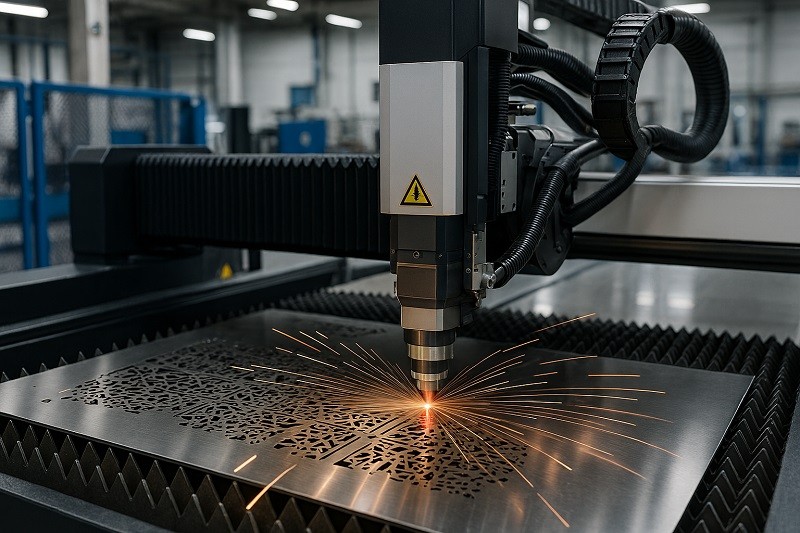
As a sheet metal fabrication manufacturer, staying competitive means constantly seeking out technologies that enhance efficiency, precision, and cost-effectiveness. Laser cutting has emerged as a revolutionary process, offering unparalleled advantages over traditional methods. But what exactly makes it so beneficial for us?
This blog post dives into the top five key advantages of incorporating laser cutting into our sheet metal fabrication processes, demonstrating how this cutting-edge technology can transform our production capabilities and final product quality.
Boosting Precision and Accuracy for Any Sheet Metal Fabrication Manufacturer
In the world of sheet metal fabrication, precision isn't just a goal; it's a fundamental requirement. The slightest deviation can lead to parts that don't fit, compromising the integrity and function of the final assembly. This is where laser cutting establishes its dominance, offering a level of precision and accuracy that traditional methods struggle to match. For a manufacturer, this translates directly to higher-quality products, reduced waste, and enhanced customer satisfaction. The ability to consistently produce identical parts, time after time, is a cornerstone of modern manufacturing, and laser technology is the key to unlocking this capability.
Achieving Intricate Designs with Unmatched Detail
One of the most celebrated advantages of laser cutting is its ability to produce parts with exceptionally intricate geometries and fine details. Unlike traditional mechanical cutting methods that rely on physical force and tooling, laser cutting uses a focused beam of light to melt or vaporize material with pinpoint accuracy. This non-contact process, guided by sophisticated Computer Numerical Control (CNC) systems, transforms digital designs from CAD software directly into physical parts.
The result is unparalleled design freedom for engineers and fabricators. Features that are difficult, expensive, or simply impossible to create with stamping dies or punching tools become routine. This includes:
- Sharp Internal Corners: Mechanical tools have inherent radius limitations, making it difficult to achieve perfectly sharp inside corners. A laser beam, however, can create crisp, well-defined angles.
- Complex Contours and Curves: Lasers can follow any programmed path, no matter how complex, allowing for the creation of fluid curves and elaborate patterns with ease.
- Fine-Detail Features: The process is ideal for cutting small holes, narrow slots, and intricate latticework or filigree patterns that would be too delicate for mechanical methods. This capability is crucial in industries like electronics, where components require high-precision cutouts for ventilation and mounting.
- Micro-Features: Advanced laser systems can produce component geometries with features as small as 5 to 50 micrometers, opening up possibilities in fields like medical device manufacturing and microfluidics.
The precision is quantifiable and impressive. Depending on the material and machine, laser cutting can consistently achieve tolerances as tight as ±0.005 inches (±0.127 mm), with some specialized systems reaching even higher accuracies of ±0.0005 inches. Typical dimensional accuracy for most sheet metal applications falls within ±0.005 inches, ensuring that parts fit together perfectly in complex assemblies. This level of precision is transformative, enabling architects to design detailed facades and engineers to create lightweight yet strong components.
Minimizing Material Contamination and Maximizing Product Quality
Product quality in sheet metal fabrication is directly tied to the cleanliness and integrity of the material throughout the production process. A major, yet often overlooked, advantage of laser cutting is its non-contact nature, which significantly reduces the risk of material contamination and damage.
Traditional mechanical cutting methods, such as punching, shearing, or sawing, rely on direct physical contact between a cutting tool and the workpiece. This introduces several risks:
- Tool Wear and Debris: Cutting blades and dies wear down over time, potentially transferring small metal particles or dull-edge impressions onto the part.
- Lubricant Contamination: Many mechanical processes require lubricants to reduce friction and heat, which can leave an oily residue on the cut parts, necessitating a separate, time-consuming cleaning stage.
- Material Deformation: The physical force exerted by mechanical tools can cause micro-burrs, warping, or stress at the cut edge, compromising the material's structural integrity.
Laser cutting elegantly bypasses these issues. Since the "tool" is a focused beam of light, there is no physical contact with the sheet metal. This has a profound impact on product quality:
- Elimination of Tool-Based Contamination: With no touching parts, there is no risk of transferring oils, greases, or debris from a worn-out tool onto the material. This is particularly critical for parts used in contaminant-sensitive industries, such as medical devices, electronics, and food processing.
- Consistent Cut Quality: A laser beam does not wear out or become dull like a physical blade. This ensures that the first part cut in a production run has the exact same quality and dimensional accuracy as the last, guaranteeing unparalleled consistency.
- Preservation of Material Surface: Since there is no clamping or direct force applied at the cut line, the surface finish of the material remains pristine, free from scratches, drag marks, or indentations that can occur with mechanical methods.
The result is a cleaner, higher-quality part straight from the cutting bed. By preventing contamination at the source, laser cutting eliminates the need for secondary cleaning operations, contributing to a more streamlined and efficient workflow. This non-contact advantage ensures that the material's inherent properties and surface finish are preserved, maximizing the quality and value of the final product.
Enhanced Efficiency and Speed for a Sheet Metal Fabrication Manufacturer
In a competitive market, production speed and workflow efficiency are paramount. The ability to move from design to finished part quickly and with minimal interruption is a key differentiator for any sheet metal fabrication manufacturer. Laser cutting technology is a catalyst for this efficiency, fundamentally changing the dynamics of production by integrating automation and dramatically reducing setup times. This shift allows manufacturers to increase throughput, take on more diverse projects, and respond more agilely to customer demands.
Streamlining Production with Automated Processes
Modern laser cutters are far more than standalone machines; they are sophisticated, highly-automated production systems. This automation is a primary driver of efficiency, transforming the shop floor by enabling continuous and streamlined production workflows with minimal human intervention.
At the heart of this automation is the seamless integration of CAD/CAM (Computer-Aided Design/Computer-Aided Manufacturing) software. The process is elegant and efficient: engineers create detailed 2D or 3D models in CAD software, which are then processed by CAM software. The CAM system translates these digital blueprints into precise G-code—the machine instructions that direct the laser head's every move. This direct digital link eliminates manual programming errors and ensures that the physical part is an exact replica of the digital design.
Beyond software, physical automation systems revolutionize material handling, a traditionally labor-intensive part of the process. These systems can include:
- Automatic Loading/Unloading Systems: These units use suction cups or robotic arms to lift raw sheet metal from a pallet and place it onto the cutting bed. Once cutting is complete, the same or a different system removes the finished parts and the leftover skeleton.
- Material Storage Towers: For even greater automation, storage towers can hold a large inventory of different material types and thicknesses. The system can automatically retrieve the correct sheet for a specific job and deliver it to the laser cutter, enabling true lights-out operation.
- Exchange Tables: Many modern laser cutters feature a dual-pallet system. While one sheet is being cut in the enclosed cutting area, an operator or robotic system can be unloading finished parts and loading a new sheet on the second, external pallet. Once the first job is done, the pallets swap places in seconds, virtually eliminating downtime between sheets.
By combining these automated hardware and software components, manufacturers can create a fully integrated production line. A robotic arm can load raw material, the laser cuts the parts, and another arm can remove and sort the finished components, all without stopping. This level of automation drastically reduces manual labor, minimizes the risk of handling errors, increases worker safety, and allows for continuous, 24/7 operation. The result is a massive boost in productivity and the ability to handle high-volume orders with unprecedented speed and consistency.
Reducing Downtime and Optimizing Workflow
A critical factor that hinders productivity in traditional manufacturing is downtime, particularly the time spent on machine setup and changeovers between different jobs. This is where laser cutting offers a transformative advantage, primarily due to its "tool-less" nature.
Traditional cutting methods like stamping and turret punching rely on physical tooling—hardened steel dies and punches specific to each feature of a part. This approach has significant drawbacks:
- Long Setup Times: Changing from one part design to another requires physically swapping out heavy, expensive dies. This process, known as changeover, can take anywhere from minutes to hours, during which the machine is idle and unproductive. For manual changeovers, this can take around 26 minutes or more. In contrast, automated changeovers on laser systems can take less than a minute.
- High Tooling Costs: Creating custom tools is expensive and time-consuming. This makes short production runs and prototyping prohibitively costly.
- Tool Maintenance and Storage: Tools wear out and require maintenance or replacement. They also need to be stored, managed, and retrieved, adding to operational overhead.
Laser cutting completely eliminates these obstacles. The "tool" is a digitally controlled beam of light, meaning there are no physical dies to create, change, or maintain. The benefits of this are profound:
- Instantaneous Changeovers: To switch from cutting one part to another, the operator simply needs to load a new program file into the CNC controller. This can be done in seconds, reducing machine downtime to nearly zero. This agility is invaluable for manufacturers who handle a high mix of low-volume jobs, enabling "just-in-time" production.
- Zero Tooling Costs: There is no need to invest in expensive, part-specific tooling. This drastically lowers the barrier to entry for producing custom designs and prototypes, as the cost for a single unique part is nearly the same as for one in a batch of thousands.
- Simplified Workflow: Without the need to manage a physical tool inventory, the entire production workflow becomes simpler and more streamlined. This reduces the chance of human error (e.g., selecting the wrong tool) and frees up valuable floor space that would otherwise be used for tool storage.
By drastically cutting down on non-productive time, the tool-less nature of laser cutting maximizes the machine's "green-light time"—the time it is actively generating revenue. This optimization of the workflow leads to higher throughput, greater operational flexibility, and a significant competitive advantage.
Cost-Effectiveness and Material Savings for Every Sheet Metal Fabrication Manufacturer
While the initial investment in laser cutting technology can be significant, the long-term return on investment is exceptionally strong. For a sheet metal fabrication manufacturer, the benefits extend beyond just speed and precision to deliver substantial cost savings across the board. These savings come from two primary areas: the reduction of costly secondary operations and the intelligent, optimized use of raw materials. Over time, these efficiencies fundamentally lower the cost-per-part and boost overall profitability.
Eliminating Secondary Finishing Operations and Associated Costs
One of the most significant hidden costs in sheet metal fabrication lies in secondary, or post-processing, operations. After a part is cut using traditional mechanical methods like punching or plasma cutting, it often requires additional work to meet final quality standards. This extra loop in the production process costs both time and money.
Common secondary operations include:
- Deburring: Mechanical and thermal cutting processes often leave behind burrs—small, sharp pieces of excess material attached to the cut edge. These must be removed for safety, proper part fitment, and aesthetic reasons.
- Sanding and Grinding: Rough or uneven edges left by methods like plasma cutting need to be smoothed down, which is a manual, labor-intensive task.
- Cleaning: Parts may need to be washed to remove oils, lubricants, or other contaminants from the cutting process.
These manual finishing steps introduce variability and add significant labor costs to each part. Studies have shown that finishing work like grinding and deburring can consume a substantial amount of time, sometimes as much as 18 minutes for every square meter of cut material. The tools for these processes also represent an ongoing operational cost.
Laser cutting, by contrast, produces exceptionally clean and smooth edges directly off the machine. The focused, high-energy beam melts or vaporizes the material so precisely that it leaves a finished edge with minimal roughness and virtually no burrs. For example, the surface roughness on a laser-cut edge can be up to 75% smoother than that of a plasma-cut edge.
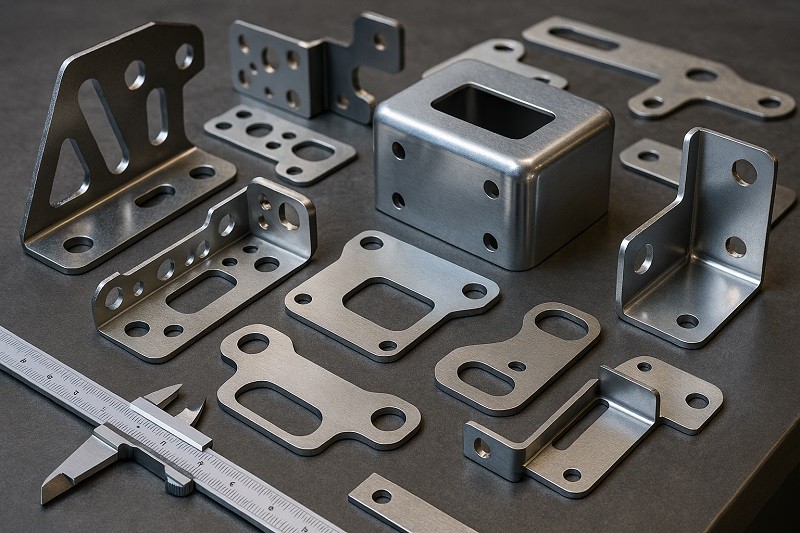
This superior edge quality means that for a vast majority of applications, parts are ready for the next stage of production—such as Metal Bending or welding—immediately after being cut. By drastically reducing or completely eliminating the need for these costly and time-consuming secondary finishing operations, laser cutting streamlines the entire manufacturing process, lowers labor costs, and shortens lead times, delivering a higher quality product faster.
Maximizing Material Utilization with Close-Nesting Capabilities
Raw material is one of the largest cost drivers in sheet metal fabrication. Therefore, any reduction in material waste translates directly to a healthier bottom line. Laser cutting excels in this area, offering superior material utilization compared to many traditional cutting methods. This is achieved through the combination of a narrow cut width and powerful software.
The key factors are:
- Narrow Kerf Width: The "kerf" is the width of material that is removed or vaporized during the cutting process. A laser beam is incredibly focused, creating a very narrow kerf, often between 0.1 mm and 0.3 mm. In contrast, methods like plasma cutting have a much wider kerf, ranging from 1.5 mm to over 3.9 mm depending on material thickness. This seemingly small difference adds up significantly over an entire sheet. The narrower kerf of a laser allows parts to be placed much closer to each other, reducing the "web" or scrap material between components.
- Advanced Nesting Software: Modern laser cutting systems are driven by sophisticated nesting software. This software acts like an incredibly complex puzzle solver, automatically analyzing a batch of parts and arranging them on the sheet metal to achieve the highest possible density. It can rotate and interlock parts in ways that would be nearly impossible for a human to plan manually. This process ensures that the maximum number of parts are cut from a single sheet, pushing material utilization rates into the 80% to 90% range.
The economic and environmental benefits are substantial. For example, in a high-volume run, improving material yield by just a few percentage points can lead to thousands of dollars in savings. By fitting more parts onto a sheet, fewer sheets are needed overall, which not only cuts direct material costs but also reduces the energy and time spent handling and loading new sheets. Furthermore, reducing scrap material is an important step towards more sustainable and environmentally responsible manufacturing. Techniques like common-line cutting, where a single cut is used to create the edge for two adjacent parts, further boost this efficiency, turning what would have been waste into valuable product.
Unrivaled Versatility and Design Flexibility for the Sheet Metal Fabrication Manufacturer
In a market that demands customization, rapid innovation, and the ability to work with an ever-expanding array of materials, versatility is not a luxury—it's a core component of a manufacturer's competitive strategy. Laser cutting technology provides an extraordinary level of flexibility that empowers fabricators to move beyond the constraints of traditional methods. It opens the door to new markets, more complex products, and a more agile response to client needs, ensuring a manufacturer can say "yes" to more opportunities.