Why Copper is a Superior Material for OEM Parts Milling Service Manufacturers
- Share
- Issue Time
- Mar 9,2026
Summary
Discover why copper is superior for OEM parts milling. Explore its unmatched conductivity, diverse alloys like brass and bronze, and expert machining solutions for electronics, automotive, and medical industries.
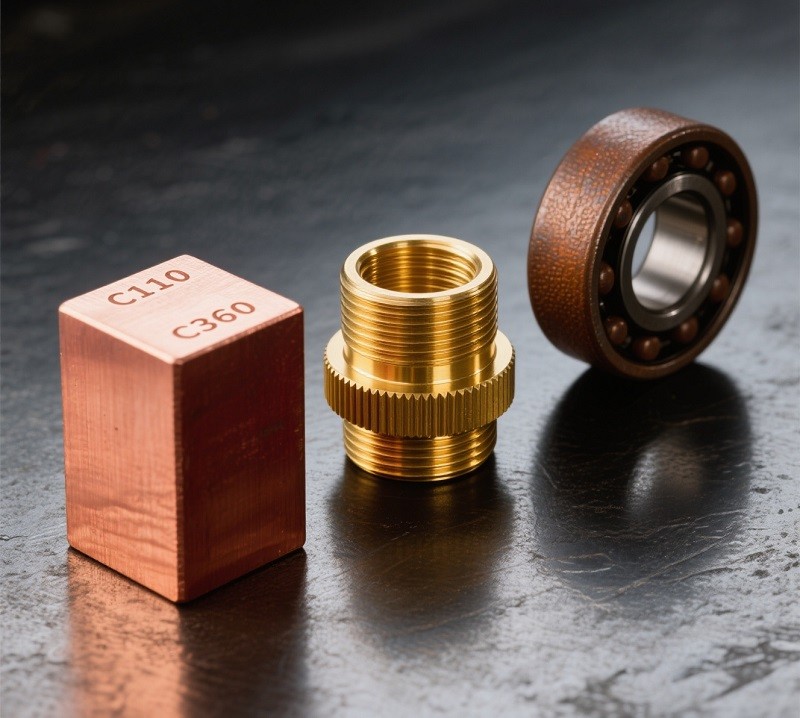
As an OEM parts milling service manufacturer, we understand the constant pursuit of optimal materials to meet increasingly demanding industrial needs. While various metals offer unique properties, copper consistently emerges as a superior choice, especially for the intricate and precise requirements of CNC milling. Its distinct combination of physical and mechanical characteristics makes it invaluable for components where performance and reliability are paramount.
In this blog post, we'll explore why copper stands out as a top-tier material for OEM parts milling service manufacturers. We'll delve into its inherent advantages, discuss its application across diverse industries, and address the specific challenges and solutions associated with milling copper, providing a comprehensive guide to its unparalleled utility.
Understanding Copper's Superior Properties for OEM Parts Milling Service Manufacturers
Copper's value in manufacturing is not accidental; it is a direct result of a unique combination of physical and chemical properties. For an OEM parts milling service manufacturer, these properties translate into high-performance components that meet the stringent requirements of modern industries. Understanding these fundamental attributes is the first step in appreciating why copper is often the best material for the job.
Exceptional Electrical and Thermal Conductivity
Copper's reputation is built on its two primary strengths: its ability to conduct electricity and heat better than almost any other commercial metal.
Electrical Conductivity: Among non-precious metals, copper is the undisputed king of electrical conductivity. It sets the industry benchmark, the International Annealed Copper Standard (IACS), at 100%. For comparison, aluminum, its closest competitor in many applications, offers only about 61% of copper's conductivity. This superior performance means that for a given amount of electrical current, a copper component can be smaller, saving space and weight without sacrificing efficiency. In OEM parts like busbars, wiring, connectors, and transformer components, low electrical resistance is critical. It minimizes energy loss in the form of heat, which not only improves overall system efficiency but also enhances safety by reducing the risk of overheating and component failure.
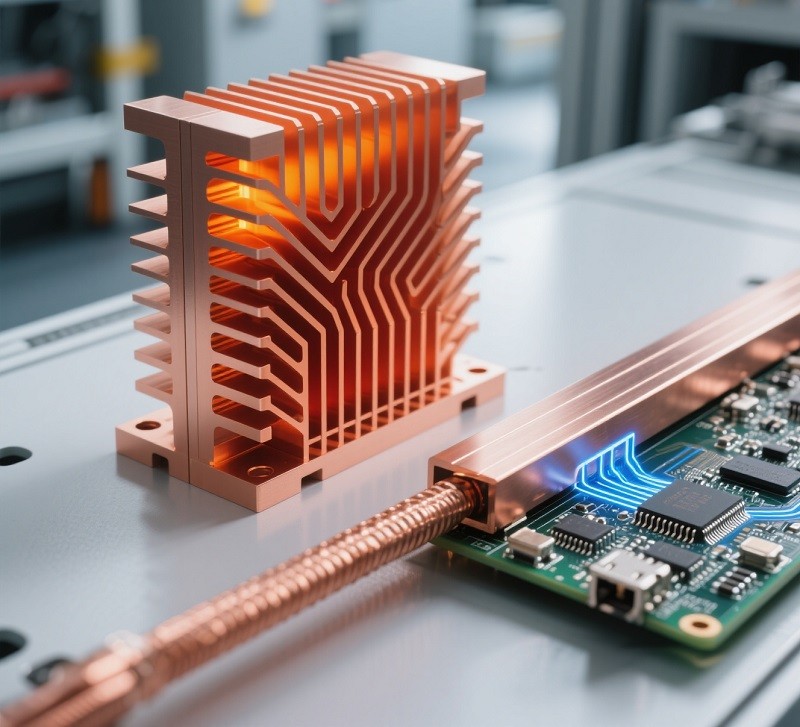
Thermal Conductivity: Just as it excels at transferring electrical energy, copper is also a premier thermal conductor. It possesses a thermal conductivity of approximately 401 W/(m·K), a value surpassed only by silver, which is far too expensive for most industrial uses. This property is invaluable for any OEM part designed for thermal management. Copper’s ability to rapidly absorb and dissipate heat makes it the ideal material for high-performance heat sinks, heat exchangers, and advanced cooling solutions like the liquid cold plates used in automotive and power generation systems. In electronic devices, from high-performance computers to smartphones, copper components like vapor chambers and heat pipes are essential for drawing heat away from critical processors, thus ensuring their longevity and stable operation.
The table below provides a clear comparison of copper's thermal conductivity against other common metals used in manufacturing.
| Material | Thermal Conductivity (W/m·K) | Key Characteristics & Use Cases |
|---|---|---|
| Silver | 429 | Highest conductivity, but high cost limits its use to specialized applications. |
| Copper | 401 | The industry standard for high-efficiency electrical and thermal applications. |
| Aluminum | 237 | Lightweight and cost-effective, but less conductive than copper. |
| Brass (Alloy) | 120 | Good corrosion resistance, used where conductivity is secondary. |
| Stainless Steel | 16 | Valued for strength and corrosion resistance, not for conductivity. |
This dual conductivity ensures that copper parts not only perform their primary function efficiently but also contribute to the overall safety, stability, and lifespan of the final product.
Ductility, Corrosion Resistance, and Malleability
Beyond its conductivity, copper presents a trio of mechanical properties that make it exceptionally well-suited for CNC milling and the creation of durable OEM parts: ductility, malleability, and inherent corrosion resistance.
Ductility and Malleability: These two properties are often mentioned together and are central to copper's excellent workability. Ductility is the ability of a material to be stretched or drawn into a wire without breaking, while malleability is its ability to be hammered or pressed into shape without cracking. For CNC milling, these traits are a significant advantage. Pure copper is relatively soft and can be easily formed into complex geometries and thin-walled structures. This workability means that less force is required to cut and shape the material, which can lead to reduced tool wear and faster machining times compared to harder, more brittle metals.
Corrosion Resistance: Copper is highly resistant to corrosion from water, air, and many chemicals. This durability is a key reason it is used in long-lasting applications like plumbing, roofing, and marine hardware. When exposed to the environment, copper develops a protective outer layer known as a patina. This layer, which often takes on a characteristic green or bluish-green hue over time, is a stable compound of copper oxides, sulfides, and carbonates that acts as a barrier, preventing further corrosion of the underlying metal. This self-protecting feature ensures that copper components maintain their structural integrity and functionality for decades, even in harsh environments, significantly reducing maintenance and replacement costs.
Antimicrobial Properties: An additional, often overlooked, benefit of copper is its natural ability to kill a wide range of harmful microbes. This makes it an ideal material for applications where hygiene is a priority, such as in medical devices, food processing equipment, and high-touch surfaces in public spaces.
These mechanical properties, combined with its superb conductivity, create a uniquely versatile material that is both easy to manufacture into precise parts and exceptionally durable in its final application.
Diverse Copper Grades and Their Applications for OEM Parts Milling Service Manufacturers
Not all copper is the same. Over the centuries, metallurgists have developed hundreds of distinct copper alloys, each tailored with a unique combination of properties to meet specific manufacturing and environmental demands. For an OEM parts milling service manufacturer, selecting the correct grade is a critical decision that impacts machinability, performance, and cost-effectiveness. In this section, we'll focus on some of the most common and important grades used in CNC milling.
Oxygen-Free Copper (Copper 101) and Electrolytic Tough Pitch (ETP) Copper (Copper 110)
Two of the most prevalent grades of pure copper in CNC machining are C101 and C110. While they appear nearly identical, their subtle chemical differences have significant implications for performance and application.
Copper 101 (C10100), or Oxygen-Free Electronic (OFE) Copper: This is the highest purity grade of copper, with a minimum copper content of 99.99% and an extremely low oxygen content (typically ≤0.0005%). This ultra-high purity gives C101 exceptional electrical conductivity, often rated at 101% IACS or higher. Because it contains virtually no oxygen, it is immune to hydrogen embrittlement, a condition where copper can become brittle when heated in a hydrogen-rich atmosphere.
- Applications: C101 is the premium choice for the most demanding applications where maximum conductivity and purity are paramount. This includes high-end audio-visual equipment, vacuum electronic devices, semiconductor manufacturing components, particle accelerators, and aerospace systems where signal integrity and reliability are non-negotiable.
Copper 110 (C11000), or Electrolytic Tough Pitch (ETP) Copper: This is the most widely used grade of copper. It has a purity of 99.9% and contains a small, controlled amount of oxygen (typically 0.02% to 0.04%). This oxygen content slightly reduces its electrical conductivity to around 100% IACS. However, the presence of oxygen offers a key manufacturing advantage: it generally improves the machinability of the copper, making it less "gummy" and producing cleaner chips compared to the softer C101.
- Applications: C110's excellent balance of high conductivity, good ductility, corrosion resistance, and lower cost makes it the workhorse for a vast array of OEM parts. It is commonly specified for general electrical applications such as busbars, connectors, transformer windings, motor components, and electrical switches.
Key Differences Summarized
| Property | Copper 101 (OFE) | Copper 110 (ETP) |
|---|---|---|
| Purity (Cu %) | ≥99.99% | ~99.9% |
| Oxygen Content | ≤0.0005% | 0.02% - 0.04% |
| Conductivity | >101% IACS | ~100% IACS |
| Machinability | Fair (softer, more "gummy") | Good (better chip formation) |
| Key Advantage | Highest purity & conductivity, immune to hydrogen embrittlement. | Excellent all-around performance, better machinability, cost-effective. |
| Cost | Higher | Standard |
| Common Uses | Vacuum electronics, semiconductors, high-frequency RF parts, aerospace. | Busbars, electrical contacts, general wiring, heat exchangers, architectural parts. |
For an OEM parts manufacturer, the choice is clear: C110 is the practical and economical choice for the majority of applications. C101 is reserved for specialized, high-performance scenarios where its premium cost is justified by its superior purity and slight conductivity edge.
Specialty Copper Alloys: Bronzes and Brasses for Various OEM Needs
While pure copper excels in conductivity, its alloys—bronze and brass—are engineered to enhance other mechanical properties like strength, hardness, and machinability. By adding elements like zinc, tin, aluminum, or lead to copper, a wide spectrum of materials can be created to suit specific OEM needs.
Brasses: The Machinability Champions
Brass is an alloy primarily composed of copper and zinc. The addition of zinc increases the material's strength and ductility, but its most lauded characteristic, especially in CNC milling, is its exceptional machinability.
C360 Free-Cutting Brass: This is often the benchmark against which all other metals' machinability is measured. It contains a small percentage of lead (around 3%), which acts as an internal lubricant and promotes the formation of small, brittle chips during cutting. This has several benefits for OEM parts manufacturers:
- Faster Speeds: Machines can run at higher cutting speeds and feed rates.
- Longer Tool Life: The reduced friction and easy chip breaking lead to less wear on cutting tools.
- Superior Surface Finish: Parts often come off the machine with a smooth, clean finish that requires little to no post-processing.
Due to these advantages, C360 brass is a cost-effective choice for high-volume production of parts such as plumbing fittings, valve components, fasteners, electronic hardware, and other precision threaded components.
Bronzes: The Durable Workhorses
Bronze is an alloy consisting primarily of copper, with tin as the main additive. However, many modern bronze alloys also include elements like aluminum, silicon, manganese, and phosphorus to achieve specific properties. Bronzes are generally harder and more resistant to wear and corrosion than brasses.
C932 Bearing Bronze (SAE 660): This is a classic bronze alloy known for its excellent wear resistance and anti-friction properties. It contains tin, lead, and zinc, a combination that makes it ideal for applications involving moving parts under load. Its structure allows it to hold a lubricant film and even "embed" small abrasive particles, protecting the mating shaft from damage. This makes it a top choice for CNC machining:
- Bearings
- Bushings
- Thrust washers
- Other components subjected to friction and wear
C954 Aluminum Bronze: This is one of the strongest copper-based alloys. The addition of aluminum (and often iron) gives it exceptional strength, hardness, and outstanding corrosion resistance, particularly in saltwater and acidic environments. While tougher to machine than bearing bronze or brass, its durability makes it indispensable for heavy-duty applications such as pump shafts, marine hardware, wear plates, and high-strength gears.
Brass vs. Bronze at a Glance
| Feature | Brass (e.g., C360) | Bronze (e.g., C932, C954) |
|---|---|---|
| Primary Alloying Element | Zinc (Zn) | Tin (Sn), Aluminum (Al) |
| Key Property | Excellent Machinability | High Strength, Wear & Corrosion Resistance |
| Appearance | Bright, yellow-gold | Reddish-brown |
| Strength & Hardness | Moderate | High to Very High |
| Corrosion Resistance | Good | Excellent, especially in marine environments |
| Common OEM Applications | Fittings, valves, fasteners, decorative parts. | Bearings, bushings, gears, marine hardware, heavy-duty components. |
For OEM parts milling service manufacturers, brass offers efficiency and cost-effectiveness for a wide range of general-purpose parts, while bronze provides the necessary strength and longevity for more demanding, high-wear, and corrosive environments.
The Advantages of CNC Machining Copper for OEM Parts Milling Service Manufacturers
The inherent properties of copper and its alloys are only part of the equation. To transform this raw potential into functional, high-value OEM components, a sophisticated manufacturing process is required. This is where Computer Numerical Control (CNC) machining excels. By combining the superior qualities of copper with the precision, efficiency, and flexibility of CNC technology, manufacturers can unlock a new level of performance and customization.
Achieving Unparalleled Precision and Complexity in Copper OEM Parts
Modern industries, from aerospace to high-performance electronics, demand components with increasingly intricate designs and exceptionally tight tolerances. CNC machining is the key technology that allows manufacturers to meet these requirements, and when paired with copper, it enables the creation of parts that were once considered impossible to fabricate.
The core advantage of CNC machining lies in its computer-driven precision. By translating a digital CAD (Computer-Aided Design) model into precise machine instructions, CNC systems can guide cutting tools with microscopic accuracy. This process makes it possible to achieve tolerances as tight as ±0.01 mm or even finer, ensuring that every part meets exact specifications. For copper components used in electrical contacts, connectors, or thermal interfaces, this level of precision is not just a goal—it's a necessity for reliable performance.
Furthermore, the evolution of multi-axis CNC machining has revolutionized the production of complex parts. Unlike traditional 3-axis machines that move along the X, Y, and Z axes, modern 5-axis machines introduce two rotational axes. This allows the cutting tool to approach the workpiece from virtually any angle in a single setup. The benefits for machining complex copper parts are immense:
- Intricate Geometries: It becomes possible to machine complex curves, deep pockets, undercuts, and organic shapes without manually repositioning the part. This is crucial for components like advanced heat sinks with fine fins or aerospace parts with complex contours.
- Improved Accuracy: Completing a part in a single setup eliminates the potential for errors that can be introduced each time a workpiece is re-clamped.
- Superior Surface Finish: The ability to keep the tool tangent to the workpiece surface results in a smoother finish, reducing the need for secondary polishing and improving the aesthetic and functional quality of the component.
Copper's natural malleability, combined with the precision of multi-axis CNC technology, allows designers to create highly optimized and complex parts that maximize performance. For an OEM parts milling service manufacturer, this capability means being able to produce everything from miniature, high-density electronic connectors to large, intricately channeled liquid cold plates for advanced thermal management, all with unparalleled accuracy.
Efficiency, Consistency, and Customization in Copper Milling
Beyond creating single, highly complex components, CNC machining provides OEM parts manufacturers with three overarching advantages that are critical in today's competitive landscape: efficiency, consistency, and customization.
Efficiency and Automation: CNC machining is an inherently automated process. Once programmed, a CNC machine can run continuously with minimal human supervision, significantly increasing productivity and throughput. Automated functions like tool changers and pallet systems further streamline the workflow, allowing for near-uninterrupted production cycles. This level of automation is crucial for meeting the demands of large-scale orders, reducing labor costs, and shortening lead times. The efficiency of the process makes it economically viable to produce everything from small batch prototypes to mass-produced copper parts.
Consistency and Repeatability: In OEM manufacturing, quality control is paramount. CNC machining ensures that every part produced is a perfect replica of the last. The digital control system eliminates the human error and variability associated with manual machining, guaranteeing exceptional repeatability. Whether producing the first part or the ten-thousandth, an OEM parts milling service manufacturer can be confident that each component will adhere to the same tight tolerances and quality standards. This consistency is vital for industries where parts must be interchangeable and function reliably within a larger assembly.
Customization and Flexibility: The link between CAD (Computer-Aided Design) and CAM (Computer-Aided Manufacturing) software is the engine of modern customization. An engineer can create or modify a 3D model of a copper part in CAD software, and the CAM software will translate that design into machine-readable instructions. This seamless workflow makes it incredibly easy to create custom copper parts tailored to unique applications. Design iterations can be tested virtually, and changes can be implemented quickly without the need for creating expensive physical tooling. This flexibility allows manufacturers to offer fully customized solutions, from one-off prototypes to small, specialized production runs, responding rapidly to evolving client needs and market demands.
Together, these advantages empower an OEM parts milling service manufacturer to deliver high-quality, precision-engineered copper components quickly, reliably, and with a level of design freedom that traditional methods cannot match.
Sustainability: A Key Benefit for OEM Parts Milling Service Manufacturers
In an era where environmental responsibility is a core component of corporate value, choosing sustainable materials is more important than ever. Copper stands out as a uniquely sustainable material, providing OEM parts milling service manufacturers and their clients with significant environmental and economic advantages. This is primarily due to its role in the circular economy.
A key attribute of copper is that it can be recycled indefinitely without any loss of its physical or chemical properties. Unlike other materials that degrade with each recycling cycle, recycled copper is indistinguishable from copper produced from virgin ore. This remarkable characteristic means there is no compromise on quality or performance.
The environmental benefits of using recycled copper are substantial:
Massive Energy Savings: The process of recycling copper uses up to 85-90% less energy than mining, extracting, and refining it from primary ore. This drastic reduction in energy consumption directly translates to a smaller carbon footprint and lower greenhouse gas emissions.
Conservation of Natural Resources: Copper is a finite resource. By prioritizing recycling, we reduce the demand for new mining operations. This helps conserve the Earth's remaining copper reserves and mitigates the environmental impact of mining, which can include habitat destruction, soil erosion, and water pollution.
Waste Reduction: Incorporating copper scrap back into the production cycle diverts vast amounts of material from landfills. This is a cornerstone of the circular economy, where waste is treated as a valuable resource. Recycled copper currently meets over 30% of global demand, demonstrating its critical role in sustainable resource management.
For an OEM parts milling service manufacturer, choosing copper is a commitment to sustainability. It allows for the production of high-performance components while simultaneously supporting a more sustainable manufacturing ecosystem. By leveraging recycled copper, manufacturers can reduce their environmental impact, lower production costs through energy savings, and offer their clients a verifiably "green" material choice, aligning with the growing global demand for sustainable products.
Overcoming Milling Challenges and Enhancing Copper OEM Parts Through Post-Processing
While copper's properties make it a superior material for many OEM applications, its unique characteristics also present specific challenges during the CNC milling process. However, with the right expertise, tooling, and techniques, these hurdles can be effectively overcome. Furthermore, a wide range of post-processing techniques can be employed to enhance the finished parts, tailoring them for even the most demanding environments and specifications.
Addressing the Unique Challenges of Milling Copper for OEM Parts
Pure copper is prized for its conductivity, but its very nature—soft, ductile, and thermally conductive—poses a distinct set of hurdles for CNC machining. Acknowledging and mastering these challenges is what separates an expert milling service provider.
The primary difficulties encountered when milling copper include:
High Ductility and "Gumminess": Copper's softness and high ductility mean that instead of shearing away cleanly to form small chips, the material tends to deform and tear. This can result in long, stringy chips that wrap around the cutting tool and workpiece. This "gumminess" also leads to material adhesion on the tool's cutting edge.
Built-Up Edge (BUE): This is the single biggest issue when machining pure copper. The high pressure and friction at the cutting point can cause copper particles to weld themselves to the tool's surface, creating what is known as a built-up edge. A BUE effectively changes the tool's geometry, leading to a host of problems:
- Increased cutting forces and friction.
- Poor surface finish as pieces of the BUE break off and mar the workpiece.
- Dimensional inaccuracies as the effective size of the tool changes.
- Accelerated and unpredictable tool wear.
High Thermal Conductivity: While a benefit in the final application, copper's ability to conduct heat can be a challenge during milling. The heat generated at the cutting point is quickly transferred away from the chip and into the cutting tool and the workpiece itself. This can accelerate tool wear and cause thermal expansion in the part, potentially leading to dimensional errors if not properly managed.
Burr Formation: The ductile nature of copper means it is prone to forming heavy burrs at the edges of the machined features, particularly where the tool exits the material. These burrs are often tenacious and require secondary deburring operations, adding time and cost to the manufacturing process.
Successfully machining copper is not about brute force; it's about a finessed approach that manages friction, heat, and chip formation. By understanding these intrinsic material challenges, manufacturers can implement targeted strategies to produce high-quality, precise copper components.
Tool Selection and High-Pressure Cooling for Optimal Results
Overcoming the challenges of milling copper requires a strategic and multi-faceted approach, focusing on two critical areas: the cutting tools themselves and the use of effective cooling.
1. Advanced Tool Selection
The right tool is the first line of defense against the difficulties of machining copper. Success depends on specific choices in tool material, geometry, and coatings.
Tool Material: Solid carbide end mills are the standard for copper machining due to their hardness and excellent wear resistance at high temperatures. High-Speed Steel (HSS) is a more budget-friendly option but wears much faster and is generally reserved for slower operations.
Tool Geometry: The shape of the cutting tool is paramount.
- Sharp Cutting Edges: Unlike tools for steel, which may have a honed (slightly rounded) edge for strength, tools for copper must be exceptionally sharp to shear the material cleanly rather than smearing it.
- High Rake and Helix Angles: Tools with high positive rake angles (the angle of the cutting face) reduce cutting forces and friction, which helps prevent BUE. A high helix angle on the flutes encourages efficient chip evacuation, pulling chips up and away from the cutting zone.
- Polished Flutes: Smooth, polished flutes reduce friction and give sticky copper chips a slippery surface to slide along, further preventing them from welding to the tool.
- Fewer Flutes: For copper, 2 or 3-flute end mills are often preferred over 4 or 5-flute designs. The lower flute count provides more space between the cutting edges, which is crucial for evacuating the long, continuous chips that copper produces.
Advanced Coatings: Modern tool coatings create a barrier between the tool and the workpiece, dramatically reducing friction and preventing material adhesion.
- DLC (Diamond-Like Carbon): This is one of the best coatings for machining non-ferrous materials like copper and aluminum. DLC coatings have an extremely low coefficient of friction, creating a super-slick surface that prevents the "gummy" copper chips from sticking. This results in a cleaner cut, superior surface finish, and significantly longer tool life.
- ZrN (Zirconium Nitride): This coating also offers excellent lubricity and is a good alternative to DLC for preventing BUE when machining copper.
2. High-Pressure Cooling Systems
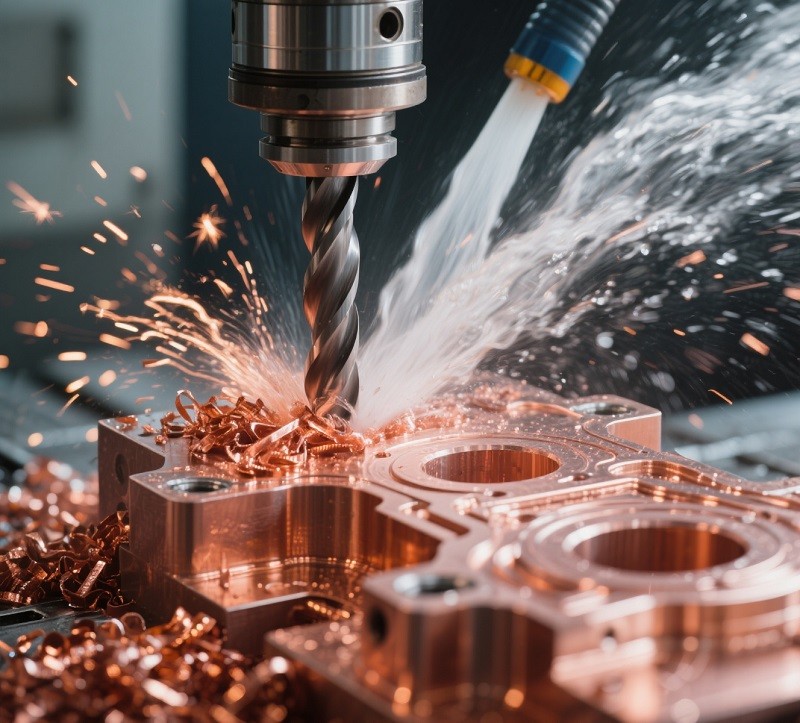
Managing heat and clearing chips are the keys to controlling BUE and achieving dimensional accuracy. While conventional flood coolant helps, High-Pressure Coolant (HPC) systems are a transformative solution. These systems deliver coolant at pressures ranging from 1,000 to over 2,000 PSI directly to the cutting zone, often through the spindle and the tool itself.
The benefits of HPC are twofold:
- Superior Chip Evacuation: The high-pressure jet acts as a powerful force, physically blasting chips away from the cutting edge and out of deep pockets or holes. This prevents chips from being re-cut, which is a major source of excess heat and tool wear. It also breaks the long, stringy copper chips into smaller, more manageable pieces.
- Effective Heat Management: During machining, a "vapor barrier" of steam can form at the cutting edge, insulating the area and preventing low-pressure coolant from being effective. High-pressure coolant has enough force to penetrate this barrier, delivering a potent cooling and lubricating effect precisely where it's needed most. This rapidly quenches the tool, workpiece, and chip, preventing overheating and thermal distortion.
By combining meticulously selected tooling with the aggressive cooling and chip control of a high-pressure system, an OEM parts milling service manufacturer can overcome the inherent challenges of machining copper, resulting in higher productivity, better part quality, and improved process reliability.
Post-Processing Techniques for Superior Copper OEM Parts
The CNC milling process creates a part with precise dimensions, but for many high-performance applications, this is only the first step. A variety of post-processing techniques are available to further enhance the surface properties of copper OEM parts. These finishing methods can improve everything from a component's appearance and corrosion resistance to its durability and electrical performance, adding significant value and tailoring the part for its specific end-use.
Electropolishing and Electroplating for Enhanced Durability and Appearance
Electrochemical finishing processes are a highly effective way to modify the surface of a copper part at a microscopic level. These techniques use a chemical bath and an electric current to add or remove material, resulting in significant improvements to the component's durability, appearance, and functionality.
Electropolishing: For Ultimate Smoothness and Purity Electropolishing is an advanced finishing process often described as "reverse electroplating." The copper part is submerged in a specialized electrolyte bath and acts as the anode. When an electric current is applied, it precisely dissolves the microscopic "peaks" of the metal surface faster than the "valleys."
This controlled removal of material yields several key benefits:
- Superior Smoothness: It creates an exceptionally smooth, mirror-like surface, reducing friction and removing microscopic defects, burrs, and surface irregularities that can be sites for corrosion to begin.
- Enhanced Corrosion Resistance: By removing surface contaminants and creating a smooth, featureless surface, electropolishing significantly improves the natural corrosion resistance of the copper part.
- Ultraclean and Hygienic Surface: The process strips away any embedded particles or contaminants from the machining process. This makes it an ideal finish for applications with stringent cleanliness requirements, such as in the medical, pharmaceutical, and semiconductor industries, as the smooth surface is easier to sterilize and less likely to harbor bacteria.
For OEM parts used in high-vacuum environments, scientific instruments, or medical devices, electropolishing is often a required step to ensure ultimate surface purity and performance.
Electroplating: For Enhanced Surface Properties Electroplating is the process of depositing a thin layer of another metal onto the surface of the copper part. This is done to impart the properties of the plated metal onto the copper component, such as enhanced durability, specific aesthetic qualities, or improved functionality for electronic applications.
Common plating materials for copper OEM parts include:
- Nickel: Often used as a barrier layer between copper and a final gold plating. Nickel plating prevents the copper from migrating into the gold layer over time, which could otherwise cause tarnishing and a loss of performance. It also adds a layer of hardness and wear resistance.
- Silver: Silver offers exceptional electrical and thermal conductivity, even higher than copper itself. Plating copper contacts with silver can further reduce contact resistance, making it an excellent choice for high-performance electrical connectors and switches.
- Gold: Gold provides superior corrosion resistance and is highly valued for its stable, low contact resistance. Gold plating is a premium choice for critical electronic components that must function reliably in harsh environments. It also ensures excellent solderability.
- Tin: Tin plating is a cost-effective solution for improving corrosion resistance and providing a highly solderable surface. It is widely used on terminals, contacts, and connectors where reliable soldering is required.
By leveraging these electrochemical processes, an OEM parts milling service manufacturer can transform a standard machined copper component into a highly specialized part, precisely tailored to meet the demands of advanced industrial, medical, and electronic applications.
Shot Blasting, Polishing, and Passivation for Diverse Finishes
In addition to electrochemical methods, a range of mechanical and chemical treatments can be used to achieve specific surface finishes on copper and its alloys. These processes can alter the part's texture, appearance, and protective qualities to match diverse application requirements.
Shot Blasting: This is a mechanical surface cleaning process that propels abrasive media (such as steel shot, glass beads, or aluminum oxide) at a high velocity against the copper part. This action strips away surface contaminants, oxides, and minor imperfections left over from machining. The primary outcome of shot blasting is a clean, uniform matte or satin texture. This finish is not only aesthetically pleasing but also creates an excellent surface profile for subsequent coating or painting, as it enhances adhesion. It's an efficient way to achieve a consistent, non-reflective finish on a batch of parts.
Mechanical Polishing: In contrast to the uniform matte look of shot blasting, mechanical polishing is used to create a smooth, bright, and reflective finish. This process uses abrasives—such as polishing wheels, belts, or compounds—to physically reduce the surface roughness of the metal. While electropolishing achieves smoothness at a microscopic level through chemical action, mechanical polishing is a manual or automated process that buffs the surface to a high shine. It is ideal for parts where a decorative, mirror-like appearance is desired.
Passivation: Passivation is a crucial chemical treatment used to enhance the natural corrosion resistance of copper and its alloys. While copper naturally forms a protective oxide layer (patina), the passivation process accelerates and strengthens this layer. The process typically involves immersing the clean copper part in a specialized chemical bath, often containing an agent like benzotriazole (BTA). This solution reacts with the copper surface to form a dense, stable, and invisible protective film. This film acts as a robust barrier against oxygen and other corrosive agents, significantly improving the part's long-term durability and preventing discoloration, especially in harsh or humid environments.
Summary of Mechanical and Chemical Finishes
| Post-Processing Technique | Process Description | Resulting Finish | Key Benefits |
|---|---|---|---|
| Shot Blasting | High-velocity abrasive media is propelled at the surface. | Uniform matte or satin texture. | Cleans the surface, removes imperfections, excellent for paint adhesion. |
| Mechanical Polishing | Physical abrasion with wheels, belts, or compounds. | Smooth, bright, highly reflective mirror finish. | Primarily for aesthetic appeal and achieving a decorative look. |
| Passivation | Chemical immersion to enhance the natural oxide layer. | Invisible protective film. | Maximizes corrosion resistance, prevents discoloration, enhances long-term durability. |
By offering a portfolio of these varied finishing techniques, an OEM parts milling service manufacturer can deliver copper components that are not only dimensionally precise but also perfectly finished to meet the functional and aesthetic needs of any application.
Diverse Industry Applications for Copper OEM Parts from Milling Service Manufacturers
The unique combination of superior conductivity, excellent machinability, and robust durability makes CNC-milled copper parts indispensable across a wide spectrum of high-tech and demanding industries. From the microscopic components inside our smartphones to the heavy-duty hardware used in aerospace, copper delivers reliability and performance where it matters most. OEM parts milling service manufacturers are at the forefront of producing these critical components.
Electronics, Automotive, and Medical Devices Relying on Copper OEM Parts
The unique characteristics of copper make it a critical material in three of the most technologically advanced and regulated sectors: electronics, automotive, and medical devices. In these fields, performance, reliability, and safety are non-negotiable, and CNC-machined copper parts consistently deliver.
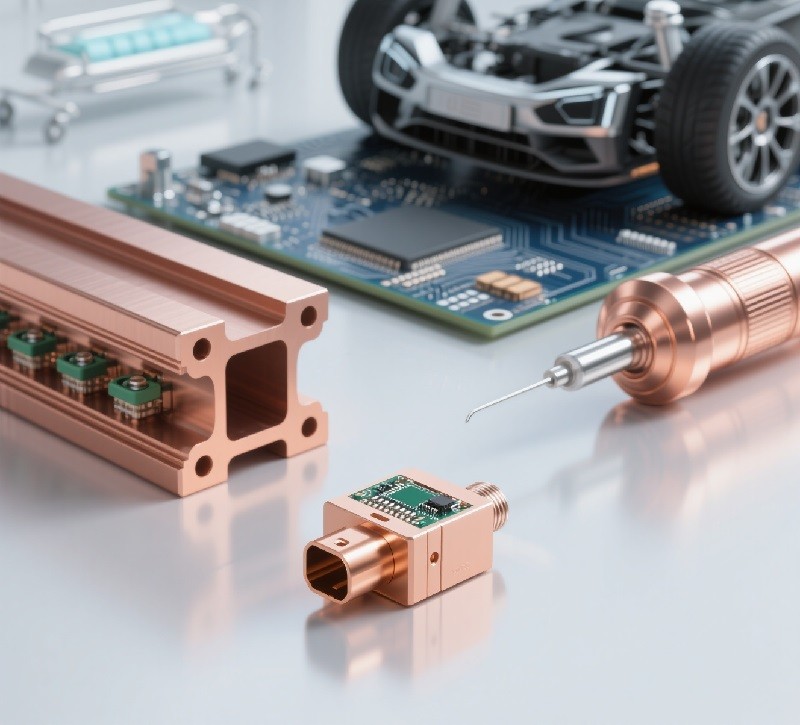
Electronics Industry: The modern electronics industry is built on the need for miniaturization, high performance, and effective thermal management. Copper is the material that makes this possible.
- Heat Sinks and Thermal Management: High-power processors, GPUs, and power modules generate immense heat. CNC-milled copper heat sinks, with their complex fins and high surface area, are essential for dissipating this heat efficiently and preventing component failure.
- Connectors, Pins, and Sockets: The exceptional electrical conductivity of copper ensures minimal signal loss and power drop in electronic connectors. CNC machining allows for the creation of incredibly small and complex connectors with the tight tolerances required for high-density applications.
- Printed Circuit Boards (PCBs): While PCBs are largely made of other materials, CNC machining is used to create conductive tracks and precision cutouts on copper-clad boards, especially for prototypes and specialized, high-frequency applications.
- EMI/RFI Shielding: Copper's conductivity makes it an excellent material for shielding sensitive electronic components from electromagnetic and radio-frequency interference, ensuring signal integrity.
Automotive Industry: The automotive sector, especially with the rapid shift towards electric vehicles (EVs), has become a major consumer of high-performance copper components.
- Busbars for EVs: Electric vehicles rely on high-current electrical systems to connect battery packs, inverters, and motors. CNC-machined solid copper busbars are the component of choice for this task. Their low electrical resistance minimizes energy loss (improving range) and heat generation, while CNC milling ensures they fit perfectly within the tight confines of a modern vehicle chassis.
- Wiring, Terminals, and Connectors: From the engine control unit (ECU) to airbag systems, every electrical connection in a car depends on reliable, corrosion-resistant copper components to ensure signals are transmitted flawlessly.
- Heat Exchangers and Radiators: Copper's superior thermal conductivity makes it a preferred material for high-performance radiators and heat exchangers responsible for cooling both traditional internal combustion engines and the powerful electronics in EVs.
- Bearings and Bushings: Wear-resistant bronze alloys are frequently machined into bearings and bushings that can withstand the constant friction and stress found in transmissions and other moving parts.
Medical Device Industry: In the medical field, precision, cleanliness, and material properties can be a matter of life and death. Copper offers a unique combination of benefits that make it highly suitable for medical applications.
- Antimicrobial Surfaces: Copper is recognized by the U.S. Environmental Protection Agency (EPA) as an antimicrobial metal. It has the natural ability to kill 99.9% of certain bacteria on its surface within hours. This makes CNC-machined copper and copper alloy components ideal for high-touch surfaces like bed railings, door handles, and IV poles, as well as for surgical instruments, to help reduce the spread of healthcare-associated infections (HAIs).
- Electrical and Diagnostic Equipment: The high conductivity of copper is critical for the wiring, connectors, and internal components of sensitive diagnostic equipment like MRI machines and defibrillators, where reliable electrical performance is essential.
- Biocompatibility and Safety: Copper and its alloys can be safely used in certain medical implants and devices. Copper is non-flammable and has a high melting point, making it a safe choice for tubing that delivers medical gases like oxygen.
In each of these industries, the ability to CNC machine copper into precise, reliable, and high-performance parts is a key enabler of technological advancement, safety, and efficiency.
Industrial, Optical, and Aerospace Sectors Utilizing Copper OEM Parts
The utility of CNC-milled copper parts extends far into heavy industry and highly specialized scientific sectors where performance under extreme conditions is the baseline requirement.
Industrial Machinery and Equipment: In the world of heavy industrial machinery, components are subjected to immense stress, high temperatures, and constant wear. Copper and its alloys, particularly bronze, are vital for ensuring operational longevity and reliability.
- Bearings and Bushings: High-strength, wear-resistant bronze alloys like C932 Bearing Bronze are machined into precision bearings and bushings. Their low-friction properties and ability to withstand heavy loads are critical for the smooth operation of gears, shafts, and other moving parts in everything from manufacturing presses to mining equipment.
- Heat Exchangers: The superior thermal conductivity of copper makes it the primary material for industrial heat exchangers used in power plants, chemical processing facilities, and HVAC systems. CNC machining enables the creation of complex tube sheets and headers that are essential for these systems to function efficiently.
- Valves and Fittings: The corrosion resistance of copper and its alloys makes them ideal for valves and fittings used to control the flow of various industrial fluids and gases, ensuring leak-free performance and long service life.
Optical and Laser Systems: In the field of optics, precision and thermal stability are paramount. While not transparent, copper plays a crucial supporting role.
- Mounts and Housings: High-precision optical instruments, from telescopes to laboratory microscopes, require mounts that are dimensionally stable. Copper's thermal conductivity helps to dissipate heat from sensitive optical components, preventing thermal expansion that could cause misalignment. CNC machining provides the tight tolerances needed to ensure perfect alignment of lenses and mirrors.
- Laser System Components: High-power laser systems generate a significant amount of heat. CNC-milled copper components are frequently used as heat sinks and cooling blocks for laser diodes and other critical elements, ensuring the laser operates at a stable temperature for consistent performance.
Aerospace Sector: The aerospace industry demands materials that deliver ultimate reliability in extreme environments. From scorching engine heat to the cold of space, copper and its high-strength alloys are critical materials.
- Electrical Systems: Every aircraft relies on miles of copper wiring for power distribution and data transmission. CNC-machined copper connectors, terminals, and busbars are used to ensure these electrical systems are efficient and unfailingly reliable.
- Thermal Management: The high thermal conductivity of copper is essential for dissipating heat from powerful avionics, radar systems, and engines. Intricately machined copper heat exchangers and cold plates are commonplace in aerospace applications.
- - Structural and Mechanical Components: High-strength copper alloys, such as aluminum bronze and beryllium copper, are machined into critical structural and mechanical parts. These include bushings and bearings for landing gear, high-strength fasteners, and components for guidance systems. These alloys provide an exceptional combination of strength, fatigue resistance, and corrosion resistance, properties essential for flight-critical applications.
In these demanding sectors, the decision to use CNC-milled copper components is driven by the need for parts that will not fail, providing the strength, conductivity, and thermal performance required for industrial, scientific, and aerospace innovation.