What is Selective Laser Melting (SLM 3D Printing)? Explained by a 3D Printing SLM Parts Supplier
- Share
- Issue Time
- Mar 6,2026
Summary
Discover Selective Laser Melting (SLM), a premier metal 3D printing technology. Learn how high-powered lasers fuse metal powder layer-by-layer to create dense, complex, high-strength parts for aerospace and medical industries.
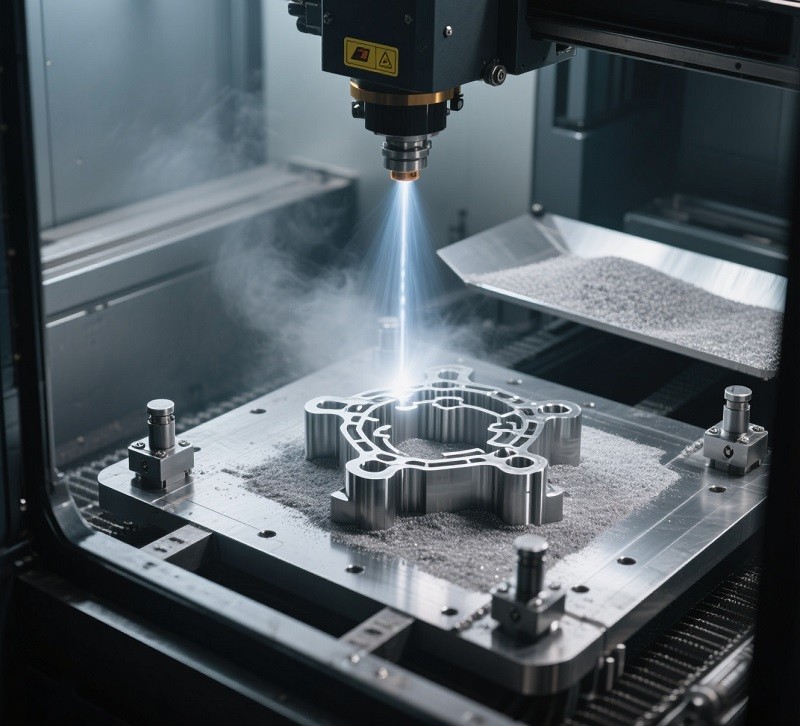
As an experienced 3D Printing SLM Parts Supplier, I'm excited to share insights into Selective Laser Melting (SLM), a cutting-edge 3D printing technology that's redefining manufacturing. If you've ever wondered how metal parts with incredible strength and complex designs are made, you're in the right place. Selective Laser Melting (SLM) is a powerful and precise additive manufacturing technology that utilizes a high-powered laser to fully melt metal powder, layer by layer, creating solid, functional components. This process is highly valued across industries like aerospace, automotive, and medical for its ability to produce intricate, high-performance parts.
In this guide, I'll walk you through the fascinating world of SLM 3D printing, explaining its mechanisms, advantages, applications, and the types of materials we, as a supplier of 3D Pringting SLM Parts, commonly use to bring your designs to life.
Understanding the Fundamentals of Selective Laser Melting (SLM) from a 3D Printing SLM Parts Supplier's Perspective
To truly appreciate the capabilities of modern manufacturing, it's essential to understand the technologies that drive it. As a supplier, we see firsthand how SLM transforms complex digital blueprints into robust, functional metal parts. It's a cornerstone of what's known as metal additive manufacturing, offering a powerful alternative to traditional methods.
What is SLM 3D Printing?
Selective Laser Melting (SLM) is a type of metal additive manufacturing, or 3D printing, that creates solid objects from a fine metallic powder. Part of the laser powder bed fusion (LPBF) family of technologies, SLM uses a high-power laser to fully melt and fuse metal particles together, layer by layer, based on a 3D digital model. This process produces fully dense parts with exceptional mechanical properties, making it a go-to technology for high-performance applications in demanding sectors like aerospace, medical, and automotive.
Unlike processes that only sinter the powder (fusing it without full melting), SLM achieves a complete phase transition from solid to liquid, which then solidifies to form a homogenous structure. This results in parts that can achieve over 99.7% density, with properties often comparable to or even exceeding those of parts made by traditional forging or casting methods. The technology is renowned for its ability to create highly intricate and complex geometries that would be difficult or impossible to produce with conventional subtractive manufacturing.
A Brief History of SLM Technology
The journey of Selective Laser Melting is rooted in the broader development of additive manufacturing. While foundational concepts of 3D printing emerged in the 1980s, the specific application to metals came slightly later.
The SLM process was pioneered in 1995 at the Fraunhofer Institute for Laser Technology (ILT) in Aachen, Germany. A research project led by Wilhelm Meiners, Konrad Wissenbach, and Andres Gasser resulted in the foundational patent for SLM. Their work introduced the concept of using a laser to completely melt single-component metal powder to produce dense parts, which they initially termed selective laser powder remelting (SLPR). This was a significant leap from earlier sintering techniques, which didn't fully melt the material.
The first commercial SLM machine for metal powders was delivered around 1999. Since then, the technology has seen rapid advancement, evolving from a niche rapid prototyping method into a viable production technology. Key milestones include the development of more powerful and precise lasers, an expanding portfolio of qualified metal materials, and the use of SLM for critical applications, such as the FDA's approval of a 3D-printed titanium spine implant.
The SLM Process Explained Step-by-Step
From our perspective as a parts supplier, the SLM process is a meticulous and highly controlled digital manufacturing workflow. It transforms a client's design into a solid metal component with precision and reliability. Here’s how it unfolds.
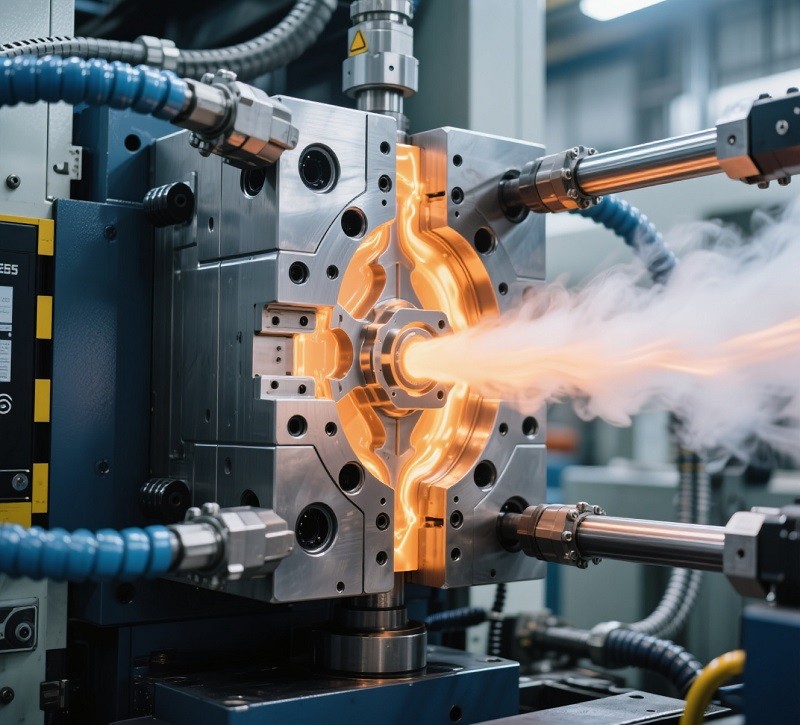
From Digital Model to Physical Part
The entire SLM process begins with a digital file.
3D CAD Model Creation: Everything starts with a 3D model created in Computer-Aided Design (CAD) software. As a supplier, we receive these files from our clients. It is crucial that this model is a "watertight" or solid body, meaning it has no holes or gaps in its geometry.
File Export and Preparation: The solid model is typically exported in a standard 3D printing format like STL (Standard Tessellation Language) or 3MF. In our preparation phase, we orient the model on the virtual build plate to optimize for print quality, minimize the need for support structures, and reduce residual stress. This orientation is a critical step that leverages our expertise to ensure a successful build.
Slicing the Model: The prepared 3D model is then loaded into specialized "slicing" software. This program virtually cuts the model into hundreds or thousands of thin, horizontal layers—each layer typically ranging from 20 to 100 microns thick. The slicer generates a file containing precise instructions for the SLM machine, dictating the laser's path for each individual layer. This process turns the static geometry of the model into a set of machine-readable commands that will guide the physical printing process layer by layer.
The Role of the Powder Bed and Laser
This stage is where the physical creation begins.
Powder Deposition: The build process starts inside the machine's build chamber. A recoater blade or roller spreads an extremely thin, uniform layer of fine metal powder across the build platform. The consistency and thickness of this powder bed are crucial for the quality of the final part.
Selective Laser Melting: Once the powder is in place, a high-power laser (often a ytterbium fiber laser with hundreds of watts of power) is directed by scanning mirrors. Following the path dictated by the sliced digital file, the laser's focused energy selectively melts the powder particles in the specified areas for that layer. The laser energy is intense enough to create a molten pool, fully fusing the material.
Layer-by-Layer Building: After the cross-section of a layer is completely scanned and solidified, the build platform lowers by the precise thickness of one layer. The recoater then passes over the surface again, depositing a fresh layer of powder on top of the previously fused one. The laser then melts the next layer, fusing it to the one below it. This cycle—lower, recoat, melt—is repeated thousands of times until the entire part is built up from the powder bed. The unused powder in the bed provides support to the structure as it is being built.
Inert Gas Chamber and Support Structures
To ensure part quality and structural integrity, two other elements are fundamental to the SLM process: the controlled atmosphere and the use of support structures.
Inert Gas Chamber: The entire build process takes place inside a sealed chamber filled with an inert gas, typically argon or nitrogen. This is critical because at the high temperatures required to melt metal, the material would otherwise react with oxygen in the air, a process known as oxidation. Oxidation can compromise the chemical properties and structural integrity of the final part. The inert atmosphere prevents this, ensuring the purity and performance of the metal. Furthermore, a constant flow of this gas across the build area helps to clear away soot and spatter generated during melting, providing the laser with a clear path to the powder bed.
Support Structures: Unlike some polymer 3D printing where loose powder provides sufficient support, SLM requires dedicated support structures for several reasons. These structures, printed from the same metal powder as the part itself, are essential for:
- Anchoring the Part: They firmly weld the component to the build plate, preventing warping or shifting due to the significant thermal stresses that develop during the rapid heating and cooling cycles.
- Supporting Overhangs: They provide a foundation for geometrical features with steep angles (typically over 45 degrees) or those that extend into open space, preventing them from collapsing or deforming.
- Heat Dissipation: Supports act as a heat sink, drawing thermal energy away from the part and into the build plate. This helps to manage the temperature gradients and reduce the risk of internal stresses and distortions.
While necessary, these supports must be carefully designed to be effective yet easy to remove during post-processing. As a supplier, optimizing support strategy is a key part of our service to balance part quality with material use and finishing time.
SLM vs. Other Powder Bed Fusion Technologies: Our View as a 3D Printing SLM Parts Supplier
Navigating the terminology of metal additive manufacturing can be confusing, as different names are often used for similar processes. From our position as a hands-on supplier, here's how we differentiate SLM from other key powder bed fusion (PBF) technologies.
SLM vs. SLS: Key Distinctions
The most fundamental difference between Selective Laser Melting (SLM) and Selective Laser Sintering (SLS) lies in the materials they use and the degree to which that material is heated.
Process and Material State:
- SLM is used exclusively for metals. It employs a high-powered laser to fully melt the metal powder, raising it to its liquid state. This complete melting is what allows the particles to form a solid, homogeneous part with very high density and strength.
- SLS, on the other hand, is primarily used for polymer powders, such as nylon. It uses a laser to sinter the powder, meaning it heats the particles to a point where their surfaces fuse together on a molecular level without reaching a full liquid state.
Part Properties and Applications:
- Because SLM parts are fully melted, they achieve near-100% density and exhibit mechanical properties comparable to wrought metals, making them ideal for high-strength, functional end-use components.
- SLS parts, due to the sintering process, may retain a degree of porosity and generally have lower strength compared to their fully melted counterparts. They are excellent for functional prototypes, complex plastic parts, and low-volume production runs where the strength of metal is not required.
Process Requirements:
- SLM requires more energy due to the higher melting temperatures of metals and necessitates a controlled inert-gas atmosphere.
- SLS operates at lower temperatures and typically does not require the same level of atmospheric control, which can make the process faster and more cost-effective for plastics.
Here is a table summarizing the key distinctions:
| Feature | Selective Laser Melting (SLM) | Selective Laser Sintering (SLS) |
|---|---|---|
| Material Used | Metal powders (Titanium, Aluminum, Stainless Steel, etc.) | Primarily Polymer powders (Nylon, TPU, etc.) |
| Physical Process | Fully melts the powder into a liquid state | Sinter (fuses) powder particles without complete melting |
| Part Density | Very high (typically >99.7%) | Lower than SLM, may have some porosity |
| Mechanical Strength | Excellent, comparable to forged or cast parts | Good for a polymer, but lower than solid metal |
| Typical Use Cases | High-strength end-use metal parts, medical implants, aerospace components | Functional prototypes, complex plastic parts, jigs and fixtures |
| Support Structures | Required to anchor the part and manage heat | Not required (un-sintered powder acts as support) |