What are the Advantages of Custom Metal Fabrication for Industrial Machinery Custom Parts Suppliers?
- Share
- Issue Time
- Jan 30,2026
Summary
Explore the key benefits of custom metal fabrication for industrial machinery suppliers: precision, durability, cost efficiency, compatibility, and material flexibility.
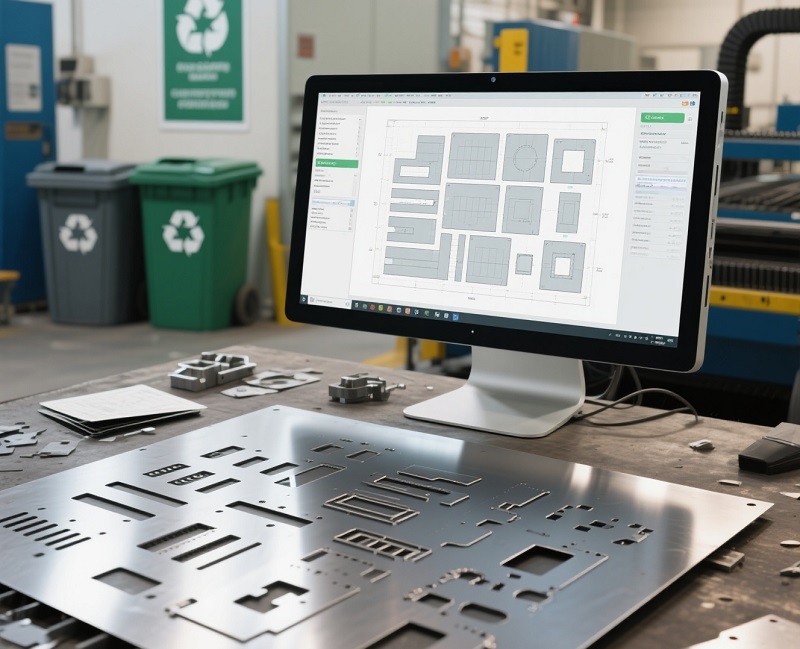
As an Industrial Machinery Custom Parts Supplier, we often get asked about the best ways to ensure our clients get exactly what they need. One answer consistently rises to the top: custom metal fabrication. It's revolutionizing how industrial machinery operates and how parts are delivered.
Gone are the days when off-the-shelf components were the only option. Today, custom metal fabrication offers unparalleled precision, durability, and cost-effectiveness for industrial machinery. We’re here to show you why it’s a game-changer for Industrial Machinery Custom Parts Suppliers.
Why Custom Metal Fabrication is a Game-Changer for Industrial Machinery Custom Parts Suppliers: Precision and Perfect Fit
In the industrial machinery sector, there is no room for error. The slightest misalignment or deviation from specifications can lead to operational inefficiencies, costly downtime, or even catastrophic failures. This is where the meticulous nature of custom metal fabrication truly shines, offering a level of precision that standardized parts simply cannot match. By creating components tailored to the exact needs of a machine, suppliers can guarantee a perfect fit and optimal functionality every time.
Achieving Exact Specifications Every Time
The core advantage of custom metal fabrication lies in its ability to produce parts that meet the strictest standards of accuracy and consistency. Unlike mass-produced components, which are designed for general use, custom parts are engineered and manufactured to specific dimensions, tolerances, and material properties. This process begins with a detailed design, often created using Computer-Aided Design (CAD) software, which allows engineers to model parts with exacting detail.
This precision-driven approach ensures that every component fits seamlessly into its intended assembly, eliminating gaps or misalignments that could compromise the final product's functionality and durability. For industries like aerospace, automotive, and heavy machinery, where even the smallest deviation can result in costly malfunctions or safety concerns, this level of accuracy is not just beneficial—it's essential. The ability to define and adhere to tight tolerances—the allowable variation in a part's dimensions—is a hallmark of quality custom fabrication. This meticulous attention to detail guarantees that every part functions precisely as intended within the larger mechanical system.
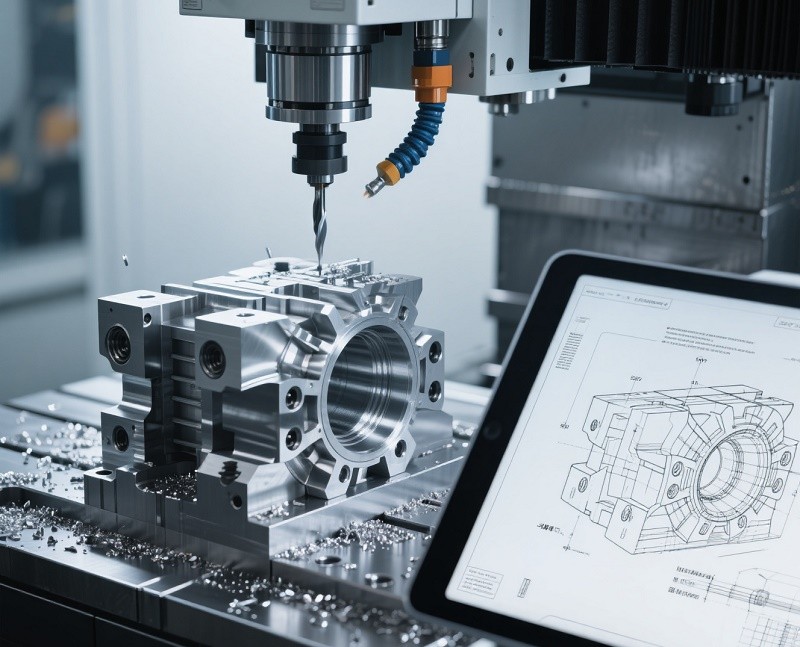
Leveraging Advanced Manufacturing Methods for Industrial Machinery Custom Parts
Achieving such high precision is made possible by a suite of advanced manufacturing technologies. These methods transform raw metal into complex components with unparalleled accuracy and repeatability. The integration of these technologies is a cornerstone of modern fabrication, enabling the creation of intricate designs that were once impossible to produce.
Key technologies include:
- Computer Numerical Control (CNC) Machining: CNC machines are the workhorses of precision fabrication. They use computer-guided tools to perform complex cutting, milling, and drilling operations with incredible accuracy, following digital instructions to produce parts that meet exact specifications.
- Laser Cutting and Water Jet Cutting: These technologies use focused energy—either a high-powered laser or a high-pressure stream of water mixed with an abrasive—to cut metal with exceptional precision. They are ideal for creating intricate shapes and patterns with clean edges, minimizing material deformation and ensuring high-quality finishes.
- Advanced Welding Technologies: Modern welding techniques, such as laser welding and friction stir welding, create strong, durable bonds between metal components. These methods offer superior precision and control, ensuring the structural integrity of the final assembly.
- Additive Manufacturing (3D Printing): Also known as 3D printing, this technology builds parts layer by layer from a digital model. It is revolutionizing prototyping and the production of complex geometries, allowing for innovative designs and rapid iteration.
By leveraging these advanced methods, custom parts suppliers can produce high-quality, reproducible components, ensuring that every part is a perfect replica of the last, which is critical for large-scale production runs and maintaining consistent quality.
Durability and Longevity for Industrial Machinery Custom Parts Suppliers
Industrial machinery operates in some of the most demanding environments imaginable, subject to heavy loads, constant vibration, extreme temperatures, and corrosive elements. In this context, the durability of each component is not a luxury but a fundamental necessity. Custom metal fabrication provides a distinct advantage by allowing for the creation of parts specifically engineered to withstand these harsh conditions, leading to enhanced longevity and a superior return on investment.
Crafting End Products that Endure
The durability of a fabricated part is directly tied to the precision of its manufacturing process. When components are cut, bent, and assembled with exact accuracy, they form stronger bonds and exhibit greater structural integrity. Poorly fitting or misaligned parts can create weak points, leading to premature wear and failure under stress. Custom fabrication minimizes these risks by ensuring every part fits perfectly, distributing loads evenly and reducing stress on individual components. As a result, custom-fabricated parts are inherently more robust and can be expected to have a long service life, often lasting between 15 and 40 years or even longer, depending on the material and application.
Furthermore, the fabrication process itself can include treatments that enhance durability. Surface finishes such as powder coating, galvanizing, or anodizing add a protective layer that shields the metal from corrosion, moisture, UV radiation, and chemical exposure. Powder coating, for example, is known to be more durable and less prone to cracking than traditional wet paint, significantly extending the component's lifespan, especially in harsh industrial settings.
The Role of Alloy Selection in Enhancing Strength
One of the most significant advantages of custom fabrication is the freedom to choose the ideal material for a specific application. Unlike off-the-shelf parts, which are often made from standard, lower-quality metals to reduce costs, custom components can be crafted from specialized alloys selected for their unique properties.
The selection process is a critical engineering decision that balances factors like strength, corrosion resistance, weight, and thermal stability.
Common Material Choices and Their Benefits:
| Material/Alloy | Key Properties | Ideal Industrial Applications |
|---|---|---|
| Stainless Steel | High corrosion resistance, strength, and hygiene. | Food processing equipment, medical devices, chemical processing plants. |
| Carbon Steel | Excellent tensile strength and wear resistance. | Structural frames, machine housings, gears, and high-stress components. |
| Aluminum | Lightweight, good strength-to-weight ratio, corrosion resistant. | Aerospace components, automotive parts, and applications where weight is a critical factor. |
| Titanium | Exceptional strength-to-weight ratio, corrosion resistance, and high-temperature stability. | Aerospace, high-performance engines, and marine applications. |
| Alloy Steels | Enhanced properties like hardness, toughness, and heat resistance through added elements (e.g., chromium, molybdenum). | High-load gears, shafts, and tooling subjected to extreme conditions. |
| Abrasion-Resistant (AR) Plate | Extremely hard and tough, designed to withstand high-impact and abrasive wear. | Mining equipment, crushers, and loaders handling abrasive materials. |
By working with an experienced fabricator, a supplier can choose a material that is precisely suited for the operational environment. This tailored approach ensures that the final product not only performs reliably but also endures for years, reducing the frequency of maintenance and replacements and ultimately delivering superior value.
Cost Efficiency and Waste Reduction for Industrial Machinery Custom Parts Suppliers
While it might seem counterintuitive, opting for custom metal fabrication can be a more cost-effective strategy in the long run compared to purchasing standard, off-the-shelf parts. Although custom work may have a higher initial investment due to design and tooling, the long-term savings in material, labor, and maintenance often outweigh the upfront expense. This is achieved through meticulous planning, optimized material use, and the elimination of costly errors.
Optimizing Material Use and Sourcing
A primary source of cost and waste in manufacturing is inefficient material usage. Custom metal fabrication addresses this issue head-on through advanced planning and technology. Fabricators employ sophisticated software, such as CAD and nesting programs, to arrange part layouts on raw material sheets in the most efficient way possible. This "nesting" process minimizes the amount of scrap metal (offcuts), ensuring that the maximum number of parts is produced from a single sheet.
The benefits of material optimization include:
- Reduced Material Costs: By using less raw material, overall project expenses are significantly lowered.
- Lower Waste Disposal Fees: Less scrap means lower costs associated with waste management and recycling.
- Enhanced Sustainability: Minimizing waste is not just economical but also environmentally responsible, aligning with modern green manufacturing principles.
Furthermore, the design simplification inherent in custom fabrication can reduce complexity by using fewer parts or fewer bends, which also contributes to material savings.
Minimizing Rework and Redesign Costs
Errors and inaccuracies in manufacturing are a major drain on resources. One of the most significant financial advantages of custom fabrication is getting the part right the first time. The precision-driven process ensures that components meet exact specifications, guaranteeing a perfect fit and function upon delivery.
This approach drastically reduces costs associated with:
- Rework: Ill-fitting off-the-shelf parts often require on-site modifications, which consume valuable time and labor. Custom parts eliminate this need.
- Redesigns: When a standard part fails to perform, it can lead to costly redesign processes. The Design for Manufacturing (DFM) principle, often applied in custom fabrication, addresses potential manufacturing issues early in the design stage, preventing expensive downstream corrections. According to DFM expert David Anderson, skillful improvements at the design phase are ten times more effective than at the manufacturing stage.
- Downtime: In an industrial setting, time is money. Waiting for replacement parts or dealing with component failures leads to lost productivity. Custom fabrication provides reliable parts that reduce the frequency of repairs and maintenance, ensuring smoother, more continuous operations.
By investing in custom-made components, suppliers provide their clients with a lean, optimized solution that eliminates unnecessary features and materials, ensuring they only pay for what they truly need.
Enhanced Compatibility and Adaptability for Industrial Machinery Custom Parts Suppliers
One of the most persistent challenges in industrial maintenance and upgrades is ensuring that new components work harmoniously with existing machinery. Off-the-shelf parts, designed for broad applications, often create compatibility issues that can lead to compromised performance or require awkward modifications. Custom metal fabrication elegantly solves this problem by creating parts that are specifically designed for seamless integration, ensuring both backward compatibility and future adaptability.
Seamless Integration with Existing Hardware
When a part in a legacy machine fails, finding an exact OEM replacement can be difficult, time-consuming, or even impossible if the part is discontinued. Custom fabrication provides an ideal solution by enabling the creation of a replacement part tailored to fit the equipment's current condition and specifications. This ensures a perfect fit without the need to modify the existing machinery, which could void warranties or introduce new operational risks.
This tailored approach is crucial for:
- Retrofitting and Upgrades: Custom components can be designed to bridge the gap between older machinery and newer technology, allowing for targeted upgrades that improve efficiency, safety, or functionality without requiring a complete system overhaul.
- Complex Assemblies: In intricate systems where multiple components must work in perfect synchrony, custom parts guarantee that every piece aligns perfectly, avoiding the functional issues that arise from even minor misalignments.
- Specialized Applications: When machinery operates in unique conditions or performs a highly specialized task, standard parts may not suffice. Custom fabrication allows for the creation of components that are perfectly suited to these unique operational demands.
By delivering parts that integrate flawlessly, suppliers help their clients minimize downtime and avoid the costly trial-and-error process often associated with standard components.
Solutions Tailored for Adaptive Industrial Applications
The industrial landscape is in constant evolution, driven by new technologies and shifting market demands. Machinery needs to be adaptable to remain competitive. Custom fabrication supports this need for flexibility by providing solutions that can be modified or redesigned as operational requirements change.
For example, a custom-fabricated machine frame can be designed with future modifications in mind, such as adding new modules or sensor mounts. This "future-proofing" approach allows businesses to adapt their equipment over time, extending its useful life and maximizing their initial investment. Customization empowers engineers to think beyond the original OEM specifications, incorporating enhancements that can improve drainage, reinforce stress points, or simplify maintenance access.
This adaptability is a key advantage, as it allows for a proactive rather than reactive approach to maintenance and upgrades. Instead of simply replacing a broken part, suppliers can collaborate with clients to develop an improved component that enhances performance and prevents future failures. This transforms a simple parts supplier into a valuable engineering partner, capable of delivering innovative solutions for adaptive industrial applications.
The Power of Oversight and Communication for Industrial Machinery Custom Parts Suppliers
Beyond the tangible benefits of precision and durability, the custom metal fabrication process offers a significant strategic advantage: a framework built on control, collaboration, and communication. This transparent approach ensures that the final product not only meets technical specifications but also aligns perfectly with the client's expectations and project goals. For a custom parts supplier, this collaborative dynamic is key to building trust and delivering unparalleled satisfaction.
Maintaining Control from Design to Production
Custom fabrication provides complete oversight of the entire product lifecycle, from the initial concept to the finished part. This end-to-end control is a stark contrast to the opaque supply chains often associated with off-the-shelf components. The process typically begins with a detailed design phase where fabricators, engineers, and clients collaborate to refine the blueprints.
This collaborative design process, sometimes called "steel detailing," ensures that the part is optimized for manufacturability without sacrificing strength or integrity. The fabricator's expertise is leveraged to make necessary adjustments, ensuring the design can be produced efficiently and effectively. Once the design is finalized, it moves into production, but the oversight doesn't stop there. Rigorous quality control measures are implemented at every stage—cutting, shaping, welding, and finishing—to inspect for defects and verify that all dimensions and tolerances meet the approved specifications. This meticulous control guarantees a high-quality outcome and minimizes the chance of errors, delays, or budget overruns.
Collaborative Processes Ensuring Client Satisfaction
Effective communication is the cornerstone of any successful custom fabrication project. Unlike purchasing a standard part from a catalog, custom fabrication is a service-oriented process that fosters a true partnership between the supplier and the client. This collaborative environment allows for a continuous feedback loop where ideas can be exchanged, concerns can be addressed, and expectations can be managed in real-time.
Key benefits of this collaborative approach include:
- Transparency and Trust: Open communication about project progress, potential challenges, and decision-making builds trust and confidence. Clients are kept in the loop, which reinforces the reliability of the partnership.
- Shared Expertise: Collaboration allows for the fusion of different skill sets. The client brings deep knowledge of the application and operational needs, while the fabricator provides expertise in materials, manufacturing techniques, and design for manufacturability. This synergy leads to more innovative and effective solutions.
- Flexibility and Problem-Solving: When unexpected issues arise, a strong collaborative relationship makes it easier to find solutions quickly. Both parties can work together to adjust schedules or designs as needed, ensuring the project stays on track.
By actively engaging clients throughout the process, industrial machinery custom parts suppliers do more than just deliver a product; they deliver a service that guarantees the final component is precisely what the client envisioned and required, fostering long-term relationships built on mutual success.
In conclusion, the advantages of custom metal fabrication for Industrial Machinery Custom Parts Suppliers are clear and substantial. This approach delivers unparalleled precision and a perfect fit, ensuring components function flawlessly within existing systems. By enabling the selection of superior materials and specialized alloys, it produces parts with exceptional durability and longevity, capable of withstanding the harshest industrial environments. Furthermore, custom fabrication proves to be a cost-effective solution by optimizing material usage, drastically reducing waste, and minimizing the need for costly rework and redesigns.
As an Industrial Machinery Custom Parts Supplier, embracing custom fabrication is about more than just manufacturing parts; it is about delivering superior value. It means providing clients with innovative, high-performance products that meet their exact needs, enhancing compatibility and adaptability for the long term. This commitment to quality and collaboration not only fosters stronger client relationships but also solidifies a supplier's reputation as a trusted and indispensable partner in the industry. We encourage you to share this article and join the conversation on how custom solutions are shaping the future of industrial machinery.