What Factors Impact CNC Machined Part Costs for Every Manufacturer?
- Share
- Issue Time
- Mar 19,2026
Summary
The cost of CNC machined parts is influenced by several critical factors, making it a complex area for product development and manufacturing professionals. Material selection plays a significant role, not only in raw material cost but also in machinability. Engineering plastics are generally cheaper than metals like aluminum, which in turn are more cost-effective than harder steels or exotic materials like titanium and Inconel. The latter, while offering superior performance for demanding applic
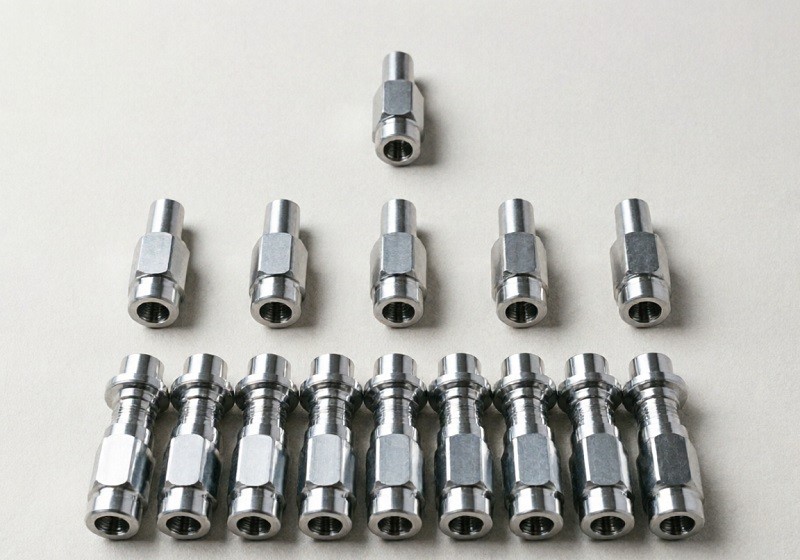
As an experienced CNC Machining Parts Manufacturer, I often get asked why the cost of CNC machined parts varies so much. It's a common question, and understanding the factors that influence pricing is crucial for anyone involved in product development and manufacturing. CNC machining is a core component of modern manufacturing, offering incredible precision and repeatability for a wide range of industries. However, the exact cost can be a moving target, influenced by an array of technical and logistical elements. Let's delve into what truly impacts the cost of CNC machined parts.
Material Selection: A Primary Cost Driver for Any CNC Machining Parts Manufacturer
The choice of material is one of the most significant factors driving the final cost of a CNC machined part. It influences not only the raw expense of the stock but also the entire machining process, from cutting speed and tool wear to the potential for waste. A careful evaluation of material properties against the project's functional requirements and budget is the first step toward cost-effective manufacturing.
Raw Material Costs and Availability
The baseline price of the raw material itself is a foundational cost component. Market fluctuations, supply chain disruptions, and geopolitical events can all contribute to the volatility of material prices. A material's availability in standard stock forms like bars, sheets, or plates also plays a crucial role; less common materials or custom sizes may lead to higher costs and longer lead times.
Metals vs. Plastics: Understanding the Price Spectrum
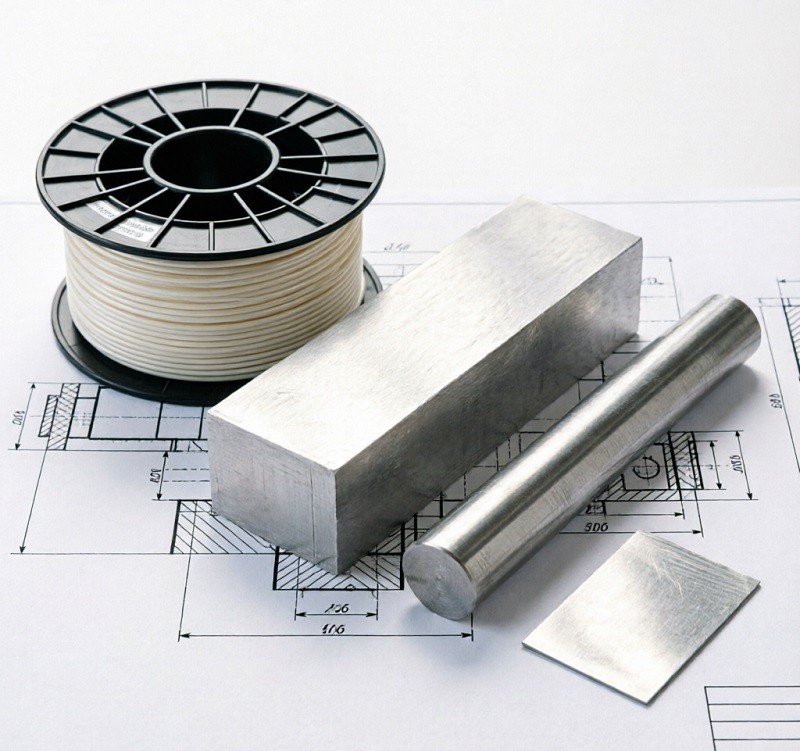
There is a broad cost spectrum when comparing metals and plastics for CNC machining. Generally, engineering plastics like ABS, Nylon, or Delrin tend to be less expensive than most metals, making them a cost-effective choice for prototypes or parts not subjected to heavy loads. Among metals, aluminum alloys like 6061 are very popular due to their relatively low cost and excellent machinability.
As requirements for strength and durability increase, so does the price. Steels and stainless steels (e.g., 304 or 316) are typically more expensive than aluminum. The cost difference isn't just in the material itself; harder metals require more robust tooling and often slower machining speeds, which increases production time and expense.
Here is a general comparison of common CNC materials, ordered by typical cost and machinability:
| Material Category | Examples | Relative Cost | Key Characteristics |
|---|---|---|---|
| Standard Plastics | ABS, Delrin (POM), Nylon | Low | Lightweight, cost-effective, good for prototypes and low-stress applications. |
| Standard Metals | Aluminum (6061), Brass | Low to Medium | Excellent machinability, good strength-to-weight ratio, corrosion resistant. |
| Engineering Metals | Carbon Steel, Stainless Steel (303, 304) | Medium | High strength, durable, good corrosion resistance (stainless). Machining can be slower than aluminum. |
| High-Performance Plastics | PEEK, Ultem | High | Excellent thermal and chemical resistance, high strength for a plastic. |
| Exotic & High-Performance Metals | Titanium, Inconel | Very High | Superior strength-to-weight ratio, extreme temperature and corrosion resistance. Difficult and expensive to machine. |
Exotic Materials: When Performance Dictates Price
For demanding applications in industries like aerospace, medical, and defense, performance is non-negotiable. This often necessitates the use of "exotic" materials such as titanium alloys, Inconel, or high-performance plastics like PEEK. These materials offer exceptional properties—like extreme heat resistance, biocompatibility, or an incredible strength-to-weight ratio—but come with a premium price tag.
The high cost of exotic materials is twofold: the raw material itself is expensive due to complex refinement processes, and machining them is significantly more challenging. Their inherent properties, such as high hardness and poor thermal conductivity, lead to accelerated tool wear and require specialized equipment and expertise.
Machinability: Beyond the Price Tag
Machinability refers to the ease with which a material can be cut, and it's a critical factor that directly impacts machining time, tool life, and ultimately, cost. A material with high machinability can be processed quickly with less wear on cutting tools, resulting in lower labor and tooling costs. Conversely, materials with low machinability require slower cutting speeds, more frequent tool changes, and can generate excessive heat, all of which drive up the price.
Hardness and Tool Wear: Impact on Machining Time and Tools
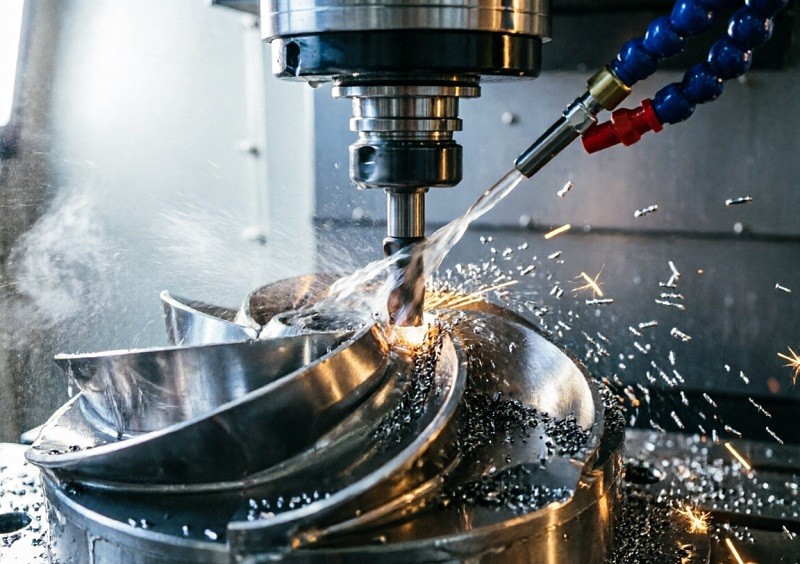
A material's hardness is a primary determinant of its machinability. Harder materials, like tool steels or titanium, resist cutting forces more effectively, which generates increased friction and heat. This leads to rapid tool wear, necessitating more frequent tool replacements and increasing operational costs. For example, machining a hardened steel part might require cutting speeds and feed rates that are significantly slower than those for a softer material like aluminum, directly increasing the machine time per part.
The abrasiveness of a material also contributes to tool wear. Some materials contain hard particles that act like sandpaper on the cutting tool's edge, dulling it quickly and compromising the surface finish and dimensional accuracy. To combat this, manufacturers may need to use advanced cutting tools with specialized coatings, which adds to the upfront tooling cost but can improve long-term efficiency.
Specialized Requirements: Handling Challenging Materials
Machining difficult materials isn't just about slowing down the process; it often requires a completely different strategic approach. Materials like Inconel are known for work-hardening rapidly during machining, meaning the area being cut becomes harder, making subsequent passes even more difficult. Titanium's low thermal conductivity causes heat to build up in the tool and workpiece rather than being carried away by the chips, which can damage both the tool and the part.
Successfully machining these materials requires:
- Specialized Tooling: Using tools made of carbide or with advanced coatings designed to withstand high temperatures and abrasion.
- Rigid Machine Setups: Utilizing machines with high rigidity and damping features to prevent vibrations (chatter) that can lead to poor surface finishes and tool breakage.
- Advanced Cooling Strategies: Employing high-pressure coolant systems to manage heat at the cutting zone and effectively evacuate chips.
- Expert Programming: Developing toolpaths that minimize work hardening and manage cutting forces effectively.
These specialized requirements add layers of complexity and cost, but they are essential for unlocking the high-performance benefits of these advanced materials.
Material Waste and Efficiency
The cost of a CNC machined part includes not just the material that ends up in the final product but also the material that is removed and becomes scrap (swarf). Efficient material utilization is key to controlling costs. This starts with selecting a raw stock size that is as close as possible to the final part dimensions, minimizing the volume of material that needs to be machined away. Designing parts that can be nested or cut from standard sheet or bar sizes can also significantly reduce waste. For expensive materials like titanium, where raw material can account for a large portion of the total cost, reducing waste through careful planning and optimization is particularly critical.
Design Complexity and Geometry: A Major Consideration for a CNC Machining Parts Manufacturer
Beyond material choice, the very shape and design of a part profoundly influence its manufacturing cost. As a rule of thumb, the more complex a part's geometry, the more expensive it will be to produce. Complex designs often require longer machining times, more sophisticated machinery (like 5-axis mills), multiple setups, and specialized tooling—all factors that add to the final price. Every feature on a CAD model translates to a machine movement, and unnecessary complexity can have a compounding effect on costs and lead times.
Intricate Features and Multi-Axis Machining
The complexity of a part is often defined by its features. Designs with intricate curves, sculpted surfaces, undercuts, or angled holes on multiple faces push the boundaries of standard 3-axis machining. While a 3-axis machine operates on the X, Y, and Z axes, it struggles with features that aren't accessible from the top. Machining these parts on a 3-axis machine requires multiple setups—manually re-fixturing the part for each new orientation. Each setup not only adds significant labor time and cost but also introduces a risk of positioning errors.
This is where multi-axis machining, particularly 5-axis CNC, becomes essential. A 5-axis machine adds two rotational axes, allowing the cutting tool to approach the workpiece from a wide array of angles in a single setup. This capability is a game-changer for complex geometries, making it possible to create highly intricate parts efficiently. However, the hourly rate for a 5-axis machine can be 1.5 to 3 times higher than a 3-axis machine due to the increased capital cost, maintenance, and programming expertise required. Despite the higher hourly rate, 5-axis machining can be more cost-effective for complex parts by drastically reducing setup times and improving accuracy.
Impact of Small Radii, Thin Walls, and Deep Cavities
Specific design features are notorious for driving up CNC machining costs. Understanding their impact is crucial for Design for Manufacturability (DFM).
Internal Radii and Corners: CNC milling tools are cylindrical and naturally create an internal radius. Designing a part with sharp, or near-sharp, internal corners is a common and costly mistake. To create a small radius, a smaller diameter tool must be used. These smaller tools are more fragile, must run at slower speeds, and can only take very light cuts, all of which dramatically increase machining time. True sharp internal corners are impossible with standard milling and require a secondary process like Electrical Discharge Machining (EDM), which adds another layer of cost and time. A good practice is to design internal radii to be at least 1/3 of the cavity's depth.
Thin Walls: While desirable for lightweighting, walls that are too thin are difficult to machine. They are prone to vibration (chatter), which leads to poor surface finishes and makes it hard to hold tight tolerances. This instability forces the machinist to slow down, taking multiple light passes to avoid deforming the part. A general guideline is to keep wall thickness above 0.8mm for metals and 1.5mm for plastics.
Deep Cavities/Pockets: Machining deep pockets is time-consuming as it requires the removal of a large volume of material. Furthermore, it poses a tooling challenge related to the "length-to-diameter" (L/D) ratio. A tool's cutting length is limited; a standard rule is that a cavity's depth should not exceed four times the tool's diameter. Machining deeper requires long, slender tools that are highly susceptible to deflection and vibration, compromising accuracy and surface finish. This high-risk operation must be done slowly, significantly increasing machine time.
Tolerances and Surface Finish Requirements
Tolerances and surface finish specifications are direct and significant cost drivers. While precision is a key benefit of CNC machining, over-specifying these requirements can lead to unnecessary expenses. Every tightening of a tolerance or refinement of a finish requires more time, more advanced processes, and more rigorous inspection.
Achieving Precision: Time and Cost Implications
Tolerances define the acceptable variation in a part's dimensions. A standard tolerance, such as +/- 0.005" (+/- 0.127mm), is relatively straightforward to achieve. However, tightening that tolerance can exponentially increase costs. Achieving a tolerance of ±0.005 mm might increase machining costs by 300-500% compared to a standard tolerance. This is because tighter tolerances demand slower machining speeds, more frequent and precise measurements, potential use of higher-precision machinery, and a higher scrap rate for parts that fall outside the narrow acceptable range. It's critical to conduct a functional analysis and specify tight tolerances only on the features where they are absolutely necessary for fit or function.
Post-Processing: An Additional Layer of Cost
The "as-machined" part is often not the final product. Post-processing or secondary operations are frequently required to meet surface finish, aesthetic, or functional requirements. Each of these steps adds to the total cost and lead time. Common post-processing services include:
- Surface Finishing: Processes like bead blasting, polishing, anodizing, and powder coating improve a part's appearance and corrosion resistance. Basic finishes are inexpensive, but more complex finishes like electroplating or manual polishing can significantly increase cost.
- Heat Treatment: This process alters the mechanical properties of a metal part, such as increasing hardness or reducing internal stress. It requires specialized furnace equipment and adds a significant step to the production workflow.
- Grinding: For parts requiring extremely tight tolerances and ultra-smooth surface finishes, grinding may be necessary after the initial machining.
Failing to consider these secondary operations during the design phase can lead to unexpected costs and delays. For instance, a design with intricate internal cavities might be very difficult or impossible to polish or plate uniformly.
Part Size and Machine Capability
The overall size of a part is a straightforward but often underestimated cost driver. Larger parts require larger blocks of raw material, which is a direct cost increase. More importantly, they necessitate the use of larger CNC machines. These large-format machines represent a higher capital investment, have higher hourly operating rates, and are less common, meaning there is less available capacity. The workholding and fixturing required to securely hold a large part are also more substantial and complex. Therefore, where possible, designing parts to fit within the work envelope of standard CNC machines can help manage costs.
Production Volume and Setup Costs: Economies of Scale for Your CNC Machining Parts Manufacturer
The relationship between production quantity and per-unit cost is one of the most critical dynamics in manufacturing. CNC machining is a prime example of where economies of scale come into play. While producing a single part can be quite expensive, the cost per part drops significantly as the production volume increases. This is because high initial setup costs can be spread across a larger number of units.
Setup and Programming Expenses
Before a single chip of material is cut, a considerable amount of preparatory work must be done. These initial, one-time costs are a major reason why small batches and prototypes are so expensive on a per-unit basis. These expenses include programming the CNC machine, designing and manufacturing any custom fixtures or workholding needed, and setting up the machine with the correct tools and materials.
Understanding Non-Recurring Engineering (NRE) Costs
The upfront expenses associated with preparing a new part for manufacturing are known as Non-Recurring Engineering (NRE) costs. These are one-time charges required to get a product from a design concept to the point where production can begin. NRE is the foundational investment needed to ensure a product can be manufactured consistently and at scale.
A typical NRE breakdown in CNC machining includes:
- CAD/CAM Programming: A skilled programmer must translate the 3D CAD model into a set of instructions (G-code) that the CNC machine can follow. More complex parts require more programming time.
- Fixture Design and Fabrication: Custom fixtures or jaws may be needed to hold the part securely and accurately during machining. This is a design and manufacturing project in itself.
- Tooling Selection and Setup: The right cutting tools must be selected, purchased, and loaded into the machine.
- First Article Inspection (FAI): The first part off the line must be rigorously inspected to ensure it meets all specifications. The creation of this initial piece and the quality assurance process are part of the NRE cost.
For a single prototype, the entire NRE cost is absorbed by that one part. For a production run of 1,000 parts, that same NRE cost is divided by 1,000, making its contribution to each unit's price much smaller.
Batch Size: The Cost Per Unit Dynamic
The inverse relationship between production volume and unit cost is a fundamental principle of manufacturing. As the batch size increases, the fixed setup costs are amortized over more parts, leading to a lower cost per piece. This effect is most dramatic at very small quantities; increasing an order from one to five pieces can cut the unit price by more than 50% in some cases. For high-volume production, the per-unit cost can be five to ten times lower than for a single part.
Prototypes vs. Large-Scale Production: Optimizing for Cost
The goals and cost structures for producing prototypes versus large-scale production are fundamentally different.
Prototypes (1-10 pieces): The primary goal is speed and design validation. The per-unit cost is high because the NRE costs are spread over a very small number of parts. Manufacturers often use general-purpose tooling and simpler setups to facilitate rapid iteration, as design changes are expected. Sometimes, a more affordable and easily machined material might be used for initial "form and fit" prototypes to keep costs down before committing to the final, more expensive production material.
Large-Scale Production (100s to 10,000s+): The focus shifts to consistency, repeatability, and cost efficiency. The significantly lower per-unit cost is achieved through economies of scale. This phase often justifies investment in optimized custom fixtures and specialized tooling that can reduce cycle times and ensure uniformity across thousands of parts. Bulk purchasing of raw materials also contributes to cost savings.
The chart below illustrates how the unit cost decreases as the production quantity rises, demonstrating the powerful effect of economies of scale.
| Quantity | Example Unit Cost (Aluminum) | Example Unit Cost (Stainless Steel) | Cost Reduction from 1x |
|---|---|---|---|
| 1 | $59.08 | $62.39 | 0% |
| 10 | $9.96 | $11.90 | ~83% |
| 100 | $4.44 | $5.97 | ~92% |
| 1000 | $3.17 | $4.38 | ~95% |
Note: These are illustrative costs. Actual prices vary based on geometry and other factors.
Leveraging Automation and Digital Processes
Automation is a key strategy for reducing production costs, especially in medium to high-volume manufacturing. Automated systems can operate 24/7 with minimal human intervention, dramatically increasing machine utilization and throughput. This is how automation impacts costs:
- Reduced Labor Costs: With automated robotic loaders and unloaders, a single operator can oversee multiple machines, reducing the labor cost per part.
- Faster Cycle Times: Automation eliminates the manual delays associated with loading/unloading parts and changing tools, leading to shorter production cycles.
- Increased Consistency: Programmed robotic systems perform tasks with unwavering precision, reducing the human error that can lead to scrap and rework.
- Reduced Setup Time: Advanced systems can streamline machine setup and changeovers, minimizing costly downtime between production runs.
By integrating automation, a CNC Machining Parts Manufacturer can significantly enhance efficiency, lower costs, and provide more competitive pricing, particularly for larger batch sizes.