What Defines High Quality CNC Machined Parts in Modern Manufacturing?
- Share
- Issue Time
- May 14,2026
Summary
Discover what defines high-quality CNC machined parts. Learn about precision, DFM, 5-axis tech, and quality control.
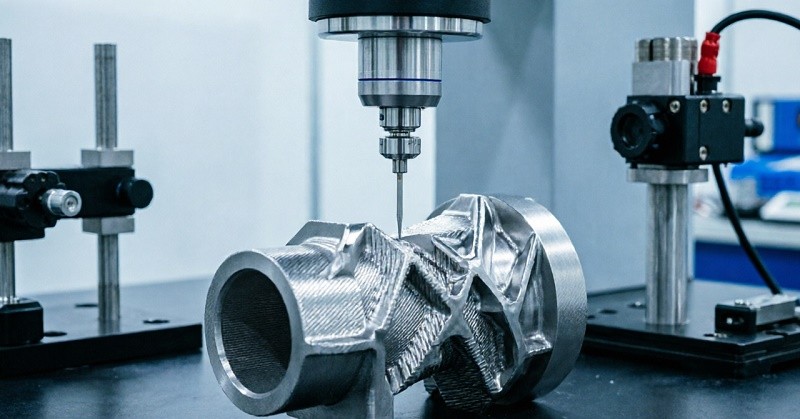
In modern manufacturing, producing high-quality CNC machined parts is crucial for countless industries, from aerospace to medical devices. Getting these parts right means ensuring precision, reliability, and efficiency, making "high quality" a non-negotiable benchmark. This article will delve into what truly defines excellence in CNC machining and how we consistently achieve it.
Defining Excellence: Precision and Specification Adherence in High Quality CNC Machined Parts
Excellence in CNC machining is fundamentally about precision and unwavering adherence to design specifications. It is a process where computer-controlled machines execute complex designs with microscopic accuracy, turning raw materials into functional components that meet rigorous industry standards. This level of precision is not a luxury but a necessity, especially in high-stakes sectors like aerospace, defense, and medicine, where even the slightest deviation can have significant consequences. The ability to consistently produce parts that match their intended design, both in dimension and function, is the true hallmark of a high-quality CNC machining operation. This commitment ensures product quality, enhances safety, and ultimately builds a reputation for reliability and excellence.
The Foundation: Strict Tolerances and Technical Drawings for High Quality CNC Machined Parts
The bedrock of any high-quality CNC machined part lies in two interconnected elements: strict tolerances and detailed technical drawings. Tolerances are the language of precision, defining the acceptable margin of error for any given dimension on a part. In industries where components must fit together and function flawlessly within complex assemblies, such as aircraft engines or medical implants, these tolerances are often measured in microns. Adhering to such tight tolerances ensures that each part is a near-exact replica of the last, guaranteeing interchangeability, performance, and safety. A part manufactured outside of its specified tolerance can lead to assembly issues, premature wear, or even catastrophic failure.
This is where technical drawings, often referred to as blueprints or engineering drawings, become indispensable. They are the universal language that communicates every critical detail of a part from the designer to the machinist. A comprehensive technical drawing goes beyond simple dimensions. It includes:
- Geometric Dimensioning and Tolerancing (GD&T): A symbolic language that precisely defines the allowable variations in a part's form, orientation, and location. GD&T eliminates ambiguity by specifying not just the size of a feature, but its relationship to other features, ensuring functional requirements are met.
- Material Specifications: Details the exact type and grade of material to be used, which is critical for the part's mechanical properties and performance.
- Surface Finish Requirements: Specifies the required texture and roughness of a part's surfaces, which can be crucial for friction, wear, and sealing.
- Other Manufacturing Notes: Includes any additional instructions, such as heat treatment, coatings, or specific inspection criteria.
By serving as the single source of truth, a detailed technical drawing ensures that machinists, engineers, and quality inspectors are all aligned, minimizing errors and guaranteeing the final product meets all design requirements with precision.
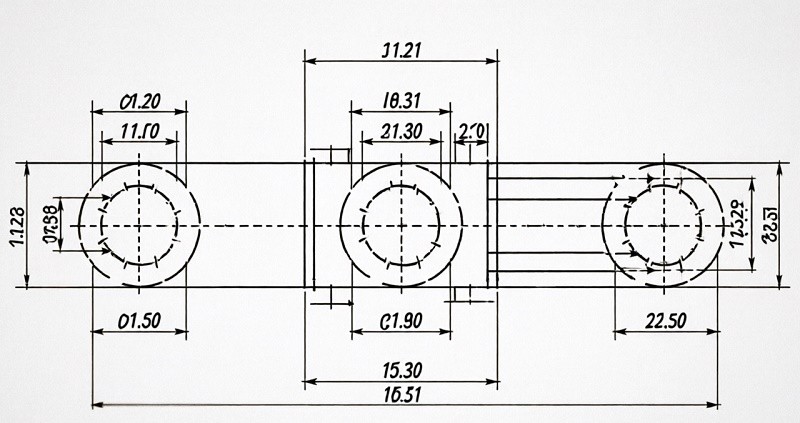
Before a single chip of metal is cut, the quality of a CNC machined part is already being determined in the digital realm. Computer-Aided Design (CAD) software is where the part is born, and the practices employed here are critical to its success. A well-prepared CAD model is the blueprint that guides the entire manufacturing process. When this digital foundation is solid, it translates directly into a physical part that is accurate, functional, and cost-effective.
The seamless transition from a digital model to a physical component is managed by Computer-Aided Manufacturing (CAM) software. This software interprets the CAD file and generates the specific instructions, known as G-code, that command the CNC machine's every move—from tool paths and rotational speeds to feed rates. Therefore, optimizing the CAD model from the very beginning is not just a best practice; it's a fundamental requirement for achieving high quality.
A crucial methodology that governs this stage is Design for Manufacturability (DFM). DFM is the proactive process of designing parts to be as easy and efficient to manufacture as possible. By applying DFM principles, engineers can eliminate features that are difficult, expensive, or impossible to machine, heading off potential problems long before they reach the shop floor. Research has shown that smart DFM choices can significantly reduce manufacturing costs and lead times.
Key DFM considerations for CNC machining include:
- Avoiding Sharp Internal Corners: Standard cutting tools are round, meaning they will always leave a radius in an internal corner. Designing for a specific, standard corner radius instead of a sharp edge simplifies machining and reduces the need for secondary processes.
- Managing Wall Thickness: Excessively thin walls are prone to vibration and warping during the machining process, which compromises accuracy. Designers should adhere to minimum wall thickness guidelines—generally around 1.5mm for plastics and 0.8mm for metals—to ensure stability.
- Standardizing Features: Using standard drill sizes, thread sizes, and tool radii whenever possible dramatically reduces costs and production time. Custom sizes require specialized, expensive tooling and longer setup times.
- Optimizing Tolerances: Tighter tolerances increase machining time, inspection requirements, and tool wear, all of which drive up costs. It's essential to apply tight tolerances only where they are functionally necessary and use standard, more relaxed tolerances elsewhere.
- Considering Tool Access: The design must allow cutting tools to reach all necessary surfaces. Deep, narrow cavities or complex features may require multiple setups or specialized 5-axis machines, increasing complexity and cost.
By integrating these practices, a CAD model becomes more than just a picture; it becomes an optimized set of instructions that paves the way for a smooth, efficient, and high-quality manufacturing process. The collaboration between thoughtful design and advanced machining is what ultimately defines excellence in modern production.## Advanced Technology and Expert Craftsmanship for High Quality CNC Machined Parts
High-quality CNC machined parts are the product of a powerful synergy between sophisticated technology and human expertise. While state-of-the-art machinery provides the capability for unprecedented precision and complexity, it is the skill and knowledge of experienced machinists and engineers that unlock this potential. This combination ensures that every component is not only manufactured to exact specifications but is also optimized for performance, durability, and cost-effectiveness. In modern manufacturing, neither technology nor craftsmanship can stand alone; their integration is the true engine of quality.
Leveraging State-of-the-Art Equipment and Automation for High Quality CNC Machined Parts
In the pursuit of perfect components, the role of state-of-the-art equipment and automation is fundamental. Modern CNC machining centers are marvels of engineering, designed to deliver exceptional accuracy, speed, and consistency. Upgrading to the latest equipment isn't just about keeping up with trends; it's a strategic investment in quality that provides a distinct competitive advantage.
A cornerstone of modern advanced machining is multi-axis technology, particularly 5-axis CNC machines. Traditional 3-axis machines move along the X, Y, and Z linear axes. 5-axis machines add two rotational axes, allowing the cutting tool to approach the workpiece from virtually any angle. This has several profound benefits:
- Machining Complex Geometries: 5-axis machines can create highly intricate shapes, deep pockets, and complex contours in a single setup. This was previously impossible or would have required multiple machines and time-consuming manual repositioning.
- Improved Accuracy and Consistency: By machining a part in a single setup ("Done-in-One"), the risk of human error from re-fixturing the part is eliminated. This ensures that all features are precisely located in relation to one another, leading to higher overall part accuracy.
- Better Surface Finishes: The ability to keep the tool tangent to the cutting surface results in a smoother finish. Shorter, more rigid cutting tools can be used, which reduces vibration and chatter, further enhancing the quality of the machined surface.
Alongside multi-axis capabilities, automation has revolutionized the CNC workshop. Automation in this context goes beyond simply programming a machine; it involves creating a seamless, efficient, and often continuously operating production system. Key automation technologies include:
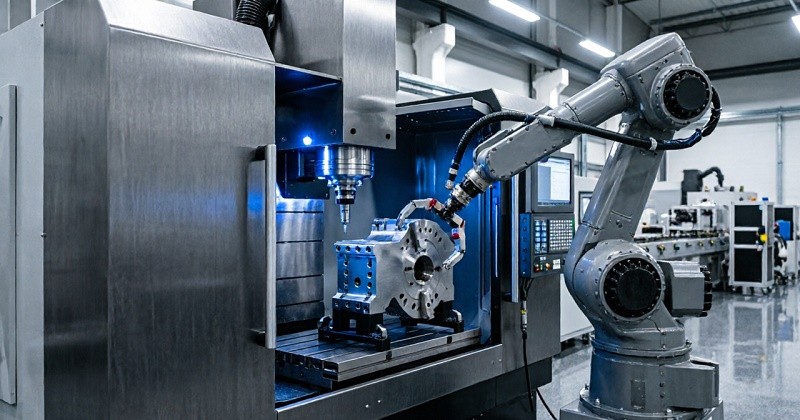
- Robotic Machine Tending: Robots are used to load raw material blanks into the machine and unload finished parts, a process known as machine tending. This allows for continuous, "lights-out" manufacturing, 24/7, dramatically increasing productivity and machine utilization.
- Automated Pallet Changers: These systems allow multiple workpieces to be pre-loaded onto pallets. When the machine finishes one part, it automatically swaps in the next pallet, minimizing idle time between cycles.
- In-Process Probing and Monitoring: Advanced sensors and probes can be integrated into the machine to measure parts during the machining cycle. This real-time feedback allows the machine to automatically compensate for tool wear or thermal variations, ensuring consistent quality from the first part to the last.
By leveraging these advanced technologies, manufacturers can achieve faster production speeds, higher precision, and unwavering consistency, all of which are defining characteristics of high-quality CNC machined parts.
The Essential Role of Materials and Expertise in High Quality CNC Machined Parts
While advanced machinery lays the groundwork, the ultimate quality of a CNC part is deeply influenced by two human-centric factors: intelligent material selection and the profound expertise of the machinist. These elements transform a technically precise operation into a true craft, ensuring the final component not only meets its specifications but also performs optimally in its intended application.
The Critical Decision of Material Selection
The choice of material is one of the most critical decisions in the entire manufacturing process, impacting everything from performance and durability to cost and machining time. A material's properties dictate how it will behave under the stresses of both the machining process and its final use. Key considerations include:
- Machinability: This refers to the ease with which a material can be cut. Materials with high machinability, like Aluminum 6061 or Brass C36000, can be processed quickly with minimal tool wear, leading to lower costs and faster production. In contrast, hard, tough materials like stainless steel or titanium have low machinability, requiring slower cutting speeds, specialized tooling, and active cooling to manage heat and prevent rapid tool degradation.
- Mechanical Properties: The intended function of the part governs the required mechanical properties. This includes tensile strength (resistance to being pulled apart), hardness (resistance to surface indentation), and fatigue resistance (ability to withstand cyclic loads). Selecting a material that is not strong enough can lead to part failure, while over-specifying a high-strength, expensive material can unnecessarily inflate costs.
- Thermal Properties: Thermal conductivity is crucial, especially for parts that will be exposed to heat. Materials with high thermal conductivity, like aluminum and copper, are excellent at dissipating heat. Thermal expansion is also critical; materials that expand significantly with temperature changes can cause issues in assemblies with tight tolerances.
- Corrosion and Chemical Resistance: For parts that will operate in harsh environments, selecting a material with inherent resistance to corrosion and chemical attack, such as stainless steel 316 or certain advanced plastics, is essential for longevity.
| Material Category | Common Examples | Key Characteristics & Applications | Machinability |
|---|---|---|---|
| Aluminum Alloys | 6061, 7075 | Lightweight, high strength-to-weight ratio, excellent thermal conductivity, corrosion resistant. Widely used in aerospace, automotive, and consumer electronics. | Excellent |
| Steel Alloys | Carbon Steel, Stainless Steel (304, 316) | High strength, durability, and hardness. Stainless steel offers excellent corrosion resistance. Used for structural components, industrial machinery, and medical devices. | Moderate to Difficult |
| Titanium Alloys | Grade 2, Grade 5 (Ti-6Al-4V) | Extremely high strength-to-weight ratio, excellent corrosion resistance, and biocompatible. Ideal for aerospace, medical implants, and high-performance racing parts. | Difficult |
| Copper & Brass | C110 Copper, C360 Brass | Excellent electrical and thermal conductivity. Brass is very easy to machine. Used for electrical connectors, plumbing fittings, and decorative hardware. | Good to Excellent |
| Engineering Plastics | Delrin (Acetal), PEEK, Nylon, Polycarbonate | Lightweight, corrosion resistant, good electrical insulators. PEEK offers high-temperature resistance. Used for gears, bearings, insulators, and medical prototypes. | Good to Excellent |
The Irreplaceable Value of Machinist Expertise
In an age of automation, it is easy to overlook the human element. However, the skill of the CNC machinist is what elevates a good part to a great one. A machinist is far more than a machine operator; they are a highly skilled professional who interprets complex designs, solves problems, and optimizes every stage of the production process.
The machinist's expertise is critical in several areas:
- Setup and Programming: While CAM software generates the initial G-code, an expert machinist will review and often refine it, optimizing tool paths for efficiency and quality. They are responsible for the physical setup, including securely fixturing the workpiece and precisely calibrating the tools—a step where attention to detail is paramount.
- Troubleshooting: Machining is a dynamic process. Tool wear, material inconsistencies, or unexpected vibrations can all arise. A skilled machinist can diagnose these issues in real-time and make the necessary adjustments to speeds, feeds, or tool selection to maintain quality without costly downtime.
- Process Optimization: Experienced machinists develop an intuitive understanding of how different materials and tools interact. They leverage this knowledge to push the boundaries of what the machine can do, finding the perfect balance between speed and precision to deliver the highest quality part in the most cost-effective manner.
Ultimately, CNC machining is a partnership between the machine and the machinist. The machine provides the raw capability, but the machinist provides the intelligence, experience, and adaptability required to consistently produce parts of the highest quality.## Comprehensive Quality Assurance and Maintenance for Sustained High Quality CNC Machined Parts
Achieving high quality in a single CNC machined part is one thing; sustaining that quality across thousands of components in a full production run is another challenge entirely. This requires a robust, systematic approach to quality assurance and a proactive maintenance culture. Comprehensive quality management is not just a final step but a continuous loop of inspection, verification, and process improvement that is woven into every stage of manufacturing. It ensures that every part that leaves the facility is a perfect reflection of the client's design and will perform reliably in its final application.
Rigorous Quality Control and Certifications for High Quality CNC Machined Parts
A rigorous quality control (QC) process is the backbone of any reputable CNC machine shop. It is a systematic approach to ensuring that every part meets the specified requirements for dimensions, tolerances, and surface finish. This process is not a single event but a multi-stage strategy designed to catch and correct deviations as early as possible.
The key stages of a robust QC process include:
- Incoming Material Inspection: Quality starts with the raw materials. Upon arrival, materials are inspected to verify they match the specified type, grade, and dimensions. Supplier certificates and test reports are reviewed to ensure compliance before the material ever reaches a machine.
- In-Process Inspection: This involves performing quality checks at critical points during the manufacturing process. Rather than waiting until a part is finished, machinists and QC personnel use calibrated instruments to measure features as they are being machined. This proactive approach allows for real-time adjustments, preventing an entire batch of parts from being produced with the same defect.
- First-Off Inspection: The very first part produced in a new setup undergoes an intensive and comprehensive inspection. This "first-off" part is scrutinized against every dimension and tolerance on the technical drawing to validate the machine setup and programming before proceeding with the full production run.
- Final Inspection: Once all machining operations are complete, a final, thorough inspection is performed. This is the last line of defense to ensure the product is 100% compliant with the customer's specifications before it is packaged and shipped.
To perform these inspections with the required precision, machine shops employ a range of metrology (measurement) tools:
- Basic Instruments: Calipers, micrometers, and height gauges are used for quick and accurate dimensional checks on the shop floor.
- Coordinate Measuring Machines (CMMs): This is the gold standard for precision inspection. A CMM uses a highly sensitive probe to touch points on a part's surface, capturing its geometry in three dimensions with micron-level accuracy. The CMM software then compares these measurements directly to the original CAD model and generates a detailed report, providing definitive verification of the part's compliance with all GD&T specifications.
Beyond these internal processes, industry certifications serve as an external validation of a company's commitment to quality. For CNC machining, the most important certifications include:
- ISO 9001:2015: This is the internationally recognized standard for a Quality Management System (QMS). An ISO 9001 certified company has demonstrated that it has well-documented, repeatable processes for ensuring consistent quality and is committed to continuous improvement.
- AS9100: This standard is specific to the aerospace industry and includes all the requirements of ISO 9001 plus additional, more stringent criteria for quality, safety, and traceability. For manufacturing critical aerospace components, AS9100 certification is often a requirement.
Working with a certified machine shop gives clients confidence that they are partnering with a supplier that has a proven, robust system for delivering high-quality parts reliably and consistently.
 Maintaining Tooling for Sustained High Quality CNC Machined Parts
Even the most advanced CNC machine is only as good as the cutting tools it uses. The condition of the tooling is a critical, yet often overlooked, factor in maintaining part quality. During machining, tools are subjected to immense friction, pressure, and heat, which leads to gradual wear. If not managed properly, tool wear can silently sabotage production, leading to a host of quality issues.
The Impact of Tool Wear on Part Quality
Tool wear is the gradual degradation and loss of material from a cutting tool's edge. This process is inevitable, but its rate depends on the material being cut, cutting speeds and feeds, and the use of coolants. As a tool wears, its effects on the machined part become increasingly pronounced:
- Reduced Dimensional Accuracy: A worn tool's cutting edge is no longer in the precise location the machine's program expects it to be. This deviation can cause critical features to be machined out of tolerance, rendering the part useless.
- Poor Surface Finish: A sharp tool cleanly shears material away, leaving a smooth surface. A dull, worn tool, however, tends to plow through or rub against the material, creating a rough, uneven finish and potentially introducing stresses into the part's surface.
- Increased Risk of Tool Breakage: As wear progresses, the cutting edge weakens. This can eventually lead to catastrophic tool failure, where the tool breaks mid-cut. This not only scraps the part being machined but can also cause significant damage to the machine itself, leading to costly repairs and extended downtime.
Strategies for Tool and Machine Maintenance
Sustaining high quality requires a proactive and systematic approach to both tool and machine maintenance. This moves beyond simply reacting to problems and instead focuses on preventing them. This is achieved through a robust preventive maintenance program.
A comprehensive preventive maintenance program includes scheduled tasks at daily, weekly, and monthly intervals:
- Daily Checks: These are quick but vital tasks performed by operators. They include wiping down critical surfaces, checking fluid levels (lubricants and coolants), and inspecting the tool holders and spindle for any buildup of chips or debris that could affect accuracy.
- Weekly Tasks: These tasks are more in-depth and may include cleaning motion components like linear rails, checking the tension of drive belts, and cleaning filters in the control cabinet to prevent electronics from overheating.
- Monthly and Quarterly Checks: These involve more detailed inspections and actions like replacing hydraulic fluids and filters, cleaning the coolant tank to remove sludge, and checking for wear on mechanical components like chuck jaws and seals.
The Critical Role of Calibration
A cornerstone of machine maintenance is calibration. Calibration is the process of verifying a machine's accuracy against a known standard and making adjustments as needed. Over time, due to thermal expansion and mechanical wear, a machine's positioning can drift. Regular calibration ensures that the machine's movements remain precise and that it can reliably hold the tight tolerances required for high-quality parts. This process is essential for maintaining accuracy, consistency, and repeatability across thousands of production cycles.
By combining meticulous tool management with a disciplined preventive maintenance and calibration schedule, a machine shop can ensure its equipment operates at peak performance. This commitment is fundamental to preventing defects, minimizing downtime, and consistently delivering CNC machined parts that meet the highest standards of quality.
Conclusion
Defining high-quality CNC machined parts involves a holistic approach, where excellence is not a single action but the result of a meticulously integrated system. It begins with a meticulous design process grounded in the principles of Design for Manufacturability (DFM) and is brought to life by the synergy of advanced multi-axis technology and the irreplaceable expertise of skilled machinists. The commitment to using the right materials for the job, understanding their unique properties and machinability, is fundamental to a part's ultimate performance and durability.
This commitment extends through to a rigorous, multi-stage quality control process, validated by internationally recognized certifications like ISO 9001. The use of high-precision inspection tools, especially CMMs, ensures that every component strictly adheres to its design specifications. Furthermore, a culture of proactive and continuous maintenance, including regular tool management and machine calibration, guarantees that this high standard of quality is sustained consistently over time.
Ultimately, achieving true high quality in CNC machining is about delivering reliable, performant parts that empower critical applications across every modern industry. It's a promise of precision, a testament to expert craftsmanship, and a dedication to a quality management system that ensures every component we produce meets the demanding standards required to drive innovation and success. If this article has provided valuable insight, we encourage you to share it with your network and join the conversation on what defines excellence in manufacturing today.