What Custom Aluminum Sheet Metal Manufacturers Offer for Aerospace
- Share
- Issue Time
- Mar 13,2026
Summary
Learn how a custom stamped metal parts supplier uses new extrusion processes for high-volume production. Discover hybrid manufacturing benefits, complex geometry capabilities, and cost-effective solutions for automotive and electronics.
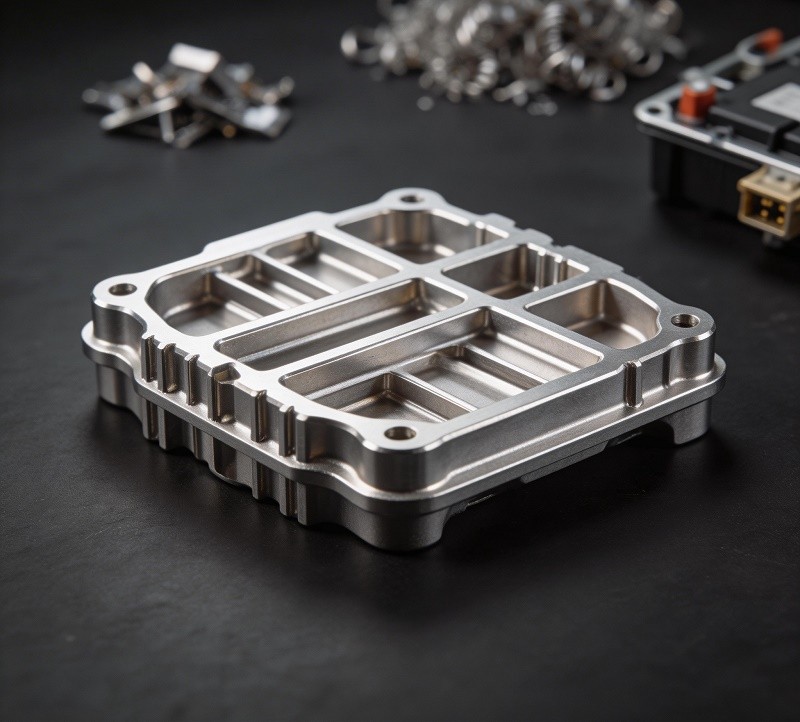
As we look up at the incredible machines soaring through our skies, it's easy to overlook the fundamental materials that make flight possible. For over a century, aluminum has been the unsung hero of aerospace, providing the perfect balance of strength and lightness. But what exactly goes into crafting the specialized aluminum sheet metal that forms the backbone of these marvels?
I'm here to explain how custom aluminum sheet metal manufacturers contribute to the aerospace industry, from the specific alloys they provide to the meticulous processes they employ. We'll explore why these manufacturers are so crucial and how they help shape the future of aviation and space exploration.
The Enduring Importance of Aluminum Sheet Metal Manufacturers in Aerospace
The story of aviation is inextricably linked with the story of aluminum. While early aircraft experimented with materials like wood and fabric, the industry quickly realized the unparalleled advantages that aluminum alloys offered. Today, from commercial airliners to deep-space probes, aluminum remains a cornerstone material, making up as much as 75-80% of a modern aircraft's structure. This enduring reliance highlights the critical role of specialized manufacturers who can produce aluminum sheet metal to the exacting standards of the aerospace sector.
Why Aluminum Remains the Go-To Material for Aircraft
The selection of materials in aerospace engineering is a delicate balancing act between performance, safety, and cost. Aluminum consistently emerges as the top choice because it delivers an optimal combination of properties that are difficult to find in any other single material. Its widespread use is a testament to its versatility and reliability in one of the world's most demanding industries.
Lightweight Strength and Fuel Efficiency
The single most important property of aluminum in aerospace is its high strength-to-weight ratio, also known as specific strength. At about one-third the density of steel, aluminum allows engineers to build robust and durable airframes that are also incredibly light. This lightweight nature is directly linked to an aircraft's performance and operational costs. A lighter aircraft requires less thrust to take off and less fuel to stay in the air, leading to significant improvements in fuel efficiency and a reduced environmental footprint. This reduction in mass also means the aircraft can carry a heavier payload, whether that be more passengers, cargo, or scientific equipment, making operations more cost-effective. For this reason, designing lightweight yet strong structures is a primary goal in aerospace, and aluminum alloys are the key to achieving it.
Durability and Corrosion Resistance
Aerospace vehicles operate in extreme and varied environments, from the humidity and salt spray of a coastal airport to the freezing, low-pressure conditions at high altitudes. Materials used in their construction must be able to withstand these challenges over decades of service. Aluminum naturally forms a thin, dense layer of aluminum oxide on its surface when exposed to air. This oxide layer acts as a protective barrier, making the metal highly resistant to corrosion and degradation from atmospheric conditions. This self-healing property is crucial for ensuring the long-term structural integrity and safety of the aircraft, minimizing costly maintenance and downtime associated with corrosion damage.
Formability and Cost-Effectiveness
From a manufacturing standpoint, aluminum is a highly versatile and cooperative material. Its inherent ductility allows it to be easily formed, machined, and shaped into the complex aerodynamic components required for modern aircraft, such as fuselage skins, wing panels, and intricate structural frames. This ease of fabrication, compared to harder materials like titanium, reduces manufacturing complexity and cost. While the initial cost of advanced alloys can be high, aluminum's abundance, recyclability, and the efficiency of its manufacturing processes make it a more cost-effective choice for the large-scale production of commercial and military aircraft. The ability to produce precise, complex parts reliably and affordably is a major reason why aluminum remains dominant, especially in the single-aisle jet market.
Historical Impact of Aluminum Sheet Metal in Aviation
Aluminum's journey in aviation is a long and storied one, beginning at the very dawn of powered flight and extending into the farthest reaches of space.
From the Wright Flyer to Modern Commercial Jets
While the Wright Brothers' 1903 Flyer was primarily built from spruce and fabric, it contained one critical aluminum component: the engine's crankcase. Unable to find a commercial engine that was light enough yet powerful enough for flight, they had one custom-built using a lightweight aluminum block. This marked aluminum's first, pivotal role in aviation.
As manufacturing processes made aluminum more affordable, its use in aviation grew exponentially. During World War I, designers began replacing wood with metal, and German engineer Hugo Junkers built the first all-metal aircraft in 1915 using an aluminum alloy. The "Golden Age of Aviation" between the wars saw all-metal aluminum designs, like the Ford Trimotor and Douglas DC-3, become the standard, prized for their streamlined efficiency and durability. World War II further accelerated this trend, with aluminum being so critical to the war effort for building aircraft that civilians were encouraged to recycle every last scrap. Today, high-strength aluminum alloys like the 2000 and 7000 series are staples in constructing everything from the fuselage and wings of a Boeing 747 to the frames of smaller private planes.
Aluminum's Role in Space Exploration
When humanity set its sights on the stars, aluminum was the natural choice to get there. The extreme demands of space—withstanding the immense stress of launch, operating in the vacuum of space, and enduring massive temperature swings—required a material that was both incredibly strong and exceptionally light. Aluminum fit the bill perfectly.
The pressurized sphere of Sputnik 1, the first artificial satellite launched in 1957, was made from an aluminum alloy. Throughout the Apollo program, aluminum alloys were used extensively in the command modules and even in the lunar rovers that explored the moon's surface. In fact, components on the Lunar Roving Vehicle, including its frame and floor panels, were made of aluminum. The massive external fuel tank of the Space Shuttle was built using an aluminum-lithium alloy, and most spacecraft today are composed of 50% to 90% aluminum alloys by weight. NASA continues to rely on and develop new aluminum alloys, such as those used for the International Space Station and the Orion spacecraft, which is designed for future missions to Mars.
Custom Aluminum Sheet Metal Manufacturers and Their Specialized Offerings
The transition from a raw block of aluminum to a precision-engineered aircraft component is a complex journey, and it all starts with custom aluminum sheet metal manufacturers. These suppliers are not just metal distributors; they are integral partners in the aerospace supply chain, providing highly specialized materials and fabrication services tailored to the industry's unique demands.
A Wide Range of Aerospace-Grade Aluminum Alloys
Not all aluminum is created equal. The aerospace industry relies on specific families of high-performance alloys, each with a unique chemical composition and set of mechanical properties tailored for different applications. Custom manufacturers are experts in supplying these specific grades, often categorized by a four-digit numbering system established by The Aluminum Association.
Understanding 2000, 6000, and 7000 Series Aluminum
The most crucial alloys in aerospace are the heat-treatable 2000, 6000, and 7000 series. Each series is defined by its primary alloying element, which dictates the material's core characteristics.
2000 Series (Al-Cu): The main alloying element in this series is copper. Alloys like 2024 aluminum are renowned for their high strength and excellent fatigue resistance, which is the ability to withstand repeated loading and unloading cycles without failing. This makes them ideal for structural components that experience significant stress during flight, such as fuselage structures and wing skins. The main drawback of this series is its relatively poor corrosion resistance due to the high copper content, which is often overcome by cladding the sheet with a layer of pure aluminum for protection.
6000 Series (Al-Mg-Si): This series uses magnesium and silicon as its primary alloying elements. The most well-known of this group is 6061 aluminum. It offers a good balance of moderate strength, excellent corrosion resistance, good machinability, and superior weldability. While not as strong as the 2000 or 7000 series alloys, its versatility makes it suitable for secondary structural applications like fuselage frames, extrusions for door and window frames, and landing mats.
7000 Series (Al-Zn): With zinc as its primary alloying element, this series boasts the highest strength of all common aluminum alloys. 7075 aluminum, for example, can achieve tensile strengths comparable to some steels, making it indispensable for highly stressed parts. Its exceptional strength-to-weight ratio makes it the top choice for critical components like wing spars, fuselage frames, and landing gear, especially in military aircraft where extreme performance is required. However, this high strength comes with tradeoffs, as 7000 series alloys can be more challenging to weld and are more susceptible to stress corrosion cracking if not treated properly.
Comparison of Common Aerospace Aluminum Alloys
| Alloy Series | Primary Elements | Key Strengths | Common Uses |
|---|---|---|---|
| 2000 Series (e.g., 2024) | Copper (Cu) | High strength, Excellent fatigue resistance. | Fuselage & wing skins, structural components. |
| 6000 Series (e.g., 6061) | Magnesium (Mg) & Silicon (Si) | Good versatility, excellent corrosion resistance, weldability. | Secondary structural frames, extrusions. |
| 7000 Series (e.g., 7075) | Zinc (Zn) | Highest strength, excellent stress resistance. | Wing spars, landing gear, high-stress frames. |
Specific Alloys by Application: Plates, Forgings, Profiles, Bars, and Tubes
Aerospace manufacturers require aluminum not just in specific alloys, but also in various forms to suit different manufacturing processes. Custom aluminum suppliers provide a comprehensive inventory of these forms:
- Plates and Sheets: These are the most common forms used for creating the "skin" of the aircraft, including the fuselage and wing surfaces. High-strength alloys like 2024-T3 and 7075-T6 are frequently supplied in sheet and plate form for these applications.
- Forgings: Forging is a process where the metal is hammered or pressed into shape, resulting in an exceptionally strong and tough component. This process is used for critical, load-bearing parts like landing gear components, bulkheads, and engine turbine disks where structural integrity is paramount.
- Profiles and Extrusions: Extrusion involves pushing an aluminum billet through a die to create a complex cross-sectional profile. This is an efficient way to produce long, continuous parts with intricate shapes, such as the stringers that run the length of the fuselage to provide stiffness, as well as door and window frames.
- Bars and Tubes: Aluminum bars (round, flat, or square) are often used as the raw stock for machining smaller components, fittings, and fasteners. Tubing is essential for applications like hydraulic fluid lines, pneumatic systems, and lightweight structural supports.
The ability of a manufacturer to supply the right alloy in the right form is crucial for the efficient and safe production of an aircraft.
Precision Processing and Fabrication Services from Aluminum Sheet Metal Manufacturers
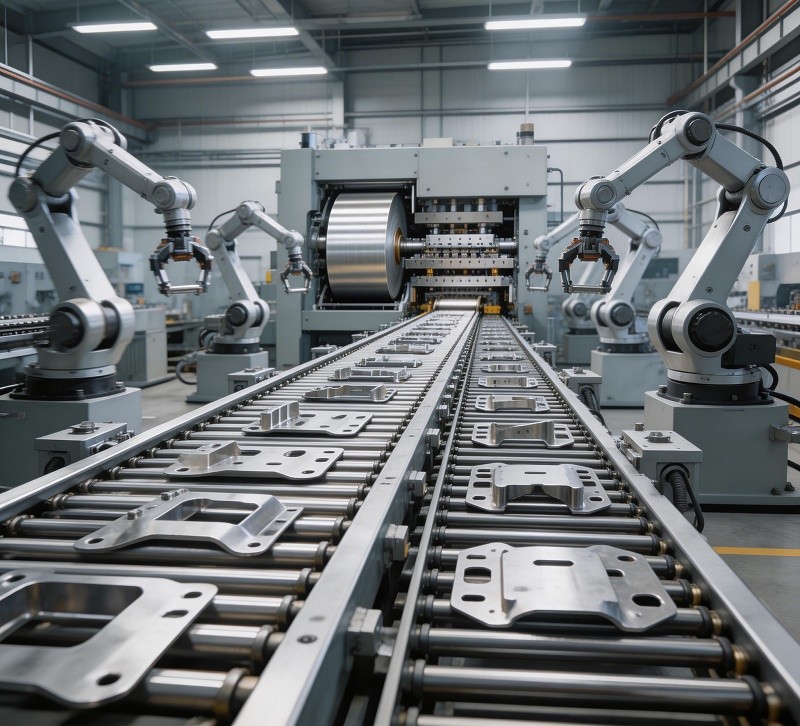
Beyond simply supplying raw materials, leading aluminum sheet metal manufacturers offer a suite of advanced processing and fabrication services. These capabilities allow them to deliver parts that are closer to their final shape, saving aerospace companies valuable time and resources. This value-added partnership is essential for meeting the tight tolerances and complex designs inherent in modern aircraft.
Cutting-Edge Manufacturing Technologies
To create the complex shapes required for aerospace components, manufacturers employ an array of sophisticated technologies. These processes are designed for high precision, repeatability, and efficiency.
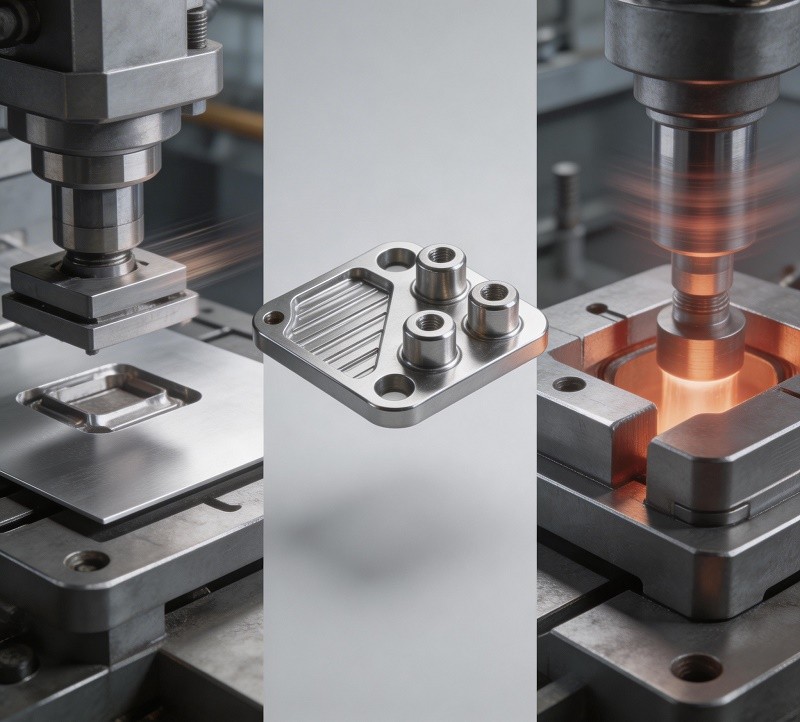
- CNC Machining: Computer Numerical Control (CNC) machining is the cornerstone of modern precision manufacturing. Multi-axis CNC machines (including 3-, 4-, and 5-axis systems) can move a cutting tool along several axes simultaneously, allowing them to sculpt highly complex parts from a solid block of aluminum. This technology is essential for creating intricate components like engine housings, structural brackets, and avionics enclosures with tight tolerances that can be as fine as ±0.0005 inches or better.
- Sheet Metal Forming and Bending: This involves using press brakes and rollers to accurately bend and shape aluminum sheets into components like fuselage panels, wing ribs, and fairings. Advanced machinery ensures consistent angles and curves, which are critical for aerodynamic performance and proper assembly.
- Hydroforming: This is a specialized forming process where high-pressure hydraulic fluid is used to press sheet metal into a die. It is particularly effective for creating complex, irregular shapes with excellent structural integrity and a smooth surface finish. Because it uses a single rigid die instead of two, it can produce parts with fewer welds, reducing weight and potential points of failure, making it ideal for engine components and complex fuselage sections.
- Precision Cutting (Laser and Waterjet): Before forming, aluminum sheets must be cut to the correct profile.
- Laser Cutting uses a high-intensity laser beam to melt or vaporize the material, offering exceptional speed and precision, especially for thin to medium-gauge sheets.
- Waterjet Cutting uses a high-pressure stream of water mixed with an abrasive substance to slice through the metal. A key advantage of waterjet cutting is that it is a cold process, so it does not create a heat-affected zone (HAZ) that could alter the metal's properties—a critical consideration for many aerospace alloys.
Customization for Diverse Aerospace Components
The "one-size-fits-all" approach does not work in aerospace. Every aircraft, satellite, and launch vehicle is a unique system composed of thousands of specialized parts. Custom aluminum sheet metal manufacturers are indispensable partners because they can tailor their production to meet these exact needs.
Examples of custom-fabricated components include:
- Structural Components: Fuselage frames, wing spars and ribs, bulkheads, and landing gear parts that must bear significant loads and stress.
- Engine Components: Parts like turbine blades, engine housings, diffusers, and heat shields require specialized alloys and forming techniques to withstand extreme temperatures and pressures.
- Interior and Secondary Parts: Even non-structural components like seat tracks, cabin partitions, luggage compartments, and galley trolleys are often made from custom-extruded or formed aluminum for its light weight and durability.
- Avionics and Systems Housing: Enclosures for sensitive electronic systems, hydraulic manifolds, and tubing for fuel and pneumatic systems are fabricated from aluminum to provide protection without adding unnecessary weight.
By offering a combination of advanced alloys and precision fabrication services, custom aluminum sheet metal manufacturers enable aerospace companies to build safer, more efficient, and higher-performing aircraft and spacecraft.
Choosing the Right Aluminum Sheet Metal Manufacturers for Your Project
Selecting a supplier for aerospace components is a decision with significant consequences. The performance and safety of an aircraft depend directly on the quality of its individual parts. Therefore, choosing a custom aluminum sheet metal manufacturer requires a rigorous evaluation process that goes far beyond just comparing prices. It involves a holistic assessment of their quality systems, technical capabilities, and overall reliability as a supply chain partner.
Key Factors for Evaluating Aluminum Sheet Metal Manufacturers
When aerospace companies evaluate potential suppliers, they look at several critical factors to ensure the partner can meet their rigorous demands for quality, reliability, and performance.
Product Quality, Stability, and Comprehensive Inventory
Consistent quality is non-negotiable in aerospace. Even minor variations in an alloy's chemical composition or mechanical properties can have significant consequences. A prime aluminum supplier must demonstrate a proven track record of producing high-quality materials that strictly adhere to specifications. This includes maintaining stable processes that yield consistent results from one batch to the next.
Beyond quality, a manufacturer's inventory is a key consideration. A supplier with a comprehensive stock of various aerospace-grade alloys and forms (plates, bars, extrusions, etc.) can respond more quickly to orders and reduce lead times. This is crucial for maintaining tight production schedules and supporting maintenance, repair, and overhaul (MRO) operations that require fast access to replacement parts.
Certifications, Compliance, and Traceability in Aluminum Manufacturing
The aerospace industry is governed by stringent quality management standards that suppliers must meet. These certifications are not just formalities; they are proof that a manufacturer has robust, audited systems in place to ensure quality and safety.
Key certifications include:
- AS9100: This is the internationally recognized Quality Management System (QMS) standard for the aerospace industry. Based on the general ISO 9001 standard, it includes additional requirements specific to aviation, defense, and space. Achieving AS9100 certification signals that a supplier is committed to the highest levels of quality, safety, and continuous improvement.
- NADCAP: The National Aerospace and Defense Contractors Accreditation Program (Nadcap) provides accreditation for "special processes" where quality cannot be easily verified after the fact. These include critical processes like heat treating, chemical processing, welding, and non-destructive testing. Many major aerospace OEMs mandate Nadcap accreditation for their suppliers.
Just as important as certification is traceability. In aerospace, every component must be traceable back to its origin. This means manufacturers must maintain meticulous records, often called batch traceability, that document every step of a material's journey—from the raw material mill certification to all processing, testing, and handling steps. This unbroken chain of documentation is essential for quality control, root-cause analysis in case of a defect, and regulatory compliance audits.
Manufacturing Capabilities and Technical Expertise
A supplier's manufacturing capabilities are a direct indicator of their ability to handle complex projects. This involves assessing their equipment—such as advanced CNC machines, press brakes, and heat-treating furnaces—and their proficiency in various fabrication processes. A supplier with a wide range of in-house capabilities can often provide more complete parts, reducing the need for multiple subcontractors and streamlining the supply chain.
Equally important is the technical expertise of their team. A valuable supplier acts as a partner, offering direct access to engineers and materials scientists who have deep knowledge of aerospace requirements. This expertise is invaluable for optimizing designs for manufacturability, solving complex challenges, and providing recommendations on material selection.
The Value of Experienced and Reputable Aluminum Sheet Metal Manufacturers
An established reputation in the aerospace industry is earned through years of consistent performance. Experienced manufacturers offer more than just materials; they provide reliability, innovation, and a deep understanding of the industry's unique demands.
Customer Service and Supply Chain Management
In the complex and fast-paced aerospace industry, effective supply chain management is mission-critical. Delays in receiving a single component can halt an entire production line, leading to significant financial losses. A reputable aluminum supplier understands this and builds their operations around reliability. This includes providing robust logistics, maintaining open and proactive communication, and ensuring on-time delivery.
Excellent customer service is another key differentiator. In an industry where technical complexity is high, responsive and knowledgeable support is essential. A good supplier offers a dedicated point of contact who can quickly address inquiries, provide technical support, and efficiently resolve any issues that arise. This level of service builds trust and fosters a strong, long-term partnership.
Innovation and Adaptability in Aluminum Product Development
The aerospace industry is in a constant state of evolution, with a relentless push for lighter, stronger, and more heat-resistant materials. The best aluminum manufacturers are not just following these trends; they are helping to drive them. They invest in research and development to create advanced alloys, such as new aluminum-lithium formulations, that offer improved properties.
Furthermore, they demonstrate adaptability by embracing new manufacturing technologies like additive manufacturing (3D printing) and advanced digital tools. A commitment to innovation and the ability to adapt to new challenges are hallmarks of a forward-thinking supplier. Partnering with such a manufacturer ensures that aerospace companies have access to the cutting-edge materials and processes needed to build the next generation of aircraft and spacecraft.
Conclusion
As we’ve seen, the role of custom aluminum sheet metal manufacturers in the aerospace industry is multifaceted and absolutely essential. They provide the specialized materials, precision fabrication, and unwavering quality control that enable the development of safe, efficient, and innovative aircraft and spacecraft. From supplying high-strength alloys like 7075 for critical wing spars to fabricating intricate fuselage components with multi-axis CNC machines, their contributions are foundational to modern aviation.
The ongoing evolution in aerospace demands that aluminum sheet metal manufacturers continue to innovate, offering advanced alloys and processing techniques. By collaborating closely with these expert suppliers, aerospace engineers and procurement managers can ensure that the industry continues to reach new heights. Choosing a partner with proven expertise, robust quality systems, and a commitment to innovation is not just a procurement decision—it's a strategic investment in the future of flight, pushing the boundaries of possibility with every new design.