What Are the Essential Sheet Metal Fabrication Materials and Their Properties?
- Share
- Issue Time
- Apr 27,2026
Summary
This article introduces essential sheet metal fabrication materials (steel, aluminum, copper, titanium) and their properties, helping select optimal materials for performance, cost and application needs.
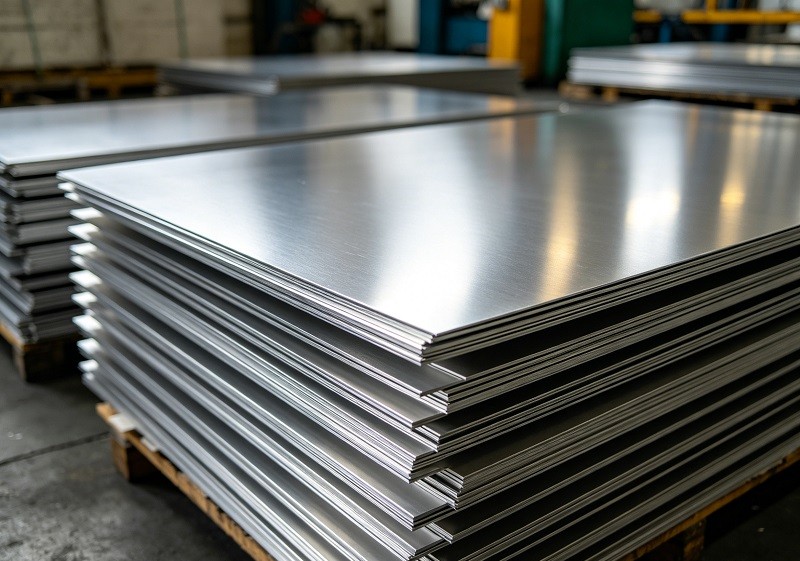
When you set out to create something from metal, whether it's a critical automotive part, a sleek kitchen appliance, or a durable outdoor enclosure, the material you choose is foundational to your project's success. This choice dictates everything from the item's strength and longevity to its final appearance and cost.
In this comprehensive guide, we will walk you through the essential sheet metal fabrication materials and their unique properties. Our goal is to equip you with the knowledge to understand why selecting the right material is not just a preliminary step, but a critical decision that influences every stage of design, manufacturing, and performance. By understanding the fundamentals, you can ensure your final product is not only functional but also optimized for its intended environment and use.
Understanding the Fundamentals of Sheet Metal Fabrication Materials
Before diving into specific metals, it's crucial to grasp the basic vocabulary of material science. The properties of a material are its inherent traits and characteristics, which determine how it behaves under different conditions. Understanding these fundamentals is the first step toward making an informed selection for your fabrication project.
What Are Material Properties?
Material properties are the quantifiable characteristics that define how a substance responds to external forces and environmental conditions. These properties can be broadly categorized into several groups, each revealing a different aspect of the material's behavior.
- Mechanical Properties: These describe how a material reacts to applied loads or forces. Key mechanical properties include strength (its ability to resist deformation), hardness (resistance to surface indentation), ductility (ability to be stretched without breaking), and toughness (ability to absorb energy before fracturing).
- Physical Properties: This category includes characteristics like density (mass per unit volume), melting point, and thermal and electrical conductivity. These are often inherent to the material and don't depend on its size or shape.
- Chemical Properties: These relate to a material’s ability to resist chemical reactions, such as corrosion or oxidation. Corrosion resistance is a critical factor for products exposed to moisture, chemicals, or atmospheric elements.
- Thermal Properties: This subset of physical properties relates specifically to how a material behaves with changes in temperature. It includes thermal conductivity (how well it transfers heat) and thermal expansion (how much its size changes with temperature).
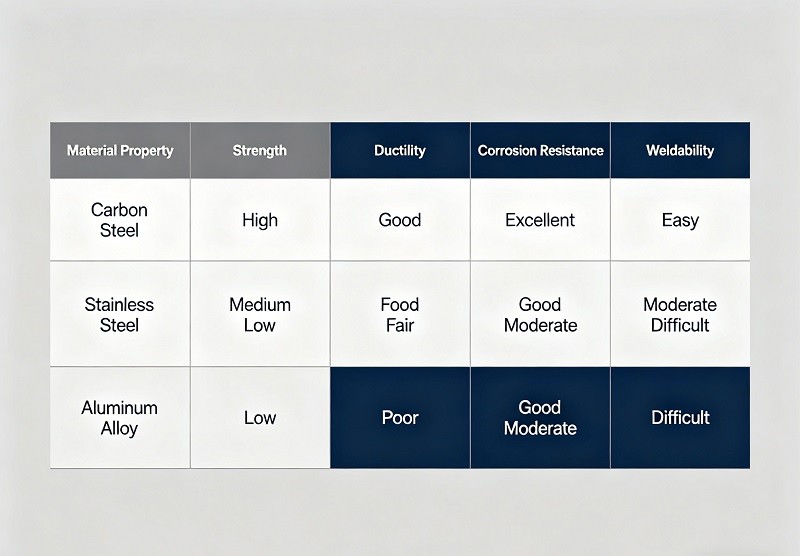
For clarity, here’s a breakdown of some of the most important properties in sheet metal fabrication:
| Property | Definition | Why It Matters in Fabrication |
|---|---|---|
| Tensile Strength | The maximum stress a material can withstand while being stretched or pulled before breaking. | Determines the load-bearing capacity of a part. Crucial for structural components. |
| Ductility | A material's ability to be drawn into a wire or deformed under tensile stress without fracturing. | Essential for processes like deep drawing and bending, as it allows the metal to be shaped without cracking. |
| Hardness | The resistance of a material to localized plastic deformation such as scratching or indentation. | Affects machinability and wear resistance. Harder materials are more durable but can be more difficult to cut and form. |
| Corrosion Resistance | The ability of a material to withstand degradation due to chemical reactions with its environment. | Dictates the lifespan and maintenance requirements of a product, especially in outdoor or chemical-exposed applications. |
| Weldability | The ease with which a material can be joined by welding to form a strong, sound joint. | A critical factor for complex assemblies, affecting both the cost and integrity of the final product. |
| Conductivity | The measure of a material's ability to conduct heat (thermal) or electricity (electrical). | Vital for applications like electrical enclosures, heat sinks, and cooking utensils. |
Why Specific Sheet Metal Fabrication Materials Matter for Your Project
Choosing a material is not a one-size-fits-all decision; it's a strategic process of matching a material's inherent characteristics to the specific demands of your project. The wrong choice can lead to premature failure, budget overruns, or a product that simply doesn't perform as expected.
Consider these factors:
- Application Environment: A part designed for a sterile medical environment requires a non-corrosive, easy-to-clean material like stainless steel. In contrast, a structural beam for construction might prioritize the high strength and low cost of carbon steel.
- Weight Requirements: In the aerospace and automotive industries, every gram matters. Lightweight materials like aluminum or titanium are chosen to improve fuel efficiency and performance, even if they come at a higher cost.
- Budgetary Constraints: While a specialty alloy might offer superior performance, its cost could make the project unfeasible. Balancing performance requirements with material and fabrication costs is a constant engineering challenge.
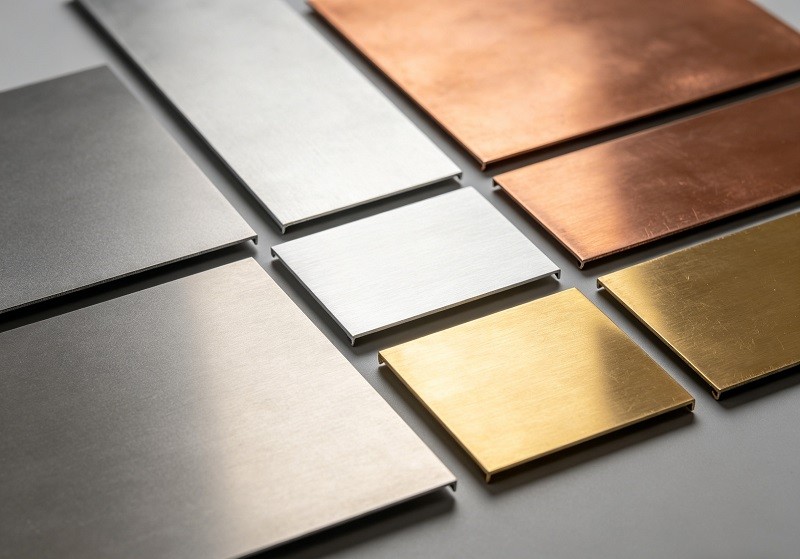
- Aesthetic and Finish: For consumer products or architectural elements, appearance is key. Materials like brushed stainless steel, polished aluminum, or copper with its distinct patina are often chosen for their visual appeal.
The Impact of Properties on Manufacturing and Performance
A material's properties directly influence both the manufacturing process and the final product's real-world performance.
During manufacturing, a property like formability (a combination of ductility and strength) determines whether a sheet can be bent into a sharp angle or deep-drawn into a complex shape without tearing. A material with low formability might require more manufacturing steps or more sophisticated tooling, increasing costs. Similarly, weldability affects the choice of joining techniques. Some aluminum alloys, for example, are notoriously difficult to weld and may require specialized processes like TIG welding, which is more time-consuming and expensive than the MIG welding often used for steel.
Once the product is in service, its performance is a direct reflection of the material choice.
- A chassis made from High-Strength, Low-Alloy (HSLA) steel will provide the necessary structural integrity for a vehicle while saving weight compared to conventional steel.
- An electrical enclosure made from aluminum will effectively dissipate heat due to its high thermal conductivity, protecting the sensitive components inside.
- A food processing vat built from 316 stainless steel will resist corrosion from cleaning agents and acidic food products, ensuring hygiene and a long service life.
Ultimately, a deep understanding of these properties allows engineers and designers to predict how a material will behave from the factory floor to its final application, ensuring a reliable and efficient product.
Diverse World of Sheet Metal Fabrication Materials: Steels and Aluminums
Among the vast array of available metals, steel and aluminum stand out as the two most dominant forces in the world of sheet metal fabrication. Their versatility, combined with a wide range of alloys and grades, makes them suitable for an incredible spectrum of applications, from everyday objects to high-tech machinery.
Steel: The Backbone Many Industries Rely On
Steel, an alloy of iron and carbon, is renowned for its exceptional strength, durability, and cost-effectiveness. The addition of different alloying elements creates a family of materials with diverse properties, making steel a reliable choice for countless industries.
Carbon Steel: Strong and Versatile
Carbon steel is the most common type of steel, valued for its sheer strength and relatively low cost. Its properties are primarily determined by its carbon content, which is used to classify it into three main categories:
- Low-Carbon Steel (Mild Steel): With a carbon content typically below 0.3%, this is the most widely used form of carbon steel. It is relatively soft, highly ductile, and easy to weld, making it ideal for stamping, bending, and fabricating everyday items like car bodies, structural shapes, and pipelines. However, it has poor corrosion resistance and usually requires a protective coating like paint or galvanization.
- Medium-Carbon Steel: Containing between 0.3% and 0.6% carbon, this steel offers a better balance of strength, hardness, and wear resistance compared to mild steel, though it is less ductile. It is often used for machinery parts, gears, and axles.
- High-Carbon Steel: With a carbon content over 0.6%, this steel is the strongest and hardest of the three but is also the most brittle. After heat treatment, it can hold a sharp edge, making it perfect for cutting tools, springs, and high-strength wires. Its low ductility makes it unsuitable for most forming operations.
Stainless Steel: Built for Durability and Hygiene
Stainless steel is an alloy of steel, chromium, and often nickel, famous for its remarkable corrosion resistance and aesthetic appeal. The chromium forms a passive, self-healing oxide layer on the surface that protects the iron from rusting. This makes it an essential material in environments where hygiene and durability are paramount.
The most common grades used in sheet metal fabrication are:
- Austenitic Stainless Steel (e.g., 304, 316): This is the most widely used type of stainless steel. Grade 304 is the workhorse of the industry, offering excellent corrosion resistance, formability, and weldability. It's found in kitchen sinks, food processing equipment, and architectural trim. Grade 316 contains an added element, molybdenum, which significantly enhances its resistance to chlorides and acids. This makes it the preferred choice for marine hardware, chemical processing equipment, and medical implants.
- Ferritic Stainless Steel (e.g., 430): This type has lower corrosion resistance and formability compared to austenitic grades but offers good resistance to stress corrosion cracking. It is magnetic and is often used in automotive exhaust systems and home appliances.
- Martensitic Stainless Steel (e.g., 410): This grade can be hardened by heat treatment, offering high strength and wear resistance. It's commonly used for cutlery, turbine blades, and surgical instruments.
Galvanized and HSLA Steel: Enhanced Protection and Strength
To overcome the poor corrosion resistance of carbon steel, protective coatings are often applied. Galvanized steel is carbon steel that has been coated with a layer of zinc. The zinc provides a sacrificial barrier; it corrodes first, protecting the steel underneath. This makes it an extremely popular and cost-effective choice for outdoor applications like roofing, HVAC ductwork, and outdoor enclosures.
High-Strength, Low-Alloy (HSLA) steel is a more modern type of alloy steel designed to provide better mechanical properties and greater resistance to atmospheric corrosion than conventional carbon steels. They are not only stronger but also lighter for a given strength level, a key attribute in the automotive industry for building safer, more fuel-efficient vehicles.
| Steel Type | Key Characteristics | Common Applications |
|---|---|---|
| Low-Carbon Steel | Low cost, high ductility, excellent weldability | Automotive panels, structural beams, pipelines |
| 304 Stainless Steel | Excellent corrosion resistance, good formability, hygienic | Kitchen appliances, food processing equipment, architectural trim |
| 316 Stainless Steel | Superior corrosion and acid resistance | Marine equipment, chemical tanks, medical devices |
| Galvanized Steel | Excellent corrosion protection, cost-effective | HVAC ducting, roofing, outdoor hardware |
| HSLA Steel | High strength-to-weight ratio, improved toughness | Automotive chassis, construction equipment, bridges |
Aluminum: The Lightweight Champion Among Sheet Metal Fabrication Materials
Aluminum is a remarkable metal, prized for its low density—about one-third that of steel—excellent corrosion resistance, and high thermal and electrical conductivity. While not as strong as steel, its high strength-to-weight ratio makes it indispensable in industries where minimizing weight is a primary goal, such as aerospace, automotive, and transportation.
3003 Aluminum: Excellent Formability and Corrosion Resistance
Aluminum 3003 is the most widely used of all aluminum alloys. Its primary alloying element is manganese, which increases its strength by about 20% over pure aluminum. Its defining characteristics are excellent formability and workability, meaning it can be easily bent, spun, and drawn into complex shapes without cracking. It also offers very good resistance to atmospheric corrosion. However, it is a non-heat-treatable alloy, so its strength is moderate.
It is the go-to material for:
- Cooking utensils and kitchen equipment
- Chemical storage tanks and pressure vessels
- HVAC ductwork and fan blades
- Architectural siding and roofing
6061 Aluminum: High Strength for Structural Applications
Aluminum 6061 is a precipitation-hardened alloy, with magnesium and silicon as its main alloying elements. Unlike the 3003 series, it can be heat-treated to achieve significantly higher strength, making it one of the most versatile heat-treatable alloys. In its most common temper, 6061-T6, it offers strength comparable to mild steel but at a fraction of the weight. While its formability is not as good as that of 3003, it has good corrosion resistance and weldability.
Its combination of strength, light weight, and corrosion resistance makes it ideal for structural applications, including:
- Aerospace components like aircraft wings and fuselages
- High-performance bicycle frames
- Scuba tanks and fishing reels
- Structural framing and base plates for machinery
Here’s a direct comparison of these two popular aluminum alloys:
| Feature | 3003 Aluminum | 6061 Aluminum |
|---|---|---|
| Strength | Moderate | High (when heat-treated) |
| Formability | Excellent | Good |
| Weldability | Good | Good |
| Corrosion Resistance | Excellent | Good |
| Heat Treatable | No | Yes |
| Primary Use Case | General-purpose forming applications | Structural and high-strength applications |
Beyond the Basics: Other Key Sheet Metal Fabrication Materials
While steel and aluminum dominate the landscape, many projects demand properties that these common metals cannot provide. For specialized applications requiring exceptional conductivity, aesthetic appeal, or performance in extreme environments, fabricators turn to other key materials like copper, brass, titanium, and advanced specialty alloys.
Copper and Brass: For Conductivity and Aesthetics
Copper and its alloys have been used by civilizations for millennia, and they remain essential in modern fabrication for their unique combination of properties.
Copper is second only to silver in electrical and thermal conductivity, making it the standard material for electrical wiring, busbars, and contacts. In sheet metal form, its high thermal conductivity is perfect for heat exchangers and high-end cookware. Copper is also well-known for its distinctive reddish-brown color, which develops a green patina over time when exposed to the elements. This aesthetic quality makes it a popular choice for architectural applications like roofing, flashing, and wall cladding. Though relatively soft and highly ductile, it can be work-hardened to increase its strength.
Brass is an alloy primarily of copper and zinc. The addition of zinc increases the material's strength, hardness, and machinability while lowering its cost compared to pure copper. Brass is known for its bright, gold-like appearance and excellent acoustic properties, which is why it is used extensively in the manufacturing of musical instruments. Its low friction and non-sparking characteristics also make it suitable for fittings, valves, and ammunition casings.
| Material | Key Properties | Common Sheet Metal Applications |
|---|---|---|
| Copper | High electrical/thermal conductivity, excellent formability, distinctive aesthetic | Electrical contacts, heat sinks, architectural roofing, decorative panels |
| Brass | Good machinability, acoustic properties, corrosion resistance, low friction | Musical instruments, decorative hardware, plumbing fittings, ammunition casings |
Titanium: High Performance in Demanding Environments
Titanium is the superstar of high-performance metals. It boasts the highest strength-to-density ratio of any metallic element, meaning it is as strong as some steels but 45% lighter. Its standout feature is its extraordinary corrosion resistance, which is on par with platinum. It is virtually immune to attack by saltwater, chlorine, and many industrial acids, thanks to a stable, passive oxide film.
These remarkable properties come at a price: titanium is significantly more expensive than steel or aluminum, and it is more difficult to machine and weld, requiring specialized techniques and equipment. Despite these challenges, its performance is non-negotiable in many demanding fields:
- Aerospace: Used for critical structural components, landing gear, and engine parts where strength, low weight, and high-temperature performance are essential.
- Medical: Its biocompatibility (it is non-toxic and not rejected by the body) and corrosion resistance make it the premier material for surgical implants like hip joints, bone screws, and dental implants.
- High-Performance Sports: Found in high-end bicycle frames, golf clubs, and racing components.
- Chemical Processing: Used for vessels and piping that handle highly corrosive chemicals.
Specialty Alloys and Composites: Pushing Boundaries
Beyond the more common metals, there exists a category of "superalloys" and composites designed to perform in the most extreme conditions imaginable.
Specialty Alloys (or Superalloys) are high-performance alloys that exhibit excellent strength, heat resistance, and resistance to creep (the tendency of a material to slowly deform over time under stress). These are typically based on nickel, cobalt, or iron. A well-known example is Inconel, a nickel-chromium-based alloy. It maintains its strength at scorching temperatures that would cause steel or aluminum to weaken and fail, making it essential for components inside jet engines, gas turbines, and nuclear reactors.
Metal Matrix Composites (MMCs) represent another frontier. These are advanced materials made by embedding a reinforcing material (like ceramic particles or fibers) into a metal matrix. For example, reinforcing an aluminum matrix with silicon carbide fibers creates a composite that is significantly stronger, stiffer, and more wear-resistant than aluminum alone, while still being lightweight. These materials are pushing boundaries in high-tech fields but are complex and expensive to produce.
Critical Properties of Sheet Metal Fabrication Materials to Evaluate
Selecting the right material requires a technical evaluation of its properties. This involves looking beyond the general labels of "steel" or "aluminum" and digging into the specific data that defines how a material will behave during fabrication and throughout its service life.
Mechanical Properties: Strength, Ductility, and Formability
These properties dictate a material's ability to be shaped and to withstand mechanical stress.
- Strength: This is not a single value but includes several metrics. Yield strength is the stress at which a material begins to deform permanently. For a structural part, the operational stress must stay below this limit. Tensile strength (or ultimate tensile strength) is the maximum stress a material can endure before it starts to break.
- Ductility: This measures how much a material can be plastically deformed before it fractures. It is typically expressed as a percentage of elongation. High ductility is crucial for processes like deep drawing, where a flat sheet is formed into a cup-like shape. A brittle material with low ductility would crack under such strain.
- Formability: This is a more complex property that describes the ability of a sheet metal to be shaped without defects. It is influenced by a combination of ductility, strength, and the material's microstructure. Fabricators use specialized tests, like the Erichsen cupping test, to quantify formability and predict how a material will respond to bending, stretching, and drawing.
Corrosion Resistance: Standing Up to the Elements
Corrosion is the gradual destruction of a material by chemical or electrochemical reaction with its environment. It is a primary cause of product failure, and selecting a material with adequate resistance is critical for ensuring durability and safety.
Key considerations include:
- Type of Corrosion: It’s important to identify the specific corrosive threat. Will the part be exposed to general atmospheric humidity, saltwater spray, industrial acids, or galvanic corrosion (which occurs when two dissimilar metals are in contact)?
- Passivation: Materials like stainless steel and aluminum are protected by a thin, inert "passive layer" of oxide on their surface. If this layer is scratched, it instantly reforms, providing self-healing protection. The stability and composition of this layer determine the material's overall resistance.
- Protective Coatings: For less resistant materials like carbon steel, coatings are essential. These can range from paint and powder coating to metallic coatings like zinc (galvanizing) or an aluminum-zinc alloy (Galvalume), each offering different levels of protection and cost.
Weldability and Machinability: Ease of Fabrication
The most impressive material is useless if it cannot be fabricated efficiently and reliably.
- Weldability refers to a material's capacity to be welded into a structure that performs satisfactorily for its intended use. It is affected by factors like thermal conductivity, chemical composition, and melting point. Low-carbon steels are generally easy to weld. Aluminum, with its high thermal conductivity and surface oxide, requires more specialized equipment and techniques (like AC TIG welding) to achieve a clean, strong joint.
- Machinability is the ease with which a metal can be cut (machined) to an acceptable finish at a low cost. Materials with good machinability produce well-formed chips, require low cutting forces, and result in minimal tool wear. Brass, for instance, is known for its excellent machinability. In contrast, tough materials like stainless steel and titanium are harder to machine, leading to slower production rates and higher tooling costs.
Heat Treatability and Grain Direction: Influencing Performance
Two more subtle but crucial factors can profoundly impact a material's final properties.
- Heat Treatability: This refers to the ability of a metal's properties to be altered by controlled heating and cooling processes like annealing, quenching, and tempering. For example, 6061 aluminum can be made much stronger through a T6 heat treatment process. Carbon steels can be hardened to hold a sharp edge or annealed to make them softer and more formable. Understanding heat treatability allows fabricators to tailor a material’s properties to the application's precise needs.
- Grain Direction (Anisotropy): During the rolling process that creates sheet metal, the crystalline grains of the metal become elongated in the direction of rolling. This creates a "grain direction" and results in the material having different properties in different directions (anisotropy). For instance, a sheet metal will typically bend more easily and to a tighter radius when the bend line is perpendicular to the grain direction. Bending parallel to the grain can lead to cracking, especially on tight-radius bends. Experienced fabricators always consider grain direction when laying out parts to ensure successful forming.
Selecting the Optimal Sheet Metal Fabrication Materials for Your Project
The final step is to synthesize all this information into a logical selection process. Choosing the optimal material is a balancing act, weighing performance requirements against practical constraints like cost and manufacturability. A methodical approach ensures that all factors are considered, leading to a decision that guarantees project success.
Matching Material Properties to Application Needs
The core of the selection process is a systematic comparison of the application's requirements with the properties of candidate materials. Start by creating a detailed checklist for your project:
Mechanical Requirements:
- What are the maximum static and dynamic loads the part will experience? (Defines required yield strength.)
- Does the part need to withstand impacts? (Requires good toughness.)
- Will it be subjected to cyclical loading? (Fatigue strength is critical.)
Environmental Conditions:
- What is the operating temperature range? (Affects material strength and expansion.)
- Will it be exposed to moisture, chemicals, or saltwater? (Defines required corrosion resistance.)
- Is it an indoor or outdoor application?
Physical and Manufacturing Constraints:
- Are there weight limitations? (Strength-to-weight ratio is key.)
- What manufacturing processes will be used (bending, welding, drawing)? (Requires specific formability and weldability.)
- What are the aesthetic requirements? (Finish, color, and texture.)
Once you have this list, you can use a material selection chart or database to filter for materials that meet your primary criteria. For instance:
- Project: An outdoor electrical enclosure in a coastal city.
- Primary Need: Extreme corrosion resistance (saltwater).
- Secondary Needs: Moderate strength, weldability.
- Viable Candidates: 316 Stainless Steel, 5052 Aluminum, or heavily coated Galvanized Steel. 316 SS offers the best protection, while aluminum offers a lightweight alternative.
- Project: A high-load structural bracket for an aircraft interior.
- Primary Need: High strength-to-weight ratio.
- Secondary Needs: Good fatigue resistance.
- Viable Candidates: 6061-T6 or 7075-T6 Aluminum, or for extreme performance, Titanium. Standard steel would be too heavy.
Balancing Performance, Cost, and Environmental Factors
It's rare for a single material to be the best in every category. The final choice almost always involves trade-offs.
- Performance vs. Cost: Titanium may be the ultimate performance material, but its cost is prohibitive for most applications. Is the superior performance of an expensive alloy truly necessary, or would a more common material like HSLA steel or 6061 aluminum suffice at a fraction of the cost? This analysis must include not just the raw material cost but also the cost of fabrication. A material that is difficult to machine or weld can drive up production costs significantly.
- Lifecycle Cost: A savvy decision looks beyond the initial purchase price. A cheaper material that corrodes quickly might lead to high maintenance or replacement costs, making a more expensive, corrosion-resistant alloy cheaper over the product's entire lifecycle.
- Environmental Factors and Sustainability: Sustainability is an increasingly important consideration. Metals like steel and aluminum are highly recyclable, which can be a significant advantage. Evaluating the energy required to produce the material and its end-of-life recyclability contributes to a more responsible design choice.
The Value of Expert Consultation and Material Testing
While data sheets provide a wealth of information, real-world experience is invaluable. For critical applications, consulting with a materials engineer or an experienced fabrication partner is a wise investment. They can provide insights that aren't found on paper, such as:
- Nuances in the formability or weldability of a specific grade of material.
- Suggestions for alternative alloys that might offer a better balance of cost and performance.
- Guidance on the proper manufacturing techniques to avoid issues like cracking or distortion.
Finally, never underestimate the power of prototyping and testing. Before committing to a large production run, fabricating a prototype from your chosen material allows you to validate your decision. You can perform mechanical tests to confirm its strength, subject it to real-world environmental conditions to check its durability, and refine your manufacturing process. This "test before you invest" approach is the ultimate way to mitigate risk and ensure your material choice is the right one.
As we've seen, the world of sheet metal fabrication materials is vast and varied. Each material, from common carbon steel to high-performance titanium, brings its own unique set of strengths, weaknesses, and ideal use cases. This diversity makes the material selection process a crucial and strategic part of any design and manufacturing workflow.
By deeply understanding the essential properties—such as strength, corrosion resistance, formability, and weldability—we can move beyond guesswork and make informed decisions that lead to high-quality, durable, and cost-effective products. Remember, the right material choice is the bedrock of your project; it ensures that your fabricated parts perform exactly as intended, standing up to the demands of their environment and delivering lasting value. Whether you are an engineer, a designer, or a hobbyist, investing time in this critical decision will pay dividends in the quality and success of your final creation.