Understanding the Benefits of Small Batch Manufacturing for Custom Stamped Metal Components
- Share
- Issue Time
- Jun 10,2026
Summary
Discover the benefits of small-batch manufacturing for custom stamped metal parts. Save costs, reduce lead times & achieve high precision with short-run stamping services.
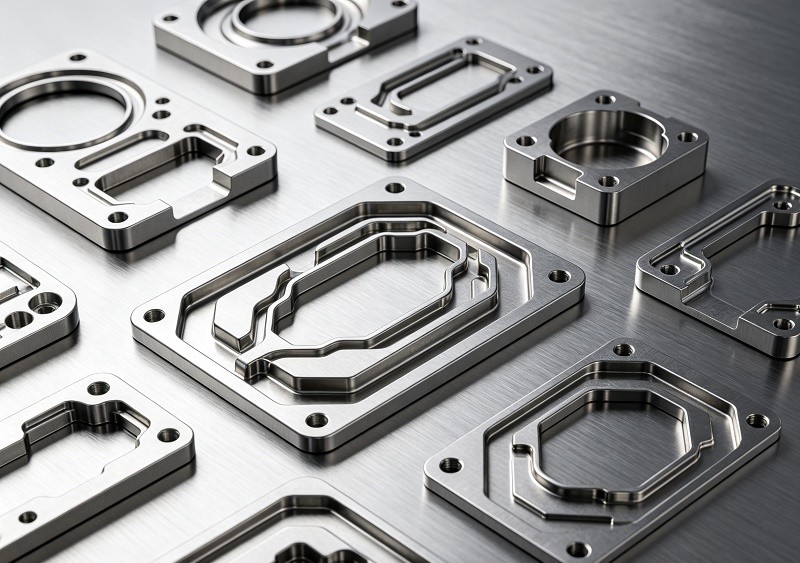
We're diving into the world of manufacturing, exploring specifically how small-batch production can be a game-changer for creating custom stamped metal components. Understanding this process can help businesses, especially startups and those in the developmental phase, save money and accelerate their product development with unparalleled flexibility. This approach challenges traditional high-volume manufacturing models by offering an agile, cost-effective, and precise alternative for bringing innovative hardware to life.
The Advantage a Custom Stamped Metal Parts Supplier Offers in Cost-Efficiency and Timelines
In today's fast-paced market, efficiency in both cost and time is not just an advantage; it's a necessity. Traditional manufacturing often involves high upfront costs and long lead times, creating significant barriers for new products or design iterations. A specialized custom stamped metal parts supplier that focuses on small-batch production directly addresses these challenges. By optimizing processes for lower volumes, these suppliers provide a strategic pathway to reduce initial investment, minimize waste, and drastically shorten the time from design to delivery, empowering companies to be more responsive and competitive.
Understanding the Power of Short-Run Stamping for Complex Parts
Short-run stamping is a specialized manufacturing process designed to produce a smaller quantity of parts, typically ranging from a few prototypes to several thousand units, without the massive investment required for high-volume production tooling. This method is particularly powerful when dealing with complex parts that may require intricate shapes, deep draws, or unique features. Unlike conventional stamping that relies on expensive progressive dies built for millions of cycles, short-run stamping utilizes more adaptable and cost-effective tooling solutions. This allows engineers and designers to test and validate complex designs in real-world materials and conditions without committing to a full-scale production budget.
The process is ideal for the initial phases of a product lifecycle, including prototyping, pilot runs, and bridge production while high-volume tooling is being prepared. For components with complicated geometries, short-run stamping offers the ability to make precise adjustments between batches, refining the design iteratively until it meets exact specifications. This adaptability ensures that even the most challenging parts can be manufactured with high precision, making it an indispensable tool for innovation in industries where complexity is standard.
Minimizing Financial Outlays and Material Waste
One of the most significant benefits of small-batch manufacturing is the dramatic reduction in financial outlay. Traditional stamping requires "hard tooling" or progressive dies, which are engineered for extreme longevity and can cost tens or even hundreds of thousands of dollars. This high initial investment is often prohibitive for startups or for projects with unproven market demand. Short-run stamping, by contrast, uses less expensive "soft tooling" or modular die sets that are designed for shorter production cycles. This can reduce initial tooling costs by as much as 80-90%, freeing up capital for other critical areas of product development.
In addition to tooling savings, small-batch production inherently minimizes material waste. During the setup and trial phase of a high-volume run, a substantial amount of raw material can be scrapped while calibrating the machinery. Short-run processes are more controlled and are set up for precision from the very first part. By producing only the quantity needed, companies avoid overproduction and the associated costs of storing and managing excess inventory. This lean approach not only improves the bottom line but also aligns with sustainable manufacturing practices by conserving resources.
| Feature | Short-Run Stamping | High-Volume Stamping |
|---|---|---|
| Tooling Investment | Low (uses soft or modular tooling) | Very High (requires hard progressive dies) |
| Initial Quantity | Low (from one to several thousand) | High (tens of thousands to millions) |
| Material Waste | Minimal (less setup scrap, no overproduction) | Higher (significant setup scrap, risk of obsolescence) |
| Cost Per Part | Higher at scale, but lower overall project cost for small volumes | Lower at very high volumes, but requires massive initial run |
| Financial Risk | Low, ideal for prototyping and market testing | High, requires confidence in design and market demand |
Achieving Faster Lead Times and Production Cycles
Speed to market is a critical competitive differentiator, and small-batch manufacturing excels in this area. The lengthy lead times associated with traditional manufacturing are often due to the complex design and fabrication of hard tooling, which can take months. With short-run stamping, the simplified and adaptable tooling can be created in a fraction of that time, often in just a few weeks. This accelerated timeline means that physical prototypes and initial production parts can be in the hands of engineers for testing and validation much sooner.
This speed translates directly into shorter overall production cycles. Once a design is finalized, a small batch can be produced and shipped rapidly, allowing companies to meet urgent demands, respond quickly to market feedback, or bridge a gap in the supply chain. For businesses operating on an agile development model, this rapid turnaround is invaluable. It enables multiple design-build-test cycles in the same amount of time it would take to simply receive the first articles from a traditional high-volume process. This ability to move from a digital design to a physical component quickly empowers companies to innovate faster and capture market opportunities before competitors.
How a Custom Stamped Metal Parts Supplier Drives Innovation and Design Flexibility
Innovation thrives on experimentation, and design flexibility is the key that unlocks it. A custom stamped metal parts supplier specializing in small batches acts as a catalyst for this process. They provide the tools and processes necessary to move beyond theoretical designs and create tangible, testable hardware without the constraints of traditional manufacturing. This partnership allows for a fluid, iterative approach to product development, where ideas can be quickly materialized, refined, and perfected. By removing the financial and time barriers associated with conventional methods, these suppliers empower engineers to push boundaries, explore novel solutions, and ultimately create superior products.
Supporting Early Hardware Development and Iterative Design
The journey from concept to a market-ready product is rarely linear. It involves a continuous cycle of designing, prototyping, testing, and refining. This iterative design process is central to modern hardware development, as it allows for the early identification and correction of flaws. Short-run stamping is perfectly aligned with this methodology. It provides a cost-effective way to produce functional prototypes using production-grade materials, offering far more valuable feedback than 3D-printed models or other simulation methods.
By partnering with a small-batch supplier, companies can execute this iterative loop with remarkable speed and efficiency. An engineer can develop a design, have a small batch of parts stamped, and conduct real-world testing within weeks. Based on the results, the design can be tweaked and a new batch ordered immediately. This agile workflow minimizes development risk by confirming part performance, fit, and manufacturability at each stage. It eliminates the fear of being locked into a flawed design due to a massive tooling investment, fostering a culture of continuous improvement and bold innovation.
Leveraging Advanced Hydraulic Stamping for Consistent Parts
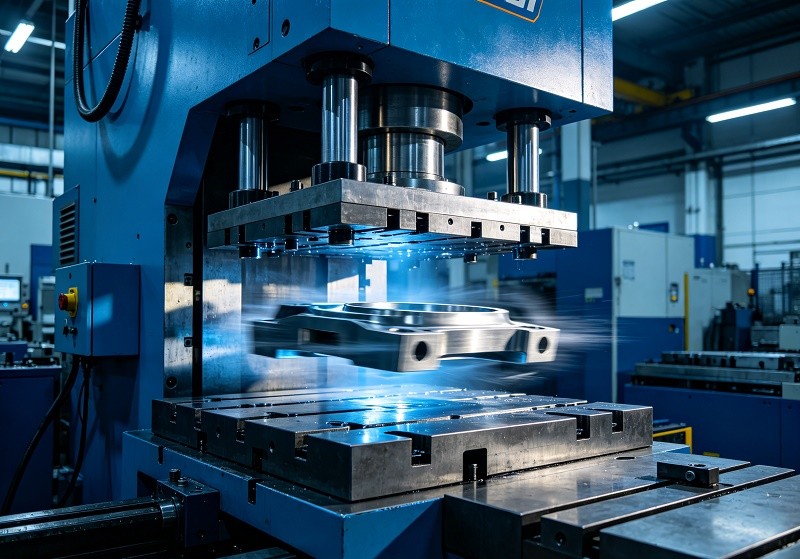
The quality and consistency of stamped parts are paramount, especially for complex components used in high-performance applications. While traditional mechanical presses are fast, advanced hydraulic stamping presses offer a superior level of control that is ideal for custom, short-run production. Unlike mechanical presses, which follow a fixed stroke cycle, hydraulic presses allow for complete control over the ram's speed, pressure, and position throughout the entire stroke.
This programmability is a significant advantage. For deep-draw parts, the ability to slow down the initial draw and control the material flow can prevent tearing and wrinkling, resulting in a much higher yield of consistent, high-quality components. The press can also be programmed to "dwell" at the bottom of the stroke, applying full pressure for a set duration to coin features or set sharp forms with exceptional precision. This level of control ensures that every part in a small batch, from the first to the last, maintains the same tight tolerances and material integrity, which is crucial for applications where consistency is non-negotiable.
Overcoming Traditional Tooling Barriers with Modern Methods
The most significant barrier in traditional metal stamping has always been the tooling. Building a progressive die is a complex, time-consuming, and expensive endeavor, making it impractical for prototyping, low-volume production, or products with a short lifecycle. Modern short-run stamping suppliers have systematically dismantled this barrier by employing innovative and flexible tooling methods.
These methods include:
- Modular Tooling: Utilizing a library of universal die components (punches, forms, and holders) that can be quickly assembled into a custom configuration for a specific part. This "mix-and-match" approach drastically reduces the time and cost compared to creating a monolithic die from scratch.
- Soft Tooling: For early prototypes or very small runs, tooling can be crafted from less durable but more easily machined materials like hardened steel or even high-strength plastics. While these tools won't last for millions of hits, they are perfect for producing a few hundred or thousand parts at a fraction of the cost.
- CNC Machining and Wire EDM: Advanced CNC machining allows for the rapid creation of precise die inserts and form blocks directly from CAD files. Wire Electrical Discharge Machining (EDM) can cut intricate shapes into hardened tool steel with extreme accuracy, enabling the production of complex tooling components without a lengthy manual finishing process.
By embracing these modern techniques, suppliers eliminate the tooling bottleneck, democratizing access to professional-grade custom metal parts and allowing even small companies to compete on a level playing field.
Ensuring Superior Quality and Precision with Your Custom Stamped Metal Parts Supplier
While cost and speed are compelling benefits, they are meaningless without quality. A top-tier custom stamped metal parts supplier builds its reputation on delivering components that meet the most stringent standards of precision and quality. This commitment extends beyond the stamping process itself to encompass a comprehensive quality assurance framework and a range of finishing services. By combining advanced technology with rigorous process control and deep expertise, these suppliers ensure that every part is not only made quickly and cost-effectively but is also manufactured to perfection, ready to perform in the world's most demanding applications.
Delivering Micron-Level Accuracy and Tight Tolerances
In industries like aerospace, medical devices, and electronics, precision is measured in microns (one-thousandth of a millimeter). Achieving this level of accuracy in a stamped metal part requires a confluence of advanced machinery, meticulous process control, and expert knowledge. Short-run specialists excel in this high-precision environment because their processes are inherently more controlled than high-speed, high-volume operations. Every step, from the initial tool design to the final press stroke, is optimized for accuracy.
Suppliers achieve tight tolerances through several means:
- State-of-the-Art Equipment: Utilizing precision presses (like hydraulic presses with finite stroke control) and advanced die-making technology (like Wire EDM) to create tooling with near-perfect accuracy.
- Rigorous Process Monitoring: Implementing in-process sensors and real-time monitoring to ensure that variables like pressure, temperature, and material feed rate remain within strict parameters.
- Climate-Controlled Environments: Housing operations in temperature and humidity-controlled facilities to prevent material expansion or contraction that could affect final part dimensions.
This fanatical attention to detail allows for the reliable production of parts with tolerances as tight as ±0.001 inches (25.4 microns) or even finer, ensuring they fit and function flawlessly in critical assemblies.
Comprehensive Quality Assurance and Surface Enhancements
A quality part is the result of a quality process. Leading custom stamping suppliers integrate quality assurance into every phase of production. This begins with a thorough design for manufacturability (DFM) analysis to identify potential issues before any metal is cut. Once production starts, the quality checks are continuous. First-article inspections verify that the setup is perfect, while in-process inspections by operators and quality technicians ensure consistency throughout the run. Finally, a meticulous final inspection using tools like Coordinate Measuring Machines (CMMs), optical comparators, and advanced vision systems confirms that every dimension and feature of every part meets the customer's specifications.
Beyond dimensional accuracy, the functionality and longevity of a part often depend on its surface characteristics. Reputable suppliers offer a suite of secondary operations and surface enhancements to deliver a fully finished component. These value-added services often include:
- Deburring: Removing sharp edges and burrs left over from the stamping process using methods like tumbling, vibratory finishing, or manual detailing for a safe and clean finish.
- Heat Treating: Altering the metal's properties to increase hardness, strength, or ductility to meet specific performance requirements.
- Plating and Coating: Applying finishes like zinc, nickel, chrome, or powder coating to enhance corrosion resistance, improve wear characteristics, or provide a specific aesthetic.
- Assembly: Performing sub-assembly operations to integrate the stamped component with other parts, saving the customer time and labor.
This holistic approach to quality ensures that the final product delivered is not just a part, but a complete, ready-to-use solution.
Tailored Applications Across Diverse High-Value Industries
The combination of flexibility, precision, and speed offered by small-batch stamping makes it an enabling technology for a wide array of high-value industries. Each sector leverages these benefits to solve unique challenges and drive innovation.
- Aerospace & Defense: The aerospace industry demands uncompromising quality, tight tolerances, and often requires parts made from exotic alloys. Short-run stamping is used to produce brackets, clips, connectors, and enclosures for avionics and structural components where reliability is paramount. The ability to produce small, certified batches is crucial for both new aircraft development and maintenance, repair, and overhaul (MRO) operations.
- Medical Devices: In the medical field, precision can be a matter of life and death. Small-batch manufacturing is essential for producing components for surgical instruments, diagnostic equipment, implants, and wearable devices. The process allows for rapid prototyping of new device concepts and ensures the extreme cleanliness and consistency required for medical-grade parts.
- Electronics: From consumer gadgets to industrial control systems, electronics rely on a vast number of custom metal components like EMI/RFI shields, connectors, terminals, and heat sinks. Short-run stamping allows electronics companies to rapidly iterate on shield designs to optimize performance and to produce custom connectors for densely packed circuit boards.
- Automotive: While the automotive industry is known for high-volume production, small-batch stamping plays a critical role in prototyping new models, producing parts for custom or luxury vehicles, and serving the aftermarket. It enables the creation of specialized brackets, sensor housings, and interior components with the speed needed to keep up with fast design cycles.
Small batch manufacturing, when supported by a skilled and well-equipped custom stamped metal parts supplier, presents a powerful solution for modern product development. It offers a uniquely flexible, cost-effective, and high-quality pathway for companies across a multitude of industries. This approach effectively lowers the barriers to entry for innovation, allowing for rapid iteration and validation without the burdensome financial commitments and long timelines associated with traditional high-volume production.
By understanding and embracing these benefits, businesses can make more informed and strategic manufacturing decisions. This empowers them to accelerate innovation, reduce risk, and ultimately achieve greater success in bringing their products to market. We encourage you to consider how this agile methodology could benefit your next project and to share this information with others who are looking to push the boundaries of hardware development.