Understanding Rubber Keypad Manufacturing Processes: A Custom Silicone Rubber Keypad Manufacturer's Guide
- Share
- Issue Time
- Feb 7,2026
Summary
Comprehensive guide to silicone rubber keypad manufacturing: design, molding processes (compression/LIM), tactile engineering, customization, and quality assurance for durable HMIs.
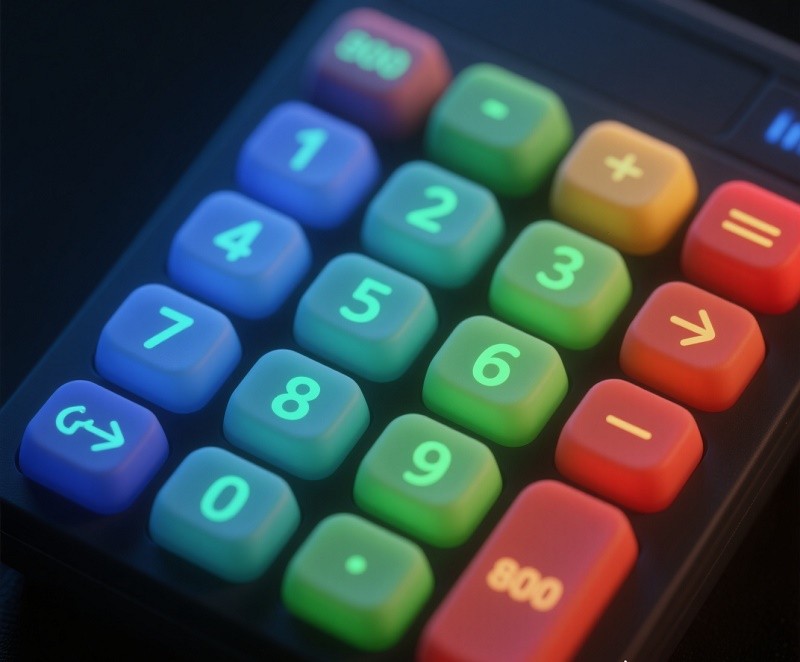
As an experienced custom silicone rubber keypad manufacturer, we recognize that these components are a critical element of human-machine interaction across a vast array of industries, from everyday consumer electronics to life-saving medical devices. We are here to guide you through the intricate processes behind their creation and demonstrate why they frequently represent the ideal interface solution for modern applications.
Silicone rubber keypads, with their inherently flexible and resilient nature, offer exceptional tactile feedback and robust resistance to environmental factors, making them an indispensable component in today's technology. Their unique combination of versatility, durability, and cost-effectiveness establishes them as a superior interface solution that truly stands out. I invite you to join us on an in-depth exploration of the manufacturing journey that brings these essential components to life.
The Evolutionary Edge: Why Silicone Rubber Keypads from a Custom Silicone Rubber Keypad Manufacturer Excel
Silicone rubber keypads have carved out a significant niche in the world of user interfaces, and for good reason. Their unique material properties give them a distinct advantage over other technologies like membrane switches or mechanical buttons in many applications. A professional custom silicone rubber keypad manufacturer can leverage these properties to create a user interface that is not only functional and reliable but also perfectly tailored to the end product's specific environmental and operational demands. This section will delve into the core benefits that make silicone rubber the material of choice for designers and engineers aiming for excellence.
Unparalleled Durability and Longevity
One of the most compelling reasons to choose silicone rubber keypads is their exceptional resilience and long operational life. The inherent properties of high-quality silicone rubber—such as excellent fatigue resistance and anti-aging characteristics—form the foundation of this durability. Unlike plastic keys that can become brittle or show wear over time, silicone keypads are engineered to withstand repetitive stress. A well-designed keypad can achieve a mechanical service life of up to 10 million-plus actuation cycles, making it a low-maintenance and highly reliable solution for products that see frequent use.
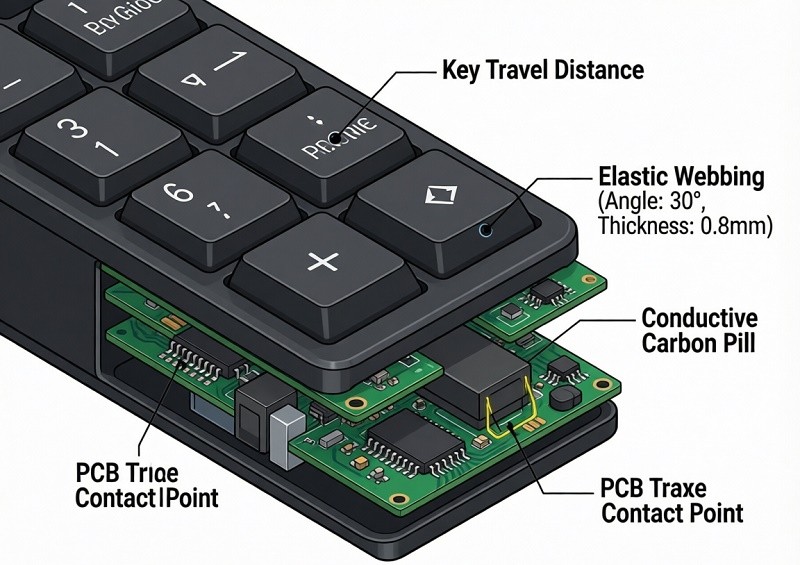
This longevity is not just a function of the material itself but also of the engineering behind it. Factors like key travel distance, structural design, and stress distribution are meticulously planned to disperse the pressure from each press, reducing localized fatigue and preventing structural failure. This robust construction ensures that the keypad maintains its structural shape and tactile feel even after millions of uses, providing a consistent user experience throughout the product's lifespan.
Superior Tactile Feedback for Enhanced User Experience
Beyond durability, the quality of a user's interaction with a device is profoundly influenced by the tactile feel of its keys. Silicone rubber keypads excel in providing a crisp, positive tactile response that confirms an action has been registered. This feedback is not accidental; it is carefully engineered by controlling the geometry of the elastic webbing that supports each key.
The key parameters that define this tactile experience include:
- Actuation Force: This is the amount of pressure, typically measured in grams, required to collapse the key's webbing and make electrical contact. It can be tailored from very light (e.g., 30g) for rapid-entry devices to very heavy (e.g., 300g+) for industrial controls where accidental presses must be avoided.
- Snap Ratio: Calculated as the difference between the actuation force and the contact force, divided by the actuation force, the snap ratio quantifies the "click" or "snap" feeling. A snap ratio between 40% and 60% is generally considered ideal, offering a satisfying tactile feel without overburdening the webbing, which could shorten its life.
- Key Travel: The distance the key moves from its resting position to the point of contact. This, along with the actuation force, can be adjusted to create a specific ergonomic profile.
By manipulating the webbing's thickness, angle, and material hardness, a custom silicone rubber keypad manufacturer can fine-tune these characteristics. This allows for the creation of a user experience that is precisely matched to the application, whether it requires light and fast data entry or deliberate, forceful activation.
Resistance to Environmental Extremes
Silicone rubber's unique chemical structure gives it remarkable stability when faced with environmental challenges. This resilience makes silicone keypads a superior choice for devices that must operate reliably outside of a climate-controlled office, from field equipment and marine electronics to automotive and medical applications.
Waterproof and Chemical Resistant Properties
Silicone is inherently hydrophobic, meaning it repels water. This property makes it an excellent material for creating sealed, waterproof interfaces. By designing the keypad as a single, continuous mat that wraps around the edges of the underlying circuit board, a natural gasket is formed. This design prevents the ingress of liquids, dust, and other contaminants, protecting the sensitive electronics within. Such keypads can be engineered to meet specific Ingress Protection (IP) ratings, like IP67, which signifies that the device is completely dust-tight and can withstand temporary immersion in water up to 1 meter deep for 30 minutes.
Furthermore, silicone rubber exhibits excellent resistance to a wide range of chemicals, including oils, acids, and alkalis. This makes silicone keypads suitable for industrial control panels, medical devices that undergo frequent cleaning with chemical disinfectants, and automotive applications where exposure to fluids is common. A proprietary polyurethane (PU) or another protective coating can be applied to the surface to further enhance this resistance and protect the printed graphics from abrasion and chemical wear.
Wide Operating Temperature Range
Many electronic components fail when exposed to extreme heat or cold. Silicone rubber, however, stands apart. Standard silicone keypads maintain their mechanical properties and elasticity across a remarkably wide operating temperature range. They will not crack or become brittle in freezing conditions, nor will they warp or degrade in high heat.
Typical operating temperatures for silicone rubber keypads range from -40°C to +150°C (-40°F to +302°F), with some specialized formulations capable of withstanding temperatures as low as -55°C and as high as +250°C. This makes them perfectly suited for a multitude of demanding applications:
- Automotive: Engine bay components, dashboard controls.
- Industrial: Factory floor equipment, outdoor control panels.
- Aerospace: Cockpit instrumentation, control systems.
- Medical: Equipment that must be sterilized at high temperatures.
This thermal stability ensures that the keypad's tactile feel and electrical performance remain consistent and reliable, regardless of the ambient temperature.
Design Flexibility and Customizability
Unlike rigid plastic or metal interfaces, silicone rubber's molding process offers immense freedom in design. As a highly flexible elastomer, silicone can be molded into complex, three-dimensional, and contoured shapes, allowing the keypad to integrate seamlessly with the ergonomics of a product's housing. This versatility means designers are not limited to flat planes or standard button layouts.
A custom silicone rubber keypad manufacturer can offer a wide spectrum of customization options:
- Shape and Size: Keys can be any shape—round, oval, square, or completely custom—and size, and can be combined into a single, cohesive part.
- Color: Silicone can be color-matched to any Pantone or RAL reference to align perfectly with brand aesthetics. Multi-color keypads can be created through co-molding, a process where different colored silicones are molded together, creating durable, vibrant designs without the need for paint.
- Graphics and Legends: Key legends (text and symbols) can be applied through durable screen printing. For backlit applications, multi-layer painting and laser etching can be used to create sharp, illuminated graphics that are highly visible in low-light conditions.
This wide range of options allows for the creation of a keypad that is not only functional but also enhances the product's overall aesthetic and brand identity.
Cost-Effectiveness and Ease of Cleaning
While the initial tooling investment for custom keypads exists, silicone rubber keypads offer significant long-term cost advantages, especially for medium to high-volume production runs. The compression molding process is highly efficient, and a single multi-cavity tool can produce hundreds of parts in a single cycle. This scalability leads to a lower per-unit cost as production volume increases. Furthermore, because a single molded part replaces multiple individual mechanical switches and a separate sealing gasket, assembly time and complexity are drastically reduced, lowering overall manufacturing costs.
Beyond production, the maintenance of silicone keypads is remarkably simple. Their solid, non-porous surface has no crevices for dirt and grime to accumulate. This makes them exceptionally easy to clean and disinfect, a critical feature for medical devices, food service equipment, and public-use terminals.
- Routine Cleaning: The surface can be easily wiped down with a soft cloth and a mild soap-and-water solution.
- Disinfection: For more stringent hygiene requirements, isopropyl alcohol (IPA) can be used to effectively clean and sanitize the keypad without damaging the silicone material or printed graphics, especially if a protective coating is applied.
This combination of efficient manufacturing and low-maintenance ownership contributes to a lower total cost of ownership compared to many alternative interface technologies.
Behind the Scenes: How a Custom Silicone Rubber Keypad Manufacturer Crafts These Essential Components
The creation of a custom silicone rubber keypad is a sophisticated process that transforms raw materials into a precise, high-performance user interface. It's a journey that blends meticulous digital design with advanced physical manufacturing techniques. As a dedicated manufacturer, we follow a rigorous, multi-stage process to ensure every keypad meets the exact specifications for form, function, and durability. This section pulls back the curtain on that journey, from the initial digital mold design to the final finishing touches that make each keypad unique.
The Foundation: Mold Design and Development
Every high-quality keypad begins as a digital blueprint. This initial stage is arguably the most critical, as the precision of the final product is entirely dependent on the quality of the production mold.
The process unfolds in several key steps:
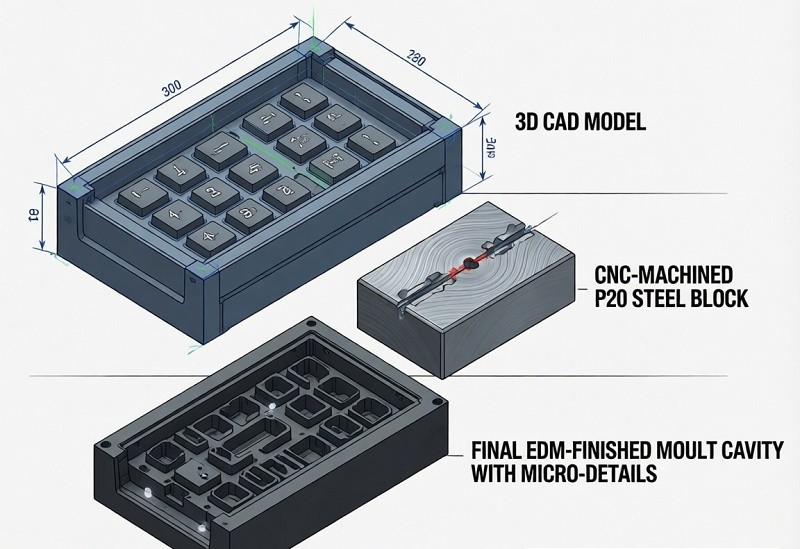
- CAD Modeling: Using specialized Computer-Aided Design (CAD) software like SOLIDWORKS or an equivalent, engineers create a detailed 3D model of the keypad. This digital file meticulously defines every aspect of the design, including key heights, travel, wall angles, and the precise geometry of the tactile webbing.
- Tooling Design: The 3D keypad model is then used to design the manufacturing tool. For compression molding, this is typically a two-part mold made from high-grade P20 or H13 tool steel. The design must account for material flow, draft angles for easy part removal, and venting channels to allow air to escape during molding.
- CNC and EDM Machining: The digital tool design is converted into machine instructions (G-code). High-precision Computer Numerical Control (CNC) milling machines carve the basic shape of the mold cavities from blocks of steel. For intricate details, sharp corners, and fine textures that CNC mills cannot achieve, Electrical Discharge Machining (EDM) is used. This process uses electrical sparks to precisely erode the steel, creating the final, highly detailed mold features.
The resulting steel mold is a durable, precise negative of the final keypad. Its accuracy is paramount, as any flaw in the mold will be replicated in every part it produces. This is why expert mold design and development are the bedrock of a reputable keypad manufacturer.
Material Selection and Preparation for Optimal Performance
The performance characteristics of a silicone keypad—from its tactile feel and electrical function to its environmental resistance—are dictated by the specific materials chosen. Selecting and preparing the right compounds is a science in itself.
The Role of Liquid Silicone Rubber (LSR)
Silicone for molding typically comes in two main forms: High-Consistency Rubber (HCR) and Liquid Silicone Rubber (LSR). While most keypads are made using HCR via compression molding, LSR is a crucial material for specific, high-precision applications.
- High-Consistency Rubber (HCR): Also known as "gum stock," HCR has a very high viscosity, giving it a solid, clay-like consistency. It's ideal for compression molding, where pre-cut sheets or slugs of material are placed into the mold before heat and pressure are applied.
- Liquid Silicone Rubber (LSR): LSR is a two-part, platinum-cured silicone with a very low viscosity, allowing it to be pumped and mixed. This makes it perfect for liquid injection molding (LIM). The benefits of using LSR include:
- High Precision: The liquid nature of LSR allows it to fill extremely intricate and complex mold details with very tight tolerances, often as precise as +/- 0.02mm.
- Faster Cycle Times: LSR injection molding is a highly automated process with faster curing times, leading to greater production efficiency, especially for high-volume orders.
- Excellent Part Consistency: The automated mixing and injection process ensures exceptional repeatability and uniform quality from part to part.
- Superior Properties: LSR often exhibits higher tear strength, better resilience, and excellent transparency, making it suitable for demanding medical and optical components.
LSR is often the material of choice for keypads with extremely complex geometries, very thin walls, or when overmolding onto other components like plastic or metal inserts.
Conductive Materials for Electrical Functionality
Because silicone rubber itself is an excellent electrical insulator, a conductive element must be added to allow a keypress to register as an electronic signal. This is achieved by creating a bridge between two contacts on a printed circuit board (PCB) located beneath the keypad. There are two primary methods for adding this functionality:
1. Conductive Pills (Carbon Pills): This is the most common and robust method. Conductive pills are small, pre-formed pellets made from a silicone base that is heavily infused with carbon particles. These "pills" are inserted into the mold and become co-molded into the underside of each key during the manufacturing process. When a key is pressed, the carbon pill physically touches the interlocking traces on the PCB, completing the circuit.
- Advantages: Extremely durable, long-lasting, and provide a reliable, low-resistance contact. Standard carbon pills offer a contact resistance of around 100-200 ohms, which is suitable for most applications.
- Variations: For applications requiring even lower resistance, such as those with higher voltage, pills made with gold or metal can be used. These offer superior conductivity but at a higher cost.
2. Screen-Printed Conductive Ink: An alternative method involves screen printing a layer of conductive ink directly onto the bottom of each key actuator after the keypad has been molded. This ink is a polymer paste containing conductive particles, most commonly carbon, but silver inks are also available.
- Advantages: This method is cost-effective and allows for non-circular or complex contact shapes that would be difficult or impossible to achieve with standard round pills.
- Disadvantages: The resistance of conductive ink is generally higher than that of carbon pills, and it may be less durable over millions of actuation cycles. It is often used in lower-cost consumer electronics like remote controls.
The choice between these two methods depends on the specific requirements of the application, including the required durability, contact resistance, and budget.
Molding Processes: Compression vs. Injection
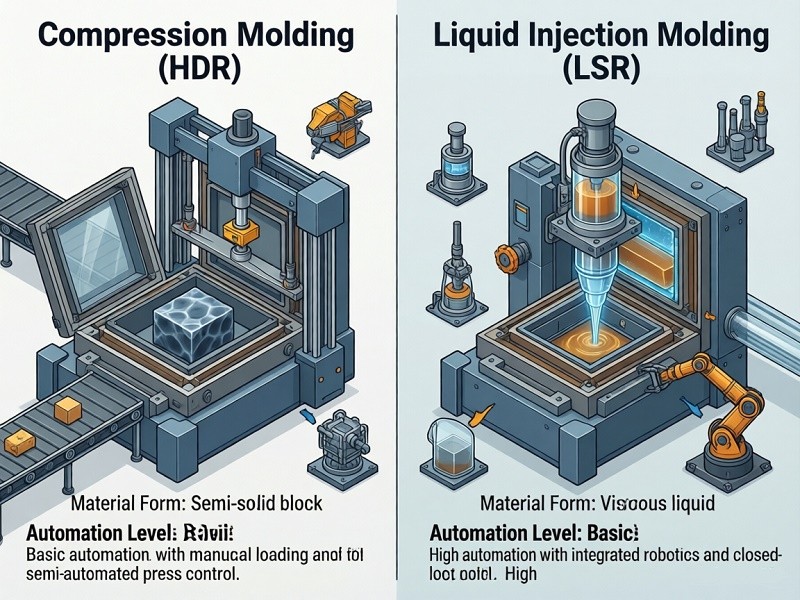
The two primary methods for forming silicone rubber keypads are compression molding and liquid injection molding (LIM). The choice between them depends on the material (HCR vs. LSR), part complexity, and production volume.
Compression Molding: This is the most traditional and widely-used method for producing silicone keypads from High-Consistency Rubber (HCR).
- Material Preparation: A pre-measured amount of HCR, often shaped into a "slug" or sheet, is prepared. If conductive pills are required, they are placed into small pockets within the mold cavity.
- Molding: The HCR preform is manually placed into the heated bottom half of the open mold.
- Curing: The mold is closed, and a large press applies immense pressure and heat (typically 170°C to 200°C). This forces the silicone to liquefy, fill every detail of the mold cavity, and then cure (vulcanize) into a solid elastomeric part.
- Demolding: After a cycle time of several minutes, the press opens, and the cured keypad is removed.
Compression molding is highly cost-effective for low-to-medium production volumes and is excellent for larger, less complex parts.
Liquid Injection Molding (LIM): This highly automated process is used exclusively with Liquid Silicone Rubber (LSR).
- Material Delivery: Two liquid components of LSR (Part A and Part B) are pumped from separate containers to a metering unit, which ensures a precise 1:1 ratio.
- Mixing and Injection: The components are blended in a static or dynamic mixer and then injected under pressure into a closed, heated mold.
- Curing: The heat of the mold triggers a rapid curing process, solidifying the LSR part in a very short time, often just seconds.
- Ejection: Once cured, the mold opens, and the finished part is automatically ejected.
LIM is ideal for high-volume production of complex, high-precision parts. It offers faster cycle times, minimal material waste, and exceptional part-to-part consistency, though the initial tooling and equipment costs are higher than for compression molding.
Here is a simple comparison:
| Feature | Compression Molding | Liquid Injection Molding (LIM) |
|---|---|---|
| Material | High-Consistency Rubber (HCR) | Liquid Silicone Rubber (LSR) |
| Tooling Cost | Lower | Higher |
| Part Cost | Higher at high volumes | Lower at high volumes |
| Cycle Time | Slower (minutes) | Faster (seconds) |
| Labor | More manual intervention | Highly automated |
| Precision | Good | Excellent |
| Complexity | Best for simple to moderately complex parts | Ideal for highly complex & intricate parts |
| Waste | More potential for flash (waste) | Minimal flash, less waste |
Post-Molding Enhancements and Surface Treatments
Once the keypad is demolded, it is a semi-finished product. A series of crucial post-molding steps are required to enhance its performance, refine its appearance, and add the final functional and aesthetic details that make the design complete.
Secondary Vulcanization for Improved Performance
Also known as post-curing, secondary vulcanization is a critical step for stabilizing and enhancing the properties of the molded keypad. After the initial molding, the keypad is placed in a hot air circulating oven and "baked" for a set period, typically for 2 to 4 hours at temperatures between 177°C and 200°C.
This process serves several vital functions:
- Removal of Volatiles: The primary curing process, especially if peroxide-based catalysts are used, can leave behind residual by-products (volatiles) and low-molecular-weight compounds. Post-curing effectively removes these substances, which is essential for medical-grade and food-contact applications to meet regulatory standards like FDA requirements.
- Improved Mechanical Properties: Secondary vulcanization further advances the cross-linking of the silicone's polymer chains. This increases tensile strength, hardness, and resilience, making the final product more robust.
- Enhanced Stability: The process stabilizes the physical properties of the elastomer, reducing changes that might otherwise occur due to natural aging. This ensures the keypad's dimensional stability and performance remain consistent over its service life.
While it is an extra step, post-curing is indispensable for manufacturing high-quality, reliable, and safe silicone keypads.
Eliminating Burring: Precision Finishing
The molding process, particularly compression molding, often leaves behind a thin veil of excess material called "flash" or "burr" along the parting line of the mold. While well-designed molds minimize flash, its complete removal is a necessary finishing step to ensure a clean aesthetic and proper fit within the product housing.
Several methods are used for deflashing, depending on the part's complexity and volume:
- Manual Trimming: For prototypes or small production runs, flash can be removed by hand using trimming tools. While effective, this method is labor-intensive and can result in inconsistencies.
- Die Punching: For simpler, flat keypads, a die can be used to punch out the part from the larger molded sheet, cleanly shearing off the flash in one motion.
- Cryogenic Deflashing: This is a highly efficient and precise method for high-volume production. The molded keypads are placed in a chamber and cooled with liquid nitrogen to temperatures as low as -184°C (-300°F). At this temperature, the thin flash becomes extremely brittle. The parts are then tumbled and blasted with small polycarbonate media pellets, which shatter the brittle flash without damaging the more substantial body of the keypad. This automated process removes flash consistently from both external surfaces and complex internal geometries.
Precision finishing ensures that every keypad not only functions perfectly but also has the clean, professional appearance that end-users expect.
Achieving Aesthetics and Functionality: Printing and Coating
The final steps in keypad manufacturing are centered on adding the visual elements and protective layers that ensure both aesthetic appeal and long-term durability.
- Screen Printing: This is the most common method for applying legends (letters, numbers, and symbols) to the keypad surface. A mesh screen with a stencil of the desired graphics is used to apply a special silicone-based ink. This process can be repeated with different colors to create multi-color graphics.
- Laser Etching for Backlighting: To create backlit keypads, a multi-step process is used. First, the keypad is molded from translucent silicone. It is then sprayed with one or more layers of opaque colored paint. A high-powered laser is then used to precisely burn away the top paint layer(s) in the shape of the desired legend, exposing the translucent silicone underneath. When an LED is placed behind the key, light shines through the etched portion, illuminating the symbol. This method creates exceptionally durable and crisp backlit graphics.
- Protective Coatings: To protect the printed legends from wear and tear and to enhance the keypad's feel and durability, a final coating is often applied.
- Polyurethane (PU) Coating: A clear PU spray is a cost-effective and very common choice. It provides excellent resistance to abrasion, chemicals, and UV exposure, significantly extending the life of the printed graphics. It is available in matte or gloss finishes.
- Epoxy Coating: For a high-end, premium feel, a clear epoxy resin can be applied to the keytops. This creates a hard, glossy, lens-like surface that is extremely durable and wear-resistant.
These finishing processes transform the molded silicone into a fully functional and aesthetically pleasing interface, ready for integration into the final product.
Customization Options Offered by a Leading Custom Silicone Rubber Keypad Manufacturer
One of the most significant advantages of silicone rubber keypad technology is its immense capacity for customization. A skilled custom silicone rubber keypad manufacturer can go far beyond standard designs, tailoring virtually every aspect of the keypad to meet the unique functional, ergonomic, and aesthetic requirements of a specific product. This ability to create a truly bespoke interface is what allows silicone keypads to integrate seamlessly into a diverse range of applications, enhancing both usability and brand identity.
Tailoring Keypad Design to Your Specifications
The fundamental design of a silicone keypad is not fixed. It is a canvas for engineers and designers to create an interface that is perfectly suited to the end product. This customization extends to every physical and functional attribute of the keypad.
- Ergonomics and Geometry: The shape, size, spacing, and height of keys can be precisely defined to match the natural movement and comfort of the user's fingers. Keypads can be molded with concave or convex tops, unique contours, and can be staggered or arranged in arcs to improve typing efficiency and reduce fatigue.
- Key Travel and Actuation Force: As previously discussed, the actuation force and key travel distance are critical to the user experience. These can be specified with remarkable precision. A manufacturer can design keypads with actuation forces ranging from a light 20 grams to a heavy 500 grams, with optimal performance typically falling between 80 and 150 grams for most applications. Tolerances for these forces are also tightly controlled, ensuring consistency across a production run.
- Sealing Features: The keypad design can incorporate features that create a robust environmental seal. This can be a simple compression rib around the perimeter or a more complex "wrap-around" design where the silicone mat extends to encase the edges of the PCB, providing a complete barrier against dust and liquids.
By working closely with a manufacturer, you can translate your specific ergonomic and functional requirements into a tangible, high-performance keypad design.
Color Matching and Graphic Integration
Visual design is a crucial component of the user experience. A keypad's colors and graphics guide the user, convey brand identity, and improve usability. Custom manufacturers offer a rich palette of options to achieve specific aesthetic goals.
- Precise Color Matching: Manufacturers can precisely match the silicone material to specific color standards, most commonly the Pantone Matching System (PMS). By adding carefully measured pigments to the raw silicone, a keypad can be produced that perfectly aligns with a company's branding guidelines. Advanced color-matching techniques using spectrophotometers can achieve a Delta-E value of less than 1.0, a difference imperceptible to the human eye, ensuring flawless consistency.
- Multi-Color Designs: Keypads with multiple colors can be created without painting. One advanced method is co-molding (or a one-time molding), where different colored raw silicone materials are strategically placed into the various key cavities of a single mold. During compression, these colors fuse together to create a single, multi-colored keypad. This process is highly durable as the color is integral to the part itself.
- Graphic Application: Legends and symbols can be applied using several methods. Screen printing is a cost-effective choice for bold, vibrant, multi-color graphics. For applications demanding extreme precision and durability, especially those requiring backlighting, laser etching is the superior method. It uses a laser to ablate painted layers, revealing a different color or a translucent layer underneath, creating sharp, wear-proof legends.
Optimizing Tactile Feel and Backlighting
Fine-tuning the feel of a keypad and integrating effective illumination are advanced customization techniques that separate a standard product from a premium one.
Optimizing Tactile Feel: The "snap" or tactile response of a key is not a one-size-fits-all feature. It is a critical ergonomic parameter that can be precisely engineered. By adjusting the geometry of the key's supportive webbing—its thickness, the angle of its walls, and the overall shape—manufacturers can dial in the exact feel required. A higher snap ratio creates a crisp, noticeable click, confirming actuation for the user. A lower snap ratio results in a softer, quieter press. This allows a manufacturer to create a keypad that feels right for its specific use, whether it's for fast, repetitive data entry or for deliberate, high-feedback industrial controls.
Customizing Backlighting: For devices used in low-light environments, backlighting is essential for usability. There are several advanced methods to achieve clear and uniform illumination:
- Laser Etching: As the premier method for backlighting, laser etching offers unparalleled precision and durability. By molding the keypad in transparent or translucent silicone, applying opaque color coats, and then precisely etching the legends, light from underlying LEDs can be channeled exclusively through the desired symbols. This prevents "light bleed" and creates sharp, easily readable keys.
- Light Guide Film: This is a thin, flexible sheet placed under the keypad that evenly distributes light from side-mounted LEDs across the entire keypad surface, providing a uniform glow.
- Integrated Light Pipes: For targeted illumination of specific keys or indicators, individual light pipes can be integrated into the design. These are clear rods of acrylic, polycarbonate, or transparent silicone that channel light from a PCB-mounted LED directly to a specific point on the keypad surface. This method is highly efficient, minimizing light loss and preventing hot spots.
The choice of method depends on the desired effect, budget, and design complexity, but all serve to enhance the keypad's functionality and aesthetic appeal in any lighting condition.
Integrating Advanced Components
A silicone keypad is often just one part of a larger human-machine interface (HMI) assembly. A key advantage of working with an experienced manufacturer is the ability to integrate these disparate components into a single, cohesive, and fully functional unit.
- P+R (Plastic + Rubber) Keypads: This popular configuration combines the soft, tactile feel of a silicone keypad with the hard, durable surface of plastic keycaps. An injection-molded plastic keycap (made from materials like ABS or PC) is bonded or mechanically attached to the top of each silicone key. This hybrid approach offers several benefits:
- It provides a more traditional, rigid feel that some users prefer.
- The hard plastic surface is extremely resistant to wear and can be finished in various textures.
- It allows for advanced graphic techniques, such as two-shot molding for the keycaps themselves, creating legends that can never wear off.
- Full Assembly Integration: Beyond P+R keycaps, manufacturers can provide a complete turnkey solution. This often includes assembling the custom silicone keypad with a Printed Circuit Board (PCB), a metal or plastic bezel (the frame around the keypad), and any other necessary components like displays or indicators. This streamlines the supply chain, reduces assembly complexity at the final product stage, and ensures that all components are designed to work together flawlessly.
- Insert and Overmolding: For truly advanced integration, manufacturers can use insert molding. This involves placing a pre-formed part—such as a metal fastener, a plastic substrate, or even electronic components—into the mold before the silicone is injected or compressed. The silicone then flows around and bonds to the insert, creating a single, integrated part. This technique is used to create incredibly robust and complex components where different materials are permanently joined.
Quality Assurance: The Commitment of a Custom Silicone Rubber Keypad Manufacturer
In the manufacturing of precision components like silicone rubber keypads, quality is not optional—it is the cornerstone of reliability and customer trust. A reputable custom silicone rubber keypad manufacturer differentiates itself through an unwavering commitment to quality assurance at every stage of the process. This dedication ensures that every keypad that leaves the facility not only meets the specified design criteria but also performs flawlessly and consistently throughout its intended service life.
Rigorous Testing Protocols
To guarantee that each keypad meets the highest standards of quality and durability, a comprehensive suite of testing protocols is employed. This testing is broadly divided into two categories: ensuring the physical accuracy of the part and verifying its functional and environmental performance.
Visual Inspections and Dimensional Accuracy
The first line of defense in quality control is a meticulous inspection process that verifies the physical integrity and dimensional correctness of every keypad.
Visual Inspections: Quality assurance personnel conduct thorough visual checks, often under magnification, to identify any cosmetic defects. This inspection follows a detailed checklist, looking for issues such as:
- Flash (burrs) or short shots (incomplete molding)
- Surface imperfections like scratches, voids, or sink marks
- Discoloration or inconsistencies in the material
- Contaminants or foreign particles embedded in the silicone
- Defects in a printed or laser-etched legend
Dimensional Accuracy: Ensuring the keypad meets the precise dimensions outlined in the CAD file is critical for proper fit and function. Specialized metrology equipment is used for this verification:
- Calipers and Micrometers: Used for basic measurements of length, width, and thickness.
- Optical Comparators: These machines project a magnified silhouette of the keypad onto a screen, allowing for precise measurement of complex profiles, angles, and radii against a digital overlay of the design specifications.
- Coordinate Measuring Machines (CMM): For the highest level of precision, a CMM uses a highly sensitive probe to touch points on the part's surface, creating a 3D map that can be compared directly against the original CAD model to verify complex geometries and tight tolerances.
This rigorous inspection guarantees that each part is a faithful and flawless reproduction of the approved design.
Functional and Environmental Testing
A keypad that looks perfect and measures correctly must also perform perfectly—both on day one and after years of use in its intended environment. A suite of functional and environmental tests ensures this long-term reliability.
Functional Testing:
- Actuation Force Test: A force gauge is used to measure the precise force required to depress each key, ensuring it meets the specified range (e.g., 150g +/- 25g).
- Contact Resistance Test: This test measures the electrical resistance when a key is pressed, verifying that the conductive element (carbon pill or ink) is making a clean, low-resistance connection with the PCB.
- Life Cycle Test: To verify durability, keypads undergo simulated life testing. A machine repeatedly presses a key for hundreds of thousands or even millions of cycles, after which the keypad is re-tested for actuation force and contact resistance to ensure no degradation in performance.
Environmental Testing: Keypads destined for harsh environments are subjected to accelerated aging tests inside an environmental test chamber. These chambers can simulate a wide range of conditions to stress the component and reveal potential weaknesses.
- Temperature Cycling: The keypad is subjected to rapid and extreme temperature swings (e.g., from -40°C to +125°C) to test its flexibility and the adhesion of coatings and printed layers.
- Humidity Testing: Keypads are exposed to high-humidity environments (e.g., up to 95% relative humidity) to check for material swelling, delamination, or moisture ingress.
- UV Exposure Test: To simulate years of sun exposure for outdoor products, keypads are placed in a UV chamber to check for color fading or material degradation.
By successfully passing these rigorous tests, a keypad proves its readiness for real-world deployment, no matter how demanding the conditions.
Our Expertise as a Domestic Supplier
Choosing where to manufacture your custom components is a strategic decision that goes beyond per-unit cost. Partnering with a domestic, U.S.-based manufacturer offers significant advantages in communication, quality oversight, and supply chain resilience.
Working with a domestic supplier provides unparalleled benefits:
- Seamless Communication: Eliminating time zone barriers and language difficulties streamlines the entire development process. Real-time collaboration means faster problem-solving, clearer understanding of design intent, and fewer delays.
- Superior Quality Oversight: Proximity allows for easier and more frequent on-site visits and audits. You can work hand-in-hand with the engineering and production teams, ensuring that quality standards are not just met, but exceeded. This direct involvement is invaluable for complex projects.
- Robust Intellectual Property (IP) Protection: Manufacturing in the U.S. provides the robust protection of American IP laws. This significantly reduces the risk of design theft or unauthorized replication, a critical concern when developing innovative products.
- Supply Chain Resilience: Recent global events have highlighted the fragility of long, overseas supply chains. Domestic manufacturing shortens lead times, reduces shipping costs and complexities, and insulates your project from international tariffs, port delays, and geopolitical disruptions. This creates a more stable, predictable, and resilient path from production to market.
As an experienced domestic manufacturer, we provide not just a component, but a collaborative partnership dedicated to the success and security of your project from concept to completion.
Conclusion
At our core, as a dedicated custom silicone rubber keypad manufacturer, we merge sophisticated design expertise with advanced molding and finishing technologies to deliver products of the highest caliber. Our focus is on producing silicone rubber keypads that are not only high-quality and exceptionally durable but also fully customizable to your unique vision. We are driven by a commitment to provide interface solutions that don't just meet your functional requirements but actively exceed your performance and aesthetic expectations, adding tangible value to your final product.
The success of your product can hinge on the quality and reliability of its user interface, and choosing the right manufacturing partner is therefore a critical decision. With our deep experience, comprehensive in-house capabilities, and stringent quality control processes, we stand ready to be that partner. We are dedicated to delivering innovative and dependable keypad solutions meticulously tailored to your specific needs, ensuring they enhance both the immediate performance and the long-term longevity of your product. We encourage you to share this guide and invite you to reach out to discuss how we can bring your next interface design to life.