Understanding Material Surface Treatment Technologies for Industrial Machinery Parts
- Share
- Issue Time
- Mar 31,2026
Summary
This blog explores surface treatment technologies for industrial machinery parts, including core importance of surface finishes for durability, functionality and aesthetics, laser-based treatment types and their real-world applications in automotive, aerospace and other high-tech industries.
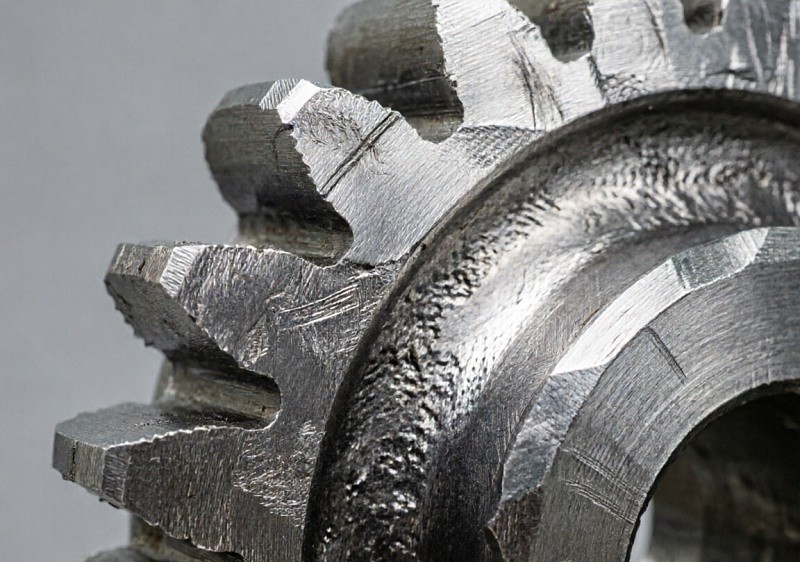
As manufacturing processes become more advanced, the longevity and performance of industrial machinery parts are increasingly dependent on meticulous surface treatment technologies. I often think about how crucial these treatments are for preventing premature wear, corrosion, and overall degradation in demanding industrial environments. Without proper surface treatment, critical components would be vulnerable to various environmental factors and mechanical stresses, leading to reduced lifespans and higher maintenance costs. I've seen firsthand how selecting the right surface finish for industrial machinery parts can dramatically improve their functionality and aesthetic appeal. As a leading Source for Custom Industrial Machinery Parts, we understand that the right finish is not just a final touch—it's integral to the component's success.
In this blog, I will explore the diverse world of surface finishes for industrial machinery parts, highlighting different techniques, their benefits, and how to choose the most suitable one for specific materials and applications.
The Core Importance of Surface Finishes for Industrial Machinery Parts
Surface finish, also known as surface texture, describes the collective characteristics of a component's surface, including its roughness, waviness, and lay pattern resulting from manufacturing processes. It is a pivotal aspect of the manufacturing process that significantly influences the performance, longevity, and even the appearance of a product. A well-executed surface finish is not merely about aesthetics; it is essential for ensuring that products meet rigorous standards of quality and functionality across various industries, from aerospace to medical devices.
Enhancing Durability and Performance
The primary function of most surface treatments is to enhance the durability and operational performance of machinery parts. This is achieved by modifying the outermost layer of the material to better withstand the harsh conditions of its operating environment.
Protecting Against Wear and Corrosion
Industrial machinery often operates in environments where components are subjected to constant friction, abrasion, and exposure to corrosive agents. Surface finishes provide a critical protective barrier.
Wear Resistance: The texture and hardness of a surface directly affect its resistance to wear. A rough surface can increase friction between moving parts, leading to accelerated wear and tear and reducing the component's lifespan. By applying treatments like hard chrome plating or case hardening, the surface hardness is increased, making the part more resistant to abrasion and erosion. This is especially crucial for components like gears, bearings, and pistons that experience regular frictional forces. Using finishing processes like grinding or polishing to reduce surface roughness minimizes energy loss and improves efficiency in rotating machinery.
Corrosion Resistance: A component's surface finish can either enhance or inhibit its ability to resist corrosion. Rough surfaces, with their microscopic peaks and valleys, can trap moisture, chemicals, and other debris, which accelerates corrosion. A smoother finish helps prevent this. Treatments such as anodizing, powder coating, and galvanizing create a protective layer that acts as a barrier between the base metal and corrosive environmental factors. The effectiveness of these coatings can extend a component's lifespan significantly, especially in harsh conditions like marine or chemical processing environments.
Improving Mechanical Properties
Beyond protection, surface treatments can fundamentally improve the inherent mechanical properties of a material's surface, enhancing its strength and resilience.
Fatigue Resistance: Surface irregularities often act as stress concentrators, becoming initiation points for cracks under cyclic loading. This can lead to fatigue failure. Techniques like shot peening and polishing are used to mitigate this. Shot peening introduces compressive residual stresses into the surface, which helps to prevent crack initiation and propagation, thereby improving fatigue strength. Polishing reduces surface imperfections that could otherwise become stress points.
Hardness and Toughness: Many surface treatments are designed to increase the hardness of the outer layer while allowing the core of the component to remain tougher and more ductile. Processes like carburizing (case hardening) and nitriding introduce elements like carbon or nitrogen into the surface of steel parts at high temperatures. This creates a hard, wear-resistant "case" over a softer core, a combination ideal for parts like gears and shafts that must endure both surface wear and impact loads.
Aesthetic and Functional Benefits
While performance enhancement is often the primary driver, the aesthetic and secondary functional benefits of surface finishing are also significant. A particular finish can be crucial for a product's perceived quality and its ability to function correctly within a larger assembly.
Beyond Just Looks: Impact on Adhesion and More
The appearance of a part can be important, but the texture of its surface has deeper functional implications.
Improved Adhesion for Coatings: The surface profile is critical when a part needs to be painted or coated. A moderately rough surface provides more "tooth" or mechanical interlocking points for paints and other coatings to adhere to. Research shows that an optimal surface roughness can increase the adhesion strength of paint on zinc coatings by 30-50% compared to smooth surfaces. However, it's a delicate balance; excessive roughness can trap air, leading to incomplete coating contact and potential failure. Furthermore, the cleanliness of the surface is paramount, as contaminants can ruin adhesion regardless of the texture.
Seal Integrity: In hydraulic and pneumatic systems, the surface finish of components that form a seal is critical. A rough or uneven surface can create microscopic channels, preventing a proper seal and leading to leaks and system failure.
Aesthetic Quality: In many cases, especially for consumer-facing products or high-end industrial equipment, a polished and visually appealing finish is desired. The quality of the surface finish often signals the overall quality and precision of the manufacturing process.
The following table summarizes the key benefits of some common surface finishing goals:
| Benefit Category | Specific Advantage | Common Application Examples |
|---|---|---|
| Durability | Enhanced Wear Resistance | Gears, Bearings, Cutting Tools |
| Improved Corrosion Resistance | Marine Hardware, Chemical Pipes, Outdoor Structures | |
| Increased Fatigue Strength | Turbine Blades, Engine Components, Shafts | |
| Functionality | Better Coating Adhesion | Painted Body Panels, Coated Electronic Housings |
| Proper Seal Integrity | Hydraulic Cylinders, Pneumatic Valves | |
| Aesthetics | Enhanced Visual Appeal | Consumer Electronics, Automotive Interiors, Architectural Fixtures |
Ultimately, the choice of surface finish is a critical engineering decision that impacts a part from its initial performance to its long-term reliability.
Laser-Based Surface Finishes for Industrial Machinery Parts
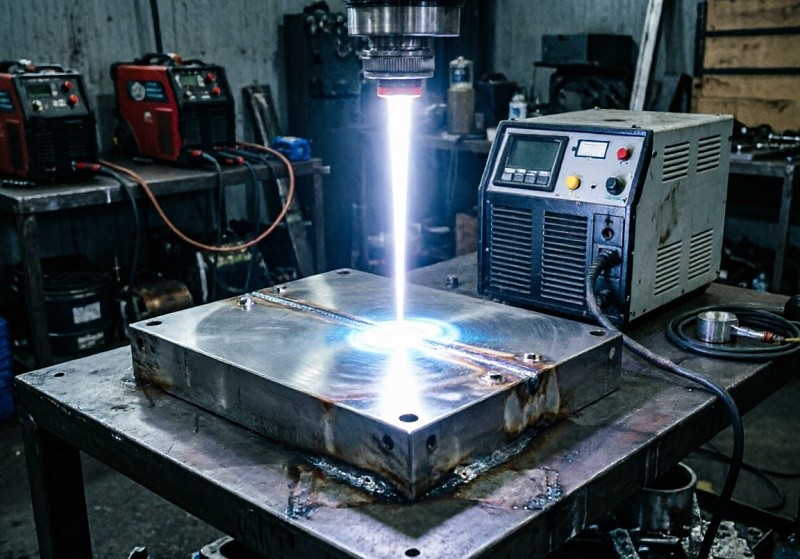
In the evolution of surface treatment technologies, laser-based methods represent a significant leap forward, offering unparalleled precision and versatility. Unlike traditional methods that can be messy and difficult to control, laser processing allows for rapid, localized heating of workpieces with pinpoint accuracy. This technology can modify the surface of nearly any material, including steel, aluminum, copper, and cast iron, to meet stringent engineering requirements with enhanced consistency.
Precision and Versatility with Laser Technology
Laser surface treatment leverages a high-energy beam of light to alter the physical and sometimes chemical properties of a material's surface. The process is non-contact, which means there is no mechanical wear on tools and minimal risk of contaminating the workpiece.
One of the key advantages is the extremely low heat input into the component. The laser's energy is concentrated on a small area, heating it rapidly and allowing the surrounding bulk material to act as a heatsink for rapid cooling, or "self-quenching." This minimizes thermal distortion, which is a common problem with conventional high-heat methods like flame or induction hardening. As a result, many laser-treated parts require little to no post-processing, saving time and cost. Modern systems, often integrated with robotics, can treat complex 3D geometries, making lasers an incredibly flexible tool for surface engineering.
Types of Laser Surface Treatments
Laser technology can be applied in several distinct ways to achieve different surface outcomes. These methods can be broadly categorized into removal processes (cleaning), modification processes (texturing, hardening), and addition processes (cladding).
Laser Cleaning: A Modern Approach to Preparation
Laser cleaning is a non-contact, environmentally friendly process that uses high-intensity laser pulses to remove contaminants like rust, paint, oil, and oxides from a surface. The process works on the principle of laser ablation: when the laser beam strikes the surface, the contaminants absorb the energy, heat up instantly, and are vaporized or ejected from the substrate.
Every material has a specific "ablation threshold"—the amount of energy needed to vaporize it. By setting the laser's energy below the threshold of the base material but above that of the contaminant, the laser can selectively remove the unwanted layer without damaging the part underneath. This makes it ideal for delicate components. Compared to traditional methods like sandblasting or chemical cleaning, laser cleaning is more precise, produces no chemical waste, and is safer for operators. It is widely used for preparing surfaces for welding, bonding, or coating.
Laser Texturing: Optimizing Surface Functionality
Laser texturing, or structuring, modifies a surface's texture and roughness to improve its functional properties. Using a process of controlled laser ablation, it creates precise micro-patterns like dimples or grooves on the surface. This process can be used to:
- Improve Adhesion: By creating a specific roughness, laser texturing provides better mechanical interlocking for adhesives, paints, and thermal spray coatings. This can drastically improve the durability and bond strength of coatings.
- Modify Tribological Properties: The texture can be designed to reduce friction, control lubrication, or improve wear resistance.
- Alter Optical Properties: Lasers can create surfaces that are anti-reflective or have specific decorative appearances.
- Enhance Biocompatibility: In the medical field, laser texturing can create surfaces on implants that encourage bone and tissue growth.
This method offers exceptional control and repeatability, producing flawless and consistent surface preparation that is often superior to abrasive blasting.
Laser Hardening: Boosting Strength and Lifespan
Laser hardening is a surface heat treatment process used to increase the hardness, wear resistance, and fatigue life of steel and cast-iron components. A laser beam heats the surface of the part to a temperature above its transformation point (typically 900-1400°C), altering its crystal structure to austenite. When the laser moves on, the surrounding cold material quenches the heated area extremely rapidly, forming a very fine-grained and hard martensitic structure.
Key benefits of laser hardening include:
- Minimal Distortion: The low and localized heat input significantly reduces part distortion compared to conventional methods, often eliminating the need for post-treatment machining.
- Selective Treatment: Only the specific areas requiring hardening are treated, saving energy and preserving the properties of the rest of the component. This allows for the creation of a hard surface with a tough, ductile core.
- High Precision and Control: The process is highly controllable and repeatable, ensuring consistent quality.
It is an ideal method for hardening parts with complex geometries or specific high-wear areas, such as gears, shafts, and press-forming tools.
Laser Cladding: Repair and Enhancement Through Deposition
Laser cladding, also known as laser metal deposition (LMD), is an additive process used to repair worn components or enhance their surfaces. In this technique, a laser beam creates a molten pool on the substrate surface while a powder or wire of a desired material is simultaneously fed into it. This creates a new layer that is metallurgically bonded to the base material, resulting in a bond that is far stronger than mechanical or thermal spray coatings.
Applications for laser cladding include:
- Repair and Restoration: It can restore worn or damaged high-value components (like turbine blades or hydraulic shafts) to their original dimensions, often with enhanced properties, extending their service life and reducing replacement costs.
- Corrosion and Wear Resistance: A layer of a more resistant material (e.g., a high-alloy steel) can be cladded onto a less expensive base material to protect it in harsh environments.
- Material Addition: The process is highly flexible, allowing for the application of different materials, including those dissimilar to the substrate, to achieve specific surface properties.
Because of its precision and low heat input, laser cladding produces a high-quality layer with minimal dilution and distortion.
Real-World Examples of Laser Surface Finishes for Industrial Machinery Parts
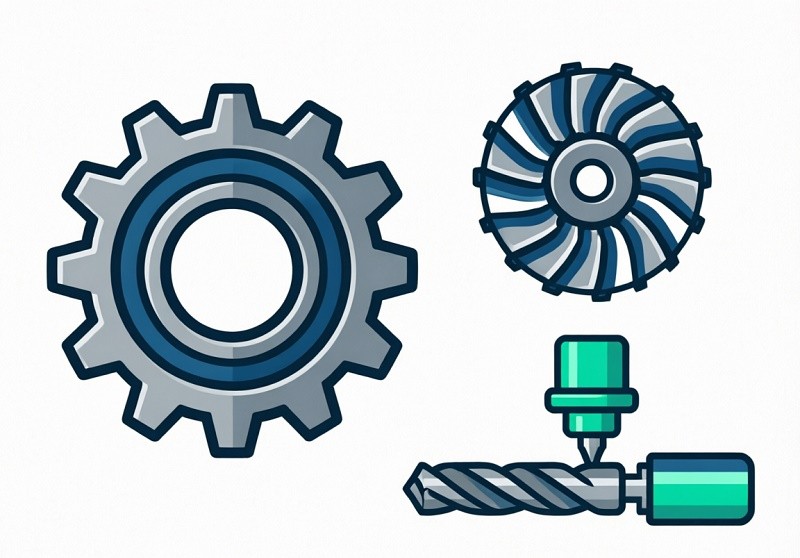
The application of laser surface treatments is widespread across numerous high-tech industries. Here are some practical examples:
| Industry | Component | Laser Treatment Used | Benefit |
|---|---|---|---|
| Automotive | Engine Components, Gears | Laser Hardening | Increased wear resistance and fatigue life. |
| Aerospace | Turbine Blades, Landing Gear | Laser Cladding, Laser Polishing | Repair of high-value parts, reduction of friction, and improved fatigue resistance. |
| Oil & Gas | Drill Components, Valves | Laser Cladding, Laser Hardening | Enhanced corrosion and wear resistance in harsh environments. |
| Tool & Die | Molds, Cutting Tools | Laser Hardening, Laser Cladding | Extended tool life and repair of worn surfaces. |
| Medical | Surgical Instruments, Implants | Laser Polishing, Laser Texturing | Creation of ultra-smooth, sterile surfaces and improved biocompatibility. |
| EV Manufacturing | Battery Pack Housings | Laser Texturing, Laser Cleaning | Improved adhesion for structural bonding and electrical connections. |
These examples highlight how laser technology offers solutions that enhance performance, extend component lifespans, and enable innovations that would be difficult or impossible with traditional methods.