Understanding Material Selection for china cnc drilling parts manufacturers: A Comparison Guide
- Share
- Issue Time
- Dec 31,2025
Summary
Material selection is a critical decision in CNC drilling parts manufacturing, directly influencing performance, durability, and cost-effectiveness. Key material properties include mechanical strength (yield, tensile), hardness, and ductility, which dictate a part's response to stress and machining.
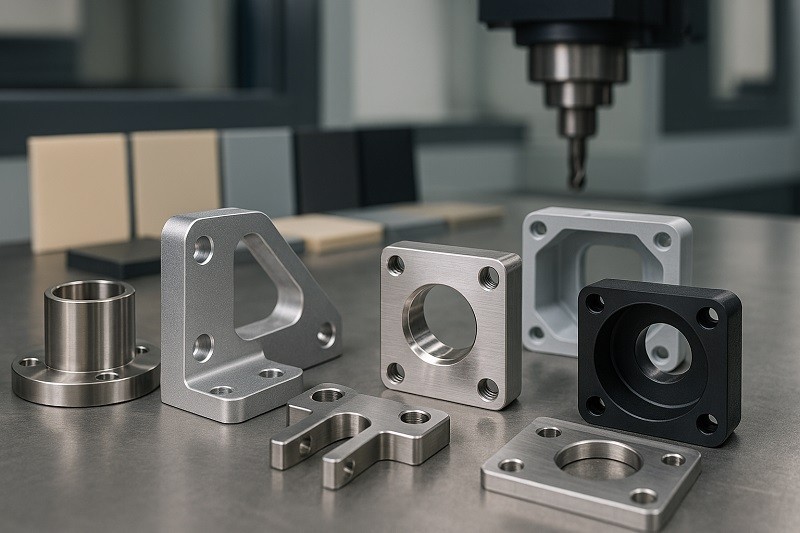
As we navigate the expanding landscape of China CNC drilling parts manufacturers, one of the most critical decisions we face is material selection. This choice directly impacts the performance, durability, and cost-effectiveness of our projects. This guide will delve into the essential factors for understanding material properties and making informed selections when working with China CNC drilling parts manufacturers, ensuring we achieve optimal results for our specific applications. From the unique characteristics of various metals and plastics to the impact of environmental factors, we'll explore why choosing the right material is paramount for successful CNC drilling parts manufacturing in China.
Understanding Material Properties for China CNC Drilling Parts Manufacturers
The foundation of any successful manufacturing project lies in a deep understanding of the materials being used. For China CNC drilling parts manufacturers, selecting the right material is not just about meeting the basic functional requirements; it’s about optimizing for performance, longevity, and cost. The properties of a material dictate how it will behave under stress, in harsh environments, and during the machining process itself.
The Core Characteristics of Materials
Before comparing specific materials, it's essential to grasp the fundamental properties that define their behavior. These characteristics are the language through which engineers and manufacturers predict a part's performance in its intended application.
Mechanical Properties: Strength, Hardness, and Ductility
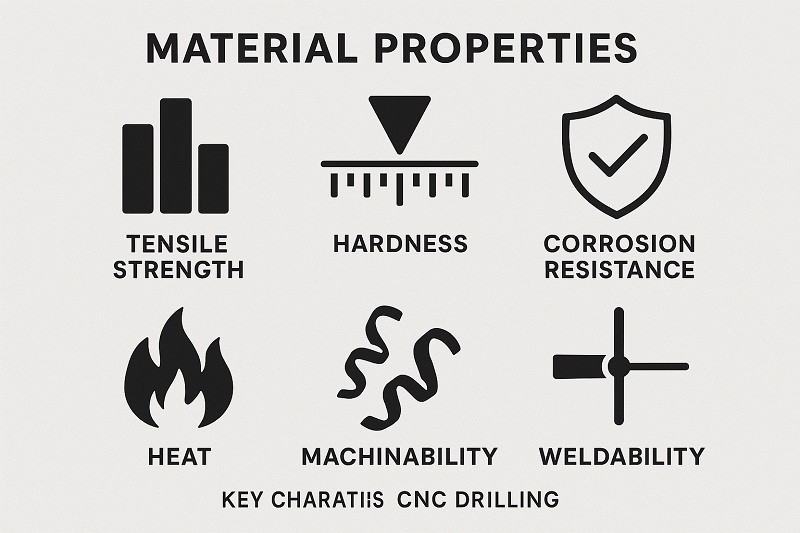
Mechanical properties define how a material responds to applied forces. For CNC drilled parts, which are often components in larger assemblies, these characteristics are paramount to ensure reliability and safety. The primary mechanical properties to consider are strength, hardness, and ductility.
Strength: This is a measure of a material's ability to withstand stress before it deforms or breaks. It's a critical factor for any load-bearing component. Strength is often discussed in two forms:
- Yield Strength: The maximum stress a material can endure before it begins to deform permanently. Below this point, the material is in its "elastic" region and will return to its original shape once the force is removed. This is a crucial number for designing parts that must not bend or change shape under their normal operating load.
- Tensile Strength (or Ultimate Tensile Strength): The maximum stress a material can withstand while being pulled or stretched before it fractures or breaks. Exceeding the tensile strength leads to catastrophic failure. While hardness and tensile strength are often well-correlated, especially in steels, they are distinct properties.
Hardness: This refers to a material's resistance to localized surface deformation, such as scratching, indentation, or wear. In CNC machining, a harder material offers greater wear resistance, which is ideal for parts that rub against other surfaces. However, this benefit comes at a cost; harder materials are generally more difficult and slower to machine, which can increase production time and expenses. Hardness is typically measured using scales like Rockwell (HRC), Brinell (HB), or Vickers (HV).
Ductility: Ductility is the measure of a material's ability to undergo significant plastic deformation before fracturing, such as being drawn into a wire. It is often quantified by elongation percentage. Materials with good ductility can bend, stretch, and absorb energy before failing, making them less prone to brittle fracture under stress. In the context of manufacturing, good ductility can facilitate smoother chip formation during machining, but very ductile materials can also be "gummy" and challenging to achieve a clean cut on.
Understanding the interplay between these properties is key. A high-strength material might be too brittle (low ductility) for an application that experiences sudden impacts. A very hard material might be too costly to machine. The ideal selection always involves balancing these properties to meet the specific demands of the part.
Corrosion and Heat Resistance
Beyond purely mechanical forces, the operating environment of a CNC part plays a decisive role in material selection. Exposure to chemicals, moisture, and extreme temperatures can degrade materials over time, leading to premature failure.
Corrosion Resistance: Corrosion is the chemical or electrochemical reaction between a material and its environment that results in the gradual destruction of the material. This is a common cause of part failure, particularly in applications exposed to moisture, chemicals, or saltwater.
- Materials like stainless steel contain chromium, which forms a passive, self-healing oxide layer on the surface that protects the iron base from rusting.
- Aluminum naturally forms a protective oxide layer that makes it highly resistant to atmospheric corrosion.
- For extremely harsh environments, such as chemical processing or marine applications, high-performance alloys like nickel-based superalloys (e.g., Inconel) or titanium are often required.
Heat Resistance: This is the ability of a material to maintain its mechanical properties, dimensional stability, and structural integrity at elevated temperatures. High temperatures can be encountered both during the CNC machining process itself and in the part's final application (e.g., in an engine or industrial furnace).
- Key parameters to consider include melting point, thermal expansion coefficient, and thermal conductivity.
- Metals such as stainless steel, titanium, and nickel superalloys like Inconel are renowned for their high-temperature performance, maintaining their strength where other materials would soften or fail.
- Certain high-performance plastics, like PEEK and Ultem, also offer exceptional thermal resistance for applications where metal is not suitable. A material's ability to withstand thermal cycling (repeated heating and cooling) without warping or cracking is also critical in many applications.
Choosing a material with inadequate corrosion or heat resistance can lead to dimensional instability, loss of strength, and ultimately, catastrophic failure of the component.
Machinability and Weldability Considerations for China CNC Drilling Parts Manufacturers
Theoretical properties are important, but practical manufacturing considerations often determine the final material choice. Machinability and weldability are two such factors that directly impact production cost, speed, and final part integrity when partnering with China CNC drilling parts manufacturers.
Machinability: This is a term that describes the relative ease with which a material can be cut or shaped by a machining process. Good machinability leads to lower production costs, faster lead times, and better surface finishes. Key factors influencing machinability include:
- Hardness: Harder materials require more force to cut and cause faster tool wear, reducing machinability.
- Ductility and Toughness: Very soft, ductile materials can be "gummy" and difficult to achieve a clean cut on, while tough materials require more energy to machine.
- Thermal Conductivity: Materials that don't dissipate heat well can cause the cutting tool to overheat, leading to premature wear.
- Machinability Rating: The American Iron and Steel Institute (AISI) established a machinability rating system where B1112 steel is the 100% baseline. Materials with ratings above 100% are easier to machine, while those below 100% are more difficult. For example, aluminum 6061 has a high rating and is easy to machine, whereas tough materials like titanium or stainless steel have lower ratings, increasing machining time and cost.
Weldability: This is the ability of a material to be welded under fabrication conditions into a specific, suitable structure and to perform satisfactorily in its intended service. If your CNC drilled part needs to be welded to other components, this property is non-negotiable. Factors affecting weldability include:
- Material Composition: The chemical makeup of the metal is the primary determinant of weldability. Low-carbon steels are generally very easy to weld, while high-carbon steels may require special procedures like preheating to prevent cracking.
- Thermal Conductivity: Materials like aluminum and copper have high thermal conductivity, which dissipates heat quickly from the weld zone, making them more challenging to weld than steel.
- Alloying Elements: Certain elements added to improve other properties can negatively impact weldability. For instance, sulfur, which improves machinability in some stainless steels, can make the material unweldable. Similarly, some high-strength aerospace aluminum alloys (like the 7xxx series) are considered unweldable due to their susceptibility to cracking.
Ignoring machinability can lead to unexpectedly high manufacturing costs and project delays. Likewise, choosing a material with poor weldability can compromise the structural integrity of the final assembly.
Key Material Categories for China CNC Drilling Parts Manufacturers
When engaging with China CNC drilling parts manufacturers, you will encounter a vast array of available materials. These can be broadly grouped into three main categories: metals, plastics, and specialty materials. Each category offers a unique spectrum of properties suitable for different applications.
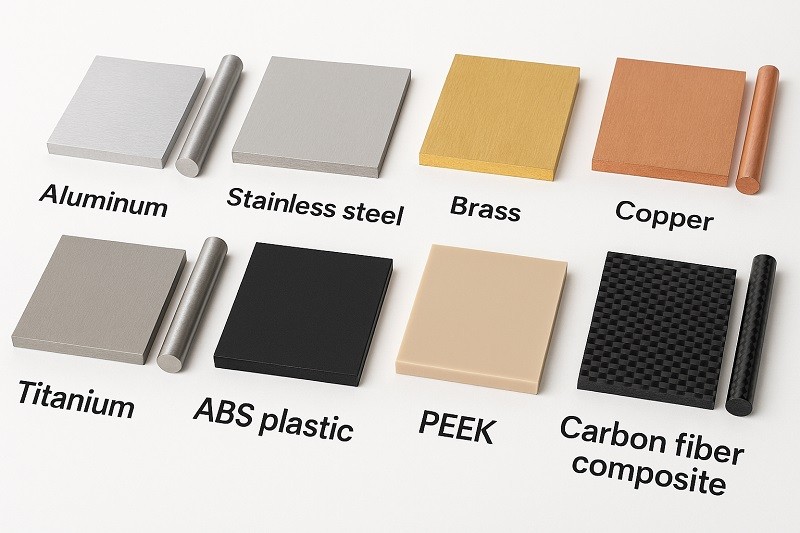
Metals: Aluminum, Steel, Stainless Steel, Brass, Copper, and Titanium
Metals are the most common materials used in CNC machining due to their strength, durability, and versatility. The selection of a specific metal alloy will have a profound impact on the final part's cost, performance, and manufacturability.
Here is a comparative overview of the most common metals used in CNC drilling:
| Material | Key Properties | Common Applications | Machinability & Cost |
|---|---|---|---|
| Aluminum (e.g., 6061, 7075) | Lightweight, excellent strength-to-weight ratio, high thermal and electrical conductivity, natural corrosion resistance. | Aerospace components, automotive parts, consumer electronics enclosures, bicycle frames, jigs, and fixtures. | Machinability: Excellent. Fast to machine with low tool wear. Cost: Low to moderate, making it a very popular and cost-effective choice. |
| Steel (Carbon & Alloy) | High strength, hardness, and durability. Can be heat-treated for enhanced properties. | Structural components, shafts, gears, tools, industrial machinery, and agricultural equipment. | Machinability: Good to moderate. Harder than aluminum, requiring slower speeds. Cost: Low. Generally the most affordable metal option. |
| Stainless Steel (e.g., 304, 316) | Excellent corrosion resistance, high strength and hardness, good performance at extreme temperatures, hygienic. | Medical devices, surgical tools, food processing equipment, marine hardware, chemical tanks. | Machinability: Moderate to difficult. Tends to work-harden, requiring more robust tooling and slower speeds. Cost: High compared to carbon steel due to alloying elements and machining difficulty. |
| Brass (e.g., C360) | Excellent machinability, good corrosion resistance, high electrical conductivity, aesthetically pleasing appearance. | Electrical connectors, plumbing fittings, valves, musical instruments, decorative parts. | Machinability: Excellent. Often used as a benchmark for high machinability. Cost: Moderate. More expensive than steel but cheaper than copper. |
| Copper | Very high electrical and thermal conductivity, good corrosion resistance, soft and ductile. | Heat sinks, electrical wiring components, heat exchangers, busbars. | Machinability: Difficult. Its softness and "gummy" nature can lead to burring and requires careful tool planning. Cost: High, due to raw material price and machining challenges. |
| Titanium (e.g., Grade 5/Ti-6Al-4V) | Exceptional strength-to-weight ratio, outstanding corrosion resistance, biocompatible, retains strength at high temperatures. | Aerospace structural parts, military components, medical implants, high-performance racing parts. | Machinability: Difficult. Low thermal conductivity leads to significant heat buildup at the tool, requiring rigid setups and specialized cooling. Cost: Very High. Both raw material and machining costs are substantial. |
Selection Summary:
- For cost-effective, general-purpose parts, Aluminum 6061 is often the default choice due to its balance of good properties and excellent machinability.
- For high-strength structural applications where weight is less of a concern, Carbon Steel offers the best performance for the price.
- When corrosion resistance is paramount, especially in medical or marine environments, Stainless Steel 316 is the go-to material, despite its higher cost.
- For high-performance applications where every gram matters, Titanium is unparalleled, but its high cost restricts its use to critical components.
Plastics: ABS, Nylon, Polycarbonate, and More
Plastics offer a compelling alternative to metals for many CNC drilling applications, providing advantages like lower weight, corrosion resistance, and often lower cost. Engineering plastics, in particular, are designed to offer robust mechanical and thermal properties suitable for demanding environments. Machinability of plastics is generally excellent, as they are softer and require less cutting force than metals, leading to faster production times.
Below is a guide to some of the most common plastics used in CNC machining:
| Plastic Material | Key Properties | Common Applications | Temperature & Cost |
|---|---|---|---|
| ABS (Acrylonitrile Butadiene Styrene) | Good impact resistance, toughness, and rigidity. Easily machined and finished. Lightweight and affordable. | Prototyping, electronic housings, automotive trim components, consumer goods. | Max Temp: ~80°C (176°F). Cost: Low. Excellent for cost-effective parts and prototypes. |
| Nylon (Polyamide, PA) | Excellent mechanical strength, wear resistance, and low friction properties. High chemical resistance. Absorbs moisture, which can affect dimensional stability. | Gears, bearings, bushings, wear pads, structural components subjected to friction. | Max Temp: ~95°C (203°F). Cost: Moderate. A go-to for durable, low-friction mechanical parts. |
| Polycarbonate (PC) | Exceptional toughness, high impact strength (significantly stronger than acrylic), and optical clarity. Good heat resistance. | Safety guards, lenses, transparent covers, automotive components, medical device housings. | Max Temp: ~135°C (275°F). Cost: Moderate to High. Chosen when high impact strength and transparency are critical. |
| POM (Polyoxymethylene, Acetal, Delrin®) | High stiffness, excellent dimensional stability, low friction, and great machinability. Extremely low water absorption. | Precision gears, bearings, electrical insulators, high-precision mechanical parts, fuel system components. | Max Temp: ~100°C (212°F). Cost: Moderate. The best choice for high-precision plastic parts that require stability. |
| PTFE (Polytetrafluorofluoroethylene, Teflon®) | Extremely low coefficient of friction ("non-stick"), excellent chemical resistance, and high-temperature tolerance. Poor mechanical strength. | Seals, gaskets, valve components, non-stick coatings, chemical-resistant linings, electrical insulators. | Max Temp: ~260°C (500°F). Cost: High. Used for its unique chemical inertness and low-friction properties, not for strength. |
| PEEK (Polyether Ether Ketone) | High-performance thermoplastic. Exceptional mechanical strength, thermal stability, and chemical resistance, even at high temperatures. Biocompatible grades available. | Aerospace components, medical implants, high-pressure valves, semiconductor parts. Often used to replace metal in demanding environments. | Max Temp: ~260°C (500°F). Cost: Very High. The premium choice for extreme temperature and chemical applications. |
Key Considerations for Plastics:
- Thermal Expansion: Plastics have a higher coefficient of thermal expansion than metals, meaning they can change size and shape more significantly with temperature fluctuations. This is a critical consideration for parts requiring tight tolerances.
- Prototyping: Due to their lower cost and ease of machining, plastics like ABS are ideal for creating prototypes to test form, fit, and function before committing to mass production in a more expensive material.
- Weight Reduction: For applications in aerospace, automotive, and robotics, replacing metal parts with high-strength plastics like Nylon or PEEK can lead to significant weight savings without compromising performance.
Specialty Materials: Composites and Alloys
Beyond standard metals and plastics, some of the most demanding applications require specialty materials. These are engineered to provide exceptional performance characteristics that commodity materials cannot match. This category primarily includes composites and advanced metal alloys, often called superalloys.
Composite Materials
Composites are engineered materials made from two or more constituent materials with significantly different physical or chemical properties which, when combined, produce a material with characteristics different from the individual components. The most common examples in CNC machining are fiber-reinforced polymers.
Carbon Fiber Reinforced Polymer (CFRP): Known simply as carbon fiber, this material consists of strong carbon fibers embedded in a polymer matrix (typically epoxy resin).
- Properties: Extremely high strength-to-weight ratio, exceptional stiffness, and low thermal expansion.
- Applications: Aerospace components, high-performance automotive parts (racing), drone frames, and high-end sporting goods.
- Machining Challenges: Machining CFRP is notoriously difficult. The carbon fibers are highly abrasive, leading to rapid tool wear. It is also prone to delamination (separation of layers), splintering, and generating fine, hazardous dust that requires special handling and ventilation. Machining requires specialized diamond-coated tools, high spindle speeds, and specific strategies to avoid damaging the material's integrity. Coolants are often used to manage dust and lubricate the cut.
G-10/FR-4: This is a high-pressure fiberglass laminate, a type of composite made from woven glass cloth and an epoxy resin binder. FR-4 is a grade of G-10 that is flame retardant.
- Properties: High mechanical strength, excellent electrical insulation properties, low moisture absorption, and good dimensional stability.
- Applications: Electrical insulators, circuit boards (PCBs), terminal boards, knife handles, and various structural components in electronics and aerospace.
- Machining Challenges: Like carbon fiber, G-10 is very abrasive and will quickly dull standard high-speed steel tools. Carbide or diamond-coated tools are necessary. It creates a fine, irritating glass dust, necessitating proper ventilation and dust collection systems.
Specialty Alloys (Superalloys)
Superalloys are a group of metal alloys engineered to maintain strength, shape, and functionality under extreme conditions, especially high heat and corrosive environments. They are typically based on nickel, cobalt, or iron-nickel combinations.
Inconel®: A family of nickel-chromium-based superalloys.
- Properties: Outstanding resistance to oxidation and corrosion at high temperatures. It maintains its strength over a wide temperature range, making it ideal for extreme environments where aluminum and steel would fail.
- Applications: Jet engine and gas turbine components (e.g., turbine blades), nuclear reactors, chemical processing equipment, and high-temperature exhaust systems.
- Machining Challenges: Inconel is one of the most difficult materials to machine. It work-hardens rapidly during machining, has high strength, and possesses poor thermal conductivity, which concentrates intense heat at the cutting edge. This leads to extreme tool wear and requires very rigid machines, specialized tooling (ceramic or coated carbide), slow cutting speeds, and high-pressure coolant.
Monel®: A series of nickel-copper alloys.
- Properties: Excellent corrosion resistance, particularly to seawater and a wide range of acids and alkalis. It also has high strength.
- Applications: Marine engineering components, chemical processing equipment, valves and pumps, and shafts in saltwater environments.
- Machining Challenges: Similar to Inconel, Monel work-hardens during machining, though typically to a lesser extent. It requires sharp tools, slow speeds, and positive feed rates to effectively cut beneath the previously hardened layer.
Working with specialty materials requires a manufacturer with specific expertise, advanced machinery, and robust process controls. While their cost and machining complexity are high, they are often the only materials that can meet the performance requirements of mission-critical applications in industries like aerospace, defense, and energy.
Comparative Analysis of Common Materials for China CNC Drilling Parts Manufacturers
A deep dive into specific material grades reveals nuances that are critical for part performance. For China CNC drilling parts manufacturers, providing guidance on these subtleties is a hallmark of an experienced partner. This section compares popular alloys within the stainless steel and copper families and touches upon key considerations for aluminum.
Stainless Steel: 304 vs. 316 vs. 316L
Stainless steel is a top choice for applications requiring strength and corrosion resistance. However, not all stainless steels are created equal. The 300 series, particularly grades 304, 316, and 316L, are among the most frequently specified. Their differences, though subtle, have significant implications for performance and cost.
Chemical Composition and its Impact on China CNC Drilling Parts
The distinct performance characteristics of these three stainless steel grades stem directly from their chemical compositions. While they are all austenitic (chromium-nickel) stainless steels, a few key elements create significant differences.
Here's a breakdown of their nominal compositions:
- Type 304 Stainless Steel: This is the most common stainless steel grade. Its typical composition includes 18% chromium and 8% nickel.
- Type 316 Stainless Steel: This grade is similar to 304 but with a crucial addition: approximately 2-3% molybdenum. To maintain the austenitic structure with the addition of molybdenum, the nickel content is also increased to a minimum of 10%.
- Type 316L Stainless Steel: The composition of 316L is nearly identical to 316, with one vital difference: a significantly lower carbon content. "L" stands for "Low," indicating a maximum carbon content of 0.03%, compared to the 0.08% maximum in standard 316.
The Role of Key Alloying Elements:
- Chromium (Cr): This is the foundational element that makes steel "stainless." When present in sufficient amounts (at least 10.5%), chromium reacts with oxygen to form a thin, durable, passive layer of chromium oxide on the steel's surface. This layer protects the underlying iron from rusting and corrosion.
- Nickel (Ni): Nickel enhances the stability of the austenitic crystal structure, which improves overall formability, ductility, and toughness. It also contributes to corrosion resistance, especially against stress corrosion cracking.
- Molybdenum (Mo): This is the key differentiator for the 316 family. The addition of molybdenum dramatically enhances the material's resistance to pitting and crevice corrosion, particularly in environments containing chlorides (like seawater and de-icing salts). Molybdenum helps stabilize the passive oxide layer, making it more robust against localized attacks from aggressive ions. It also improves the steel's strength at elevated temperatures.
- Carbon (C): Carbon is a hardening agent that increases the tensile and yield strength of steel. However, it has a significant downside related to welding. At high temperatures, carbon can combine with chromium to form chromium carbides at the grain boundaries, a process called sensitization. This depletes the surrounding area of the chromium needed to maintain the protective passive layer, making the material susceptible to intergranular corrosion (weld decay). The much lower carbon content in 316L minimizes this risk, making it the preferred choice for welded components.
In summary, the addition of molybdenum gives 316 and 316L their superior corrosion-fighting ability compared to 304, while the reduced carbon in 316L gives it a critical advantage over 316 in welded applications.
Corrosion Resistance in Different Environments for China CNC Drilling Parts
The choice between 304, 316, and 316L stainless steel hinges almost entirely on the corrosive nature of the part's intended environment. The presence of chlorides and acids is the most significant deciding factor.
Type 304 Stainless Steel: This is the workhorse of the stainless steel family and offers excellent corrosion resistance in a wide range of atmospheric and mild chemical environments. It is ideal for:
- Food and Beverage Processing: Used for tanks, pipes, and processing equipment where hygiene and resistance to food acids are necessary.
- Architectural Applications: Suitable for indoor and outdoor trim, railings, and panels in environments without significant chloride exposure.
- General Household and Industrial Use: Kitchen appliances, sinks, and general-purpose hardware.
However, Type 304 is susceptible to pitting and crevice corrosion when exposed to chloride-rich environments, such as coastal areas, marine applications, or where de-icing salts are used. Continuous exposure to these conditions will lead to rust and eventual failure.
Type 316 and 316L Stainless Steel: Thanks to the addition of molybdenum, the 316 family exhibits vastly superior resistance to corrosion, especially against chlorides and various industrial chemicals and acids. This makes it the necessary choice for more aggressive conditions.
- Marine Environments: Often called "marine-grade" stainless steel, 316 is the standard for boat fittings, coastal architectural features, and any parts exposed to saltwater spray.
- Chemical and Pharmaceutical Processing: Its resistance to acids and other harsh chemicals makes it indispensable for manufacturing reactors, tanks, and piping in these industries.
- Medical and Surgical Applications: 316L, in particular, is widely used for surgical implants and instruments due to its high corrosion resistance and biocompatibility.
Even though 316 is highly resistant, it is not entirely immune. It can still suffer from crevice corrosion in stagnant, high-chloride seawater, especially at elevated temperatures. However, its performance threshold is significantly higher than that of 304. For instance, in a 3.5% sodium chloride solution (similar to seawater), the corrosion rate of 316 can be ten times lower than that of 304.
Pitting vs. Crevice Corrosion: These are two forms of localized corrosion that chlorides induce:
- Pitting Corrosion: Occurs on open surfaces where the protective passive layer breaks down in small, localized spots, creating pits that can rapidly deepen and perforate the material.
- Crevice Corrosion: Occurs in tight, confined spaces (like under bolt heads or in gasket joints) where oxygen is depleted. This stagnant area becomes enriched with chlorides and acidified, leading to rapid corrosion within the crevice.
Decision Guide: If the part will operate in a chloride-free environment, 304 stainless steel is a practical and cost-effective choice. If the part will be exposed to saltwater, de-icing salts, or corrosive industrial chemicals, investing in the superior resistance of 316 or 316L is essential to ensure longevity and prevent premature failure.
Mechanical Properties and Welding Performance
Beyond corrosion resistance, the mechanical properties and weldability of these stainless steel grades are crucial considerations for design and fabrication.
Mechanical Properties:
- Strength and Hardness: Standard 316 stainless steel generally exhibits slightly higher tensile and yield strength than 316L. This is due to its higher carbon content, as carbon acts as a hardening agent. 304 stainless steel typically has strength properties that fall between 316 and 316L.
- For applications where high mechanical stress is the primary concern and welding is not required, standard 316 can be a better choice due to its marginal strength advantage.
- For most applications, the difference in strength between 316 and 316L is minimal and not a deciding factor.
Here is a typical comparison of minimum mechanical properties:
| Property | 304 Stainless Steel | 316 Stainless Steel | 316L Stainless Steel |
|---|---|---|---|
| Tensile Strength | ~515-620 MPa | ~515-620 MPa | ~485 MPa |
| Yield Strength | ~205 MPa | ~205 MPa | ~170 MPa |
| Hardness (Brinell) | ~201 HB | ~217 HB | ~217 HB |
Note: These are approximate values and can vary based on the specific manufacturing process and heat treatment.
Welding Performance:
The ability to be successfully welded is where the "L" grade demonstrates its most significant advantage.
304 and 316 Stainless Steel: Both grades have good weldability. However, their higher carbon content makes them susceptible to sensitization during welding. When heated into the sensitization range (approximately 450°C to 850°C), chromium carbides can form at the grain boundaries. This strips the adjacent areas of chromium, compromising the passive layer and making the heat-affected zone (HAZ) vulnerable to intergranular corrosion, also known as "weld decay." To restore corrosion resistance, post-weld heat treatment (annealing) might be necessary, which adds cost and complexity.
316L Stainless Steel: With a maximum carbon content of just 0.03%, 316L has insufficient carbon to allow for significant chromium carbide precipitation during welding. This makes it highly resistant to sensitization and intergranular corrosion in its as-welded state. For any project involving extensive welding, especially for parts that will be used in corrosive environments, 316L is the superior and safer choice. It eliminates the need for post-weld annealing, saving time and money while ensuring the integrity of the welded joint.
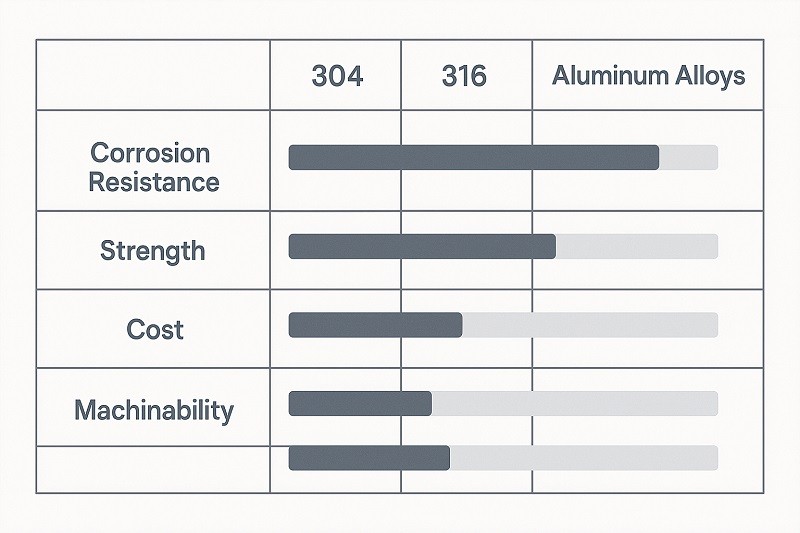
In summary, while standard 316 offers a slight strength benefit, the vastly superior weldability and post-weld corrosion resistance of 316L make it the preferred material for most fabricated and welded CNC parts destined for critical applications.
Cost and Application Scenarios for China CNC Drilling Parts Manufacturers
The decision to use 304, 316, or 316L stainless steel ultimately comes down to a balance between performance requirements and budget.
Cost Comparison: There is a clear cost hierarchy among these three grades:
- 304 Stainless Steel: This is the most economical and widely available option. Its lower price is due to its simpler composition, lacking the expensive alloying element molybdenum.
- 316 Stainless Steel: Typically, 316 is about 20-30% more expensive than 304. The higher price is a direct result of its nickel and molybdenum content.
- 316L Stainless Steel: The cost of 316L is very similar to standard 316, sometimes slightly higher due to the tighter control required in its production to maintain low carbon levels.
The increased cost of 316/316L is not just in the raw material. These grades are also slightly harder and more prone to work-hardening than 304, which can lead to increased tool wear and slightly longer machining times, adding to the overall manufacturing cost.
Application Scenarios:
A clear understanding of the end-use environment is crucial for making the right, cost-effective choice.
1. Use 304 Stainless Steel for General-Purpose & Mild Environments: It is the go-to material when high strength and good general corrosion resistance are needed, but the environment is not aggressively corrosive.
- Food & Beverage: Kitchen sinks, cookware, countertops, and equipment for brewing and milk processing.
- Architecture: Indoor decorative trim, handrails, and paneling.
- Household Appliances: Refrigerators, washing machines, and dishwashers.
- Automotive: Exhaust systems and trim.
2. Use 316 Stainless Steel for High Strength & Corrosive Environments (Non-Welded): 316 is required when parts are exposed to chlorides or harsh chemicals, and welding is not a primary fabrication step.
- Chemical Processing: Equipment, pumps, and valves that handle various acids and chemicals.
- High-Temperature Applications: The molybdenum content gives 316 slightly better strength at elevated temperatures compared to 304.
- Non-welded Marine Parts: Components like high-strength bolts and fasteners that are machined from a solid piece.
3. Use 316L Stainless Steel for Welded Parts in Harsh Environments: 316L is the benchmark material for fabricated components that must withstand the most demanding conditions.
- Marine Applications: It is essential for welded structures like boat railings, hardware, and any part in constant contact with saltwater.
- Medical and Pharmaceutical: Its superior post-weld corrosion resistance and biocompatibility make it the standard for surgical implants, pharmaceutical processing vats, and sterile equipment.
- Chemical and Petrochemical: Welded tanks, pipes, and reactors exposed to harsh chemicals benefit from 316L's immunity to weld decay.
Summary for Manufacturers:
- For cost-sensitive projects in mild environments, 304 is the optimal choice.
- For applications needing superior corrosion resistance, especially against chlorides, 316 is the minimum requirement.
- For any application that requires both welding and exposure to a corrosive environment, 316L is the only reliable option to prevent long-term failure due to intergranular corrosion.
Copper and its Alloys in China CNC Drilling Parts Manufacturing
Copper and its alloys are prized for their exceptional electrical and thermal conductivity, as well as good corrosion resistance and a unique aesthetic. However, working with copper presents specific challenges and opportunities for China CNC drilling parts manufacturers. Pure copper is difficult to machine, but specialized alloys have been developed to overcome these issues while retaining its most desirable properties.
Machinability Challenges and Solutions for Copper CNC Drilling Parts
Pure copper is a notoriously difficult material to machine effectively. Its unique combination of properties, while beneficial for its end use, creates significant hurdles during the CNC drilling and milling process.
The Core Machining Challenges:
High Ductility and Softness (Gummy Nature): Pure copper is exceptionally soft and ductile. Instead of forming clean, brittle chips that break away easily, the material tends to smear, deform, and stick to the cutting tool. This is often described as being "gummy." This leads to several problems:
- Built-Up Edge (BUE): Material from the workpiece pressure-welds itself onto the cutting tool's edge. This alters the tool's geometry, increases cutting forces, and results in a very poor surface finish on the part.
- Burr Formation: The material's tendency to deform rather than shear cleanly results in large, difficult-to-remove burrs along the edges of the cut. Deburring adds a significant amount of time and cost to the manufacturing process.
High Thermal Conductivity: Copper's excellent ability to conduct heat away is a primary reason for its use in applications like heat sinks. However, during machining, this property works against the process. The heat generated by friction at the cutting point doesn't stay localized to the chip but quickly dissipates into the tool and the workpiece. This can:
- Cause the cutting tool to overheat, leading to rapid wear and a shortened tool life.
- Lead to thermal expansion and warping of the part, compromising dimensional accuracy.
Tool Wear: The combination of copper's abrasive nature and its tendency to adhere to the tool surface results in accelerated tool wear. This increases the frequency of tool changes, drives up tooling costs, and creates production downtime.
Solutions for Machining Copper:
Experienced CNC manufacturers employ a combination of strategies to overcome these challenges and successfully machine copper parts.
Tool Selection: Using the right cutting tools is critical.
- Material: Carbide or even diamond-coated tools are preferred over High-Speed Steel (HSS) for their superior wear resistance and ability to handle heat.
- Geometry: Very sharp cutting edges are essential to shear the material cleanly rather than plowing through it. Tools with high rake and clearance angles help to reduce cutting forces and minimize the formation of a built-up edge.
Optimized Cutting Parameters:
- Speeds and Feeds: A counter-intuitive approach often works best. Very high spindle speeds combined with moderate to high feed rates can help create a clean shearing action and reduce the time the tool is in contact with the material, minimizing heat transfer. Slow cutting speeds can exacerbate the material's tendency to smear.
Coolant and Lubrication: Proper use of coolant is non-negotiable when machining copper.
- Flood Coolant: A high-pressure flood of water-soluble oil or a semi-synthetic coolant helps to aggressively evacuate chips, lubricate the cutting interface to prevent sticking, and, most importantly, manage the intense heat generated.
- Air Blast: For some high-speed operations, a strong air blast can be effective at clearing chips and providing some cooling without the mess of liquid coolants.
Alloying: The most effective solution is often to avoid pure copper altogether if the application allows. Alloying copper with other elements dramatically improves machinability.
By carefully controlling these variables, it is possible to produce high-quality, precision CNC copper parts despite the inherent difficulties of the material.
Advantages of TeCu (C145) for Precision CNC Drilling Parts
To solve the inherent machining difficulties of pure copper while retaining its benefits, metallurgists developed "free-machining" copper alloys. Among the most valuable of these for precision CNC drilling is C145 Tellurium Copper, also known as TeCu.
C145 is a copper alloy containing approximately 99.5% copper and 0.5% tellurium (Te). This small addition of tellurium is a game-changer for manufacturing, transforming the material's behavior during machining.
The Primary Advantage: Dramatically Improved Machinability
The core benefit of C145 is its exceptional machinability. While pure copper has a machinability rating of just 20% on the scale where free-cutting brass is 100%, C145 Tellurium Copper boasts a machinability rating of 85-90%. This is a more than four-fold improvement.
This drastic increase in machinability is due to the way tellurium behaves in the copper matrix. The tellurium forms small, hard particles of copper telluride (Cu₂Te) that are dispersed throughout the alloy. During machining, these particles act as microscopic chip breakers.
Instead of the long, stringy, "gummy" chips produced when machining pure copper, C145 produces short, clean, brittle chips. This has several profound benefits for precision CNC manufacturing:
- Faster Machining Speeds: Manufacturers can machine C145 up to five times faster than pure copper, dramatically reducing cycle times and increasing throughput.
- Longer Tool Life: The clean chip formation and reduced friction significantly lessen wear and tear on cutting tools, lowering tooling costs and minimizing production downtime.
- Superior Surface Finish: The absence of a built-up edge and clean shearing action results in a much smoother and more precise surface finish directly off the machine, reducing the need for secondary finishing operations.
- Easier Chip Removal: Short chips are easily evacuated from the cutting zone by coolant, preventing them from clogging the tool or getting recut, which can damage the part surface.
Retention of Key Copper Properties
Critically, the addition of tellurium achieves this remarkable machinability with only a minor impact on copper's most prized properties:
- High Electrical Conductivity: C145 retains about 90% of the electrical conductivity of pure copper (IACS rating). This makes it an excellent choice for current-carrying components that also require intricate machining.
- High Thermal Conductivity: Similarly, its thermal conductivity remains high, making it suitable for parts that need to dissipate heat effectively.
- Good Corrosion Resistance: It maintains good resistance to atmospheric corrosion, similar to pure copper.
Applications for C145 Precision CNC Drilling Parts
The unique combination of excellent machinability and high conductivity makes C145 the ideal material for a range of precision components, particularly in the electrical and electronics industries.
- Electrical Connectors, Terminals, and Contacts: These parts often have complex geometries and require both precise dimensions for a reliable connection and high conductivity to minimize electrical resistance.
- Welding Torch Tips and Nozzles: C145 is perfect for these applications as they require intricate internal and external features and must effectively manage intense heat.
- High-Speed Automatic Screw Machine Parts: Its free-machining nature makes it perfect for high-volume production of small, complex parts like specialized bolts, nuts, and fittings for electrical applications.
- Aerospace and Automotive Electrical Components: Used for reliable electrical contacts, sensor parts, and connectors in critical systems.
In conclusion, for any precision CNC drilled part that requires the high conductivity of copper but involves complex geometries or high production volumes, C145 Tellurium Copper is the superior and more cost-effective choice over pure copper. It solves the primary manufacturing bottleneck while delivering nearly identical performance in the final application.
Aluminum and Other Metals for China CNC Drilling Parts
While stainless steel and copper alloys serve specific, high-performance roles, aluminum remains one of the most versatile and widely used materials in CNC machining. Its various alloys offer a broad spectrum of properties, making it essential to compare them to select the optimal grade. Additionally, other common metals like brass and bronze present their own unique advantages.
Aluminum Alloy Comparison: 6061 vs. 7075
The two most popular aluminum alloys for CNC machining are 6061 and 7075. While both are lightweight and corrosion-resistant, they are engineered for very different purposes.
Aluminum 6061: Often called the "jack-of-all-trades" of aluminum alloys, 6061 is alloyed primarily with magnesium and silicon. It is known for offering a superb balance of properties, making it a versatile and cost-effective choice.
- Properties: Good strength-to-weight ratio, excellent corrosion resistance (especially to atmospheric conditions), and outstanding weldability and formability. Its T6 temper (solution heat-treated and artificially aged) provides a yield strength of around 276 MPa.
- Machinability: Excellent. 6061 is one of the most machinable aluminum alloys, allowing for high cutting speeds, great surface finishes, and reduced tool wear. This ease of machining helps keep production costs low.
- Applications: It is used in a vast range of applications, including bicycle frames, automotive parts, structural components, electronic enclosures, and marine fittings. Its weldability makes it ideal for fabricated assemblies.
Aluminum 7075: This is a high-performance alloy, often referred to as "aircraft aluminum," with zinc as its primary alloying element. It is engineered for maximum strength.
- Properties: Exceptional strength, often comparable to that of mild steel, but at a fraction of the weight. The T6 temper can achieve a yield strength of approximately 503 MPa—nearly double that of 6061. It also has excellent fatigue resistance.
- Machinability: Good, but more challenging than 6061 due to its increased hardness. It can be machined to precise tolerances but may require more robust tooling and slower speeds.
- Drawbacks: Its key trade-offs are lower corrosion resistance compared to 6061 (requiring a protective coating or anodizing for harsh environments) and poor weldability, which makes it unsuitable for most welded structures. It is also significantly more expensive.
- Applications: 7075 is the clear choice for high-stress and high-load applications where strength-to-weight ratio is the most critical factor. This includes aircraft structural components (wing spars, fuselage frames), high-performance racing parts, military-grade equipment, and high-end sporting goods like climbing carabiners.
| Feature | Aluminum 6061 (General Purpose) | Aluminum 7075 (High Strength) |
|---|---|---|
| Primary Alloying Elements | Magnesium, Silicon | Zinc, Magnesium, Copper |
| Yield Strength (T6) | ~276 MPa | ~503 MPa |
| Machinability | Excellent | Good |
| Corrosion Resistance | Excellent | Moderate (Susceptible to stress cracking) |
| Weldability | Excellent | Poor (Not recommended) |
| Cost | Lower | Higher |
| Best For | General-purpose parts, welded frames, marine applications, electronic housings. | Aerospace structural parts, high-stress components, military equipment. |
In summary: Choose 6061 for versatile, cost-effective parts with good all-around performance. Choose 7075 when maximum strength and fatigue resistance are non-negotiable and the higher cost and lack of weldability are acceptable trade-offs.
Other Common Metals: Brass and Bronze
Beyond the "big three" (aluminum, steel, and stainless steel), other alloys like brass and bronze hold important niches in CNC manufacturing.
Brass: An alloy of copper and zinc, brass is best known for its exceptional machinability, often serving as the benchmark (100% rating) against which other metals are measured.
- Properties: Excellent machinability, good corrosion resistance, good electrical conductivity (though less than pure copper), and a bright, gold-like aesthetic.
- Applications: Ideal for plumbing fittings, valves, electrical connectors, musical instruments, and decorative hardware where both function and appearance are important.
Bronze: An alloy of copper, typically with tin as the main additive (but also aluminum, manganese, or silicon), bronze is valued for its strength, durability, and low-friction properties.
- Properties: Higher hardness and strength than brass, excellent resistance to corrosion (especially saltwater), and a low coefficient of friction against other metals.
- Applications: The ideal choice for bearings, bushings, gears, and marine hardware (propellers, submerged fittings) where wear resistance and durability are critical. Bronze develops a protective patina over time, which adds to its corrosion resistance.
The choice between brass and bronze often comes down to machinability versus wear resistance. Brass is easier and cheaper to machine, while bronze offers superior durability and strength for heavy-duty mechanical applications.
Critical Selection Factors for China CNC Drilling Parts Manufacturers
Making the right material selection is more than just picking from a list; it's a strategic decision that balances a part's intended function with the realities of budget and production timelines. An experienced China CNC drilling parts manufacturer can be an invaluable partner in navigating these critical factors, ensuring the final product is not only functional but also optimized for cost and manufacturability.
Project-Specific Requirements
Every project is unique, with its own set of demands that dictate the ideal material. The first step is always to define the part's role and the environment in which it will operate. This analysis forms the bedrock of the material selection process.
Functionality and Performance Needs
Before any material is selected, the part's function must be clearly defined. The choice of material is a direct consequence of the performance it needs to deliver. A methodical approach involves asking a series of fundamental questions:
What is the primary function of the part? The answer separates materials into broad categories based on their intrinsic properties.
- Structural and Load-Bearing: Will the part need to support weight or withstand significant mechanical stress? If so, key properties like tensile strength, yield strength, and hardness become the primary drivers. High-strength materials such as steel, 7075 aluminum, or titanium are initial candidates. A component for a heavy-duty industrial machine will have vastly different material needs than a decorative panel.
- Electrical or Thermal Conductivity: Does the part need to conduct electricity or dissipate heat? This immediately points toward materials like copper, aluminum, or thermally conductive plastics. For a CNC-drilled heat sink, for example, thermal conductivity is the most important property, and a material like Aluminum 6061 is often chosen for its excellent balance of thermal performance and machinability.
- Wear Resistance: Will the part be in constant sliding contact with other components? This prioritizes hardness and a low coefficient of friction. Materials like case-hardened steel, bronze alloys for bearings, or wear-resistant plastics like Nylon or POM (Delrin®) would be considered.
- Aesthetic or Cosmetic: Is the part's appearance a primary concern? This brings properties like surface finish, color, and the ability to be polished or anodized to the forefront. Materials like brass, polished stainless steel, or smoothly machined and anodized aluminum are often selected for their visual appeal.
What are the "must-have" vs. "nice-to-have" properties? Engineers often separate performance requirements into critical needs and desired characteristics. A material might offer exceptional strength, but if the part is non-structural, that extra strength is an unnecessary expense. This discipline prevents over-engineering, where a material is chosen that far exceeds the functional requirements, leading to needlessly high costs and complex manufacturing.
By first establishing a clear profile of the part's required functionality, the vast universe of material options can be systematically narrowed down to a few suitable candidates. This function-first approach ensures that the final material selection is not just adequate, but perfectly optimized for the part's intended purpose.
Environmental Conditions and Stress Factors
A part does not exist in a vacuum. Its performance and longevity are directly tied to the environment it operates in and the stresses it must endure. Choosing a material without considering these factors is a recipe for premature failure, costly replacements, and potential safety risks. A comprehensive analysis must include:
1. Chemical Exposure and Corrosion: The presence of moisture, chemicals, acids, or salts can aggressively attack materials.
- Moisture and Humidity: Simple exposure to humid air can cause standard carbon steel to rust. Materials must be selected based on their ability to resist this type of degradation. Stainless steels, aluminum, and plastics are common choices for moisture-rich environments.
- Chemical and Acidic Environments: Industrial settings, chemical processing plants, and laboratories expose parts to a wide range of corrosive substances. In these cases, a material's chemical compatibility is paramount. While 304 stainless steel can handle mild chemicals, aggressive acids may require the superior resistance of 316 stainless steel, or even high-performance alloys like Hastelloy or inert plastics like PTFE.
- Marine/Saltwater Environments: The chloride ions in saltwater are extremely corrosive to many metals. This is where "marine-grade" 316 stainless steel becomes essential, as its molybdenum content provides the necessary resistance to pitting and crevice corrosion. Aluminum can also perform well, particularly specific marine-grade alloys from the 5xxx series.
2. Temperature Extremes: Operating temperatures have a profound effect on material properties.
- High Temperatures: Heat can cause materials to lose strength, soften, and warp. Parts for engines, exhaust systems, or industrial furnaces must be made from materials with high thermal stability, such as stainless steel, titanium, nickel superalloys (Inconel), or high-performance plastics (PEEK, Ultem).
- Low Temperatures (Cryogenic): Extreme cold can make some materials brittle, increasing the risk of fracture. Austenitic stainless steels (like 304 and 316) and certain aluminum alloys perform well at cryogenic temperatures, retaining their toughness.
- Thermal Cycling: Parts that experience repeated heating and cooling are subject to thermal stress, which can lead to fatigue and cracking. Materials with low coefficients of thermal expansion are often preferred to minimize this effect.
3. UV Radiation Exposure: For parts used outdoors, exposure to ultraviolet (UV) radiation from sunlight is a significant stress factor, particularly for plastics.
- Prolonged UV exposure can cause polymers to degrade, leading to color fading, embrittlement, and a loss of mechanical strength. UV-stabilized plastics or materials inherently resistant to UV, like acrylic (PMMA), should be chosen for outdoor applications. Metals are generally unaffected by UV radiation.
4. Mechanical Stress Factors: Beyond a simple static load, the type of stress a part endures is a critical factor.
- Fatigue: Will the part be subjected to repeated cyclical loading (vibration, etc.)? This requires a material with high fatigue strength, like 7075 aluminum or certain alloy steels, to prevent failure over time.
- Impact: Will the part experience sudden shocks or impacts? This calls for a material with high toughness (the ability to absorb energy without fracturing), such as polycarbonate or tougher steel alloys. Brittle materials would shatter under such conditions.
By thoroughly mapping out the environmental and stress conditions the part will face, you can select a material that is not just strong enough, but durable enough to survive its intended service life.
Dimensional Tolerance and Surface Finish
The precision of a CNC machined part is not just a function of the machine itself; it is intrinsically linked to the material being cut. The material's properties directly influence the achievable dimensional tolerances and the quality of the surface finish.
How Material Choice Affects Dimensional Tolerance: Dimensional tolerance is the permissible limit of variation in a part's physical dimensions. Achieving very tight tolerances (e.g., ±0.001 inches or less) requires a material that is dimensionally stable throughout the machining process.
Material Hardness and Rigidity:
- Hard Materials (e.g., Steel, Titanium): Harder materials resist deformation from the force of the cutting tool. This rigidity allows them to be machined to very tight tolerances, as they hold their shape precisely during cutting.
- Soft Materials (e.g., Pure Copper, some Plastics): Softer, more ductile materials can be problematic. The pressure from the cutting tool can cause them to deflect or deform slightly, making it difficult to hold tight tolerances. This "gummy" nature requires specialized tooling and techniques to manage.
Thermal Stability:
- Materials with a high coefficient of thermal expansion will change size more significantly in response to the heat generated during machining. This can lead to dimensional inaccuracies if not properly controlled with coolant.
- Plastics are particularly susceptible to thermal expansion, which can make achieving a high degree of precision more challenging than with metals. Materials like POM (Delrin), which has excellent dimensional stability and low water absorption, are often chosen for precision plastic parts.
How Material Choice Affects Surface Finish: Surface finish, or surface roughness (often measured as Ra), refers to the fine-scale texture of a surface. A smooth, high-quality finish is crucial for aesthetics, sealing surfaces, and low-friction applications.
- Machinability: This is the single most important factor. Materials with good machinability, like Aluminum 6061 or free-cutting brass (C360), produce clean, small chips and allow the tool to create a smooth surface with minimal defects.
- Material Ductility: Highly ductile or "gummy" materials, like pure copper or some soft plastics, tend to smear rather than shear cleanly. This can lead to a built-up edge on the tool, which then mars the surface of the part, resulting in a poor finish.
- Hardness and Brittleness: Extremely hard or brittle materials can be prone to chipping at a microscopic level during cutting, which can also lead to a rougher surface if machining parameters are not perfectly optimized.
In practice, this means that while a CNC machine might be capable of producing parts to a very high precision, the choice of material can be the limiting factor. For parts requiring both tight dimensional control and an excellent surface finish, a material with high hardness, good thermal stability, and superior machinability is the ideal combination. This is why alloys like Aluminum 6061 are so popular—they offer an excellent balance of these properties, allowing manufacturers to produce high-quality, precise parts efficiently.
Cost-Effectiveness and Lead Time
In any manufacturing project, cost and speed are critical business considerations. Material selection has a direct and significant impact on both the final price per part and the time it takes to deliver them. A seemingly cheaper raw material can sometimes lead to a more expensive final part if it is difficult to machine.
Material Costs and Machining Efficiency
The total cost of a CNC machined part is a composite of several factors, with raw material price and machining time being the two most significant. A strategic material selection process aims to minimize the sum of these two costs, not just the material cost alone.
The Interplay of Material Cost and Machining Cost:
Raw Material Cost: This is the upfront price of the material block or bar stock. Prices vary dramatically based on the type of metal or plastic, its alloying elements, and market availability. For example, common Aluminum 6061 is relatively inexpensive, while high-performance materials like Titanium or PEEK can be orders of magnitude more expensive per kilogram.
Machining Efficiency (Cost): This cost is directly proportional to the amount of time a CNC machine is running to produce the part. This "machine time" encompasses the actual cutting time, as well as time for tool changes and setup. Machining efficiency is almost entirely dependent on the material's machinability.
The relationship can be summarized as follows:
High Machinability Materials (e.g., Aluminum 6061, Brass C360):
- Allow for high cutting speeds and feed rates.
- Cause less tool wear, reducing the frequency and cost of tool replacements.
- Result in shorter cycle times per part.
- Effect on Cost: Even if the raw material is slightly more expensive than a harder-to-machine alternative, the significant reduction in machine time often leads to a lower total cost per part.
Low Machinability Materials (e.g., Stainless Steel, Titanium, Inconel):
- Require slower cutting speeds and more conservative feed rates.
- Cause rapid tool wear, leading to higher tooling costs and more frequent downtime for changes.
- Result in longer cycle times per part.
- Effect on Cost: A lower raw material cost can be misleading. The extended machine time and increased tooling expenses can quickly eclipse any initial savings, leading to a higher total cost per part. For example, while some grades of steel are cheaper than aluminum per pound, they can take twice as long to machine, often making the final steel part more expensive.
The Cost-Effectiveness Fallacy: A common pitfall is selecting a material based solely on its raw material price. For instance, choosing 304 stainless steel because it is cheaper than 303 stainless steel might seem like a good way to save money. However, 303 stainless is specifically formulated with sulfur for improved machinability. It cuts more easily and quickly than 304, which is known for being somewhat "gummy." In many cases, the savings in machine time from using 303 can outweigh its slightly higher material cost, especially for complex parts or large production runs.
Therefore, a truly cost-effective decision requires a holistic view that considers the total landed cost, which is the sum of the material cost and the machining cost. Collaborating with a knowledgeable manufacturer is key, as they can provide accurate estimates of machining times for different materials, allowing for an informed trade-off between material price and production efficiency.
Optimizing Production for China CNC Drilling Parts
Beyond selecting the right material, optimizing the part design for manufacturing is a powerful strategy for reducing costs and shortening lead times when working with China CNC drilling parts manufacturers. This approach, known as Design for Manufacturability (DFM), involves making conscious design choices that align with the capabilities and efficiencies of the CNC machining process.
Here are key strategies for optimizing production:
1. Simplify Part Geometry and Design for Standard Tooling:
- Avoid Sharp Internal Corners: CNC milling tools are round, making it impossible to create a perfectly sharp internal corner. Every internal corner must have a radius. Specifying a very small radius requires a small-diameter tool, which is less rigid and must cut more slowly, increasing machining time and risk of tool breakage. A good practice is to design internal corner radii that are at least 1/3 of the cavity's depth.
- Use Standard Hole Sizes and Threads: Design holes that correspond to standard drill bit sizes. Specifying a non-standard hole diameter requires an extra milling operation to create it. Similarly, use standard thread sizes (e.g., M6, 1/4-20) whenever possible to avoid the need for expensive custom taps.
- Minimize Deep, Narrow Pockets: Machining deep and narrow cavities is time-consuming and challenging. It requires long, slender tools that are prone to vibration ("chatter") and breakage. Chip evacuation also becomes difficult. A good rule of thumb is to keep the depth of a pocket to no more than 6 times its width. If a very deep pocket is unavoidable, consider designing the part in two pieces that can be machined separately and then assembled.
2. Reduce the Number of Setups: Every time a part must be manually repositioned and re-fixtured in the CNC machine to access a different face, it adds time and introduces potential for error.
- Design parts so that as many features as possible can be machined from a single direction (a single setup).
- For complex parts that require machining on multiple faces, a manufacturer with 5-axis CNC machines can be highly advantageous. These machines can access five sides of a part in a single setup, dramatically reducing manual intervention and improving accuracy.
3. Specify Tolerances and Finishes Appropriately:
- Apply Tight Tolerances Only Where Necessary: Unnecessarily tight tolerances are a major cost driver. They often require slower cutting speeds, additional finishing passes, and more intensive quality inspection. Apply tight tolerances only to critical features (e.g., mating surfaces, bearing bores) and use standard, looser tolerances for non-critical features.
- Avoid Multiple Surface Finishes: If possible, specify a single surface finish for the entire part. Requiring different finishes on different surfaces necessitates extra steps like masking, which adds to labor and time. The standard "as-machined" finish is the most cost-effective.
4. Communicate Clearly with Your Manufacturer: Especially when outsourcing to China CNC drilling parts manufacturers, clear and detailed communication is paramount to avoid delays.
- Provide Complete Technical Drawings: Supply comprehensive CAD models and 2D drawings that clearly define all dimensions, tolerances, material specifications (using universal standards like UNS or ASTM), and required finishes.
- Share Timelines and Forecasts: Giving your supplier a clear picture of your project deadlines and potential future orders allows them to plan their production schedule and raw material procurement more effectively.
- Be Open to DFM Feedback: A reliable manufacturer will often provide DFM feedback to suggest design changes that could reduce cost or improve the part's quality. Being open to this collaborative process is key to optimization.
By implementing these DFM principles, you can significantly reduce both the cost and lead time of your CNC machined parts, fostering a more efficient and effective partnership with your manufacturer.
Industry Applications and Best Practices for China CNC Drilling Parts Manufacturers
The versatility of CNC machining allows it to serve a vast array of industries, each with unique material requirements and quality standards. Working effectively with China CNC drilling parts manufacturers involves understanding these industry-specific needs and establishing robust communication and quality control protocols.
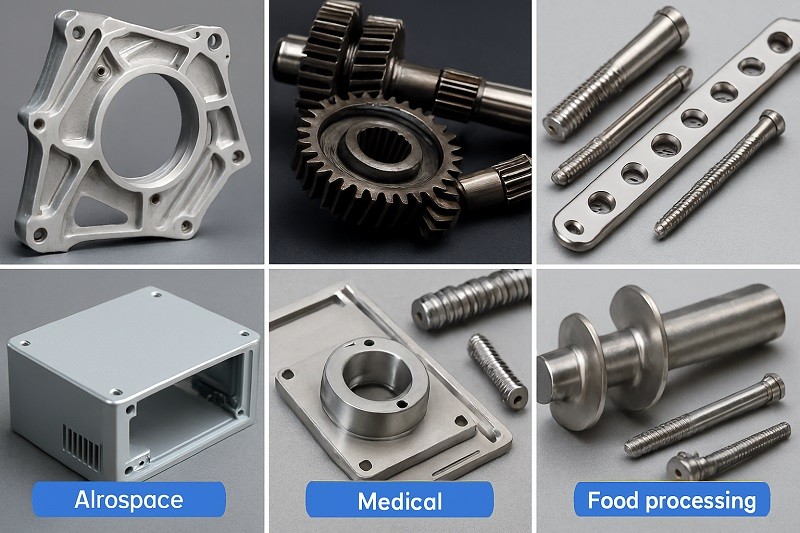
Aerospace and Automotive Industries
The aerospace and automotive industries are at the forefront of engineering innovation, constantly pushing the boundaries of performance, efficiency, and safety. For CNC machined parts, this translates to stringent requirements for materials that can deliver high strength, light weight, and exceptional reliability.
Dominant Trend: Lightweighting A primary driver in both sectors is lightweighting—the strategy of reducing a vehicle's weight to improve fuel economy, increase payload capacity, and enhance performance. For every kilogram of weight saved on an aircraft, hundreds of kilograms of jet fuel can be saved over its lifespan. This makes material selection a critical component of design.
Key Materials and Their Applications:
Aluminum Alloys: Aluminum is a cornerstone material in both industries due to its excellent strength-to-weight ratio and cost-effectiveness.
- Aerospace: High-strength alloys like 7075 are used for critical structural components, including fuselage frames, wing skins, and landing gear parts, where resistance to stress and fatigue is paramount. General-purpose alloys like 6061 are used for less critical structural parts, brackets, and avionics enclosures.
- Automotive: Aluminum is vital for manufacturing engine components (blocks, cylinder heads), chassis and suspension parts, and body panels, helping to reduce overall vehicle weight and improve handling.
Titanium Alloys: When the strength-to-weight ratio of aluminum is insufficient, or when high-temperature performance is needed, titanium is the material of choice.
- Aerospace: Ti-6Al-4V (Grade 5) is widely used for jet engine components (blades, discs), landing gear, and critical structural brackets that experience extreme loads and heat.
- Automotive: Used in high-performance and racing vehicles for components like connecting rods, valves, and exhaust systems where performance outweighs cost.
High-Strength Steels: Despite the focus on lightweighting, certain applications still demand the sheer strength, hardness, and durability of steel.
- Aerospace & Automotive: Used for landing gear components, high-strength bolts and fasteners, actuators, and internal engine and transmission parts like gears and shafts that must withstand extreme wear and stress.
Superalloys (e.g., Inconel): For the most extreme environments, such as the "hot section" of a jet engine, superalloys are indispensable.
- Aerospace: Used for turbine blades, combustion chambers, and exhaust systems that must maintain their structural integrity at temperatures that would cause other metals to fail.
Composites and High-Performance Plastics: Materials like carbon fiber reinforced polymer (CFRP) and PEEK are increasingly used for their exceptional stiffness and low weight.
- Aerospace: Used extensively for fuselages, wings, and interior cabin components. The Boeing 787, for instance, is approximately 50% composite by weight.
- Automotive: Used in high-end sports cars for body panels, chassis components, and interior trim.
Best Practices for Manufacturing:
- Traceability and Certification: These industries demand complete material traceability. China CNC drilling parts manufacturers must be able to provide Mill Test Reports (MTRs) and Certificates of Conformance (CoC) to verify the material's chemical composition and mechanical properties, ensuring it meets strict aerospace (e.g., AS9100) or automotive (e.g., IATF 16949) standards.
- Precision and Quality Control: Parts for these industries often have complex geometries and require extremely tight tolerances. Manufacturers must have advanced 5-axis CNC capabilities and robust quality control systems, including Coordinate Measuring Machines (CMM), to inspect and validate parts.
- Expertise in Hard-to-Machine Materials: A reliable supplier must demonstrate expertise in machining difficult materials like titanium and Inconel, which require specialized tooling, programming strategies, and process controls.
Medical Devices and Electronics
The medical and electronics industries rely on CNC machining for parts that require high precision, specific material properties, and absolute reliability. While both fields demand accuracy, their material selection drivers are distinctly different.
Medical Devices and Electronics
Medical Device Manufacturing
The primary drivers for material selection in the medical field are biocompatibility, sterilizability, and corrosion resistance. Parts that come into contact with human tissue or fluids must not cause any adverse reactions, and they must withstand repeated, harsh sterilization cycles.
Key Materials for Medical Devices:
- Titanium (especially Ti-6Al-4V ELI): The gold standard for implants like hip replacements, bone screws, and dental fixtures. Its excellent biocompatibility allows for osseointegration (direct bone growth onto the implant), and it has a high strength-to-weight ratio and outstanding corrosion resistance.
- Stainless Steel (316L): Often called "surgical steel," 316L is widely used for surgical instruments and temporary implants. Its low carbon content ensures it resists corrosion even after welding, and it is durable and easily sterilized.
- PEEK (Polyether Ether Ketone): A high-performance plastic that is often used as a metal replacement. It is biocompatible, lightweight, and radiolucent (transparent to X-rays), making it ideal for spinal implants and other devices where imaging is required. PEEK can withstand over 1,000 steam sterilization cycles.
- Polycarbonate (PC) and Polysulfone (PSU): These tough, transparent plastics are used for medical device housings, surgical trays, and components where visibility of fluid flow is necessary. They are known for their impact resistance and ability to handle multiple sterilization cycles.
Best Practices for Medical Manufacturing:
- Material Certification: It is non-negotiable for manufacturers to provide full material traceability and certifications (e.g., meeting ISO 10993 for biocompatibility).
- Strict Quality Control: Manufacturing must occur in a controlled environment to prevent contamination. Parts require extremely high precision and burr-free finishes to ensure patient safety.
Electronics Manufacturing
For electronics, the key material properties are often electrical conductivity, thermal management, and EMI shielding.
Key Materials for Electronics:
- Aluminum (e.g., 6061): The most common material for electronic enclosures and housings. It is lightweight, cost-effective, and easy to machine. Crucially, it offers excellent thermal conductivity to dissipate heat from sensitive components and acts as an effective Faraday cage for EMI/RFI shielding, protecting circuits from electromagnetic and radio-frequency interference.
- Copper and Brass (e.g., C110, C360): Used for parts that require high electrical conductivity. Copper is the top choice for connector pins, contacts, and bus bars due to its superior conductivity. Brass, being more machinable and cost-effective than copper, is also widely used for connector housings and terminals. These parts are often plated with gold or nickel to enhance conductivity and prevent oxidation.
- Plastics (ABS, PC, PEEK): Used for housings, insulators, and connectors where electrical insulation is required. PEEK and Ultem (PEI) are chosen for high-performance connectors due to their high dielectric strength and heat resistance. ABS and PC are cost-effective choices for casings and enclosures for consumer electronics.
Best Practices for Electronics Manufacturing:
- EMI Shielding Consideration: For metal enclosures, design choices must ensure good electrical contact between all panels to create an effective shield. Conductive gaskets are often used to seal seams.
- Heat Dissipation: Designs for enclosures often incorporate features like heat sink fins, which can be efficiently produced with CNC machining, to maximize surface area for thermal management.
- Precision for Assembly: Electronic components are often miniaturized and require high-precision housings and brackets for proper alignment and assembly.
By understanding these distinct industry requirements, clients can have more productive conversations with China CNC drilling parts manufacturers to ensure the selected material perfectly aligns with the part's end use.
Food Processing and Chemical Industries
The food processing and chemical industries have some of the most stringent material requirements, driven by the need for hygiene, safety, and resistance to aggressive substances. CNC machined parts used in these sectors must be durable, non-reactive, and easy to clean to prevent contamination.
Key Requirements and Material Choices:
Hygiene and Cleanability: Food processing equipment must have smooth, non-porous surfaces that prevent bacterial growth and are easy to sanitize. Designs must avoid crevices, sharp internal corners, and dead zones where food particles or microbes could get trapped. Welding must be continuous and smooth.
- Stainless Steel (304 & 316L): This is the most common material family for food processing and chemical applications. Its smooth surface, durability, and resistance to corrosion make it ideal for meeting strict hygiene standards. 316L stainless steel is often preferred for applications involving acidic foods (like fruit juices), brines, or harsh cleaning agents due to its superior corrosion resistance imparted by molybdenum. 304 stainless steel is a cost-effective choice for general-purpose equipment that doesn't handle highly corrosive substances.
- Food-Grade Plastics: Certain plastics are certified by regulatory bodies like the FDA for direct food contact. These are used for components like cutting boards, conveyor belt parts, guides, and seals. Common food-grade plastics include:
- HDPE (High-Density Polyethylene): Used for cutting boards and containers.
- PP (Polypropylene): Used for reusable containers and components that need to be microwave-safe.
- Acetal (POM / Delrin®): Excellent for gears, bushings, and other mechanical parts in food machinery due to its low friction, dimensional stability, and resistance to moisture absorption.
- PTFE (Teflon®): Used for non-stick surfaces and seals due to its chemical inertness and high-temperature resistance.
Chemical Resistance: The chemical industry requires materials that can withstand constant exposure to highly corrosive acids, bases, and solvents.
- 316L Stainless Steel: Serves as a baseline for many chemical applications, offering good resistance to a wide range of chemicals.
- High-Performance Alloys (e.g., Hastelloy, Inconel): For extremely corrosive environments or high-temperature chemical processes where stainless steel would fail, these nickel-based superalloys are necessary. They are used in reactors, piping systems, and valves.
- Titanium: Offers exceptional resistance to many aggressive chemicals, making it a valuable material for heat exchangers and chemical storage tanks.
Best Practices for Manufacturing:
- Regulatory Compliance: Machined parts must comply with industry standards such as those from the FDA, NSF, or EHEDG (European Hygienic Engineering & Design Group). This involves using certified materials and ensuring manufacturing processes maintain hygiene.
- Material Traceability: Manufacturers must provide documentation that traces the material back to its source, ensuring it meets the specified food-grade or chemical-resistant standards.
- Hygienic Design Principles: Beyond material choice, the design of the part itself is critical. This includes ensuring all surfaces are smooth (often requiring polishing or electropolishing), corners are rounded, and there are no areas that could trap contaminants.
By selecting the appropriate stainless steel grade or certified food-safe plastic, and adhering to hygienic design principles, manufacturers can produce CNC drilled parts that are safe, durable, and reliable for the demanding environments of the food and chemical industries.
Working with China CNC Drilling Parts Manufacturers: Communication and Quality Control
Successfully outsourcing to China CNC drilling parts manufacturers hinges on two pillars: clear, unambiguous communication and a robust, verifiable quality control process. While cost-effectiveness is a major draw, it can be quickly negated by errors arising from misunderstandings or inconsistent quality.
Effective Communication Strategies:
Provide Comprehensive Technical Documentation: The single most important element is a complete and detailed technical package.
- 3D CAD Models and 2D Drawings: Supply both 3D models (e.g., STEP, IGES files) and detailed 2D drawings. The 2D drawings should clearly call out all critical dimensions, tolerances, required surface finishes, and specific material grades using internationally recognized standards (e.g., ASTM, UNS for materials; ISO for tolerances).
- Bilingual Communication: While many Chinese suppliers have English-speaking project managers, providing key specifications in both English and Mandarin can help eliminate ambiguity on the factory floor.
Establish Clear Communication Channels: Work with a supplier that demonstrates responsive and clear communication. Using platforms like WeChat or email for regular updates is common. A dedicated, English-speaking project manager is a significant asset.
Request Prototypes and Samples: Before committing to a full production run, always request a prototype or a small batch of initial samples. This is the most effective way to verify that the manufacturer has correctly understood all your design specifications and can meet your quality standards.
Robust Quality Control (QC) Processes:
Quality assurance cannot be an afterthought; it must be built into the sourcing process from the beginning.
Verify Certifications: A reliable manufacturer should have and be able to provide proof of quality management system certifications, with ISO 9001 being the most common. For specific industries, look for certifications like AS9100 (aerospace) or IATF 16949 (automotive).
Insist on Material Traceability: For every batch of parts, require a Material Test Report (MTR), also known as a Mill Test Certificate (MTC). This document is the "birth certificate" for the raw material, provided by the original metal or plastic mill. It certifies the material's exact chemical composition and mechanical properties, proving that it conforms to the specified grade. This is your primary defense against material substitution.
Define Your Inspection Requirements: Clearly outline your quality control expectations. This can include:
- First Article Inspection (FAI): A detailed inspection of the first part produced to ensure it meets all specifications before mass production begins.
- In-Process Quality Control (IPQC): Checks performed at various stages of the manufacturing process.
- Final Inspection: A final check of the finished parts before they are shipped. Specify the sampling plan (e.g., AQL - Acceptable Quality Limit) or if 100% inspection is required for critical dimensions.
- Inspection Reports: Require the supplier to provide detailed inspection reports, often from a Coordinate Measuring Machine (CMM), that confirm all critical dimensions are within tolerance.
By establishing these communication and quality control best practices from the outset, you build a foundation of trust and transparency. This proactive approach minimizes risks, prevents costly errors, and ensures that the parts you receive from your China CNC drilling parts manufacturer meet the exact standards required for your application.
Navigating the China CNC Drilling Parts Manufacturers Landscape
Outsourcing CNC machining to China has become a cornerstone of global manufacturing strategy for many companies. The country's vast industrial ecosystem offers significant advantages in cost, scale, and speed. However, realizing these benefits depends entirely on selecting a reliable and capable manufacturing partner. Navigating this landscape requires a clear understanding of both the opportunities and the criteria for choosing the right supplier.
Benefits of Outsourcing to China for CNC Drilling Parts
The reasons for sourcing CNC parts from China extend beyond simple cost savings. The maturity of the manufacturing sector provides a strategic advantage for businesses looking to scale production efficiently and reliably.
Cost-Effectiveness and Competitive Pricing
The primary and most well-known benefit of sourcing CNC parts from China is the significant cost savings. This advantage is rooted in a combination of factors that create a highly competitive pricing structure.
Lower Labor Costs: While wages in China have been rising, the cost of skilled labor—from machine operators to quality control personnel and engineers—remains substantially lower than in North America and Europe. Hourly rates for machinists in China can be significantly less, which directly reduces the cost of labor-intensive manufacturing processes.
Economies of Scale: China's manufacturing sector operates on an immense scale. This allows manufacturers to purchase raw materials like aluminum, steel, and plastics in massive bulk quantities, securing lower prices that are then passed on to the customer. This scale also applies to operational expenses, as large, high-efficiency factories can distribute their overhead costs across a larger volume of production, lowering the cost per unit. Some studies suggest total costs for CNC machined components can be 30-50% lower when manufactured in China compared to Western countries.
Reduced Operational Overhead: Beyond labor, the general costs of running a factory, including energy and factory rent, are often lower in China's industrial zones compared to their Western counterparts. For example, electricity costs can be 30-40% lower than in regions like California or Germany, contributing to overall lower production costs.
Fierce Market Competition: The sheer number of CNC machining suppliers in industrial hubs like Shenzhen and Dongguan creates a highly competitive market. This competition incentivizes manufacturers to constantly optimize their processes, improve efficiency, and offer attractive pricing to win business.
While cost is a primary driver, it's crucial to evaluate it as part of the "total landed cost," which includes shipping, tariffs, and quality assurance. However, for many projects, the fundamental cost advantages in raw materials, labor, and operations make China an economically compelling choice for producing CNC drilled parts.