Understanding Advanced CNC Machining for Difficult Materials: A Parts Supplier's View
- Share
- Issue Time
- May 8,2026
Summary
This guide explains advanced CNC machining for difficult materials like titanium & stainless steel, covering tools, cooling, precision, quality control and supplier expertise.
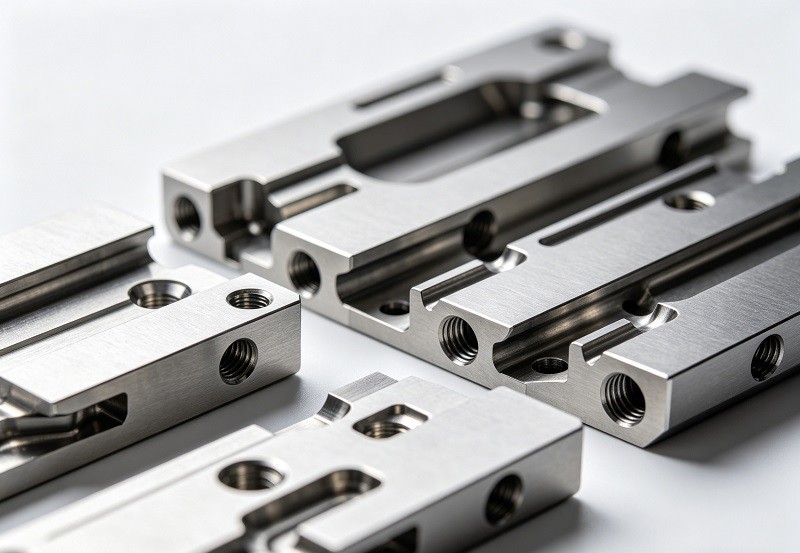
In the world of advanced manufacturing, the most critical components are often crafted from materials known for being exceptionally tough to work with. These "difficult-to-machine" materials are selected for their incredible strength, heat resistance, and unique properties, which are indispensable for high-performance applications in demanding environments. They form the backbone of innovations in aerospace, medical technology, and energy sectors.
As an experienced CNC Machining Parts Supplier, we understand that shaping these materials requires more than just standard equipment; it demands specialized knowledge, cutting-edge technology, and a deep, unwavering commitment to precision. The margin for error is virtually nonexistent, and success hinges on mastering a complex interplay of physics, engineering, and hands-on experience.
This article will explore the multifaceted challenges and innovative solutions involved in machining these demanding materials. We will share our perspective as a parts supplier, offering insights into how we navigate these complexities to deliver exceptional, reliable, and perfectly-formed components for our clients, turning theoretical designs into tangible, high-performance realities.
The Essential Role of Difficult Materials in Manufacturing, from a CNC Machining Parts Supplier's View
Difficult-to-machine materials are the unsung heroes of modern engineering. They are the reason a jet engine can withstand extreme temperatures, a surgical implant can be biocompatible and strong, and a deep-sea vehicle can survive immense pressures. From our vantage point as a specialized parts supplier, these materials represent both the pinnacle of material science and the ultimate test of our machining capabilities. Their unique properties, while making them ideal for their intended applications, also present significant hurdles that must be overcome with expertise and advanced technology.
What Makes a Material 'Difficult' for a CNC Machining Parts Supplier?
The term "machinability" refers to the ease with which a material can be cut and shaped. A material is considered 'difficult' when it exhibits specific physical and chemical properties that resist standard cutting processes. This difficulty isn't just about one single factor but a combination of characteristics that together create significant challenges. From a supplier's perspective, these properties directly impact everything from production time and cost to the final quality of the part.
Several key factors determine a material's machinability:
- High Hardness and Strength: Materials with high hardness, like hardened steels, resist penetration by the cutting tool. This requires much greater cutting forces, which in turn generates immense friction and heat, leading to rapid tool wear. Similarly, materials with high tensile strength demand more energy to form a chip, stressing both the tool and the machine.
- Low Thermal Conductivity: Some of the most challenging materials, including titanium and nickel-based superalloys, are poor conductors of heat. Instead of dissipating, heat from the cutting action concentrates at the tool's edge and in the workpiece. This can soften the cutting tool, cause it to deform, and lead to a phenomenon called work hardening in the material itself.
- Work Hardening Tendency: Certain materials, notably austenitic stainless steels and Inconel, have a tendency to harden as they are being machined. This "work hardening" or "strain hardening" means that each subsequent pass of the cutting tool encounters a surface that is harder than the one before, accelerating tool wear and making consistent cutting difficult.
- High Ductility and Toughness: While it might seem counterintuitive, very soft and ductile materials can also be difficult to machine. They tend to form long, stringy chips that are hard to break and can wrap around the tooling, potentially damaging the part surface or the tool. High toughness, a material's ability to absorb energy and deform without fracturing, increases cutting forces.
- Abrasiveness: Some materials, including composites and high-silicon aluminum alloys, contain hard, abrasive particles within their microstructure. These particles act like sandpaper against the cutting tool, causing rapid abrasive wear and shortening tool life significantly.
- Chemical Reactivity: At the high temperatures generated during machining, some materials like titanium alloys can chemically react with the cutting tool material. This can cause chips to weld to the tool, forming a "built-up edge" (BUE) that degrades the surface finish and can lead to tool chipping.
To quantify these challenges, the industry often uses a "machinability rating," which compares a material's cutting performance to a benchmark standard (typically AISI B1112 steel, rated at 100%). Materials with ratings below 100% are considered more difficult to machine. Understanding these underlying properties is the first step for any CNC machining parts supplier in developing a successful strategy to tackle these demanding materials.
Key Industries Relying on These Tough Materials
The demand for difficult-to-machine materials isn't arbitrary; it's driven by the extreme performance requirements of some of the world's most advanced industries. These sectors push the boundaries of science and engineering, and they rely on components that can withstand intense heat, pressure, corrosion, and stress. As a supplier, we are deeply integrated into these supply chains, providing the critical parts that make their innovations possible.
The following industries are primary users of high-performance components made from these tough materials:
Aerospace and Defense: This is arguably the largest consumer of difficult-to-machine materials. Titanium alloys are prized for their exceptional strength-to-weight ratio, which is crucial for reducing aircraft weight and improving fuel efficiency. They are used extensively in airframes, landing gear, and structural components. Nickel-based superalloys like Inconel are vital for jet engines, specifically in turbine blades, combustion chambers, and exhaust systems, where they must endure incredibly high temperatures and corrosive environments. Every component must meet micrometer-level accuracy and full traceability under standards like AS9100.
Medical: Biocompatibility, corrosion resistance, and strength are paramount for medical implants. Materials must perform their function without being rejected by the body or degrading over time. Titanium and Cobalt-Chromium alloys are staples for orthopedic implants like artificial hips and knees, as well as for trauma fixation devices like bone plates and screws. The non-allergenic and biocompatible nature of titanium also makes it a top choice for dental implants and pacemaker casings. The complexity and miniaturization of surgical instruments and devices also drive the need for precise machining of these durable materials.
Oil, Gas, and Energy: In the energy sector, components are often exposed to highly corrosive substances, extreme pressures, and high temperatures. Inconel and other nickel-based alloys are essential for downhole tools, valves, and piping systems in oil and gas exploration. In power generation, these superalloys are used in gas and steam turbines, boiler systems, and nuclear reactors, where their ability to resist creep and oxidation at high temperatures ensures reliability and a long service life.
Performance Motorsports: In the world of Formula One, NASCAR, and other high-stakes racing, every gram and every fraction of a second matters. This industry demands an optimal balance of lightweight construction and immense strength. Titanium and high-strength aluminum alloys are used for suspension components, transmission parts, and custom engine modifications. The ability of CNC machining to rapidly produce complex, customized prototypes from these advanced materials is a game-changer, allowing teams to constantly innovate and refine their vehicles for peak performance.
Chemical Processing: Equipment used in chemical plants, such as reactors, heat exchangers, and valves, must handle highly corrosive acids and alkalis. Nickel alloys and certain grades of stainless steel provide the exceptional corrosion resistance needed to ensure the safety and integrity of these systems, preventing leaks and costly downtime.
Across all these fields, the common thread is a need for components that deliver uncompromising performance under conditions where standard materials would fail. This reliance solidifies the essential role of specialized suppliers capable of transforming these challenging raw materials into precision-engineered parts.
Common Difficult Materials We Encounter as a CNC Machining Parts Supplier
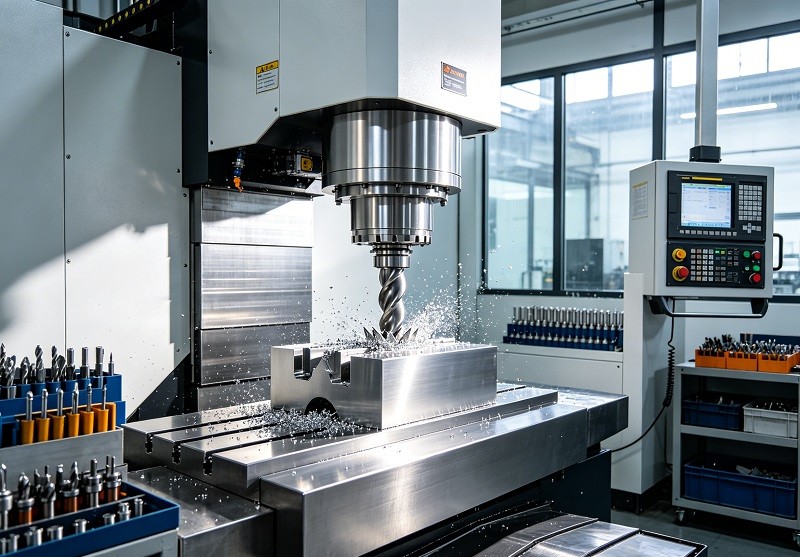
As a supplier, our expertise is defined by our ability to master a portfolio of challenging materials. Each one has a unique personality—a distinct set of properties that dictates how it must be handled, cut, and finished. Understanding these materials on a fundamental level is non-negotiable. Below are some of the most common difficult materials we process, along with the specific challenges each presents.
| Material | Key Properties & Characteristics | Primary Machining Challenges |
|---|---|---|
| Titanium Alloys (e.g., Ti-6Al-4V) | - Excellent strength-to-weight ratio - High tensile strength, even at elevated temperatures - Superior corrosion resistance - Low thermal conductivity - High modulus of elasticity ("springiness") |
- Heat Buildup: The low thermal conductivity means heat doesn't escape into the chips but concentrates on the cutting tool, causing rapid wear and potential tool failure. - Chemical Reactivity: At high temperatures, titanium can react with and weld to the cutting tool, leading to galling and a poor surface finish. - Vibration/Chatter: The material's "springiness" can cause it to push away from the cutting tool, resulting in vibration that harms tool life and accuracy. |
| Nickel-Based Superalloys (e.g., Inconel, Hastelloy) | - Maintains high strength at extreme temperatures - Outstanding resistance to corrosion and oxidation - High toughness - Very low thermal conductivity |
- Extreme Work Hardening: These alloys harden significantly and instantly upon contact with a tool, making subsequent cuts extremely difficult. - High Cutting Forces & Heat: A great deal of energy is required to shear the material, generating intense heat and stress that wears down even the toughest cutting tools. - Tool Wear: The combination of hardness, abrasive particles, and heat leads to rapid notch wear, chipping, and deformation of cutting edges. |
| Hardened Steels (e.g., Tool Steels, Alloy Steels >45 HRC) | - Extremely high hardness (often 45-70 HRC) - Superior wear resistance and dimensional stability - High tensile and yield strength - Can be brittle compared to their annealed state |
- Sheer Hardness: The primary challenge is overcoming the material's resistance to being cut, which demands immense cutting forces and can cause tool chipping or fracture. - Tool Material Selection: Standard tools are ineffective. Machining requires ultra-hard tool materials like Cubic Boron Nitride (CBN) or ceramics that can withstand the heat and abrasion. - Brittle nature: Improper machining techniques can lead to micro-cracks or outright fracture of the workpiece itself, not just the tool. |
| Cobalt-Chrome Alloys (e.g., CoCrMo) | - Excellent wear and corrosion resistance - High strength and biocompatibility - Retains hardness at high temperatures - Tendency to produce stringy, unmanageable chips |
- Abrasiveness & Hardness: Like other superalloys, CoCr is tough and abrasive, leading to premature tool wear. Hardness can range from 40-50 HRC or even higher. - Work Hardening: These alloys also exhibit a high work-hardening rate, which means that using too low a feed rate can actually make the material harder to machine. - Chip Control: The tendency to form long, stringy chips requires specialized tool geometries (like chip breakers) and strategies to prevent them from wrapping around the tool or damaging the part's surface. |
Our daily work involves an intimate understanding of this table. We don't just see "Inconel 718"; we see a material that demands a rigid setup, a specific cutting tool coating, a carefully managed feed rate to stay ahead of work hardening, and a high-pressure coolant strategy to manage its intense heat generation. This deep material knowledge is the foundation upon which we build our precision machining processes.
Overcoming Machining Roadblocks: A CNC Machining Parts Supplier's Perspective
Transforming a block of superalloy or hardened steel into a precision component is a journey fraught with potential roadblocks. These are not simple materials that yield easily to a cutting tool. They fight back. As a specialized CNC machining parts supplier, our role is not just to operate machines but to act as problem-solvers, anticipating and neutralizing these obstacles before they can compromise the quality, timeline, or cost of a project. This requires a profound understanding of the physics at play during the cutting process and a strategic, experience-driven approach to every setup.
Understanding Common Machining Obstacles
The unique properties of difficult materials give rise to a specific set of recurring challenges on the shop floor. These are not minor inconveniences; they are fundamental issues that can lead to catastrophic tool failure, scrapped parts, and blown budgets if not managed with expertise. Mastering these materials means first mastering the problems they create.
Chatter and Runout: Dealing with Vibrations
In machining, "chatter" is the enemy of precision. It is a form of self-excited vibration that occurs between the cutting tool and the workpiece, often producing a distinct, high-pitched noise. This isn't just a minor annoyance; it’s a destructive force that degrades surface finish, causes dimensional inaccuracies, and drastically shortens the life of expensive cutting tools. The "springiness" of materials like titanium and the high cutting forces required for superalloys make them particularly susceptible to chatter.
Another closely related issue is runout, which is the error that causes a tool to spin in a slight elliptical pattern instead of a perfect circle. This can be a radial (side-to-side) or axial (end-to-end) deviation. Even a few microns of runout mean that one flute of a multi-fluted end mill does more work than the others, leading to uneven wear, vibration, and a poor surface finish.
Causes and Consequences of Vibration:
- Lack of Rigidity: The primary cause of chatter is insufficient rigidity somewhere in the system—be it the machine tool itself, the workholding fixture, the tool holder, or the cutting tool. A long, thin tool, for example, will vibrate more easily than a short, stout one.
- Regenerative Chatter: This is the most common and destructive form of chatter. It occurs when a cutting tool passes over a surface that is already slightly wavy from a previous pass. The tool's vibration resonates with the existing waviness, amplifying the vibration in a feedback loop.
- Forced Vibrations: These can be caused by external factors such as an imbalanced spindle, worn machine bearings, or even vibrations from nearby machinery.
- Workpiece Flexibility: Machining thin-walled or poorly supported parts is a common scenario for chatter. The part itself may not be rigid enough to resist the cutting forces without vibrating.
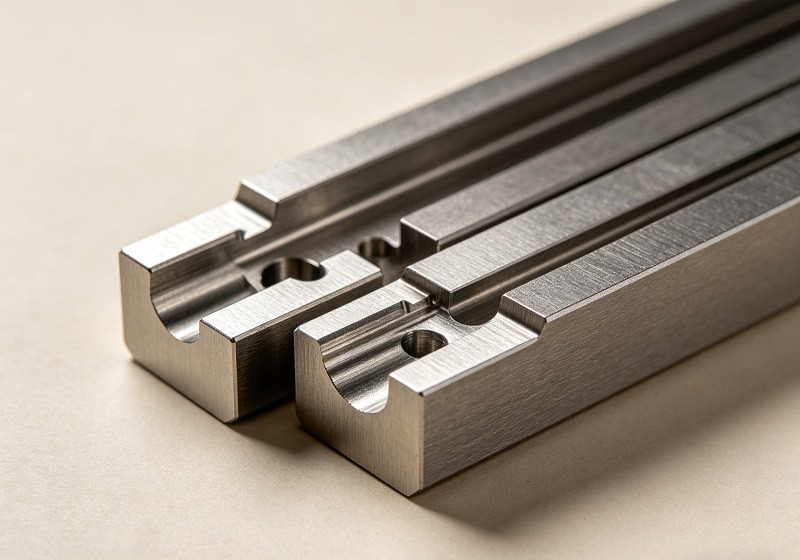
Our Strategies for Mitigation: As a supplier, we attack chatter and runout systematically:
- Maximize System Rigidity: This is our first principle. We use high-quality, rigid machine tools and ensure they are meticulously maintained. We employ robust workholding solutions to firmly secure the workpiece. Critically, we minimize tool overhang, keeping the length-to-diameter ratio as low as possible (ideally under 3:1) to prevent the tool from acting like a tuning fork.
- Select the Right Tooling: We use high-quality, balanced tool holders, such as hydraulic or shrink-fit types, which provide excellent rigidity and inherent vibration damping. For the cutting tools themselves, we often select those with variable helix or variable pitch geometries, which are specifically designed to disrupt the harmonic frequencies that lead to chatter.
- Optimize Cutting Parameters: Simply slowing down is often not the answer. Chatter occurs at specific resonant frequencies. We sometimes increase the spindle speed by 10-15% to move out of an unstable zone. We also carefully manage the radial and axial depth of cut. Deeper radial cuts (engagement) with a shallower axial depth, a technique known as trochoidal milling, can maintain a constant chip load and reduce vibration.
- Employ Damping Technologies: For particularly challenging operations, we utilize anti-vibration tooling, such as damped boring bars or milling holders. These specialized tools have internal mechanisms that absorb and counteract vibrations before they can amplify.
By treating the entire machining setup as an interconnected system, we can diagnose and eliminate sources of vibration, ensuring that the only marks left on the part are those intended by the design.
Work Hardening: When Material Gets Tougher as You Cut
Work hardening, also known as strain hardening, is a phenomenon where a metal becomes harder and stronger as it undergoes plastic deformation. While this can be a desirable outcome in processes like cold rolling, it is a significant obstacle in CNC machining. When cutting materials like austenitic stainless steel, titanium, or nickel-based superalloys (Inconel, Hastelloy), the pressure and heat from the cutting tool can cause the surface layer of the workpiece to harden almost instantly.
This creates a vicious cycle: the tool makes a cut, hardening the surface immediately behind it. The next pass, or even the trailing edge of the same tool, then has to cut through this newly hardened layer. This dramatically increases cutting forces, generates even more heat, and leads to rapid tool wear or catastrophic failure. If not managed, a part can become so hard that it is virtually unmachinable.
What Causes Work Hardening?
- Plastic Deformation: The primary driver is the physical stress of the cutting tool deforming the metal's crystal structure. This introduces and tangles dislocations within the material's atomic lattice, making it more resistant to further deformation.
- Heat Generation: The intense friction between the tool and workpiece generates localized heat. In materials with low thermal conductivity (like titanium and Inconel), this heat doesn't dissipate into the chip; it soaks into the workpiece surface, accelerating the hardening effect.
- Tool Rubbing vs. Cutting: This is a critical factor. If a cutting tool is dull, or if the feed rate is too low, the tool can start to rub against or "plow" through the material instead of cleanly shearing a chip. This rubbing action generates immense friction and pressure, which is a perfect recipe for severe work hardening.
How We Prevent It: Combating work hardening requires a proactive and aggressive machining strategy. Our approach is to stay ahead of the phenomenon, ensuring we are always cutting beneath the previously hardened layer.
- Maintain a Constant, Aggressive Cut: We avoid "light" or timid cuts. Feed rates must be sufficient to ensure the cutting edge is constantly digging into fresh, un-hardened material below the surface layer affected by the previous pass. We never allow the tool to dwell or pause during a cut, as this instantly generates heat and hardening.
- Use Extremely Sharp and Appropriate Tooling: A sharp cutting tool is non-negotiable. We use tools with positive rake angles and specific geometries designed to shear material cleanly rather than plow through it. For materials like Inconel, ceramic or CBN (Cubic Boron Nitride) tools may be used, as they can handle higher speeds and maintain their edge in punishing conditions.
- Optimize Depth of Cut: Our depth of cut is always programmed to be greater than the work-hardened zone created by the previous pass, which is typically 0.1–0.2 mm. This ensures the cutting edge is always engaging with softer, virgin material.
- Climb Milling Strategy: Whenever possible, we employ climb milling. In this method, the cutter rotates with the direction of the feed. The tool starts the cut with maximum chip thickness and ends with zero, which effectively transfers heat into the chip and away from the workpiece, reducing the tendency to work harden. This is the opposite of conventional milling, which starts at zero chip thickness and can initiate rubbing.
- Effective Cooling: While coolant can't stop the mechanical deformation, high-pressure coolant systems are crucial. They help to rapidly extract heat from the cutting zone, flush away abrasive chips that could be recut, and provide lubrication to reduce friction.
By rigorously applying these strategies, we prevent the work-hardened layer from ever becoming an obstacle, enabling a stable and predictable machining process even in the most unforgiving materials.
Extreme Tool Wear and Heat Management
The single greatest battle when machining difficult materials is the fight against heat and the resulting tool wear. The properties that make these materials so valuable—high strength at extreme temperatures—also make them incredibly punishing on the cutting tools used to shape them. Tool failure isn't a matter of if, but when. Our job is to delay that "when" for as long as possible through intelligent heat management and tooling strategies.
The combination of high hardness, abrasiveness, and low thermal conductivity creates a perfect storm at the cutting edge. Instead of being carried away in the chips, the immense heat generated by friction flows directly into the cutting tool. This extreme thermal load leads to several common tool failure modes:
- Flank Wear: This is the gradual wearing away of the relief face of the tool from rubbing against the newly machined surface. It's caused by both abrasion and excessive heat.
- Crater Wear: High temperatures on the tool's rake face (where the chip flows) can cause diffusion, where atoms from the workpiece material transfer to the tool, creating a "crater." This weakens the cutting edge and can lead to chipping or catastrophic failure.
- Notch Wear: A specific type of wear that occurs at the depth-of-cut line, often exacerbated by work hardening. It can lead to poor surface finish and eventual edge fracture.
- Thermal Cracking & Deformation: The intense heat can soften the cobalt binder in carbide tools, causing the cutting edge to deform or "plasticize." Rapid temperature fluctuations can cause microscopic cracks that eventually lead to tool breakage.
- Built-Up Edge (BUE): At certain temperatures, material from the workpiece can weld itself to the tool tip, which changes the tool's geometry, degrades the surface finish, and can break off, taking a piece of the tool with it.
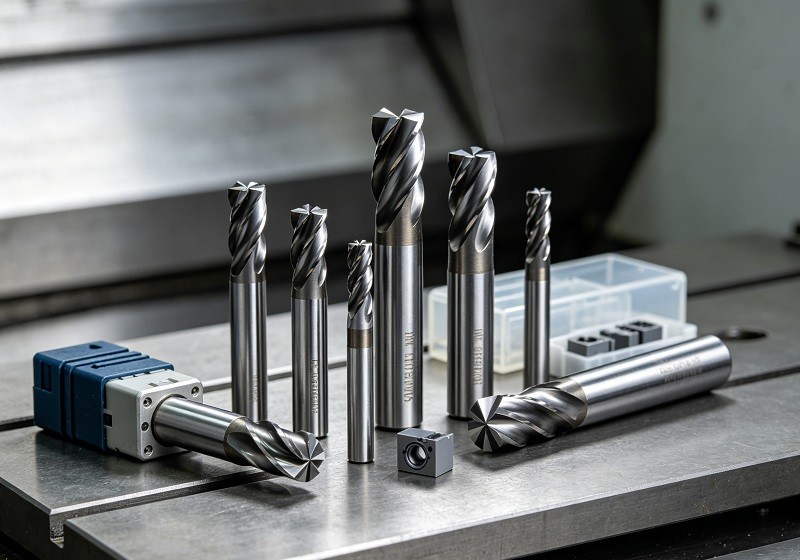
Our Multi-Faceted Strategy for Heat Management and Tool Life Extension:
Successfully machining these materials requires a comprehensive approach to controlling heat and mitigating wear.
Advanced Tool Materials and Coatings: Standard High-Speed Steel (HSS) is not an option. We rely on:
- Coated Carbide: These are the workhorses. Substrates are designed for toughness, while advanced multi-layer coatings like Aluminum Titanium Nitride (AlTiN) or Titanium Aluminum Nitride (TiAlN) act as a thermal barrier. These coatings form a protective layer of aluminum oxide at high temperatures, insulating the tool and deflecting heat into the chip.
- Ceramics and Cubic Boron Nitride (CBN): For hardened steels and some superalloy finishing operations, we use even harder materials. CBN is second only to diamond in hardness and retains its strength at incredibly high temperatures, making it ideal for hard turning and milling.
Strategic Coolant Application: Coolant does more than just cool; it lubricates and evacuates chips. Merely flooding the area is often insufficient.
- High-Pressure Coolant (HPC): We utilize systems delivering coolant at pressures of 70 bar (1000 PSI) or higher, aimed directly at the cutting zone. This high pressure gets underneath the chip to break it, cool the tool's edge effectively, and blast chips away before they can be recut.
- Through-Spindle Coolant: Many of our tools have internal coolant channels that deliver coolant directly through the tool tip to the exact point of contact, ensuring maximum cooling efficiency where it's needed most.
Optimized Toolpaths: Modern CAM software allows us to create toolpaths that manage heat and tool load. Techniques like High-Efficiency Milling (HEM) or Trochoidal Milling use a lower radial depth of cut but a much higher axial depth and feed rate. This approach maintains a constant, light engagement with the material, spreads heat and wear over a larger portion of the cutting edge, and promotes better chip evacuation.
By combining the right tool material, a protective coating, aggressive coolant delivery, and intelligent toolpaths, we turn the battle against heat and wear into a manageable, predictable process. This ensures we can produce high-quality parts consistently, with predictable tool life and controlled costs.
Why Expertise is Crucial for a CNC Machining Parts Supplier
In the world of CNC machining, advanced equipment and software are powerful tools, but they are not a substitute for human expertise. This is never more true than when working with difficult materials. A state-of-the-art 5-axis machine can still produce a scrapped part or destroy a cutting tool in seconds if the person programming and operating it lacks the necessary experience. True expertise is a combination of theoretical knowledge, hands-on skill, and an intuitive understanding of how these demanding materials behave under pressure.
The Limits of Automation and the Value of "Tribal Knowledge"
While automation streamlines production, it cannot fully replace the nuanced decision-making of a seasoned machinist or process engineer. Machining superalloys is often described as more of an art than a science, relying heavily on what is known in the manufacturing world as "tribal knowledge." This is the undocumented expertise and best practices that experienced workers develop over decades. It's knowing the specific sound of chatter before it becomes destructive, recognizing the subtle change in chip color that indicates excessive heat, or understanding that a particular batch of Inconel requires a slight adjustment to the feed rate. This type of knowledge isn't found in a textbook; it's earned through years of trial, error, and success on the shop floor.
Why Deep Experience Matters as a Supplier:
Strategic Process Planning: An expert process engineer doesn't just program a toolpath. They develop a comprehensive strategy. This involves selecting the right machine, the optimal workholding method, a sequence of roughing and finishing operations to manage stress, and the most suitable cutting tools and parameters for each step. This holistic planning is critical to preventing issues like work hardening and thermal distortion before the first cut is even made.
Problem-Solving in Real-Time: When dealing with difficult materials, unexpected issues are common. An experienced machinist can interpret real-time feedback from the machine—the sound, the vibrations, the load on the spindle—and make immediate, informed adjustments. This ability to troubleshoot on the fly is what separates a successful run from a costly failure.
Optimizing for Efficiency and Cost: Anyone can machine titanium by running the machine at a crawl, but this is not a commercially viable strategy. True expertise lies in finding the "sweet spot"—the optimal balance of cutting speed, feed rate, and depth of cut that maximizes material removal rates without compromising tool life or part quality. This optimization directly translates to lower costs and faster turnaround times for the customer.
Material-Specific Nuances: An experienced supplier understands that not all alloys are created equal. They know that one grade of titanium may be more "gummy" than another, or that a specific heat treatment on a steel alloy will require a shift from carbide to CBN tooling. This deep material expertise ensures that the machining strategy is perfectly tailored to the unique characteristics of the workpiece.
Ultimately, CNC machines are tools that execute instructions. The quality of the final part is a direct reflection of the quality of the expertise that created those instructions. For industries that rely on high-performance parts made from challenging materials, partnering with a supplier who possesses this deep well of experience is not just a preference—it is a fundamental requirement for success.
Advanced Techniques: How a Leading CNC Machining Parts Supplier Delivers Precision
Achieving the extreme tolerances and flawless surface finishes required for critical components is not a matter of chance. It is the result of a deliberate, holistic system that combines cutting-edge physical assets with intelligent process control. As a leading supplier of complex parts, we have built our operations around a core philosophy: invest in the best technology and empower it with the sharpest minds. This synergy allows us to move beyond simply cutting metal and into the realm of true precision engineering, where we can predictably and repeatedly transform even the most obstinate materials into perfect components.
Cutting-Edge Machinery and Specialized Tooling Empowering Our CNC Machining Parts Supplier Operations
The foundation of precision machining, especially for difficult materials, rests on the quality and capability of the machinery and tooling. Simply put, you cannot achieve micron-level accuracy with subpar equipment. Recognizing this, we have strategically invested in a fleet of advanced CNC machines and a comprehensive arsenal of specialized tooling designed to conquer the unique challenges of superalloys and hardened steels.
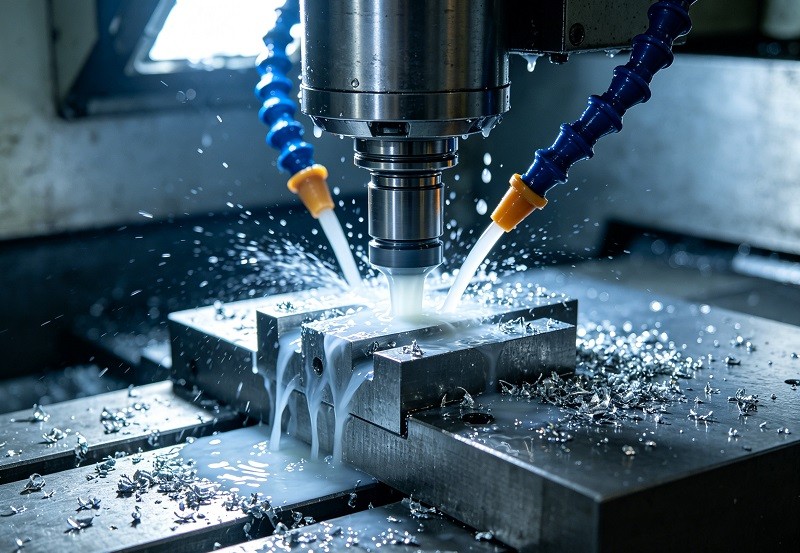
1. The Power of Multi-Axis Machining
Our workshop is anchored by a suite of 5-axis CNC machining centers. Unlike traditional 3-axis machines that only move along the X, Y, and Z axes, 5-axis machines introduce two additional rotary axes. This capability is a game-changer for machining complex parts from difficult materials for several key reasons:
- Single-Setup Machining: We can machine multiple faces of a complex part, such as an aerospace turbine blade or a medical implant, in a single setup. By eliminating the need to manually re-fixture the part for different operations, we dramatically reduce the risk of human error and improve feature-to-feature accuracy.
- Shorter, More Rigid Tools: The ability to tilt the tool or rotate the workpiece allows us to use shorter, more rigid cutting tools. A shorter tool is far less susceptible to the vibration and deflection that cause chatter, which directly translates to a superior surface finish and longer tool life.
- Improved Access and Complex Geometries: 5-axis movement enables the tool to reach intricate features, undercuts, and angled holes that would be impossible to machine on a 3-axis machine. This empowers engineers to design more functional and efficient parts without being constrained by manufacturing limitations.
- Optimal Cutting Angles: We can maintain an optimal, tangential angle between the cutting tool and the material surface at all times. This consistent engagement reduces tool wear and results in a smoother, higher-quality surface finish with fewer tool marks.
2. The Indispensable Role of Machine Rigidity
When machining materials that require high cutting forces, machine rigidity is paramount. Rigidity is the machine's ability to resist deformation and vibration under load. Our machines are built with heavy-duty cast iron bases and robust structural components that provide exceptional damping properties. This inherent stability ensures that the machine can absorb cutting forces without deflecting, which is critical for:
- Holding Tight Tolerances: A rigid machine minimizes any deviation between the programmed toolpath and the actual cutting position, ensuring dimensional accuracy.
- Preventing Chatter: By absorbing vibrations, a rigid structure prevents the feedback loop that leads to chatter, preserving both the part's surface integrity and the tool's cutting edge.
- Extending Tool Life: A stable, vibration-free cutting environment subjects the tool to less impact and stress, significantly extending its usable life.
3. Specialized Tooling: The Sharp End of Precision
The machine is only half of the equation; the cutting tool is where the physics of material removal happens. We maintain an extensive and highly specialized tooling inventory tailored for difficult materials:
- Advanced Materials: Our go-to tools are made from premium substrates like micro-grain carbide, which offers a great balance of hardness and toughness. For the most extreme applications, we employ tools made of Cubic Boron Nitride (CBN) and ceramics, which retain their hardness at the intense temperatures generated when cutting hardened steel and nickel alloys.
- Engineered Geometries: We don't use general-purpose tools. Our end mills and inserts feature specific geometries—like high positive rake angles to reduce cutting forces and specialized chipbreakers for better chip control—designed explicitly for materials like Inconel and titanium. Variable helix and variable pitch designs are standard for mitigating chatter.
- Performance Coatings: Virtually all our tools are coated. These micro-thin coatings, such as AlTiN (Aluminum Titanium Nitride), are not just for lubrication. They act as a crucial thermal barrier, insulating the carbide substrate from the intense heat of the cutting zone and dramatically improving wear resistance.
This investment in top-tier machinery and tooling is not a luxury; it is a fundamental requirement for any serious CNC machining parts supplier. It provides us with the stable, powerful, and precise platform needed to deliver on the promises of quality and accuracy that our clients in high-stakes industries demand.
Smart Process Optimization: From CAD/CAM to Workholding
Having world-class machines and tools is only the beginning. The true art of precision machining lies in how those assets are deployed. At our facility, every project undergoes a rigorous process optimization workflow that begins the moment we receive a client's CAD file and doesn't end until the final part is inspected and shipped. This intelligent, front-to-back approach ensures efficiency, accuracy, and predictability.
1. CAD/CAM: The Digital Blueprint for Success
Our process starts with a deep dive into the digital model using advanced Computer-Aided Design (CAD) and Computer-Aided Manufacturing (CAM) software. This is far more than just converting a drawing into code; it's a critical strategic planning phase.
- Design for Manufacturability (DFM) Analysis: Our engineers first analyze the CAD model to identify any features that might pose machining challenges, such as deep pockets, thin walls, or difficult-to-reach areas. We provide proactive feedback to our clients, suggesting minor design modifications that can significantly improve machinability, reduce costs, and enhance the final part's integrity without compromising its function.
- Intelligent Toolpath Generation: This is where our CAM expertise shines. Instead of using basic, linear toolpaths, we generate highly optimized strategies that are tailored to the specific material and geometry. We leverage sophisticated techniques like:
- High-Efficiency Milling (HEM): Also known as dynamic or trochoidal milling, HEM is a roughing strategy that uses a low radial depth of cut (RDOC) but a high axial depth of cut (ADOC) and a significantly increased feed rate. This approach maintains a constant, light load on the tool, spreads wear evenly across the entire flute length, and effectively dissipates heat, dramatically extending tool life and boosting material removal rates, especially in tough alloys prone to work hardening.
- Optimized Finishing Paths: For finishing, we use toolpaths that follow the part's natural curvature, often using constant-scallop or 3D spiral strategies. This ensures a consistent, high-quality surface finish without abrupt changes in direction that can leave tool marks.
2. Simulation and Verification: Machining Before We Machine
Before any stock is loaded into a machine, we run the entire program through a complete digital simulation. Our CAM software creates a "digital twin" of the machine tool, fixture, tool, and workpiece. This allows us to:
- Detect Collisions: We can identify any potential collisions between the tool, holder, workpiece, fixture, or machine components.
- Verify Material Removal: The simulation shows us exactly how the material will be removed, allowing us to spot areas of inefficient cutting or where unwanted stock might be left behind.
- Optimize Non-Cutting Moves: We analyze and reduce "air time"—the time the tool spends moving but not cutting. By optimizing rapid movements, tool changes, and entry/exit paths, we can shave significant time off the total cycle.
3. Workholding: The Unsung Hero of Precision
Fixturing, or workholding, is the critical and often overlooked foundation of precision machining. Even the most rigid machine and advanced toolpath are useless if the workpiece moves even slightly during the cut. Our approach to workholding is uncompromising:
- Maximize Rigidity: For materials like titanium, which are flexible and prone to vibration, we design fixtures that provide maximum support and clamp the workpiece securely. This often involves using multiple clamping points to distribute pressure evenly and prevent part distortion.
- Custom Fixtures: For complex geometries or high-volume production, we design and build custom fixtures tailored to the specific part. This ensures perfect, repeatable positioning and allows for optimal tool access to all features.
- Minimizing Vibration: A stable workholding setup is a primary defense against chatter. By ensuring the part is held firmly and supported against cutting forces, we eliminate a major source of vibration, leading to better surface finishes and extended tool life.
This intelligent workflow—from digital design optimization in CAM to the physical reality of a rock-solid workholding setup—creates a seamless, error-resistant process. It’s this meticulous attention to detail at every stage that allows us to transform a client's concept into a tangible, precise component efficiently and reliably.
The Power of Green Machining: CO₂ Cooling Systems as Embraced by Our CNC Machining Parts Supplier Team
In our relentless pursuit of precision and efficiency, we are continuously exploring and adopting technologies that offer a competitive edge. One of the most promising advancements in our toolkit is cryogenic cooling using carbon dioxide (CO₂), a technique that represents a significant leap forward in sustainable and high-performance machining. This "green machining" approach not only aligns with modern environmental standards but also delivers tangible benefits in managing the extreme heat generated when cutting difficult materials.
How CO₂ Cooling Works
Instead of traditional flood coolants, which are oil- or water-based emulsions, this system uses liquid CO₂ as the primary cooling medium. The CO₂ is stored in a tank and delivered under high pressure through the machine's spindle and directly through the cutting tool's internal channels. When the liquid CO₂ exits the nozzle at the tool tip, it undergoes rapid expansion, instantly transforming into dry ice snow at approximately -78°C (-109°F). This creates an intense, localized cooling effect precisely at the point of cut—where heat is most destructive.
Some advanced systems utilize **supercritical CO₂ (scCO₂) **, a state where CO₂ is held above its critical temperature and pressure, behaving like both a liquid and a gas. This phase allows it to penetrate the cutting zone with incredible efficiency, delivering superior cooling and lubrication.
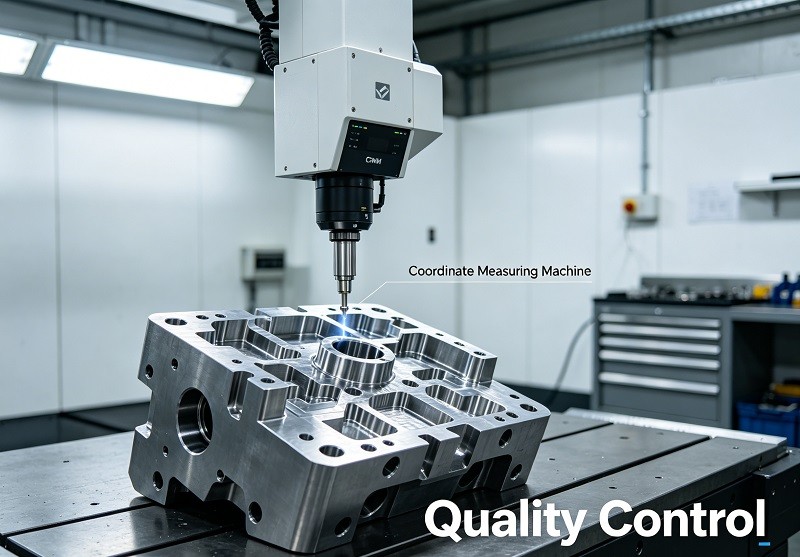
Key Advantages of CO₂ Cooling in Our Operations:
Superior Heat Extraction: The primary benefit is unparalleled heat reduction. By drastically lowering the temperature at the tool-workpiece interface, CO₂ cooling directly counteracts the main cause of tool wear when machining materials with low thermal conductivity like titanium and Inconel. This allows us to significantly extend tool life, sometimes by more than double compared to conventional coolants.
Increased Productivity: With heat under control, we can push our cutting parameters more aggressively. CO₂ cooling enables us to increase cutting speeds and material removal rates, in some cases reducing cycle times by 30-50%. This boost in efficiency translates directly to faster project delivery and more competitive pricing for our clients.
Environmental and Safety Benefits (The "Green" Aspect): This is a major driver of our adoption.
- Zero Waste: Unlike oil-based coolants that become contaminated and require costly and environmentally hazardous disposal, the CO₂ simply sublimates and harmlessly evaporates into the atmosphere. The CO₂ we use is often a recycled by-product from other industrial processes, making it an environmentally neutral choice.
- Clean Parts and Work Environment: Machining with CO₂ leaves parts, chips, and machines completely clean and dry. This eliminates the need for post-machining cleaning processes, saving time and resources. It also creates a safer, healthier workplace for our team by eliminating the oily mist and fumes associated with traditional coolants.
- Reduced Energy Consumption: By eliminating the need for large pumps, filtration systems, and chillers required for conventional coolant management, CO₂ systems consume significantly less energy.
Improved Part Quality: The intense cooling minimizes thermal expansion of the workpiece, which helps in maintaining tighter dimensional tolerances. It also reduces the formation of burrs and improves the overall surface finish of the machined part. For industries like medical manufacturing, the clean, residue-free nature of the parts is a critical advantage.
While the initial investment in CO₂ cooling technology is significant, we view it as an essential component of a forward-looking, high-performance machining strategy. It provides a powerful solution that enhances performance, increases efficiency, and aligns with our commitment to sustainable and responsible manufacturing practices.
Partnering with the Right CNC Machining Parts Supplier for High-Demand Parts
In industries where performance is non-negotiable and components must endure extreme conditions, the choice of a CNC machining parts supplier is as critical as the design of the part itself. A component is only as reliable as the hands and machines that crafted it. Selecting a partner goes beyond simply finding a shop that can cut metal; it involves identifying a team that possesses the technical depth, process integrity, and quality-centric mindset required to handle the complexities of high-demand parts. A true partner becomes an extension of your own engineering and procurement teams, offering expertise and reliability that de-risk your supply chain and elevate your final product.
What to Look for in a Trusted CNC Machining Parts Supplier
When sourcing a partner for critical, high-demand parts, especially those made from difficult materials, a surface-level capabilities list is not enough. A trusted supplier must demonstrate a deep-seated commitment to quality, backed by verifiable evidence of their expertise, processes, and systems. Here are the essential criteria to look for when evaluating a potential CNC machining parts supplier.
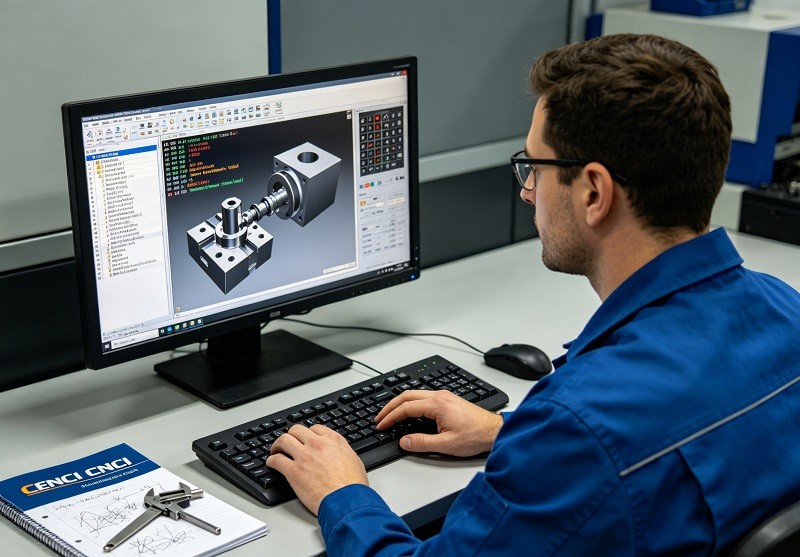
1. Verifiable Industry Experience and Material Expertise
A supplier's experience is one of the first qualities to consider. A shop with a long track record, particularly within your specific industry (e.g., aerospace, medical), is more likely to understand the unique challenges and compliance requirements involved.
- What to ask: "Can you provide case studies or examples of projects similar to ours?" "What is your experience machining [specific material, e.g., Inconel 718 or Ti-6Al-4V]?"
- What to look for: A confident supplier will have a portfolio of complex parts and be able to speak fluently about the specific techniques they use for difficult materials. They should be able to anticipate potential issues before you even mention them.
2. Robust Quality Management System (QMS) and Certifications
Certifications are non-negotiable proof that a supplier adheres to rigorous, standardized processes. They are a baseline indicator of a company's commitment to quality.
- ISO 9001:2015: This is the foundational standard for quality management. It ensures a supplier has documented processes for everything from order entry to final inspection and is committed to continuous improvement.
- Industry-Specific Certifications: For high-stakes sectors, look for specialized certifications. AS9100 is essential for aerospace suppliers, as it adds stringent requirements for traceability and risk management. ISO 13485 is the equivalent for medical device manufacturing, focusing on patient safety and regulatory compliance.
- What to ask: "Are you certified to [relevant standard]?" "Can we review your quality manual and audit history?"
3. Advanced Technical Capabilities and Equipment
The supplier's equipment list is a direct reflection of their capabilities. For difficult materials, advanced machinery is a necessity, not a luxury.
- Machinery: Look for modern 5-axis CNC machining centers, which are crucial for producing complex geometries in a single setup, improving accuracy and efficiency.
- Inspection Equipment: A serious supplier must have a climate-controlled quality lab equipped with advanced metrology tools. A Coordinate Measuring Machine (CMM) is essential for verifying tight tolerances on complex parts. Other tools like laser scanners and surface profilometers demonstrate a deep commitment to quality control.
- What to ask: "What are the capabilities of your CMM?" "Can you provide a sample inspection report for a part with similar tolerances to ours?"
4. Comprehensive Process Control and Documentation
Quality isn't just checked at the end; it's built into every step. A trusted supplier will have a system to control and document the entire manufacturing process.
- In-Process Inspection: They shouldn't rely solely on final inspection. Ask about their procedures for in-process checks, where operators measure parts at various stages of machining to catch deviations early.
- Material Traceability: For critical applications, the supplier must be able to trace a finished part all the way back to the raw material heat lot. Look for systems that ensure lot separation and provide full material certifications (mill certs).
- What to ask: "What is your process for first-article inspection (FAI)?" "How do you ensure material traceability throughout production?"
5. Strong Communication and Engineering Support
A true partner does more than just take orders. They communicate proactively and offer their expertise to improve your product.
- Responsiveness: A good supplier should respond to inquiries quickly and clearly.
- Design for Manufacturability (DFM) Feedback: Look for a partner who will review your designs and suggest modifications that could reduce cost, improve performance, or simplify manufacturing without compromising function.
- What to ask: "What is your typical lead time for quotes?" "Do you offer DFM analysis as part of your service?"
Selecting a supplier based on these criteria establishes a foundation of trust and reliability, ensuring that the complex, high-demand parts you receive are not just made, but made right.
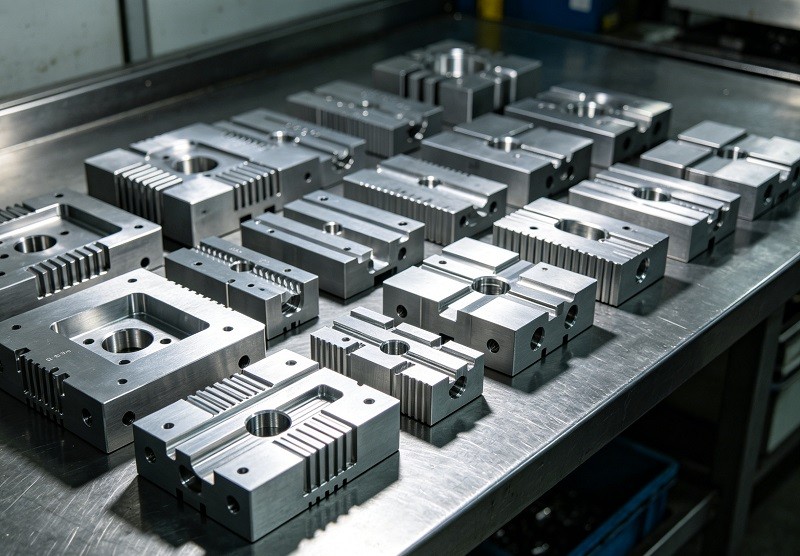
Benefits of Our Precision Approach as Your CNC Machining Parts Supplier
Choosing us as your CNC machining parts supplier is a strategic decision that delivers tangible benefits beyond just the finished component. Our precision-first approach is an integrated philosophy that impacts everything from design optimization to supply chain reliability. By partnering with us, you are not just buying a part; you are investing in a process designed to enhance your product's performance, reduce your total costs, and accelerate your time-to-market.
Here are the key benefits you gain from our commitment to precision:
1. Unmatched Quality and Performance Our core focus on holding extremely tight tolerances ensures that every part we produce functions exactly as designed.
- Perfect Fit and Function: High-tolerance parts guarantee seamless integration during assembly, eliminating the need for time-consuming and costly manual adjustments or shimming. For complex assemblies in aerospace or medical devices, this perfect fit is critical for performance and safety.
- Enhanced Reliability: Precision reduces the risk of premature wear and failure. When components fit and move together flawlessly, mechanical stress is distributed as intended, leading to a longer operational lifespan and greater product reliability.
2. Significant Cost Savings and Increased Efficiency While precision machining can have higher upfront costs, our approach delivers significant long-term savings.
- Reduced Waste and Rework: Our "measure twice, cut once" philosophy, supported by in-process inspections and advanced quality control, dramatically reduces scrap rates. By getting it right the first time, we eliminate the costs associated with rework or defective parts.
- Optimized Material Usage: Our expertise in material properties and advanced CAM software allows us to select the most cost-effective materials and optimize toolpaths to maximize material yield, reducing waste in expensive superalloys.
- Lower Assembly Costs: Parts that fit perfectly reduce manual labor and assembly time. This accelerates your entire production workflow, lowering labor costs and increasing throughput.
3. Accelerated Time-to-Market Our efficiency and reliability directly translate to a faster production schedule for you.
- Streamlined Prototyping: We can quickly produce high-fidelity prototypes, allowing your engineering teams to test and iterate designs faster.
- Reduced Production Delays: By mastering difficult materials and eliminating common machining roadblocks, we ensure a predictable and reliable production schedule, helping you meet tight deadlines and launch products on time.
4. Strengthened and De-Risked Supply Chain A reliable supplier is a cornerstone of a resilient supply chain.
- Consistent and Repeatable Quality: Our robust Quality Management System (QMS) and process controls mean that the thousandth part you receive is identical to the first. This consistency is crucial for long-term production and spare parts inventory.
- A True Engineering Partner: We do more than just manufacture; we collaborate. Our team provides valuable Design for Manufacturability (DFM) feedback, helping you optimize your designs for better performance and lower cost. This collaborative partnership transforms us from a simple vendor into an integral part of your success.
By choosing us, you are leveraging a partner who is deeply invested in the quality and performance of your final product. We transform challenging materials into high-performance assets like CNC Turning Parts{target="_blank"}, ensuring that every component we deliver adds value, enhances reliability, and contributes to your competitive advantage.
Ensuring Quality and Compliance: A Commitment from Your CNC Machining Parts Supplier
In industries where failure is not an option, the promise of quality is not enough. As your dedicated CNC machining parts supplier, our commitment to quality and compliance is embedded in every stage of our operation, providing you with objective, verifiable proof that your parts are manufactured to the highest standards. This rigorous, systematic approach ensures reliability, reduces risk, and builds the trust necessary for a strong, long-term partnership.
Our quality framework is built on several key pillars:
1. A Robust Quality Management System (QMS)
Our entire operation is governed by a comprehensive QMS that meets the stringent requirements of both ISO 9001:2015 and AS9100.
- ISO 9001 serves as the foundation, ensuring we have standardized processes for everything from quoting and material procurement to production planning and final inspection. It drives a culture of continuous improvement and customer focus.
- AS9100 builds on this foundation with additional, rigorous requirements specific to the aerospace and defense industries. This certification is our testament to our ability to manage risk, ensure product safety, and maintain impeccable documentation and traceability.
2. Complete Material Traceability
For every component we produce, we maintain an unbroken chain of documentation that links the finished part back to its raw material source.
- Material Certification: We procure materials only from approved vendors and require full material certifications (mill certs) with every order. These documents verify the material's chemical composition and physical properties.
- Heat Lot and Batch Tracking: From the moment raw material enters our facility, it is assigned a unique lot number. This identifier follows the material through every step of the production process, allowing us to pinpoint the exact origin of any component and ensure lot separation. In the rare event of a material issue, this system enables swift and precise containment.
3. Multi-Stage Inspection and Verification
We believe quality must be verified, not just assumed. Our inspection process is multi-layered, using state-of-the-art metrology equipment to ensure dimensional accuracy.
- First Article Inspection (FAI): Before launching a full production run, a part from the first batch undergoes an exhaustive FAI, often following the AS9102 standard. We meticulously measure every single dimension, feature, and note on the engineering drawing to verify that our production process is capable of producing a conforming part.
- In-Process Inspection: Our machinists perform regular checks throughout the machining cycle using calibrated tools. This allows us to detect and correct any potential deviations in real-time, preventing the production of multiple out-of-spec parts.
- Final Inspection with CMM Reports: Every production lot undergoes a final inspection in our climate-controlled quality lab. For complex parts with tight tolerances, we use a Coordinate Measuring Machine (CMM) to perform a detailed dimensional analysis. We provide our clients with comprehensive CMM inspection reports, which offer objective, traceable data comparing the actual measurements of the part to the nominal CAD model dimensions. This report is your ultimate proof of dimensional compliance.
4. Documentation and Compliance
We maintain meticulous records for every job. This documentation is not only crucial for our internal processes but also provides our clients with the evidence they need for their own quality and regulatory obligations. Our records are archived securely and are readily available for audits, ensuring full transparency.
This unwavering commitment to a documented, verifiable, and certified quality system is how we transform our promise of precision into a guarantee. By partnering with us, you are choosing a supplier who treats your quality and compliance requirements with the same rigor and seriousness as you do.
Conclusion
Machining difficult materials is undoubtedly a complex and demanding discipline, yet it is this very challenge that drives innovation and enables groundbreaking advancements across the aerospace, medical, and energy sectors. It requires a harmonious blend of science, technology, and hands-on artistry—a balance that transforms unforgiving alloys into components of exceptional performance and reliability.
As a dedicated CNC Machining Parts Supplier, we have built our expertise around mastering these challenges. We are equipped not only with advanced machinery and intelligent software but, more importantly, with a problem-solving mindset and a deep-seated understanding of the materials we shape. We tackle every project with a proactive strategy, anticipating obstacles and engineering solutions to ensure that your components are delivered with uncompromising precision.
When your designs demand the highest levels of strength, heat resistance, and accuracy, you need more than just a vendor. You need a reliable partner committed to turning your ambitious concepts into tangible realities. Trust in our expertise and technology to transform demanding materials into the high-performance components that meet your exact specifications and drive your success. Let's build the future, one precision part at a time.