The Versatility of Wholesale Custom Plastic Injection Molding Parts: A Guide
- Share
- Issue Time
- Mar 24,2026
Summary
Explore the versatility of wholesale custom plastic injection molding. Learn about processes, material options, and applications for durable, high-precision parts.
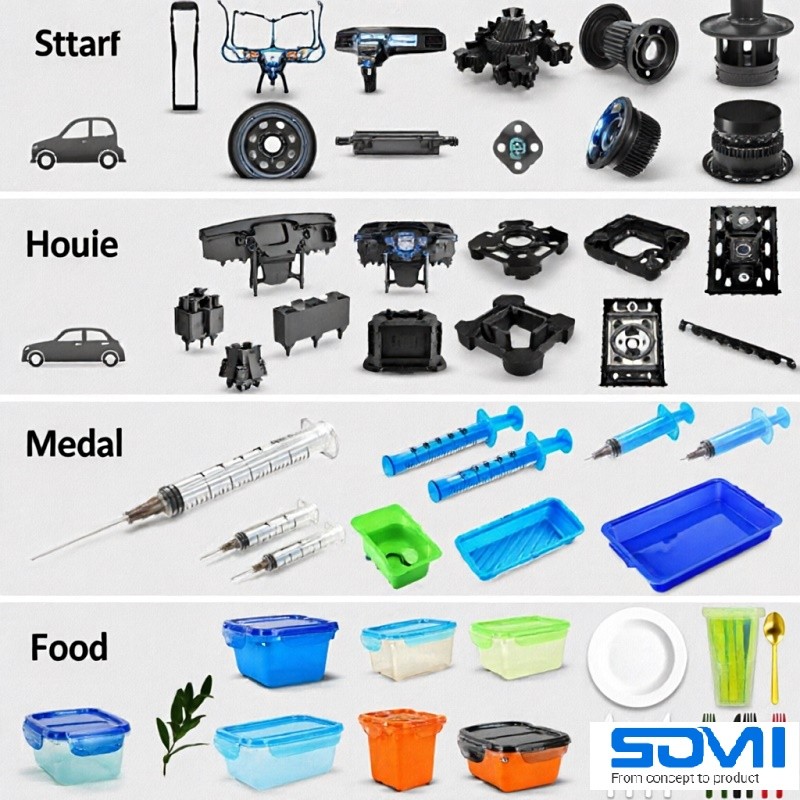
As an engineer or product designer, making the right choices for your projects is critical. This guide provides a comprehensive overview of wholesale custom plastic injection molding parts, helping you understand the materials, processes, and factors influencing quality and cost. Custom plastic injection molding has revolutionized countless industries by offering unparalleled flexibility and precision in manufacturing intricate components. From automotive parts to consumer electronics and medical devices, this process consistently delivers robust and reliable products. I'm here to help you navigate the world of Wholesale Custom Plastic Injection Molding Parts. This guide will clarify the manufacturing processes, material selections, and key considerations to ensure successful project outcomes. By understanding these elements, you can optimize your designs, control costs, and achieve the desired performance for your products.
Understanding the Fundamentals of Wholesale Custom Plastic Injection Molding Parts
The foundation of modern manufacturing is built on processes that are efficient, repeatable, and scalable. Wholesale custom plastic injection molding stands out as a pillar in this landscape, enabling the creation of vast quantities of identical parts with remarkable precision. To fully leverage its capabilities, it's essential for designers, engineers, and procurement managers to grasp the core principles of this transformative technology. Understanding the journey from a simple design to a finished product unlocks the potential for innovation, cost savings, and market leadership. This section delves into the fundamental aspects of the process, its key advantages, and its widespread impact across various global industries.
What is Custom Plastic Injection Molding?
Custom plastic injection molding is a highly sophisticated and widely used manufacturing technique for creating three-dimensional plastic objects in large volumes. The process involves injecting molten plastic material into a precisely engineered mold cavity under high pressure. Once the plastic fills the mold, it cools and solidifies, taking on the exact shape of the cavity. The result is a highly detailed and consistent part, making this method a popular choice in demanding industries like automotive, medical, and consumer goods. This technique allows companies to produce unique products tailored to their specific design requirements, transforming raw plastic into finished components with exceptional accuracy and repeatability.
The process is initiated by creating a custom mold, often called a tool, which is typically machined from steel or aluminum and consists of two halves: a cavity and a core. This mold is the most critical and often the most significant upfront investment, but its cost is offset by the extremely low cost-per-part in high-volume production runs.
The Process: From Pellets to Parts
The journey from raw material to a finished component in plastic injection molding is a systematic and automated cycle. Although it sounds complex, it can be broken down into a few primary stages that are repeated rapidly to achieve mass production.
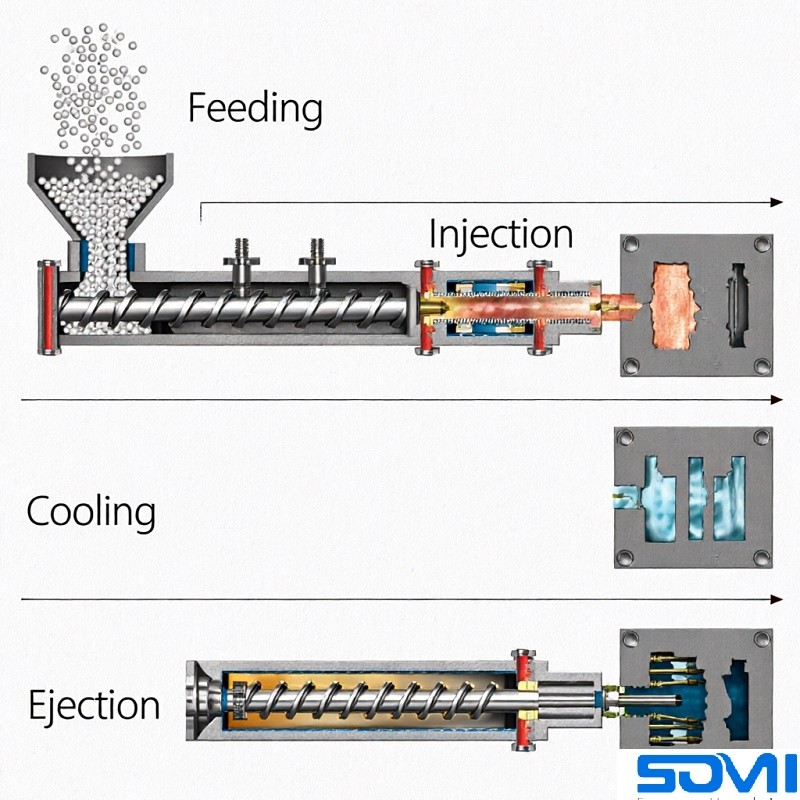
Material Loading and Melting: The process begins with small plastic pellets or granules, which are selected based on the desired properties of the final part. These pellets are poured into a hopper on the injection molding machine. From the hopper, they are fed into a heated barrel containing a rotating screw. The screw's motion and the barrel's heaters work together to melt the plastic into a molten, liquid state.
Injection: Once enough molten plastic has accumulated at the front of the barrel, the injection phase begins. A powerful hydraulic or electric system drives the screw forward, acting like a plunger. This action forces the molten plastic out of the barrel through a nozzle and into the mold cavity under immense pressure. This high pressure ensures that the mold is filled completely, capturing every intricate detail of the design.
Cooling and Solidification: After the mold is filled, the molten plastic begins to cool and solidify, taking the shape of the mold. The cooling stage is critical as it largely determines the cycle time and the final properties of the part. Cooling channels are often designed into the mold, through which water or oil is circulated to accelerate this process and maintain a consistent temperature.
Ejection: Once the part has cooled sufficiently and is solid, the mold opens. An ejection mechanism, typically a series of pins or a plate, pushes the finished part out of the mold cavity. The machine is then ready to close the mold and begin the next cycle. This entire process, from injection to ejection, can take anywhere from a few seconds to a couple of minutes, depending on the part's size, complexity, and material.
Key Advantages for Wholesale Custom Plastic Injection Molding Parts
Choosing injection molding for wholesale part production offers a multitude of benefits that make it a superior choice for many applications. These advantages stem from the process's inherent efficiency, precision, and scalability.
- High Efficiency and Fast Production: The injection molding process is remarkably fast, with cycle times often lasting just seconds. This incredible speed allows for the production of hundreds or even thousands of parts per hour from a single mold, making it exceptionally efficient for high-volume orders.
- Cost-Effectiveness at Scale: While the initial investment in mold tooling can be substantial, the cost per part becomes extremely low as production volume increases. The automated nature of the process also leads to lower labor costs compared to other manufacturing methods.
- Precision and Complexity: Injection molding allows for the creation of highly complex and intricate geometries that would be difficult or impossible to achieve with other methods. The high pressure used in the process ensures that the plastic fills every nook and cranny of the mold, resulting in parts with fine details and tight tolerances, often within 0.001 inches.
- Material and Color Flexibility: A vast array of thermoplastic polymers can be used, each offering different mechanical, thermal, and chemical properties. This allows designers to select the perfect material for their application. Furthermore, pigments can be added directly to the raw material, enabling the production of parts in virtually any color without the need for secondary painting operations.
- High Repeatability and Consistency: The process is highly automated and controlled, ensuring that each part produced is virtually identical to the last. This consistency is critical for applications where parts must fit together perfectly or meet stringent quality standards.
- Low Waste: Injection molding is a very efficient process with minimal material waste. Any scrap plastic, such as the material from runners and sprues, can often be reground, recycled, and reused in the process, further enhancing its cost-effectiveness and environmental friendliness.
The Versatility Across Industries
The unique combination of speed, precision, and cost-efficiency has made custom plastic injection molding an indispensable process across a vast spectrum of industries. Its ability to produce durable, complex, and reliable components at scale has driven innovation and lowered costs for countless products we use every day.
Here’s a look at how some key sectors leverage this technology:
- Automotive: The automotive industry is one of the largest users of injection-molded parts. Components like bumpers, dashboards, door handles, interior trim, and headlight housings are commonly manufactured this way. Plastics help reduce vehicle weight, which improves fuel efficiency, while also offering the durability and aesthetic finishes required for modern cars.
- Consumer Electronics: Think about the devices you use daily. The housings for your Wi-Fi router, the body of your smartphone, and the buttons on your remote control are all likely made using injection molding. This process is ideal for creating the sleek, complex, and durable casings needed to protect sensitive electronic components while providing a high-quality feel.
- Medical and Healthcare: In the medical field, precision and sterility are paramount. Injection molding is used to produce a vast range of single-use and reusable medical devices, including syringes, test swabs, implant components, and enclosures for monitoring equipment. The ability to use FDA-compliant, sterilizable plastics makes it a perfect fit for these critical applications.
- Food and Beverage: This industry relies on injection molding for everything from bottle caps and containers to conveyor system components and food processing equipment. The use of food-grade plastics ensures safety and compliance with health regulations, while the process delivers the high volumes needed for packaging mass-market products.
- Building and Construction: Durability and resistance to the elements are key in construction. Injection molding is used to create components like pipe fittings, electrical boxes, tool handles, and window and door hardware. These plastic parts offer a lightweight, corrosion-resistant, and cost-effective alternative to traditional materials like metal and wood.
- Consumer Products: The reach of injection molding extends into nearly every corner of our homes. From furniture components and kitchen appliance parts to children's toys and garden tools, the process enables the mass production of affordable, durable, and intricately designed goods.
| Industry | Common Injection Molded Components | Key Benefits |
|---|---|---|
| Automotive | Bumpers, Dashboards, Door Handles, Buttons | Weight Reduction, Durability, Complex Shapes |
| Consumer Electronics | Device Housings, Cable Connectors, Casings | High-Precision, Aesthetic Finish, Protection |
| Medical | Syringes, Test Kits, Implantable Parts | Sterilizability, Biocompatibility, High Precision |
| Food & Beverage | Bottle Caps, Containers, Processing Parts | FDA Compliance, High Volume, Low Cost |
| Construction | Pipe Fittings, Drain Grates, Tool Handles | Durability, Corrosion Resistance, Cost-Effective |
The widespread adoption of injection molding highlights its incredible versatility. By enabling the efficient production of high-quality plastic parts, it has become a cornerstone of modern manufacturing, supporting innovation and growth in industries around the globe.
Selecting the Right Material for Your Wholesale Custom Plastic Injection Molding Parts
The success of a custom injection-molded part hinges on the selection of the right material. The polymer chosen dictates not only the physical appearance and tactile feel of the final product but also its structural integrity, durability, and ability to withstand environmental factors. With hundreds of resins available, each with a unique profile of properties, making an informed choice is critical. This decision directly impacts performance, manufacturing efficiency, and overall project cost. This section will guide you through the fundamental distinctions between major plastic categories, compare common materials, and explore the far-reaching impact of material selection on your product's success.
Thermoplastics vs. Thermosets: A Core Distinction
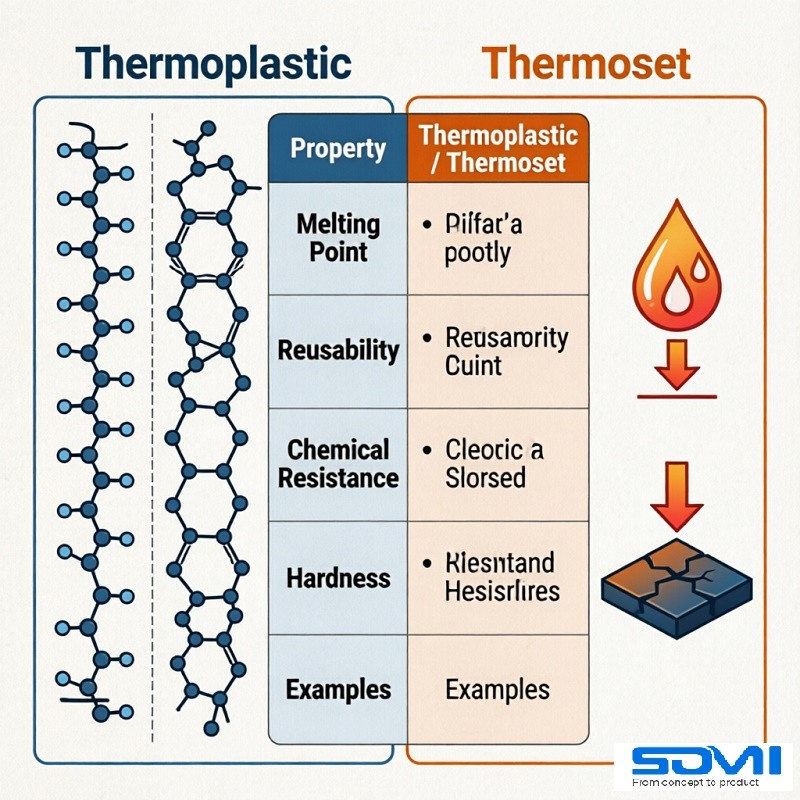
In the world of injection molding, polymers are broadly categorized into two main families: thermoplastics and thermosets. Although they sound similar, their behavior when exposed to heat is fundamentally different, which dictates how they are processed and where they are used.
Thermoplastics are polymers that become molten and pliable when heated and then solidify upon cooling. This process is reversible, much like melting and freezing water or cheese. It means that thermoplastics can be reheated and reshaped multiple times without significant chemical degradation. This recyclability, coupled with high impact resistance and generally lower processing costs, makes them the most common choice for injection molding. Examples include Polypropylene (PP), ABS, Polycarbonate (PC), and Nylon.
Thermosets, on the other hand, start as a liquid or soft solid and undergo an irreversible chemical reaction (curing) when heated, forming a permanent, cross-linked network. Once a thermoset part is cured, it cannot be remelted or reshaped. Think of it like baking a cake—the process cannot be undone. This permanent bond gives thermosets superior dimensional stability, excellent resistance to high temperatures and chemicals, and high mechanical strength. Common thermosets include epoxy, phenolic resins, and liquid silicone rubber (LSR).
Here is a summary of their key differences:
| Property | Thermoplastics | Thermosets |
|---|---|---|
| Reaction to Heat | Soften and melt when heated; can be reshaped. | Undergo an irreversible chemical cure when heated; cannot be remelted. |
| Molecular Structure | Long polymer chains with no chemical bonds between them. | Polymer chains are cross-linked with strong, permanent chemical bonds. |
| Recyclability | Generally recyclable and reprocessable. | Not recyclable as they cannot be remelted. |
| Common Uses | Consumer goods, packaging, automotive interiors, medical components. | Electrical components, high-heat applications, durable industrial parts, seals. |
| Advantages | High impact resistance, flexibility, easier processing, lower cost for high volume. | High thermal stability, superior strength and rigidity, excellent chemical resistance. |
| Disadvantages | Lower heat resistance, may deform under stress. | Longer cycle times, higher processing costs, cannot be recycled. |
Comparing Common Materials for Wholesale Custom Plastic Injection Molding Parts
Within the vast family of thermoplastics, a few stand out for their versatility and widespread use in custom injection molding. Understanding the nuances between these materials allows engineers and designers to tailor their part's performance to the specific needs of the application.
ABS vs. Polypropylene (PP)
ABS (Acrylonitrile Butadiene Styrene) and PP (Polypropylene) are two of the most popular plastics for injection molding, but they offer very different performance characteristics.
ABS (Acrylonitrile Butadiene Styrene): ABS is an engineering thermoplastic known for its strength, toughness, and high-impact resistance. It provides a smooth, glossy surface finish, which makes it ideal for consumer-facing products where aesthetics are important, such as electronic enclosures, car dashboards, and toys like LEGO bricks. However, it has relatively poor resistance to chemicals and UV light. It is also more expensive than PP.
Polypropylene (PP): PP is a commodity plastic prized for its excellent chemical resistance, flexibility, and low cost. It has a waxy, semi-rigid feel and is one of the lightest general-purpose plastics available. Its fantastic fatigue resistance makes it the perfect choice for parts with living hinges, such as the lids on condiment bottles or storage containers. While less strong than ABS and prone to higher shrinkage rates during molding, its affordability and durability in certain applications make it extremely common.
Here's a head-to-head comparison:
| Property | ABS (Acrylonitrile Butadiene Styrene) | Polypropylene (PP) |
|---|---|---|
| Strength & Rigidity | High strength and rigidity. | Lower strength, more flexible. |
| Impact Resistance | Excellent, very tough. | Moderate, can become brittle in cold. |
| Surface Finish | Smooth, glossy, ideal for aesthetics. | Waxy or matte finish. |
| Chemical Resistance | Poor to moderate. | Excellent against most acids and bases. |
| Cost | Higher. | Lower, very cost-effective. |
| Common Uses | Electronic housings, automotive trim, toys, phone cases. | Packaging, living hinges, food containers, car bumpers. |
Thermoplastic Elastomers (TPE) vs. Liquid Silicone Rubber (LSR)
When a part needs to be soft, flexible, and rubber-like, designers often choose between TPE and LSR. Though both provide elasticity, they belong to different polymer families and have distinct processing and performance attributes.
Thermoplastic Elastomers (TPE): TPE is a family of thermoplastics that behaves like rubber. A key advantage is its processing—it melts and solidifies like a standard plastic, meaning it can be processed on conventional injection molding machines, often with shorter cycle times and lower energy use. TPEs are great for overmolding onto rigid plastic parts to create soft-touch grips (like on a power tool or toothbrush), and they are easily colorable and often recyclable. However, their performance at high temperatures and their compression set (ability to return to original shape after being compressed) are generally inferior to LSR.
Liquid Silicone Rubber (LSR): LSR is a high-purity thermoset silicone that is cured in the mold with heat, creating irreversible chemical bonds. This process gives LSR outstanding properties, including excellent thermal stability over a wide temperature range (up to 400°C), superior compression set, and biocompatibility. These properties make it the material of choice for medical devices, automotive seals, and high-performance kitchenware like baking molds. However, LSR requires specialized molding equipment and typically has longer curing cycles, which can increase production time and cost.
A comparative summary:
| Property | Thermoplastic Elastomers (TPE) | Liquid Silicone Rubber (LSR) |
|---|---|---|
| Material Type | Thermoplastic | Thermoset |
| Processing | Standard injection molding, faster cycles. | Requires specialized equipment, longer curing times. |
| Temperature Resistance | Moderate. | Excellent, stable across a very wide range. |
| Performance | Good flexibility, limited compression set. | Superior compression set, high tear strength, biocompatible. |
| Recyclability | Yes, can be re-melted and reprocessed. | No, curing is irreversible. |
| Cost | Generally lower material and processing costs. | Higher material and tooling costs. |
| Common Uses | Soft-touch grips, flexible seals, toys, overmolded parts. | Medical implants, automotive seals, baby products, kitchenware. |
Other Popular Engineering and High-Performance Resins
Beyond the common commodity plastics, a category of engineering and high-performance resins exists to meet the most demanding applications, often replacing metal components.
- Polycarbonate (PC): Known for its incredible impact resistance ("bulletproof glass" is often made of PC), high strength, and optical clarity. It's used for protective lenses, electronic device screens, and automotive headlight covers.
- Polyamide (Nylon): This family of materials offers a great balance of toughness, wear resistance, and chemical resistance. Glass or carbon fillers can be added to significantly increase its strength and thermal stability, making it suitable for gears, bearings, and under-the-hood automotive parts.
- PEEK (Polyether Ether Ketone): PEEK is an ultra-high-performance thermoplastic with exceptional mechanical strength, chemical inertness, and stability at very high temperatures. Its properties allow it to thrive in harsh environments found in aerospace, medical implants, and oil and gas industries.
- Acetal (POM): This resin is known for its high stiffness, low friction, and excellent dimensional stability. It is often used for precision mechanical parts like gears, bushings, and fasteners.
The Impact of Material Selection on Performance and Cost for Wholesale Custom Plastic Injection Molding Parts
The choice of material creates a ripple effect through the entire project, influencing the final part's performance, its lifespan, and the overall budget. Selecting a material is a critical balancing act between cost and performance.
Performance Impact: The material directly determines a part's physical and mechanical properties. Choosing a plastic with inadequate heat resistance for an automotive engine component will lead to failure. Similarly, a consumer product that feels flimsy or breaks easily due to poor material choice can damage a brand's reputation. The right material ensures the product can withstand its operating environment, whether that involves mechanical stress, chemical exposure, UV radiation, or extreme temperatures.
Cost Impact: Material costs can vary dramatically, from less than a dollar per pound for commodity resins like PP to over $50 per pound for high-performance plastics like PEEK. While it may be tempting to choose the cheapest option, this can be a false economy. A part made from a low-cost but inappropriate material that fails prematurely will incur costs from warranty claims, recalls, and reputational damage. Conversely, over-engineering a part by using an expensive high-performance resin when a cheaper commodity plastic would suffice can needlessly inflate production costs. The processing requirements of a material also affect cost; materials that require higher temperatures, longer cycle times, or specialized equipment will add to the manufacturing expense.
Ultimately, the best material selection strategy involves a thorough analysis of the part's application requirements and a clear understanding of the trade-offs between different polymers. Collaborating with an experienced injection molding partner early in the design process can provide invaluable guidance, ensuring you select a material that delivers the necessary performance at an optimal price point.
Optimizing Design and Manufacturing for Wholesale Custom Plastic Injection Molding Parts
Achieving a high-quality, cost-effective plastic part goes far beyond simply choosing the right material. The success of an injection molding project is deeply rooted in the synergy between intelligent part design and an efficient manufacturing process. Design for Manufacturability (DFM) is a crucial engineering practice that focuses on creating parts optimized for easy and efficient production. By considering the constraints and capabilities of the injection molding process from the very beginning, engineers can prevent costly defects, reduce cycle times, and minimize waste. This section explores the pivotal role of part design, the mechanics of the injection molding cycle, and the key financial considerations that every stakeholder should understand.
The Role of Part Design in Custom Plastic Injection Molding
The design of the plastic part itself is arguably the most critical factor influencing its manufacturability, quality, and cost. Flaws in the initial design can lead to a cascade of problems, including molding defects, tool damage, and increased production expenses. Adhering to established DFM principles is essential to avoid these pitfalls.
Key design guidelines include:
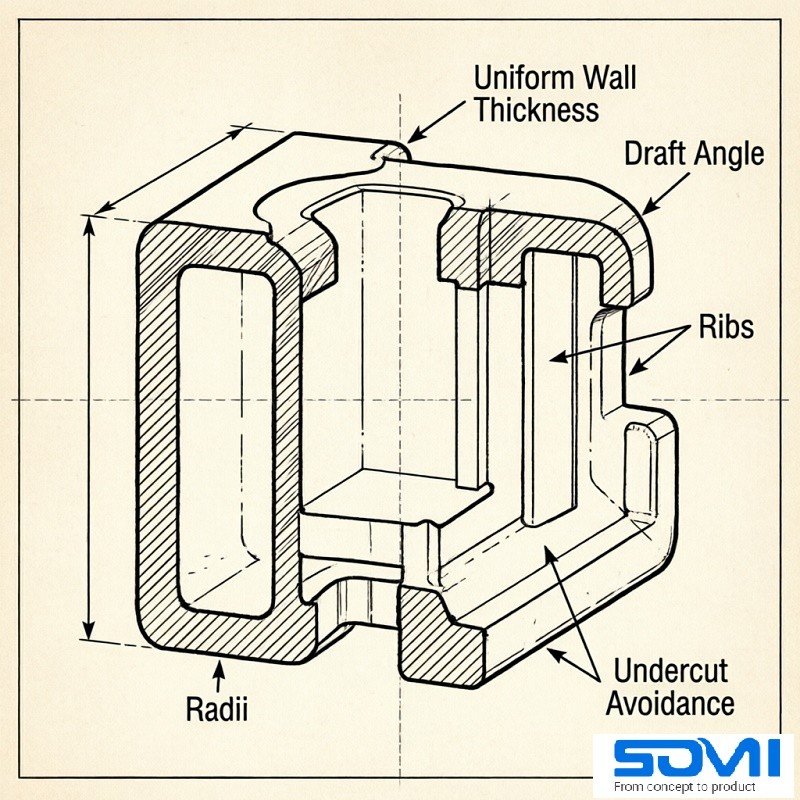
- Uniform Wall Thickness: This is one of the most fundamental rules in injection molding. Walls of a part should be as uniform in thickness as possible. If wall thickness varies dramatically, the thinner sections will cool and shrink faster than the thicker sections, leading to internal stress, warping, and cosmetic defects like sink marks (depressions on the part's surface opposite a thick section). While some variation is acceptable, transitions should be gradual, and the thickness of one wall should generally be no less than 40-60% of an adjacent wall.
- Draft Angles: For a part to be released cleanly from the mold, its vertical walls must have a slight taper, known as a draft angle. Without adequate draft, friction will cause the part to scrape against the mold surface during ejection, leading to cosmetic damage and potential sticking. A good rule of thumb is to incorporate at least 1 degree of draft for every inch of cavity depth, though more may be required for textured surfaces.
- Ribs and Gussets for Strength: Instead of making walls thicker to increase strength, it's far better to incorporate ribs. Ribs add stiffness and structural integrity without adding significant material or increasing cycle time. To prevent sink marks, ribs should be designed to be about 40-60% of the thickness of the main wall they are attached to.
- Radii and Fillets: Sharp internal corners are areas of high-stress concentration, which can make a part prone to cracking under load. They also impede the flow of molten plastic. Designing smooth, rounded corners (fillets) and edges (radii) helps distribute stress more evenly and improves material flow, resulting in a stronger, more durable part.
- Avoiding Undercuts: An undercut is a feature that prevents the part from being directly ejected from the mold, such as a side hole or a snap-fit latch. These features require complex and expensive mold mechanisms like slides or lifters, which significantly increase tooling cost and complexity. While sometimes unavoidable, designs should be reviewed to eliminate or minimize unnecessary undercuts.
By thoughtfully applying these DFM principles, designers can create parts that are not only functional but also optimized for high-quality, efficient production.
Understanding the Injection Molding Cycle
The injection molding process is a cyclical one, with each cycle producing one or more parts. The efficiency and consistency of this cycle are paramount to the quality and cost-effectiveness of production. The process is broken down into four primary stages.
- Clamping: The process begins with the two halves of the mold being securely closed by a powerful clamping unit. This unit must exert enough force to keep the mold sealed against the immense pressure of the injected molten plastic, preventing any material from leaking out and creating "flash."
- Injection and Packing: Once clamped, molten plastic is injected into the mold cavity at high speed and pressure. After the cavity is nearly full (about 95%), the "packing" or "holding" phase begins. During this phase, additional material is packed into the mold under pressure to compensate for the shrinkage that occurs as the plastic cools. This step is crucial for preventing voids and ensuring the part is fully formed with good surface detail.
- Cooling: The cooling stage is often the longest part of the entire cycle, sometimes accounting for up to 80% of the total time. During this stage, the plastic inside the mold solidifies, taking on its final shape. The mold is designed with cooling channels through which a fluid (usually water) circulates to remove heat from the plastic. The cooling time is determined by the material type, the part's wall thickness, and the efficiency of the mold's cooling system.
- Ejection: After the part has cooled and solidified, the mold opens. An ejection system, consisting of pins, sleeves, or a plate, pushes the finished part out of the mold cavity. The machine is then ready to close the mold again to start the next cycle.
The total time for one complete cycle—from clamping to ejection—is known as the cycle time. Minimizing this time is a key goal in optimizing production, as shorter cycle times lead to more parts produced per hour and lower manufacturing costs.
Cost Considerations for Wholesale Custom Plastic Injection Molding Parts
Understanding the cost structure of injection molding is essential for budgeting and making strategic decisions. The total cost is a combination of several factors, with the primary drivers being tooling, material, and production volume.
Tooling Costs: The injection mold (or tool) is the most significant upfront investment in the process. Mold costs can range from a few thousand dollars for a simple, low-volume prototype mold to over $100,000 for a complex, high-volume production mold made from hardened steel. The main factors driving tool cost are:
- Part Size and Complexity: Larger and more intricate parts require larger, more complex molds, which are more expensive to design and machine. Features like undercuts that necessitate slides or lifters dramatically increase mold complexity and cost.
- Mold Material: Molds are typically made from aluminum or various grades of steel. Aluminum molds are cheaper and faster to produce but have a shorter lifespan, making them suitable for prototyping or low-volume runs. Hardened steel molds are more expensive but are incredibly durable and can produce millions of parts.
- Number of Cavities: A mold can be designed with a single cavity or multiple cavities to produce several parts per cycle. Multi-cavity molds are more expensive to build but reduce the per-part production cost by increasing output.
Part Cost (Unit Cost): This is the price of each individual molded part. The unit cost is influenced by three main variables:
- Material Cost: The price of the chosen plastic resin, which can vary widely. Engineering and high-performance resins are significantly more expensive than commodity plastics. The total amount of material used per part (including runners and scrap) is a direct cost.
- Cycle Time: The time it takes to produce one part. Longer cycle times mean lower output and higher machine time cost per part. Factors like thick walls and slow-cooling materials increase cycle time.
- Labor: While injection molding is highly automated, costs for setup, monitoring, quality control, and any secondary operations (like assembly or packaging) are factored into the part price.
Production Volume: The total number of parts being produced has a huge impact on the overall economics. The high upfront cost of the mold is amortized over the total number of parts. For very high-volume runs, the tooling cost per part becomes negligible, making injection molding one of the most cost-effective manufacturing methods available. Conversely, for very low volumes, the tooling cost can make the per-part price prohibitively expensive.
By carefully managing these factors—optimizing part design for manufacturability, selecting the most cost-effective material for the application, and planning for an appropriate production volume—companies can effectively control the costs of their Wholesale Custom Plastic Injection Molding Parts projects.
Choosing the Ideal Partner for Your Wholesale Custom Plastic Injection Molding Parts Needs
Selecting the right manufacturing partner is as crucial as perfecting your part design or choosing the right material. A top-tier injection molder acts as more than just a supplier; they become an extension of your team, providing critical expertise, ensuring quality, and adding value at every stage of the product lifecycle. The partnership you forge can be the deciding factor in achieving a smooth launch, consistent quality, and long-term success. This final section outlines the essential qualities to look for in a reliable manufacturer and the value-added services that separate the best from the rest.
Key Qualities of a Reliable Custom Plastic Injection Molding Manufacturer
When evaluating potential partners, it's essential to look beyond the initial quote. A truly reliable manufacturer demonstrates a commitment to quality, transparency, and collaboration. Here are the key qualities to look for:
- Robust Quality Management Systems (QMS): Consistency and precision are the hallmarks of quality injection molding. A trustworthy manufacturer will have a well-documented and rigorously enforced QMS. Look for certifications like ISO 9001:2015, which proves their processes meet international standards for quality and customer satisfaction. For specific industries, additional certifications are critical, such as IATF 16949 for automotive or ISO 13485 for medical devices.
- Technical Expertise and Experience: An experienced molder brings a wealth of knowledge to your project. They should have a proven track record across various industries and materials. A diversified market presence often indicates stability and a broader range of problem-solving skills. Look for a partner with in-house engineering and tooling support, as this signals deep technical capability.
- Clear and Consistent Communication: A strong partnership is built on effective communication. Your supplier should be accessible, professional, and responsive, providing timely and valuable information. They should be willing to collaborate and understand your project's unique requirements rather than imposing a rigid, one-size-fits-all approach.
- State-of-the-Art Facilities and Equipment: The quality of a manufacturer's equipment directly impacts the quality of your parts. A clean, well-maintained facility is a sign of a disciplined operation. Their press tonnage capabilities should match your part size and complexity requirements, and they should have measures in place to maintain and calibrate their equipment properly.
- Production Capacity and Scalability: Ensure the manufacturer can handle your required production volumes, whether you need a small batch for prototyping or millions of parts for a mass-market product. The best partners can accommodate both low and high-volume runs, offering the flexibility to scale with your needs.
- Transparency and Trust: Avoid partners who offer quotes that seem too good to be true, as this can indicate hidden charges or compromises on quality. A reliable partner provides clear, detailed quotes and is transparent about their processes, lead times, and tool ownership policies.
Evaluating Expertise and Value-Added Services for Wholesale Custom Plastic Injection Molding Parts
A premier injection molding partner goes beyond simply molding parts. They offer a suite of value-added services that streamline the supply chain, reduce costs, and accelerate your time to market. When assessing a potential manufacturer, evaluate their capabilities in these key areas:
- Design for Manufacturability (DFM) Analysis: This is one of the most crucial value-added services. A strong partner will offer a comprehensive DFM review of your part design before any tooling is made. This process proactively identifies potential manufacturing issues related to wall thickness, draft angles, undercuts, and material flow. By addressing these problems early in the design phase, DFM prevents costly rework, reduces defects, and ensures a more efficient production process. Advanced manufacturers use tools like Moldflow simulation to digitally predict how the plastic will fill the mold, further optimizing the design and process before cutting steel.
- In-House Tooling and Maintenance: A manufacturer with in-house capabilities for designing, building, and maintaining molds offers a significant advantage. This ensures that the team building the tool fully understands the part design and production requirements. It also means that any necessary mold maintenance or repairs can be handled quickly, minimizing production downtime.
- Secondary and Finishing Operations: To provide a turnkey solution, many molders offer a range of post-molding secondary operations. These services eliminate the need to coordinate with multiple suppliers, saving time and simplifying logistics. Common secondary operations include:
- Assembly: Automated or manual assembly of molded components with other parts like screws, springs, or electronics.
- Decorating and Printing: Services like pad printing, screen printing, hot stamping, or hydro dipping to add logos, labels, or decorative finishes to parts.
- Welding and Joining: Using techniques like ultrasonic welding, heat staking, or adhesive bonding to permanently join multiple plastic components.
- Machining: Post-mold CNC machining to create features with extremely tight tolerances or geometries that cannot be molded directly.
- Custom Packaging and Logistics: A full-service partner can also handle custom packaging, bar-code labeling, and even manage distribution and shipping logistics, providing a complete "mold-to-market" solution.
By partnering with a custom plastic injection molding manufacturer that excels in these areas, you are not just buying parts—you are investing in a relationship that will enhance your product's quality, optimize your costs, and support your business's growth.
In conclusion, mastering the nuances of wholesale custom plastic injection molding is crucial for anyone involved in product development and manufacturing. By carefully considering material selection, design optimization, and partnering with an experienced manufacturer, you can achieve superior product quality, cost-effectiveness, and efficient production cycles. The versatility of injection molding ensures that your custom parts meet the precise demands of your application, from intricate designs to high-volume production.
We've explored the diverse world of wholesale custom plastic injection molding parts, highlighting the importance of informed decisions at every stage. From understanding different material properties to recognizing the critical steps in the manufacturing process, your choices directly impact the success of your project. Remember, the right partner can guide you through these complexities, ensuring your custom plastic parts meet the highest standards of quality and performance.
For businesses seeking top-tier customization and reliability in their plastic components, SOMI Custom Parts provides professional OEM and ODM plastic injection molding services. We excel in delivering tailor-made solutions, including custom black ABS+PC parts specifically designed for the consumer electronics sector, ensuring precision and quality that meet your exact specifications. We encourage you to share this guide with your colleagues and reach out to our team to discuss how we can bring your next project to life.