The Unsung Hero: How CATV Hardline Connectors Are Evolving for a 10G World and Beyond
- Share
- Issue Time
- Jun 20,2026
Summary
Explore the evolution of CATV hardline connectors. Learn how brass materials & new designs meet DOCSIS 4.0 & 5G backhaul demands.
The Backbone of Modern Connectivity: More Than Just Cable TV
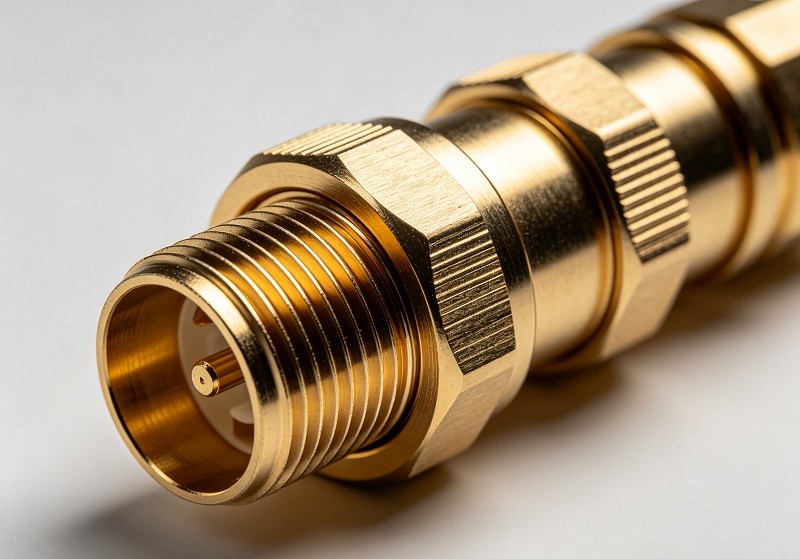
For decades, the term CATV has been synonymous with residential television. However, the humble CATV hardline connector, a core component of this infrastructure, is undergoing a significant transformation. Far from being a relic of a bygone era, the Hybrid Fiber-Coaxial (HFC) network is proving to be a resilient and cost-effective backbone for our insatiable demand for digital services. These connectors are the critical linchpins enabling this evolution, moving beyond television to power multi-gigabit internet, 5G wireless expansion, and the smart cities of tomorrow. This isn't just about getting a clearer picture; it's about building a faster, more reliable, and more connected future. The evolution is driven by speed, reliability, and the capacity to handle a future we are only beginning to imagine.
The Push for Standardization: Why SCTE Matters
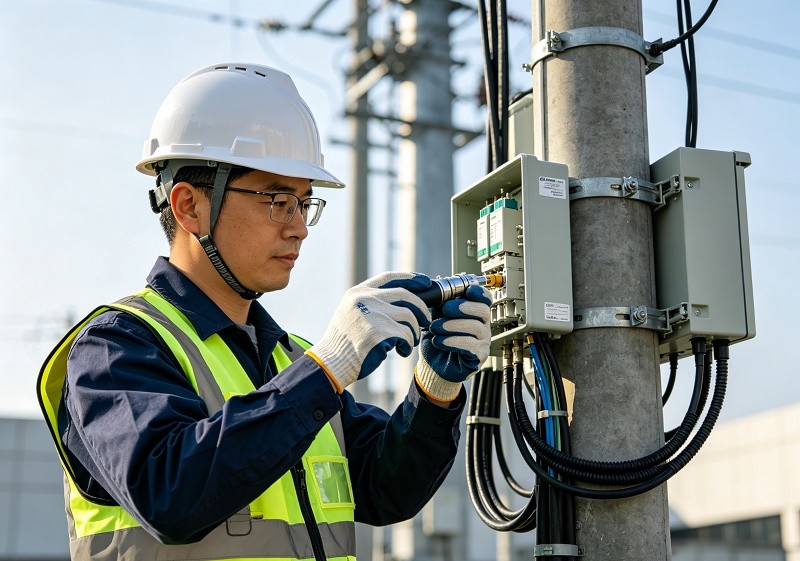
The Society of Cable Telecommunications Engineers (SCTE) plays a pivotal role in the telecommunications world. Imagine a world where every connector from every manufacturer had different dimensions, threads, and impedance levels. Interoperability would be a nightmare. SCTE, along with bodies like ANSI, establishes the crucial standards that ensure a male connector from one company will seamlessly and reliably fit a female connector from another. These standards cover everything from physical dimensions to performance metrics like return loss, ensuring uniformity, interchangeability, and the long-term reliability of broadband networks. Without these foundational documents, the high-performance, interconnected networks we rely on today would not be possible.
Meeting the DOCSIS 4.0 Challenge
The primary driver behind the radical evolution of hardline connectors is the rollout of DOCSIS 4.0 (Data Over Cable Service Interface Specification). This new standard unlocks the massive potential of existing HFC networks, promising symmetrical multi-gigabit speeds that rival full-fiber-to-the-home (FTTH) installations. DOCSIS 4.0 achieves this by expanding the usable radio frequency (RF) spectrum up to 1.8 GHz and, in the future, even 3.0 GHz. This places immense pressure on every single component in the signal path. Connectors that were adequate for a 1 GHz environment are now obsolete. Today’s connectors must perform flawlessly at these much higher frequencies, handling orders of magnitude more data without introducing signal degradation.
Technical Demands on Modern Hardline Connectors
As frequencies climb, the technical requirements for connectors become exponentially more stringent. Several key performance indicators are critical:
- Low Insertion Loss: Minimizing the amount of signal power lost at the connection point is crucial. Every decibel of loss can impact network reach and performance.
- High Return Loss: This metric measures how much signal is reflected back from the connector. High reflections create interference and noise, which can cripple data speeds. ANSI/SCTE 125 2018 provides a standardized procedure for measuring this critical parameter.
- Excellent Shielding Effectiveness: The connector must act as a perfect seal, preventing outside RF signals from leaking into the cable (ingress) and stopping internal signals from leaking out (egress). This is vital in the increasingly crowded RF environment.
- Passive Intermodulation (PIM) Performance: When multiple signals mix in a non-linear junction, such as a poorly made connector, they can create PIM, a significant source of interference. High-quality connectors are designed and manufactured to minimize PIM, keeping the RF spectrum clean.
Material Science: The Shift from Aluminum to Brass
For a long time, aluminum was the material of choice for hardline connectors, primarily due to its light weight and low cost. However, the demands of next-generation networks are exposing its limitations. Consequently, the industry is seeing a significant shift towards brass, an alloy of copper and zinc. While aluminum has a tensile strength of 70-700 megapascals (MPa), brass boasts a superior range of 200-900 MPa. The benefits of brass extend beyond just strength:
- Durability and Repeatability: Brass is harder and more durable, making it ideal for applications requiring longevity.
- Resistance to Galling: Brass does not experience "galling" or "cold welding," an adhesive wear that can occur on sliding aluminum surfaces, making disassembly cleaner and preserving the connector for reuse.
- Thread Integrity: Even when over-torqued or side-loaded, brass connectors maintain their thread integrity, a common failure point for softer aluminum housings.
Innovations in Connector Design
Beyond materials, the mechanical design of connectors is also advancing rapidly. To combat issues like "suck-out" or "pull-out" – where the cable's center conductor pulls away from the connector due to temperature changes or vibration, causing signal loss – manufacturers are developing innovative seizing mechanisms.
Advanced designs now feature mechanisms that grip the center conductor more securely and over a larger surface area. Some use a helix-style connection that clamps onto the conductor like a screw, providing a more stable electrical and mechanical connection essential for passing 1.8 GHz signals seamlessly. These designs also focus on ease of installation, with features that prevent the cable from turning during tightening and provide a uniform grip without the need for torque wrenches, which is a major advantage in tight spaces.
The Role of HFC in 5G and Beyond
One of the most exciting new roles for the modernized HFC network is supporting the rollout of 5G wireless technology. The deployment of countless small cells required for 5G demands robust backhaul—high-capacity links connecting these cells to the core network. Laying new fiber for every small cell is often prohibitively expensive. HFC networks, already deeply deployed in communities, offer a cost-effective and readily available solution for this backhaul, with advanced hardline connectors ensuring the reliability and speed these 5G nodes require.
Hardline Connector and Cable Types
Hardline connectors are not a one-size-fits-all solution. They are designed to work with specific types of hardline coaxial cables, such as those made by major manufacturers like CommScope and Trilogy. Common cable types include P3, QR, and MC2, each with different physical dimensions. Connectors are categorized accordingly, with types like pin connectors, splice connectors, and various adapters (feed-through, housing-to-housing, etc.) to meet the varied architectural needs of an HFC plant.
| Connector Type | Typical Application | Compatible Cable Families |
|---|---|---|
| Pin Connector | Connects cable to equipment ports (e.g., amplifiers, taps) | P3, QR, MC², TFC |
| Splice Connector | Joins two hardline cables together | P3, QR, MC², TFC |
| Adapter | Interfaces between different connector types or ports | Universal |
| Terminator | Provides proper 75-Ohm termination to an unused port | Universal |
Installation and Tool Integrity: The Weakest Link
A network is only as strong as its weakest connection. Even the most advanced connector can fail if not installed correctly. Moisture ingress is the number one cause of connection failures in the field. Therefore, proper weather sealing is paramount. Furthermore, the integrity of installation tools is often overlooked. A dull or damaged cutting blade on a cable preparation tool can score the center conductor or create weaknesses in the cable jacket, compromising the connection from the start. Proper training and an emphasis on using well-maintained tools are critical for network reliability.
The Future is a Hybrid
While the industry trends towards fiber optics, the reality is that HFC networks will remain a vital part of the broadband ecosystem for many years to come. The continued investment in coaxial technology, driven by standards like DOCSIS 4.0, proves its viability and cost-effectiveness. At the heart of this ongoing success story are the CATV hardline connectors. These seemingly simple components are the unsung heroes enabling the leap to 10G speeds, powering the 5G revolution, and forming the backbone of our increasingly digital lives. As network demands escalate, the performance, reliability, and innovation engineered into these critical components will be more important than ever.