The Ultimate Guide to Liquid Silicone Rubber (LSR) Injection Molding for the Automotive Industry
- Share
- Issue Time
- Jan 25,2026
Summary
Discover how LSR injection molding enhances automotive performance with durable, heat-resistant, and electrically insulating components for EVs and advanced systems.
In the highly competitive and rapidly innovating automotive sector, material science is a key driver of progress. Among the advanced materials transforming vehicle design and performance, Liquid Silicone Rubber (LSR) stands out. Its unique properties and the efficiency of the Liquid Injection Molding (LIM) process have made it indispensable for creating durable, high-precision components. This comprehensive guide explores every facet of LSR injection molding, from the fundamental process to its most advanced applications in today's vehicles.
What is Liquid Silicone Rubber (LSR)?
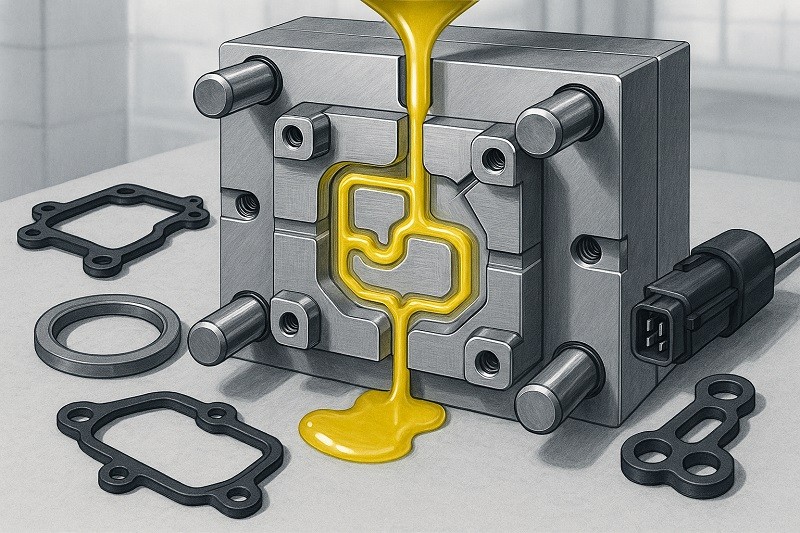
Liquid Silicone Rubber is a two-part, platinum-cured elastomer that offers a unique combination of chemical inertness, resistance to extreme temperatures, and stable mechanical properties. Unlike conventional high-consistency rubber (HCR), LSR starts as two liquid components (Component A and B) which are mixed before being injected into a heated mold. This process, known as Liquid Injection Molding (LIM), allows for the creation of highly complex and detailed parts with remarkable consistency and speed. Its excellent flow characteristics enable the molding of thin walls and intricate geometries, making it a go-to material for challenging automotive designs.
Why is LSR Injection Molding a Game-Changer for Automotive?
The automotive environment is one of the harshest for any material. Components face extreme heat, freezing cold, vibration, moisture, and exposure to oils and chemicals. LSR injection molding rises to this challenge by providing parts that offer unparalleled reliability. The process is fully automated, enabling rapid cycle times, minimal material waste, and scalability for high-volume production, which ultimately reduces manufacturing costs. This efficiency, combined with the material’s superior performance, gives automotive manufacturers a significant competitive edge in producing safer, more reliable, and longer-lasting vehicles.
The LSR Injection Molding Process: A Step-by-Step Breakdown
The LIM process is a marvel of precision engineering. It involves specialized equipment designed to handle the unique properties of LSR.
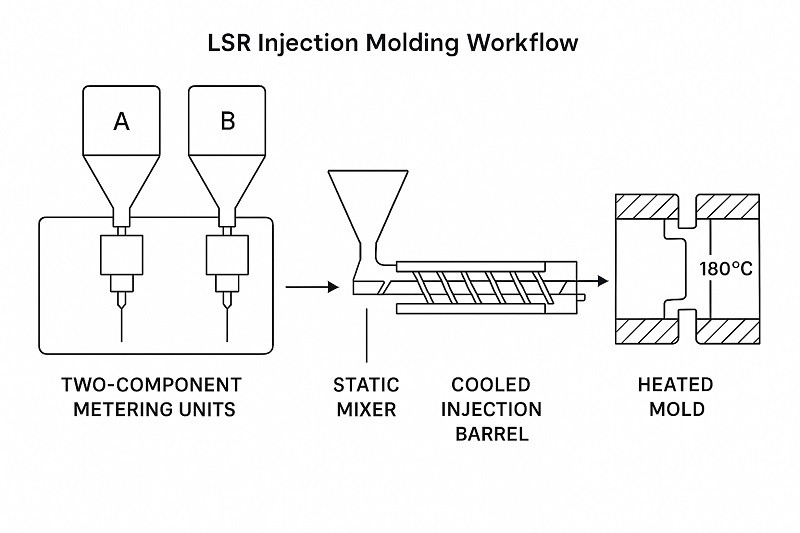
- Material Preparation: The two liquid components of LSR, typically an 'A' component with a platinum catalyst and a 'B' component with a cross-linker, are stored in separate containers.
- Metering and Mixing: A precision metering unit pumps the two components in an exact 1:1 ratio. Color pigments can also be introduced at this stage. The materials are then forced through a static mixer, ensuring a perfectly homogeneous blend before reaching the mold.
- Injection: The mixed LSR is injected into a sealed, pre-heated mold cavity. Unlike thermoplastic injection molding where the barrel is hot and the mold is cool, LSR molding uses a cooled barrel and a hot mold (typically 150°C - 200°C).
- Curing: The heat from the mold triggers the platinum catalyst, causing the LSR to cure and solidify within seconds. This rapid heat-curing is a key reason for the process's efficiency.
- Demolding: Once cured, the mold opens and the finished silicone part—which is flexible yet solid—is ejected, often by robotic automation.
Critical Material Properties of Automotive-Grade LSR
LSR's prominence in the automotive industry is due to its exceptional range of properties:
- Extreme Temperature Resistance: LSR parts perform reliably in a wide temperature range, typically from -50°C to over 200°C, making them perfect for under-the-hood applications near engines and exhaust systems.
- Durability and Longevity: The material shows excellent resistance to aging, UV radiation, and ozone, ensuring that components like exterior seals do not crack or degrade over the vehicle's lifespan.
- Chemical Resistance: LSR withstands exposure to automotive fluids like oils, coolants, and fuels, preventing degradation and maintaining sealing integrity.
- Excellent Sealing (Low Compression Set): LSR maintains its shape under prolonged pressure, providing reliable, long-term sealing for gaskets, O-rings, and connector seals.
- Electrical Insulation: With superb dielectric properties, LSR is an ideal insulator for high-voltage components, connectors, and sensors, particularly in electric vehicles (EVs).
- Vibration Damping: The inherent elasticity of LSR helps to absorb vibrations and shocks, reducing noise, vibration, and harshness (NVH) and improving ride comfort.
Application Spotlight: Powertrain and Under-the-Hood Components
Under the hood is where LSR truly shines. The high-heat environment requires materials that won't melt, deform, or degrade. Key applications include engine gaskets, radiator seals, turbocharger hoses, and spark plug boots. These components must prevent leaks of fluids and gases while enduring constant vibration and temperature fluctuations, tasks for which LSR is perfectly suited.
Sealing the Future: LSR in Automotive Electrical Systems and Connectors
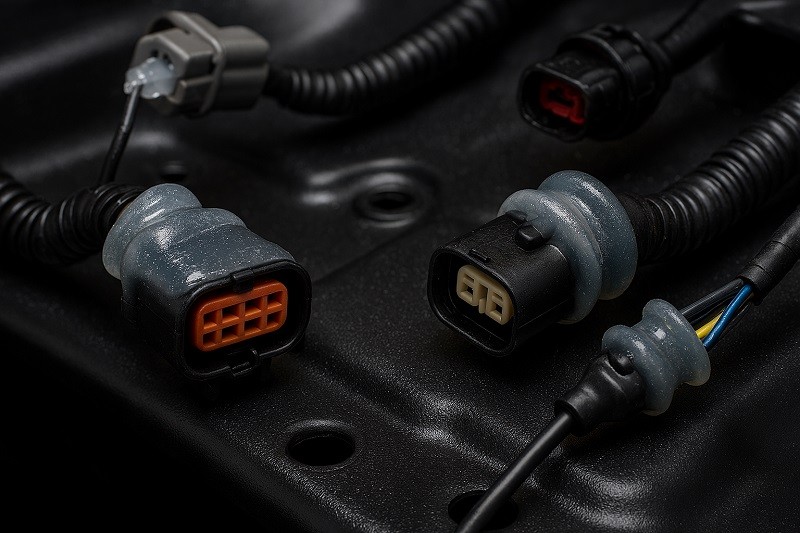
Modern vehicles are packed with sophisticated electronics. LSR is critical for protecting these systems. It's used to create single-wire seals, connector seals, and grommets that provide robust, waterproof protection against moisture and dust ingress. The ability to mold LSR into complex seal geometries ensures a perfect fit for intricate wiring harnesses, enhancing the reliability of a vehicle's entire electrical architecture.
Illuminating Innovation: The Role of Optical LSR in Modern Vehicle Lighting
Specialized optical-grade LSR is transforming automotive lighting design. Due to its high optical clarity, non-yellowing characteristics, and resistance to UV light and heat, it is used for sophisticated headlamp components like light guides, lenses, and diffusers. This allows designers to create signature lighting elements that are both aesthetically striking and highly durable.
Driving the EV Revolution: LSR's Crucial Role in Electric Vehicles
The shift to electric vehicles (EVs) has created new demands for high-performance materials. LSR is playing a pivotal role here. Its thermal management capabilities and excellent electrical insulation are essential for battery systems, where it is used for cell housing seals, cooling system gaskets, and high-voltage connector insulation. Ensuring the safety and efficiency of battery packs is a top priority, and LSR's reliability makes it a trusted material in this critical application.
Overmolding and 2K Molding: Advanced LSR Techniques
LSR's versatility extends to multi-component manufacturing. In overmolding, LSR is molded directly onto a plastic or metal substrate. This process is used to create integrated components, such as a plastic connector housing with a built-in LSR seal, eliminating the need for manual assembly and improving part integrity. Two-shot (2K) molding is a similar process where both the rigid substrate and the LSR are molded in the same machine, allowing for perfect chemical bonding between materials like PBT or PA and silicone for unparalleled sealing performance.
Design Considerations for LSR Injection Molded Parts
While LSR offers tremendous design freedom, there are key principles to follow for successful part manufacturing. Due to its very low viscosity, LSR can easily cause flash (thin, unwanted material) if tooling is not precise. Therefore, mold design is critical. Other considerations include:
| Design Guideline | Description |
|---|---|
| Uniform Wall Thickness | Promotes consistent curing and prevents internal stresses. |
| Avoid Sharp Corners | Use generous radii to improve material flow and reduce stress concentrations. |
| Plan for Shrinkage | LSR typically shrinks 2-3%, which must be accounted for in the mold design for dimensional accuracy. |
| Gate Location | Strategic gate placement is crucial for optimal material flow and to minimize cosmetic blemishes. |
Choosing the Right Partner for Automotive LSR Molding
The complexity of LSR injection molding means that partnership with an experienced manufacturer is vital. A top-tier molder will have deep expertise in material science, precision tool design, and process automation. They can provide design-for-manufacturability (DFM) feedback early in the process to optimize the part for high-volume production, reduce costs, and ensure the final component meets the stringent quality standards of the automotive industry.
The Future of LSR in the Automotive Sector
The role of LSR in the automotive industry is only set to grow. As vehicles become more autonomous, connected, and electrified, the need for reliable sensors, complex electronics, and high-performance battery components will increase. LSR will be essential for creating the smart surfaces with haptic feedback, durable sensor housings for ADAS (Advanced Driver-Assistance Systems), and next-generation seals for advanced battery and thermal management systems that will define the cars of tomorrow.