The Rise of Custom Connectors and Fasteners: Tailoring Manufacturing for Precision and Performance
- Share
- Issue Time
- Dec 26,2025
Summary
This blog explores the rise of custom connectors and fasteners in manufacturing, driven by miniaturization, advanced materials, and performance needs in aerospace, automotive, and more—for precision and reliability.
The Unseen Revolution in Manufacturing: Custom Connectors and Fasteners
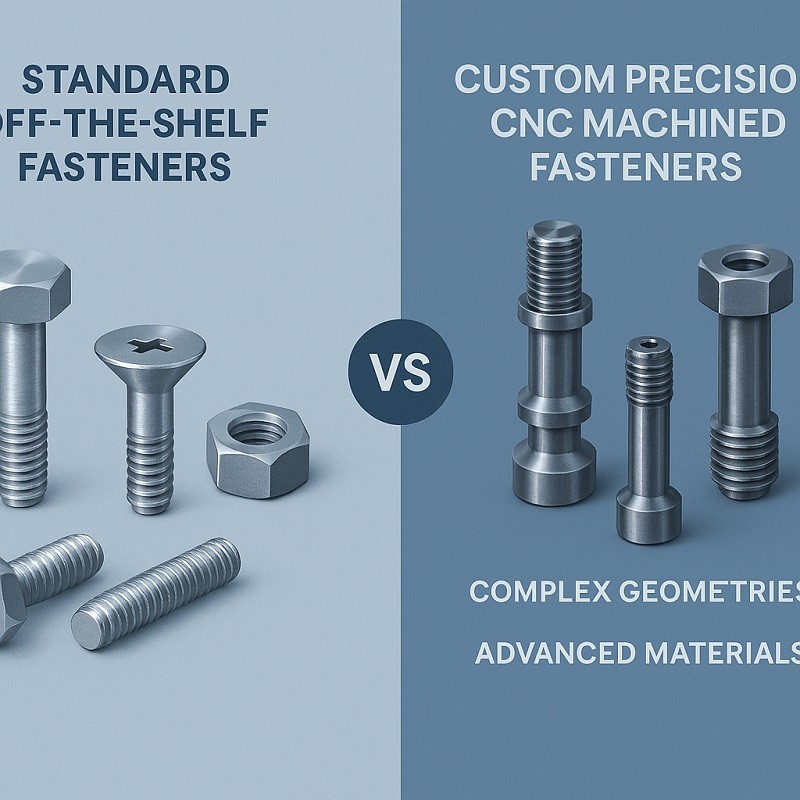
In the intricate world of modern manufacturing, from aerospace engineering to medical device production, the smallest components often have the largest impact. For decades, manufacturers relied on standard, off-the-shelf fasteners, but a quiet revolution is taking place. The demand for custom connectors and fasteners is surging, driven by the need for greater precision, durability, and performance in increasingly complex products. While standard fasteners are cost-effective and readily available, they represent a one-size-fits-all approach in a world that thrives on specialization. Industries are now recognizing that true innovation requires components engineered for a specific purpose, leading to the rapid growth of the custom fastener market.
What Are Custom Fasteners?
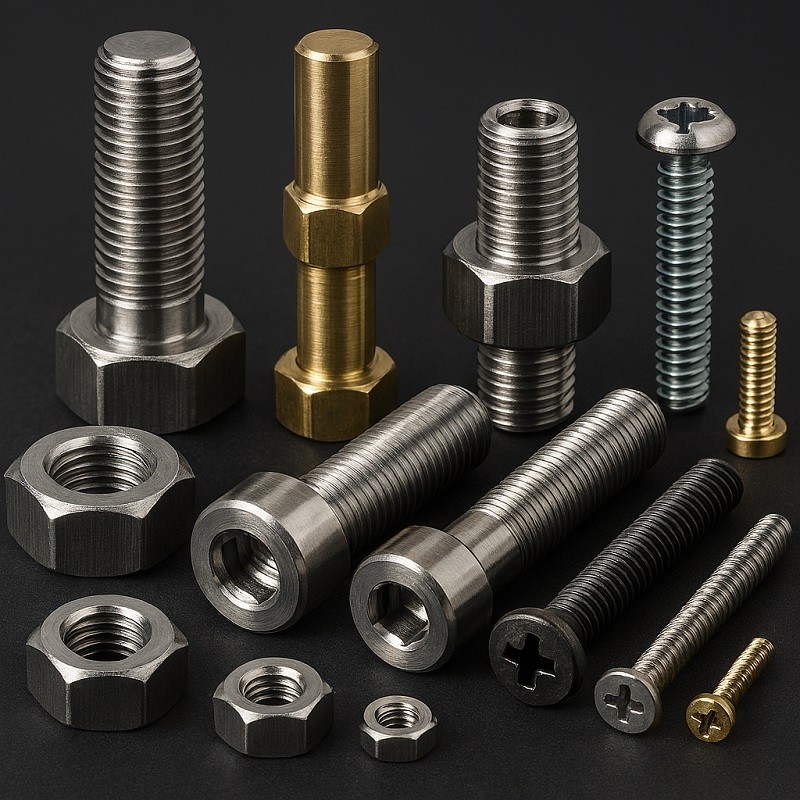
Custom fasteners are components specifically designed to meet unique project requirements that standard parts cannot fulfill. Unlike their mass-produced counterparts, which adhere to universal standards like ISO or ANSI, custom fasteners are tailored in every aspect—from material and size to head type and thread design. This bespoke approach solves engineering challenges that would be impossible to overcome with standard options, ensuring a perfect fit and optimal function.
The Limitations of a Standard-Parts World
Standard fasteners are the workhorses of many industries, valued for their low cost and immediate availability. However, their limitations become apparent in high-stakes applications. Engineers often face challenges with ill-fitting parts, which can lead to performance compromises, increased vibration, and even product failure. Relying on standard components can mean designing a product around a fastener, rather than choosing the ideal fastener for the design. This can stifle innovation and lead to bulkier, less efficient, and less reliable products.
Driving Force 1: Miniaturization and Complex Geometries
As electronics, medical devices, and consumer goods become smaller and more intricate, the demand for micro-sized, custom-shaped fasteners has exploded. Standard screws and bolts are often too large or improperly shaped for the tight confines of modern devices. Custom fasteners can be designed with complex geometries, ultra-fine threads, and low-profile heads to fit into confined spaces without compromising structural integrity. This trend is particularly evident in the electronics and medical industries, where precision and reliability are paramount.
Driving Force 2: Advanced Materials for Extreme Environments
Industries like aerospace, oil and gas, and automotive operate in extreme environments where components must withstand high temperatures, intense pressures, and corrosive substances. Standard steel fasteners often lack the required resilience. Custom fastener manufacturers utilize a wide array of advanced materials to meet these challenges:
- Titanium Alloys: Offer a high strength-to-weight ratio, ideal for aerospace applications where reducing weight is critical for fuel efficiency.
- Superalloys (e.g., Inconel): Provide superior resistance to extreme heat and corrosion, making them essential for jet engines and gas turbines.
- Plastic and Composites: Deliver lightweight, corrosion-resistant, and non-conductive solutions for automotive and electronic applications.
Driving Force 3: Enhanced Performance and Reliability
Performance is a non-negotiable aspect of high-value manufacturing. Custom fasteners are engineered to deliver superior performance by ensuring a perfect fit, which minimizes vibration and wear and tear. A fastener designed for a specific load-bearing capacity and environmental condition is inherently more reliable than a generic part. This enhanced reliability reduces the risk of mechanical failure, which is critical in safety-focused sectors like automotive and construction. Secure connections mean fewer maintenance issues and a longer product lifespan.
Cost-Effectiveness: Rethinking the Upfront Investment
While custom fasteners often have a higher initial cost due to design, tooling, and specialized manufacturing processes, they frequently lead to significant long-term savings. The total cost of ownership is often lower when considering the following factors:
- Reduced Assembly Time: Perfectly fitting parts streamline the assembly process, lowering labor costs.
- Fewer Components: A single custom fastener can sometimes replace multiple standard parts, simplifying the design and inventory.
- Lower Maintenance and Warranty Costs: Increased reliability leads to fewer product failures, repairs, and warranty claims.
- Improved Product Longevity: Durability means a longer operational life, enhancing brand reputation and customer satisfaction.
The Custom Fastener Design and Manufacturing Process
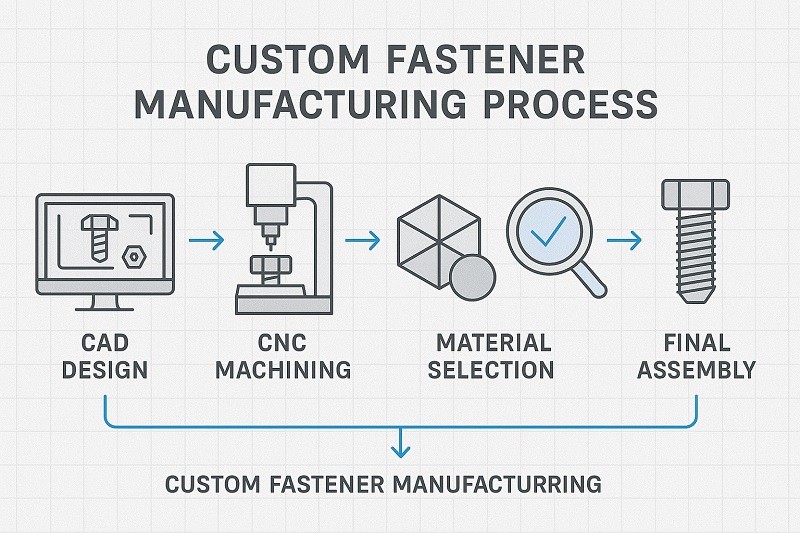
Creating a custom fastener is a collaborative process between the client and the manufacturer. It typically begins with a detailed consultation to understand the application's specific needs, including load requirements, environmental conditions, and material specifications. Engineers then use advanced CAD software to design the part, often creating prototypes through 3D printing for testing and validation. Once the design is finalized, manufacturing processes like CNC machining or cold forming are used to produce the final component, followed by rigorous quality control checks to ensure it meets all specifications.
| Process Stage | Key Activities | Outcome |
|---|---|---|
| 1. Consultation | Defining project requirements (load, environment, material) | A clear engineering brief and performance targets |
| 2. Design & Prototyping | 3D modeling (CAD), stress analysis, and often 3D-printed prototypes for fit testing | A validated and optimized fastener design |
| 3. Manufacturing | CNC machining, cold forming, or casting; application of specialized coatings | The production of the physical fastener |
| 4. Quality Assurance | Dimensional checks, material testing, and functional performance verification | A final product that meets all quality and safety standards |
Industry Spotlight: Aerospace and Automotive
In the aerospace industry, every gram matters. Custom lightweight fasteners made from titanium and aluminum alloys are crucial for improving fuel efficiency without sacrificing strength. These fasteners are also designed to withstand extreme temperature fluctuations and intense vibrations during flight.
In the automotive sector, the shift to electric vehicles (EVs) has created new demands. Fasteners for battery packs, electric motors, and lightweight body panels must be non-conductive, corrosion-resistant, and able to handle unique stress loads. Custom solutions are essential for the safety and efficiency of these next-generation vehicles.
The Future is Custom: Smart Fasteners and Industry 4.0
The evolution of custom fasteners is not stopping at materials and shapes. The next frontier is the integration of smart technology. Smart fasteners equipped with tiny embedded sensors can monitor torque, tension, and temperature in real time. This data can be transmitted wirelessly, allowing for predictive maintenance and preventing catastrophic failures in critical infrastructure like bridges and wind turbines. This alignment with Industry 4.0 principles is transforming fasteners from simple components into active data-gathering assets.
Conclusion: A Strategic Advantage in a Competitive Market
The growth of custom-made fasteners is a testament to a broader shift in manufacturing toward precision, specialization, and long-term value. By moving beyond the constraints of standard parts, companies can unlock new levels of innovation, improve product performance and reliability, and ultimately gain a significant competitive edge. For engineers and product designers, the question is no longer whether to use standard or custom fasteners, but rather where custom-designed components can provide the most strategic advantage. In the modern industrial landscape, a tailored fit is no longer a luxury—it is the new standard.