The Complete Guide to TV IEC Quick Male Connectors for 75 Ohm Antenna Cables.
- Share
- Issue Time
- May 26,2026
Summary
This guide introduces 75 Ohm TV IEC quick male connectors with 9.5mm plug and 0-1GHz frequency. It covers push-on design, applications in Europe and Australia, installation steps and comparison with F-type and BNC connectors.
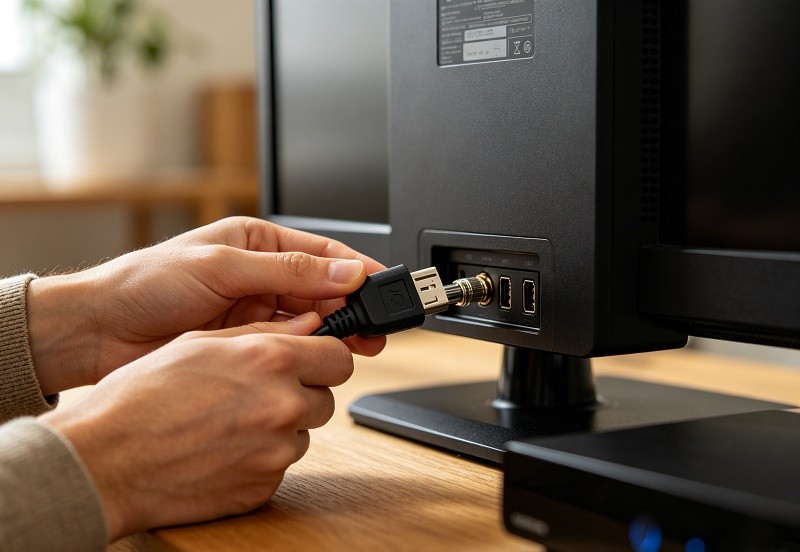
Hello everyone! Today, we're diving into a small but mighty component in our home entertainment systems: the TV IEC quick male connector. This little piece of hardware is a crucial element for connecting 75 Ohm antenna cables, ensuring you get the best possible signal for your television.
If you've ever set up a TV antenna, fiddled with the cables behind your television, or simply noticed that straightforward push-on connector and wondered about its function, this guide is for you. We will explore every facet of these remarkably useful connectors, from their technical specifications to their practical applications. Prepare to become an expert on the tool that brings your favorite shows to your screen.
Unpacking the TV IEC Quick Male Connector: What It Is and How It Works
The TV IEC quick male connector, despite its complex-sounding name, is a fundamental component designed for simplicity and efficiency. Known formally as the IEC 61169-2 connector, and more colloquially as a Belling-Lee or PAL connector, it has been a staple in homes for decades. It was originally designed around 1922 by Belling & Lee Ltd in the U.K. for the first BBC broadcasts and is still one of the oldest coaxial connectors in common use today. This connector is purpose-built to link coaxial antenna cables to devices like televisions, FM radios, and CATV distribution equipment, providing a stable and reliable signal path.
Its structure is a marvel of functional design, featuring an inner conductor for the signal, an insulating dielectric, and an outer metal shield that protects against interference. The male plug is designed to fit snugly into a corresponding female socket, a convention that is almost universally adopted for TV signals where the source (the antenna cable) has the male connector.
The 75 Ohm Impedance: Essential for Your TV IEC Connector
Impedance matching is a critical concept in any radio frequency (RF) application, including television broadcasting. The TV IEC connector is specifically designed to work with 75 Ohm coaxial cables and systems.
My TV IEC quick male connector features a 75 Ohm impedance, which is perfect for TV and antenna signals, ensuring clear pictures and sound.
The 75 Ohm standard is not arbitrary; it was established as a compromise to achieve the lowest possible signal loss (attenuation) for applications where signal integrity is paramount. For television and video signals, maintaining a consistent 75 Ohm impedance from the antenna, through the cable, and into the TV tuner is essential to prevent signal reflections. These reflections can cause a host of problems, including ghosting in analog signals and pixelation or a complete loss of picture in digital broadcasts. The IEC connector's design ensures it maintains this impedance, making it ideal for connecting terrestrial VHF/UHF roof antennas and other TV equipment. This precise matching allows for the efficient transfer of signal with minimal distortion, which is why your TV picture and sound remain crisp and clear.
Your TV IEC Connector's Quick Connection: Push-On Power
The "quick" in the name refers to one of the connector's most user-friendly features: its push-on mechanism. Unlike other connectors that require screwing or complex tools, the IEC connector is designed for effortless installation.
What makes the TV IEC quick male connector 'quick' is its unique push-on design. It simply pushes into place, utilizing a friction fit to secure the connection without screwing. This design is popular for everyday TV use.
The simplicity of this design is its greatest strength. In its most common form, the connector just slides together, creating a secure connection through a friction fit. The male plug is pushed firmly into the female socket, and it holds its place reliably for typical in-home use. This makes setup and teardown incredibly fast and requires no special tools, a significant advantage for the average consumer. While a screw-coupled variant with an M14x1 thread does exist for more secure applications, the push-on version is far more common for domestic TV setups due to its convenience. This ease of use has made it a lasting standard, especially for over-the-air antenna connections where frequent adjustments are not typically necessary.
The Inner Look: Your TV IEC Quick Male Connector as a 9.5 mm Plug
The physical dimensions of the connector are standardized to ensure interoperability between different devices and cables. The male connector is characterized by its most prominent measurement.
The TV IEC quick male connector is a 9.5 millimeter plug, designed for signals in the 0 to 1 GHz range. This range is ideal for standard TV broadcasts and terrestrial television.
This connector is officially designated as a type 9,52 connector under IEC 61169-2, where the "9,52" refers to the 9.525-millimeter (or 3/8-inch) diameter of the connector body. This size is standard for these connectors and ensures a proper fit. The internal components, often made of brass and sometimes gold-plated for better conductivity, consist of a center pin that carries the signal and an outer shell for shielding. These internal parts, which include the contact and main body, are often created using high-precision manufacturing techniques. For large-scale production, specialized components are crucial, and many manufacturers rely on Custom Metal Stamping Parts to produce the metallic elements with the necessary precision and consistency for reliable performance. The connector is engineered to perform optimally for frequencies up to about 1 GHz, which comfortably covers the entire range of terrestrial VHF and UHF television broadcasts, as well as FM and DAB radio signals.
Where Your TV IEC Quick Male Connector Calls Home: Applications and Regions
While its design is universal, the TV IEC quick male connector's popularity and application vary by region. Understanding where and how it's used can help you identify if it's the right connector for your needs.
Primary Uses for Your TV IEC Quick Male Connector
The core function of this connector has remained consistent since its invention: connecting broadcast signal sources to receivers.
The TV IEC quick male connector primarily connects a TV antenna cable to a television and indoor TV feeders. This ensures a stable connection for broadcast signals.
The most common application is connecting a terrestrial VHF/UHF antenna, such as a rooftop aerial, to the 'Antenna In' port on a TV set. It is also used for associated equipment like antenna signal amplifiers and CATV distribution systems. The simple, push-on design is perfectly suited for these fixed installations where the connection is made once and rarely disturbed. In addition to television, it's also the standard connector for FM and DAB radio receivers in many regions, highlighting its versatility in handling RF signals. While it excels at over-the-air antenna frequencies, it is less suitable for the higher frequencies required by satellite TV systems, where the F-type connector is preferred.
Global Presence: Your TV IEC Connector in Europe and Australia
The geographic footprint of the IEC connector is a key part of its identity. While it might be a rare sight in North America, it's the undisputed standard in other parts of the world.
The TV IEC quick male connector is especially common in Europe and Australia. If you're in these areas, you'll likely use one to set up your TV.
This connector is the standard for TV antenna connections throughout most of Europe and Australia. In these regions, it is colloquially known by various names, including a "PAL connector" (due to its association with the PAL television standard) or simply a "TV aerial plug." Its widespread adoption makes it the default choice for connecting televisions, radios, and related equipment. While you might encounter it in the US on the FM antenna input of some audio receivers, it is not used for television there, where the F-type connector reigns supreme. So, if you're setting up a TV in London, Sydney, or Berlin, the IEC connector is the plug you will be working with.
Effortless Setup: How to Use Your TV IEC Quick Male Connector
One of the most significant advantages of the IEC connector is its incredibly straightforward installation process. You don't need to be a professional installer to get a perfect connection every time.
Simply Push: Installing Your TV IEC Quick Male Connector
The "quick" push-on design is all about simplicity and speed, turning a potentially tedious task into a matter of seconds.
To connect an antenna, simply take the male IEC plug and firmly push it into the female antenna input on the TV. It snugs into place easily.
The process is as simple as it sounds. Align the male plug with the female socket on your television or receiver and apply gentle, firm pressure to push it into place. The friction fit design ensures it will hold securely. If you're having difficulty, a slight wiggle as you push can help it seat properly. For DIYers making their own cables, it's important to prepare the coaxial cable correctly, ensuring the center conductor is the correct length and that none of the braided shielding wires are touching the center pin, which could short out the signal. However, for pre-made cables, it's a true plug-and-play experience.
Finding the Right Port for Your TV IEC Connector
Before you can plug it in, you need to locate the correct input on your device. Luckily, these ports are usually clearly marked.
The port for the antenna cable, where the TV IEC quick male connector goes, is usually labeled 'Antenna In' or has an antenna icon. In IEC-standard regions, the 'cable in' port might also be an IEC type.
On the back of your television, look for a female port labeled "Antena," "Antenna In," "Aerial," or simply marked with a small symbol that looks like an antenna. This is the designated input for terrestrial broadcast signals. In regions like Europe where the IEC standard is prevalent, you will find this port is a female IEC socket ready to receive the male plug from your antenna cable. This differs from North American TVs, which use a threaded female F-type connector for the same purpose. It's a simple matter of matching the plug on your cable to the corresponding jack on your TV.
Your TV IEC Quick Male Connector Compared: Other Coaxial Connectors
The IEC connector is part of a larger family of coaxial connectors used for RF signals. Comparing it to others, like the F-type and BNC connectors, helps to highlight its specific strengths and intended purpose.
TV IEC Quick Male Connector vs. F-Type: Different Approaches
In the world of home entertainment, the IEC and F-type connectors are the two most common choices for television signals, but they dominate different regions and applications.
Both the F-type and the TV IEC quick male connector are 75 Ohm coaxial connectors for RF signals, but with different designs. The F-type is threaded and screws on, popular in North America for cable/satellite TV. The TV IEC connector uses a push-on mechanism, prioritizing ease for broadcast TV.
The key difference lies in the connection mechanism. The F-type connector features a threaded 'nut' that is screwed onto the male port, creating a very secure and robust mechanical connection. This security makes it the standard in North America for both over-the-air antenna and, more critically, cable and satellite TV installations, where higher frequencies and the need for a semi-permanent, reliable connection are paramount.
In contrast, the IEC connector’s push-on friction fit prioritizes convenience and speed over the mechanical robustness of a threaded connection. While both are designed for 75 Ohm systems, the F-connector's design is generally considered better for the higher frequencies used in satellite television. For standard terrestrial TV and radio, the IEC connector's performance is more than adequate and its ease of use is a significant benefit for consumers.
| Feature | TV IEC Quick Male Connector | F-Type Connector |
|---|---|---|
| Mechanism | Push-on (friction fit) | Screw-on (threaded) |
| Impedance | 75 Ohm | 75 Ohm |
| Primary Use | Terrestrial TV, FM/DAB Radio | Cable/Satellite TV, Terrestrial TV |
| Primary Region | Europe, Australia | North America |
| Ease of Use | Very easy, no tools needed | Requires screwing, can be tight |
| Security | Good for static use | Very secure mechanical lock |
When Other Connectors Like BNC Shine
Beyond the world of home television, other connectors like the BNC are used for specialized and professional applications.
BNC connectors, with their twist-lock mechanism, are often used in professional settings like security cameras. While some are 75 Ohm, they differ from the simple TV IEC quick male connector.
The BNC (Bayonet Neill-Concelman) connector is known for its quick and secure "snap and lock" or twist-lock mechanism. This design provides a more secure connection than a simple push-on plug while being faster to connect and disconnect than a threaded F-type connector. BNC connectors are available in both 50 Ohm and 75 Ohm versions. The 75 Ohm variant is widely used in professional video applications, such as television studios and for CCTV security systems, where signal integrity and a reliable connection are critical. While they serve a similar purpose in transmitting video signals, their robust design and locking mechanism make them better suited for professional environments where cables may be frequently connected, disconnected, or subject to movement, a scenario where the simpler IEC connector might fail.
Your TV IEC Quick Male Connector: What We Call It
A connector with such a long history and wide geographic spread is bound to pick up a few nicknames along the way. Knowing these alternative names can be helpful when searching for parts or information.
Common Names for Your TV IEC Quick Male Connector
Depending on where you are and who you're talking to, the same component can have many different names.
It's often called a 'TV antenna plug' or 'coaxial antenna plug.' More formally, it's known as an IEC 61169-2 or Belling-Lee connector. In Europe, it's also a 'PAL connector.' All these names refer to the same type of push-on TV IEC quick male connector that helps you enjoy your favorite shows!
Here's a breakdown of the most common names and their origins:
- Belling-Lee Connector: This is its original name, after the inventors, Belling & Lee Ltd. It is still used, particularly in technical or historical contexts.
- IEC 61169-2 Connector: This is its official, formal designation from the International Electrotechnical Commission, the standards body that codified it. You'll see this name in technical specifications.
- PAL Connector: A very common colloquial name in Europe and other regions that used the PAL analog television standard. The connector became synonymous with the system it served.
- TV Antenna/Aerial Plug: This is a simple, descriptive name based on its primary function. It's what many consumers would call it when looking for a cable for their TV.
- 9.5mm Connector: Referring to its key physical dimension, this is another way to identify the plug.
So, whether you call it a Belling-Lee, a PAL plug, or just a TV plug, you're talking about the same simple and effective connector.
Conclusion
So, there you have it! The TV IEC quick male connector, though it may seem like a minor detail, is a straightforward, efficient, and essential component for anyone looking to connect their TV antenna to a 75 Ohm cable, especially in many parts of Europe and Australia. From its push-on design that prioritizes ease of use to its standardized 75 Ohm impedance that ensures a clear, stable signal, this connector has proven its worth over a century of use.
Understanding this simple yet powerful connector helps us appreciate the engineering that goes into our home entertainment systems. It empowers us to make the right connections, troubleshoot signal issues, and ultimately get clearer signals to enjoy our television and radio receivers without hassle. We hope this complete guide has shed some light on this unsung hero of the TV world.
What are your experiences with IEC connectors? Have you ever had to choose between an IEC and an F-type? Share your thoughts and experiences in the comments below, and don't forget to share this article with anyone who might find it helpful