The Complete Guide to RFQ for Custom CNC Parts: What to Include and Avoid
- Share
- publisher
- SOMI Custom Parts
- Issue Time
- Jul 29,2026
Summary
Learn exactly what to include in your RFQ for custom CNC machined parts — and what common mistakes to avoid. This complete guide covers 3D models, 2D drawings, GD&T, material specifications, surface finishes, tolerances, and inspection requirements to help you get accurate CNC machining quotes faster and at lower cost.
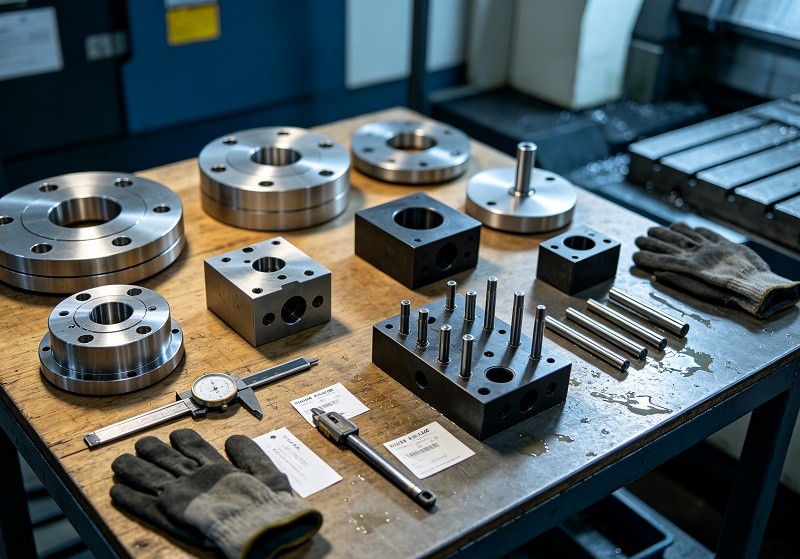
Every precision CNC machined part begins not with a cutting tool, but with a document — the Request for Quotation (RFQ). For procurement managers, engineers, and product developers sourcing custom CNC parts, the RFQ is the single most important communication tool in the entire manufacturing process. A well-prepared RFQ can reduce quote turnaround time by 40–60%, lower machining costs by 20–40%, and eliminate weeks of back-and-forth clarification emails. Yet many buyers submit incomplete or ambiguous RFQs, forcing suppliers to make assumptions, add risk buffers, and deliver pricing that reflects uncertainty rather than actual manufacturing cost. Studies estimate that shops add 15–25% to quotes when key specifications are missing. This guide covers everything you need to include in your CNC machining RFQ — and the costly mistakes to avoid. A Request for Quotation (RFQ) is a formal document that communicates your manufacturing requirements to a CNC machining supplier. Unlike a simple price inquiry, a complete RFQ functions as a technical communication package that enables the shop to accurately estimate machining time, plan tooling, evaluate manufacturability, and assess quality requirements. An RFQ is not a generic procurement form — it is a technical document that tells the shop exactly what to program, fixture, machine, inspect, and finish. Missing any of these elements forces assumptions, and assumptions always cost you money. The core components of any CNC machining RFQ include: a 3D CAD model (STEP format preferred), a 2D engineering drawing with GD&T per ASME Y14.5-2018, complete material specifications, tolerance requirements, surface finish specifications, quantity tiers, inspection expectations, and delivery logistics. When all these elements are present, shops can quote accurately on the first round. Complete RFQs can be quoted within 24–48 hours, compared to 3–5 days for incomplete packages that require clarification. Complete specifications eliminate risk buffers, reducing quoted prices by 15–25% compared to vague requests. Consistent RFQ packages allow you to compare quotes across suppliers on a like-for-like basis. Clear specifications reduce the risk of manufacturing errors, rework, and costly production delays. Every CNC machining RFQ must include a 3D CAD model. The universal standard accepted by virtually all CNC shops is the STEP format (.stp or .step). STEP files open reliably across every major CAM system and avoid version-compatibility issues that arise with native CAD formats. If you are using SolidWorks, Inventor, or Creo, export a STEP file alongside your native format. The 3D model is used by the shop's engineering team to analyze geometry, estimate stock size, identify machining features, plan setups, and generate toolpaths for CAM programming. Without a clean solid model, accurate quoting is impossible. Pro Tip: Before sending your file, confirm it represents the latest approved revision. Include the part number and revision in the file name so the quotation, drawing, and production order all reference the same design. A 3D model shows geometry, but only a 2D drawing communicates manufacturing intent. The 2D drawing is the contractual document that governs production — if the 3D model and drawing conflict, the drawing wins. Every complete RFQ must include a fully dimensioned PDF drawing with GD&T per ASME Y14.5-2018. Your 2D drawing must include: Material choice directly affects machining cost, strength, weight, surface finish, corrosion resistance, and lead time. Writing only "aluminum" or "stainless steel" forces the shop to guess — and they will quote based on the lowest-cost option. Always specify the exact grade, temper, and governing specification. If you are unsure which material is best, explain the application and operating environment in your RFQ. A good supplier will recommend the optimal material based on the part's functional requirements. Surface finish is one of the most misunderstood aspects of a CNC machining RFQ. Unless you specify the finish requirement, the supplier will assume an as-machined finish with standard roughness (typically Ra 3.2 µm / 125 µin). If your application requires finer finishes, coatings, or secondary processes, state them explicitly in the RFQ. Common surface roughness (Ra) values: Coating specifications should follow industry standards: Also identify areas that must be masked — threaded holes, mating surfaces, grounding points, and bearing seats should remain uncoated. Standard CNC machining tolerance is ±0.13 mm (±0.005 in) for machined features. Tighter tolerances require additional fixturing, slower feed rates, specialized tooling, and more extensive inspection — all of which increase cost. The key to an efficient RFQ is distinguishing between critical and non-critical tolerances. Common mistake: Applying a tight general tolerance to the entire part instead of marking critical dimensions individually. This can double or triple machining cost without any functional benefit. When to specify tight tolerances: On your 2D drawing, mark critical dimensions individually with their specific tolerance. Provide a general tolerance note for all other dimensions (e.g., "Unless otherwise specified, all dimensions ±0.13 mm"). Quantity: Always provide both the immediate order quantity and anticipated annual volume. Quantity directly affects pricing — setup, programming, and tooling costs are distributed across the total run. Request tiered pricing (e.g., 1 / 10 / 50 / 100 pieces) to understand the cost-volume relationship and find your optimal order quantity. Lead time: Specify a clear deadline rather than "ASAP." Standard lead times for custom CNC parts are typically 10–15 business days for simple parts and 15–25 business days for complex multi-setup parts. Expedited services are usually available at a 30–50% premium. Inspection: Tell the supplier upfront if you require inspection reports. Common documentation includes: At SOMI Custom Parts, we understand that the quality of your RFQ directly determines the quality of your manufacturing outcome. Our experienced engineering team reviews every incoming RFQ against our ISO 9001:2015 quality management system, providing free Design for Manufacturability (DFM) feedback on every submission. When you send your RFQ to SOMI, you receive: Ready to get accurate pricing on your next CNC project? Submit your RFQ today and let our team put their expertise to work for you. Browse our CNC machining parts and product catalog to see the quality and precision we deliver. STEP (.stp/.step) is the universal standard accepted by all CNC shops. Send both the 3D model and a 2D drawing with GD&T. Native CAD formats (SolidWorks .sldprt, Inventor .ipt) are also typically accepted, but always include a STEP export to avoid version-compatibility issues. Generally no. Specify what you need (tolerances, material, finish, features), not how to make it. The shop will determine the most efficient process — 3-axis vs. 5-axis, milling vs. turning. If you have a specific requirement (e.g., "no EDM on this surface"), state it explicitly. Ensure every supplier receives the same complete RFQ package. Compare unit price, setup fees, material costs, included inspection reports, and included surface finishing. The lowest per-piece price may not represent the lowest total cost if inspection, finishing, or logistics are quoted separately. Simple prototype parts: 5–7 business days. Complex multi-setup parts: 10–15 business days. Production batches (50+ units): 15–25 business days. Expedite services are typically available at a 30–50% premium for 2–3 day turnaround on simple parts. Yes — for prototype-stage RFQs this is common. Flag clearly that the design may change and specify a shorter validity period on any early pricing. A good supplier will provide cost-saving suggestions during the DFM review process that can be incorporated before final production. A CNC machining RFQ is not just a request — it is the foundation of your entire manufacturing process. Clear and complete RFQs lead to faster quotes, lower costs, better production outcomes, and stronger supplier relationships. Every missing specification is an opportunity for miscommunication, cost overruns, and production delays. By following the comprehensive checklist outlined in this guide — including a 3D STEP model, fully dimensioned 2D drawing with GD&T, precise material callouts, clearly defined tolerances and surface finishes, quantity tiers, and realistic lead time expectations — you can transform your RFQ from a routine purchasing document into a powerful tool for manufacturing success. Start your next project with confidence. Submit a complete RFQ to SOMI Custom Parts and experience the difference that engineering-led precision manufacturing makes. For more insights, explore our CNC machining blog or contact our team directly.
Introduction: Why Your RFQ Matters
What Is an RFQ for Custom CNC Parts?
Key Benefits of a Complete RFQ Package
Faster Quotes
Lower Costs
Apples-to-Apples Comparison
Fewer Errors
1. 3D CAD Model — The Universal Starting Point
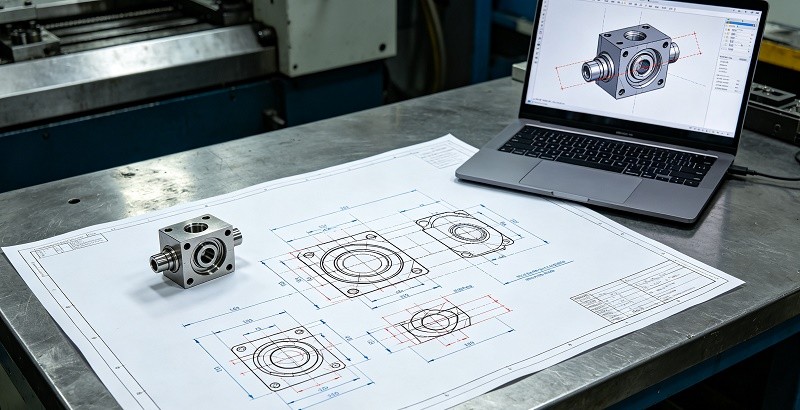
2. 2D Engineering Drawing — Defining Manufacturing Intent
3. Material Specification — Never Leave It to Interpretation
Material Correct Specification Typical Applications Aluminum 6061-T6 per AMS-QQ-A-225/8 General industrial, automotive, aerospace Stainless Steel 304 per ASTM A276 Food processing, medical, architectural Stainless Steel 316L per ASTM A240 Marine, chemical, pharmaceutical Titanium Ti-6Al-4V per AMS 4928 Aerospace, medical implants, racing Steel 4140 per ASTM A29 Gears, shafts, structural components Brass C36000 per ASTM B16 Fittings, valves, electrical components 4. Surface Finish and Post-Processing Requirements
5. Tolerances — Apply Tight Only Where Needed
6. Quantity, Lead Time, and Inspection Requirements
Common RFQ Mistakes That Increase Cost and Delay
Mistake Impact Solution Missing material specification Shop assumes cheapest grade; part fails in service Specify alloy + temper + governing spec Only 3D model, no 2D drawing No tolerance, finish, or thread definition Always include both 3D STEP and 2D PDF Undefined surface finish As-machined at Ra 3.2 may not suit sealing surfaces Specify Ra value and coating per industry standard No tolerance definition Shop uses default tolerance; parts may not fit Mark critical dimensions individually Unrealistic lead time Added expedite fees or rejected quote Provide realistic deadline or request rush pricing Incomplete quantity information No volume discount applied; suboptimal pricing Provide quantity tiers and annual volume estimate How SOMI Custom Parts Can Help
Frequently Asked Questions
What file format should I send for CNC machining quotes?
Should I specify the CNC process in my RFQ?
How do I compare CNC machining quotes from different suppliers?
What is a typical lead time for custom CNC machined parts?
Can I send an RFQ before my design is fully finalized?
Conclusion