Stainless Steel CNC Explained: Why it's a Top Choice for Durable Parts
- Share
- Issue Time
- Apr 22,2026
Summary
Explains why stainless steel CNC machining is a top choice for durable parts, covering its corrosion resistance, strength, machinability, surface quality and wide industrial applications.
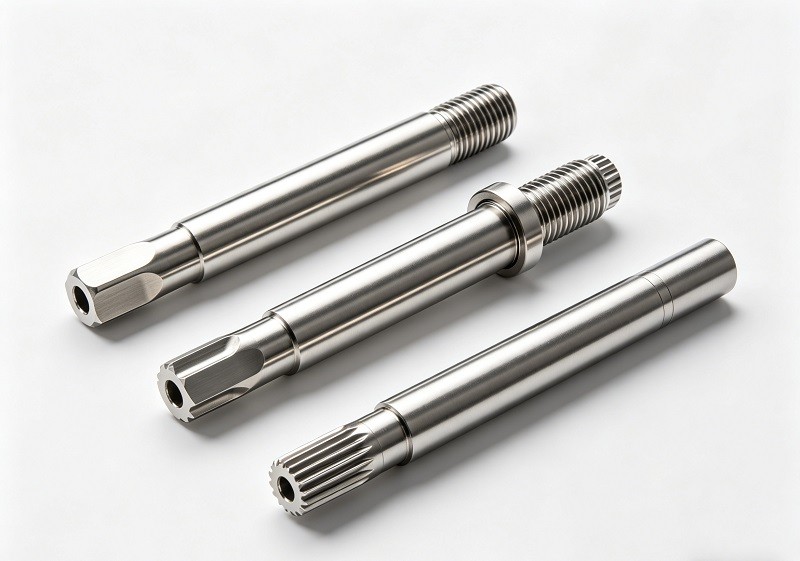
Hello there! Have you ever wondered what makes some parts incredibly strong and long-lasting, especially in tough environments? Today, we're diving into the exciting world of Stainless Steel CNC machining, a process that creates durable components that stand the test of time.
Stainless steel is already a superstar material, known for its excellent resistance to corrosion, impressive strength, and overall toughness. When we combine these amazing properties with the precision and efficiency of CNC machining, we get parts that are not just good, but truly exceptional.
Join me as we explore why Stainless Steel CNC is becoming the go-to choice for manufacturing components that demand ultimate durability and high performance across various industries.
Exploring Stainless Steel for CNC Machining: Core Properties and Classifications
Stainless steel isn't just one material but a diverse family of iron-based alloys. What unites them is a minimum chromium content of 10.5%, the key ingredient that gives them their renowned "stainless" quality. This family of metals is prized in manufacturing for its exceptional durability, cleanability, and aesthetic appeal, making it a cornerstone in everything from aerospace to medical devices.
What Makes Stainless Steel a Premium Choice for CNC?
The suitability of stainless steel for CNC machining boils down to a blend of inherent chemical and mechanical properties. This combination allows for the creation of parts that are not only precisely shaped but also incredibly resilient in their final application. The interaction of its alloying elements provides a spectrum of characteristics that can be tailored to specific performance requirements.
The Magic of Chromium: Boosting Corrosion Resistance
The standout feature of stainless steel is its remarkable resistance to corrosion, a property primarily gifted by chromium. When the chromium content in the steel exceeds 10.5%, it reacts with oxygen in the air to form a thin, invisible, and incredibly stable layer of chromium oxide on the metal's surface. This "passive layer" acts as a protective shield, preventing oxygen and moisture from reaching the iron base and causing rust.
What makes this process truly magical is its self-healing nature. If the surface is scratched or damaged, the exposed chromium immediately reacts with oxygen again, instantly repairing the protective film and ensuring the part's integrity remains intact. This passivation process can be further enhanced through chemical treatments, which remove free iron from the surface and promote a thicker, more robust chromium oxide layer, maximizing corrosion resistance from the moment a part is made.
Beyond Chromium: How Other Alloys Enhance Durability
While chromium is the primary hero of corrosion resistance, other alloying elements play crucial roles in fine-tuning a grade's specific properties for durability, strength, and machinability. Each element adds a unique characteristic to the final material.
Here is a breakdown of key alloying elements and their contributions:
| Alloying Element | Primary Contribution | Secondary Effects |
|---|---|---|
| Nickel (Ni) | Stabilizes the austenitic (non-magnetic) crystal structure at room temperature, greatly enhancing toughness, ductility, and formability. | Improves corrosion resistance in certain acidic environments and performance at both high and low temperatures. |
| Molybdenum (Mo) | Significantly increases resistance to pitting and crevice corrosion, especially in chloride-rich environments like saltwater. | Boosts strength at elevated temperatures, making it vital for high-performance applications. |
| Manganese (Mn) | Acts as an austenite stabilizer (often substituting for some nickel in 200-series grades) and improves strength and hot-working properties. | Increases the solubility of nitrogen, which further enhances strength. |
| Nitrogen (N) | A powerful strengthening agent that also improves resistance to localized corrosion, such as pitting. | Stabilizes the austenitic structure and enhances mechanical strength. |
| Carbon (C) | A primary hardening element, significantly increasing the strength and hardness, especially in martensitic steels. | In austenitic and ferritic grades, higher carbon can reduce corrosion resistance and weldability if not properly controlled. |
| Sulfur (S) | Added specifically to "free-machining" grades (like 303) to improve machinability by creating small, brittle chips that break away easily. | Has a slightly detrimental effect on corrosion resistance, formability, and weldability. |
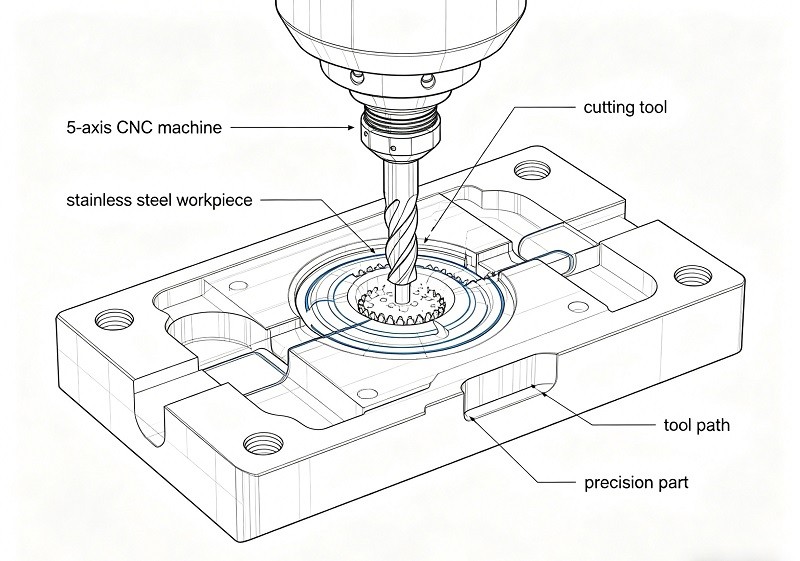
Essential Properties for Robust Stainless Steel CNC Parts
When selecting stainless steel for a CNC-machined part, engineers look at a suite of properties that guarantee performance under stress. These include:
- High Strength-to-Weight Ratio: Many stainless steel grades offer impressive strength without excessive weight, crucial for aerospace, automotive, and medical applications.
- Toughness and Ductility: Austenitic grades, in particular, exhibit excellent toughness, meaning they can absorb energy and deform without fracturing, making them resilient to impact.
- Temperature Stability: Certain grades maintain their mechanical properties across a wide range of temperatures, from cryogenic lows to the high heat of engines and industrial processes.
- Hardness and Wear Resistance: Martensitic and precipitation-hardening grades can be heat-treated to achieve very high levels of hardness, making them ideal for cutting tools, bearings, and high-wear components.
- Hygienic Surface Finish: Stainless steel can be machined and polished to an extremely smooth, non-porous surface that is easy to clean and sterilize, a non-negotiable requirement in the food processing, pharmaceutical, and medical industries.
Understanding Stainless Steel Classifications for CNC Applications
The diverse properties of stainless steel are organized into distinct families based on their crystalline microstructure. The four main types relevant to CNC machining are austenitic, ferritic, martensitic, and duplex, with a fifth, precipitation-hardening, also playing a key role. Each family offers a different combination of strength, corrosion resistance, and machinability.
Austenitic Stainless Steels: Versatility and Toughness in CNC
Accounting for over 70% of all stainless steel production, the austenitic family is the most widely used. Defined by their face-centered cubic (FCC) crystal structure, which is stabilized by nickel, these steels are renowned for their exceptional corrosion resistance, superior formability, and excellent weldability.
- Common Grades: 304 (the ubiquitous "18-8" stainless) and 316 (with added molybdenum for enhanced corrosion resistance).
- Key Properties: They are non-magnetic in their annealed state, have great toughness even at cryogenic temperatures, and are highly durable.
- Machining Challenges: Austenitic steels are prone to work hardening, where the material becomes harder as it's being cut. They also have low thermal conductivity, which can lead to heat buildup at the tool tip. Successful machining requires sharp tools, appropriate cutting speeds and feeds, and effective cooling to manage these challenges.
- Typical Applications: Food processing equipment, medical instruments, chemical tanks, architectural paneling, and marine hardware.
Martensitic Stainless Steels: Maximizing Strength and Hardness with CNC
Martensitic stainless steels are the hard-hitters of the family. They have a higher carbon content and a body-centered tetragonal crystal structure that allows them to be hardened significantly through heat treatment (quenching and tempering). This process gives them exceptional strength and wear resistance.
- Common Grades: 410, 420, and 440C.
- Key Properties: High hardness, high tensile strength, and good fatigue resistance. They are magnetic.
- Machinability: In their annealed (softened) state, martensitic grades are relatively easy to machine. However, after hardening, machining becomes much more challenging.
- Trade-offs: Their increased hardness comes at the cost of lower corrosion resistance compared to austenitic grades and reduced ductility.
- Typical Applications: Cutlery, surgical instruments, turbine blades, bearings, fasteners, and injection molds—anywhere a sharp edge or extreme wear resistance is critical.
Other Stainless Steel Families Relevant for Specific CNC Needs
Beyond the two most common families, other classifications offer unique property combinations for specialized applications:
- Ferritic Stainless Steels: These grades (like 430) contain chromium but have low carbon and very little nickel, resulting in a magnetic, body-centered cubic (BCC) structure. They are more cost-effective than austenitic steels and offer good corrosion resistance and thermal stability, but have lower ductility and strength. They are often used in automotive exhaust systems, kitchen appliances, and decorative trim.
- Duplex Stainless Steels: As the name implies, these steels (like 2205) have a mixed microstructure of both austenite and ferrite in roughly equal proportions. This combination gives them the "best of both worlds": the superior strength of ferritic grades and the excellent corrosion resistance of austenitic grades, particularly against chloride stress corrosion cracking. They are ideal for demanding environments in the oil and gas, chemical processing, and marine industries.
- Precipitation-Hardening (PH) Stainless Steels: This unique family (including 17-4 PH) combines the corrosion resistance of austenitic grades with the ability to be heat-treated to even higher strength levels than martensitic grades. This is achieved by adding elements like copper, aluminum, or titanium that form microscopic precipitates in the steel's matrix during a low-temperature aging process. This provides an unparalleled combination of high strength, good corrosion resistance, and excellent toughness, making them a top choice for high-performance aerospace, defense, and motorsport components.
Why Specific Stainless Steel CNC Grades Excel and Outperform Traditional Methods
Not all stainless steel is created equal, especially when it comes to high-performance applications. The specific grade chosen for a CNC machining project can make the difference between a part that simply works and one that excels for years under demanding conditions. Furthermore, the precision of CNC machining elevates these materials, producing components that are often superior to those made by conventional methods like casting.
A Closer Look at Popular Stainless Steel Grades for CNC Machining
The vast selection of stainless steel grades allows engineers to pinpoint the perfect material for their needs. Each grade offers a unique balance of machinability, corrosion resistance, strength, and cost.
The Widespread Use of 304 and the Superior Corrosion Resistance of 316/316L in Stainless Steel CNC
304 Stainless Steel: Often called the workhorse of stainless steels, 304 is the most versatile and widely used grade. Its popularity stems from a potent combination of good corrosion resistance, excellent formability, and cost-effectiveness. It performs reliably in general industrial uses and indoor environments where exposure to harsh chemicals or salt is not a concern. Typical applications include kitchen equipment, architectural trim, and general-purpose brackets and enclosures.
316/316L Stainless Steel: For applications demanding a higher level of corrosion resistance, 316 is the go-to upgrade. The key difference is the addition of 2-3% molybdenum, which dramatically enhances its ability to resist pitting and crevice corrosion, especially in chloride-rich environments like saltwater or chemical processing plants. This makes 316 essential for marine hardware, medical implants, and food processing equipment that undergoes frequent, caustic wash-downs.
The "L" in 316L denotes "low carbon." This lower carbon content minimizes carbide precipitation during welding, preserving the material's corrosion resistance at the weld seams and making 316L the preferred choice for welded components in highly corrosive environments. While 316 offers superior performance, it typically costs 20-30% more than 304, making the choice between them a critical balance of performance needs and budget.
Achieving Precision and Smooth Finishes with Free-Machining 303 for Stainless Steel CNC
While austenitic steels like 304 are known for being "gummy" and difficult to machine, 303 stainless steel was specifically engineered to solve this problem. By adding sulfur, 303 becomes a "free-machining" grade. The sulfur forms manganese sulfide inclusions that act as chip breakers, resulting in small, brittle chips that break away cleanly from the cutting tool.
This translates to several key benefits:
- Faster Machining Speeds: Production times can be significantly reduced.
- Longer Tool Life: Reduced friction and better chip control lead to less tool wear.
- Superior Surface Finish: The clean cutting action allows for smoother, more precise surfaces right off the machine.
The trade-off for this excellent machinability is a slight reduction in corrosion resistance and poor weldability compared to 304. However, for high-volume production of complex parts like screws, nuts, bolts, shafts, and sensor housings, 303 is often the most cost-effective and efficient choice.
High Strength Applications: 17-4 and 440C Grades in Stainless Steel CNC
When sheer strength and hardness are the top priorities, martensitic and precipitation-hardening grades are unmatched.
17-4 PH Stainless Steel: Standing for 17% chromium and 4% nickel, 17-4 PH is a precipitation-hardening steel that offers a phenomenal combination of high strength, good corrosion resistance, and toughness. Its defining feature is its ability to be heat-treated through an aging process to achieve a wide range of hardness levels, often designated as H900 for maximum strength or H1150 for increased toughness. This versatility makes it a favorite in demanding industries like aerospace (for structural components and turbine blades), defense, and high-performance automotive.
440C Stainless Steel: Known as one of the hardest stainless steels available, 440C is a high-carbon martensitic grade. After heat treatment, it can achieve a Rockwell hardness of HRC 58-60, giving it exceptional wear resistance and edge retention. This makes it the premier choice for applications where durability against abrasion is critical. However, its high carbon content means its corrosion resistance is moderate and lower than austenitic grades. Machining is typically done in the softer, annealed state before the final hardening treatment. You'll find 440C used in ball bearings, high-quality knife blades, surgical instruments, and valve seats.
Duplex 2205: The Ultimate Strength for Demanding Stainless Steel CNC Projects
Duplex 2205 stainless steel is an advanced alloy that combines the microstructures of both austenitic and ferritic steels. This dual-phase structure gives it a unique set of properties:
- Exceptional Strength: Duplex 2205 has roughly twice the yield strength of common austenitic grades like 304 and 316.
- Superior Corrosion Resistance: It offers outstanding resistance to chloride stress corrosion cracking, pitting, and crevice corrosion, outperforming 316 in many harsh environments.
These characteristics make it indispensable for critical components in the oil & gas industry (pipelines, subsea systems), chemical processing plants (pressure vessels, heat exchangers), and marine applications (desalination plants). The trade-off is its machinability; its high strength and work-hardening rate make it more difficult to machine than standard austenitic steels, requiring slower speeds and more robust tooling.
The Unmatched Advantages of Stainless Steel CNC Over Conventional Manufacturing
While materials are half the story, the manufacturing method is the other. Compared to traditional methods like casting, CNC machining offers distinct advantages that result in superior parts.
Cost Efficiency and Design Freedom with Stainless Steel CNC
At first glance, casting may seem cheaper for large volumes due to lower material waste. However, Stainless Steel CNC machining eliminates the significant upfront cost and long lead times associated with creating molds, which can run into tens of thousands of dollars. This makes CNC machining highly cost-effective for prototyping, low-to-mid volume production, and situations where designs may need to be modified.
Furthermore, CNC machining provides engineers with immense design freedom. Complex external geometries, fine details, and sharp corners that are difficult or impossible to achieve with casting can be produced with ease. The process is subtractive, meaning it starts with a solid block of material and carves away what's not needed, allowing for intricate and highly precise designs without the constraints of mold-making.
Unlocking Superior Dimensional Precision and Faster Turnaround with CNC
CNC machining is synonymous with precision. Because the entire process is computer-controlled, it can achieve incredibly tight tolerances (as low as ±0.001 inches), ensuring that every part is virtually identical to the last. This level of accuracy and repeatability is difficult to match with casting, where factors like mold wear and metal shrinkage can introduce variability.
The production cycle for CNC machining is also significantly faster, especially for prototypes and small batches. Without the need to create and set up molds, production can begin almost immediately after a digital design file is loaded. This rapid turnaround is invaluable for product development, allowing engineers to test and iterate designs quickly.
Ensuring Long-Term Durability: Why CNC-Machined Stainless Steel is Key
The inherent strength of stainless steel is amplified by the CNC machining process. Machining a part from a solid billet of wrought stainless steel preserves the material's uniform grain structure and integrity. This results in components with superior mechanical properties and strength compared to cast parts, which can suffer from internal defects like porosity or voids that can become points of failure.
Moreover, CNC machining enhances durability by:
- Creating Superior Surface Finishes: A smooth, non-porous surface produced by precise machining reduces friction and wear, and is less prone to trapping contaminants that can initiate corrosion.
- Eliminating Stress Concentrators: CNC allows for the creation of smooth transitions and fillets, eliminating the sharp internal corners that can act as stress risers and lead to fatigue cracking over time.
By creating components free from internal defects and with precise, optimized geometries, stainless steel CNC machining ensures parts are not only built to specification but also built to last, significantly improving their operational lifecycle.
Conclusion
In summary, the combination of stainless steel's inherent strength, remarkable corrosion resistance, and the specific advantageous properties of its various grades, alongside the incredible precision and efficiency of CNC machining, guarantees incredibly durable and high-performing parts. This powerful synergy delivers components that meet the most rigorous standards of modern industry.
From critical medical implants and robust aerospace components to precision parts in the automotive and food processing sectors, Stainless Steel CNC solutions are proving to be absolutely indispensable. They offer the reliability, consistency, and advanced manufacturing capabilities needed to meet even the toughest demands.
Our journey through the world of stainless steel machining has clearly shown why it isn't just a good choice, but often the very best choice for crafting parts that we expect to last and perform flawlessly for years to come.