Selecting the Right Aluminum Alloy: A Decision Guide for CNC Projects
- Share
- publisher
- SOMI Custom Parts
- Issue Time
- Sep 10,2026
Summary
Compare 6061, 7075, and other aluminum alloys for CNC projects across strength, cost, machinability, corrosion resistance, anodizing, and typical applications.
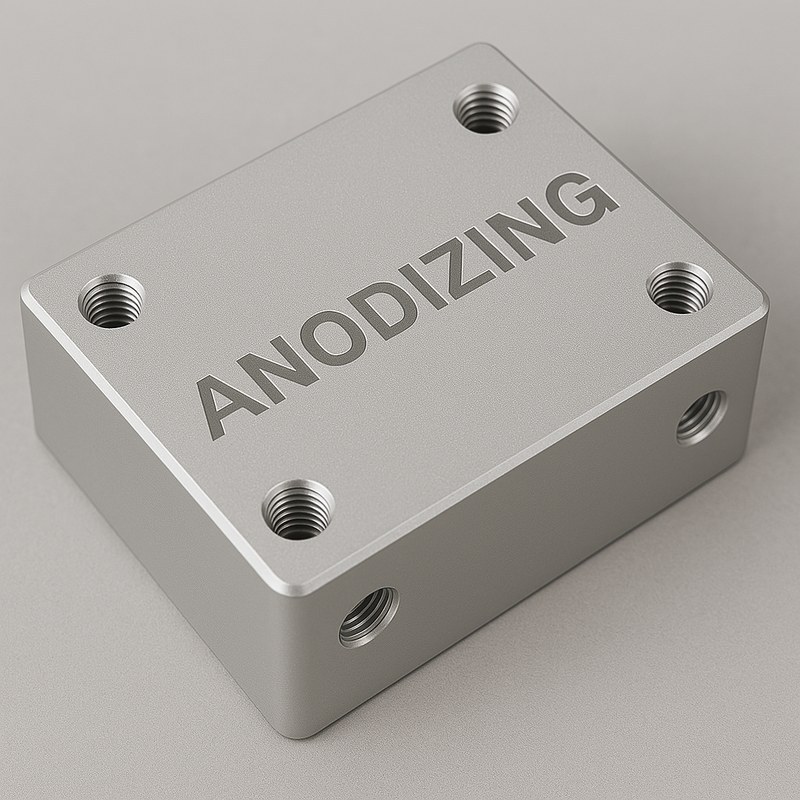
Selecting the Right Aluminum Alloy: A Decision Guide for CNC Projects
6061 or 7075? 6063 or 2024? Choosing the right aluminum alloy affects strength, cost, finish, and lead time. This decision guide helps engineers and buyers specify the correct grade before sending an RFQ.
Introduction: Why Alloy Choice Matters
Aluminum is the most commonly machined non-ferrous metal in precision manufacturing, and for good reason: it is light, corrosion-resistant, easy to machine, and available in dozens of alloys. But not all aluminum is the same. The alloy you specify determines mechanical strength, weldability, anodizing response, raw material cost, and even tool life at the machine.
For CNC projects, most designs land on one of a few workhorse alloys — 6061, 7075, 6063, 2024, or 5083. This guide explains what distinguishes them, when to pay a premium for high-strength grades, and how to match the alloy to the functional requirements of your part.
Aluminum Alloy Families: What the Numbers Mean
Aluminum alloys are grouped into series by their primary alloying element. The series number (first digit) tells you a lot about the material's personality.
| Series | Primary Alloying Element | Common Grades | Typical Use in CNC |
|---|---|---|---|
| 2xxx | Copper | 2024 | Aerospace structures; high strength, lower corrosion resistance. |
| 5xxx | Magnesium | 5083, 5052 | Marine and welded structures; excellent corrosion resistance. |
| 6xxx | Magnesium + Silicon | 6061, 6063, 6082 | General-purpose CNC parts — the default family. |
| 7xxx | Zinc | 7075, 7050 | High-strength aerospace and performance parts. |
Within a series, the temper designation (e.g., T6) describes the heat-treatment condition. T6 means solution heat-treated and artificially aged, which maximizes strength in 6xxx and 7xxx alloys.
6061-T6: The Workhorse Alloy
For the majority of CNC projects, 6061-T6 is the safest and most economical starting point. It offers an excellent balance of machinability, strength, corrosion resistance, weldability, and anodizing quality.
- Machinability: soft enough for long tool life and fast cycle times (95 HB hardness).
- Strength: 310 MPa ultimate tensile strength — adequate for most housings, brackets, plates, and enclosures.
- Corrosion resistance: forms a stable protective oxide; performs well outdoors and in humid environments.
- Finishing: takes bright, uniform clear or colored anodizing.
- Cost: widely available and roughly 40–60% cheaper than 7075 at equivalent sizes.
Choose 6061 when the part is a cover, bracket, housing, fixture, heat sink, or prototype — unless a real design reason demands higher strength.
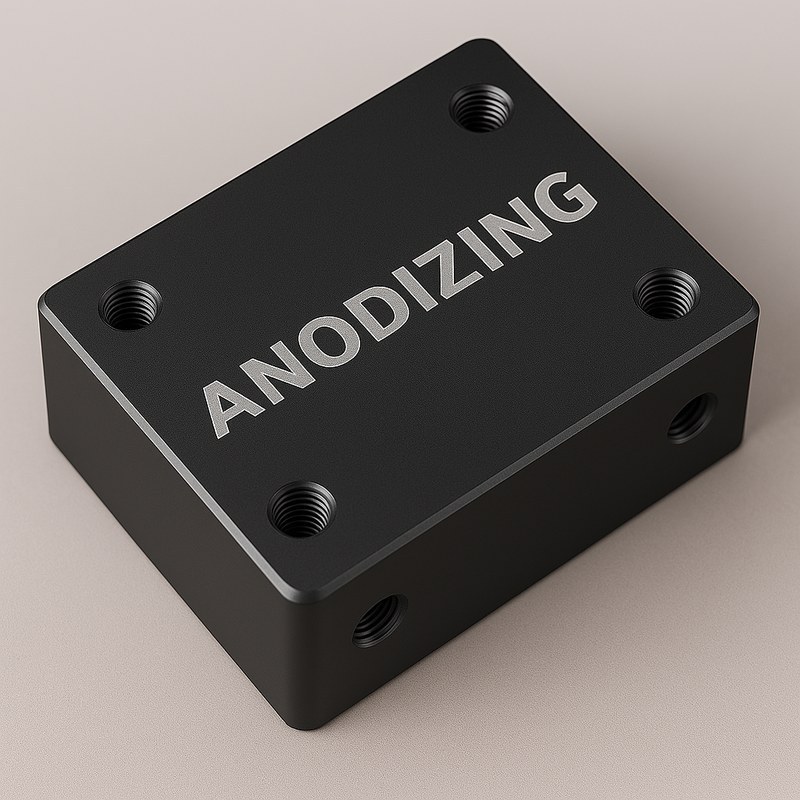
Anodized 6061 aluminum parts are the most common CNC output for enclosures, brackets, and housings.
7075-T6: High-Strength Performance Grade
When your part carries real structural load and weight is critical, 7075-T6 delivers roughly 85% higher tensile strength than 6061-T6 (572 MPa vs 310 MPa). It is the standard choice for aerospace brackets, robotics arms, drone frames, tooling plates, and high-load mechanical assemblies.
However, 7075 asks for trade-offs:
- Corrosion: the zinc-copper composition is more susceptible to corrosion and stress-corrosion cracking — anodizing or coating is usually required.
- Weldability: generally considered non-weldable for structural applications due to hot cracking.
- Machining: harder (150 HB), which can add 5–15% cycle time on long runs and slightly increase tool wear.
- Cost: material typically costs 1.8–2.2× more than 6061.
A good rule of thumb: start with 6061 and upgrade to 7075 only when stress analysis or fatigue requirements justify the premium.
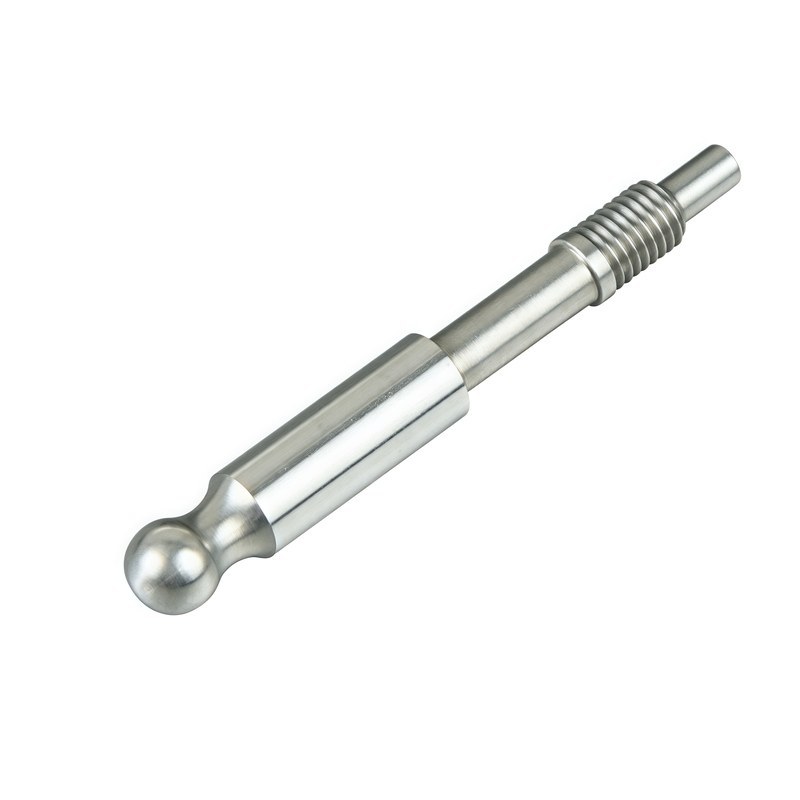
High-strength turned and milled parts often specify 7075-T6 when load capacity matters more than material cost.
Other Alloys Worth Knowing
- 6063: excellent for extrusions and cosmetic architectural profiles with a smooth anodized surface; slightly softer than 6061.
- 2024-T4: high strength-to-weight for aerospace skins and fittings; poorer corrosion resistance, often clad or coated.
- 5083 / 5052: outstanding corrosion resistance and weldability for marine and pressure applications.
- 6082: European standard structural grade, comparable to 6061 with slightly higher strength in thicker sections.
If your project spans both machined and extruded components, keep the alloy consistent where possible to simplify sourcing and finishing.
Anodizing and Finishing Considerations
Aluminum's finishing response is often the deciding factor in material selection. 6061 anodizes consistently — clear, black, and colored Type II finishes look bright and uniform. 7075 can also be anodized, but its higher alloy content can produce slightly darker or less uniform tones, and hard anodizing (Type III) is commonly used to protect it.
When parts must match in color across batches, or will be visible on a product's exterior, 6061 is the more forgiving choice. Always define color, coating thickness, and masking areas on the drawing before quoting.
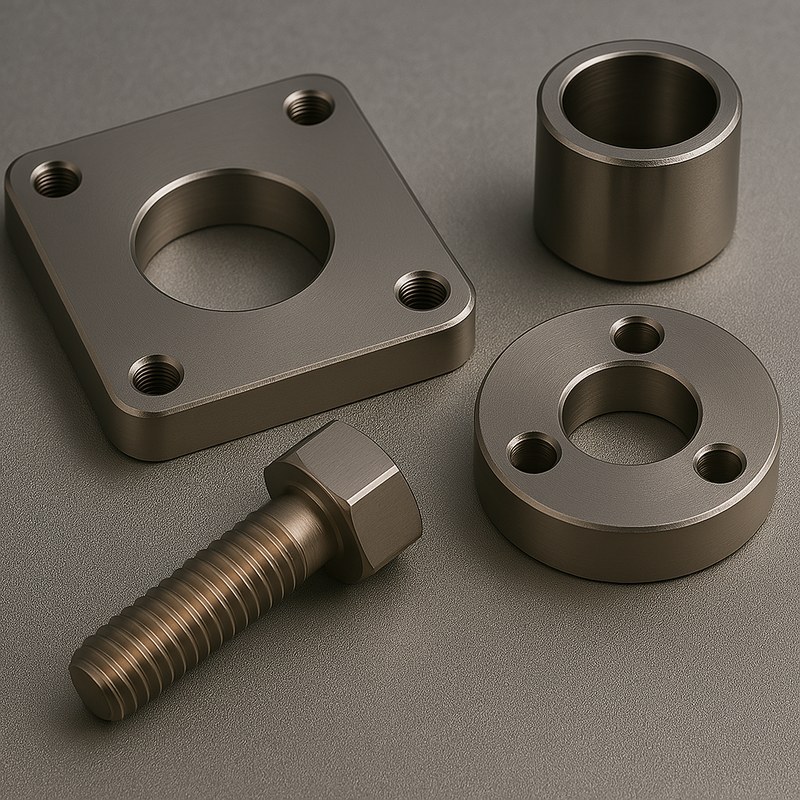
Chemical conversion and plating options expand the design possibilities for machined aluminum parts.
How SOMI Custom Parts Can Help
Selecting an alloy is a team decision. At SOMI Custom Parts, our engineers review your drawing, load requirements, and finish specifications to recommend the most cost-effective material — before you commit to a design freeze.
- CNC machining of 6061, 7075, 6063, and other aluminum alloys
- Surface finishing including anodizing, electroplating, and powder coating
- Material certificates and traceability for regulated industries
- DFM feedback on alloy choice, tolerances, and finishing trade-offs
Send us your design and target application — request a quote and we will confirm the right alloy within your RFQ response.
From alloy selection to finished surface, SOMI Custom Parts manages the full CNC aluminum workflow.
Frequently Asked Questions
Is 7075 aluminum always better than 6061?
No. 7075 is stronger but also more expensive, harder to weld, and more corrosion-prone. For most parts, 6061-T6 provides sufficient strength at lower cost with better finishing results. Choose 7075 only when load, stiffness, or fatigue requirements demand it.
Which aluminum alloy anodizes best?
6xxx alloys — especially 6061 — anodize most consistently with bright, uniform results. 7075 can be anodized but may appear slightly darker; hard anodizing (Type III) is commonly used to protect it.
Can 7075 aluminum be welded?
7075 is generally considered non-weldable for structural applications because its high zinc and copper content causes hot cracking. If welded assemblies are required, 6061 is the practical choice.
What does the -T6 temper mean?
T6 means the alloy was solution heat-treated, quenched, and artificially aged to reach peak strength. Most CNC aluminum is supplied in the T6 condition.
Conclusion
There is no single "best" aluminum alloy — only the best alloy for your specific design. 6061-T6 covers the vast majority of CNC projects with an ideal balance of cost, machinability, finish, and performance. 7075-T6 earns its premium when strength-to-weight is critical. Knowing the differences between series, tempers, and finishing behavior will save you money, avoid failures, and keep your project on schedule.
If you are ready to machine a new aluminum part or need a second opinion on alloy selection, contact SOMI Custom Parts — we will help you specify the right material from the start.