Precision Engineered: The Ultimate Guide to Custom Machined Metal Parts for Modern Industries
- Share
- Issue Time
- Jan 24,2026
Summary
SOMI is a trusted custom machined metal parts supplier offering precision CNC machining, rapid prototyping & production for aerospace, medical, automotive & industrial applications.
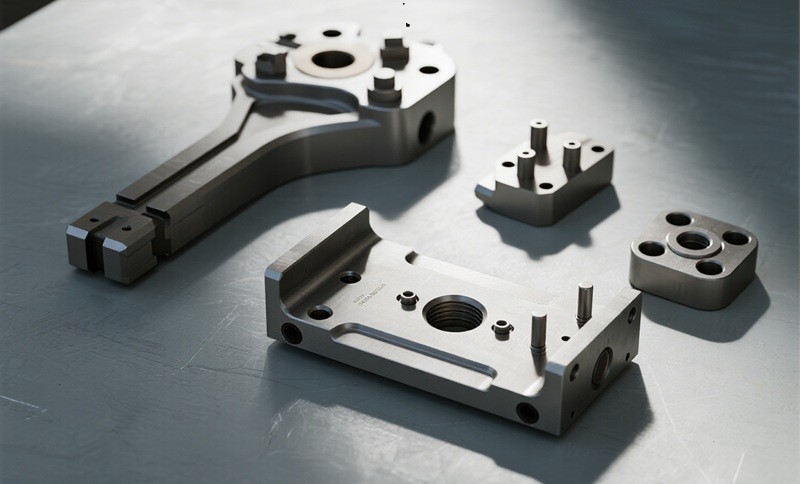
In a world where precision, durability, and performance are paramount, off-the-shelf components often fall short. For industries ranging from aerospace to medical technology, custom machined metal parts are not a luxury—they are a necessity. These components are engineered and manufactured to exact specifications, ensuring perfect fit, optimal function, and unparalleled reliability. This comprehensive guide will explore the critical aspects of custom machined metal parts, from the initial design concept to the final delivered product.
What Exactly Are Custom Machined Metal Parts?
Custom machined parts are components created through subtractive manufacturing processes, where material is precisely removed from a solid block to achieve a specific design. Unlike standard or mass-produced parts, every feature—from dimensions and geometry to material selection and surface finish—is tailored to a unique application. The most common method for this is Computer Numerical Control (CNC) machining, a highly automated process that uses computer-guided tools to create parts with exceptional accuracy and repeatability. This allows for the production of everything from simple brackets and fasteners to highly complex, multi-faceted components for critical systems.
The Unmistakable Advantages of Choosing Custom Over Stock
While standard parts may seem more cost-effective upfront, their limitations can lead to design compromises, poor performance, and costly replacements. Custom fabrication offers distinct, long-term advantages.
- Perfect Fit and Function: Custom parts are designed to your exact specifications, eliminating the need for workarounds or modifications during assembly. This ensures seamless integration and optimal performance within the larger system.
- Material Freedom: Custom machining allows for the selection of specific metals and alloys that possess the ideal properties for your application, such as high strength-to-weight ratio, corrosion resistance, or heat tolerance. You are not limited to the standard materials available for off-the-shelf parts.
- Enhanced Durability and Reliability: By choosing the ideal material and optimizing the design for specific stresses and environmental conditions, custom parts offer superior durability and a longer operational lifespan.
- Design Complexity and Innovation: CNC machining can produce intricate geometries that are impossible to create with other methods. This freedom empowers engineers to innovate and design more efficient and compact products.
Key Materials in Custom Metal Machining: A Comparison
Selecting the right material is one of the most critical decisions in the custom machining process. The choice impacts cost, durability, weight, and performance. Each metal has unique properties suited for different applications.
| Material | Key Properties | Common Applications |
|---|---|---|
| Aluminum (e.g., 6061, 7075) | Lightweight, excellent strength-to-weight ratio, high machinability, corrosion-resistant. | Aerospace components, automotive parts, electronic enclosures, consumer products. |
| Stainless Steel (e.g., 304, 316) | High strength, excellent corrosion and chemical resistance, durable, can be polished to a high finish. | Medical devices, food processing equipment, marine hardware, fasteners. |
| Carbon Steel (e.g., 1018) | Strong, durable, cost-effective, but requires a protective finish to prevent rust. | Machinery components, structural parts, fixtures. |
| Titanium | Extremely high strength-to-weight ratio, exceptional corrosion resistance, biocompatible. | Aerospace and defense components, high-performance racing parts, medical implants. |
| Brass | Good machinability, low friction, excellent electrical conductivity, corrosion-resistant. | Electrical connectors, plumbing fittings, decorative hardware. |
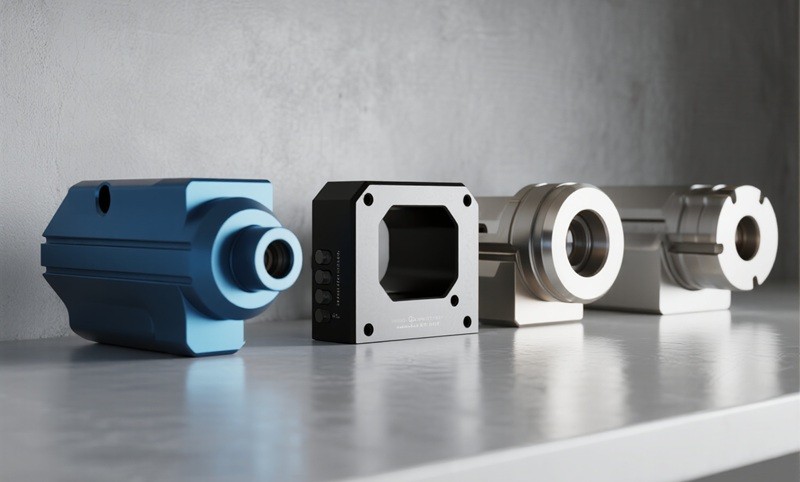
Understanding the Core Machining Processes
CNC machining encompasses several different techniques. The two most fundamental are milling and turning, often used in combination to create complex parts.
CNC Milling
A rotating, multi-point cutting tool moves along multiple axes to remove material from a stationary workpiece. CNC milling is ideal for creating flat surfaces, pockets, and complex 3D contours. 5-axis milling machines offer even greater flexibility, allowing the cutting tool and workpiece to move simultaneously for highly intricate designs.
CNC Turning
The workpiece rotates at high speed while a stationary cutting tool removes material. Turning is used to create cylindrical parts with features like grooves, tapers, and threads. Lathes are the primary machines used for this process.
From Blueprint to Reality: The Custom Machining Workflow
The journey from an idea to a finished metal part follows a structured and precise process to ensure quality and accuracy at every stage.
- Consultation & Design: The process begins with your concept, often a 3D CAD (Computer-Aided Design) model. The manufacturing partner's engineers will review the design for manufacturability, suggesting optimizations to improve efficiency and reduce costs.
- Prototyping: Before full production, a prototype is often created to test the part's form, fit, and function. This allows for design validation and an opportunity to make adjustments.
- Production: Once the design is approved, the CNC machines are programmed, and production begins. Automated processes ensure each part is identical and adheres to the specified tolerances.
- Quality Control: Throughout and after production, parts undergo rigorous quality checks to ensure they meet all geometric and dimensional specifications.
- Finishing & Delivery: Parts can undergo various surface treatments before being carefully packaged and delivered.
Critical Design Considerations for Optimal Performance
To ensure your custom part is both functional and manufacturable, consider these design principles:
- Define Tolerances: Specify only the critical tolerances. Overly tight tolerances on non-essential features can significantly increase machining time and cost.
- Wall Thickness: Maintain a uniform wall thickness where possible. This prevents warping and ensures structural integrity. Thin walls can be difficult and costly to machine.
- Hole Placement: Position holes away from the edges and bends of a part to avoid material deformation during manufacturing.
- Bend Radii: For parts made from sheet metal that is then machined, a generous and consistent bend radius helps prevent fractures and material stress.
Surface Finishes and Post-Processing Treatments
The function and appearance of a machined part can be greatly enhanced with surface treatments. These finishes can improve corrosion resistance, wear resistance, hardness, and aesthetics.
- Anodizing (for Aluminum): Creates a hard, durable, corrosion-resistant oxide layer. Can be dyed in various colors.
- Powder Coating: A durable and protective paint finish applied as a dry powder and cured with heat.
- Passivation (for Stainless Steel): A chemical process that removes free iron from the surface, enhancing the natural corrosion resistance of stainless steel.
- Electroplating: Involves coating the part with another metal, such as zinc or nickel, to improve corrosion resistance or appearance.
Industries Transformed by Custom Machined Components
The need for precision-engineered parts spans nearly every sector of the modern economy.
- Aerospace & Defense: For flight-critical components where failure is not an option, from fuselage brackets to engine parts.
- Medical: In surgical instruments, orthopedic implants, and diagnostic equipment where biocompatibility and precision are essential.
- Automotive: For high-performance engine components, custom suspension parts, and prototypes for new vehicle designs.
- Electronics: To create custom enclosures, heat sinks, and connectors that protect and optimize electronic systems.
- Robotics & Automation: For structural components, grippers, and custom mounts that require high strength and low weight.
Quality Assurance: Ensuring Precision and Reliability
Reputable manufacturing partners adhere to strict quality control protocols. This involves using advanced metrology equipment like Coordinate Measuring Machines (CMMs) to verify that every dimension on the finished part matches the original CAD model. Material certifications and adherence to industry standards (such as ISO 9001) are also key indicators of a commitment to quality.
How to Select the Right Custom Machining Partner
Choosing the right partner is as crucial as the design itself. Look for a manufacturer with:
- Proven Expertise: A strong track record in your industry and with the materials you require.
- Advanced Technology: Modern, well-maintained CNC machines and quality control equipment.
- Engineering Support: The ability to provide design-for-manufacturability feedback.
- Scalable Production: Capabilities that range from rapid prototyping to low or high-volume production runs.
- Transparent Communication: A willingness to collaborate closely throughout the entire process, from consultation to delivery.
By leveraging the power of custom machining, you can move beyond the limitations of standard parts and create solutions that are truly engineered for excellence.