Precision CNC Machining of Engineering Plastics: POM, Nylon, PEEK, and PTFE
- Share
- publisher
- SOMI Custom Parts
- Issue Time
- Jul 20,2026
Summary
A comprehensive guide to CNC machining of engineering plastics — POM (Delrin), Nylon, PEEK, and PTFE. Learn material properties, cutting parameters, design tips, tolerances, and industry applications for precision plastic parts.
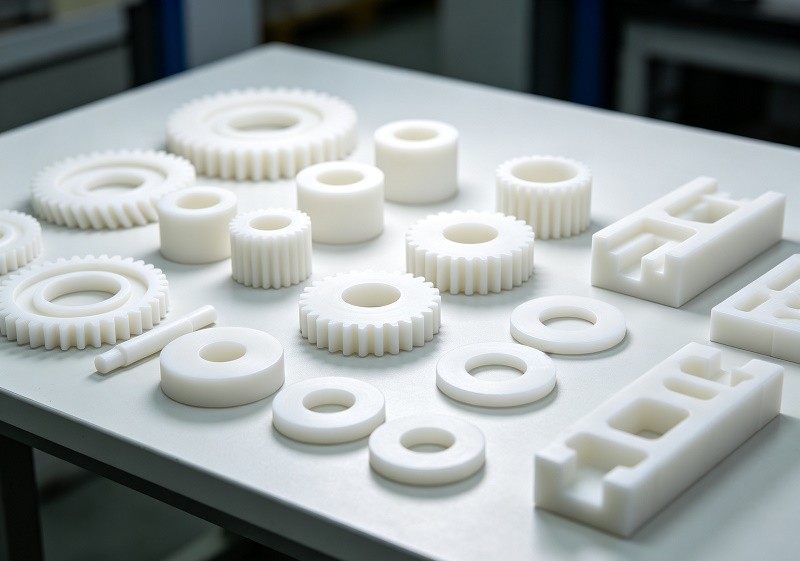
In the world of precision manufacturing, metals have long dominated the conversation. But a quiet revolution is underway — engineering plastics such as POM (polyoxymethylene, also known as Delrin), Nylon (polyamide), PEEK (polyether ether ketone), and PTFE (polytetrafluoroethylene) are increasingly replacing metal components across industries ranging from medical devices to aerospace and semiconductor equipment. According to industry data, the global engineering plastics market was valued at over $105 billion in 2025 and is projected to exceed $160 billion by 2032, driven by demand for lightweight, corrosion-resistant, and cost-effective alternatives to metal. At SOMI Custom Parts, we have over 15 years of experience in precision CNC machining of engineering plastics. Our facility is equipped with advanced multi-axis CNC machining centers and Swiss-type lathes capable of holding tolerances as tight as ±0.01 mm (±0.0004 in) on complex plastic geometries. This guide covers everything you need to know about CNC machining of POM, Nylon, PEEK, and PTFE — from material properties and machining parameters to industry applications and design considerations. Engineering plastics are a group of polymer materials that offer superior mechanical, thermal, and chemical properties compared to standard commodity plastics like ABS or polypropylene. They are designed to withstand demanding operating conditions and are frequently specified as direct replacements for metals in structural and mechanical applications. Each of these materials brings a unique combination of properties to precision CNC machined parts, and selecting the right one for your project requires careful evaluation of operating temperature, load conditions, chemical exposure, and cost constraints. Choosing CNC machined engineering plastics over metal or injection-molded alternatives offers several compelling advantages: POM is widely regarded as one of the most machinable engineering plastics, earning the nickname "the aluminum of plastics" among experienced machinists. Its high crystallinity and molecular structure give it excellent dimensional stability, low moisture absorption, and exceptional stiffness. Recommended cutting parameters for POM include cutting speeds of 150–250 m/min, feed rates of 0.1–0.2 mm/tooth, and depths of cut between 1–3 mm. However, POM is prone to internal stress that can cause warpage after material removal. At SOMI Custom Parts, we perform stress-relief annealing on POM components before and during machining to ensure tight tolerances are maintained. Typical applications include precision gears for robotic end-effectors, conveyor guide rails, and sensor housings in industrial automation. One crucial design consideration: POM has a coefficient of thermal expansion approximately 10 times higher than aluminum. This means parts machined to tight tolerances at room temperature may expand and bind in elevated-temperature environments. We recommend designing in 0.1–0.2 mm clearance for press-fit assemblies operating above 60 °C. Nylon is one of the most versatile engineering plastics, valued for its high mechanical strength, excellent wear resistance, and good impact toughness. Nylon 6 and Nylon 66 are the two most common grades used in CNC machining. PA66 offers higher tensile strength and better heat resistance than PA6, making it the preferred choice for structural components operating under sustained load. Recommended cutting parameters for Nylon: cutting speeds of 120–200 m/min, feed rates of 0.15–0.25 mm/tooth, and depths of cut of 1–4 mm. Nylon absorbs moisture from the environment, which can cause dimensional changes of up to 0.5–1.0% depending on humidity. To counteract this, we pre-condition nylon billets in climate-controlled storage and machine components with appropriate moisture compensation allowances. Common Nylon CNC machined parts include gears for motion control systems, bushings for agricultural machinery, wear strips for conveyor systems, and electrical insulators for power distribution equipment. For applications requiring FDA compliance, we offer food-grade Nylon variants. Design Tip: When designing Nylon parts with threaded holes, specify thread depths at least 1.5 times the nominal diameter to compensate for Nylon's lower thread shear strength compared to metals. PEEK (polyether ether ketone) is a high-performance semi-crystalline thermoplastic that offers an exceptional combination of mechanical strength, thermal stability, chemical resistance, and biocompatibility. With a continuous service temperature of 260 °C (500 °F) and tensile strength comparable to aluminum alloys, PEEK is the material of choice for the most demanding applications in aerospace, medical, and semiconductor industries. Machining PEEK presents unique challenges. Its high melting point (approx. 343 °C) and low thermal conductivity mean heat builds up rapidly in the cutting zone. Without proper thermal management, the material can micro-crack or undergo stress deformation. Our approach at SOMI uses diamond-tipped tooling, precise coolant application, and multi-stage stress-relief annealing to achieve tolerances of ±0.02 mm on even the most complex PEEK geometries. Recommended cutting parameters: cutting speeds of 80–150 m/min, feed rates of 0.08–0.15 mm/tooth, and depths of cut of 0.5–2 mm. The cost of PEEK raw material is significantly higher than other engineering plastics — typically $30–$50 per kilogram for medical-grade billet — but the performance benefits justify the investment in mission-critical applications. PEEK is widely used for medical implants (spinal cages, bone screws), aerospace structural brackets, semiconductor wafer handling components, and high-pressure sealing rings in oil and gas equipment. It is ISO 10993 and USP Class VI certified for medical implant applications. PTFE, commonly known by the brand name Teflon, is a unique engineering plastic prized for its ultra-low coefficient of friction (0.04–0.10), complete chemical inertness, and excellent dielectric properties. It is the go-to material for seals, gaskets, bearings, and electrical insulators in aggressive chemical environments. However, PTFE is notoriously difficult to machine to tight tolerances. Its high coefficient of thermal expansion — approximately 10–15 times that of steel — means that a part machined to specification at 20 °C may be significantly oversized at 60 °C. Additionally, PTFE's softness and low stiffness make it prone to deformation under clamping pressure and tool cutting forces. At SOMI, we specialize in PTFE machining using dedicated sharp carbide tooling in climate-controlled production cells. Recommended parameters include cutting speeds of 100–180 m/min, feed rates of 0.1–0.2 mm/tooth, and depths of cut of 1–3 mm. For PTFE parts requiring tight tolerances, we typically machine to size at the operating temperature range specified by the customer, or we design-in thermal compensation to ensure functional fit at the intended service temperature. Practical Tip: PTFE parts should be designed with wall thicknesses greater than 1.5 mm to prevent distortion during machining. For thin-wall applications, consider filled PTFE grades (glass-filled, carbon-filled) which offer improved dimensional stability. With over 15 years of hands-on experience in precision CNC machining of engineering plastics, SOMI Custom Parts has the expertise, equipment, and quality systems to deliver consistent, high-quality plastic components. Our capabilities include: Whether you need a single functional prototype for design validation or a production run of thousands, our engineering team works with you from material selection through final inspection. Submit your CAD drawings today for a free DFM review and competitive quote within 24 hours. POM offers better dimensional stability, lower moisture absorption, and easier machinability, making it ideal for precision components requiring tight tolerances. Nylon provides higher impact strength and better wear resistance but absorbs moisture, which can cause dimensional changes. Choose POM for precision gears and bushings in dry environments; choose Nylon for high-impact and abrasive-wear applications. Yes. PEEK is widely used in medical implants (spinal cages, cranial plates, dental abutments) and surgical instruments. Medical-grade PEEK is ISO 10993 and USP Class VI certified for biocompatibility. CNC machining of medical PEEK requires validated processes, cleanroom-compatible production environments, and full material traceability — all of which we provide at SOMI Custom Parts. PTFE's high thermal expansion and softness require specialized techniques: use sharp carbide tooling with high positive rake angles, minimize clamping force with soft jaws or vacuum fixturing, employ air blast cooling instead of liquid coolants, and machine in a temperature-controlled environment. For parts with tight tolerances, thermal compensation factors must be applied to the tool path. For production volumes under 1,000 pieces, CNC machining is generally more cost-effective because it has zero tooling costs and offers faster turnaround. Injection molding becomes economical beyond 5,000 identical units where the upfront mold cost is amortized. CNC machining also offers greater design flexibility for iterative development and complex geometries. Standard tolerances for CNC machined engineering plastics range from ±0.05 mm to ±0.1 mm. With careful process control, stress-relief annealing, and temperature management, tolerances as tight as ±0.01 mm can be achieved on dimensionally stable materials like POM and PEEK. Materials with high thermal expansion (PTFE, Nylon) typically require looser tolerances of ±0.1 mm unless specific temperature compensation is applied. Engineering plastics have earned their place alongside metals in precision manufacturing. POM, Nylon, PEEK, and PTFE each offer unique advantages — from POM's machinability and dimensional stability to PEEK's extreme performance under high temperature and chemical attack, PTFE's unmatched chemical inertness, and Nylon's toughness and wear resistance. Choosing the right material and machining partner is critical to achieving the performance, cost, and quality targets of your project. At SOMI Custom Parts, we combine advanced CNC machining technology with deep material science expertise to deliver precision plastic components that meet the most demanding requirements. Contact us today to discuss your next engineering plastic project, or browse our blog for more technical guides and industry insights.Introduction: Why Engineering Plastics Matter in Precision Manufacturing
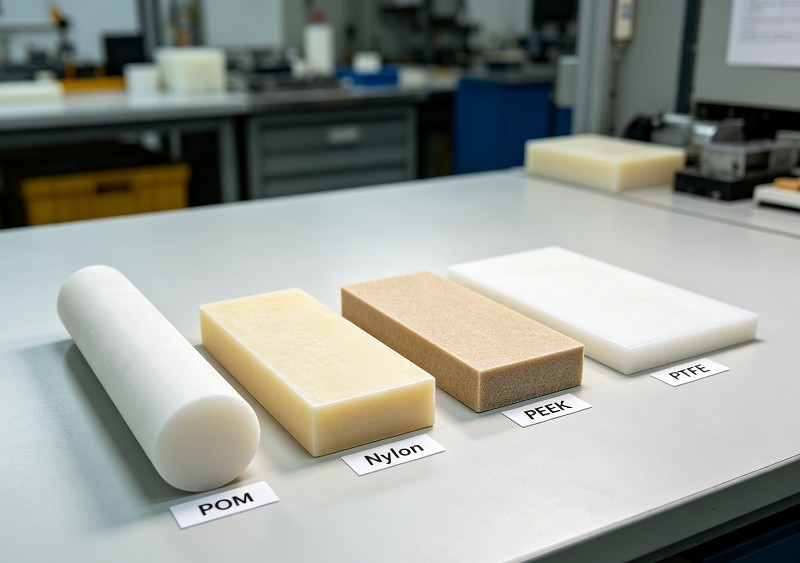
What Are Engineering Plastics? POM, Nylon, PEEK, and PTFE Explained
Material Key Properties Max Service Temp Typical Applications POM (Delrin / Acetal) High stiffness, low friction, excellent dimensional stability, easy to machine 100 °C (212 °F) Gears, bearings, bushings, conveyor components, precision spacers Nylon (PA6 / PA66) High strength, excellent wear resistance, good impact toughness, low friction 120 °C (248 °F) Mechanical gears, chain sprockets, bushings, electrical insulators PEEK Exceptional strength-to-weight, biocompatible, resists chemicals and high heat 260 °C (500 °F) Medical implants, aerospace components, semiconductor parts, high-load bearings PTFE (Teflon) Ultra-low friction, chemically inert, excellent dielectric properties, non-stick 260 °C (500 °F) Seals, gaskets, bearings, chemical processing equipment, food-grade parts
Key Benefits of CNC Machining Engineering Plastics
CNC Machining POM (Delrin / Acetal) — The "Aluminum of Plastics"
CNC Machining Nylon (PA6 / PA66) — Tough and Wear-Resistant
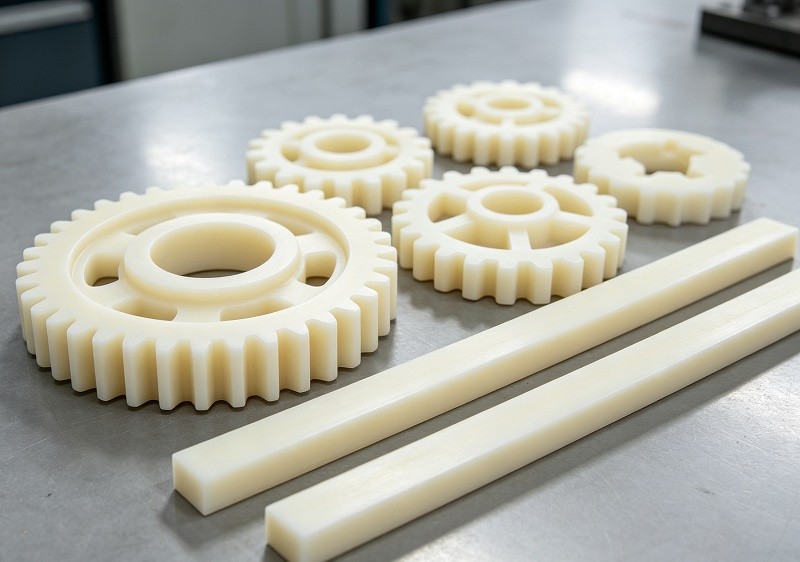
CNC Machining PEEK — High-Performance Polymer for Critical Applications
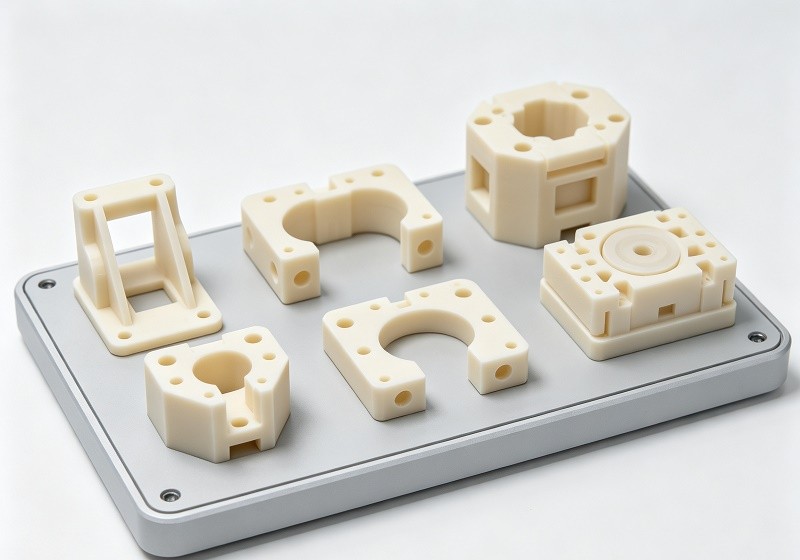
CNC Machining PTFE (Teflon) — Managing Thermal Expansion Challenges
How SOMI Custom Parts Can Help with Your Engineering Plastic Project
Frequently Asked Questions
What is the difference between POM and Nylon for CNC machining?
Can PEEK be CNC machined to medical-grade standards?
How do you prevent PTFE parts from warping during machining?
Is CNC machining of plastics better than injection molding?
What tolerances can be achieved for CNC machined plastic parts?
Conclusion