Hybrid Manufacturing: Combining 3D Printing and CNC Machining for Superior Custom Parts
- Share
- publisher
- SOMI Custom Parts
- Issue Time
- Jul 15,2026
Summary
Discover how hybrid manufacturing combines 3D printing and CNC machining to deliver superior custom parts with complex geometries, tight tolerances, and reduced lead times. Learn about applications in aerospace, medical devices, and tooling.
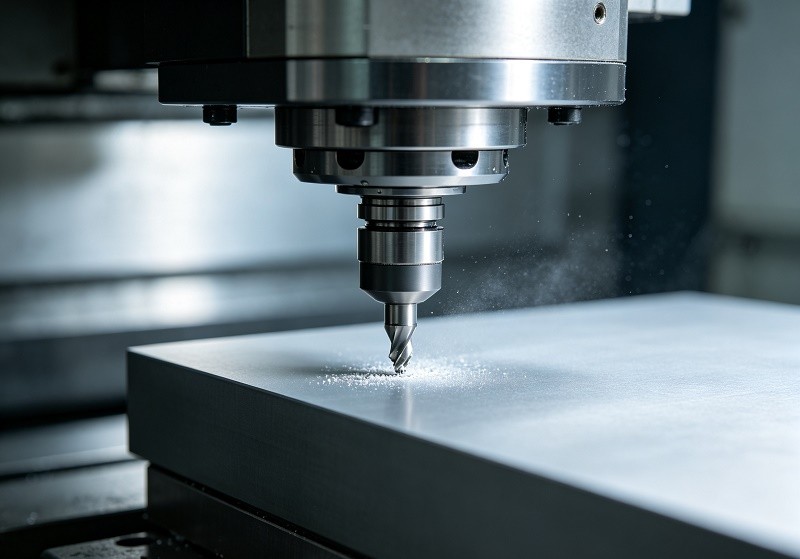
For decades, manufacturers faced a binary choice: build parts additively with 3D printing for complex geometries, or machine them subtractively with CNC for precision and surface quality. In 2026, that choice is no longer necessary. Hybrid manufacturing — the strategic integration of 3D printing and CNC machining within a unified workflow — is redefining what is possible in precision custom parts production. According to industry analysis from All3DP Pro (November 2025), companies leveraging hybrid approaches have reduced lead times from 10 weeks to as little as 72 hours, while cutting material waste by up to 97%. The global hybrid manufacturing market reached an estimated $3.1 billion in 2025 and continues to grow at a compound annual growth rate (CAGR) of 12.3% through 2033, according to market research from Coherent Market Insights. At SOMI Custom Parts, we have invested in hybrid manufacturing capabilities to deliver superior custom parts that combine the design freedom of additive manufacturing with the uncompromising precision of CNC machining. Hybrid manufacturing refers to the integration of additive manufacturing (3D printing) and subtractive manufacturing (CNC machining) within a single production workflow or unified machine tool. The core principle is elegantly simple: let each technology do what it does best. Additive manufacturing (3D printing) builds parts layer by layer from digital CAD models. It excels at creating intricate internal geometries, lattice structures, and complex organic shapes that would be impossible with traditional machining. Common metal 3D printing technologies include Direct Metal Laser Sintering (DMLS), Selective Laser Melting (SLM), and Directed Energy Deposition (DED). Subtractive manufacturing (CNC machining) removes material from a solid block with exceptional precision. Modern 5-axis CNC machining centers can achieve tolerances of ±0.005mm and surface finishes as smooth as Ra 0.8 μm — critical for mating surfaces, sealing faces, and bearing journals. In a hybrid workflow, the 3D printer creates a near-net-shape preform, typically leaving 0.3–0.5mm of excess material on critical surfaces. The part is then transferred to a CNC machine (or the same machine switches heads) for precision finishing of all functional features. The convergence of additive and subtractive processes delivers transformative advantages across multiple dimensions of production: Hybrid manufacturing enables the creation of internal cavities, conformal cooling channels, and complex lattice structures that are fully machined before being sealed inside the part — something impossible with either technology alone. This opens new design possibilities for injection molds, heat exchangers, and aerospace components. By eliminating the need to move parts between different machines and suppliers, hybrid workflows compress production timelines dramatically. Sulzer, a Swiss manufacturer of critical pumps for oil and gas, reduced delivery times from 25 weeks to under 1 week by implementing DMG Mori Lasertec 65 DED/CNC hybrid machines with Siemens NX CAD/CAM software. Traditional CNC machining of aerospace components can waste up to 90% of expensive raw materials like titanium and Inconel. Hybrid manufacturing achieves 85–95% material utilization by printing only what is needed near-net-shape, then machining away the small excess for final precision. For a 5kg titanium aerospace bracket, this means buying 5.5kg of material instead of a 50kg billet. While 3D-printed metal parts typically have surface roughness of Ra 10 μm or higher due to the layer-by-layer process, CNC finishing brings critical surfaces down to Ra 0.8 μm or better. This eliminates stress concentration points where micro-notches from the printing process could initiate fatigue cracks under cyclic loading. Two primary metal additive technologies dominate the hybrid manufacturing landscape: DED systems use a laser or electron beam to melt metal powder or wire as it is deposited through a nozzle onto the build surface. The same machine then swaps the deposition head for a milling spindle to finish the surface. DED is ideal for large parts, repair applications, and adding features to existing components. Meltio's laser-wire DED technology, integrated into Haas CNC machines, is a leading example for defense and aerospace applications. PBF (including DMLS and SLM) uses a laser to selectively melt metal powder in a powder bed, building parts layer by layer with exceptional detail resolution. Parts are then post-processed on CNC machines for critical surface finishing. PBF is preferred for smaller, highly complex parts such as medical implants and turbine components. Aerospace manufacturers are leading adopters of hybrid manufacturing. In a case study from AFI Parts, an integrally bladed rotor (blisk) suffering from foreign object damage — traditionally requiring complete replacement at hundreds of thousands of dollars — was repaired using hybrid DED technology. The process involved milling away the damaged blade tip, depositing compatible titanium alloy, and 5-axis simultaneous milling to restore the original airfoil profile within ±0.015mm. Additionally, the University of Sheffield AMRC demonstrated that hybrid manufacturing of aerospace actuator components reduced costs by 23% and improved the buy-to-fly ratio from 31:1 to 2.5:1. Hybrid manufacturing enables the economical production of custom, batch-of-one medical implants. 3D printing creates porous lattice structures that promote bone osseointegration, while CNC machining ensures the precise mating surfaces required for joint articulation — achieving tolerances critical for hip replacement stems and spinal implants. Toolmakers use hybrid processes to create molds with conformal cooling channels — complex curved coolant paths that follow the mold cavity contour. These channels reduce injection molding cycle times by up to 30% while minimizing part warpage and improving dimensional consistency. At SOMI Custom Parts, we understand that choosing between 3D printing and CNC machining should not limit your design potential. Our facility combines advanced metal 3D printing capabilities with precision 5-axis CNC machining centers, allowing us to offer true hybrid manufacturing solutions under one roof. Whether you need rapid prototyping with 3D-printed near-net shapes followed by CNC finishing, or production-scale hybrid runs for complex aerospace or medical components, our engineering team works closely with you from initial inquiry through final delivery. We maintain ISO 9001:2015 certification and can support AS9100D aerospace quality standards for hybrid-manufactured parts. Explore our CNC machining capabilities and full range of manufacturing services to see how hybrid manufacturing can accelerate your next project. Contact our team for a free design review and feasibility assessment. Additive manufacturing (3D printing) builds parts layer by layer. Hybrid manufacturing combines additive with subtractive (CNC machining) processes, either in a single machine or sequential workflow, to achieve both complex geometries and tight tolerances that neither technology can achieve alone. Hybrid manufacturing works with most engineering metals including titanium alloys (Ti-6Al-4V), stainless steels (316L, 17-4PH), aluminum alloys, Inconel 718, Hastelloy, and tool steels. Engineering plastics such as PEEK, Ultem, and nylon can also be processed through hybrid workflows. In standard production environments with proper process control (Cpk > 1.33), hybrid-manufactured parts reliably achieve tolerances of ±0.005mm to ±0.01mm on CNC-finished surfaces, with surface finishes down to Ra 0.8 μm. Yes. Hybrid manufacturing is particularly cost-effective for low-to-medium volume production (10–500 parts) of complex geometries, especially when using expensive materials. The elimination of tooling costs and dramatic reduction in material waste make it competitive against traditional machining at these volumes. Lead times vary by complexity, but hybrid workflows typically reduce project timelines by 50–90% compared to traditional multi-supplier approaches. Simple hybrid parts can ship in 3–5 business days, while complex aerospace components may require 2–4 weeks. Hybrid manufacturing is not a futuristic concept — it is a present-day reality transforming how precision parts are designed and produced. By combining the design freedom of 3D printing with the precision and surface quality of CNC machining, hybrid workflows enable faster production, lower costs, better material utilization, and parts that were previously impossible to manufacture. As the global hybrid manufacturing market continues its rapid expansion — projected to reach $104.65 billion by 2032 in the broader augmented manufacturing space (including 3D printing and hybrid systems) — early adopters gain significant competitive advantage through shorter development cycles, reduced inventory, and enhanced design capabilities. Ready to explore how hybrid manufacturing can transform your next project? Submit your RFQ today or contact the SOMI team for a no-obligation consultation. Discover our full range of CNC machining services and advanced manufacturing capabilities at somicustomparts.com.Introduction: The Convergence of Additive and Subtractive Manufacturing
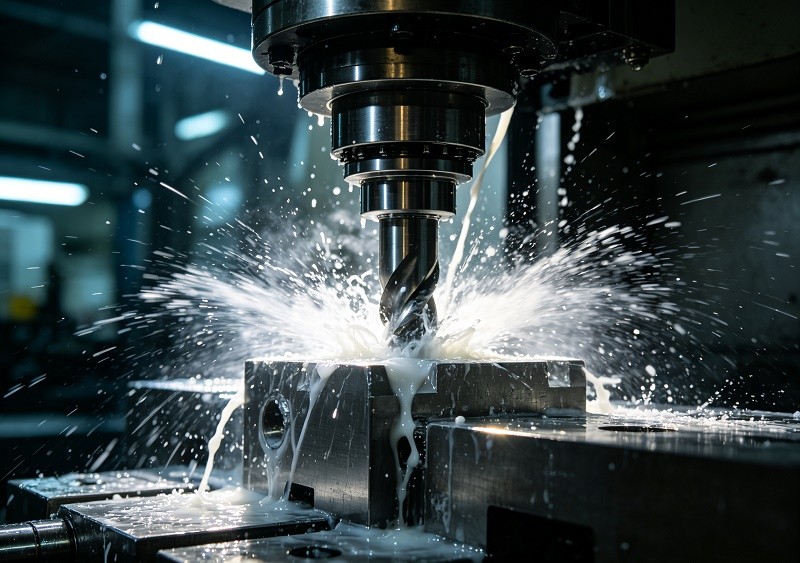
What Is Hybrid Manufacturing?
Key Benefits of Hybrid Manufacturing
Unmatched Geometric Freedom
Dramatic Lead Time Reduction
Material Efficiency and Cost Savings
Superior Surface Quality and Accuracy
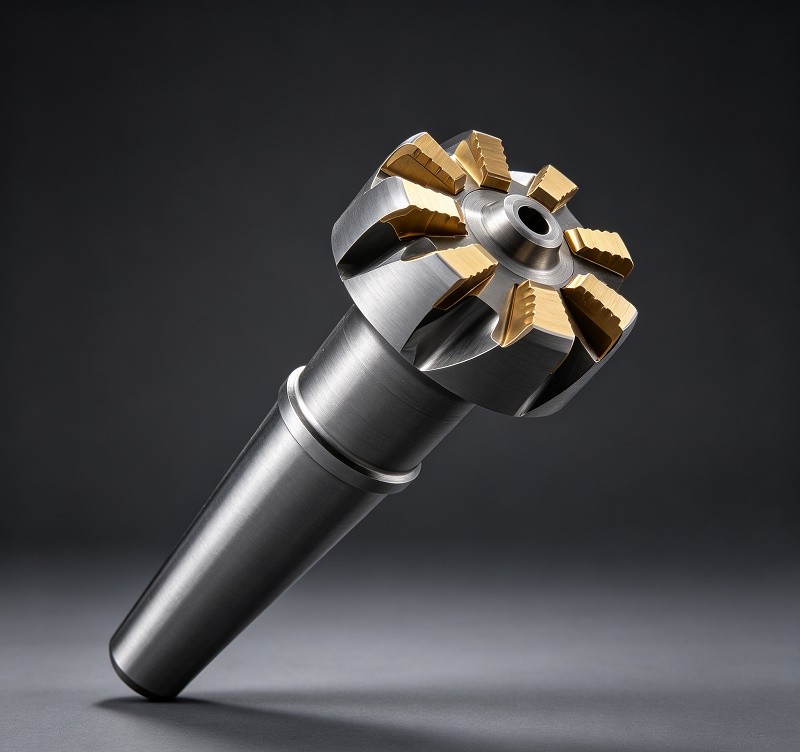
Hybrid Manufacturing Technologies: DED and PBF
Directed Energy Deposition (DED)
Powder Bed Fusion (PBF)
Real-World Applications Across Industries
Aerospace: Blisk Repair and Lightweight Structures
Medical Devices: Patient-Specific Implants
Injection Molding: Conformal Cooling Channels
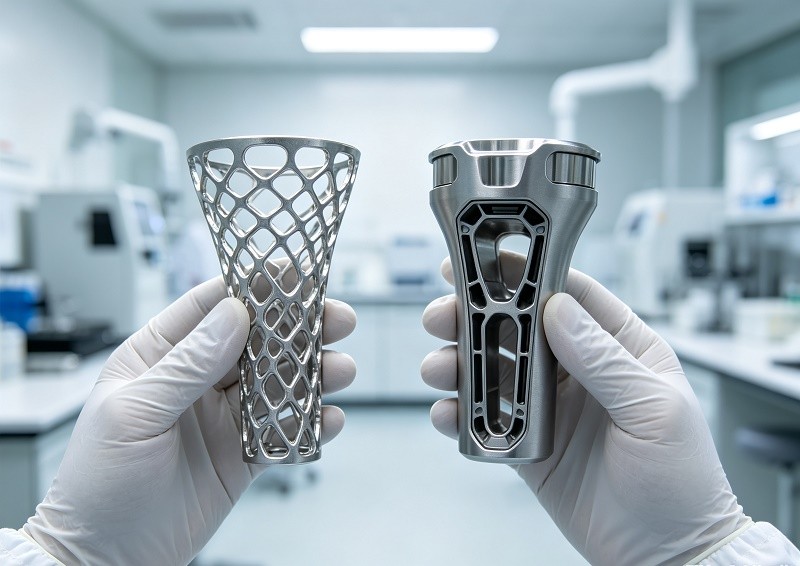
How SOMI Custom Parts Can Help
Frequently Asked Questions
What is the difference between hybrid manufacturing and additive manufacturing?
Which materials are compatible with hybrid manufacturing?
What tolerances can hybrid manufacturing achieve?
Is hybrid manufacturing cost-effective for low-volume production?
How long does a typical hybrid manufacturing project take?
Conclusion: The Future of Precision Manufacturing