How to Find a Reliable CNC Turning, Milling, and Drilling Part Supplier
- Share
- Issue Time
- Mar 25,2026
Summary
A complete guide to finding reliable CNC turning, milling, and drilling part suppliers. Learn to define your needs, evaluate supplier expertise, quality control, certifications, compare local vs international options, and build successful manufacturing partnerships.
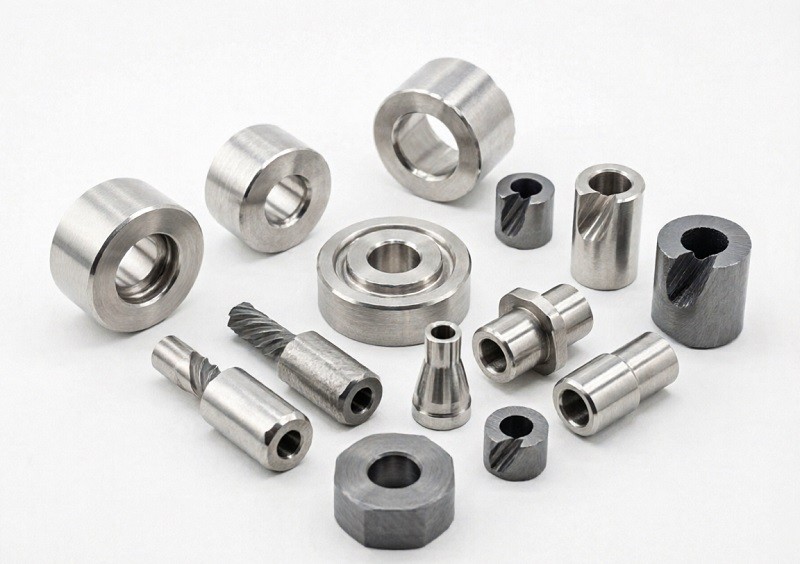
Choosing the right CNC Turning, Milling, and Drilling Part Supplier is a critical decision that directly impacts product quality, cost-effectiveness, and project timelines. As someone deeply involved in manufacturing, I understand that the wrong choice can lead to budget overruns, missed deadlines, or inconsistent part quality.
In today's global market, the landscape of CNC Turning, Milling, and Drilling Part Suppliers is vast, with options ranging from local shops to large-scale international manufacturers. My goal with this guide is to help you navigate this complexity, offering practical advice and data-driven insights to make an informed decision for your unique needs.
Understanding Your Needs for a CNC Turning, Milling, and Drilling Part Supplier
Before you can even begin to evaluate suppliers, you must first have a comprehensive understanding of your own project requirements. A clear, well-documented set of needs is the foundation of a successful partnership. It eliminates ambiguity, ensures accurate quoting, and sets clear expectations for quality and delivery from the outset. Without this internal clarity, you are essentially asking potential partners to guess, which often leads to costly errors and delays.
Defining Part Specifications and Volume
The most fundamental step is to meticulously define your part's specifications. This goes far beyond a simple sketch. Your technical documentation is the primary language you will use to communicate with a supplier.
- Detailed CAD Files: Always provide 3D CAD models in universal formats like STEP or IGES, supplemented by 2D technical drawings in PDF format. The 2D drawings are crucial for calling out specific details that are not always captured in the 3D model.
- Geometric Dimensioning and Tolerancing (GD&T): Utilize GD&T to define the acceptable limits of variation for the critical features of your part. This is an unambiguous, standardized language that explains the part's function and how features relate to one another, which is far more effective than simply listing +/- tolerances.
- Surface Finish Requirements: Specify the required surface roughness (Ra) for every surface. A mirror-like finish is significantly more expensive and time-consuming than a standard machined finish, so only specify high-end finishes where they are functionally necessary.
- Production Volume: Clearly outline your expected production volume. Is this a one-off prototype, a low-volume run of 10-100 units, or mass production in the thousands? Different suppliers specialize in different volumes. A rapid prototyping shop may not be cost-effective for a large run, while a mass-production facility may have high minimum order quantities (MOQs).
| Production Stage | Typical Volume | Key Consideration |
|---|---|---|
| Prototyping | 1-10 | Speed and design iteration flexibility are priorities over cost per part. |
| Low-Volume Production | 10-1,000 | Balancing cost, quality, and lead time. Good for market testing. |
| High-Volume Production | 1,000+ | Cost per part is critical. Requires a supplier with high automation and capacity. |
Assessing Project Timelines and Urgency
Your project timeline is a major factor in determining the right type of supplier. You must create a realistic schedule that accounts for every stage of the procurement process.
- Quoting and Supplier Selection: Allow adequate time to send out Requests for Quotation (RFQs) and evaluate the responses. Rushing this stage can lead to selecting an unsuitable partner.
- Tooling and Setup: If your part requires custom tooling or fixtures, this can add several weeks to the initial lead time.
- Production and Machining: This is the core manufacturing time.
- Post-Processing: Factor in time for any required finishing steps like anodizing, painting, or heat treatment.
- Quality Inspection: Both the supplier and your own team may need time to conduct inspections.
- Shipping and Logistics: This can range from one day for a local supplier to several weeks for an international one.
If your project has extreme urgency, you may need to partner with a supplier specializing in rapid prototyping or one located geographically close to you. Be prepared for this to come at a premium cost. Clearly communicating your deadlines upfront is essential; a good supplier will be transparent about whether they can meet your schedule.
Identifying Material and Technical Requirements for Your CNC Turning, Milling, and Drilling Parts
The material you choose and the technical complexity of your part will significantly narrow your pool of potential suppliers. Not every machine shop has the capability or experience to handle all materials or complex geometries.
Material Selection: Your material choice impacts the part's strength, weight, corrosion resistance, and cost. It also dictates the machining process.
- Metals: Aluminum (e.g., 6061, 7075) is popular for its excellent strength-to-weight ratio and machinability. Steels (stainless, carbon, alloy) offer higher strength and durability. Exotic metals like Titanium and Inconel are used for high-performance applications (e.g., aerospace) but are notoriously difficult and expensive to machine.
- Plastics: Materials like ABS, Polycarbonate (PC), Nylon, and PEEK are lightweight, often less expensive, and can be suitable for many applications. However, they have different machining properties and require specific expertise to avoid warping or melting.
Technical Complexity:
- 5-Axis Machining: If your part has complex curves or features on multiple faces, it may require a 5-axis CNC machine. Many smaller shops only have 3-axis capabilities. Verifying a supplier's equipment list is crucial.
- Post-Processing: Make a list of all required secondary operations. This can include heat treatment to increase hardness, anodizing for corrosion resistance and color, powder coating, or specialized plating. Ensure your potential supplier can handle these processes in-house or has a network of trusted partners to manage them.
A supplier with deep expertise in your chosen material will be able to advise on design for manufacturability (DFM) and optimize their process to produce higher-quality components.
Evaluating Potential CNC Turning, Milling, and Drilling Part Suppliers: Key Criteria
Once you have a firm grasp of your project's needs, you can begin the critical process of evaluating potential suppliers. This evaluation should be a systematic, objective process based on a set of key criteria that reflect your priorities. Moving beyond just the quoted price to assess the supplier's overall capability is what separates a transactional relationship from a true manufacturing partnership.
Experience and Technical Expertise
A supplier's experience is arguably the most important factor to consider. An experienced shop has likely encountered and solved a wide range of manufacturing challenges. They can offer valuable Design for Manufacturability (DFM) feedback that can improve your part's quality and reduce its cost.
Certifications and Quality Systems for CNC Turning, Milling, and Drilling
Certifications are a critical, third-party validation of a supplier's commitment to quality and process control. They indicate that the supplier has implemented and adheres to a robust quality management system (QMS).
- ISO 9001:2015: This is the international standard for a QMS. A supplier with ISO 9001 certification demonstrates that they have standardized processes for everything from quoting to final delivery, with a focus on customer satisfaction and continuous improvement. It is the foundational quality certification for manufacturing.
- AS9100: This standard is specific to the aerospace industry. It includes all the requirements of ISO 9001 but adds more stringent criteria related to safety, risk management, and product traceability, which are paramount in aerospace applications.
- ISO 13485: This is the equivalent standard for the medical device industry. It emphasizes risk management, process validation, and comprehensive documentation to ensure that parts are safe and effective for their intended medical use.
Asking for a supplier's certifications is a quick and effective way to filter for quality-conscious partners.
Equipment and Machine Capabilities
A supplier is only as good as the equipment they run. Their machine list directly determines their ability to hold tight tolerances, achieve fine finishes, and produce complex geometries. Don't be afraid to ask for a detailed equipment list.
- CNC Machines: Look for modern, well-maintained machines from reputable brands (e.g., Haas, Mazak, DMG Mori). Critically, note the type of machines they have.
- 3-Axis Milling: Suitable for simpler parts where all machining can be done from one direction or by manually flipping the part.
- 5-Axis Milling: Essential for parts with complex, organic shapes or features on multiple angled faces. It allows the tool to approach the part from five directions in a single setup, improving accuracy and efficiency.
- Turning Centers (Lathes): These are used for creating cylindrical parts. The presence of live tooling on a lathe (a combination turning/milling center) indicates a higher level of capability, as it allows for milling and drilling operations to be performed on the part without moving it to a separate machine.
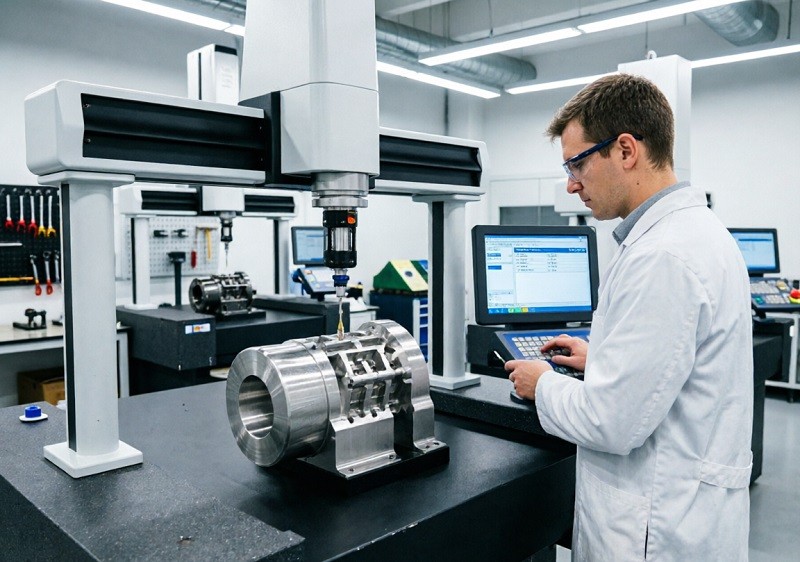
- Inspection Equipment: A serious supplier will have a dedicated, climate-controlled inspection room with equipment like a Coordinate Measuring Machine (CMM). A CMM uses a probe to measure the geometry of a part with extremely high precision, providing an objective verification that the part meets the drawing specifications.
Material Expertise in CNC Turning, Milling, and Drilling Operations
General machining experience is not enough; you need a supplier with specific, demonstrable expertise in the materials you plan to use. Machining different materials presents unique challenges.
For example, machining Titanium requires low cutting speeds, high feed rates, and constant coolant flow to manage heat and prevent work hardening. A shop that primarily works with aluminum may not have the right tooling, parameters, or experience to machine titanium effectively. Ask potential suppliers for case studies or examples of past projects they have completed using your specified material. A supplier with deep expertise in machining various alloys will be better equipped to produce high-quality CNC Milling Parts{:target='_blank'} from materials like Inconel or stainless steel.
Quality Control and Assurance Processes
Technical capability must be backed by a rigorous quality control system. You need to be confident that the supplier can not only make the first part correctly but can make every part correctly.
Inspection and Testing Protocols for CNC Turning, Milling, and Drilling Parts
A supplier’s inspection process should be multi-faceted and integrated throughout the manufacturing workflow.
- First Article Inspection (FAI): This is a comprehensive inspection of the first part produced in a production run. The supplier typically generates a detailed FAI report that verifies every dimension, feature, and note on your drawing. You should always review and approve this report before authorizing the rest of the production run.
- In-Process Inspection: Quality checks should not wait until the end. Operators and quality personnel should be inspecting the parts at various stages during the machining process to catch any deviations early, before a large number of bad parts are made.
- Final Inspection: A final check is performed on a statistically significant sample (or 100% of parts for critical applications) before the order is shipped. This is the last line of defense to ensure the order is correct and meets all specifications.
Traceability and Documentation
In many industries, particularly medical, aerospace, and automotive, full traceability is a requirement. This means being able to track a part's entire journey and know everything about it.
A good supplier should be able to provide, upon request, a comprehensive documentation package, which may include:
- Material Certifications: Certificates from the raw material mill that verify the material's composition and properties.
- Inspection Reports: The FAI report and any final inspection data.
- Certificates of Conformance (CoC): A document from the supplier stating that the parts conform to all of your specified requirements.
This level of documentation provides accountability and is invaluable in the event of a part failure or quality audit.
Communication, Responsiveness, and Customer Service
Never underestimate the importance of good communication. Even the most technically proficient supplier will be a poor partner if they are difficult to communicate with.
When evaluating a supplier, pay close attention to the quoting process:
- How quickly did they respond to your initial RFQ?
- Did they ask clarifying questions, or just provide a price? A supplier who asks questions is engaged and trying to understand your needs fully.
- Were you assigned a single point of contact (e.g., an account manager or project engineer) who can answer your technical and commercial questions?
Good customer service means they are responsive, transparent, and act as a collaborative partner. They should provide proactive updates on your order status and work with you to solve any problems that arise. A willingness to schedule a video call or a facility tour (even a virtual one) is often a sign of an open and confident supplier.
Comparing Local vs. International CNC Turning, Milling, and Drilling Part Suppliers
One of the most significant decisions in sourcing CNC parts is choosing between a domestic (local) and an international supplier. Both options have distinct advantages and disadvantages, and the "right" choice depends entirely on your project's priorities regarding cost, speed, scale, and risk tolerance. There is no universally superior option; the key is to make an informed choice that aligns with your business strategy.
Cost-Effectiveness and Pricing Structures
On the surface, international suppliers, particularly those in low-cost manufacturing regions, often offer a significantly lower price per part. This is frequently the primary driver for companies looking overseas. However, the sticker price is only part of the story.
A more accurate method is to evaluate the Total Cost of Ownership (TCO), which includes all direct and indirect costs.
| Cost Factor | Local Supplier | International Supplier |
|---|---|---|
| Price Per Part | Typically Higher | Typically Lower |
| Shipping Costs | Low | High (Air freight can be very expensive) |
| Tariffs & Duties | None | Potentially significant, and can change |
| Travel Costs | Low (for site visits, audits) | Very High |
| Cost of Delays | Lower risk of customs/shipping delays | Higher risk, can disrupt supply chains |
| Inventory Costs | Can use Just-In-Time (JIT), lower inventory | Must hold more safety stock to buffer long lead times |
While the international quote may be lower, once you factor in shipping, tariffs, and the cost of holding extra inventory, the TCO gap often narrows considerably.
Lead Times and Logistics for CNC Turning, Milling, and Drilling Orders
Lead time is a critical factor where local suppliers have a clear and significant advantage.
- Local Suppliers: Lead times are shorter and more predictable. Shipping is often just 1-2 days via ground transport. If there's an urgent issue, you can sometimes drive to the facility to resolve it the same day. This makes local sourcing ideal for rapid prototyping, design iterations, and just-in-time manufacturing models.
- International Suppliers: Lead times are much longer and more variable. Ocean freight, while economical, can take 4-6 weeks. Air freight is faster (5-10 days) but dramatically increases costs. Furthermore, international orders are subject to potential delays at customs, which are often unpredictable and outside of anyone's control. These long lead times necessitate more robust long-term planning.
Scalability and Production Capacity
This is an area where the comparison becomes more nuanced.
- International Suppliers: Large overseas manufacturing hubs often have access to a vast ecosystem of factories with immense production capacity. If your goal is to produce tens of thousands or millions of parts, international suppliers are often better equipped to scale to that level of volume. They may have dozens or even hundreds of CNC machines running 24/7.
- Local Suppliers: While a single local shop may have limited capacity, a domestic sourcing strategy can still be scalable. It may involve working with multiple local suppliers to diversify your supply chain. Local shops are often more agile and can be more flexible in accommodating smaller, high-mix production runs. Their scalability lies in their flexibility and responsiveness rather than sheer machine volume.
Intellectual Property Protection When Sourcing CNC Turning, Milling, and Drilling Parts
Protecting your intellectual property (IP) is a paramount concern, especially if your part is a novel invention or provides a competitive advantage. The level of risk varies dramatically depending on the supplier's location.
- Local Suppliers (e.g., in the US, Western Europe): These suppliers operate under strong legal frameworks for IP protection. A well-drafted Non-Disclosure Agreement (NDA) is legally binding and enforceable in court. The risk of IP theft is generally considered very low.
- International Suppliers: The risk can be significantly higher, depending on the country. While many international suppliers are trustworthy, the legal systems in some regions may not offer the same level of IP protection or recourse. Enforcing an NDA across international borders can be complex and expensive.
Mitigation Strategies for International Sourcing: If you choose to work with an international supplier, it is crucial to:
- Work with a very reputable, well-established company.
- Have a lawyer draft a specific, locally enforceable NDA (a standard US NDA may not be valid).
- Avoid sending full product assembly drawings—only send the drawings for the specific part you need made.
- Consider filing for patents or trademarks in the supplier's country if the IP is highly valuable.
Tips for Successful Collaboration with Your Chosen CNC Turning, Milling, and Drilling Part Supplier
Selecting the right supplier is only half the battle. Building a strong, collaborative, and long-term relationship is what truly drives success. A great supplier can become a vital extension of your own team, contributing insights and improvements that go beyond simply manufacturing a part to print. The following tips can help you foster this kind of productive partnership.
Clear Communication and Universal Standards
Effective communication is the lifeblood of any successful manufacturing project. Ambiguity is the enemy of quality and efficiency.
- Embrace Universal Standards: Rely on standardized systems that leave no room for interpretation. As discussed earlier, using Geometric Dimensioning and Tolerancing (GD&T) on your 2D drawings is non-negotiable for critical parts. It is a universal language that precisely defines function and acceptable variation, eliminating guesswork.
- Centralize Communication: Establish a clear and consistent communication channel. Designate a single point of contact on your team and request the same from your supplier (ideally a project manager or engineer). This prevents conflicting information and ensures accountability. Summarize important phone calls with a follow-up email to create a written record of key decisions.
- Provide a Complete Data Package: When you submit an RFQ or a purchase order, ensure the data package is complete. This includes:
- 3D CAD models (e.g., STEP)
- 2D drawings with full GD&T (PDF)
- Material specifications
- Post-processing requirements
- Required quantity and delivery date
- Any required documentation (e.g., Certificate of Conformance, material certs)
Starting with Small Orders and Building Trust
It is often unwise to commit to a massive production run with a new, unproven supplier. Trust must be earned and verified through performance.
- Run a Pilot Program: Before placing a large-volume order, start with a small, low-risk pilot run. This could be for prototypes or a small batch of non-critical components.
- Evaluate the Entire Process: Use this pilot order to evaluate the supplier on all your key criteria:
- Quality: Did the parts meet all drawing specifications?
- Delivery: Were they delivered on time?
- Communication: Was the supplier responsive and easy to work with?
- Documentation: Was the provided documentation accurate and complete?
- Provide Feedback: After the pilot run, provide your supplier with detailed feedback—both positive and negative. A good partner will appreciate the opportunity to learn and improve their processes to better serve you. This initial exchange sets the tone for a collaborative relationship built on mutual respect and continuous improvement.
Leveraging Technology for Oversight and Efficiency
In today's connected world, geography should not be a barrier to effective oversight. Modern technology provides numerous tools to manage supplier relationships, track progress, and maintain transparency, regardless of whether your supplier is across the street or across the ocean.
- Project Management Platforms: Use shared project management tools (e.g., Asana, Trello, Jira) to track milestones, share files, and manage timelines. This creates a central hub of information that is visible to both your team and the supplier.
- Video Conferencing and Virtual Tours: Regular video calls can help build a personal relationship and are far more effective for complex problem-solving than email. If a physical site visit is impractical, request a live virtual tour of their facility. Have them walk you through their shop floor, quality lab, and show you your parts in production.
- Supplier Portals: Many larger suppliers have online portals where you can log in to check the status of your orders, view inspection data, and access shipping information in real-time. This level of transparency is a strong indicator of a modern, customer-focused operation.
By proactively managing the relationship with clear communication, a phased approach to building trust, and the smart use of technology, you can transform a simple supplier transaction into a powerful strategic partnership.

Selecting the ideal CNC Turning, Milling, and Drilling Part Supplier requires a thorough understanding of your project needs and a diligent evaluation of potential partners. By focusing on experience, quality control, communication, and a clear comparison of local versus international options, you can mitigate risks and ensure project success.
My experience shows that a well-chosen CNC Turning, Milling, and Drilling Part Supplier becomes a valuable extension of your team, contributing to innovation, cost savings, and high-quality product delivery. I encourage you to use this guide as a roadmap to forge strong, productive manufacturing partnerships.