How to Choose the Right CNC Turned Parts Supplier for Precision Components
- Share
- Issue Time
- Jun 26,2026
Summary
Learn how to select reliable CNC turned parts suppliers, covering material options, tolerance control, certifications, production volume matching, DFM support and factory quality inspection for aerospace & medical precision components.
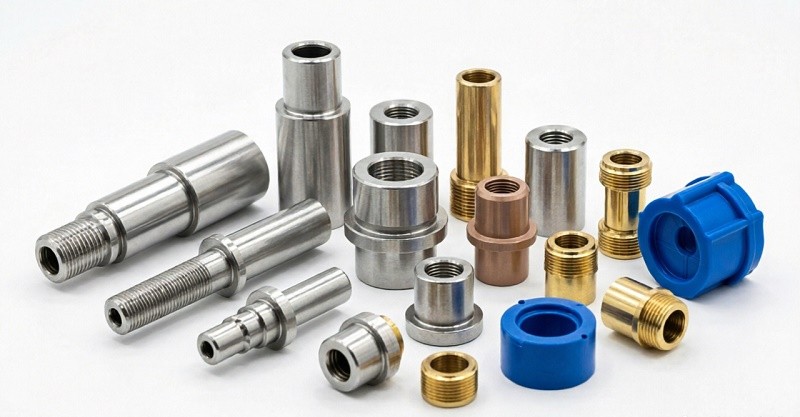
In today's precision manufacturing world, choosing the right CNC turned parts supplier is a critical decision that directly impacts your product's quality and your project's success. Making the right choice can seem daunting, but with the right approach, it becomes much clearer. A great CNC turned parts supplier can elevate a project, delivering components that meet exact specifications, while a poor choice can lead to costly delays, quality issues, and significant rework. My goal is to help you avoid those pitfalls.
Let's explore together the key factors to consider when selecting a trusted partner for your precision CNC turned components, ensuring you make the best decision for your unique needs. By the end of this guide, you will have a structured framework to evaluate and choose a supplier that not only produces parts but also adds strategic value to your operations.
Defining Your Project Needs with Your Potential CNC Turned Parts Supplier
Before you can choose the right supplier, you must first have a crystal-clear understanding of your own project requirements. A reliable manufacturer can't meet your expectations if those expectations aren't clearly defined from the outset. This initial planning phase is the foundation of a successful partnership and prevents costly errors, miscommunications, and delays down the line. Clearly defining specifications like materials, tolerances, and part complexity allows a potential supplier to accurately assess their capabilities and provide meaningful feedback.
Understanding Material Selection for Your CNC Turned Parts Supplier
The choice of material is a cornerstone of manufacturing precision parts, directly influencing the component's performance, durability, and cost. Each material has unique mechanical properties and machinability characteristics that must be carefully matched to the part's functional and environmental requirements. A knowledgeable supplier will be able to guide you through this selection process, but it's crucial to have a foundational understanding of the common options available.
Common Metals: Aluminum, Stainless Steel, Titanium, and Brass
Metals are the workhorses of CNC turning, each offering a distinct profile of benefits for specific applications.
- Aluminum: A popular choice in industries like aerospace and automotive, aluminum is lightweight, corrosion-resistant, and has excellent machinability. Its high strength-to-weight ratio and thermal conductivity make it ideal for parts like electronic housings and structural components.
- Stainless Steel: Renowned for its superior strength, durability, and corrosion resistance, stainless steel is a go-to material for demanding applications in the medical, marine, and food processing industries. While it can be more challenging to machine, its longevity and resilience often justify the extra effort.
- Titanium: With an exceptional strength-to-weight ratio and outstanding resistance to corrosion and heat, titanium is a premium material used extensively in aerospace and medical implants. Though its cost and difficulty in machining are higher, its performance in extreme conditions is unparalleled.
- Brass: Valued for its superb machinability, electrical conductivity, and corrosion resistance, brass is a cost-effective choice for precision connectors, fittings, and musical instrument components. It allows for the creation of parts with tight tolerances and smooth surface finishes.
Engineering Plastics: ABS, Delrin, PEEK, and Polycarbonate
Plastics offer a compelling alternative to metals, providing benefits like weight reduction, chemical resistance, and electrical insulation.
- ABS (Acrylonitrile Butadiene Styrene): A low-cost, tough plastic with good impact resistance, ABS is often used for prototypes and consumer product enclosures. It is one of the easiest plastics to machine, making it a functional and accessible option.
- Delrin (POM/Acetal): Known for its excellent dimensional stability, low friction, and high stiffness, Delrin is a top choice for precision mechanical components like gears, bearings, and bushings. Its resistance to moisture and chemicals makes it highly reliable.
- PEEK (Polyether Ether Ketone): A high-performance thermoplastic, PEEK is capable of operating in extreme environments with high temperatures (up to 260°C), steam, and wear. This makes it a preferred material for aerospace, medical, and pharmaceutical applications.
- Polycarbonate: This material offers high impact strength and optical clarity. It's often used for guards, displays, and other applications where durability and transparency are needed.
Key Performance Factors: Strength, Corrosion Resistance, and Heat Tolerance
When selecting a material, you must consider its performance under the specific conditions it will face.
- Strength and Hardness: The material must be strong enough to withstand the mechanical stresses of its application without deforming or failing. Hardness influences the part's wear resistance and durability.
- Corrosion Resistance: If the part will be exposed to moisture, chemicals, or harsh environmental conditions, selecting a material with adequate corrosion resistance, like stainless steel or certain plastics, is critical.
- Heat Tolerance: For applications involving high temperatures, materials like PEEK or titanium are essential as they maintain their structural integrity and properties. Thermal expansion is a particularly important factor in large parts, where heat can cause significant dimensional changes.
Here is a comparative table to help guide your decision:
| Material | Relative Strength | Corrosion Resistance | Heat Tolerance | Machinability |
|---|---|---|---|---|
| Aluminum | Medium | Good | Medium | Excellent |
| Stainless Steel | High | Excellent | High | Fair |
| Titanium | Very High | Excellent | Very High | Poor |
| Brass | Low-Medium | Good | Medium | Excellent |
| ABS | Low | Good | Low | Excellent |
| Delrin (POM) | Medium | Excellent | Medium | Excellent |
| PEEK | High | Excellent | Very High | Fair |
| Polycarbonate | Medium | Fair | Medium | Good |
Pinpointing Precision and Tolerances for Your CNC Turned Parts Supplier
Precision is at the heart of CNC machining. Tolerance refers to the acceptable range of variation for a specific dimension of a part. Clearly defining your required tolerances is a critical step that directly impacts a part's function, cost, and manufacturing time. While it's tempting to specify the tightest possible tolerances for every feature, this can drastically increase costs. A good supplier will help you identify which dimensions are truly critical and which can have more lenient tolerances.
Industry-Specific Requirements, such as Aerospace and Medical Components
Certain industries operate under extremely strict precision mandates where safety and reliability are non-negotiable.
- Aerospace: Components for aircraft engines, flight controls, and structural assemblies demand incredibly tight tolerances, often within thousandths of an inch. This precision is vital to ensure parts fit perfectly, maximize fuel efficiency, and withstand extreme conditions without risk of catastrophic failure.
- Medical: In medical device manufacturing, high precision is essential for the safety and effectiveness of surgical instruments, implants, and diagnostic equipment. Parts must function flawlessly within the human body or during delicate procedures, making tight tolerances a regulatory and ethical necessity.
A supplier serving these sectors must demonstrate experience and adherence to specific certifications like AS9100 for aerospace or ISO 13485 for medical devices.
Evaluating the Supplier's Machining Capabilities and Inspection Equipment
A supplier's promise to meet tight tolerances is only as good as the equipment they use to produce and verify them.
- Machining Capabilities: An advanced machine shop will have a range of well-maintained CNC lathes, including multi-axis and turn-mill centers, which allow for the creation of complex parts in a single setup, improving accuracy and consistency. High-precision CNC machines are often equipped with features like thermal compensation to maintain accuracy during long production runs.
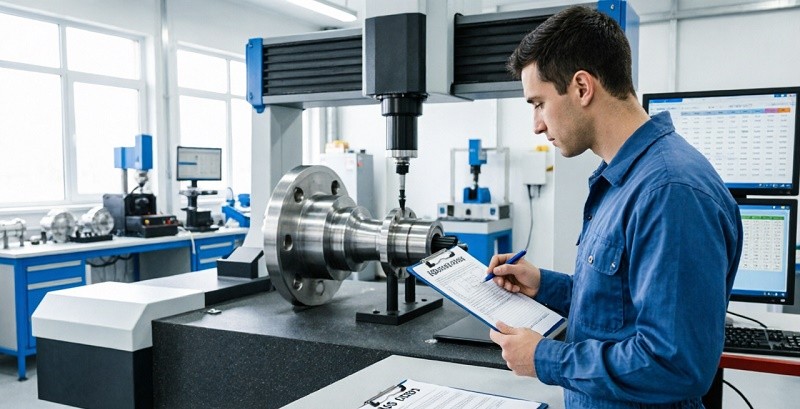
- Inspection Equipment: The ability to measure is as important as the ability to cut. A reliable supplier must have a robust quality control department with advanced inspection tools. Look for Coordinate Measuring Machines (CMMs), which can measure complex geometries with precision down to ±0.001 mm. Other essential tools include laser scanners, optical comparators, and surface profilometers to ensure every dimension, feature, and finish meets your specifications.
Evaluating Part Complexity with Your CNC Turned Parts Supplier
The geometric complexity of your part is a major factor in supplier selection. Not all CNC shops are equipped to handle intricate designs. A supplier's ability to manage complex geometries, advanced machining processes, and provide design feedback separates a basic job shop from a true manufacturing partner.
From Simple Shapes to Highly Complex Geometries
The spectrum of part complexity ranges widely. Simple turned parts might include basic shafts, pins, or bushings. Highly complex geometries, on the other hand, can involve intricate curves, non-symmetrical features, thin walls, and deep holes with tight precision requirements—challenges that push the limits of standard manufacturing. Evaluating a supplier's portfolio for parts of a similar complexity to your own is an effective way to gauge their true capabilities.
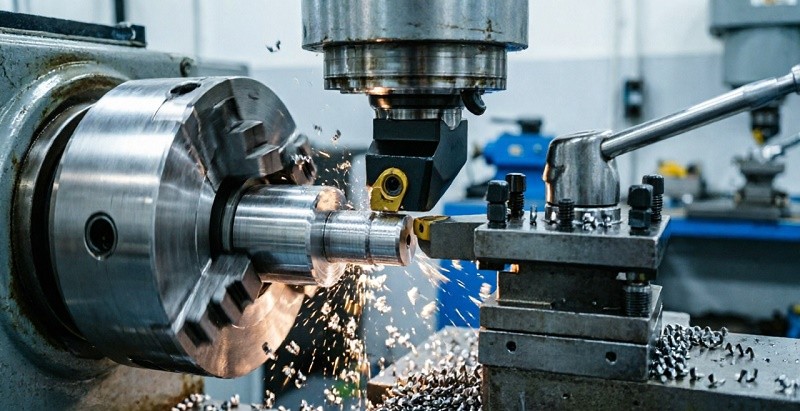
Advanced Machining Technologies: 5-Axis, Swiss Turning, and EDM
For complex parts, advanced machining technologies are often not just beneficial but necessary.
- 5-Axis Machining: These machines move a part or tool along five different axes simultaneously. This capability allows for the machining of complex shapes and contours in a single setup, reducing handling, improving accuracy, and shortening lead times.
- Swiss Turning: Ideal for small, complex, and long parts, Swiss-type lathes feed the workpiece through a guide bushing, providing support right at the point of cutting. This minimizes deflection and vibration, enabling the production of highly precise components like those used in medical devices and electronics.
- Electrical Discharge Machining (EDM): EDM uses electrical sparks to shape metal, making it perfect for creating sharp internal corners, deep and narrow slots, or machining extremely hard materials that are difficult to cut with traditional tools.
The Value of Design for Manufacturability (DFM) Support
A top-tier supplier does more than just execute a design; they actively help improve it. Design for Manufacturability (DFM) is a collaborative process where the supplier provides feedback to optimize a part's design for more efficient, cost-effective, and higher-quality production. They might suggest minor changes to tolerances, materials, or features that can significantly reduce machining time, tool wear, and scrap rates, ultimately lowering your total cost without compromising function.
Matching Production Volume with Your CNC Turned Parts Supplier
A supplier's operational structure, capacity, and expertise are often tailored to specific production volumes. A shop that excels at rapid prototyping may not be the most cost-effective partner for high-volume mass production, and vice versa. It's crucial to select a supplier whose capabilities align with your current and future production needs.
Accommodating Prototyping, Small Batch, or Mass Production Needs
- Prototyping: This stage prioritizes speed, flexibility, and design feedback. A supplier focused on prototyping is adept at quick turnarounds and working through design iterations to validate functionality.
- Small Batch Production: This requires a balance of efficiency and flexibility. Suppliers must have established processes to ensure quality and consistency across smaller runs without the high setup costs associated with mass production.
- Mass Production: For large-scale orders, the focus shifts to process stability, automation, and cost predictability. Suppliers optimized for mass production use highly automated systems, statistical process control, and locked-in tooling to ensure every part is identical and produced at the lowest possible cost per unit.
Assessing the Critical Qualities and Reliability of a CNC Turned Parts Supplier
Once your project needs are defined, the next step is to evaluate the supplier themselves. Technical capabilities are crucial, but they are only one piece of the puzzle. The true measure of a great manufacturing partner lies in their commitment to quality, their communication, and their proven experience. These qualities determine the reliability and long-term success of your partnership.
Non-Negotiable Certifications and Quality Assurance from a CNC Turned Parts Supplier
A robust quality management system (QMS) isn't just a nice-to-have; it's the foundation of a reliable supplier. Certifications and documented quality processes provide objective proof that a supplier is committed to consistency, traceability, and continuous improvement.
The Foundational Importance of ISO 9001 Certification
ISO 9001 is the internationally recognized standard for quality management systems. A supplier with ISO 9001 certification has demonstrated that they have established and follow systematic processes for everything from quoting and production to inspection and delivery. This certification is a strong indicator of a company's commitment to delivering consistent quality and managing its operations professionally. While not a guarantee of a perfect part every time, it shows that a framework for quality and corrective action is in place.
ITAR Registration for Restricted and Defense Industries
For projects in the defense, aerospace, or other sectors involving sensitive technology, International Traffic in Arms Regulations (ITAR) registration is mandatory. An ITAR-compliant supplier has the necessary security protocols and procedures to handle controlled technical data and hardware, ensuring that your project adheres to U.S. law and protects national security interests.
Demonstrating Quality: Project Portfolios, Customer References, and Broad Capabilities
Certifications tell part of the story, but tangible proof is essential.
- Project Portfolios & Case Studies: Ask for examples of past projects that are similar to yours in complexity, material, and industry. A deep portfolio demonstrates hands-on experience and a track record of success.
- Customer References: Don't hesitate to ask for and contact customer references. Speaking with other clients can provide invaluable insights into the supplier's real-world performance, communication style, and problem-solving abilities.
- Quality Control Processes: Go beyond the certificate and ask about their specific quality control procedures. Do they perform First Article Inspections (FAI) to validate new setups? Do they use in-process inspection to catch deviations early? What does their final inspection report look like? This information reveals how deeply quality is integrated into their workflow.
Exceptional Communication and Project Management from Your CNC Turned Parts Supplier
A supplier is not just a vendor; they are a strategic partner and an extension of your team. Clear, proactive, and technically proficient communication is the lifeblood of this partnership. Poor communication can lead to misunderstandings, delays, and costly rework.
The Value of Responsiveness and Proactive Updates
A great supplier keeps you informed. They should be responsive to your inquiries, provide clear and realistic lead times, and proactively update you on the status of your order, especially if any issues arise. This transparency builds trust and allows you to manage your own production schedules more effectively.
Engineering Dialogue and Constructive DFM Feedback
Look for a supplier whose engineering team is willing and able to engage in a technical dialogue with yours. A true partner will review your designs and provide constructive Design for Manufacturability (DFM) feedback to improve quality and reduce costs. This collaborative approach shows they are invested in your project's success, not just in cutting metal.
Effective Problem-Solving for Issues and Market Changes
No manufacturing process is entirely without challenges. The key differentiator is how a supplier responds to problems. A reliable partner will address issues head-on, communicate transparently about the cause and solution, and work diligently to minimize any impact on your timeline. They should also be agile enough to adapt to market changes or shifts in your project requirements.
Experience and Expertise When Choosing a CNC Turned Parts Supplier
Experience breeds expertise. A supplier that has been in business for a long time and has served your specific industry is more likely to understand its unique challenges, standards, and material requirements.
A Proven Track Record and Deep Industry Understanding
A supplier with deep experience in an industry like automotive, medical, or aerospace will be familiar with its specific quality standards, documentation requirements, and performance expectations. This specialized knowledge allows them to anticipate potential problems, offer better solutions, and ensure compliance, ultimately reducing risk for your project.
The Ability to Handle Your Future Growth and Expansion Needs
Consider a supplier's capacity for growth. Can they scale production to meet your needs as your business grows? A supplier with multiple machines, several shifts, and a history of investing in new technology is better positioned to support your long-term expansion than a small shop already operating at full capacity. Choosing a partner who can grow with you saves you the trouble of having to vet and switch suppliers in the future.
Exploring Different Engagement Models with Your CNC Turned Parts Supplier
How you structure your purchasing relationship with a supplier can significantly impact costs, lead times, and supply chain stability. From one-off orders to long-term contracts, each model offers distinct advantages and is suited to different situations. Understanding these options will help you build a more strategic and efficient procurement process.
Spot Buys: Testing the Waters with a New CNC Turned Parts Supplier
A spot buy is a one-time purchase order for a specific quantity of parts. This model is often used to test a new supplier's capabilities or for urgent, non-recurring needs.
Ideal for Urgent Orders and Initial Supplier Vetting
Spot buys are perfect for immediate requirements or for placing a small trial order with a potential new supplier. It allows you to evaluate their quality, communication, and on-time delivery performance on a real-world task without committing to a long-term relationship. This is a low-risk way to gather firsthand data before awarding more significant work.
Understanding Potentially Higher Costs for Custom Work Compared to Long-Term Agreements
Because spot buys don't come with a volume commitment, the price per part is often higher than in a long-term agreement. The supplier has to account for the full cost of setup, programming, and tooling for a single run. While this model offers flexibility, it is generally less cost-effective for parts you plan to order repeatedly.
Blanket Orders: Achieving Efficiency with a Trusted CNC Turned Parts Supplier
A blanket order, or blanket purchase agreement, is a long-term contract where a buyer commits to purchasing a larger total quantity of parts over a specified period, with parts delivered in smaller, scheduled releases.
Benefits of Faster Production, Shorter Lead Times, and Bulk Discounts
Blanket orders are a win-win for both the buyer and the supplier.
- Cost Savings: By committing to a larger volume, you unlock economies of scale, resulting in a lower price per part. This also locks in pricing, protecting you from future material cost fluctuations.
- Improved Lead Times: The supplier can produce parts in larger, more efficient batches and may even hold inventory for you. When you need a release, the parts may already be on the shelf, reducing lead times from weeks to days.
- Simplified Logistics: Instead of issuing multiple purchase orders, you manage a single agreement with scheduled releases, reducing administrative workload for both sides.
The Necessity of Excellent Communication for Swift Adjustments
While blanket orders provide stability, they still require good communication. A strong partnership allows for adjustments to delivery schedules based on changes in your demand. Open dialogue ensures the supplier can manage their production schedule effectively while keeping your assembly lines running smoothly.
Short-Term vs. Long-Term Contracts with Your CNC Turned Parts Supplier
Choosing between a short-term and long-term engagement model depends on your project's stability and your level of confidence in the supplier.
Short-Term Agreements: Lower Risk for New Suppliers, but Variable Pricing
Short-term agreements, similar to spot buys, offer flexibility and are a good way to start a relationship with a new supplier. However, they lack price stability and require more frequent renegotiation. This can be suitable for projects with uncertain demand or when you are still in the process of qualifying a new manufacturing partner.
Long-Term Partnerships: Building Trust, Stable Pricing, and Robust References
Long-term contracts, like blanket orders, are built on a foundation of trust. They provide the ultimate price stability and supply chain security. This model transforms the relationship from a simple transaction to a strategic partnership. The supplier gains a deep understanding of your needs, and you benefit from a reliable, consistent supply of critical components.
Specialized Capabilities to Look for in a Comprehensive CNC Turned Parts Supplier
Beyond standard turning operations, many projects require specialized expertise and equipment. A truly comprehensive supplier will offer a range of advanced capabilities that demonstrate their technical depth. Evaluating these specializations is crucial when your components are large, made from challenging materials, or require a fully controlled manufacturing process.
Large Component Machining Expertise from Your CNC Turned Parts Supplier
Machining large parts introduces a unique set of challenges that standard CNC shops are not equipped to handle. These challenges include managing thermal expansion, ensuring machine rigidity, and simply handling and fixturing heavy workpieces.
Verifying Actual Machine Travel Size and Maximum Part Experience
Don't just take a supplier's word for it. When you need large parts, ask for the specific machine travel dimensions (X, Y, and Z axes) and the maximum weight their machines can handle. More importantly, ask for examples of the largest parts they have successfully machined. A supplier's practical experience often matters more than the raw specifications of their equipment.
Addressing Thermal and Rigidity Challenges Unique to Large Parts
- Thermal Expansion: Machining large parts generates significant heat, which can cause the material to expand and lead to dimensional inaccuracies. An experienced supplier will use strategies like managing heat input with controlled cutting passes and using high-flow coolant systems to mitigate these effects.
- Rigidity and Vibration: The sheer size and weight of large components can cause deflection and vibration during machining, compromising surface finish and tolerances. A capable supplier uses robust, custom fixtures and may employ specialized techniques like using extra supports to ensure the workpiece remains stable throughout the process.
Advanced Inspection Techniques: Large Coordinate Measuring Machines (CMM)
Inspecting a large part accurately is as challenging as machining it. Verifying flatness or parallelism over a span of several meters requires specialized equipment. A supplier serious about large part machining will have invested in large-format Coordinate Measuring Machines (CMMs) capable of accommodating the full dimensions of the parts they produce.
Material-Specific Processing Prowess of a Skilled CNC Turned Parts Supplier
Different materials behave very differently during machining. A supplier who claims to machine everything may not have deep expertise in anything. Look for a partner with proven experience in the specific materials your project requires.
Proven Cutting Parameters and Tooling for Diverse Material Types
An expert supplier will have a database of proven cutting parameters—including speeds, feeds, and depths of cut—for a wide range of materials. They will also have the right tooling, such as carbide tools with specific coatings for machining tough materials like stainless steel or titanium, to ensure efficiency and quality. This expertise prevents common issues like excessive tool wear, poor surface finish, and dimensional instability.
Understanding Material Characteristics and Their Processing Impact
A skilled machinist understands how a material's properties—like its hardness, ductility, and thermal conductivity—affect the machining process. For example, pure copper is notoriously "gummy" and difficult to machine, while certain grades of carbon steel become harder to machine as their carbon content increases. A supplier with this deep knowledge can adjust their approach to deliver consistent results, regardless of the material.
In-House vs. Outsourced Operations from Your CNC Turned Parts Supplier
Understanding which processes a supplier performs in-house versus which they outsource is critical for managing quality and lead times.
The Advantages of Full In-House Control for Quality and Consistency
A supplier who performs most or all operations in-house—from initial machining to finishing and inspection—has complete control over the entire process. This vertical integration leads to several advantages:
- Better Quality Control: There are no gaps in accountability. The supplier is responsible for every step, ensuring consistent quality.
- Shorter Lead Times: Eliminating the need to ship parts to outside vendors for secondary operations saves significant time.
- Simplified Communication: You have a single point of contact for the entire project, streamlining communication and problem-solving.
While some outsourcing is common, critical processes should ideally be managed in-house to minimize risk and ensure reliability.
Ultimately, selecting the right CNC turned parts supplier involves a thorough and thoughtful evaluation of their technical capabilities, quality assurances, communication practices, and how well their services truly align with your unique project requirements. It's a partnership, not just a transaction. This decision is critical, as a reliable manufacturer does more than just produce components; they help maintain your operational efficiency, reduce downtime, and ensure consistent output.
By carefully weighing all these factors—from material expertise and tolerance control to communication and scalability—I am confident you can establish a successful and lasting partnership. This ensures the consistent precision, high quality, and timely delivery of your critical components for years to come. Choosing the right partner requires careful evaluation, but the reward is a strong, collaborative relationship that supports sustainable growth.
Remember, a truly reliable CNC turned parts supplier is more than just a vendor; they are a vital extension of your manufacturing process, contributing directly to your success and reputation. They become a part of your team, understanding your needs and helping you innovate.