How to Choose the Ideal Plastic Injection Molding Manufacturer for Your Needs
- Share
- Issue Time
- Jan 12,2026
Summary
Selecting the appropriate plastic injection molding manufacturer is crucial for a project's success, affecting product quality, production timelines, and cost-effectiveness. This comprehensive guide outlines key evaluation elements, emphasizing the importance of understanding project needs before partnering with a manufacturer.
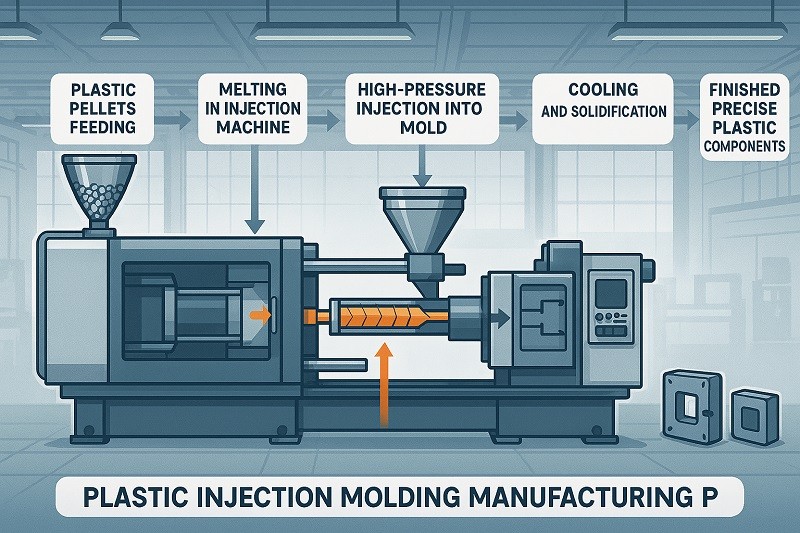
Choosing the right plastic injection molding manufacturer is a critical decision that significantly impacts your project's success. This choice influences everything from product quality and production timelines to overall cost-effectiveness. With numerous manufacturers offering seemingly similar services, making an informed choice can feel overwhelming. However, crucial distinctions appear when you examine factors like production reliability, product quality, cost efficiency, durability, and the strength of the relationship you build with your partner.
Plastic injection molding is a versatile and popular method for mass-producing plastic parts and components across various industries. This comprehensive guide will help you understand the essential elements to evaluate when partnering with a Plastic Injection Molding Manufacturer{:target='_blank'}. By carefully assessing their capabilities, experience, and commitment to quality, you can secure a manufacturing partner who will contribute to your project's success and long-term goals.
Understanding Your Project Needs Before Partnering with a Plastic Injection Molding Manufacturer
Before you can choose the right partner, you must have a crystal-clear understanding of your own project. A detailed and well-defined project scope is the foundation of a successful manufacturing relationship. It enables potential manufacturers to provide accurate quotes, anticipate challenges, and align their capabilities with your specific requirements. Without this clarity, you risk miscommunication, delays, and unexpected costs. A manufacturer can only be as effective as the information they are given, so investing time in this initial phase is paramount to achieving your desired outcomes. This internal preparation is the first step toward finding a manufacturing partner that fits not just your technical needs, but also your business objectives.
Defining Product Requirements and Scope for Your Plastic Injection Molding Manufacturer
Defining your product requirements is not merely a suggestion; it's a fundamental necessity for a successful manufacturing partnership. This process involves translating your vision into a concrete set of specifications that a manufacturer can understand and execute. You need to detail the functional and aesthetic aspects of your product, its intended operational environment, and the performance standards it must meet. This detailed blueprint serves as the primary communication tool between you and your potential manufacturing partner, ensuring everyone is aligned from the very beginning.
Expected Production Volume and Capacity
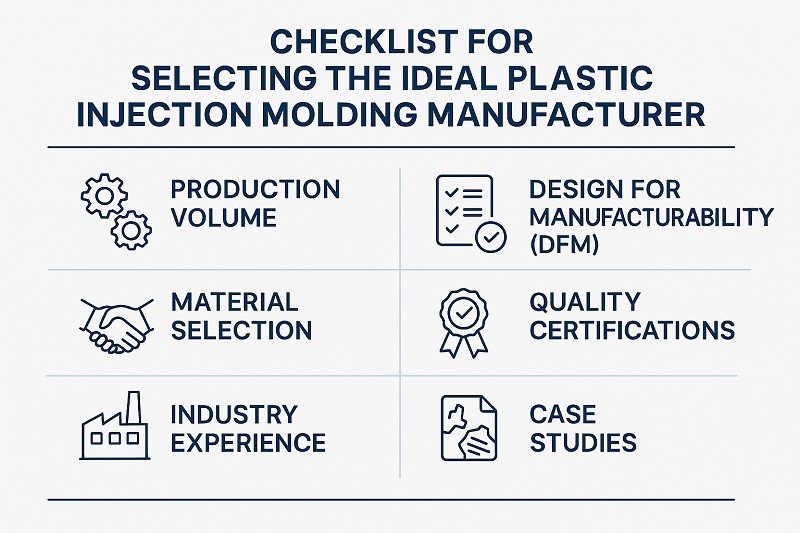
Your anticipated production volume is a decisive factor in selecting a manufacturer. Are you planning a small, initial run of a few thousand units, or do you require mass production in the millions? A manufacturer's capacity, including the number and size of their injection molding machines, must align with your volume needs. Mismatched capacity can lead to significant issues; a large manufacturer may deprioritize smaller projects, while a smaller shop might lack the infrastructure for high-volume runs, causing production bottlenecks and delays.
It's also crucial to consider scalability. Your production needs may change over time, and your chosen partner should be able to accommodate that growth. Discuss their single and multi-cavity mold capabilities, as this directly impacts output. A single-cavity mold produces one part per cycle, suitable for lower volumes, whereas multi-cavity molds produce multiple parts per cycle, drastically increasing efficiency for high-volume projects. Be transparent about your forecasts, including initial production quantities and potential future demand, to ensure the manufacturer can build a production plan that is both efficient and sustainable.
Specific Product Application and End-Use
The final application and end-use of your product heavily influence every stage of the manufacturing process, from material selection to quality control. A part intended for a medical device has profoundly different requirements than a component for a consumer electronic or an automotive application. Clearly define the environment in which your product will operate. Will it be exposed to extreme temperatures, UV radiation, harsh chemicals, or high mechanical stress?.
For example, components for the automotive industry often require high-impact strength and resistance to heat and fluids, while parts for food and beverage applications must be made from food-grade materials that comply with FDA regulations. Providing this context allows the manufacturer to offer expert guidance on material choice, design adjustments for durability, and necessary secondary operations like special coatings or treatments. The more detail you provide about the end-use, the better equipped your manufacturing partner will be to deliver a product that is safe, reliable, and fit for its purpose.
Material Selection and Technical Requirements
The choice of plastic resin is one of the most critical decisions in injection molding, as it determines the part's mechanical properties, appearance, cost, and lifespan. With thousands of thermoplastic and thermoset polymers available, each with unique characteristics, making the right choice is essential. Your technical requirements should be as specific as possible. Do you need high tensile strength, flexibility, electrical insulation, or flame retardancy? Are there specific color matching (RAL or Pantone) or surface finish requirements?.
Work with a manufacturer who has deep expertise in materials science. An experienced partner can review your requirements and recommend the optimal material. They can also suggest cost-effective alternatives that don't compromise performance. For instance, a glass-filled nylon might be suggested for a part requiring high stiffness and strength, while polycarbonate could be chosen for its impact resistance and optical clarity. Be prepared to discuss material data sheets and even perform material testing to validate the choice. This collaborative approach to material selection ensures the final product performs exactly as intended.
The Importance of Design and Engineering Support from Your Plastic Injection Molding Manufacturer
Beyond simply producing parts, a top-tier manufacturer acts as a consultative partner, offering invaluable design and engineering support. Their expertise can help you refine your product design, optimize it for the manufacturing process, and prevent costly errors before production even begins. This collaborative approach bridges the gap between your concept and a viable, mass-producible product. Involving a manufacturer early in the design phase is a strategic move that pays dividends throughout the product lifecycle.
Early Involvement and Design for Manufacturability (DFM)
Engaging a manufacturer during the initial design stages is crucial for implementing Design for Manufacturability (DFM). DFM is a proactive engineering practice focused on designing parts in a way that simplifies and optimizes the injection molding process. A manufacturer with strong DFM expertise will analyze your CAD designs and provide feedback on key features like wall thickness, draft angles, rib and boss design, and gate locations.
Consistent wall thickness, for example, is critical to prevent cosmetic defects like sink marks and internal stresses caused by uneven cooling. Draft angles (a slight taper on the vertical walls) are necessary to ensure the part can be easily ejected from the mold without damage. Early DFM analysis can identify and correct potential issues that would be expensive and time-consuming to fix once the mold has been machined. This collaborative review process not only improves part quality but also can reduce cycle times, lower material usage, and extend the life of the mold, leading to significant cost savings.
Prototyping and Mold Flow Analysis Capabilities
Before committing to expensive and time-consuming hard tooling, it is essential to validate your design with prototypes. A capable manufacturer should offer various prototyping options, such as 3D printing (SLA or FDM), CNC machining, or soft tooling (using aluminum molds for short runs). Prototyping allows you to create physical models to test form, fit, and function, providing tangible feedback that digital models cannot. This step is invaluable for identifying design flaws and making necessary adjustments early on.
Furthermore, ask about their mold flow analysis capabilities. Mold flow analysis is a powerful simulation software that predicts how the molten plastic will flow into and fill the mold cavity. This simulation can identify potential problems such as air traps, weld lines, and areas of high pressure or uneven cooling before the tool is ever built. By visualizing the molding process, engineers can optimize gate locations, runner systems, and processing parameters to ensure the mold produces high-quality parts consistently. A manufacturer that proactively uses mold flow analysis demonstrates a commitment to precision engineering and risk mitigation.
Evaluating the Expertise and Experience of a Plastic Injection Molding Manufacturer
When you entrust a company with your product, you are betting on their expertise. A manufacturer's experience and technical competence are not just lines on a resume; they are direct indicators of their ability to handle your project successfully. An established track record in your industry suggests they understand its unique challenges, standards, and material requirements. Similarly, their investment in modern technology and skilled personnel reflects a commitment to quality and efficiency. Evaluating these aspects is crucial to vetting a potential partner and ensuring they have the depth of knowledge to bring your project to life.
Assessing Industry Experience and Track Record of a Plastic Injection Molding Manufacturer
A manufacturer's history provides a window into their reliability and capabilities. Look beyond their sales pitch and delve into their actual performance over time. A company with a long and successful track record has weathered economic shifts, technological changes, and diverse client demands, demonstrating resilience and adaptability. This longevity is often a sign of consistent quality and strong customer relationships.
Years in Business and Diverse Client Portfolio
A manufacturer that has been in business for many years has likely accumulated a wealth of experience across various challenges and projects. While longevity alone isn't a guarantee of quality, it often correlates with stable processes and a deep understanding of the industry. Ask about the range of industries they have served. A diverse portfolio—spanning automotive, medical, consumer electronics, industrial, and more—signals versatility and a broad knowledge base.
This diversity is beneficial even if your project fits into just one category. For instance, a manufacturer with experience in the tight tolerances of the medical field can apply that same precision to consumer products, resulting in higher quality. Conversely, experience with the cost-pressures of the consumer goods market can lead to innovative, cost-saving solutions for industrial applications. A varied client base indicates that the manufacturer is trusted by a wide range of companies and is capable of adapting to different standards and requirements.
Case Studies, References, and Online Reviews
The best way to gauge a manufacturer's past performance is to examine their work. Ask for case studies relevant to your project or industry. A detailed case study will outline the initial problem, the manufacturer's solution, and the final outcome, showcasing their problem-solving skills and technical abilities. These documents provide concrete proof of their capabilities far more effectively than any marketing brochure.
Furthermore, don't hesitate to ask for client references—and be sure to contact them. Speaking directly with a current or former client can provide candid insights into the manufacturer's communication, reliability, and quality of work. Prepare specific questions about their experience with project management, on-time delivery, and how issues were resolved. Finally, conduct your own research by looking for online reviews, testimonials, and industry reputation. While individual reviews should be taken with a grain of salt, the overall sentiment can help paint a more complete picture of the company.
Technical Competence and Equipment of Your Plastic Injection Molding Manufacturer
A manufacturer's theoretical knowledge is only as good as the tools they have to implement it. The quality and sophistication of their equipment, software, and overall technological infrastructure are critical factors. A company that invests in modern technology is better positioned to deliver precision, efficiency, and advanced capabilities. During your evaluation, take a close look at their facility, either through an in-person tour or a detailed virtual walkthrough, to assess their technical prowess.
Machinery, Software, and Advanced Technologies
The heart of any injection molding operation is its machinery. Inquire about the age, condition, and tonnage range of their injection molding presses. Tonnage refers to the clamping force of a machine, which determines the size of the parts it can produce. A manufacturer with a wide range of press tonnages can handle a greater variety of project sizes. Modern, well-maintained machines with robotic automation for part removal and handling lead to greater consistency, faster cycle times, and reduced labor costs.
Also, ask about the software they use for design (CAD), manufacturing (CAM), and project management. Advanced CAD/CAM software ensures seamless translation from your design to the final toolpath, while robust project management tools enhance communication and tracking. Inquire about their adoption of advanced technologies like scientific molding or Industry 4.0 principles (smart manufacturing). Scientific molding uses data-driven analysis of the process to achieve maximum consistency and quality, while Industry 4.0 integration can provide real-time production monitoring and data analytics, leading to greater transparency and process optimization.
Specialized Processes like Overmolding or Insert Molding
If your project requires more than a simple, single-piece part, it's essential to verify the manufacturer's expertise in specialized molding processes. Two common advanced techniques are overmolding and insert molding.
Overmolding: This process involves molding a second layer of soft material (typically a thermoplastic elastomer like TPE) over an existing rigid plastic part. It is widely used to add soft-touch grips to tool handles, create watertight seals on electronic enclosures, or improve the aesthetics of a product. Successful overmolding requires precise control over temperature and pressure to ensure a strong chemical or mechanical bond between the two materials.
Insert Molding: In this process, a non-plastic component—such as a metal threaded insert, a screw, or a ceramic piece—is placed into the mold before the plastic is injected. The molten plastic then flows around the insert, securing it permanently within the part. This technique is excellent for creating robust attachment points or integrating electrical contacts directly into a plastic housing. It requires high precision in both mold design and insert placement to prevent damage to the mold or the insert.
Ask potential manufacturers for examples of their work with these specialized processes. True expertise in overmolding and insert molding is a sign of a highly skilled and technically competent team.
| Process | Description | Common Applications | Key Considerations |
|---|---|---|---|
| Overmolding | A second layer of material is molded over a pre-molded rigid substrate. | Soft-touch grips, waterproof seals, multi-color parts. | Material compatibility, bond strength, tool design. |
| Insert Molding | A pre-formed object (insert) is placed in the mold before plastic injection. | Threaded fasteners, electrical contacts, custom hardware. | Insert stability, thermal expansion differences, automation. |
Ensuring Quality and Reliability from Your Chosen Plastic Injection Molding Manufacturer
Quality and reliability are non-negotiable. A low-cost quote is meaningless if the final parts are inconsistent, fail to meet specifications, or are delivered late. A premier manufacturing partner demonstrates their commitment to quality not through words, but through robust, documented processes and internationally recognized certifications. This commitment should be evident in every aspect of their operation, from initial material inspection to final product verification. A culture of quality is the bedrock of a reliable supply chain and a successful long-term partnership.
Robust Quality Assurance Processes of a Plastic Injection Molding Manufacturer
Quality Assurance (QA) is a proactive approach that aims to prevent defects before they occur. It encompasses the entire production system, from the initial design review to the final shipping process. Look for a manufacturer with a well-defined and rigorously enforced quality management system (QMS). This system should dictate how quality is monitored, documented, and continuously improved throughout the organization.
Strict Testing and Quality Control Measures
Quality Control (QC) is the inspection-based part of quality assurance. A reliable manufacturer will have a dedicated QC lab with a range of metrology equipment to perform detailed part inspections. Ask about their specific QC procedures. This should include:
- First Article Inspection (FAI): A comprehensive inspection of the first parts produced from a new tool or production run to verify that they meet all dimensional and cosmetic specifications.
- In-Process Inspection: Regular checks performed during production to monitor critical dimensions and ensure the process remains stable. This can involve both automated sensors and manual inspections by operators.
- Final Inspection: A final batch inspection or 100% inspection (depending on requirements) performed before the parts are shipped to the customer.
Inquire about the tools they use for these inspections, such as coordinate measuring machines (CMMs), vision systems, calipers, and custom gauges. A strong QC process provides the data necessary to confirm that your parts are made to spec every single time.
Internal Quality Teams and Product Evaluation
An empowered internal quality team is a hallmark of a manufacturer dedicated to excellence. This team should operate independently from production to provide unbiased oversight. They are responsible for not only inspecting parts but also for conducting root cause analysis when a defect is found and implementing corrective actions to prevent recurrence.
The quality team's role extends to product evaluation beyond simple dimensional checks. Depending on the product's application, this could involve functional testing, environmental stress testing (e.g., temperature and humidity cycling), material strength tests, and color matching verification using a spectrophotometer. A proactive quality department doesn't just find problems—it works collaboratively with the engineering and production teams to solve them, driving a culture of continuous improvement throughout the facility.
Crucial Certifications and Industry Standards for a Plastic Injection Molding Manufacturer
Certifications from recognized standards bodies are a powerful, third-party validation of a manufacturer's quality management system. They demonstrate that the company has committed to and been audited against a set of globally accepted best practices for quality and consistency. While not a replacement for your own due diligence, certifications serve as a strong baseline indicator of a manufacturer's competence and professionalism.
ISO 9001 and Industry-Specific Certifications (e.g., IATF 16949, ISO 13485)
The most fundamental quality certification is ISO 9001. It proves that a manufacturer has a documented and audited quality management system focused on customer satisfaction, process control, and continuous improvement. At a minimum, any potential manufacturing partner should be ISO 9001 certified.
Beyond this, look for industry-specific certifications that are relevant to your project:
- IATF 16949: This is the global quality standard for the automotive industry. It builds upon ISO 9001 with more stringent requirements for risk management, defect prevention, and supply chain control. If you are in the automotive sector, this certification is essential.
- ISO 13485: This is the quality standard for manufacturers of medical devices. It includes specific requirements for traceability, risk management, and process validation in a sterile or cleanroom environment. For medical projects, ISO 13485 is non-negotiable.
Regulatory Compliance and Auditing Practices
A manufacturer's commitment to quality also includes their adherence to regulatory requirements. This can include environmental regulations (like RoHS, which restricts hazardous substances), labor laws, and material traceability requirements. Ask about their compliance programs and how they stay up-to-date with changing regulations in their region and yours.
Finally, inquire about their internal and external auditing practices. A certified company is regularly audited by a third-party registrar to maintain its certification. Additionally, a mature company will conduct its own internal audits to ensure compliance and identify areas for improvement. A willingness to allow customer audits is also a strong sign of transparency and confidence in their own processes. A manufacturer who embraces audits sees them not as a threat, but as an opportunity to get better.
Communication, Customer Service, and Cost-Effectiveness with a Plastic Injection Molding Manufacturer
Finding a technically proficient manufacturer is only half the battle. The "soft skills" of communication, responsiveness, and transparency are just as critical to a project's success. A great manufacturing partner operates as an extension of your own team, providing clear updates, proactive problem-solving, and honest pricing. Similarly, true cost-effectiveness is not about the lowest price per part, but the best overall value, which includes quality, reliability, and the long-term health of the partnership.
Transparent Communication and Responsive Customer Service
Clear, consistent, and proactive communication is the lifeblood of any successful manufacturing project. From the initial quote to the final delivery, you should feel informed and confident in the process. Look for a manufacturer that provides a single point of contact, such as a dedicated project manager or account manager, who is responsible for your project and can answer your questions promptly.
Responsiveness is a key indicator of good customer service. When you send an email or make a phone call, how quickly do you get a meaningful response? Delays in communication can lead to project delays and frustration. A manufacturer that values your business will make communication a priority. Furthermore, communication should be proactive. A good partner will alert you to potential issues before they become major problems and provide regular updates on the project's status without you having to ask. This transparency builds trust and allows for collaborative problem-solving.
Cost Optimization and Pricing Transparency from Your Plastic Injection Molding Manufacturer
While cost is always a factor, it's crucial to evaluate it in the context of total value, not just the per-part price. The cheapest quote is not always the best one, especially if it leads to poor quality, missed deadlines, or unexpected additional charges. Look for a manufacturer that offers pricing transparency. Their quote should be detailed and itemized, clearly breaking down costs for tooling, materials, production, and any secondary operations. This allows you to understand exactly what you are paying for and helps avoid hidden fees later on.
A true partner will also work with you on cost optimization. Drawing on their DFM experience, they might suggest minor design modifications that can reduce material usage, shorten cycle times, or simplify the tool design, all of which can lead to significant long-term savings. They should be able to explain the cost implications of different material choices and production volumes. The goal is to find a partner who helps you achieve the lowest total cost of ownership, which factors in quality, reliability, and part lifespan, rather than just the initial price.
Building a Long-Term Partnership with Your Plastic Injection Molding Manufacturer
The ideal scenario is not to find a supplier for a single project, but to build a long-term partnership with a manufacturer you can rely on for years to come. A long-term relationship fosters deeper collaboration, greater efficiency, and mutual trust. When a manufacturer understands your products, standards, and business goals, they can serve you more effectively. They become invested in your success, offering proactive advice and prioritizing your needs.
This kind of partnership is built on shared values of quality, integrity, and continuous improvement. It involves open communication, fair dealings, and a commitment to resolving challenges together. When evaluating potential manufacturers, don't just consider their ability to make your current part; consider their potential to be a strategic partner who can support your company's growth and innovation in the future.
Ultimately, the ideal plastic injection molding manufacturer is more than just a supplier; they are a partner committed to your project's success. By thoroughly researching and evaluating potential manufacturers based on their experience, technical capabilities, quality assurance, communication practices, and cost-effectiveness, you can make an informed decision.
Remember to prioritize a manufacturer that demonstrates expertise, reliability, and a willingness to collaborate closely with you throughout the entire production cycle. Such a partnership will ensure that your plastic injection molded products meet the highest standards of quality, are delivered on time, and contribute to your overall business objectives.
With a focus on precision, quality, and customer satisfaction, a leading plastic injection molding manufacturer stands out by being dedicated to providing comprehensive solutions to clients worldwide. Choosing such a partner is choosing a commitment to excellence. We encourage you to share this guide with colleagues who may find it useful and to apply these principles in your search for the perfect manufacturing partner.