How to Choose a Custom CNC Machining Supplier: A Complete Buyer's Checklist
- Share
- publisher
- SOMI Custom Parts
- Issue Time
- Jul 28,2026
Summary
A comprehensive buyer's checklist for choosing the right custom CNC machining supplier. Learn how to evaluate technical capability, quality systems, DFM support, pricing transparency, and communication to select a reliable manufacturing partner for your precision parts projects.
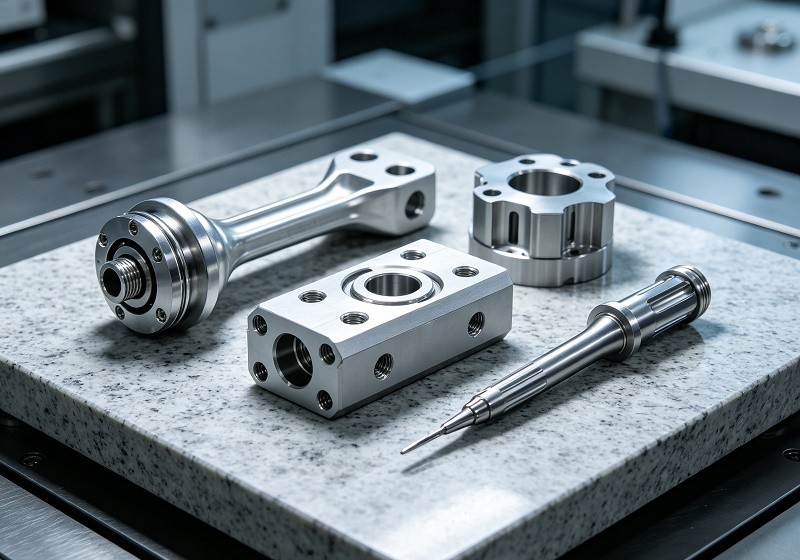
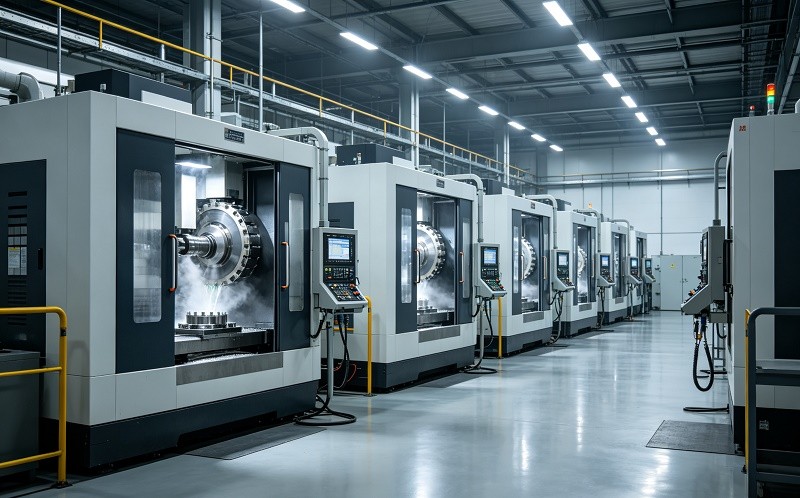
Choosing the right custom CNC machining supplier is one of the most critical decisions in any precision manufacturing project. The global precision machining market is valued at approximately USD 132–134 billion in 2026, growing at a compound annual growth rate (CAGR) of 6–8% through the early 2030s (Grand View Research, Fortune Business Insights). With CNC operations accounting for nearly 78.9% of the precision machining market, the demand for reliable, high-quality machining partners has never been greater. Yet many buyers — from procurement managers at Tier-1 automotive suppliers to startup hardware engineers — make the same costly mistake: they choose a supplier based on price alone. A low quote often hides loose tolerances, minimal inspection, unstable processes, or worse, a broker who quietly subcontracts your job without your knowledge. The result? Rejected parts, delayed deliveries, and total project costs that far exceed the initial savings. This complete buyer's checklist provides an engineering-driven framework for evaluating CNC machining suppliers. Whether you are sourcing custom CNC parts for aerospace, automotive, medical devices, robotics, or industrial automation, this guide covers the critical factors that separate reliable manufacturing partners from high-risk vendors. Modern CNC machining is far more than "cutting metal." It is a controlled system involving multi-axis programming accuracy, thermal stability management, fixture engineering, tool wear compensation, and inspection traceability. A weak supplier may deliver parts — but not consistently. Industry data from PFT CNC Machining's internal project analysis (2024–2025) reveals that over 62% of machining issues reported by new clients were caused not by design complexity, but by supplier capability mismatch. The real-world impact of selecting the wrong supplier includes: According to industry benchmarks, switching from a low-cost supplier to a qualified precision partner reduces downstream assembly issues by 20–40%. The right supplier catches design problems early, holds tolerance consistently across batches, and communicates honestly when deadlines need adjustment. Key Insight: Supplier choice is the single biggest factor in whether your parts ship on time, hit tolerance, and pass inspection — bigger than the design itself, bigger than the material selection. Experienced engineers and procurement professionals use a structured evaluation framework that goes far beyond comparing quotation prices. Based on analysis of thousands of custom manufacturing projects across the industry, the following dimensions separate reliable manufacturing partners from high-risk brokers. 3-axis, 4-axis, and 5-axis machining centers; CNC turning; Swiss machining; EDM capabilities; maximum workpiece dimensions. ISO 9001:2015 certification; CMM inspection capability; in-process quality control; First Article Inspection (FAI) reports. Design for Manufacturability feedback during quoting; tolerance optimization; material and cost-saving suggestions. Number of CNC machines; shift structure; monthly capacity; ability to scale from prototype to mass production. ISO 9001, AS9100 (aerospace), IATF 16949 (automotive), ISO 13485 (medical); material traceability and mill certificates. Response speed; technical understanding; English proficiency; willingness to discuss alternatives and provide clear updates. Not all CNC suppliers have the same manufacturing capabilities. The equipment on the shop floor directly determines the complexity, precision, and efficiency of the parts they can produce. When evaluating a supplier's technical capability, verify the following: A shop equipped with only 3-axis mills can handle simple prismatic parts but will struggle with undercuts, multi-face features, and complex curved surfaces. 5-axis CNC machining allows single-setup operations for complex geometries, preventing tolerance stacking and reducing lead times. Mordor Intelligence reports that 5-axis CNC machines are the fastest-growing category, with an 8.25% CAGR, driven by aerospace and automotive demand. A reliable supplier must have the equipment to verify what they produce. CMM (Coordinate Measuring Machine) inspection is indispensable for verifying complex geometries, hole positions, flatness, concentricity, and positional tolerances that manual tools cannot measure reliably. Ask potential suppliers whether they have in-house CMM capability and whether they can provide dimensional reports with actual versus nominal values. A robust quality management system is the foundation of consistent manufacturing quality. The minimum bar for serious B2B work is ISO 9001:2015 certification. For regulated industries, buyers should demand additional certifications: A structured quality system should include multiple inspection stages rather than relying solely on final inspection: Industry Benchmark: In controlled manufacturing environments, introducing in-process inspection reduces defect rates by 18–30% compared with final-only inspection systems (PFT CNC Machining internal data). Design for Manufacturability (DFM) feedback is arguably the most undervalued service a CNC machining supplier can provide. When a supplier reviews your CAD file before production and identifies avoidable cost drivers, the savings can be substantial. According to industry data, early DFM intervention can reduce total machining cost by 30% or more. Common DFM optimizations that experienced suppliers recommend include: Red flag: If a supplier returns a quote with no DFM feedback — even on a complex print — that is a strong indicator they are an order-taker, not an engineering partner. Price matters, and every procurement team has cost targets. However, experienced buyers understand that the lowest quotation rarely represents the lowest overall cost. A transparent supplier provides a line-item cost breakdown that includes: When evaluating quotes, consider the total cost of ownership rather than unit price alone. Hidden costs from a low-priced supplier may include scrap and rejected parts, rework and additional inspections, production delays, engineering corrections, and communication inefficiencies. Communication quality is one of the most underrated factors in supplier selection — until problems happen. Evaluate prospective suppliers during the quoting process itself: If communication is slow or vague during the quoting stage, it will be considerably worse during production when issues arise. A reliable supplier assigns a dedicated project manager who can provide regular production updates and respond quickly to technical inquiries. A buyer received a quote 40% below average but later discovered the supplier omitted heat treatment and deburring. Parts were unusable, and total cost with rework exceeded the higher-quoted alternative. Relying only on sales communication instead of engineering input. Always request sample CMM data on a part comparable to yours. A shop that genuinely holds tight tolerance will provide it; a shop that does not will hesitate. A supplier may perform well for prototypes but fail in batch production. Ask about production shifts, monthly capacity, and ability to scale from 10 to 1,000 pieces without quality degradation. Ask: "Whose machine will cut my part?" If the answer is vague, you are talking to a broker. Factory-direct suppliers can show equipment lists, shop floors, and operators on a live video call. At SOMI Custom Parts, we understand that choosing a CNC machining partner is a strategic decision. As an experienced precision parts manufacturer, we combine advanced multi-axis machining capabilities with rigorous quality control systems to deliver consistent, high-quality custom parts across industries including automotive, aerospace, medical devices, robotics, and industrial automation. Our engineering team provides free DFM feedback with every quote, identifying potential cost savings and manufacturability improvements before production begins. We maintain ISO 9001:2015 quality management systems, use in-house CMM inspection for dimensional verification, and provide complete material traceability with mill certificates for every batch. Whether you need a single prototype or full-scale production runs, our facility is equipped to handle projects of all sizes. We invite you to send your drawings for a free evaluation and experience the difference that engineering-driven CNC machining makes. The minimum baseline is ISO 9001:2015. For regulated industries, require AS9100 for aerospace, IATF 16949 for automotive, or ISO 13485 for medical. Material certificates traceable to the mill heat number are non-negotiable for safety-critical applications. Ask: (1) Which specific machine will cut my part? (2) Can I see your factory on a video call? (3) Can you provide mill certificates? Real factories answer directly; brokers deflect with vague answers. Prototypes typically take 5–15 business days. Production orders are 15–30 business days. A supplier promising dramatically shorter lead times without explanation should be treated with caution. Critical for precision parts. CMM inspection verifies complex geometries, positional tolerances, and GD&T requirements that manual tools cannot measure reliably. Always ask for sample CMM reports. Provide: 3D CAD files (STEP/IGES), 2D drawings with tolerances and GD&T, material grade, surface finish specs, prototype and production quantities, critical dimension callouts, and certification requirements. Choosing a CNC machining supplier is not about finding the cheapest option — it is about reducing uncertainty and building a reliable manufacturing partnership. When you evaluate suppliers properly using this framework, you achieve: The global precision machining market continues to grow, and the demand for reliable, high-quality CNC partners will only increase. By applying the criteria outlined in this buyer's checklist — technical capability, quality systems, DFM support, pricing transparency, communication quality, and verified production capacity — you can confidently select a CNC machining supplier that adds real value to your supply chain. Ready to start your next project? Contact the SOMI Custom Parts team for a free engineering review and competitive quote on your custom CNC machined parts.Introduction: Why Supplier Selection Makes or Breaks Your CNC Project
Why Choosing the Right CNC Supplier Matters More Than Ever
Key Criteria for Evaluating CNC Machining Suppliers
Technical Capability
Quality Systems
DFM Support
Production Capacity
Certifications
Communication
Technical Capability: What Machines and Equipment to Look For
Multi-Axis Machining
Machine Type Best Application Buyer Advantage 3-Axis CNC Simple plates, pockets, housings, brackets Cost-effective for straightforward geometries 4-Axis CNC Side features, curved parts, rotational components Fewer setups, better dimensional consistency 5-Axis CNC Complex surfaces, aerospace parts, medical implants, impellers Higher precision, fewer repositioning errors CNC Turning with Live Tooling Cylindrical parts with milled features Single-setup efficiency for rotational parts Inspection Equipment
Quality Control Systems and Certifications
Engineering Support and DFM Feedback
Design Issue DFM Recommendation Cost Impact Unnecessary tight tolerances Relax to standard IT-grade where functional Reduces machining speed and inspection cost Sharp internal corners Add radius relief (R1.5+) Eliminates special tooling and slow EDM Deep cavities beyond tool length Reduce depth or design for stepped access Avoids specialty long-reach tooling Thin wall sections Increase minimum wall thickness Prevents deformation during machining Complex multi-setup geometries Consolidate for 5-axis single setup Reduces repositioning errors and cycle time Pricing Transparency and Total Cost of Ownership

Communication and Responsiveness
Common Mistakes to Avoid When Choosing a CNC Supplier
Choosing Based on Price Alone
Skipping Technical Evaluation
Not Verifying Production Capability
Working with Brokers Instead of Factories
How SOMI Custom Parts Can Help
Frequently Asked Questions
What certifications should a CNC machining supplier have?
How can I tell if a CNC supplier is a broker or a real factory?
What is a reasonable lead time for custom CNC parts?
How important is CMM inspection capability?
What information should I include in my RFQ?
Conclusion: Make Supplier Selection a Strategic Decision