How to Balance Cost & Quality for Custom CNC Machined Parts: CNC Rapid Prototyping vs. 3D Printing
- Share
- Issue Time
- Dec 15,2025
Summary
In the realm of product development and manufacturing, developers consistently face the decision between CNC machining and 3D printing for producing custom parts. This guide thoroughly examines the fundamental differences, advantages, and limitations of both technologies, aiding in balancing cost and quality.
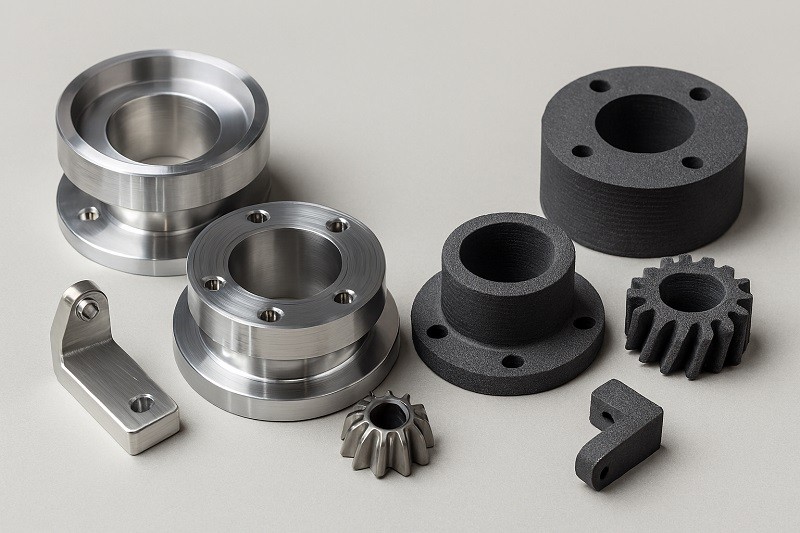
As product developers and engineers, we constantly face the challenge of bringing innovative designs to life efficiently and affordably. Two powerhouse technologies dominate the rapid prototyping and low-volume production landscape: CNC machining and 3D printing. But how do we decide which one is best for our custom CNC machined parts and other components?
This guide will explore the core differences, advantages, and limitations of both CNC machining and 3D printing, helping you balance cost and quality for your custom parts. We’ll delve into factors like material suitability, design complexity, production volume, and overall cost implications to make informed decisions for your projects, whether they involve custom CNC machined parts or intricately 3D printed components.
Understanding the Fundamentals of Custom CNC Machined Parts vs. 3D Printed Parts
Choosing between CNC machining and 3D printing requires a solid understanding of their core methodologies. One is an additive process, building objects from the ground up, while the other is a subtractive process, carving parts from a solid block. This fundamental difference dictates their respective strengths in precision, material properties, and geometric capabilities.
CNC Machining: Precision Through Subtraction for Custom CNC Machined Parts
CNC (Computer Numerical Control) machining is a subtractive manufacturing process where computer-controlled tools remove material from a solid workpiece to create a final part. This method has become a cornerstone of modern manufacturing, prized for its ability to produce high-precision components with excellent mechanical properties.
Process Overview and Advantages
The CNC machining process begins with a 3D CAD (Computer-Aided Design) model, which is translated into a set of instructions, often in a language called G-code. This code directs the machine's tools—such as mills, lathes, and drills—to cut, shape, and finish the raw material with minimal human intervention. The most common operations include:
- Milling: Uses rotating cutters to remove material from a stationary workpiece, ideal for creating flat surfaces, pockets, and complex contours.
- Turning: Rotates the workpiece against a stationary cutting tool, perfect for producing cylindrical and symmetrical parts like shafts and pins.
- Drilling and Tapping: Creates precise holes and internal threads for assembly.
The primary advantages of this subtractive process are significant:
- High Precision and Repeatability: CNC machines can achieve incredibly tight tolerances, often as fine as ±0.001” (0.025mm) or even tighter, ensuring that every part is virtually identical. This level of accuracy is critical in industries like aerospace and medical devices.
- Excellent Surface Finishes: Because it involves cutting and grinding, CNC machining can produce very smooth surfaces right off the machine, often requiring minimal post-processing.
- Superior Material Properties: Machining from a solid block of material means the final part retains the original material's full strength, structural integrity, and thermal stability.
Material Versatility and Strength for Custom CNC Machined Parts
One of the greatest strengths of CNC machining is its compatibility with a vast range of production-grade materials. The choice of material is a critical decision that impacts the final part's strength, durability, cost, and performance.
Metals: Metals are a staple in CNC machining due to their strength and durability. Common choices include:
- Aluminum Alloys (e.g., 6061, 7075): Valued for their excellent strength-to-weight ratio, corrosion resistance, and machinability, making them ideal for aerospace, automotive, and consumer electronics.
- Stainless Steel (e.g., 304, 316): Offers high strength, durability, and superior corrosion resistance, essential for medical devices and food-processing equipment.
- Titanium: Known for its exceptional strength, low weight, and biocompatibility, it is frequently used in high-performance aerospace components and medical implants.
- Other Metals: Brass, copper, carbon steels, and specialized alloys are also widely used for their specific properties like conductivity or hardness.
Plastics: A diverse range of engineering plastics can be machined, offering properties like light weight, chemical resistance, and electrical insulation. Popular options include ABS, PEEK, Nylon, and Polycarbonate.
The strength of a CNC machined part is exceptional because the process works with a homogenous block of material, ensuring uniform integrity without the internal voids or layer lines that can compromise other methods. Properties like tensile strength (resistance to being pulled apart) and yield strength (the point of permanent deformation) are key metrics where machined parts excel.
Achieving High Accuracy and Surface Finishes in Custom CNC Machined Parts
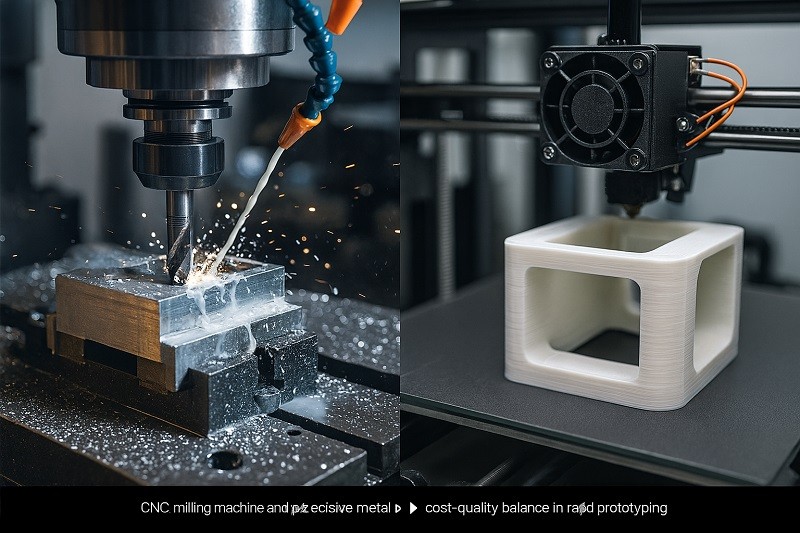
Accuracy in CNC machining is defined by tolerances, which specify the acceptable deviation in a part's dimensions. Standard tolerances for CNC machining are typically around ±0.005" (0.13mm), but with advanced machinery and processes, it's possible to achieve "ultra-precision" tolerances of ±0.0001" (0.0025mm). Adherence to international standards like ISO 2768 helps ensure consistency and quality across manufacturers.
Surface finish, measured by its roughness (Ra), is another critical attribute. CNC machining naturally produces smoother surfaces than many 3D printing methods. A typical machined surface can have an Ra value far lower than a raw 3D print, and this can be further improved with secondary finishing processes like polishing, bead blasting, or anodizing. A smooth surface is not just aesthetically pleasing; it reduces friction, improves wear resistance, and minimizes stress concentrations that could lead to part failure.
3D Printing: Flexibility Through Addition for Custom Parts
Known formally as additive manufacturing (AM), 3D printing builds objects layer by layer from a digital file. This approach is the opposite of subtractive machining and offers unparalleled design freedom, making it a revolutionary tool for prototyping and creating complex components.
Process Overview and Advantages
The 3D printing process also starts with a CAD model, which is digitally "sliced" into thin horizontal layers. The printer then constructs the object by depositing, curing, or fusing material layer by layer until the part is complete. There are numerous 3D printing technologies, each with its own advantages:
- Fused Deposition Modeling (FDM): The most common process, which extrudes a thermoplastic filament through a heated nozzle.
- Stereolithography (SLA): Uses a UV laser to cure liquid resin into a solid object, known for producing smooth surfaces and fine details.
- Selective Laser Sintering (SLS): Fuses powdered material (like nylon) together with a high-power laser.
The main advantages of 3D printing include:
- Geometric Complexity: 3D printing can create intricate internal channels, hollow structures, and organic shapes that would be impossible or prohibitively expensive to produce with CNC machining.
- Speed for Prototypes: For one-off parts and early-stage prototypes, 3D printing is often faster because it requires no complex setup or tooling.
- Cost-Effectiveness for Low Volumes: With no tooling costs, 3D printing is highly economical for creating single parts or very small batches.
- Waste Reduction: As an additive process, it generally produces less material waste than subtractive methods.
Geometric Freedom and Rapid Iteration for Custom Parts
The true power of 3D printing lies in its ability to bring virtually any digital design to life, no matter how complex. This "design freedom" allows engineers to create lightweight yet strong parts using generative design and internal lattice structures—optimizations that are not feasible with traditional manufacturing.
This technology is a game-changer for rapid prototyping. Teams can design a part, print it overnight, and have a physical model ready for testing the next day. This ability to quickly iterate—making small adjustments and re-printing—dramatically accelerates the product development cycle, allowing for more thorough testing and refinement before committing to expensive production tooling. This fast feedback loop helps mitigate risks, sparks innovation, and ultimately gets better products to market faster.
Known Limitations in Material Properties and Surface Quality
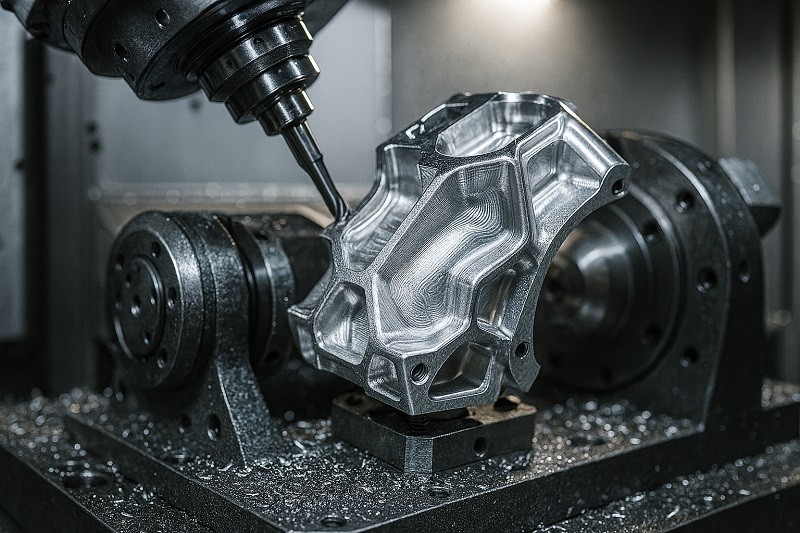
Despite its flexibility, 3D printing has well-known limitations, particularly concerning material properties and surface quality.
- Material Properties: The range of materials for 3D printing is more limited than for CNC machining. While new materials are constantly being developed, many 3D printed plastics do not match the strength, chemical resistance, or thermal stability of their machined counterparts. Furthermore, the layer-by-layer construction can create anisotropic properties, meaning the part is weaker along the layer lines than in other directions. This can be a significant concern for functional parts subjected to mechanical stress.
- Surface Quality: The surfaces of 3D printed parts, especially from FDM printers, have visible layer lines, resulting in a rougher finish compared to machined parts. While technologies like SLA offer smoother surfaces, most 3D printed parts require some form of post-processing—such as sanding, bead blasting, or vapor smoothing—to achieve a fine finish. This additional step adds time and cost to the process.
- Accuracy: While some 3D printing technologies can achieve good accuracy, they generally cannot match the tight tolerances of high-precision CNC machining.
Cost and Time Efficiency: Critical Factors for Custom Projects, Including Custom CNC Machined Parts
When balancing quality and budget, understanding the cost structures and time implications of CNC machining and 3D printing is paramount. The most economical and fastest choice depends heavily on the project's specific requirements, including production volume, part complexity, and material choice.
Analyzing Cost Structures for Custom CNC Machined Parts
The cost of producing custom CNC machined parts is influenced by several key factors: machine time, setup complexity, material costs, and labor. These elements create a cost structure that is quite different from that of 3D printing.
Setup Costs and Volume Considerations
A significant portion of the cost in CNC machining comes from the initial setup. This includes programming the machine with CAM software, preparing the tooling, and configuring the workholding fixtures. These are fixed, upfront costs that remain the same whether you produce one part or a thousand.
Because of this, the cost per part for CNC machining is highly dependent on production volume. For a single prototype, the cost can be relatively high as it must absorb the entire setup expense. However, as the production volume increases, this fixed cost is distributed across more units, causing the per-part cost to drop significantly. This principle, known as economies of scale, makes CNC machining extremely cost-effective for large production runs (typically 100+ parts) compared to 3D printing.
Material and Labor Costs for Custom CNC Machined Parts
Material costs are another major cost driver, representing anywhere from 30% to 60% of a project's total cost. Softer materials like aluminum are generally cheaper and easier to machine, resulting in lower costs. In contrast, harder or more exotic materials like titanium and stainless steel are more expensive and increase machining time and tool wear, which drives up the price. Because CNC is a subtractive process, the cost is also influenced by how much material must be removed; parts with large, solid volumes that require less cutting can sometimes be cheaper to machine than hollow ones.
Labor costs encompass skilled technicians who program the machines, oversee the process, and perform quality control. While the machines are automated, their operation requires more expertise and supervision than most desktop 3D printers. Hourly rates for CNC machining vary based on the machine's complexity (e.g., a 5-axis machine costs more per hour than a 3-axis one) and the geographic location of the service.
Cost Implications for 3D Printed Custom Parts
3D printing presents a different economic model. Its cost structure is often more straightforward for low volumes but can become less competitive as quantities scale up.
Per-Part Costs and Complexity
The primary cost drivers in 3D printing are machine time, the volume of material used, and the initial equipment investment. For most 3D printing processes, the cost per part remains relatively constant regardless of the production volume. Since there are minimal setup costs beyond preparing the digital file, it is highly economical for producing one-off parts or very small batches (typically 1-10 units).
A key advantage of 3D printing is that part complexity has little to no impact on the cost. Creating an intricate, organic shape costs roughly the same as printing a simple cube of the same size, whereas the same complexity would dramatically increase costs in CNC machining due to challenging toolpaths and multiple setups. This makes 3D printing the ideal choice for geometrically complex prototypes and custom components. The cost of materials can vary widely, with standard plastics like PLA being very affordable, while high-performance resins and metal powders are significantly more expensive.
Post-Processing and Iteration Costs
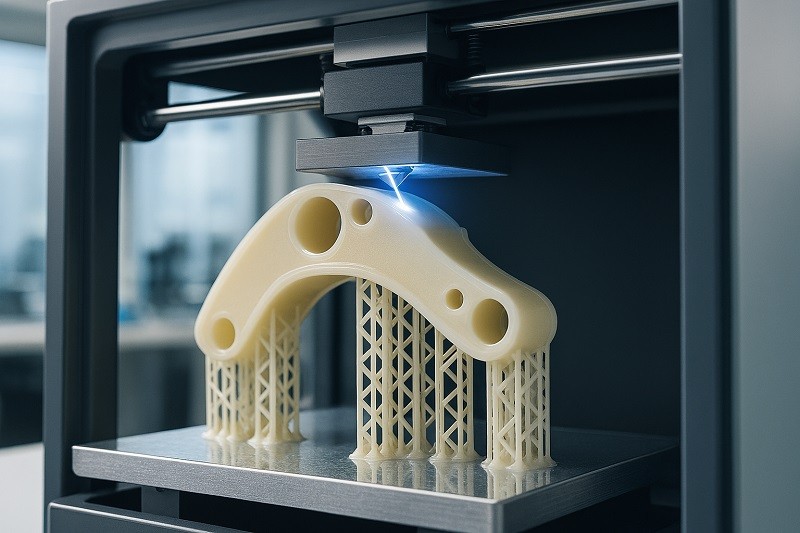
While printing itself may be straightforward, many 3D printed parts require post-processing to achieve the desired finish and mechanical properties, which adds to the overall cost and time. This can include support structure removal, sanding, polishing, UV curing, or painting. The labor and time involved in these steps should be factored into the total cost.
However, where 3D printing truly shines is in the cost of iteration. If a design needs to be modified after the first prototype, you can simply alter the CAD file and print a new version. The cost of this second part is the same as the first. In CNC machining, a design change might require reprogramming and a new setup, incurring additional costs that are often much higher than simply re-printing a part.
Speed and Turnaround Time for Custom Prototypes and Production Parts
The race to get products to market often comes down to speed. The "faster" method between CNC machining and 3D printing depends entirely on the context of the project.
- For Prototypes and Single Parts: 3D printing is generally much faster. With minimal setup required, a part can often be printed overnight from a digital file. CNC machining involves a longer initial setup time for programming and tooling, so even if the actual machining time is short, the total turnaround for a single part is typically longer.
- For Production Volumes: CNC machining quickly becomes the faster option as quantities increase. Once the initial setup is complete, CNC machines can produce parts at a much higher speed than 3D printers. For large batches, the time savings per part become substantial, making it the clear choice for volume production.
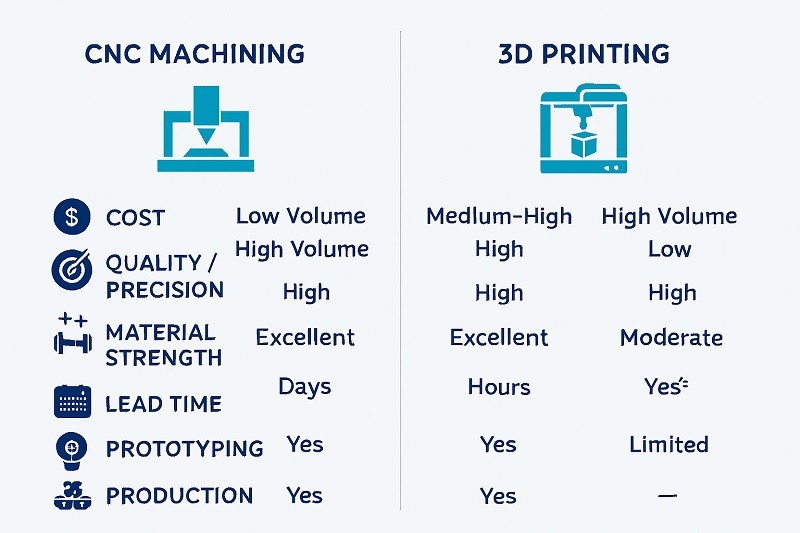
Here's a simple table summarizing the cost and speed dynamics:
| Feature | CNC Machining | 3D Printing |
|---|---|---|
| Setup Cost | High (tooling, programming) | Very Low (file preparation) |
| Cost for 1-10 Parts | High | Low |
| Cost for 100+ Parts | Low (economies of scale) | High (linear cost increase) |
| Cost vs. Complexity | Cost increases with complexity | Cost is largely independent of complexity |
| Turnaround for Prototypes | Slower (due to setup) | Faster (overnight prints possible) |
| Speed for Production | High | Low |
Ultimately, the most efficient method is a strategic choice based on balancing these factors against your project's specific needs for quality, budget, and timeline.
Strategic Selection: Choosing the Right Process for Your Custom CNC Machined Parts and Beyond
The decision between CNC machining and 3D printing is not a matter of one being universally better than the other. Instead, it's about making a strategic choice based on the specific needs of your project. By understanding the ideal use cases for each technology, you can optimize for quality, cost, and speed.
When Custom CNC Machining Excels
CNC machining is the go-to process when precision, material strength, and durability are non-negotiable. Its subtractive nature ensures parts have the full integrity of the block material they are carved from.
Functional Testing and High Durability for Custom CNC Machined Parts
For prototypes that need to undergo rigorous functional testing, CNC machining is often the superior choice. Because it can work with production-grade metals and plastics, the resulting prototypes have mechanical properties that are identical or very close to the final production part. This allows engineers to conduct meaningful tests for stress, thermal performance, and fatigue life. CNC machined parts are prized for their durability and strength, making them ideal for components that will be subjected to high loads or harsh operating conditions. The inherent material integrity, free from layer lines or internal inconsistencies, ensures reliable and predictable performance.
Production-Grade Materials and Tight Tolerances
CNC machining offers an unparalleled selection of materials, including a wide array of aluminum alloys, stainless steels, titanium, and various engineering plastics. This versatility means you can select a material that perfectly matches your application's requirements for strength, weight, corrosion resistance, and thermal stability. For industries like aerospace, automotive, and medical, where material certification and traceability are often required, CNC machining is the established standard.
Furthermore, the process is renowned for its ability to achieve exceptionally tight tolerances. While a standard tolerance might be around +/- 0.005”, specialized processes can reliably hold dimensions to +/- 0.0005” or even tighter. This level of precision is critical for parts that must fit together flawlessly in complex assemblies, ensuring proper alignment, reducing wear, and guaranteeing functional reliability.
When 3D Printing is the Optimal Choice for Custom Parts
3D printing shines brightest when design flexibility, speed for early-stage models, and cost-efficiency for low volumes are the primary concerns. Its additive approach opens up possibilities that are simply not feasible with traditional methods.
Complex Geometries and Design Freedom
One of the most compelling advantages of 3D printing is its ability to produce parts with highly complex geometries. It can create intricate internal channels for cooling, organic and lightweight lattice structures, and consolidated assemblies that combine multiple components into a single printed part. This design freedom allows engineers to optimize parts for performance and weight without the constraints imposed by traditional tool-based manufacturing. For designs that are geometrically complex, 3D printing is often the only viable and cost-effective option.
Rapid Prototyping and Early-Stage Iteration
3D printing has revolutionized rapid prototyping by dramatically accelerating the product development cycle. Designers can go from a digital CAD file to a physical part in a matter of hours, allowing them to quickly get a feel for the design, test for form and fit, and gather immediate feedback. This speed enables rapid iteration, where designs can be tweaked and reprinted multiple times in a short period. This iterative process helps identify design flaws early, reduces development costs, and ultimately leads to a more refined and successful final product. For low-volume production runs, typically up to 100 units, 3D printing remains a cost-effective and quick solution.
The Power of Hybrid Approaches for Custom Parts
The most advanced product development workflows often don't choose one process over the other but instead leverage the strengths of both. This hybrid approach offers a pragmatic and powerful path to creating optimized parts.
Combining Strengths for Optimal Outcomes, Including for Custom CNC Machined Parts
A hybrid manufacturing strategy combines the additive power of 3D printing with the precision of subtractive CNC machining. The workflow typically involves 3D printing a near-net-shape part, which captures the complex geometries and internal features, and then using CNC machining to finish critical surfaces and features that require tight tolerances and a smooth finish.
This integrated approach delivers the best of both worlds:
- Geometric Freedom with Precision: Create parts with complex internal structures and then machine the mating surfaces and mounting holes to exacting specifications.
- Reduced Waste and Cost: By printing the bulk of the part first, material waste from subtractive machining is minimized. For example, one case study showed a part costing €250 via full CNC machining was produced for only €15 using a hybrid approach.
- Accelerated Timelines: The speed of 3D printing for the initial form combined with targeted, faster machining cycles can significantly reduce overall lead times compared to machining a complex part from a solid block.
Real-World Applications in Various Industries
The hybrid approach is already making a significant impact across multiple sectors:
- Aerospace: Lightweight yet strong components, such as brackets with optimized lattice structures, are 3D printed and then machined on critical interfaces to ensure perfect alignment and strength.
- Medical: Custom patient-specific implants are created using additive manufacturing to match unique anatomies, followed by precision machining to achieve the necessary surface finish for biocompatibility and a perfect fit.
- Automotive: Rapid prototyping of complex engine components and custom jigs and fixtures often involves 3D printing for speed and design flexibility, with CNC machining used for final functional testing prototypes.
- Tool & Die: Molds with conformal cooling channels can be 3D printed to improve efficiency, and then the molding surfaces are machined to a high-quality finish.
By intelligently combining these two cornerstone technologies, manufacturers can push the boundaries of design, accelerate innovation, and create higher-performing parts more efficiently than ever before.
Navigating Industry-Specific Needs for Custom CNC Machined Parts and 3D Printed Solutions
Different industries impose unique demands on component manufacturing, from the extreme durability required in aerospace to the patient-specific customization needed in healthcare. The choice between CNC machining and 3D printing is often dictated by these sector-specific requirements for performance, materials, and aesthetics.
Aerospace and Automotive: Precision and Performance for Custom CNC Machined Parts
In the aerospace and automotive industries, safety, reliability, and performance are paramount. Components must withstand extreme temperatures, high pressures, and constant vibration. For these reasons, CNC machining is the dominant manufacturing process.
- Aerospace: The aerospace sector relies on CNC machining to produce flight-critical components with exacting precision and material integrity. Parts like turbine blades, structural frames, manifolds, and landing gear components are machined from high-strength, lightweight materials such as titanium alloys, aluminum, and nickel superalloys. CNC machining ensures that these parts meet the stringent tolerances (often within microns) and rigorous quality standards (like AS9100) required for flight safety. The ability to produce strong, consistent, and fully traceable parts makes CNC machining indispensable.
- Automotive: In the automotive world, CNC machining is essential for producing high-performance engine components, transmission parts, and suspension systems where precision directly impacts vehicle performance and safety. Parts like cylinder heads, crankshafts, and brake rotors require the tight tolerances and superior surface finishes that CNC provides to ensure efficiency, durability, and smooth operation. The process is used for everything from rapid prototyping of engine parts to mass production of critical components.
Medical Devices and Healthcare: Tailored Solutions for Custom Parts
The medical field requires a unique blend of precision, biocompatibility, and customization. Both 3D printing and CNC machining play vital, often complementary, roles in meeting these needs.
- 3D Printing for Customization: 3D printing has revolutionized healthcare by enabling the creation of patient-specific devices. Using data from CT or MRI scans, surgeons and medical engineers can design and print custom implants (such as cranial or orthopedic implants), surgical guides, and anatomical models that are perfectly tailored to an individual's anatomy. This level of personalization improves surgical outcomes, reduces operation times, and enhances patient comfort. Materials like biocompatible polymers and metals such as titanium are commonly used for these applications.
- CNC Machining for Precision and Durability: For standard medical instruments, surgical tools, and durable implants that require superior strength and flawless surface finishes, CNC machining remains the primary choice. The process can work with a wide range of biocompatible materials, including stainless steel and titanium, producing parts with the high precision and reliability needed for critical medical applications. While 3D printing is excellent for one-off custom devices, CNC machining is better suited for the production of standardized, high-strength medical components.
Consumer Electronics and Industrial Design: Aesthetics and Functionality in Custom Parts
In the consumer electronics and industrial design sectors, the final product must balance aesthetic appeal with robust functionality. Here, both 3D printing and CNC machining are used at different stages of the development cycle.
- 3D Printing for Prototyping and Aesthetics: 3D printing is heavily utilized for rapid prototyping in consumer electronics. It allows designers to quickly create physical models of products like smartphone cases, wearables, and other gadgets to test their form, fit, and feel. The ability to produce complex shapes and textures gives designers immense creative freedom, helping them refine the product's ergonomics and appearance.
- CNC Machining for Functional Prototypes and Production: When functional prototypes are needed to test the internal mechanics or durability of a device, CNC machining is often used. It can produce parts from materials that simulate the final production plastic or metal, allowing for more realistic performance testing. For final production parts, especially those that serve as internal structural components or require a premium metallic finish, CNC machining provides the necessary strength, precision, and high-quality appearance.
By understanding the distinct advantages each technology offers, companies can strategically apply them to meet the specific challenges and standards of their industry, ensuring the final product is optimized for both performance and cost.
Optimizing Your Manufacturing Workflow: Best Practices for Custom CNC Machined Parts and 3D Printing
To truly balance cost and quality, it’s not enough to just choose the right technology; you must also optimize your design for it. Adopting Design for Manufacturability (DFM) principles and leveraging modern digital tools can dramatically streamline your workflow, reduce costs, and accelerate your time to market.
Design Strategies for Manufacturability (DFM)
Design for Manufacturability is the practice of designing parts with the specific manufacturing process in mind to make them easier, faster, and more cost-effective to produce. By considering the capabilities and limitations of either CNC machining or 3D printing from the outset, you can avoid costly redesigns and production delays.
Principles for Custom CNC Machined Parts
Effective DFM for CNC machining is centered on reducing complexity, machine time, and the need for specialized tooling. Some key principles include:
- Avoid Sharp Internal Corners: CNC cutting tools are cylindrical and therefore cannot create perfectly sharp internal corners. Always design internal corners with a radius that is as large as possible, ideally at least 1/3 of the cavity’s depth. This allows for the use of larger, more rigid tools, which reduces machining time and improves surface finish.
- Limit the Depth of Pockets: Deep pockets are difficult and time-consuming to machine. A good rule of thumb is to limit the depth of any cavity to four times its width. Exceeding this ratio can cause tool deflection, vibration, and difficulty with chip evacuation, leading to longer cycle times and higher costs.
- Design for Standard Tool Sizes: Whenever possible, design holes, threads, and other features to match standard drill and tap sizes. Using non-standard dimensions requires custom tooling, which adds significant cost and lead time.
- Minimize Thin Walls: Walls that are too thin are prone to vibration, warping, and breakage during machining. A recommended minimum wall thickness is 0.8mm for metal parts and 1.5mm for plastics.
- Use Tolerances Wisely: Only apply tight tolerances to features that are absolutely critical for the part’s function. Over-tolerancing adds significant cost and time, as it may require additional finishing operations and more rigorous inspection.
Considerations for 3D Printed Custom Parts
DFM for 3D printing focuses on minimizing print time, material usage, and the need for support structures, while ensuring the part is strong enough for its application.
- Optimize Part Orientation: The way a part is oriented on the build plate affects its strength, surface finish, and the amount of support material needed. Since 3D printed parts are typically weakest along the layer lines (Z-axis), orient the part so that critical stresses are applied along the X-Y plane.
- Minimize Overhangs and Supports: Overhangs are features that are not fully supported by the layer below. Most printers can handle overhangs up to a 45-degree angle without support. Designing parts to avoid steep angles or incorporating self-supporting features like chamfers can reduce the need for support structures, which saves material, reduces print time, and minimizes post-processing marks.
- Maintain Appropriate Wall Thickness: While 3D printing allows for very thin features, walls that are too thin can be fragile and warp. A minimum wall thickness of 0.8mm to 1.0mm is a safe guideline for most technologies to ensure structural integrity.
- Hollow Out Solid Models: For parts that don't need to be solid, hollowing them out can significantly reduce material consumption and print time. For FDM, this is achieved by adjusting the infill percentage. For SLS and SLA, it is crucial to add escape holes to allow unused powder or liquid resin to be removed from the hollow cavity.
Leveraging Online Manufacturing Platforms for Custom Parts
In today's fast-paced environment, online manufacturing platforms have emerged as a powerful tool for streamlining the entire production process, from quoting to delivery. These platforms connect engineers and designers with a global network of vetted manufacturing partners.
Automated Quoting and Design Analysis
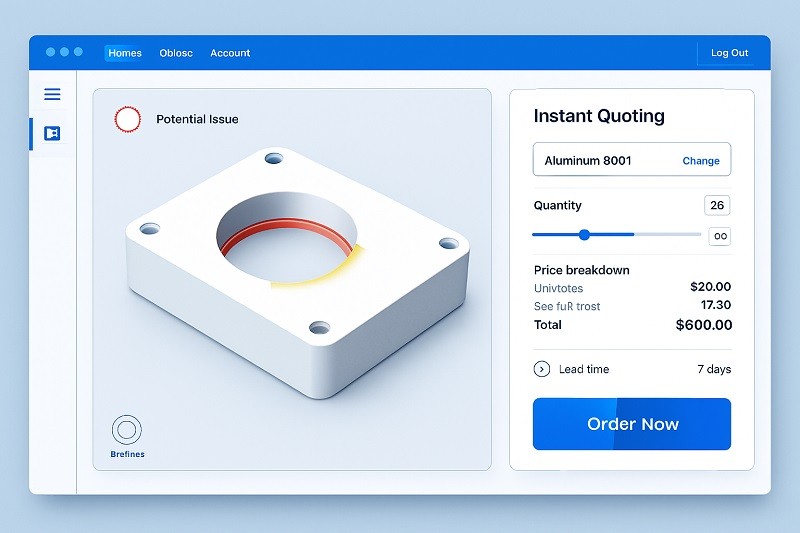
One of the biggest advantages of online manufacturing platforms is the ability to get instant, automated quotes for both CNC machining and 3D printing. By simply uploading a 3D CAD file, you can receive pricing in seconds or minutes, a process that used to take days or weeks with traditional quoting methods.
Many of these platforms also offer automated DFM analysis. The software analyzes your design and provides immediate feedback, highlighting features that may be difficult or expensive to manufacture, such as deep pockets, thin walls, or unmachinable internal corners. This allows you to make cost-saving adjustments to your design before ever placing an order, aligning engineering and production from the very start.
Streamlined Workflows and Real-Time Tracking for Custom CNC Machined Parts
Online platforms consolidate the entire manufacturing workflow into a single, digital interface. This eliminates the need to manage multiple suppliers, negotiate contracts, and handle logistics separately. The result is a more efficient and transparent process that reduces administrative overhead and minimizes the risk of communication errors.
A key benefit of these streamlined workflows is real-time production tracking. These systems provide continuous monitoring of your manufacturing orders, offering up-to-the-minute updates on the status of your parts. This transparency allows you to anticipate delivery times accurately, identify potential bottlenecks early, and make better-informed decisions. For businesses that depend on just-in-time production or have tight project deadlines, the ability to track every step of the manufacturing journey is an invaluable advantage.
By combining smart design strategies with the power of digital manufacturing platforms, you can effectively optimize your projects for an ideal balance of cost, quality, and speed.
Conclusion
Ultimately, the decision between 3D printing and CNC machining for custom parts is not about which technology is inherently superior, but which is best suited to your specific project requirements. By carefully evaluating factors like material properties, geometric complexity, desired precision, production volume, and budget, we can make informed choices that optimize both cost and quality.
A hybrid approach often offers the most pragmatic solution, allowing us to leverage the speed and design freedom of 3D printing for early iterations, and the precision and material integrity of CNC machining for functional prototypes and custom CNC machined parts. For bespoke solutions in both CNC Machining and 3D Printing, SOMI Custom Parts provides manufacturing and OEM services to clients worldwide, ensuring optimal results every time.