How a Custom CNC Milling Parts Manufacturer Delivers Precision Machining
- Share
- Issue Time
- Jan 23,2026
Summary
How custom CNC milling manufacturers achieve micron-level precision, material versatility, and rapid prototyping for aerospace, medical, and automotive industries.
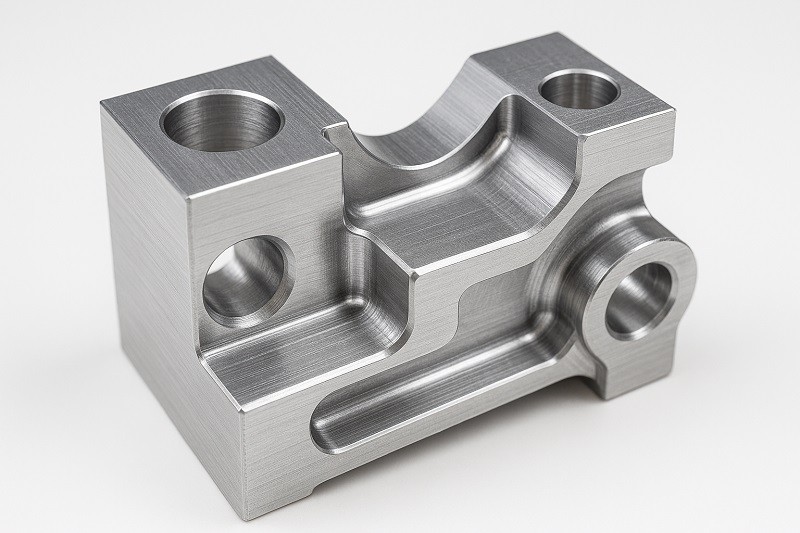
As an expert in manufacturing, I understand that precision, reliability, and speed are crucial in today's industrial world. Custom CNC milling is a powerful approach that delivers tailored performance and durability, ensuring our machines operate optimally, last longer, and require less unplanned maintenance. This technology is instrumental for creating bespoke components that are not available off-the-shelf, solving unique engineering challenges across countless sectors. This blog will explore how a custom CNC milling parts manufacturer achieves unparalleled precision and efficiency, meeting diverse industrial needs from aerospace to medical devices.
Understanding Custom CNC Milling: What a Custom CNC Milling Parts Manufacturer Does
Custom CNC (Computer Numerical Control) milling is a sophisticated manufacturing process that uses computerized controls and rotating multi-point cutting tools to remove material from a workpiece and produce a custom-designed part. Unlike standard manufacturing where generic parts are mass-produced, custom machining focuses on creating components tailored to very specific requirements, often involving complex geometries, tight tolerances, and unique materials. A custom CNC milling parts manufacturer serves as a critical partner for innovators and engineers, turning digital blueprints into tangible, high-precision products that drive performance and reliability.
The Essence of Customization in CNC Milling
The core of custom CNC milling lies in its ability to move beyond the limitations of standardized parts. It provides bespoke solutions that are engineered for a specific function, environment, and performance standard, offering a level of precision and adaptability that off-the-shelf components simply cannot match.
Tailored Solutions for Unique Needs
Custom machining is the process of creating parts that do not exist anywhere else. This becomes necessary when a component requires a non-standard size, a specific material composition, or is part of a new invention not yet available from suppliers. A custom CNC milling parts manufacturer works directly from a client's 2D drawings or 3D CAD models to machine a part to exact specifications. This tailored approach is essential in applications where unique geometry and tight tolerances are critical to the product's integrity and function. By creating parts designed for a specific purpose, companies can significantly improve performance, enhance compatibility with existing systems, and meet specialized market demands, potentially leading to innovative designs that provide a competitive edge.
Beyond Standard Parts
While standard, off-the-shelf parts are suitable for many applications, they often fall short in high-performance or specialized scenarios. Custom CNC milling becomes indispensable when:
- Complex Geometries are Required: CNC machines, especially 5-axis models, can produce parts with intricate shapes, curves, and undercuts that are impossible to create with standard methods.
- Specific Materials are Necessary: A project may require a material with specific properties like high strength-to-weight ratio (e.g., titanium), corrosion resistance (e.g., stainless steel 316L), or biocompatibility (e.g., PEEK), which are not available in standard components.
- Tight Tolerances are Non-Negotiable: Industries like aerospace and medical devices demand exceptionally high precision to ensure safety and functionality. Custom machining can achieve tolerances as tight as ±0.0002 inches (±0.005 mm) or better.
By moving beyond standard parts, companies can avoid the compromises in design and performance that often come with generic components, leading to more durable, efficient, and reliable end products.
The Custom CNC Milling Process
The journey from a digital concept to a physical component is a systematic process managed by the custom CNC milling parts manufacturer. It blends digital design, automated machinery, and expert oversight to ensure every part is produced with accuracy and consistency.
From Digital Blueprint to Physical Part
The custom CNC milling workflow is a highly automated and precise journey from concept to reality. The process generally follows four key stages:
- CAD Model Design: Engineers create a 2D or 3D digital blueprint of the part using Computer-Aided Design (CAD) software. This file contains all the geometric information and dimensional specifications.
- Conversion to CNC Program: The CAD file is then imported into Computer-Aided Manufacturing (CAM) software. The CAM software translates the model into a set of instructions, known as G-code, that the CNC machine can understand. This code dictates the cutting tool's movements, speed, and other critical parameters.
- Machine Setup: An operator prepares the CNC milling machine by loading the raw material (workpiece) onto the machine's table and installing the appropriate cutting tools in the spindle. They then load the G-code program into the machine's control panel.
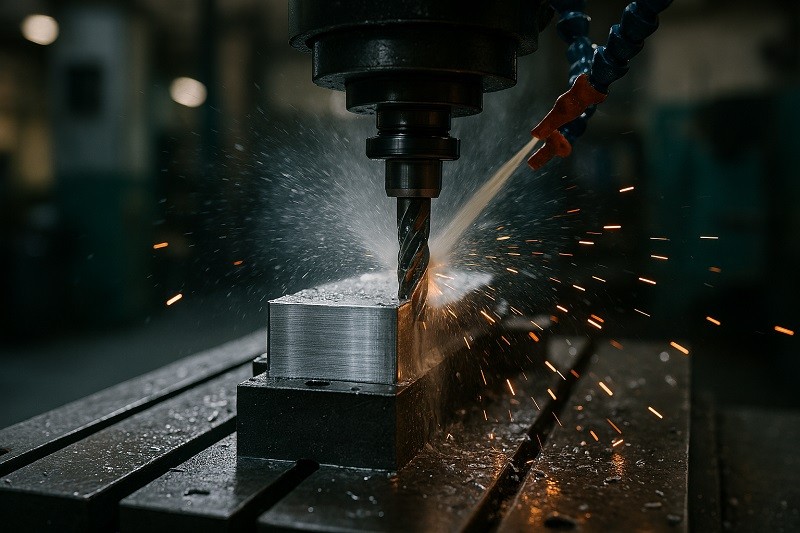
- Execution of the Milling Operation: The operator initiates the program, and the CNC machine autonomously executes the milling process. The cutting tool rotates at high speed, moving along multiple axes to cut away material and shape the part according to the programmed instructions. Once complete, the finished part is inspected for quality.
This digital-to-physical workflow minimizes the potential for human error and ensures that the final part perfectly matches the original design intent.
Tools and Techniques of a Custom CNC Milling Parts Manufacturer
A custom CNC milling parts manufacturer employs a diverse array of tools and techniques to create parts with varying complexities and features. The choice of tool and technique depends on the material, part geometry, and required surface finish.
Key Tools:
- End Mills: These are the most common milling cutters, used for facing, slotting, and peripheral milling. They come in various shapes (flat, ball, bull nose) and sizes.
- Face Mills: Used to create flat surfaces on the top of a workpiece.
- Drills and Taps: For creating holes and internal threads.
Milling Techniques and Machine Types: The "axes" of a CNC machine refer to the number of directions the cutting tool or workpiece can move.
| Machine Type | Description | Common Applications |
|---|---|---|
| 3-Axis CNC Milling | The cutting tool moves along the X, Y, and Z axes (left-right, front-back, up-down). The workpiece remains stationary. | Simpler geometries, drilling holes, cutting slots, creating flat surfaces. Ideal for parts like fuel pumps and motor housings. |
| 4-Axis CNC Milling | Adds a rotational axis (A-axis) to the standard 3-axis setup, allowing the workpiece to be rotated during milling. | Machining cylindrical parts or features on multiple sides of a part in a single setup. |
| 5-Axis CNC Milling | Includes two rotational axes (A and B axes) in addition to the three linear axes. This allows the cutting tool to approach the workpiece from virtually any angle. | Highly complex and intricate geometries, such as turbine blades, impellers, and medical implants, often in a single setup. |
The ability to use multi-axis machining is a hallmark of an advanced custom CNC milling parts manufacturer, as it reduces setup time, improves accuracy, and enables the creation of exceptionally complex components.
The Unmatched Advantages of a Custom CNC Milling Parts Manufacturer
Choosing a custom CNC milling parts manufacturer provides a host of benefits that are essential for modern industrial applications. These advantages range from unparalleled precision and material versatility to greater cost-effectiveness and faster product development cycles. By leveraging these benefits, companies can enhance product quality, accelerate innovation, and gain a significant competitive advantage.
Precision and Accuracy in Every Custom CNC Milling Part
At the heart of CNC milling is its ability to produce parts with a level of precision and consistency that manual processes cannot replicate. This accuracy is fundamental to the performance and reliability of critical components in demanding industries.
Eliminating Human Error and Ensuring Consistency
One of the most significant advantages of CNC machining is its automation, which drastically reduces the potential for human error. Once a program is created and verified, the machine can execute the same cuts and movements with flawless repeatability for hundreds or thousands of parts. This ensures that every component in a production run is virtually identical, maintaining consistent quality from the first part to the last. This consistency is crucial for applications requiring interchangeable parts and predictable performance, as it minimizes the need for rework and lowers the risk of component failure.
Achieving Tight Tolerances for Complex Designs
A tolerance is the acceptable range of variation in a part's dimensions. Custom CNC milling excels at achieving extremely tight tolerances, often in the range of ±0.001 inches or even as fine as ±0.0002 inches (0.005 mm). This micro-level precision is vital for complex designs where components must fit together perfectly to ensure proper function, reduce wear and vibration, and extend the equipment's lifespan. Advanced machinery, such as 5-axis mills, combined with precise programming and stable fixtures, allows manufacturers to produce intricate geometries while holding these critical dimensional standards, something essential for industries like aerospace and medical device manufacturing.
Flexibility and Material Versatility with a Custom CNC Milling Parts Manufacturer
A key strength of a custom CNC milling parts manufacturer is the ability to adapt to a vast range of materials and design requirements. This flexibility allows engineers to select the perfect combination of material and geometry to meet the specific demands of their application.
A Wide Range of Materials Handled
Custom CNC milling is not limited to a single type of material. Expert manufacturers have the capability to machine a wide variety of substances, each chosen for its unique properties like strength, weight, hardness, temperature resistance, or chemical stability. The choice of material directly impacts the machining process, including cutting speeds, tool selection, and the need for coolants.
| Material Category | Examples | Key Properties & Applications |
|---|---|---|
| Metals | Aluminum (e.g., 6061, 7075), Stainless Steel (e.g., 304, 316L), Titanium, Brass, Copper | Aluminum offers a great strength-to-weight ratio. Stainless steel provides corrosion resistance. Titanium is exceptionally strong, lightweight, and biocompatible. |
| Plastics | PEEK, ABS, Polycarbonate, Nylon, Delrin (Acetal), PTFE | PEEK offers high-temperature resistance and strength. ABS is a common, versatile plastic. Delrin provides excellent machinability and low friction. |
| Composites | Carbon Fiber, Fiberglass | Offer very high strength-to-weight ratios, ideal for lightweighting applications in aerospace and automotive industries. |
Proficiency across this spectrum of materials allows a manufacturer to serve diverse industries and applications effectively.
Adapting to Diverse Design Requirements
Custom CNC milling is inherently flexible, allowing manufacturers to adapt their processes to suit nearly any design. Unlike molding or casting, which require expensive and fixed tooling, CNC programs can be easily modified to accommodate design changes. This makes it simple to adjust features, correct flaws, or create different versions of a part. Furthermore, a collaborative manufacturer will often provide Design for Manufacturability (DFM) feedback, helping clients optimize their designs to reduce machining time, lower costs, and improve the final part's quality without compromising its function.
Cost-Effectiveness and Efficiency Through Custom CNC Milling
While custom parts can have a higher per-unit cost than mass-produced standard items, the overall process offers significant cost-effectiveness and efficiency, especially for prototyping and low-to-medium volume production runs.
Reduced Waste and Optimized Production
CNC milling is a subtractive process, meaning it cuts material away from a solid block. While this inherently creates some waste in the form of chips, modern CAM software helps optimize toolpaths to remove material as efficiently as possible, minimizing scrap. The high precision of the process also dramatically reduces the number of rejected parts, further preventing material and energy waste. This optimization leads to more sustainable and budget-friendly production.
Accelerated Prototyping and Faster Time-to-Market
In today's competitive landscape, speed is critical. Custom CNC milling is one of the fastest ways to turn a digital design into a functional, high-fidelity prototype. Unlike processes like injection molding that require long lead times for tool creation, a CNC machine can be programmed and set up in a matter of hours or days. This allows engineers to get physical parts in their hands quickly for testing, validation, and iteration. By accelerating the prototyping phase, custom CNC machining helps identify design issues early, shortens the overall product development cycle, and enables companies to bring their products to market much faster.
Applications Across Industries: How a Custom CNC Milling Parts Manufacturer Serves Diverse Needs
The precision, versatility, and efficiency of custom CNC milling make it an indispensable technology across a wide spectrum of industries. From mission-critical aerospace components to life-saving medical devices, a custom CNC milling parts manufacturer provides the essential capability to produce parts that meet the most stringent demands for quality, reliability, and performance.
Key Industries Benefiting from Custom CNC Milling Parts
Nearly every industry that relies on high-performance machinery and components can benefit from custom CNC milling. However, some sectors depend on it more heavily due to their need for complex geometries, exotic materials, and uncompromising precision.
Aerospace and Automotive: Critical Components
In the aerospace and automotive sectors, safety and performance are paramount. CNC machining is pivotal for producing high-strength, lightweight components that can withstand extreme conditions.
- Aerospace: Manufacturers produce parts like turbine blades, engine mounts, landing gear components, and structural airframe elements such as ribs and spars. Materials like titanium alloys and high-strength aluminum (e.g., 7075) are commonly used for their excellent strength-to-weight ratios and resistance to fatigue and high temperatures.
- Automotive: The industry uses CNC milling for everything from engine blocks and crankshafts to custom components for high-performance and electric vehicles. It allows for the rapid prototyping of new designs and the production of parts that enhance fuel efficiency and durability.
Medical and Electronics: Intricate Designs
The medical and electronics industries require extremely small, intricate parts with flawless accuracy.
- Medical: CNC machining is used to create surgical instruments (scalpels, forceps), custom orthopedic implants (hip and knee replacements), and components for diagnostic equipment like MRI and CT scanners. Biocompatible materials such as titanium and PEEK are machined to create devices that are safe for use inside the human body. The precision of CNC milling ensures these devices fit perfectly and function reliably.
- Electronics: Manufacturers produce custom heatsinks, connectors, and enclosures for various electronic devices. These parts often have complex features for heat dissipation and require tight tolerances to ensure proper assembly and protection of sensitive internal components.
Oil & Gas, and Industrial Machinery: Heavy-Duty Applications
For heavy-duty applications, durability and reliability under harsh conditions are key.
- Oil & Gas: This industry relies on CNC machining for robust components like valves, flanges, and parts for drilling equipment. These components must be made from corrosion-resistant materials to withstand harsh environmental exposure.
- Industrial Machinery: Custom CNC milling is used to produce gears, shafts, custom fixtures, and other components for large-scale processors, conveyor systems, and robotic arms. Machining these parts to precise specifications ensures that the machinery operates smoothly, lasts longer, and requires less maintenance.
From Prototyping to Production with a Custom CNC Milling Parts Manufacturer
A versatile custom CNC milling parts manufacturer can support a project's entire lifecycle, from the initial concept validation with a single prototype to full-scale production runs of thousands of units.
Rapid Prototyping and Design Validation
CNC machining is an ideal method for rapid prototyping because it allows designers to create highly accurate, functional prototypes from production-grade materials. This is a significant advantage over other methods like 3D printing, where prototype materials may not have the same mechanical properties as the final product. A CNC-milled prototype can be subjected to rigorous real-world testing for form, fit, and function. This rapid iteration process allows for quick design adjustments and validation, helping to identify and resolve potential issues early and minimize costly setbacks during mass production.
Scalable Solutions for Various Production Volumes
Custom CNC milling is uniquely scalable, making it economically viable for a wide range of production volumes.
- Low-Volume Production: For quantities from one to several hundred parts, CNC milling is often more cost-effective than methods like injection molding or casting, which involve high upfront tooling costs.
- Medium-to-High Volume Production: Thanks to automation, a CNC machine can run continuously with minimal oversight, making it efficient for producing larger batches of consistent, high-quality parts. A skilled manufacturer can seamlessly scale from producing a few prototypes to a full production run, providing a flexible and reliable supply chain for their clients.
Choosing the Right Custom CNC Milling Parts Manufacturer for Your Project
Selecting the right manufacturing partner is as critical as the design of the part itself. A capable and trustworthy custom CNC milling parts manufacturer will not only deliver high-quality components but will also act as a valuable partner in optimizing your design and production process. Evaluating potential manufacturers on their experience, technical capabilities, quality control, and communication is key to a successful outcome.
Key Factors to Evaluate in a Custom CNC Milling Parts Manufacturer
When vetting potential partners, it's crucial to look beyond the price quote and assess the depth of their expertise and the robustness of their operations. A manufacturer's experience and technical prowess are direct indicators of their ability to handle your project's specific needs.
Assessing Experience and Expertise
A manufacturer's track record provides valuable insight into their capabilities. When evaluating experience, consider the following:
- Industry Specialization: Look for a manufacturer with demonstrated experience in your specific industry, whether it's aerospace, medical, automotive, or another sector. They will have a better understanding of the unique standards, materials, and challenges associated with your field.
- Portfolio and Case Studies: Review their past work. A reputable manufacturer should be able to provide examples of complex parts they have produced, which can serve as proof of their skills and capabilities.
- Years in Business: While not the only factor, a long-standing history in the industry often indicates stability, reliability, and accumulated knowledge.
Considering Technical Capabilities and Quality Control
The quality of a manufacturer's equipment and processes is fundamental to the quality of their output. This is where you can assess their commitment to precision and reliability.
- Machinery and Technology: Inquire about the types of CNC machines they operate. Do they have modern 3-axis, 4-axis, and 5-axis machines? Advanced equipment is necessary for producing complex geometries with high precision and efficiency.
- Quality Control Processes: A rigorous quality control system is non-negotiable. Ask about their inspection procedures, such as First Article Inspection (FAI), in-process checks, and final inspection.
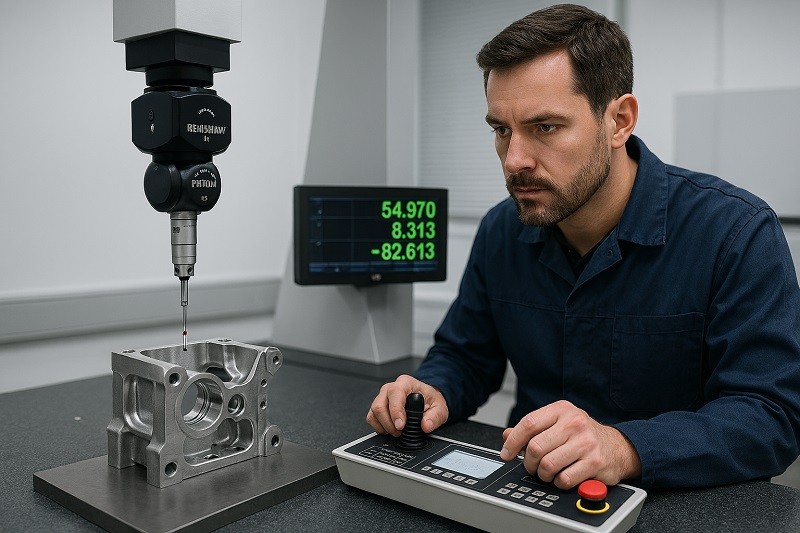
- Inspection Equipment: A commitment to quality is also reflected in their investment in measurement tools. Look for the use of calibrated instruments like micrometers, calipers, and especially Coordinate Measuring Machines (CMM), which provide highly accurate dimensional verification.
The Importance of Communication and Support from Your Custom CNC Milling Parts Manufacturer
Beyond technical skills, the "soft skills" of a manufacturer—communication, flexibility, and a commitment to standards—are what elevate them from a simple supplier to a true strategic partner.
Responsive and Flexible Partnerships
A great manufacturing partner operates as an extension of your own team. They should be responsive, transparent, and flexible. Look for a manufacturer that:
- Provides DFM Feedback: Offers constructive input on how to improve your design for better manufacturability, lower costs, and higher quality.
- Communicates Clearly: Keeps you informed about production status, timelines, and any potential issues that arise.
- Adapts to Changes: Is willing and able to accommodate reasonable changes to design or delivery schedules when necessary.
This collaborative approach ensures a smooth process and helps prevent misunderstandings or costly errors.
Certifications and Industry Standards
Certifications are a formal validation of a manufacturer's commitment to quality, safety, and process control. They provide objective proof that a company adheres to strict, internationally recognized standards, which is a powerful indicator of trustworthiness.
Key certifications to look for include:
| Certification | Industry | What It Signifies |
|---|---|---|
| ISO 9001 | General Manufacturing | A certified Quality Management System (QMS) is in place, demonstrating a commitment to customer satisfaction and continual improvement. |
| AS9100 | Aerospace | Includes all requirements of ISO 9001 plus additional, more stringent standards for quality, safety, and traceability specific to the aerospace industry. |
| ISO 13485 | Medical Devices | Specifies requirements for a QMS for medical device manufacturing, ensuring product safety and regulatory compliance. |
| NIMS | Workforce Skills | The National Institute for Metalworking Skills (NIMS) certification demonstrates that operators have proven competencies in machine setup, operation, and quality checks. |
Partnering with a certified manufacturer minimizes risk and provides assurance that your parts will be produced according to the highest industry benchmarks for quality and reliability.
Conclusion
In conclusion, a custom CNC milling parts manufacturer is essential for achieving the precision, durability, and tailored performance required in modern manufacturing. Their role goes far beyond simple fabrication; they are key partners in innovation, enabling the creation of complex, high-performance components that define industries from aerospace to healthcare. By leveraging advanced machinery, a wide range of materials, and stringent quality controls, these manufacturers turn ambitious designs into reality.
By understanding their processes, appreciating the advantages of custom machining, and knowing how to choose the right partner, you can ensure your projects benefit from the highest quality components. The selection process should be a careful evaluation of experience, technical capability, communication, and certified quality standards.
We believe that by leveraging the expertise of a trusted custom CNC milling parts manufacturer, you can unlock innovation, accelerate your time-to-market, and ultimately drive the success of your products. When precision matters, a dedicated manufacturing partner makes all the difference.