How Injection Molding Achieves Superior Surface Finishes for Consumer Electronics
- Share
- Issue Time
- Apr 23,2026
Summary
This article explains how injection molding achieves superior surface finishes for consumer electronics, covering standards SPI, VDI, Mold-Tech, material selection, process parameters, advanced techniques and post-treatment.
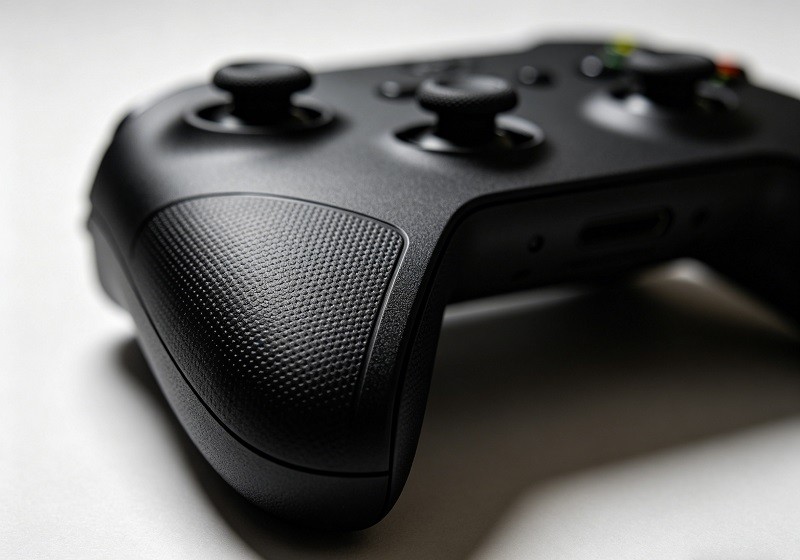
When it comes to consumer electronics, we know that a flawlessly smooth or perfectly textured surface isn't just about looking good; it's about the first impression, how a product feels in our hands, and its overall quality. At our core, we understand that achieving these superior surface finishes is paramount, and that's where injection molding truly shines as a manufacturing process. We're going to explore how injection molding delivers exceptional aesthetic and functional surface qualities for your devices.
The Foundation: Understanding Surface Finish Standards and Types for Consumer Electronics
The perceived value and usability of a consumer electronic device are significantly influenced by its surface finish. From the glossy sheen of a new smartphone to the tactile, grippy texture of a gaming controller, the surface is the primary point of interaction between the user and the product. Achieving the perfect finish is a science, governed by established industry standards that ensure consistency and quality.
What Defines a Superior Surface Finish?
A superior surface finish is one that is free of defects and perfectly matches the design intent, whether for aesthetic appeal, functional performance, or both. For consumer electronics, this means no visual imperfections like sink marks, flow lines, or inconsistent gloss, which can detract from a product's premium feel. Functionally, the right surface texture can enhance grip, resist wear and fingerprints, or ensure proper sealing.
A quality finish directly impacts part durability and performance; for instance, a specific texture can improve wear resistance, extending the product's life. Conversely, poor surface quality, such as an uneven texture or visible defects like weld lines or blush marks, can signal inferior quality to the consumer and may even lead to premature failure. Therefore, a superior finish is a critical aspect of product development, influencing everything from material selection to the final processing parameters.
Our Guiding Standards: SPI, VDI, and Mold-Tech
To ensure clear communication and consistent results between designers, engineers, and manufacturers, the plastics industry relies on several standardized systems for defining surface finishes. The three most globally recognized standards are SPI, VDI, and Mold-Tech.
SPI (Society of the Plastics Industry) Standards: Predominantly used in North America, the SPI standard specifies finishes based on the mold's polishing method. It is divided into four main categories (A, B, C, and D), which range from a mirror-like high gloss to a dull matte.
- Category A: Achieved with diamond buffing, producing a super-smooth, glossy, mirror-like finish ideal for lenses and transparent parts.
- Category B: Created using fine sandpaper, resulting in a semi-gloss finish that is good for hiding minor tool marks.
- Category C: Produced with grit sanding stones, leaving a matte finish with a rougher texture than Category B.
- Category D: Accomplished by pressure blasting the mold with abrasives like glass beads, resulting in a dull or flat finish.
VDI (Verein Deutscher Ingenieure) 3400 Standards: This German standard is now used worldwide and focuses on defining textured surfaces, particularly those created by Electrical Discharge Machining (EDM). The VDI 3400 standard includes 45 grades, numbered from 0 to 45, where a lower number indicates a finer, smoother texture and a higher number represents a coarser, rougher texture. It's important to note that VDI grades are all matte textures and do not include mirror-polish finishes.
Mold-Tech: Unlike SPI and VDI which provide standardized linear textures and finishes, Mold-Tech offers a vast catalog of complex, often proprietary, decorative patterns. These textures can mimic natural materials like leather, wood grain, stone, or geometric patterns, providing endless aesthetic possibilities for product designers.
The choice between these standards depends on the desired outcome. SPI is often chosen for parts requiring high gloss or transparency. VDI 3400 is the go-to for achieving consistent, functional matte and textured surfaces. Mold-Tech is selected when a unique, decorative, and aesthetic pattern is the primary goal.
Here is a comparative overview of these standards:
| Standard | Primary Focus | Method | Common Applications in Consumer Electronics |
|---|---|---|---|
| SPI | Glossy & Polished Finishes | Mold Polishing (Diamond, Sandpaper, Stone) | High-gloss smartphone cases, transparent screens, optical lenses. |
| VDI 3400 | Textured & Matte Finishes | EDM (Electrical Discharge Machining) | Anti-glare laptop casings, matte-finish smart speakers, non-slip surfaces. |
| Mold-Tech | Decorative & Patterned Textures | Chemical Etching, Laser Engraving | Leather-like camera bodies, wood-grain speaker panels, patterned remote controls. |
An important consideration when specifying a textured finish, especially rougher VDI or Mold-Tech grades, is the draft angle. Deeper textures increase friction and can make part ejection difficult, so larger draft angles are necessary to ensure a smooth release from the mold without scuffing the surface.
Common Aesthetics: High-Gloss, Matte, and Textured Options for Consumer Electronics
The aesthetic of consumer electronics is a powerful marketing tool, and the surface finish is at the heart of this visual and tactile appeal. The three most prevalent categories of Consumer Electronics Surface finishesare high-gloss, matte, and textured.
High-Gloss Finishes A high-gloss or "Class A" finish provides a smooth, mirror-like surface that exudes premium quality. This look is often achieved using SPI A-grade polishes on the mold, which must be polished to an extremely low surface roughness, often using diamond buffing techniques. This requires meticulous mold maintenance, as any scratch or imperfection on the mold surface will be directly transferred to the final part.
- Applications: Smartphone backs, television bezels, laptop lids, and premium audio equipment.
- Challenges: Susceptible to showing fingerprints, smudges, and fine scratches.
Matte Finishes Matte finishes offer a non-reflective, subtle, and sophisticated look. They are excellent at hiding fingerprints and minor surface imperfections, making them highly practical for frequently handled devices. These finishes are typically achieved using SPI C or D grades, or finer VDI textures (e.g., VDI 18-27). The dulling effect is created by preparing the mold surface with fine stone polishing or bead blasting.
- Applications: Laptop bodies, computer mice, smart home hubs, and charging cases for earbuds.
- Benefits: Reduces glare, hides fingerprints, and can provide a soft-touch feel.
Textured Finishes Textured surfaces serve both aesthetic and functional purposes. Aesthetically, they can create a unique look and feel, adding depth and character to a product. Functionally, textures can significantly improve grip and ergonomics, enhance durability by hiding scratches, and even improve paint or label adhesion. These finishes are achieved using coarser VDI grades or custom patterns from providers like Mold-Tech.
- Applications: Grips on gaming controllers, ruggedized phone cases, camera bodies, and tool handles.
- Benefits: Enhanced grip, improved scratch resistance, and unique visual appeal.
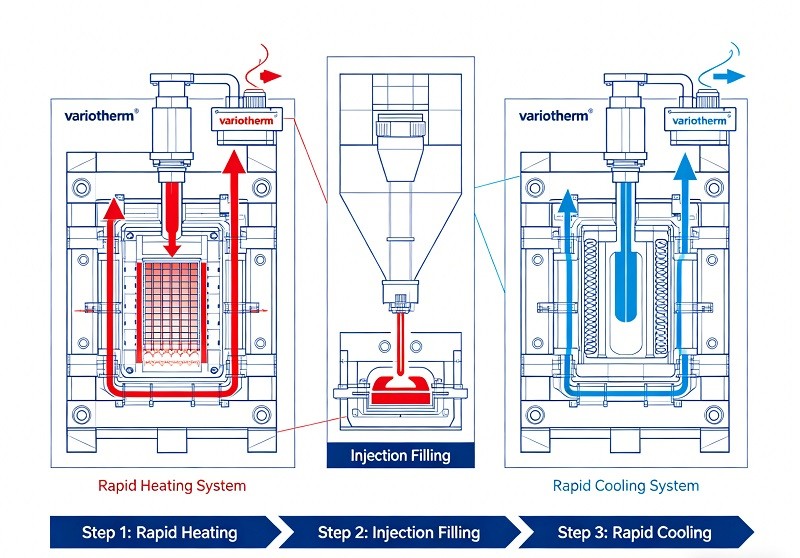
Each of these finishes requires a different approach in mold design, material selection, and processing, all of which must be carefully harmonized to achieve the desired superior result.
Material Selection and Process Mastery for Optimal Consumer Electronics Surface Finishes
Achieving flawless surfaces in injection molding is a two-part equation: selecting the right raw materials and mastering the complex interplay of process parameters. Even the most perfectly polished mold can produce subpar parts if the material or process is not optimized.
Choosing the Right Thermoplastics for Flawless Surfaces
The choice of thermoplastic resin has a profound impact on the final surface finish. Different polymers have inherent properties that make them more or less suitable for specific aesthetic goals. Factors like melt flow rate, shrinkage, and reaction to additives all play a critical role.
For high-gloss finishes, materials with excellent flowability and low shrinkage are preferred, as they can replicate the mirror-smooth mold surface with high fidelity.
- Polycarbonate (PC): Known for its clarity, toughness, and ability to hold a high-gloss finish. Often used for transparent covers and lenses.
- Acrylonitrile Butadiene Styrene (ABS): A versatile and popular choice, ABS offers a naturally glossy surface and is available in high-gloss grades. It's commonly found in device housings and bezels.
- Polymethyl Methacrylate (PMMA / Acrylic): Offers exceptional optical clarity and the highest surface gloss, making it a perfect material for light pipes, screens, and premium decorative elements.
- ABS+PC Blends: These alloys combine the gloss and processability of ABS with the strength and heat resistance of PC, making them ideal for durable, high-gloss electronic enclosures.
For matte and textured finishes, a wider range of materials can be used, but their specific properties still matter.
- Polypropylene (PP): A cost-effective material with good chemical resistance. While not naturally glossy, it takes texture well and is used for durable, non-cosmetic housings.
- Polyamide (PA / Nylon): Often filled with glass fibers for strength, PA is very durable. The unfilled versions can accept fine textures, but fiber-filled variants tend to have a rougher, lower-gloss finish. Adding fillers like glass fiber will generally result in a lower gloss appearance.
- Thermoplastic Polyurethane (TPU): Its rubber-like elasticity makes it excellent for soft-touch grips and protective overmolding. However, its high abrasion resistance makes it very difficult to polish to a high gloss (SPI Grade A).
Here is a summary of common thermoplastics and their suitability for different finishes:
| Thermoplastic | Best Suited For | Key Properties for Surface Finish | Common Consumer Electronics Applications |
|---|---|---|---|
| PC | High-Gloss, Transparent | High clarity, low shrinkage, good thermal stability. | Smartphone screens, durable housings, light pipes. |
| ABS | High-Gloss, General Purpose | Good natural gloss, easy to process, good impact strength. | Housings for laptops, keyboards, remotes, chargers. |
| PMMA | Mirror-Gloss, Optical | Highest surface gloss and transparency. | LED lenses, display panels, decorative trim. |
| PP | Textured, Matte | Excellent chemical resistance, takes texture well. | Battery casings, internal structural parts, hinges. |
| PA (Nylon) | Textured, Functional | High strength and wear resistance, especially when filled. | Gears, connectors, durable housings. |
| TPU | Textured, Soft-Touch | Flexible, excellent abrasion resistance, good for grip. | Protective phone cases, button covers, non-slip feet. |
Precision in Process Parameters: Temperature, Pressure, and Cooling
Beyond material choice, the injection molding process itself is a delicate dance of variables. Precise control over these parameters is essential to prevent defects and achieve the intended surface finish.
Temperature (Melt and Mold) Temperature is arguably the most critical factor influencing surface quality.
- Melt Temperature: This is the temperature of the plastic as it's injected into the mold. A higher melt temperature reduces the resin's viscosity, allowing it to flow more easily and fill every fine detail of the mold cavity. This helps in producing a glossier finish and minimizing weld lines where two flow fronts meet. However, a temperature that is too high can cause material degradation, leading to discoloration or streaks.
- Mold Temperature: The temperature of the mold surface itself plays a huge role. A higher mold temperature allows the plastic to stay molten for longer after injection, giving it more time to perfectly replicate the mold's surface texture. This results in higher gloss, better replication of fine textures, and reduced internal stresses. Conversely, a mold that is too cold can cause the plastic to "freeze" prematurely, resulting in flow marks, dull spots, and poor texture replication.
Pressure and Speed
- Injection Pressure & Speed: The speed and pressure at which the molten plastic is pushed into the mold cavity directly affect the surface appearance. A faster injection speed is often used to achieve a high-gloss finish, as it helps fill the cavity quickly and uniformly before the plastic begins to cool. This rapid filling can also make weld lines less visible.
- Packing Pressure and Time: After the initial injection, a "packing" or "holding" pressure is applied to push more material into the cavity to compensate for shrinkage as the part cools. Insufficient packing pressure or time can lead to sink marks—small depressions on the surface, often opposite thick features like ribs or bosses. Applying adequate packing pressure helps ensure a dense, uniform part with a flawless surface.
Cooling The final stage, cooling, solidifies the part before it is ejected. The rate and uniformity of cooling are crucial.
- Cooling Rate: If a part cools too quickly or unevenly, different areas will shrink at different rates, introducing internal stresses that can cause warping or cracks. Slow, controlled cooling generally leads to better dimensional stability and a higher-quality surface finish.
- Uniform Cooling: Non-uniform cooling is a major cause of defects. If one side of the mold is significantly colder than the other, the part will warp towards the hotter side. This is why the design of cooling channels within the mold is so critical.
Mastering these elements requires expertise and a scientific approach to molding, often involving simulations and incremental adjustments to find the perfect balance for each unique part, material, and finish combination.
Beyond Basics: Enhancing Consumer Electronics Surface Finishes through Advanced Techniques and Additives
While mastering the fundamentals of material selection and process control is essential, the pursuit of exceptional surface finishes often involves more advanced technologies and material science. These techniques can solve complex molding challenges, create unique aesthetics, and add functional value to consumer electronics.
Advanced Techniques for Innovative Consumer Electronics Surface Finishes
To push the boundaries of design and eliminate stubborn defects, manufacturers turn to sophisticated molding processes.
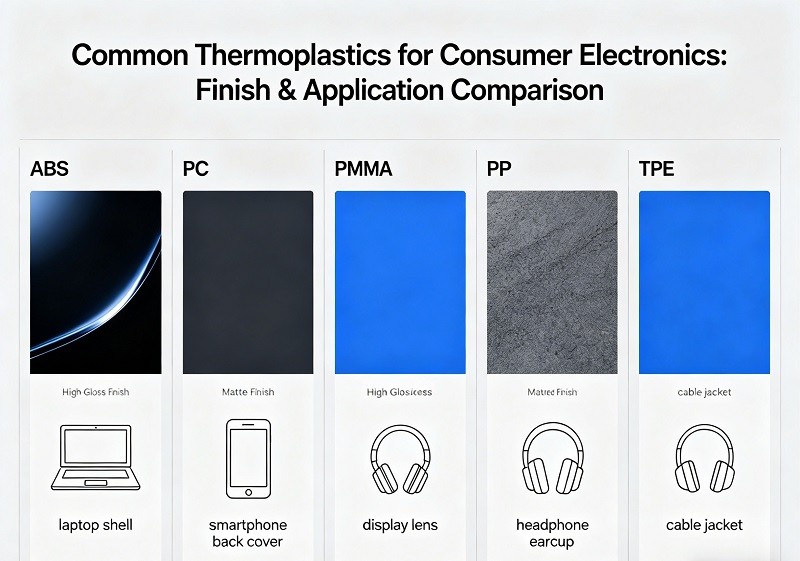
Variotherm Molding (Rapid Heat Cycle Molding - RHCM) Variotherm molding is a cutting-edge technique designed to achieve flawless, high-gloss surfaces without weld lines or sink marks. The process involves rapidly heating the mold surface to a high temperature (often above the material's glass transition temperature) just before injection. This allows the molten plastic to flow with minimal resistance, perfectly replicating the mold surface and allowing weld lines to merge seamlessly. Immediately after the mold is filled, it is rapidly cooled to solidify the part and shorten the cycle time. This dynamic temperature control is highly effective for producing the "piano black" high-gloss finishes seen on premium electronics.
Gas-Assist Injection Molding This technique is an excellent solution for producing large, thick-walled parts without the sink marks that typically plague them. After a partial injection of plastic, a controlled volume of inert gas (usually nitrogen) is injected into the molten core of the part. The gas pressure hollows out the thick sections and pushes the molten plastic outwards, uniformly packing it against the mold cavity walls. This internal pressure compensates for shrinkage, eliminates sink marks, and results in a smooth, Class-A finish on the cosmetic side of the part. It also allows for lighter parts and reduced cycle times.
Conformal Cooling Traditional cooling channels in a mold are drilled in straight lines, which can lead to inefficient and uneven cooling, especially in parts with complex geometries. Conformal cooling solves this by creating cooling channels that follow the exact contours of the part's surface, ensuring a uniform distance from the mold cavity. This is typically achieved using metal 3D printing (additive manufacturing) to build the mold inserts. The result is dramatically faster and more uniform cooling, which reduces cycle times by up to 40%, minimizes part warpage, and improves overall surface quality and dimensional stability.
In-Mold Decoration (IMD) and In-Mold Labeling (IML) IMD and IML are processes that integrate decorative finishes directly into the molding cycle. A pre-printed film or label is placed inside the mold before injection. When the molten plastic is injected, it fuses permanently with the film. This allows for the creation of parts with highly detailed graphics, metallic effects, different colors, and even functional features like capacitive touch sensors, all in a single step. This technique is highly durable as the graphics are protected by the outer layer of plastic and cannot be scratched off.
The Role of Additives and Post-Molding Treatments for Superior Consumer Electronics Surface Finishes
The properties of a base thermoplastic can be significantly modified through the use of additives. Furthermore, after a part is molded, it can undergo various secondary operations to enhance its surface.
Additives for Enhanced Surface Quality Additives are blended with the raw plastic resin before molding to improve its processing characteristics or final appearance.
- Flow Enhancers: These additives reduce the viscosity of the molten plastic, helping it to fill complex molds more easily and improving the quality of the surface finish by reducing flow-related defects.
- Nucleating Agents: Used with crystalline plastics, these agents promote the formation of smaller, more numerous crystals. This can improve clarity, reduce cycle time, and create a more uniform surface.
- Gloss Agents: Certain additives can be incorporated to increase the natural gloss of a material like ABS.
- Fillers: While some fillers like glass fibers can decrease gloss, others like mica or carbon black can be used to alter appearance and reduce surface roughness in certain composites.
Post-Molding Treatments Even after a part is ejected from the mold, there are many ways to refine its surface. These secondary operations are crucial for achieving specific aesthetic or functional goals that are not possible through molding alone.
- Painting and Coating: This is one of the most common post-molding treatments. Painting can provide custom colors, hide minor molding defects, or apply specialized coatings. For example, a soft-touch paint can be applied for a premium feel and improved grip, a UV-resistant coating can protect parts used outdoors, and an EMI/RFI shielding coating can be applied to the inside of electronic enclosures to prevent interference.
- Polishing and Buffing: For parts that require a clear, high-gloss finish, manual or automated polishing can be used to remove any microscopic imperfections and bring the surface to a mirror shine. This is often used on transparent materials like PC or PMMA.
- Pad Printing and Silk Screening: These methods are used to apply graphics, logos, and text to a finished part. Pad printing is excellent for transferring an image onto a curved or irregular surface.
- Texturing: While texturing is often done in the mold, secondary processes like laser etching or chemical etching can also be used to add fine details or patterns to a finished part.
- Welding and Assembly: Often, a final product is an assembly of multiple injection-molded components. Techniques like ultrasonic welding create a strong, seamless bond between plastic parts without the need for adhesives or fasteners, preserving a clean aesthetic.
By combining these advanced techniques, additives, and post-molding operations, it is possible to achieve an almost limitless range of high-quality, durable, and beautiful surface finishes for consumer electronics.
Conclusion
We believe that achieving superior surface finishes for consumer electronics through injection molding is a blend of careful material selection, precise process control, and advanced techniques. The final look and feel of a device—from a brilliant high-gloss finish to an intricate, tactile texture—are the result of a deliberate and expert-driven process. These qualities are not merely cosmetic; they are fundamental to enhancing the user experience, conveying quality, and ensuring the long-term durability of the product.
From leveraging industry standards like SPI and VDI to mastering the nuances of temperature, pressure, and material flow, every step is critical. We are dedicated to delivering parts that not only meet the most stringent aesthetic demands but also perform flawlessly. By embracing advanced methods like variotherm molding and conformal cooling, and utilizing targeted post-molding treatments, we can overcome complex design challenges and produce truly exceptional components.
Let us partner with you to transform your consumer electronics designs into products with truly exceptional surface finishes. Share this article with your colleagues and let's start a conversation about how we can elevate your next project. Your vision for a perfect product deserves a manufacturing process to match.