How High-Quality Metal Components Suppliers Excel in Precision Metal Stamping
- Share
- Issue Time
- Feb 3,2026
Summary
Discover how top metal stamping suppliers achieve OEM-level precision through ultra-tight tolerances, advanced automation, and rigorous quality control.
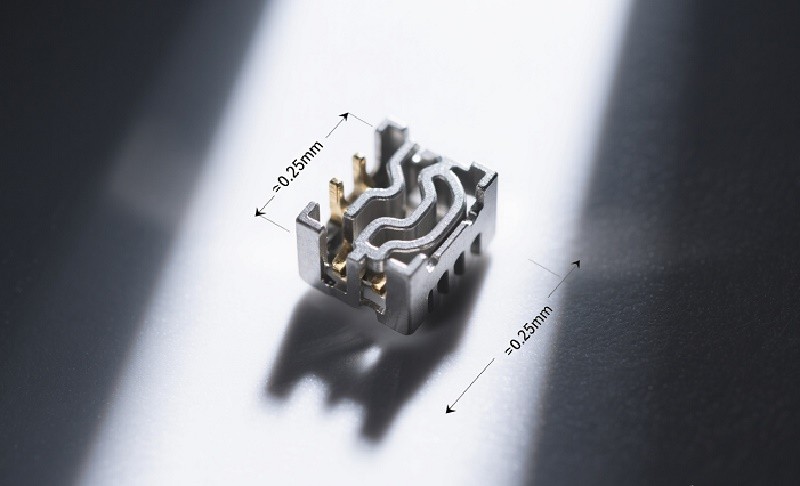
In the intricate world of modern manufacturing, the integrity and performance of every single component are paramount. The persistent threat of corrosion and material failure can compromise the functionality and safety of everything from complex industrial machinery to everyday consumer electronics. Therefore, the strategic selection of a supplier for critical metal parts is not merely a procurement task; it is a foundational decision that impacts the entire lifecycle of a product.
This article delves into how High-Quality Metal Components Suppliers distinguish themselves in the highly demanding field of precision metal stamping. We will explore the key pillars of their excellence—from technical mastery and advanced technology to an unwavering commitment to quality and partnership. By understanding these differentiators, you can ensure your projects are built with components that meet the highest standards of precision, durability, and performance.
How High-Quality Metal Components Suppliers Ensure Precision and Performance
The ability of a supplier to deliver exceptional metal components hinges on a combination of deep expertise, advanced technological capabilities, and a meticulous approach to every stage of production. These elements work in concert to transform raw materials into precision-engineered parts that meet the exact specifications of a project. For industries where failure is not an option—such as aerospace, medical devices, and automotive—partnering with a supplier who embodies these qualities is essential for success. It is this synergy of skill and technology that forms the foundation of precision and reliable performance.
Exacting Tolerances and Material Mastery
Precision in metal stamping is not an accident; it is the result of rigorous control over two fundamental aspects: dimensional accuracy (tolerances) and the intrinsic quality of the materials used. A top-tier supplier demonstrates mastery in both, ensuring that every part is not only shaped correctly but also built to last.
Achieving Ultra-Tight Tolerances
In precision manufacturing, "tolerance" refers to the permissible limit of variation in a physical dimension of a part. Achieving ultra-tight tolerances is a hallmark of a superior metal stamping supplier. These precise measurements are critical in applications where components must fit and function together flawlessly, such as in complex electronic connectors or automotive engine parts. The accepted industry standard for high-precision stamping can be as fine as ±0.001 inches (0.025 mm), and in some cases, even tighter.
To consistently achieve this level of accuracy, suppliers employ a range of sophisticated techniques and quality control processes. This includes:
- Advanced Die Design: Utilizing progressive dies, where a series of stamping operations are performed sequentially at different stations, allows for complex geometries to be created with exceptional consistency.
- High-Precision Machinery: Modern stamping presses with servo-driven controls offer superior command over stroke length, velocity, and dwell time, enabling more precise forming and reducing variability.
- In-Process Monitoring: Real-time sensor and vision systems are often integrated into the stamping line to monitor critical dimensions and detect any deviation from the set tolerance instantly, allowing for immediate correction.
- Climate-Controlled Environments: Temperature fluctuations can cause metal to expand or contract, affecting dimensional stability. High-quality suppliers often operate in climate-controlled facilities to mitigate these environmental variables.
Selecting Superior Materials for Durability
The performance and lifespan of a stamped component are intrinsically linked to the material from which it is made. A high-quality supplier brings deep metallurgical expertise to the table, guiding clients in selecting the optimal material for their specific application. This decision is based on a careful balance of factors including mechanical strength, corrosion resistance, electrical conductivity, thermal properties, and cost.
Leading suppliers maintain a vast inventory of certified materials and have established relationships with reputable mills, ensuring traceability and quality from the very start. The selection process involves a thorough analysis of the part's operational environment and functional requirements. For example, a component used in a marine environment will require a material with excellent corrosion resistance, like 316 stainless steel or a specific marine-grade aluminum alloy.
Below is a table outlining common materials used in precision stamping and their typical applications:
| Material | Key Properties | Common Applications |
|---|---|---|
| Stainless Steel (e.g., 301, 304, 316) | High strength, excellent corrosion resistance, heat resistance | Medical devices, food processing equipment, automotive exhaust components, marine hardware |
| Carbon Steel (Low, Medium, High) | High strength, durability, wear resistance (especially high-carbon) | Automotive brackets, industrial machinery parts, fasteners, springs |
| Aluminum (e.g., 3003, 5052, 6061) | Lightweight, good strength-to-weight ratio, corrosion resistance, thermal and electrical conductivity | Aerospace components, electronics enclosures, heat sinks, lighting fixtures |
| Copper and Copper Alloys (e.g., Brass, Bronze) | Excellent electrical and thermal conductivity, corrosion resistance, good formability | Electrical connectors, terminals, springs, bushings, decorative hardware |
| Phosphor Bronze | High fatigue resistance, good wear resistance, excellent spring qualities | Electrical contacts, switches, diaphragms, bellows |
Mastery over these materials means understanding how they behave under the immense pressures of stamping, how they respond to secondary processes like heat treating or plating, and how they will perform over millions of cycles in their final application.
Advanced Capabilities and Equipment
Expertise in tolerances and materials must be supported by the right technology and processes. A supplier's investment in state-of-the-art equipment and integrated support services is a clear indicator of their commitment to excellence, efficiency, and scalability.
Leveraging Modern Machinery and Automation
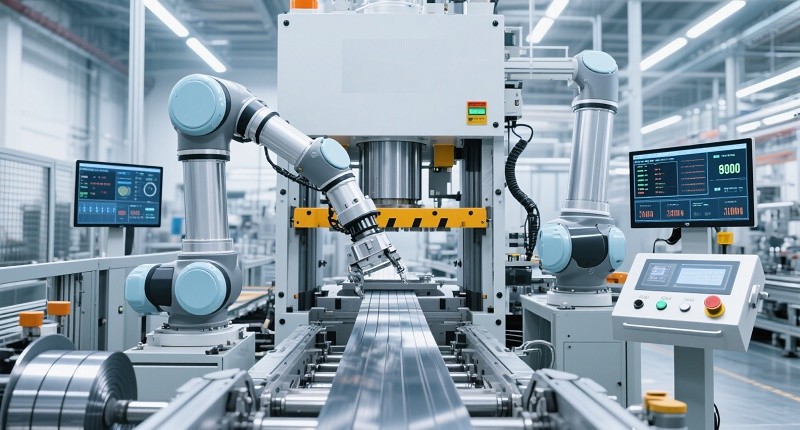
The era of purely manual, operator-dependent stamping has given way to a sophisticated, automated manufacturing environment. High-quality suppliers leverage this technology to enhance precision, increase throughput, and ensure unwavering consistency. Modern machinery in a top-tier facility often includes:
- High-Speed Servo Presses: Unlike traditional mechanical presses, servo-driven presses provide complete control over the ram's motion profile. This allows for optimized forming speeds, reduced springback in high-strength materials, and improved die life.
- Automated Coil Feeding and Handling: Robotics and automated systems handle the loading of raw material coils, feeding the metal strip into the press, and transferring parts between stations or to packaging. This minimizes human error, improves safety, and allows for continuous, 24/7 operation.
- In-Die Sensors: Advanced sensors integrated directly into the stamping die can monitor variables like pressure, temperature, and material position in real-time. This data-driven approach allows for predictive maintenance and immediate adjustments to prevent the production of out-of-spec parts.
Automation doesn't just make the process faster; it makes it smarter and more reliable, ensuring that the first part and the millionth part are virtually identical.
Supporting Design with Prototyping and Tooling Expertise
A great component begins with a great design, and a high-quality supplier acts as a crucial partner in the design phase. They provide Design for Manufacturability (DFM) feedback, helping to refine a part's geometry to make it more efficient and cost-effective to produce without compromising its function.
This collaborative process is supported by two key capabilities:
- Rapid Prototyping: Before investing in expensive and time-consuming hard tooling, suppliers can create prototypes to validate a design. This can be done through various methods, from 3D printing of plastic models to soft tooling or single-hit forming, which create functional metal prototypes. This step allows engineers to test form, fit, and function, catching potential issues early when changes are easy and inexpensive to make.
- In-House Tool and Die Making: The stamping die is the heart of the entire operation. Top-tier suppliers often have dedicated in-house departments for designing, building, and maintaining their own tooling. This vertical integration is a significant advantage, as it ensures the tool is built to the highest possible standard and is perfectly matched to the presses and materials being used. It also allows for expedited maintenance and repairs, minimizing downtime. When a project requires unique geometries, this expertise is essential for developing Custom Metal Stamping Parts{target="_blank"} that meet precise functional requirements.
Scalable Production for Any Project Size
A key differentiator for elite suppliers is their ability to scale production to meet any demand. Their operational structure and equipment are configured to manage a wide spectrum of project sizes with equal efficiency and quality.
- Low-Volume and Prototype Runs: For new product introductions or specialized equipment, suppliers use flexible tooling setups and single-station presses to produce small batches cost-effectively.
- Medium to High-Volume Production: As demand grows, production can be transitioned to fully automated progressive die stamping lines. These systems are designed for high-speed, continuous operation, capable of producing hundreds or even thousands of parts per minute.
This scalability means a client can partner with a single supplier for the entire product lifecycle, from the initial prototype of a few dozen units to full-scale production of millions, ensuring consistency in quality and a seamless supply chain.
The Unwavering Commitment of High-Quality Metal Components Suppliers to Quality and Reliability
Beyond technology and technical skill lies the cultural foundation of a premier supplier: an unbreakable commitment to quality and trust. This commitment is not just a slogan on a website but is woven into every process, every inspection, and every interaction. It is demonstrated through rigorous certifications, transparent communication, and a partnership-focused approach to customer service.
Rigorous Quality Control and Certification
For a high-quality supplier, quality control is not a final step but an integrated system that runs parallel to the entire production process. This system is designed to prevent defects rather than just catching them at the end, saving time, reducing waste, and ensuring that every part shipped meets or exceeds client expectations.
Implementing Robust Testing Procedures
A multi-layered approach to testing and inspection is standard practice. This comprehensive quality assurance framework includes a variety of methods and technologies to verify part integrity from raw material to finished product. Key procedures include:
- First Article Inspection (FAI): Before a full production run begins, the first parts produced are subjected to an exhaustive inspection to ensure they conform to all print specifications. This verifies that the tooling and machine setup are correct.
- In-Process Inspection: Automated vision systems and statistical process control (SPC) charting are used during production to monitor critical dimensions continuously. This allows operators to track trends and make proactive adjustments before any parts fall out of tolerance.
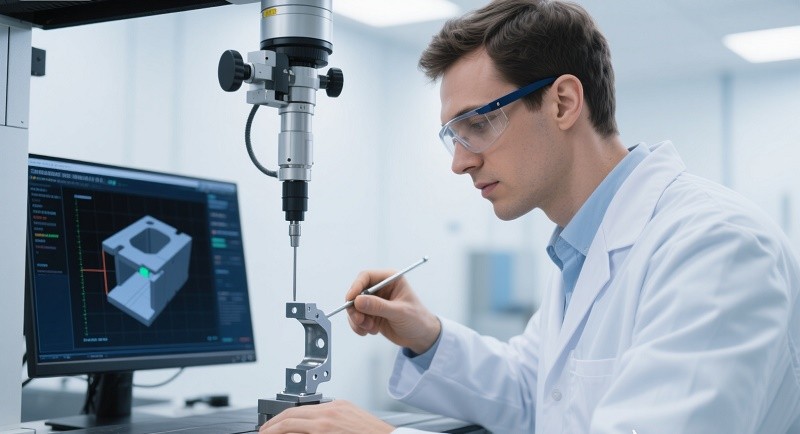
- Coordinate Measuring Machines (CMMs): For parts with complex three-dimensional geometries, CMMs use a high-precision probe to take exact measurements and compare them against the original CAD model, ensuring conformance to the most challenging specifications.
- Material and Functional Testing: Depending on the part's requirements, suppliers may also perform tests for material hardness, tensile strength, plating thickness, and surface roughness to guarantee that the components will perform reliably in their end-use environment.
Meeting and Exceeding Industry Standards
Certifications are a formal validation of a supplier's commitment to quality. They serve as an independent audit of a company's quality management system (QMS), proving that they have robust, repeatable processes in place. High-quality suppliers don't just achieve these certifications; they embed them into their daily operations.
Key industry standards include:
- ISO 9001:2015: This is the international standard for a QMS. ISO 9001 certification demonstrates a supplier's ability to consistently provide products and services that meet customer and regulatory requirements. It emphasizes process control, risk management, and continuous improvement.
- IATF 16949: Essential for suppliers in the automotive industry, this standard builds on ISO 9001 with more stringent requirements for defect prevention, supply chain management, and the reduction of variation and waste.
- AS9100: This is the quality management standard for the aerospace industry, incorporating ISO 9001 requirements with additional criteria for safety, reliability, and regulatory compliance specific to aerospace components.
Partnering with a certified supplier provides peace of mind, as it confirms they are held to the highest global standards for quality, traceability, and process control.
Building Trust Through Transparency and Communication
A reliable supplier relationship is built on more than just delivering good parts; it is built on trust. This trust is cultivated through open, honest communication and a transparent approach to project management. Premier suppliers view their clients as long-term partners and understand that collaboration is key to mutual success.
Open Dialogue and Project Updates
From the initial quote to final delivery, a high-quality supplier maintains a clear and consistent line of communication. This involves:
- Dedicated Project Managers: Clients are often assigned a single point of contact who is responsible for the project's success and provides regular updates on progress, timelines, and any potential challenges.
- Collaborative Problem-Solving: If an issue arises, whether in design, production, or testing, a top supplier communicates it proactively and works collaboratively with the client to find the best solution. They share information openly rather than concealing problems.
- Access to Information: Clients are given visibility into the production schedule and key milestones. Some suppliers even offer secure online portals where clients can track the status of their orders in real time.
This transparency eliminates uncertainty and allows clients to plan their own production schedules with confidence.
Responsive Customer Service and Support
Excellent customer service extends beyond being polite and friendly. In the world of manufacturing, it means providing tangible, expert support that adds real value to the client's project. World-class suppliers excel in this area by offering:
- Technical Expertise on Demand: Clients have access to the supplier's engineering team for advice on material selection, part design, tolerance analysis, and cost-reduction strategies.
- Rapid Response Times: Whether it's a request for a quote, a technical question, or an inquiry about an existing order, a high-quality supplier responds promptly and thoroughly.
- Post-Delivery Support: The partnership doesn't end when the parts are shipped. Suppliers stand behind their work and are available to address any issues that may arise once the components are integrated into the final assembly.
This level of responsive support demonstrates a supplier's investment in the client's success and solidifies their role as a true strategic partner.
Value Beyond Price: Why Partnering with High-Quality Metal Components Suppliers Matters
In a competitive market, it can be tempting to select a supplier based solely on the lowest price per part. However, this narrow focus often overlooks the total cost of ownership and the strategic value a high-quality partner brings. The most astute companies recognize that partnering with a premier supplier is an investment that yields significant returns in cost efficiency, risk reduction, and competitive advantage.
Cost Efficiency and Long-Term Savings
True cost efficiency is not about the cheapest initial price but about achieving the lowest total cost over the product's lifecycle. A high-quality supplier contributes to long-term savings through transparent quoting, superior quality that eliminates hidden costs, and optimized designs that reduce waste.
Detailed Quote Transparency
A quote from a high-quality supplier is more than just a number; it is a detailed breakdown of all the costs associated with producing a component. This transparency is crucial for accurate budgeting and for understanding the value being delivered. A comprehensive quote should clearly itemize:
- Tooling Costs: The one-time investment to design and build the stamping die. A transparent supplier will explain the type of tool being built (e.g., single-hit, progressive, compound) and its expected lifespan.
- Material Costs: The price of the raw material per part, often based on current market rates.
- Per-Part Production Cost: The charge for machine time, labor, and other operational overhead for each component produced.
- Secondary Operations: Any additional costs for services like plating, heat treating, deburring, or special packaging.
- Amortization Options: Some suppliers offer to amortize the tooling cost over a set number of parts, which can be beneficial for managing upfront cash flow.
This level of detail allows for a true "apples-to-apples" comparison and prevents unexpected charges down the line. It reflects a supplier's confidence in their pricing and their commitment to an honest partnership.
Reducing Rework and Waste
The cost of poor quality (COPQ) can be devastating. It includes not only the obvious costs of scrap and rework but also the hidden costs of production line shutdowns, product recalls, warranty claims, and damage to a company's reputation. A high-quality supplier dramatically reduces these risks.
- Minimized Scrap Rates: By using advanced process controls and high-precision equipment, premier suppliers achieve extremely low scrap rates, meaning less material is wasted.
- Elimination of Rework: Parts that are delivered within spec every time eliminate the need for costly and time-consuming rework or sorting by the customer.
- Enhanced Product Reliability: Components that are dimensionally accurate and made from the correct, high-quality material prevent premature field failures. The long-term savings from avoiding a single product recall can far exceed the initial investment in a superior supplier.
Over a project's lifetime, the reliability and consistency delivered by a premium supplier translate directly into significant bottom-line savings.
Strategic Advantages of Local High-Quality Metal Components Suppliers
While global supply chains offer certain benefits, there are powerful strategic advantages to partnering with a local or domestic high-quality supplier. These benefits have become increasingly apparent in recent years, as companies seek to build more resilient and responsive supply chains.
Faster Delivery and Reduced Logistics
Proximity dramatically simplifies logistics and shortens lead times. The advantages of a local supply chain are numerous:
- Shorter Lead Times: With no overseas shipping or customs delays to contend with, lead times for both new tooling and production parts are significantly reduced. This allows for faster time-to-market and more agile inventory management.
- Lower Shipping Costs: Transporting goods across town or across the country is inherently cheaper and more predictable than international freight.
- Reduced Supply Chain Risk: Local sourcing insulates a company from the volatility of global shipping, geopolitical instability, and international trade disputes that can disrupt production for weeks or months.
This logistical simplicity and risk reduction make the supply chain more robust and predictable.
Personalized Service and Local Expertise
Working with a local supplier transforms the dynamic from a transactional relationship to a hands-on partnership. This proximity facilitates a level of collaboration that is difficult to achieve from a distance.
- Face-to-Face Collaboration: Engineers and project managers can easily visit the supplier's facility to review prototypes, conduct on-site press approvals, and resolve complex design challenges in person.
- Deeper Understanding: A local supplier has a deep understanding of the regional business climate, regulations, and labor market. They are invested in the same community and are often more flexible and responsive to a client's specific needs.
- Just-in-Time (JIT) Delivery: Close proximity makes Just-in-Time inventory strategies more feasible and reliable, helping clients minimize inventory holding costs and improve cash flow.
By fostering closer collaboration and reducing logistical friction, a local, high-quality supplier can become a powerful extension of a company's own team, contributing directly to its operational efficiency and strategic goals.
Key Takeaways
- Precision is Non-Negotiable: High-quality suppliers excel by achieving ultra-tight tolerances (as fine as ±0.001 inches) through advanced die design, servo-driven machinery, and rigorous in-process monitoring.
- Material Mastery is Crucial: The right material selection—based on factors like strength, corrosion resistance, and conductivity—is fundamental to a component's durability and performance. Expert suppliers guide this decision.
- Technology Drives Consistency: Modern capabilities, including automation, robotic handling, and in-die sensing, are leveraged to ensure every part is identical, from the first to the millionth.
- Quality is a System, Not a Step: A commitment to quality is demonstrated through robust testing procedures (FAI, CMM) and adherence to internationally recognized standards like ISO 9001 and IATF 16949.
- Trust is Built on Transparency: Open communication, detailed quotes, and responsive technical support are the cornerstones of a true supplier partnership, differentiating premier suppliers from mere vendors.
- Value Outweighs Price: The true cost of a component includes the risks of rework, waste, and field failures. Partnering with a quality-focused supplier minimizes these risks, leading to significant long-term savings.
- Local Partnerships Offer Strategic Advantages: Sourcing from local or domestic suppliers can lead to faster delivery, reduced logistical complexity, and a more collaborative, hands-on relationship.
Frequently Asked Questions (FAQ)
Q1: What is the main difference between precision metal stamping and standard stamping?
A: The primary difference lies in the level of tolerance, complexity, and quality control involved. Standard stamping is typically used for simpler parts where dimensional accuracy is less critical (e.g., washers, simple brackets). Precision metal stamping, on the other hand, is required for complex components with intricate geometries and very tight tolerances (often measured in thousandths of an inch). It employs more advanced machinery (like servo presses), more sophisticated tooling (progressive dies), and rigorous quality control systems (like CMMs and in-process vision systems) to produce parts for critical applications in industries like aerospace, medical, and electronics.
Q2: What information do I need to provide to a supplier to get an accurate quote for a metal stamping project?
A: To receive the most accurate and comprehensive quote, you should provide as much detail as possible. Key information includes:
- A detailed 2D drawing and a 3D CAD model of the part, specifying all dimensions, tolerances, and surface finish requirements.
- Material specifications, including the type of metal, its grade, and any required certifications.
- The estimated annual usage (EAU) or the total quantity of parts needed, as well as the expected order size per release. This helps the supplier determine the most appropriate tooling and production method.
- Any requirements for secondary operations such as plating, heat treating, powder coating, assembly, or special packaging.
- The project timeline, including when you need prototypes and when you expect full production to begin.
Q3: How do certifications like ISO 9001 benefit me as a customer?
A: ISO 9001 certification provides you with a high degree of confidence in a supplier's ability to deliver consistent quality. It serves as independent verification that the supplier has a robust Quality Management System (QMS) in place. For a customer, this means the supplier has:
- Documented and controlled processes for everything from quoting to shipping, reducing the chance of errors.
- A commitment to continuous improvement, meaning they are constantly working to make their processes more efficient and effective.
- Strong traceability, allowing them to track materials and production batches, which is critical for quality control and problem resolution.
- A focus on customer satisfaction built into their management structure. Ultimately, partnering with an ISO 9001-certified supplier lowers your risk, ensures greater product reliability, and leads to a more predictable and stable supply chain.
Q4: Why is in-house tooling and die making considered a significant advantage for a supplier?
A: In-house tooling capability is a massive advantage because the stamping die is the most critical element in the entire process. When a supplier controls the design, build, and maintenance of their own tools, it leads to several key benefits:
- Higher Quality: The tool is designed by engineers who intimately understand the specific presses and materials being used, ensuring optimal performance and part quality.
- Faster Timelines: Tooling can be created and modified on an accelerated schedule without relying on a third-party toolmaker's queue.
- Reduced Downtime: If a tool needs maintenance or repair, it can be addressed immediately by the in-house team, minimizing production delays.
- Accountability: There is a single point of responsibility for the entire process. The supplier cannot blame tooling issues on an outside vendor, leading to faster and more effective problem-solving. This vertical integration is a hallmark of a truly capable and committed metal stamping partner.
In conclusion, choosing the right supplier for precision metal components is a strategic decision that reverberates throughout a project's lifecycle. It transcends a simple comparison of price lists; it is about forging a partnership with a company that embodies precision, understands the science behind materials, and is fundamentally committed to quality. High-Quality Metal Components Suppliers are indispensable allies in projects where accuracy, longevity, and unflinching reliability are the currencies of success.
By prioritizing a supplier's experience, technological capabilities, certified processes, and dedication to transparent communication, you safeguard your project against the hidden costs of poor quality and supply chain instability. This strategic approach to supplier selection not only ensures a successful outcome for your current project but also lays the groundwork for a resilient and innovative long-term partnership. We encourage you to share your thoughts and experiences in the comments below and to consider these critical factors in your next manufacturing endeavor.