Heat Treatment for Machined Parts: Annealing, Hardening, and Stress Relieving Explained
- Share
- publisher
- SOMI Custom Parts
- Issue Time
- Sep 11,2026
Summary
Learn how annealing, stress relieving, hardening, and tempering affect CNC machined parts — and how to sequence heat treatment around machining for accuracy and performance.
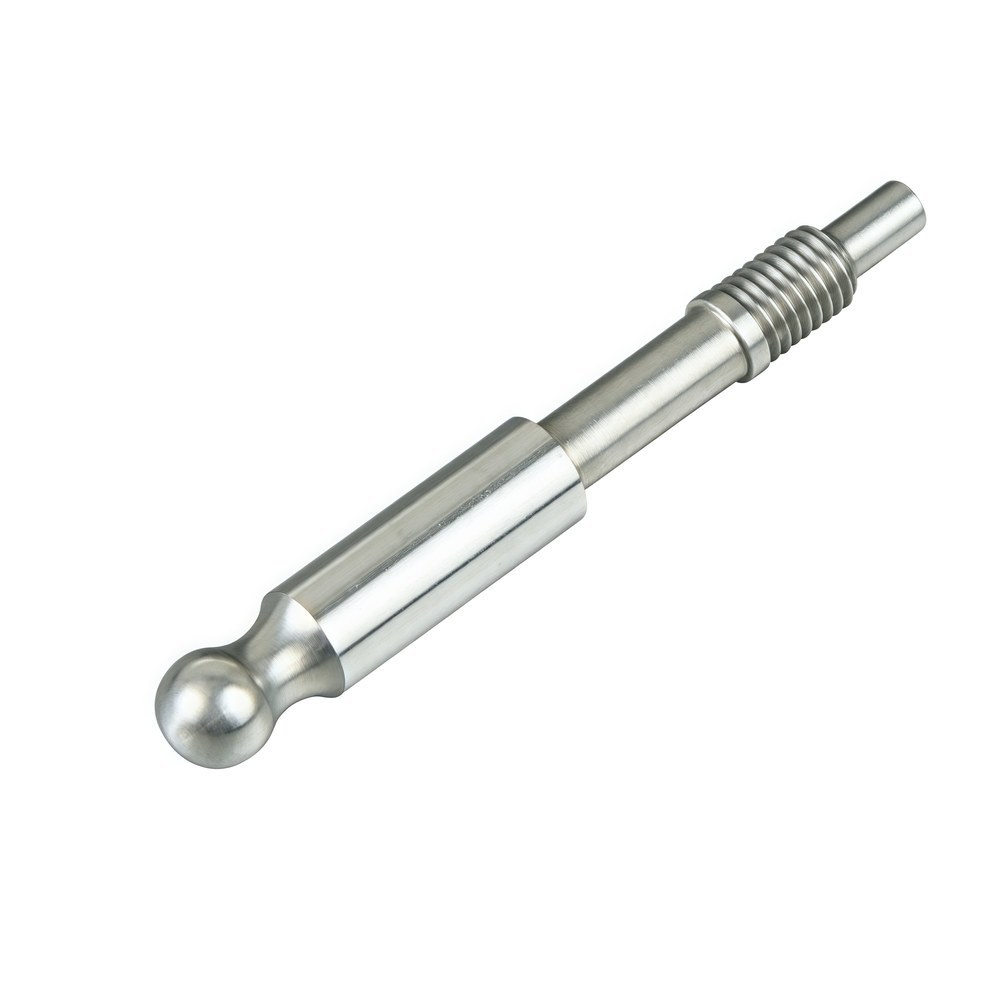
Heat Treatment for Machined Parts: Annealing, Hardening, and Stress Relieving Explained
Annealing, hardening, tempering, and stress relieving change how metal performs — and whether your machined parts stay within tolerance. Learn what each process does and when to apply it around CNC machining.
Introduction: Why Heat Treatment Belongs in Your Machining Plan
Heat treatment is controlled heating and cooling of metal to modify its microstructure. The same steel alloy that machines comfortably at 22 HRC can be transformed into a wear-resistant gear surface at 52 HRC — or left so hard it becomes nearly impossible to cut. Understanding heat treatment helps engineers sequence operations, predict dimensional change, and avoid parts that look correct but fail in service.
For CNC machined parts, heat treatment is rarely an afterthought bolted onto the end of a job. It creates three challenges you must plan around:
- Machinability shifts: hardened steel must be ground, EDM'd, or hard-turned with specialized tooling.
- Dimensional change: heating and quenching make parts grow, shrink, and distort.
- Residual stress: poorly sequenced heat treatment can cause warping or cracking long after machining.
Annealing: Softening for Machinability
Annealing softens metal to make machining easier. The material is heated to its transformation temperature and cooled slowly in the furnace. For steel, annealed hardness typically lands around 150–200 BHN (approximately 80–95 HRB).
Use annealing when:
- Stock is too hard or work-hardened to cut efficiently.
- The part must be formed, straightened, or significantly modified.
- Residual stresses from prior forging, rolling, or welding need to be relieved.
Annealed steel machines easily but may produce stringy chips and slightly poorer surface finish. It is often specified before rough machining, ahead of a final hardening step later in the sequence.
Stress Relieving: Stability for Precision Features
Stress relieving heats material below its transformation temperature — for steel typically 1,000–1,200°F (about 550–650°C) for roughly one hour per inch of thickness — to relax internal stresses without significantly changing hardness. The process removes stresses induced by heavy machining, welding, or forming and stabilizes dimensions for subsequent finishing passes.
Stress relieving matters most when:
- Tight tolerances must survive later operations.
- Parts have thin walls or complex geometry prone to distortion.
- Precision surfaces are ground or finish-machined after roughing.
- Weldments must be machined to size without movement.
For aluminum and titanium parts that will be precision-machined, a stress-relief cycle after roughing can be the difference between a stable component and one that creeps out of tolerance in final inspection.
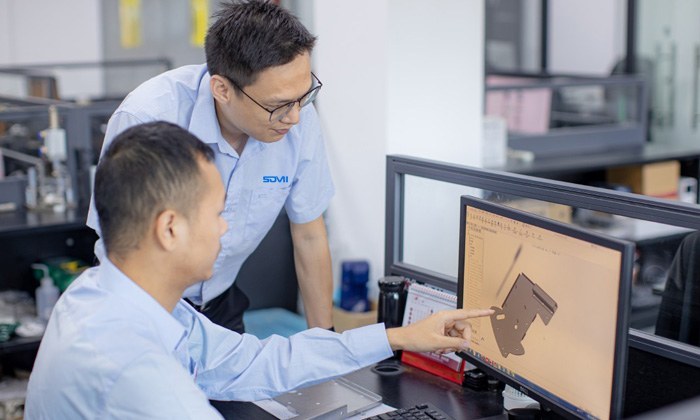
Precision CNC machining of metals whose internal stress state was controlled before finishing passes.
Hardening and Tempering: Strength and Wear Resistance
Hardening heats steel above its transformation temperature, then quenches it rapidly in oil, water, or polymer to form martensite — the hard microstructure that provides wear resistance and strength. Typical results depend on the alloy:
| Steel | Hardened HRC | Typical Applications |
|---|---|---|
| 4140 | 28–32 | Shafts, gears, moderate wear |
| 4340 | 38–44 | Heavy-duty shafts, gears |
| O1 / A2 / D2 | 58–62 | Tooling, dies, cutting tools |
The critical rule: all hardened steel must be tempered. Tempering reheats the hardened part to a lower temperature to reduce brittleness and relieve quenching stresses. Higher tempering temperatures produce lower hardness but better toughness — springs get one temper, cutting tools another.
Because hardened steel (above roughly 45 HRC) is difficult to machine with conventional tools, the standard production sequence for precision hardened parts is:
- Rough machine in the annealed or normalized condition.
- Heat treat — harden and temper to specification.
- Finish machine critical surfaces with carbide, CBN, or ceramic tooling, or grind to final size.
Aluminum Tempers: Precipitation Hardening
Aluminum doesn't quench-harden like steel. Instead, alloys such as 6061 and 7075 are strengthened by precipitation hardening (also called age hardening). The material is solution heat-treated, quenched, and then aged — naturally at room temperature or artificially in an oven. The familiar T6 designation describes this full sequence.
For aluminum CNC parts, tempering decisions usually happen at the mill, not the machine shop: you order bar stock in T6 condition. But if a machined aluminum component is later welded, the heat-affected zone loses its temper and must be re-heat-treated or the design must account for the localized strength loss.
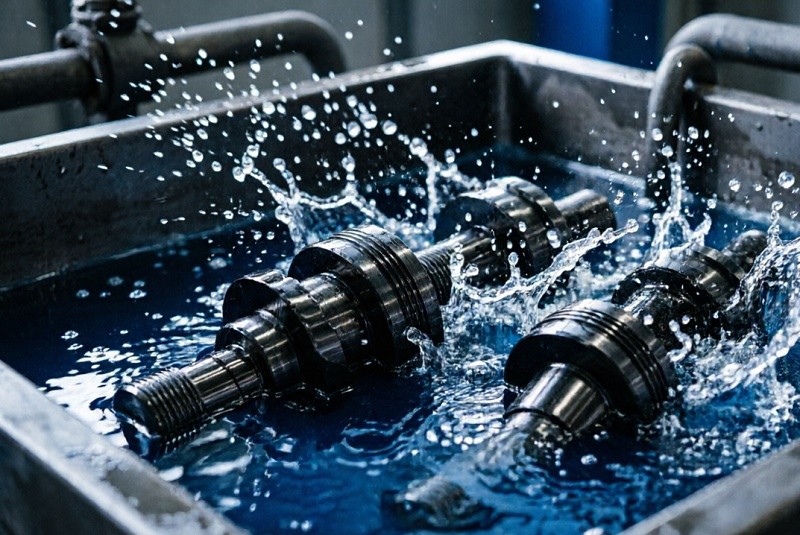
Engineers plan the heat-treatment sequence during process review so tolerances survive thermal cycling.
Sequencing Heat Treatment Around Machining
When you specify heat treatment, the sequence is as important as the process itself:
- Machine soft, then harden: common for high-volume production. Expect some distortion and plan a finish pass on critical features.
- Harden first, then machine: for geometries too complex to predict movement, or tool steels that machine better in the hardened state.
- Two-step approach: rough soft, heat treat, then finish machine. This is how dies, molds, precision shafts, and aerospace components are made — it costs more but delivers both accuracy and hardness.
Always leave adequate machining allowance on surfaces that must be finished after heat treatment, and document the target hardness range on the drawing. A specification like "heat treat as required" produces inconsistent results; write "harden and temper 4140 to 28–32 HRC" instead.
How SOMI Custom Parts Can Help
Heat treatment success depends on process control and experience. At SOMI Custom Parts, we coordinate machining sequences with heat-treatment steps to deliver parts that hold tolerance and perform in service.
- Machining of annealed, normalized, and hardened materials across CNC machining and CNC turning
- Planning machining allowances for post-treatment finish operations
- Material certification and hardness documentation for quality records
- Support for steel, stainless, aluminum, and titanium components
If your design requires heat treatment, tell us the target hardness and critical features up front — send us your drawing and we will propose the right sequence.
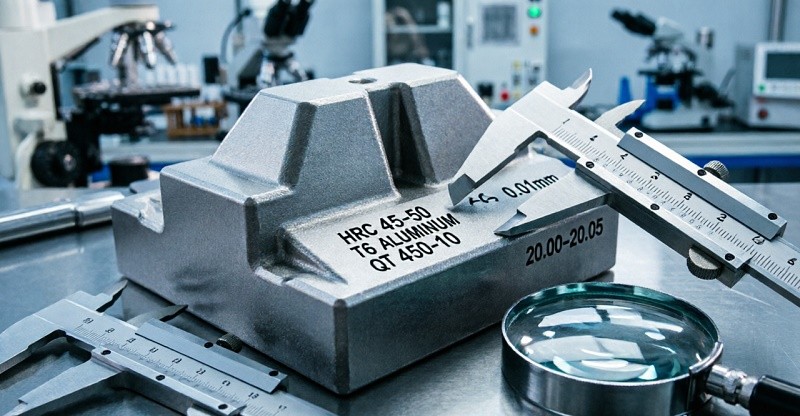
Controlled process planning keeps dimensional stability and material properties on specification.
Frequently Asked Questions
Should I machine before or after heat treatment?
It depends. If the part must be hard in service, machine soft and then heat treat — but plan for distortion and leave allowance for finish machining. If tolerances are critical and the geometry is predictable, a rough-soft / heat-treat / finish-hard sequence gives the best accuracy.
Can hardened steel be CNC machined?
Yes, with the right tooling. Carbide works up to about 50 HRC; above that, CBN or ceramic inserts are required. Speeds drop and cycle times increase, so heat treatment should only be applied where the part truly needs it.
What is the difference between annealing and stress relieving?
Annealing heats material above its transformation temperature and cools slowly to soften it fully. Stress relieving heats below transformation temperature and only relaxes internal stresses without significantly changing hardness or strength.
Do aluminum parts need heat treatment?
Most CNC aluminum is ordered already in a heat-treated temper such as T6. If a part is welded after machining, the weld zone loses its temper and may need re-solution treatment and aging to restore strength.
Conclusion
Heat treatment is how a soft, machinable blank becomes a hardened, wear-resistant component — and how precision parts stay dimensionally stable for years. The key is sequencing: rough machine when the material is cooperative, heat treat to specification, then finish the surfaces that matter. When annealing, hardening, tempering, and stress relieving are planned into the manufacturing route, parts meet both their dimensional and mechanical requirements.
Ready to specify heat treatment on your next CNC project? Talk to SOMI Custom Parts and we will help you define the process, hardness, and machining sequence that keeps quality high and cost in check.