Driving the Future: How MJF 3D Printing Part Manufacturers are Revolutionizing the Automotive Industry
- Share
- Issue Time
- Jan 11,2026
Summary
Discover how MJF 3D printing manufacturers accelerate automotive innovation with rapid prototyping, end-use parts, design freedom, lightweighting, and on-demand production for EVs and legacy vehicles.
The Unseen Revolution on the Production Line
The automotive industry is in a state of constant evolution. The race towards electric vehicles, autonomous driving, and greater sustainability demands faster innovation and more flexible manufacturing than ever before. Amidst this transformation, Multi Jet Fusion (MJF) 3D printing has emerged as a powerhouse technology, quietly revolutionizing how cars are designed, prototyped, and produced. Specialist MJF parts manufacturers are at the forefront of this shift, providing the expertise and capacity to turn digital designs into road-ready components with remarkable speed and precision.
Why is MJF the Go-To for Automotive Manufacturing?
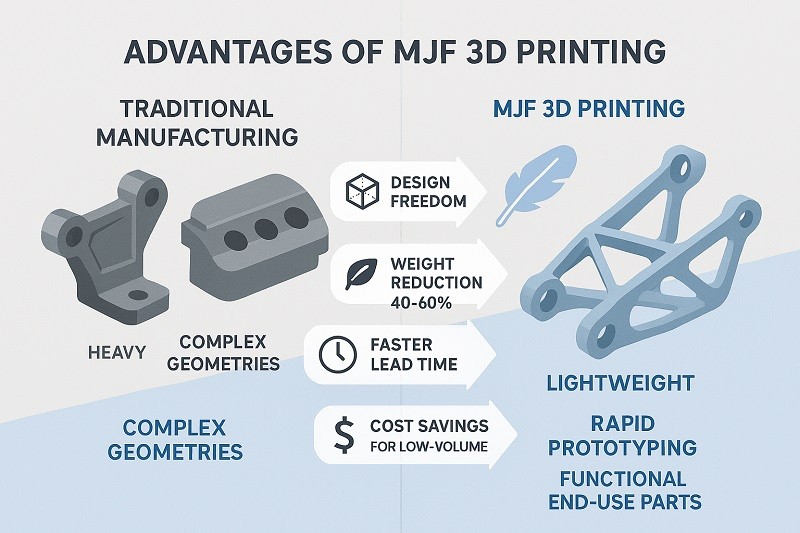
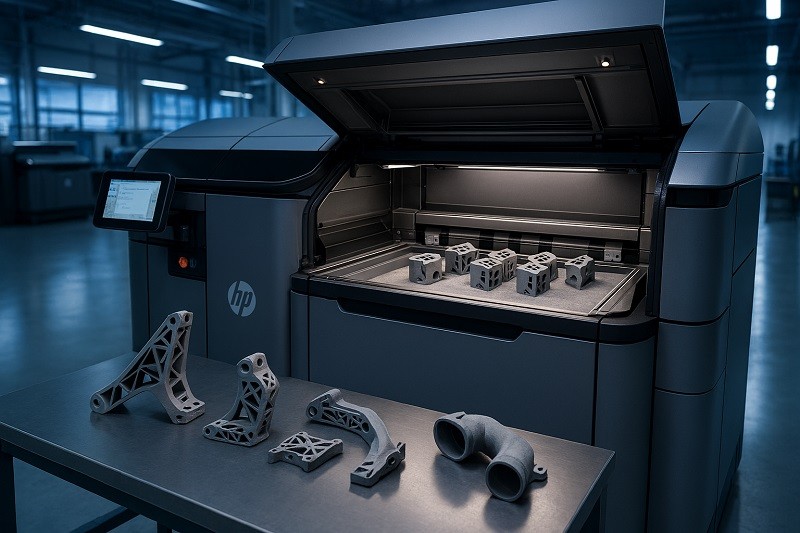
Unlike traditional manufacturing methods that require expensive and time-consuming tooling, MJF is an additive process that builds parts layer by layer from a powder bed. An inkjet array applies a fusing agent to the material, which is then fused by infrared energy. This method provides a unique combination of speed, accuracy, and strength, making it ideal for the demanding automotive environment. Key advantages include significantly reduced lead times, the ability to produce complex geometries, and superior part quality. For automotive companies, this translates into a critical competitive edge, enabling them to innovate faster and more cost-effectively.
Accelerating Development with Rapid Prototyping
Before MJF, creating functional prototypes was a major bottleneck in vehicle development, often taking weeks or months and involving costly tooling. Today, MJF allows automotive engineers to produce high-fidelity, functional prototypes in a matter of days. These aren't just static models; parts printed with materials like PA 12 Nylon can be used for form, fit, and even functional testing. This allows designers to test snap-fit assemblies, moving components, and load-bearing elements, identifying potential issues long before committing to mass production tooling. According to some case studies, this can lead to a 70% faster design iteration cycle.
From Prototypes to Production: MJF for End-Use Parts
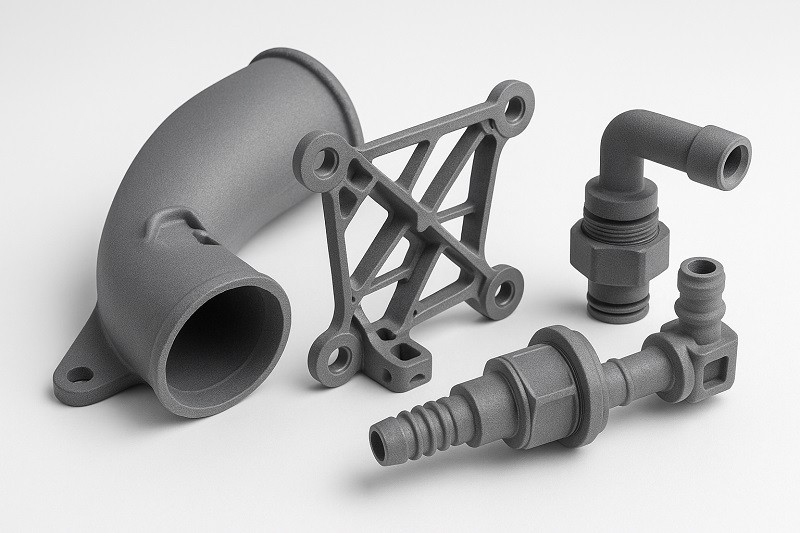
The capabilities of MJF extend far beyond prototyping. The technology is increasingly being adopted for the production of end-use parts, especially for low-volume vehicles, custom editions, and the aftermarket sector. The strength and durability of MJF parts, which exhibit nearly uniform mechanical properties in all directions (isotropic strength), make them suitable for a wide range of applications, from interior trims and brackets to under-the-hood components. Companies like Jaguar Land Rover and General Motors are already utilizing MJF for production parts in their vehicles.
The Power of Design Freedom and Complexity
Traditional manufacturing methods are often limited by what can be molded or machined. MJF removes these constraints, empowering engineers to design for function rather than for manufacturability. This opens the door to creating parts with intricate internal channels, complex lattice structures, and consolidated assemblies that combine multiple components into a single, optimized part. This design freedom is crucial for lightweighting—a key goal in the push for fuel efficiency and electric vehicle range—as it allows for the creation of strong but lightweight components.
Material Excellence: Built for the Road
The most common material used in automotive MJF printing is PA 12 (Nylon), prized for its excellent mechanical strength, chemical resistance, and thermal stability. This makes it perfect for components in the engine bay, which must withstand heat, fluids, and constant vibration. Other materials include:
- Glass-Filled Nylon: Offers increased stiffness and temperature resistance for more structural parts.
- TPU (Thermoplastic Polyurethane): A flexible material ideal for seals, gaskets, and vibration-dampening components.
- PA 11: Provides higher ductility and impact resistance for parts that need to bend without breaking.
| Material | Key Properties | Common Automotive Applications |
|---|---|---|
| PA 12 Nylon | Strength, Heat & Chemical Resistance | Brackets, Housings, Air Ducts, Fluid Components |
| PA 11 Nylon | Ductility, Impact Resistance | Snap-fit parts, Living hinges |
| Glass-Filled PA | High Stiffness, Thermal Stability | Load-bearing brackets, Structural components |
| TPU | Flexibility, Durability, Vibration Dampening | Seals, Gaskets, Air duct closeouts, Protective covers |
Real-World Applications Driving the Industry Forward
MJF technology is not just theoretical; it's delivering tangible results across the automotive world. Luxury and performance brands use it to create custom interior and exterior trims for limited-edition models. Electric vehicle manufacturers employ MJF to prototype complex cooling system components. In the world of motorsports, teams use MJF to rapidly produce lightweight, aerodynamic parts for racecars, gaining a critical performance edge. It's also a lifeline for classic cars, enabling the on-demand production of obsolete parts that are no longer available.
The Role of the Expert MJF Part Manufacturer
While some large OEMs have in-house MJF capabilities, many rely on specialized 3D printing service bureaus. These expert manufacturers are more than just print shops; they are partners in innovation. They offer:
- Deep Material Knowledge: Guiding clients to the right material for their specific application.
- Design for Additive Manufacturing (DfAM) Expertise: Helping optimize designs to fully leverage the benefits of MJF.
- Scalable Production: Offering the capacity to move seamlessly from a single prototype to thousands of production parts.
- Post-Processing & Finishing: Providing services like dyeing, vapor smoothing, and painting to achieve the desired finish and functionality.
Reducing Costs and Eliminating Tooling
The financial impact of MJF is one of its most compelling benefits. By eliminating the need for expensive injection molds, especially for prototyping and low-volume production, the technology dramatically lowers the barrier to entry for innovation. Reports indicate that tooling cost reductions can be as high as 85%. This allows companies to test more ideas, make changes on the fly without financial penalty, and produce customized or niche parts that would otherwise be economically unviable.
On-Demand Manufacturing and Supply Chain Optimization
MJF supports a more agile and resilient supply chain. Instead of warehousing large quantities of parts, components can be printed on-demand, reducing inventory costs and waste. This is particularly valuable for the aftermarket and for end-of-life vehicle support, where demand can be unpredictable. Localized production through a network of MJF manufacturers can also reduce dependence on long, complex global supply chains, ensuring parts are available when and where they are needed.
The Sustainable Choice for Modern Manufacturing
Sustainability is a major driver in the automotive sector. MJF contributes to greener manufacturing practices in several ways. The high reusability of unfused powder (often up to 80%) minimizes material waste compared to subtractive methods. Furthermore, the ability to create lightweight parts directly contributes to vehicle efficiency, reducing fuel consumption or extending battery range. On-demand production also means less overproduction and a smaller carbon footprint associated with logistics and warehousing.
Your Partner in Automotive Innovation
Partnering with a skilled MJF parts manufacturer unlocks the full potential of this transformative technology. Whether you are developing a functional prototype, producing a series of custom parts, or creating jigs and fixtures to streamline your assembly line, an expert provider delivers the quality, speed, and engineering support necessary to succeed. By leveraging their specialized knowledge and advanced machinery, automotive companies can focus on what they do best: designing and building the vehicles of tomorrow. Embrace the future of automotive manufacturing and accelerate your next project with the power of Multi Jet Fusion.