Custom ABS Plastic Molding Materials Explained: Properties and Applications
- Share
- Issue Time
- Jun 15,2026
Summary
Explore ABS plastic properties, applications in automotive & electronics, and how to select the right ABS-PC blend for your custom molding project.
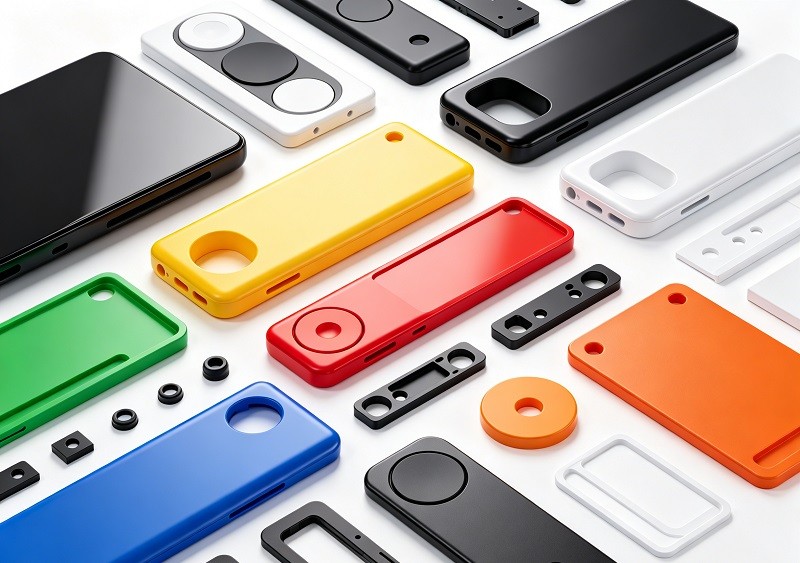
In the vast and intricate world of modern manufacturing, custom plastic molding stands as a cornerstone technology. It's a process essential for creating countless products we use daily, especially within the dynamic electronics sector where precision and durability are non-negotiable. From the sleek casings of our gadgets to the complex components inside our cars, injection molding quietly shapes the world around us.
The success of any molded product, however, hinges on one critical decision: the choice of material. Understanding the right polymer is paramount for creating end products that are not only durable and safe but also visually appealing. Among a sea of options, Acrylonitrile Butadiene Styrene, or ABS, has emerged as a versatile and reliable choice for designers and engineers across numerous industries. In this comprehensive guide, we will dive deep into the properties, applications, and crucial selection considerations for custom ABS plastic molding materials and their popular, high-performance blends.
Essential Custom ABS Plastic Molding: Properties and Common Applications
Acrylonitrile Butadiene Styrene (ABS) is a thermoplastic polymer celebrated for its balanced combination of strength, toughness, and manufacturability. It is a terpolymer, meaning it's synthesized from three distinct monomers: acrylonitrile, butadiene, and styrene. Each of these components imparts specific, desirable properties to the final material. Acrylonitrile contributes chemical resistance and thermal stability, butadiene enhances toughness and impact strength, and styrene provides rigidity and a glossy surface finish. This unique trifecta results in a material that is not just strong but also lightweight, highly moldable, and cost-effective, making it a superstar in the injection molding world.
Why We Use ABS for Custom Molding
The widespread adoption of ABS in custom molding is no accident. It stems from a robust profile of properties that make it exceptionally well-suited for high-volume, precision manufacturing. Manufacturers prefer ABS because it offers a fantastic balance of mechanical performance, aesthetic quality, and processing efficiency, allowing for the creation of durable, high-quality, and visually appealing parts.
Key Properties and Advantages of ABS Plastic:
- High Impact Resistance and Toughness: ABS is renowned for its superior ability to absorb shock and withstand physical stress without cracking or breaking. The butadiene component acts as a rubbery phase within the polymer matrix, which dissipates energy from impacts. This makes it ideal for products that endure rough handling, such as electronic enclosures, automotive components, and protective gear. It maintains this toughness across a wide temperature range, a characteristic that makes it reliable in diverse environments.
- Excellent Strength and Rigidity: Despite its toughness, ABS also possesses good stiffness and high tensile strength. This means it can support loads and maintain its form under stress, making it suitable for structural components that require both durability and rigidity.
- Superior Dimensional Stability: ABS exhibits a low and predictable shrinkage rate during the molding process, typically between 0.5% and 0.7%. This high dimensional stability means that parts retain their intended shape and size after cooling, which is crucial for creating complex components with tight tolerances. It also has low water absorption, which prevents swelling or warping.
- Good Chemical Resistance: The material is resistant to a wide variety of chemicals, including diluted acids, alkalis, oils, and salts. This resilience expands its utility in industrial settings and for products that may come into contact with various substances during their lifecycle. However, it's important to note its susceptibility to strong polar solvents like acetone.
- Aesthetic Quality and Surface Finish: One of the major advantages of ABS is its ability to achieve an excellent surface finish. It can be easily processed to produce a smooth, high-gloss surface that is aesthetically pleasing, making it a top choice for consumer-facing products where visual appeal is a key factor.
- Ease of Processing and Design Flexibility: ABS has a relatively low melting temperature and excellent flow characteristics, making it one of the easiest thermoplastics to process via injection molding. This ease of processing allows for faster cycle times, reduced energy consumption, and lower overall production costs. Its moldability enables the creation of intricate and complex geometries that would be difficult or impossible with other materials.
- Cost-Effectiveness: Compared to many other engineering plastics, ABS is relatively inexpensive, offering a strong performance-to-cost ratio. Its low material cost, combined with efficient processing, makes it an economically attractive option for high-volume production runs.
These properties culminate in a material that is incredibly versatile. Its applications span a vast range of industries:
| Industry | Common Applications of ABS Plastic | Reason for Use |
|---|---|---|
| Automotive | Dashboards, interior trim, door panels, pillar trim, bumper covers, grilles, and instrument panels. | High impact strength, dimensional stability, heat resistance, and excellent surface finish for aesthetic interiors. |
| Consumer Electronics | Housings for laptops, computers, mobile phones, keyboards, remote controls, and power adapters. | Toughness for durability, electrical insulation properties, and the ability to be molded into sleek, complex designs with a high-quality finish. |
| Household Appliances | Housings for vacuum cleaners, food processors, coffee makers, and refrigerator liners. | Chemical resistance, impact strength, and affordability for mass-produced goods. |
| Toys and Games | Famously used for LEGO™ bricks, as well as other toys and sporting goods. | High impact resistance ensures durability and safety, while its ability to be brightly colored and hold intricate shapes is ideal for toys. |
| Medical Devices | Housings for diagnostic equipment, nebulizers, and other non-implantable medical device components. | Durability, chemical resistance for cleaning, and ease of sterilization make it suitable for medical applications. |
| Construction | Pipes, fittings, and drainage systems, as well as door and window frames. | Corrosion resistance, lightweight nature, and impact strength are beneficial for building applications. |
Expanding Custom ABS Plastic Molding with ABS-PC and Material Selection
While standard ABS offers a remarkable balance of properties, some applications demand even higher performance, particularly in terms of impact strength and heat resistance. This is where material science introduces polymer blends, creating alloys that combine the best attributes of different plastics. One of the most significant and widely used of these is the ABS-Polycarbonate blend, commonly known as ABS-PC.
Optimizing with ABS-PC Blends and Smart Choices
PC/ABS is a high-performance thermoplastic alloy that synergistically combines the superior strength and heat resistance of Polycarbonate (PC) with the excellent flexibility and processability of ABS. This blend strategically addresses the limitations of each individual material; for instance, it improves the low-temperature impact resistance that can be a weakness in PC, and it enhances the heat resistance and strength beyond what standard ABS can offer.

This results in a material that is exceptionally tough, dimensionally stable, and capable of withstanding higher temperatures, making it a sought-after choice in demanding industries like automotive and electronics.
Key Advantages of ABS-PC Blends:
- Enhanced Impact Resistance: While ABS is already tough, the addition of PC creates a material with exceptional impact strength, even at low temperatures where other plastics might become brittle.
- Improved Heat Resistance: The PC component significantly raises the heat deflection temperature of the blend compared to pure ABS, allowing parts to function in higher-temperature environments without deforming.
- Superior Strength and Toughness: PC-ABS is tougher and stronger than ABS alone. This makes it ideal for protective housings, automotive interior components like dashboards, and telecommunications equipment.
- Good Processability: The ABS in the blend improves the melt flow and processability compared to pure PC, making it easier to injection mold.
Here is a comparison to illustrate when to choose one over the other:
| Feature | Standard ABS | ABS-PC Blend | Best For |
|---|---|---|---|
| Cost | Lower | Higher | Cost-sensitive projects and general-purpose applications. |
| Impact Strength | Good | Excellent, especially at low temperatures | Applications requiring maximum durability and protection from impacts, like power tool housings or automotive bumpers. |
| Heat Resistance | Moderate | High | Components exposed to heat sources, such as automotive interiors or electronic device casings with heat-generating components. |
| Processability | Excellent | Good | Complex parts where ease of molding and faster cycle times are critical. |
| Surface Finish | Excellent and glossy | Excellent, often with a premium feel | High-end consumer electronics and automotive interior trims where aesthetics and perceived quality are paramount. |
Making Smart Choices: A Guide to Material Selection
Choosing the right material—whether it's ABS, ABS-PC, or another thermoplastic—is a foundational step that dictates a project's success. An incorrect choice can lead to failed parts, budget overruns, and production delays. A comprehensive material selection process involves a detailed analysis of the part's intended function, environment, and lifecycle.
Here are the critical factors to consider when selecting a material for your custom plastic molding project:
| Selection Factor | Key Questions to Ask | Why It's Important |
|---|---|---|
| Mechanical Requirements | What stresses and strains will the part endure? Does it need to resist impact, bending, or torsion? | This determines the required tensile strength, rigidity, and toughness. A load-bearing part needs a high-strength material, while a protective casePRI requires high impact resistance. |
| Environmental and Thermal Conditions | What is the operating temperature range? Will the part be exposed to sunlight (UV radiation), humidity, or water? | Materials degrade differently. ABS, for example, has poor resistance to prolonged UV exposure unless stabilized. Heat resistance is crucial for parts near engines or electronics. |
| Chemical Resistance | Will the part come into contact with oils, solvents, acids, or cleaning agents? | Chemical exposure can cause materials to swell, soften, or crack. The material must be inert to the specific chemicals it will encounter. |
| Aesthetic and Cosmetic Requirements | What is the desired surface finish (glossy, matte, textured)? Is color matching critical? Does the part need to be transparent? | For consumer-facing products, appearance is a key selling point. Materials like ABS provide an excellent glossy finish, but if transparency is needed, PC or Acrylic might be better choices. |
| Regulatory and Agency Compliance | Does the part need to meet specific industry standards (e.g., FDA for food contact, UL for flammability, ISO 13485 for medical)? | Compliance is non-negotiable in many industries. Using a certified material from the start avoids costly redesigns and legal issues. Medical-grade and flame-retardant grades are available for many polymers. |
| Assembly and Post-Processing | How will the part be assembled? Will it be welded, bonded with adhesives, or fastened with screws? | Material choice affects assembly. Some plastics are easier to weld or glue than others. The design may need to incorporate features like bosses for screws, which requires a material that can handle the stress. |
| Production Volume and Cost | What is the total production quantity? What is the target cost per part? | For high-volume production, the efficiency and cycle time of injection molding become critical cost factors. Materials like ABS are cost-effective for large runs, but tooling costs must also be considered. |
Engaging with an experienced plastic molding partner early in the design process is invaluable. Experts can provide crucial design for manufacturability (DFM) feedback and guide you through the material selection maze, ensuring the chosen polymer aligns perfectly with every performance, cost, and design requirement.
Conclusion
In the final analysis, the success of a custom plastic molding project is fundamentally tethered to the material you choose. Whether the optimal solution is the versatile and cost-effective ABS, the robust and heat-resistant ABS-PC blend, or another specialized thermoplastic, this decision will profoundly influence the product's performance, durability, and commercial viability. The journey from a digital design to a tangible, high-quality component is complex, and navigating the nuances of polymer properties, molding processes, and design considerations requires a deep well of expertise.
We leverage our extensive knowledge and experience in material science and custom molding to guide you through every step of this journey. By collaborating closely with your team, we help you navigate the critical material selection process and refine your design for manufacturability. Our goal is to ensure that your custom plastic molded components not only meet but exceed your specific requirements for performance, cost, and aesthetics, empowering you to bring superior products to market with confidence.
We encourage you to share this guide with your colleagues and partners. If you are embarking on a new project, we invite you to reach out and discuss how we can help you make the smart material choices that lead to manufacturing success.