Choosing Your MJF 3D Printing Parts Supplier: A Guide to Quality, Accuracy, and Reliability
- Share
- Issue Time
- May 1,2026
Summary
Complete guide to choosing a reliable MJF 3D printing parts supplier. Covers dimensional accuracy, warpage control, mechanical consistency, surface finish, materials, post-processing and supplier evaluation for quality nylon parts.
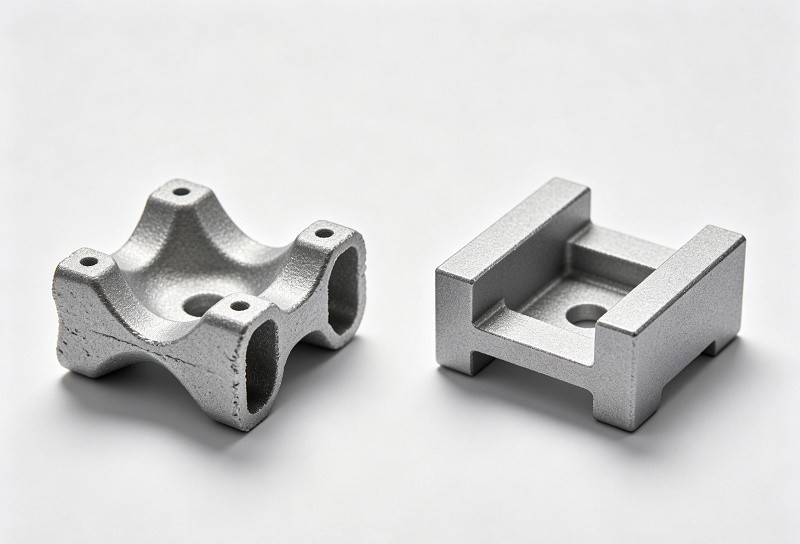
Why Your Choice of MJF Parts Supplier Matters More Than You Think
Multi Jet Fusion (MJF) has revolutionized 3D printing, enabling the rapid production of strong, detailed, and functional nylon parts suitable for everything from prototypes to end-use products. However, the promise of this technology can quickly turn into a series of costly setbacks—warped parts, poor dimensional accuracy, and inconsistent finishes—if your manufacturing partner lacks true expertise. The difference between a Box-of-Parts and a high-quality component is not the printer, but the process control and knowledge of the supplier. This guide will walk you through the common challenges in MJF production and equip you with the knowledge to select a supplier who can navigate them successfully.
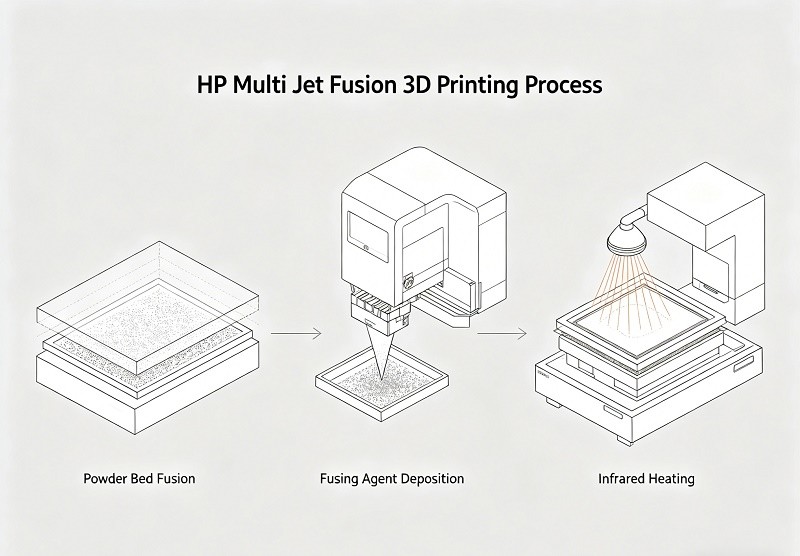
Understanding the Core Technology: What is MJF?
HP's Multi Jet Fusion is a powder bed fusion process. It works by depositing a thin layer of polymer powder (like PA12 nylon) and then using an inkjet array to selectively apply a fusing agent where the part needs to be solid. An infrared energy source then passes over the bed, fusing the areas with the agent into a solid layer. The unsintered powder provides support, allowing for complex geometries without the need for dedicated support structures. This support method is a key reason MJF can produce intricate designs, but it also introduces challenges in cooling and part extraction that only expert suppliers can master.
Challenge 1: Ensuring Dimensional Accuracy and Preventing Warpage
One of the most significant challenges in MJF printing is managing thermal forces. As the powdered material is heated and cooled, internal stresses can build up, causing flat surfaces to bow and long, thin parts to warp. This distortion compromises dimensional accuracy and can make parts unusable. A top-tier supplier actively mitigates this.
What to Ask Your Supplier:
- How do you optimize part orientation and nesting in the build chamber to ensure uniform cooling?
- What strategies do you use for large, flat parts, which are notoriously prone to warping?
- Can you provide examples or data on the tolerances you typically achieve for geometries similar to mine?
A knowledgeable supplier won't just hit "print." They will analyze your geometry and strategically place it within a packed build unit to balance thermal stresses, sometimes even adding sacrificial parts to help control heat distribution. They understand that parts in the center of the build volume experience different thermal conditions than those at the edges and plan accordingly.
Challenge 2: Achieving Consistent Mechanical Properties
The strength and durability of an MJF part are highly dependent on achieving full fusion between layers and particles. Incomplete fusion leads to porosity, creating brittle parts that are prone to failure under stress. This can be caused by improper machine calibration, poor powder quality, or incorrect processing parameters. Your supplier's quality control over their material and machines is paramount.
What to look for in a reliable supplier:
- Material Management: They should have strict protocols for powder handling, including sieving to remove clumps and storing materials in a dry, controlled environment to prevent moisture absorption.
- Machine Calibration: Ask about their maintenance schedule. Regular calibration of heating elements and printheads is crucial for consistent performance.
- Process Control: A great partner can fine-tune parameters like layer thickness and energy density to match the part geometry and material requirements.
Challenge 3: Mastering Surface Finish and Aesthetics
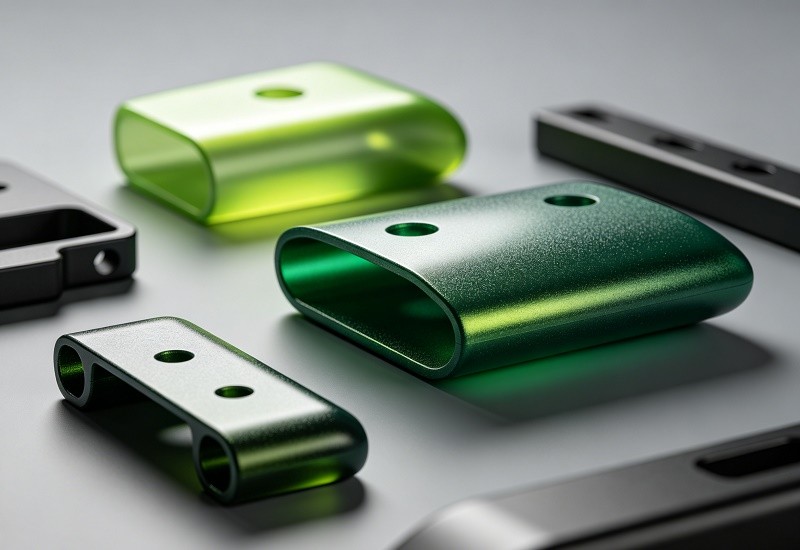
Raw MJF parts come out with a grainy, matte gray finish. While functional, it's often not suitable for cosmetic or consumer-facing products. The journey from a raw print to a finished part involves multiple post-processing steps. A supplier's capability in this area dramatically impacts the final product's look, feel, and performance.
Key Post-Processing Services to Inquire About:
- Bead Blasting: This is the standard first step to remove residual powder and even out the surface, resulting in a satin finish.
- Dyeing: For a professional look, parts can be dyed. Quality dyeing results in deep, uniform color (typically black) that is scratch-resistant because the porous nylon absorbs the pigment.
- Vapor Smoothing: For a surface finish that rivals injection molding, vapor smoothing uses chemical vapors to slightly melt the part's outer skin, creating a sealed, smooth, and glossy surface. This also improves moisture resistance.
- Tumbling/Vibro Polishing: A mechanical process using ceramic media to smooth parts, ideal for achieving a lower coefficient of friction on functional components.
Challenge 4: Handling Complex Geometries and Internal Features
MJF excels at producing parts with intricate details and internal channels. However, a major challenge is ensuring all the unfused powder is removed from these internal cavities after printing. Trapped powder can affect moving parts, clog channels, and add unwanted weight. Thorough cleaning requires specialized equipment and expertise.
Signs of a an expert supplier:
- They use a combination of manual brushing, compressed air, and advanced bead blasting stations for effective powder removal.
- For highly complex parts or medical applications, they may offer ultrasonic cleaning to ensure no residue is left behind.
- They will review your design and provide feedback if a feature is too small for effective powder removal (DfAM - Design for Additive Manufacturing).
Challenge 5: Material Selection and Expertise
The most common material for MJF is Nylon PA12, a versatile and robust thermoplastic. However, other variants exist, such as Glass-Bead filled PA12 (for higher stiffness) or flexible TPU. A good supplier doesn't just offer materials; they understand their properties and can guide you to the right choice for your application.
Your supplier should be able to answer:
- Based on my application's stress, temperature, and flexibility requirements, is PA12 the best choice, or should we consider PA11 or a filled material?
- What are the design trade-offs between different materials (e.g., stiffness vs. impact resistance)?
Supplier Evaluation Checklist
When choosing an MJF parts supplier, use this table as a quick reference to compare their capabilities:
| Feature | What to Look For | Ask The Supplier |
|---|---|---|
| Dimensional Accuracy | Evidence of process control, understanding of thermal effects, and tight tolerance capabilities. | "What is your standard tolerance? How do you mitigate warpage on large or thin parts?" |
| Quality Control | ISO 9001 certification, consistent material handling procedures, and documented machine maintenance schedules. | "Can you describe your QC process from file review to final inspection?" |
| Post-Processing | A wide range of finishing options including dyeing, bead blasting, and vapor smoothing. | "What finishing options do you offer, and can you provide samples of each?" |
| Technical Expertise (DfAM) | Willingness to review your designs and provide feedback for optimizing printability and cost. | "Could you review my design and suggest any changes to improve the outcome or reduce cost?" |
| Communication | Transparent, clear communication and realistic lead times. | "What is your communication process during production? Who is my point of contact?" |
| Experience | A portfolio of projects in industries similar to yours (e.g., automotive, medical, consumer goods). | "Do you have experience with parts that have similar functional requirements to mine?" |
Beyond The Machine: The Value of a True Partner
Ultimately, selecting an MJF parts supplier is not about finding the cheapest quote or fastest turnaround time. It's about finding a manufacturing partner who invests in process, expertise, and quality. A great supplier acts as an extension of your own engineering team, providing guidance and ensuring that the parts you receive are not only made quickly, but made right. By asking the right questions and understanding the inherent challenges of the technology, you can identify a partner who will help you leverage the full power of Multi Jet Fusion for your projects.