China CNC Drilling Parts Factory: Technology and Solutions in Precision Manufacturing Explained
- Share
- Issue Time
- Jan 13,2026
Summary
The core CNC precision drilling technology emphasized throughout the article for creating accurate holes in engine parts, pressure vessels, and marine components using advanced Chinese factory capabilities.
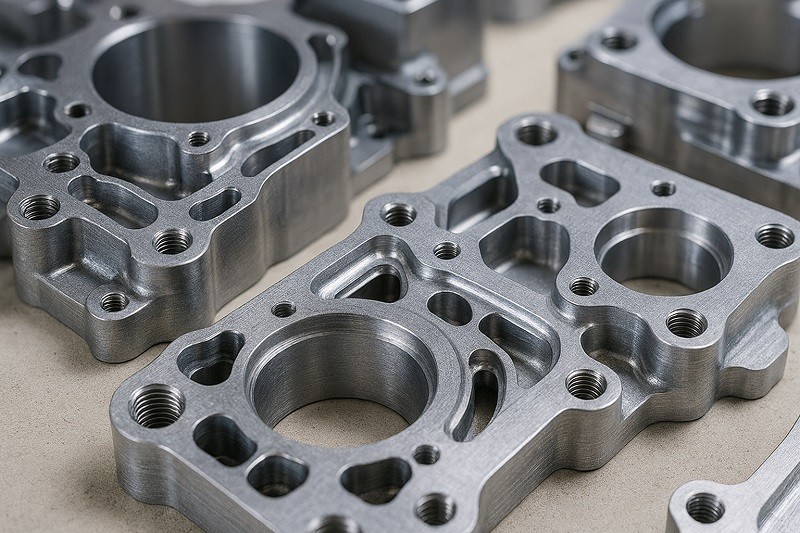
As we delve into the world of precision manufacturing, we'll explore why the China CNC drilling parts factory is at the forefront of producing high-performance components. This guide will provide a comprehensive overview of CNC machining for essential engine parts and other critical machine components, highlighting the technological advancements and solutions offered by a China CNC drilling parts factory.
The Cornerstone of Modern Industry: Precision from a China CNC Drilling Parts Factory
Computer Numerical Control (CNC) machining has become an indispensable technology in modern manufacturing, revolutionizing the creation of everything from simple brackets to complex, high-performance engine components. This subtractive manufacturing process, which uses computer-controlled machines to precisely remove material from a solid block, ensures unparalleled accuracy, consistency, and efficiency. A China CNC drilling parts factory leverages these capabilities to serve a global market, offering a potent combination of cutting-edge technology, skilled engineering, and competitive cost structures.
The Indispensable Role of CNC Machining in Engine Part Production
The heart of any vehicle or heavy machinery is its engine, a complex assembly of components that must work in perfect harmony. The reliability and performance of an engine are directly tied to the precision with which its parts are made. CNC machining is not just a manufacturing option for these parts; it is an essential technology that enables the required levels of accuracy and complexity. It is extensively used to produce critical engine components like cylinder heads, engine blocks, crankshafts, pistons, and valves, where even minute deviations can impact performance and safety.
Transforming Raw Materials into High-Quality Engine Components
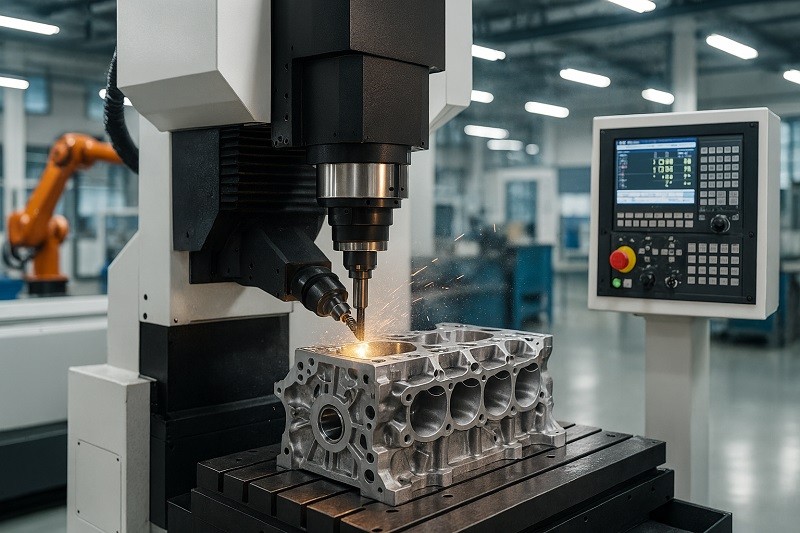
The journey from a block of raw material to a finished engine part is a testament to the power of CNC technology. It begins with a digital design created using Computer-Aided Design (CAD) software, which is then converted into a set of instructions for the CNC machine. The machine's tools—such as drills, mills, and lathes—then meticulously carve away material to create the final shape.
This process allows for the creation of intricate and precise features that are vital for engine function. For instance, CNC drilling can create exact coolant passages and oil galleries within an engine block, while CNC milling shapes the complex surfaces of a cylinder head. The result is a component that meets exact specifications, often with tolerances as tight as a fraction of a millimeter, ensuring a perfect fit and optimal function within the engine assembly.
| CNC Process | Application in Engine Parts | Key Benefits |
|---|---|---|
| CNC Milling | Cylinder heads, engine blocks, exhaust manifolds | Creates complex geometries, flat surfaces, and cavities with high precision. |
| CNC Turning | Crankshafts, camshafts, pistons | Produces cylindrical parts with high dimensional accuracy and smooth surface finishes. |
| CNC Drilling | Coolant passages, oil galleries, bolt holes | Creates precise holes of various depths and diameters. |
| CNC Grinding | Crankshaft journals, valve seats | Achieves ultra-fine surface finishes and extremely tight tolerances. |
Speed, Efficiency, and Cost Advantages in Custom Applications
One of the most significant benefits of CNC machining is its combination of speed and flexibility, especially for custom applications. Traditional manufacturing methods often require expensive, custom-made molds or tooling, making small production runs or one-off prototypes prohibitively expensive. CNC machining eliminates this barrier.
Since the process is controlled by a digital program, designs can be quickly modified and iterated upon without the need for physical tool changes. This agility accelerates product development cycles and allows for rapid prototyping, enabling engineers to test and refine parts quickly. Furthermore, the high level of automation reduces the need for constant human supervision, allowing machines to run continuously, which shortens production times and lowers labor costs. This efficiency makes CNC machining a cost-effective solution for both single custom parts and low-to-mid volume production runs.
Why a China CNC Drilling Parts Factory Offers a Competitive Edge
Sourcing components from a China CNC drilling parts factory has become a strategic move for businesses worldwide. This is not simply about finding a low-cost option; it's about partnering with a manufacturing ecosystem that offers a powerful combination of advanced technology, scalability, and an integrated supply chain. Many Chinese manufacturers have invested heavily in state-of-the-art 3-axis, 4-axis, and 5-axis CNC machines and adhere to rigorous international quality standards like ISO 9001.
Access to High-Performance and Durable Machine Parts
The narrative that "Made in China" equates to lower quality is outdated. Today, high-quality Chinese OEM CNC parts are recognized for their precision and reliability on the global manufacturing stage. These factories have access to a vast and well-established supply chain, enabling them to source a wide variety of high-performance raw materials at competitive prices. This, combined with extensive experience and investment in advanced manufacturing technology, allows them to produce durable, high-performance parts that meet the stringent requirements of industries like aerospace, automotive, and medical devices. The key is to partner with reputable suppliers who can demonstrate a commitment to quality through robust quality control systems and international certifications.
The Advantage of Lower Costs and Enhanced Competitiveness
The cost-effectiveness of sourcing from China is a major competitive advantage for businesses. This advantage stems from a combination of factors, including lower labor rates, economies of scale, and an incredibly efficient industrial network. The fierce competition within the Chinese manufacturing market drives suppliers to continually optimize their processes, which translates into better value for the customer.
However, the savings go beyond the initial price tag. By outsourcing their CNC machining needs, companies can reduce capital expenditure on expensive machinery and avoid the overhead associated with in-house production. The rapid turnaround times offered by many Chinese factories also shorten product development cycles and allow businesses to bring their products to market faster. This blend of quality, speed, and cost-efficiency provides a significant competitive edge in the fast-paced global market.
| Benefit of Sourcing from China | Key Contributing Factors |
|---|---|
| Cost-Effectiveness | Lower labor rates, economies of scale, efficient supply chains, intense market competition. |
| Access to Technology | Heavy investment in modern 3, 4, and 5-axis CNC machines and automation. |
| High Production Capacity | Vast network of facilities allows for scalability from prototypes to mass production. |
| Integrated Supply Chain | Ready access to raw materials and secondary services like heat treating and finishing. |
| Rapid Turnaround | Optimized processes and high efficiency lead to shorter lead times. |
Exploring Materials and Applications at a China CNC Drilling Parts Factory
A key strength of a high-quality China CNC drilling parts factory is its versatility in both materials and applications. The ability to machine a wide array of raw materials allows these factories to serve a diverse range of industries, from marine engineering to medical devices. This flexibility is crucial for meeting the specific demands of high-performance components that must operate in challenging environments.
Versatile Materials for Demanding Environments
The choice of material is fundamental to the performance of any machined part. CNC factories in China work with a broad spectrum of materials, from common metals like steel and brass to advanced plastics and exotic alloys. One standout material, especially for harsh conditions, is the 5086 aluminum alloy.
5086 Aluminum Alloy: Durability and Corrosion Resistance
5086 aluminum alloy is a high-strength, non-heat-treatable material belonging to the 5xxx series, with magnesium as its primary alloying element. Its composition, typically containing around 4% magnesium, gives it exceptional resistance to corrosion, particularly in saltwater and other aggressive marine environments. This makes it a premier choice for shipbuilding and offshore applications.
Beyond its corrosion resistance, 5086 aluminum offers an excellent strength-to-weight ratio, good weldability, and impressive durability. This combination of properties makes it suitable for a wide range of demanding applications where structural integrity and longevity are critical.
Key Properties of 5086 Aluminum Alloy
| Property | Value | Significance |
|---|---|---|
| Density | ~2.66 g/cm³ | Lightweight, contributing to an excellent strength-to-weight ratio. |
| Tensile Strength | 260-414 MPa (38-60 ksi) | High strength allows it to withstand significant mechanical stress. |
| Corrosion Resistance | Excellent | Ideal for marine, chemical, and industrial applications due to high magnesium content. |
| Weldability | Good | Retains a high percentage of its strength after welding, which is crucial for large fabricated structures. |
| Machinability | Good | Can be effectively machined into complex parts, especially in specific strain-hardened tempers like H34 or H36. |
The Role of Cold Working for Enhanced Strength
Unlike heat-treatable alloys, 5086 aluminum derives its strength primarily from solid solution strengthening (from the magnesium) and a process called cold working or strain hardening.
Cold working involves deforming the metal at a temperature below its recrystallization point, typically at room temperature. Processes like rolling, drawing, or pressing cause permanent changes to the metal's internal crystal structure. During plastic deformation, imperfections in the crystal lattice, known as dislocations, multiply and become entangled. This tangled network of dislocations hinders their own movement, which makes the material more resistant to further deformation.
The result is a significant increase in both the tensile strength and hardness of the material. However, this comes at the cost of reduced ductility, meaning the material becomes less flexible. Engineers and manufacturers must carefully balance this trade-off to achieve the desired mechanical properties for a specific application. The combination of alloying and cold working is an extremely effective method for achieving high strength in many aluminum alloys.
Key Applications: From Marine Structures to Pressure Vessels
The superior properties of materials like 5086 aluminum, combined with the precision of CNC machining, enable their use in some of the most demanding industrial and commercial applications.
Critical Components for Marine and Offshore Industries
The marine industry is a primary beneficiary of 5086 aluminum's exceptional qualities. Its outstanding resistance to seawater corrosion makes it the ideal material for components constantly exposed to the harsh marine atmosphere. CNC-machined parts made from 5086 aluminum are used extensively in:
- Ship Hulls and Superstructures: The material's strength, light weight, and weldability are perfect for constructing durable and efficient boat and ship bodies.
- Offshore Rigs and Platforms: Components for drilling rigs and other offshore structures benefit from the alloy's long-term performance in saltwater.
- Marine Hardware and Equipment: Items like vessel gangways, masts, and equipment housings are fabricated from 5086 to ensure they withstand corrosion and mechanical stress.
Precision Parts for Pressure Vessels and Tanks
The strength and reliability of CNC-machined 5086 aluminum also make it a preferred material for pressure vessels and storage tanks. These applications require materials that can safely contain substances under pressure and resist corrosion from their contents.
CNC machining is used to create critical components such as flanges, nozzles, and end caps with the high precision necessary to guarantee a perfect seal. The material's good performance in cryogenic applications also makes it suitable for tanks used to store liquefied gases. Whether for chemical storage, transportation tanks, or industrial process equipment, parts machined from 5086 aluminum provide the safety and durability required.
Upholding Quality and Standards: The Commitment of a China CNC Drilling Parts Factory
In precision manufacturing, quality is not just a goal; it is a fundamental requirement. The final performance, safety, and reliability of a product are directly dependent on the quality of its individual components. Reputable China CNC drilling parts factories demonstrate their commitment to quality by adhering to a comprehensive framework of internationally recognized standards. These standards govern everything from the performance of the CNC machines themselves to the language used to define part specifications and the rules for verifying those specifications.
This commitment to standardization is a cornerstone of trust, providing customers with the assurance that parts will meet their exact requirements consistently. Adherence to standards like those published by the International Organization for Standardization (ISO) and the American Society of Mechanical Engineers (ASME) ensures a universal language for quality and precision.
International Standards for Machine Performance and Design
The quality of a machined part begins with the quality of the machine tool that creates it. A factory's investment in and maintenance of high-performance machinery is a critical indicator of its capabilities. International standards provide a clear methodology for evaluating and verifying the performance of these complex systems.
ASME B5.54 and B5.57: Evaluating CNC Machining and Turning Centers
The American Society of Mechanical Engineers (ASME) publishes standards that are critical for evaluating the performance of CNC equipment. These documents provide a unified methodology for specifying and testing these machines, facilitating fair comparisons and ensuring they meet performance claims.
ASME B5.54 specifically addresses the performance evaluation of Computer Numerically Controlled (CNC) Machining Centers. This standard outlines tests for critical parameters such as positioning accuracy, repeatability, and geometric errors across multiple axes. By adhering to ASME B5.54, a factory can verify that its milling machines are capable of producing parts that conform to the required specifications.
ASME B5.57 focuses on the performance evaluation of CNC Lathes and Turning Centers. It establishes requirements for testing the accuracy and performance of machines that produce cylindrical components. This ensures that the machinery used to create components like high-precision CNC Turning Parts meets strict requirements for accuracy, alignment, and contouring performance.
Compliance with these standards provides objective proof that a factory's equipment is maintained and operated at a level necessary for high-precision manufacturing.
ASME Y14.5 and B89.7.3.1: Geometric Dimensioning and Tolerancing
Clear and unambiguous communication is vital in engineering. A design is only as good as its ability to be correctly interpreted by the manufacturer and inspector.
ASME Y14.5 is the authoritative standard for Geometric Dimensioning and Tolerancing (GD&T). GD&T is a symbolic language used on engineering drawings and 3D models to define the allowable variation in a part's geometry. Instead of just tolerancing size, it controls features' form, orientation, and location, which is critical for ensuring parts fit together and function correctly. By using GD&T, designers can communicate their exact intent, eliminating the ambiguity of traditional plus/minus dimensioning.
ASME B89.7.3.1 provides Guidelines for Decision Rules when determining if a part conforms to its specifications. All measurements have some degree of uncertainty. This standard helps answer the question: if a measurement falls very close to the tolerance limit, does the part pass or fail? It provides a framework for suppliers and customers to agree on how to account for measurement uncertainty when accepting or rejecting products, which helps avoid disputes and ensures that decisions are made with a clear and mutually understood level of risk.
Together, these standards create a robust system for defining part requirements and verifying conformance with mathematical and procedural rigor.
Specialized Standards for Diverse Machine Parts
Beyond the general standards for machine performance and part definition, a truly capable factory also demonstrates expertise in standards related to specific types of components. This specialized knowledge is crucial for producing complex and high-performance assemblies, which often consist of more than just milled or turned parts.
AGMA Standards for Gears: From Spur to Plastic Gears
Gears are among the most critical components in any power transmission system, and their quality directly impacts performance, noise level, and lifespan. The American Gear Manufacturers Association (AGMA) is the primary authority for gear standards in the United States.
AGMA standards provide a comprehensive framework for gear design, manufacturing, and inspection. A key aspect is the gear quality classification system, often referred to as the AGMA "Q number". AGMA 2000-A88, for example, defines quality levels from Q3 to Q15, where a higher number indicates tighter tolerances and higher precision. This system evaluates parameters such as:
- Pitch Variation: The accuracy of the spacing between teeth.
- Involute Profile Variation: How closely the tooth's curve matches the ideal theoretical shape.
- Tooth Lead or Alignment: The parallelism of the tooth face to the gear's axis.
- Radial Runout: The variation in the distance of the teeth from the center of rotation.
Factories adhering to AGMA standards can produce a wide variety of gears, including spur gears, helical gears, and bevel gears, to the precise quality level an application demands. Furthermore, with the increasing use of advanced polymers, standards and information sheets like ANSI/AGMA 1006-A97 and AGMA 909-A06 provide crucial guidelines for the tooth proportions and specifications of plastic gears, addressing the unique properties and molding considerations of these materials.
ASME B29.8 and B40.200: Ensuring Reliability in Chains and Gauges
A commitment to quality extends to all components within an assembly, including those that may seem secondary but are vital for function and safety.
ASME B29.8 is the standard for Leaf Chains, Clevises, and Sheaves. Leaf chains are critical components in lifting applications like forklifts and material handling equipment. The standard specifies dimensions, material strength, and lacing configurations to ensure interchangeability and safety. Adherence to B29.8 guarantees that these high-strength chains can handle their rated loads reliably.
ASME B40.200 covers Thermometers, Direct Reading and Remote Reading. While this may seem unrelated to drilling parts, many complex mechanical systems require precise temperature monitoring for safe and efficient operation. This standard consolidates requirements for various thermometer types, ensuring their accuracy, construction, and safety. A factory that understands and sources components compliant with standards like B40.200 demonstrates a comprehensive approach to system-level quality and reliability.
This dedication to specialized standards showcases a factory's depth of expertise and its ability to act as a true partner in developing and delivering complete, reliable, and high-performance mechanical solutions.
Conclusion
The expertise and technological solutions from a China CNC drilling parts factory are essential in today's precision manufacturing landscape. By offering a powerful combination of advanced machining capabilities, a deep understanding of high-performance materials, and a steadfast commitment to quality, these factories provide a wide array of industries with the critical components they need to innovate and thrive.
By adhering to stringent international standards—from the machine performance evaluations of ASME B5.54 and B5.57 to the design language of ASME Y14.5 and specialized component standards like those from AGMA—a leading China CNC drilling parts factory establishes itself as a vital and trustworthy partner. Leveraging these advanced CNC technologies and rigorous quality frameworks ensures the development of durable, high-performance machine parts that drive progress across the globe. As you consider your next manufacturing project, look for a partner whose commitment to these principles is evident in every part they produce. We encourage you to share this article and join the conversation on the future of precision manufacturing.