China's SLS 3D Printing: Powering the Future of Global Manufacturing with Speed, Scale, and Innovation
- Share
- Issue Time
- Jan 29,2026
Summary
Discover how China’s SLS 3D printing drives global manufacturing with speed, scale, innovation, and cost-effective production.
The Unstoppable Rise of SLS 3D Printing in China
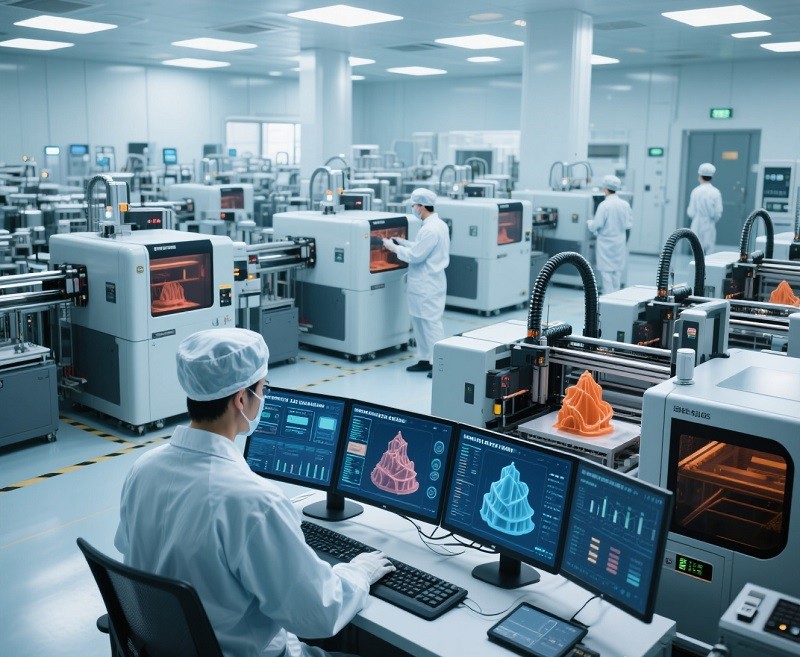
Once a niche technology, Selective Laser Sintering (SLS) has exploded into a mainstream manufacturing powerhouse, and China is at the epicenter of this revolution. Driven by strategic government initiatives like "Made in China 2025" and massive investments in high-tech manufacturing, the nation's 3D printing sector is experiencing unprecedented growth. The Chinese market is projected to grow at a staggering CAGR of 27.5% between 2024 and 2030. This surge isn't just about producing more; it's about producing better, faster, and more efficiently. As a result, global businesses are increasingly looking to China for high-quality, cost-effective SLS printed parts, transforming global supply chains and product development cycles. The country's commitment to self-reliance and technological innovation has cultivated a robust ecosystem of machine manufacturers, material suppliers, and service bureaus that are surpassing their global competitors in both scale and speed.
Why Global Businesses are Turning to China for SLS Parts
Sourcing SLS parts from China offers a compelling value proposition that balances cost, speed, and quality. The country's mature manufacturing infrastructure provides a significant competitive advantage, enabling rapid scalability and reduced production costs. This established ecosystem means that everything from raw materials to sophisticated machinery is readily available, shortening lead times and streamlining the entire production process. Furthermore, Chinese service providers have become remarkably adept at working with international clients, breaking down language barriers and offering seamless project management. Outsourcing to China allows companies to accelerate their time-to-market without the hefty capital investment required for in-house SLS printers and staff, freeing them to focus on their core business of innovation and design. This strategic move is not just a cost-saving measure; it's a way to tap into a world-class manufacturing hub at the forefront of additive technology.
Key Industries Driving Demand for Chinese SLS Components
The versatility and durability of SLS-printed parts have made them indispensable across several key industries, with Chinese manufacturers leading the charge.
- Automotive: From rapid prototyping of new designs to producing custom jigs, fixtures, and even end-use parts, the automotive sector is a major consumer. Chinese automotive firms like NIO are leveraging SLS for producing components for electric vehicles.
- Aerospace & Defense: The aerospace industry relies on SLS for lightweight yet strong components with complex geometries. China's focus on developing its aerospace capabilities has created immense demand for domestically produced, high-performance parts that meet stringent quality standards.
- Healthcare: Mass customization is a game-changer in the medical field. SLS is used for creating patient-specific surgical guides, orthopedic implants, and anatomical models, where precision and biocompatibility are critical.
- Consumer Electronics: Shenzhen, the heart of China's electronics industry, utilizes SLS for creating intricate housings, custom connectors, and functional prototypes for the next generation of gadgets. The fast product iteration cycles in this industry align perfectly with the speed of SLS printing.
Navigating the Material Landscape: From Nylon to High-Performance Polymers
Material innovation is a cornerstone of China's growing dominance in the SLS market. While Nylon (PA12) remains the workhorse material for its excellent balance of strength, flexibility, and detail, Chinese suppliers are rapidly expanding their portfolios. The market for 3D printing materials in China is projected to surpass 16 billion yuan by 2024. This growth is fueled by domestic R&D into a wide range of advanced polymers and composites designed for specific industrial applications.
| Material | Key Properties | Common Applications |
|---|---|---|
| PA12 (Nylon) | Strong, ductile, good chemical resistance | Functional prototypes, complex assemblies, casings |
| PA11 | Higher impact resistance, more flexible, bio-based | Snap-fit parts, living hinges, prosthetics |
| Glass-Filled PA | Increased stiffness and heat resistance | Housings, jigs & fixtures, under-hood components |
| TPU (Elastomer) | Rubber-like flexibility, high abrasion resistance | Gaskets, seals, flexible prototypes, footwear |
This focus on material diversity allows for a broader range of applications, from heat-resistant automotive components to flexible, wearable consumer products.
Overcoming Quality Control Challenges with Chinese SLS Suppliers
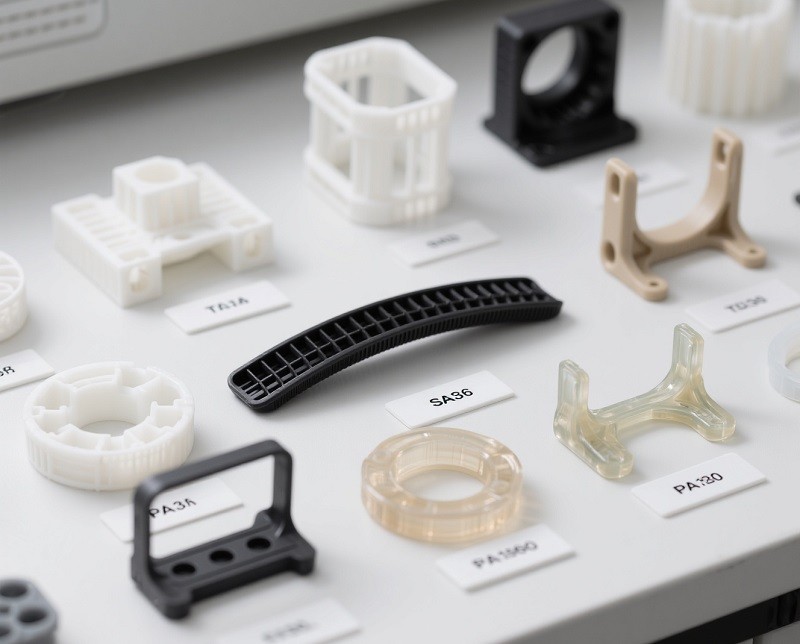
Despite the rapid advancements, a key concern for global businesses has been ensuring consistent quality. The market was previously fragmented, leading to variability between suppliers. However, the industry is maturing quickly. Leading Chinese SLS service providers have responded by investing heavily in rigorous quality management systems, standardized processes, and advanced metrology equipment. To mitigate risks, it is crucial for clients to conduct thorough due diligence. This includes requesting sample parts, reviewing quality certifications (like ISO 9001), and understanding the supplier's process controls. Many top-tier companies now offer detailed material data sheets and part inspection reports to ensure full traceability and reliability, bridging the trust gap and delivering parts that meet or exceed global standards.
The Cost Equation: Achieving Economies of Scale in SLS Production
One of China's most significant advantages is its ability to deliver SLS parts at a competitive price point. This is not simply due to lower labor costs but rather a result of achieving massive economies of scale. The high concentration of 3D printing companies in manufacturing hubs like Shenzhen and the Pearl River Delta creates a competitive environment that drives down prices. Furthermore, the operational efficiency of these facilities, which often run 24/7 with a high utilization rate of machines, allows for the amortization of hardware costs over a vast number of parts. This, combined with a mature domestic supply chain for powders and a strategic focus on reducing dependency on foreign technologies, results in a cost structure that is difficult for Western counterparts to match, especially for medium to high-volume production runs.
Future Trend #1: The Integration of AI in SLS Design and Manufacturing
The next frontier for SLS in China is the integration of Artificial Intelligence and Machine Learning. AI is poised to revolutionize the entire workflow, from design to final part. AI-driven generative design software can create optimized, lightweight structures with complex internal lattices that would be impossible for a human to design, perfectly leveraging the geometric freedom of SLS. In production, AI algorithms can monitor prints in real-time, detecting potential defects like warping or under-sintering and making automatic adjustments to laser power or temperature. This reduces failure rates, minimizes waste, and ensures higher part-to-part consistency, pushing the boundaries of reliability and efficiency.
Future Trend #2: Sustainable Materials and Green Manufacturing
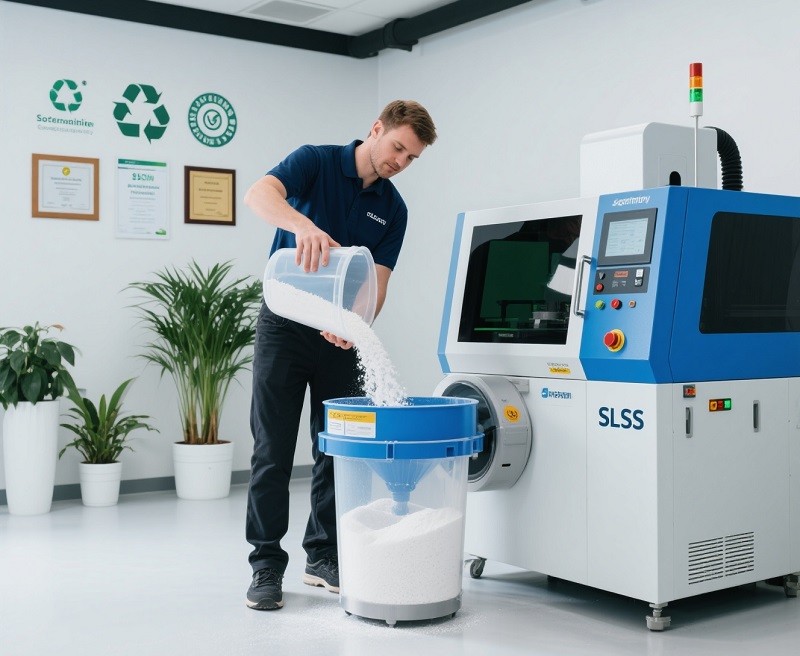
Sustainability is becoming a major focus in the SLS industry. Chinese manufacturers are actively exploring two key areas: the development of bio-based polymers (like PA11, derived from castor oil) and improving the recyclability of unused powder. A significant advantage of SLS is that unsintered powder in the build chamber can support subsequent parts, reducing the need for wasteful support structures. Advanced powder handling systems are being developed to improve the "refresh rate"—the ratio of virgin to recycled powder—which lowers material costs and minimizes the environmental footprint. This shift towards greener manufacturing is not just an ethical imperative but also a growing market demand.
Future Trend #3: Mass Customization and On-Demand Production
3D printing has always promised mass customization, and China's SLS sector is making it a scalable reality. The convergence of efficient digital workflows, automated post-processing, and cost-effective production allows for the manufacturing of large quantities of individually unique parts. This is transforming industries like healthcare (patient-specific implants), consumer goods (customized electronics casings), and automotive (personalized interior components). As the cost per part continues to fall, the economic viability of on-demand production for end-use parts increases, paving the way for a future with more agile, less wasteful supply chains.
How to Select the Right SLS Printing Partner in China
Choosing the right partner is critical for success. Look beyond the price tag and evaluate potential suppliers on a range of factors:
- Technical Capability: Do they have a wide range of modern, well-maintained SLS machines? Can they work with the specific materials your project requires?
- Quality Management: Ask for proof of their quality control processes. Do they have certifications like ISO 9001? Can they provide inspection reports and material certifications?
- Experience & Case Studies: Look for a provider with a proven track record in your industry. Ask for case studies or examples of similar parts they have produced.
- Communication & Support: Is their team proficient in English? Are they responsive and knowledgeable? Good communication is key to navigating the complexities of remote manufacturing.
- Logistics & Supply Chain: How do they handle international shipping and customs? A partner with robust logistics experience can prevent costly delays.
The Future is Sintered: China's Central Role in Additive Manufacturing
The trajectory is clear: China is not just a participant but a leader shaping the future of the global additive manufacturing landscape. Its strategic focus on technology, material science, and achieving industrial scale has positioned it as an indispensable hub for SLS production. While challenges remain, the pace of innovation and the immense domestic market are driving the industry forward at a breakneck speed. For businesses around the world, collaborating with Chinese SLS providers is no longer just an option for cost savings—it's a strategic imperative to stay competitive, accelerate innovation, and build the next generation of products.