CNC Prototyping vs Production: When to Use Rapid Prototyping vs Full Production Runs
- Share
- publisher
- SOMI Custom Parts
- Issue Time
- Jul 30,2026
Summary
A comprehensive comparison of CNC rapid prototyping versus production machining. Learn when to use each approach, cost crossover analysis, quality differences, and how to transition from prototype to full production with confidence.
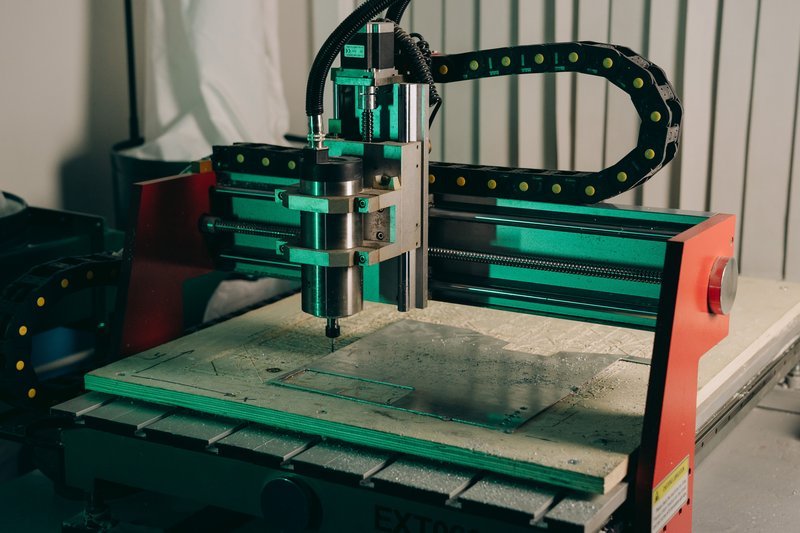
One of the most critical decisions in product development is choosing between CNC prototyping and full production machining. While both processes use the same CNC equipment, their objectives, workflows, cost structures, and quality control approaches differ significantly. Getting this decision wrong can mean paying prototype prices for production quantities or investing in expensive tooling before a design is validated. This comprehensive guide breaks down the differences between rapid prototyping and production CNC machining, helping engineers, product managers, and procurement professionals make informed decisions at every stage of the product lifecycle. Rapid prototyping refers to the fast manufacturing of a small number of CNC machined parts, typically 1 to 50 units, to validate form, fit, function, or manufacturability before committing to full-scale production. The "rapid" element comes from reduced setup time, standard tooling, and CAM programming that prioritizes speed over per-unit cost optimization. CNC-machined prototypes are produced from the same materials as production parts: aluminum 6061, stainless steel 304/316, titanium Grade 5, and engineering plastics such as PEEK, POM, and Nylon. This is a critical advantage over 3D-printed prototypes, which often use surrogate materials that do not replicate true mechanical performance. CNC-machined prototypes typically match production-intent material properties within 95%, making them far more reliable for functional testing. Key characteristics of rapid prototyping runs: Production machining is optimized for volume. Where prototyping asks "does this design work?", production machining asks "how do we make 500 of these parts at the lowest verified cost with consistent quality across every unit?". At this stage, manufacturers invest in dedicated fixtures, custom tooling, optimized cycle times, and statistical process control (SPC). Key characteristics of production machining: Cost is where most teams get burned. The instinct is to look at per-unit price only — but that is the wrong lens. The true cost equation must include setup costs. For a hypothetical aluminum bracket (medium complexity, three setups): The crossover point varies by part, but for most machined components it falls between 20 and 80 units. Below that threshold, rapid prototyping wins on total cost. Above it, production machining takes the lead. The best manufacturing strategies do not treat prototyping and production as binary choices. They use a deliberate bridge approach. According to research published in the Journal of Manufacturing Science and Engineering, companies that implement structured prototype-to-production bridge strategies reduce total product development cost by an average of 23% compared to teams that skip prototype validation stages. Phase 1: Concept Prototype (1–5 units) — Validate your fundamental design concept. Are the dimensions right? Does it assemble? Does it function? Phase 2: Engineering Prototype (5–25 units) — Test under real-world conditions: thermal cycling, load testing, fit checks. Share with engineering teams and key customers for feedback. Phase 3: Pilot Production (25–100 units) — Introduce basic production-intent fixturing. Conduct first article inspection (FAI). Identify manufacturability issues before full tooling investment. Phase 4: Full Production (100+ units) — Locked design. Optimized process. Certified quality plan. Economies of scale begin to work. Setup: Prototypes use standard vises and general-purpose fixtures. The machinist clamps the part in a standard setup — fast and cheap but not ideal for repeatability. Production runs use custom fixtures that hold every part in the exact same position, reducing cycle time and improving consistency. Tooling: Prototyping relies on standard off-the-shelf tools. Production uses optimized tooling selected for longer life and faster cutting speeds, including custom form tools that combine multiple operations into a single pass. Inspection: Prototypes receive basic dimensional checks using calipers and pins. Production parts undergo full CMM (Coordinate Measuring Machine) inspection with detailed reports, SPC tracking, and first article inspection protocols per AS9102 for aerospace or PPAP for automotive. Material sourcing differs significantly between the two approaches. For prototypes, shops cut from standard stock sizes — fast but wasteful. Production runs can order near-net blanks in the right dimensions, reducing machining time and material waste. At high volumes, materials can be purchased directly from mills at the best pricing. Surface finish is another key differentiator. Prototype parts typically ship as-machined or with basic deburring. Production parts can meet full finishing specifications: anodizing (Type II and Type III), powder coating, electroless nickel plating, passivation, and black oxide. For parts requiring MIL-A-8625 anodizing or ISO 4042 plating standards, production machining with documented process control is essential. SOMI Custom Parts operates an ISO 9001:2015 certified facility with full in-house finishing capabilities, offering both rapid CNC prototype services and production machining with complete quality documentation. Rapid prototyping is the right call when uncertainty is your biggest variable: Production machining becomes non-negotiable when you need volume, consistency, and certified quality: At SOMI Custom Parts, we provide both rapid CNC prototyping and full production machining under one roof. Our ISO 9001:2015 certified facility houses over 50 advanced CNC machines including 3-axis, 4-axis, and 5-axis machining centers, CNC lathes with live tooling, and full CMM inspection equipment. We understand the bridge from prototype to production because we live it daily with our clients. Our engineering team provides comprehensive DFM feedback at every stage, ensuring your designs are optimized for both prototype speed and production efficiency. Whether you need 3 prototype parts for functional testing or 3,000 production parts for a product launch, our integrated approach means consistent quality, single-point accountability, and faster time to market. Send us your CAD files for a free DFM review and competitive quote. We support materials from aluminum 6061 and stainless steel 304 to titanium Grade 5, PEEK, and engineering plastics, with over 30 surface finishing options available. Most CNC machining providers, including SOMI Custom Parts, accept orders from a single part. There is no minimum quantity for prototype runs. Setup fees may apply for extremely complex parts, but single-unit orders are standard practice. Rapid prototyping typically delivers parts in 3 to 7 business days. Production machining requires additional time for first article inspection, process qualification, and fixture setup — extending lead time to 2 to 8 weeks for the initial run. Repeat production orders are faster once the process is established. Yes — CNC-machined prototype parts use the same materials and achieve the same quality as production parts. The difference is in process efficiency, not part quality. Many companies use prototype quantities for first shipments, beta testing, and regulatory submissions. However, for certified documentation (FAI reports, material certs, SPC data), you need production-grade processes. The crossover point depends on part complexity and setup cost, but for most machined components it falls between 20 and 100 units. Simple parts with low fixture investment cross over sooner; complex, multi-setup parts may require 150+ units to justify dedicated production tooling. Yes — using the same supplier across both stages provides consistent material lots, consistent inspection methods, and accumulated design knowledge. SOMI Custom Parts supports the entire journey from rapid prototyping through bridge production to full-scale manufacturing, with tooling and programs kept on file so reorders are fast and consistent. Choosing between rapid prototyping and production machining is not simply a question of volume. It is a question of design maturity, cost structure, and risk tolerance. The teams that succeed consistently are those that use rapid CNC prototyping to validate their design rigorously before committing budget to production tooling. By applying the four-phase bridge strategy outlined in this guide, you can move from first idea to certified production with far less rework, scrap, and cost overrun. At SOMI Custom Parts, we partner with you at every stage. Contact us today to discuss your project requirements and discover how our precision CNC machining services can accelerate your product development cycle. Read more articles on our blog for additional insights into CNC machining best practices.Introduction
What Is CNC Rapid Prototyping?
What Is Production CNC Machining?
Key Differences: Rapid Prototyping vs Production Machining
Factor
Rapid Prototyping
Production Machining
Quantity
1 to 50 units
50 to 10,000+ units
Lead Time
3 to 10 business days
2 to 8 weeks (incl. setup & FAI)
Per-Unit Cost
Higher per part
Lower per part at volume
Setup Cost
Minimal
Significant (tooling, fixtures)
Tolerances
Standard (±0.05 to ±0.1mm)
Tight (<±0.01mm with certification)
Design Flexibility
High (changes easy)
Low (changes are costly)
Quality Control
Visual + dimensional check
SPC, CMM, FAI, PPAP
Best For
Validation, testing, iteration
Certified, repeatable output at scale
Cost Comparison: When Prototyping Becomes Production
Scenario
Qty
Unit Price
Setup Cost
Total Cost
Rapid Prototype
3
$220
$0
$660
Production Run
3
$55
$1,800
$1,965
Rapid Prototype
25
$190
$0
$4,750
Production Run
25
$55
$1,800
$3,175
Production Run
100
$38
$1,800
$5,600
The Bridge Strategy: Prototype to Production in Four Phases
Setup, Tooling, and Inspection Differences
Material Sourcing and Surface Finish
When to Use Rapid Prototyping
When to Move to Production Machining
How SOMI Custom Parts Can Help
Frequently Asked Questions
What is the minimum order quantity for CNC rapid prototyping?
How much faster is rapid prototyping than production machining?
Can prototype parts be used in final products?
At what quantity does production machining become more cost-effective?
Should I use the same supplier for prototyping and production?
Conclusion