CNC Machining for the Automotive Industry: Custom Parts for EV and Traditional Vehicles
- Share
- publisher
- SOMI Custom Parts
- Issue Time
- Jul 23,2026
Summary
Comprehensive 2026 guide to CNC machining for the automotive industry. Covers precision manufacturing for EV and traditional vehicles, material selection, IATF 16949 quality standards, and how SOMI Custom Parts delivers reliable automotive components with micron-level precision.
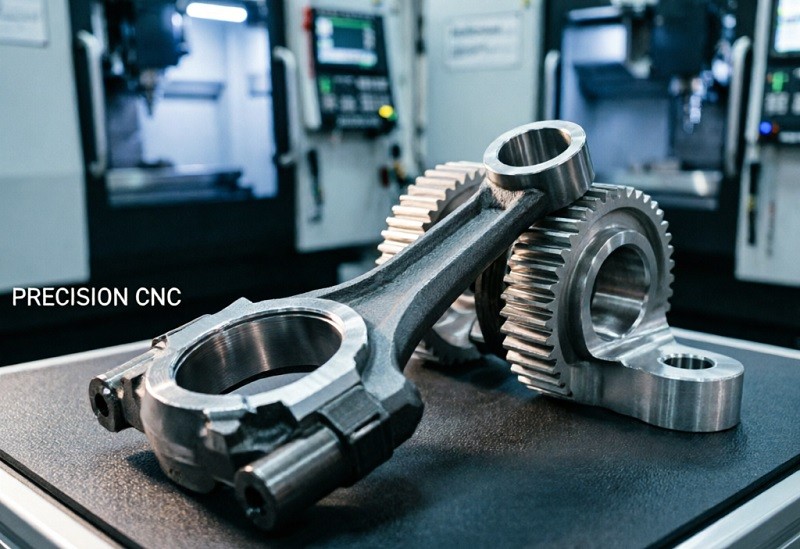
The automotive industry is undergoing its most significant transformation since the invention of the assembly line. With the rapid shift toward electric vehicles (EVs), autonomous driving technologies, and increasingly stringent quality standards, the demand for precision-manufactured components has never been higher. CNC (Computer Numerical Control) machining has emerged as the cornerstone technology enabling this transformation, delivering the micron-level accuracy, repeatability, and material versatility that modern vehicles — both traditional internal combustion engine (ICE) and electric — demand.
According to 2026 SAE International data, 82% of global premium automotive brands now rely on CNC machining as the primary production method for over 40% of their core safety-related components. From engine blocks and transmission gears to EV battery cooling plates and motor housings, CNC machining provides the precision and consistency necessary to meet the zero-defect requirements of today's automotive supply chain. At SOMI Custom Parts, we combine decades of precision engineering expertise with state-of-the-art multi-axis CNC capabilities to serve both traditional and EV automotive manufacturers worldwide.
CNC machining for the automotive industry refers to the automated subtractive manufacturing process that produces precise custom automotive components via pre-programmed computer instructions (G-code). Unlike general-purpose CNC machining, automotive-grade CNC machining must comply with the IATF 16949 quality management system, require 100% dimensional inspection before delivery, and maintain strict traceability records for every batch of raw materials.
Key differences from general CNC machining include:
In practice, CNC machined automotive components are widely applied across seven core vehicle systems: powertrain, chassis, EV battery pack, brake system, steering assembly, interior structural supports, and sensor mounting brackets.
From real-world production data across 200+ automotive projects, CNC machining delivers measurable advantages for both ICE and EV component manufacturing: Achieve tolerances as tight as ±0.005 mm on critical features. This level of precision is essential for EV battery cooling plate channels, motor housings, and transmission gear profiles. Process over 30 engineering-grade materials including 6061/7075 aluminum, stainless steel, titanium, PEEK, and brass — enabling optimal material selection for each application. Industry consensus from the 2026 Global Automotive Manufacturing Summit shows CNC machining has reduced EV R&D cycles by 40%, enabling rapid design iteration without mold costs. 5-axis CNC machines can produce intricate internal cooling channels, topology-optimized lightweight brackets, and complex mounting interfaces that stamping cannot achieve. For 1–10,000 unit runs, CNC machining offers 15–25% lower total cost than stamping after eliminating expensive mold making fees, with higher qualification rates. Full compliance with automotive quality management standards, including 100% CMM dimensional inspection and complete material traceability for every batch.
While the industry shifts toward electrification, traditional ICE vehicles still represent a substantial portion of global automotive production and aftermarket demand. CNC machining plays a critical role in manufacturing precision components for these vehicles, where reliability under extreme conditions is paramount.
ICE engines demand components that can withstand high temperatures, pressure cycles, and continuous mechanical stress. CNC-machined cylinder heads, engine blocks, crankshafts, pistons, and connecting rods are produced to tolerances of ±0.01 mm or better, ensuring optimal compression, reduced friction, and extended engine life. High-strength materials such as 4140/4340 alloy steel and ductile cast iron are commonly used for transmission housings and gear components.
Safety-critical brake calipers, ABS valve bodies, and suspension control arms require defect-free manufacturing with full traceability. CNC machining produces these components from materials like 304 stainless steel for corrosion resistance and 7075-T6 aluminum for lightweight suspension brackets. The 100% CMM inspection protocol ensures every part meets the strict IATF 16949 requirements.
The EV market continues its explosive growth, with S&P Global Mobility projecting that EV penetration could reach 40% of passenger car sales by 2030. EVs introduce entirely new manufacturing challenges that CNC machining is uniquely positioned to solve.
EV battery packs generate significant heat during charging and operation. CNC-machined aluminum cooling plates with micro-channels (1.0–1.2 mm width) achieve up to 40% better temperature distribution compared to stamped alternatives. The machined serpentine channels ensure uniform coolant flow, maintaining battery cells within their optimal operating range and extending battery life. Typical tolerances for cooling plates are ±0.03 mm, with 100% helium leak testing on every part.
EV motor housings require high concentricity for rotor alignment and vibration damping. CNC machining from 6061 or 7075 aluminum billets achieves housing concentricity ≤ 0.008 mm. Busbar connectors made from copper C110 require burr-free edges and exact hole spacing of ±0.01 mm to prevent arcing in high-voltage systems.
Choosing the right material is critical for balancing performance, durability, and cost in automotive applications. Below is a 2026 verified material comparison based on real production data: According to 2026 SAE research, matching the correct material to specific application scenarios can extend automotive component average service life by 47% under regular operating conditions. When selecting a CNC machining partner for automotive applications, the following certifications are non-negotiable: Per 2026 industry data, 62% of unqualified CNC automotive parts quality issues stem from missing raw material spectrum inspection before formal production. At SOMI Custom Parts, we maintain rigorous incoming material testing protocols to eliminate this risk.
At SOMI Custom Parts, we understand the unique demands of the automotive industry. Our precision manufacturing facility is equipped with advanced 3-axis, 4-axis, and 5-axis CNC machining centers capable of handling both low-volume prototyping and medium-volume production runs for automotive clients worldwide.
Whether you need precision CNC machined parts for EV battery systems, engine components for traditional vehicles, or custom prototypes for new platform development, SOMI has the expertise and capacity to deliver. We invite you to contact our engineering team to discuss your project requirements, or send us your RFQ for a detailed quotation within 24 hours.
General CNC automotive parts meet IT6–IT7 tolerance levels (0.01 mm to 0.05 mm), while core powertrain and safety components require IT4–IT5 tolerance (0.002 mm to 0.01 mm). At SOMI, we can achieve tolerances as tight as ±0.005 mm on critical features. Yes. For all components assembled in passenger cars and commercial vehicles, IATF 16949 certification is mandatory per global automotive industry 2026 regulations. Suppliers without this qualification cannot enter the formal OEM supply chain. For low to medium volume production (under 100,000 units annually), CNC-machined parts show 15–25% lower total cost than stamping after eliminating expensive mold making fees, with a significantly higher product qualification rate (98.5% vs. 72–85%). Absolutely. CNC machining excels at custom production based on unique designs with no standard component template limits. Simply provide complete 2D/3D drawings to get an accurate quote within 24 hours. Design modifications can be completed within hours rather than days. For prototype orders, lead time is 3–7 working days. For mass production orders of 1,000 to 10,000 units, the delivery time is typically 15–25 working days. Expedited services are available for urgent projects.
The automotive industry's evolution — from traditional combustion engines to electric powertrains and autonomous systems — demands manufacturing partners who can deliver uncompromising precision, quality, and reliability. CNC machining stands at the center of this transformation, providing the micron-level accuracy, material flexibility, and production agility that modern automotive engineering requires.
At SOMI Custom Parts, we are committed to supporting both EV and traditional automotive manufacturers with world-class precision machining services. Our IATF 16949-aligned quality systems, advanced multi-axis capabilities, and experienced engineering team ensure your components meet the most demanding specifications — every time, on time.
Ready to start your next automotive project? Browse our manufacturing capabilities, request a quote, or learn more about SOMI Custom Parts. Our team is ready to help you bring your designs to life with precision and reliability.
Introduction: The Precision Backbone of Modern Automotive Manufacturing
What Is CNC Machining for Automotive Applications?
CNC Machining vs. Traditional Stamping: 2026 Performance Comparison
Performance Dimension Traditional Stamping CNC Machining Minimum Tolerance ±0.1 mm ±0.005 mm Lead Time for New Products 25–40 days 3–7 days Maximum Material Hardness HRC 35 HRC 65 Mass Production Defect Rate 3–5% ≤0.2% Material Waste Rate 32–40% 8–15% Small Batch (100 pcs) Lead Time 15–25 days 3–7 days Design Modification Cost High (new mold required) Minimal (software change only)
Key Benefits of CNC Machining for Automotive Parts
Micron-Level Precision
Material Versatility
Rapid Prototyping & Iteration
Complex Geometry Support
Cost-Effective for Low-Volume Production
IATF 16949 Compliance
CNC Machining for Traditional Internal Combustion Engine Vehicles
Engine and Powertrain Components
Brake System and Suspension Components

CNC Machining for Electric Vehicles: The New Frontier
Battery Cooling Plates and Thermal Management
Motor Housings and Drive Unit Components
Key EV Components Requiring CNC Machining
Component Typical Materials Standard Tolerance Key Requirement Battery Cooling Plates 6061-T6 Al ±0.03 mm Leak-proof serpentine channels Motor Housing Aluminum Alloy ±0.01 mm High concentricity, vibration damping Busbar Connectors Copper C110 ±0.01 mm Burr-free edges, exact hole spacing High-Voltage Enclosures Aluminum, Steel ±0.05 mm Sealing grooves for IP67/IP69K Lightweight Suspension Brackets 7075-T6 Al ±0.05 mm Topology-optimized weight reduction Gearbox Casing (EV) Aluminum ≤0.008 mm cylindricity Integrated oil channels, bearing seats 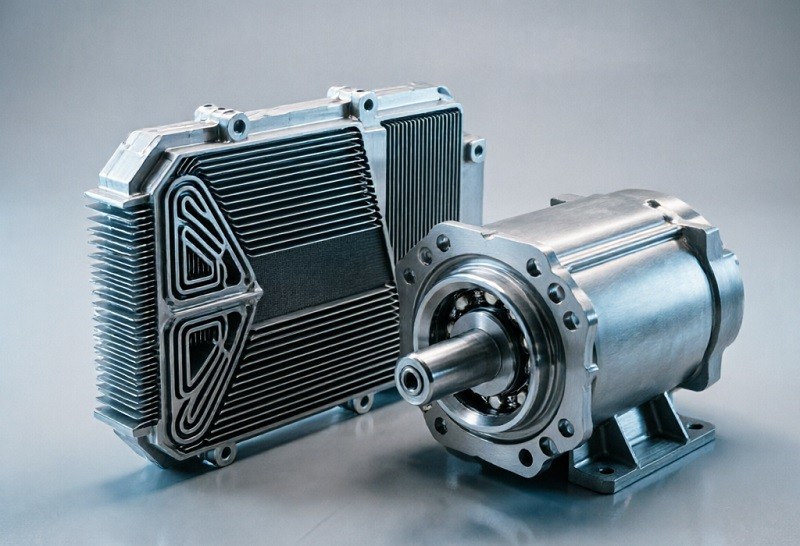
Material Selection Guide for Automotive CNC Parts
Material Tensile Strength (MPa) Achievable Tolerance (mm) Max Working Temp (°C) Typical Automotive Application 6061 Aluminum 310 ±0.002 120 EV motor housing, battery tray, engine brackets 7075 Aluminum 505 ±0.008 150 Suspension control arm, transmission gear 304 Stainless Steel 520 ±0.012 250 Brake system valve, fluid pipeline connectors 4140 Alloy Steel 655 ±0.015 220 Engine shaft, high-load transmission parts PEEK Engineering Plastic 97 ±0.005 260 High-temp insulating components, bearing cages Copper C110 220 ±0.01 150 EV busbar connectors, conductive contact parts Quality Certifications and Standards for Automotive CNC Parts
How SOMI Custom Parts Delivers Excellence in Automotive CNC Machining
Frequently Asked Questions
What is the standard tolerance range for CNC machined automotive parts?
Is IATF 16949 certification mandatory for automotive CNC parts suppliers?
Are CNC-machined automotive parts more expensive than stamped components?
Can CNC machining produce custom non-standard automotive components?
What is the typical lead time for automotive CNC parts orders?
Conclusion: Precision Manufacturing for the Future of Mobility