CNC Machining Stainless Steel: Grades, Challenges, and Best Practices
- Share
- publisher
- SOMI Custom Parts
- Issue Time
- Jul 19,2026
Summary
A comprehensive guide to CNC machining stainless steel, covering grades 303, 304, 316, and 17-4 PH, the key challenges of work hardening and heat management, and best practices for tool selection and cutting parameters to achieve precision results.
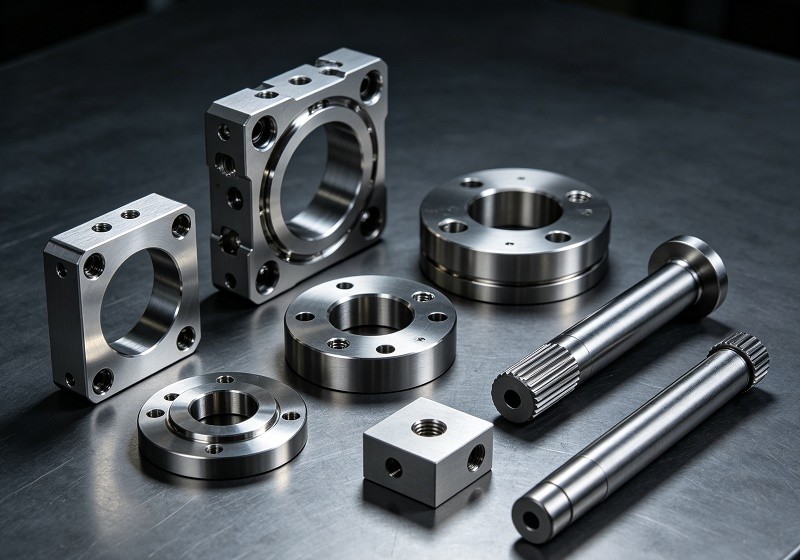
Stainless steel is one of the most widely specified materials in precision CNC machining, prized for its exceptional corrosion resistance, high tensile strength, and aesthetic versatility. From medical implants and aerospace structural components to food processing equipment and marine hardware, stainless steel parts are ubiquitous across industries that demand reliability in harsh environments. However, beneath its many advantages lies a reputation that every machinist knows well — stainless steel is among the most challenging materials to machine. The global CNC machining stainless steel market continues to expand rapidly. According to industry data, the worldwide free-machining stainless steel market was valued at approximately USD 3.46 billion in 2025 and is projected to reach USD 4.91 billion by 2032, growing at a compound annual growth rate (CAGR) of 5.14%. The Asia-Pacific region accounts for approximately 45% of global production, driven by extensive manufacturing infrastructures in China, Japan, and India. In China alone, the precision stainless steel machining market is expected to exceed CNY 280 billion (approximately USD 39 billion) in 2026. In this comprehensive guide, we explore the key grades of stainless steel used in CNC machining, the technical challenges they present, industry best practices for overcoming those challenges, and how SOMI Custom Parts delivers precision stainless steel components that meet the most demanding specifications. CNC machining of stainless steel refers to the use of computer numerically controlled (CNC) equipment to cut, shape, and finish stainless steel workpieces into precise components. Unlike conventional machining of carbon steel or aluminum, stainless steel presents unique material science challenges due to its alloy composition — particularly its high chromium content (≥10.5% per ASTM A276), nickel, and in some grades, molybdenum. The three primary categories of stainless steel used in CNC machining are: The choice of grade determines approximately 60% of a part's machining complexity and 30-40% of its raw material cost, making grade selection one of the most critical decisions in any stainless steel CNC machining project. The chromium oxide passive layer provides natural rust protection without coatings, making stainless steel ideal for medical, food, and marine applications. Stainless steel maintains its mechanical properties at elevated temperatures where aluminum and plastics would fail. Meets FDA food contact, ISO 13485 medical device, and AS9100 aerospace certification requirements. Key insight: Grade 303 offers the highest machinability (78%) among stainless steels due to added sulfur, which acts as a chip-breaker. If your application does not require welding, specifying 303 can reduce machining costs by up to 30-40% compared to 304 or 316. Work hardening is the most significant obstacle in CNC machining stainless steel. Austenitic grades like 304 and 316 have a high strain-hardening coefficient (n-value of 0.41 for AISI 304). When a cutting tool dwells or rubs against the surface instead of shearing cleanly, the material surface becomes harder than the base metal. This creates a destructive feedback loop: the hardened surface accelerates tool wear, dull tools generate more heat, and more heat causes further hardening. Once a surface is work-hardened, subsequent passes encounter material that is significantly harder to cut, often causing abrupt tool failure. The thermal conductivity of 300-series stainless steel is approximately 16.2 W/m·K — roughly one-third that of carbon steel (49.8 W/m·K) and less than one-fifteenth that of aluminum (167 W/m·K). This means heat generated during cutting remains trapped at the tool-chip interface rather than dissipating through the workpiece. Temperatures can exceed 1,000°C (1,800°F) at the cutting edge, leading to rapid flank wear, built-up edge (BUE) formation, and thermal deformation of both tool and workpiece. Stainless steel's high nickel and chromium content makes it chemically "sticky" at high cutting temperatures. Tiny particles of workpiece material can weld themselves to the cutting edge, forming a built-up edge that alters the tool geometry. When the BUE breaks away, it carries fragments of the tool material with it, causing micro-chipping and a rough surface finish. Stainless steel produces long, stringy, tough chips that tend to wrap around the tool or workpiece. This "gummy" behavior can cause chip re-cutting, surface scratches, and even tool breakage. Unlike the small, manageable chips produced when machining cast iron or aluminum, stainless steel chips require active management through chip-breaking tool geometries and high-pressure coolant systems. For production-level CNC machining of stainless steel, coated carbide tools are the industry standard, not an upgrade. High-speed steel (HSS) tools wear too quickly for any meaningful run. Recommended specifications include: Optimizing feeds and speeds is critical. The key principle is to maintain consistent chip thickness — never let the tool dwell or rub: Coolant is mandatory, not optional, for stainless steel CNC machining. Water-soluble emulsion with extreme pressure (EP) additives at 8-12% concentration is recommended. High-pressure coolant systems (300-1,000+ PSI) with through-spindle delivery are essential for deep hole drilling and complex pocket milling. Flood cooling may be adequate for simple operations, but high-pressure through-tool coolant represents a step-change improvement in tool life and surface quality. At SOMI Custom Parts, we bring years of hands-on experience machining stainless steel across a wide range of grades and applications. Our facilities are equipped with rigid, high-torque CNC machining centers capable of maintaining tight tolerances (±0.01 mm standard) even in difficult-to-machine stainless grades. We use only AlTiN-coated carbide tooling paired with high-pressure through-spindle coolant systems to manage heat, control chip formation, and maximize tool life. Our team follows a disciplined three-stage machining process — roughing, semi-finishing, and finishing — with strict depth-of-cut parameters to prevent work hardening at every pass. We perform CMM inspection on every critical dimension and offer a full range of surface finishing options including passivation (per ASTM A967), electropolishing (Ra 0.2-0.4 μm), and bead blasting. Whether you need prototype quantities or production runs, SOMI's engineering team provides design-for-manufacturability (DFM) support to optimize your stainless steel parts for cost-effective CNC machining. Send us your inquiry for a fast, competitive quote on your next stainless steel CNC project. A: Grade 303 stainless steel is the most machinable grade, with a machinability rating of 78% compared to free-machining steel. Its added sulfur content acts as a chip-breaker, resulting in shorter cycle times and longer tool life. However, 303 is not suitable for welding and has slightly reduced corrosion resistance compared to 304. A: Prevention is far easier than correction. Key strategies include: (1) maintaining sharp tools and replacing inserts before they dull, (2) using consistent feed rates that achieve a minimum chip thickness of 0.05 mm/tooth, (3) avoiding tool dwell or rubbing, (4) applying climb milling instead of conventional milling, and (5) using high-pressure coolant to manage heat at the cutting zone. A: Yes. With proper tooling, coolant, and process control, CNC machining can achieve standard tolerances of ±0.025 mm (±0.001") and precision tolerances of ±0.005 mm (±0.0002") with grinding. Surface finishes from Ra 3.2 μm (as-machined) to Ra 0.05 μm (mirror polish) are achievable. Temperature-controlled machining environments (±0.5°C) help prevent thermal expansion-related dimensional drift. A: Stainless steel CNC machining typically costs 30-50% more than aluminum due to slower cutting speeds, higher tool wear, and longer cycle times. Raw material costs for 304 range from $3.5-4.5/kg, while 316 costs $4.5-5.5/kg. However, for low-volume production, CNC machining is often 30-50% cheaper than tooling-based processes like casting or injection molding. To reduce costs, consider specifying free-machining grades like 303 when possible. A: Passivation per ASTM A967 is recommended for most stainless steel parts, particularly those used in medical, food, and pharmaceutical applications. The process removes free iron from the surface layer and restores the chromium oxide passive film, significantly improving corrosion resistance without altering dimensions. It is a low-cost post-processing step that maximizes the inherent corrosion resistance of the stainless steel. CNC machining of stainless steel presents real technical challenges — work hardening, heat concentration, built-up edge, and chip control — but these are well-understood and manageable with the right expertise, tooling, and process control. The key to cost-effective, high-quality stainless steel parts lies in three areas: selecting the appropriate grade for the application (considering machinability alongside corrosion and strength requirements), using coated carbide tooling with optimized cutting parameters, and maintaining disciplined process control throughout roughing, semi-finishing, and finishing passes. The global demand for precision stainless steel components continues to grow, driven by aerospace, medical device, automotive, and industrial automation sectors. As a trusted CNC machining parts manufacturer, SOMI Custom Parts combines technical expertise with state-of-the-art equipment to deliver stainless steel components that meet the most demanding specifications. Contact our engineering team to discuss your project requirements, or request a quote today.Introduction
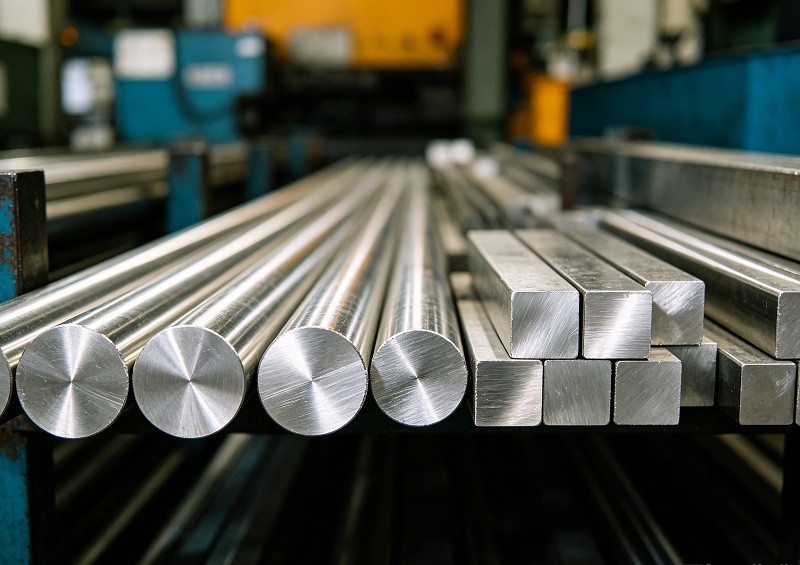
What Is CNC Machining of Stainless Steel?
Key Benefits of CNC Machining Stainless Steel
Superior Corrosion Resistance
High Temperature Performance
Regulatory Compliance
Stainless Steel Grades for CNC Machining: A Comparison
Grade
Type
Machinability
Corrosion Resistance
Tensile Strength (MPa)
Typical Applications
303
Austenitic (free-machining)
Excellent (78%)
Good
620
Fittings, shafts, valve components, nuts and bolts
304 / 304L
Austenitic
Fair (45%)
Very Good
515-620
Housings, brackets, food equipment, enclosures
316 / 316L
Austenitic (Mo added)
Fair (36%)
Excellent
515-620
Medical implants, marine hardware, chemical processing
17-4 PH
Precipitation Hardening
Good (50%)
Good
930-1,310
Aerospace components, structural parts, high-strength fasteners
410 / 420
Martensitic
Fair
Moderate
450-900
Surgical tools, shafts, fasteners, cutlery
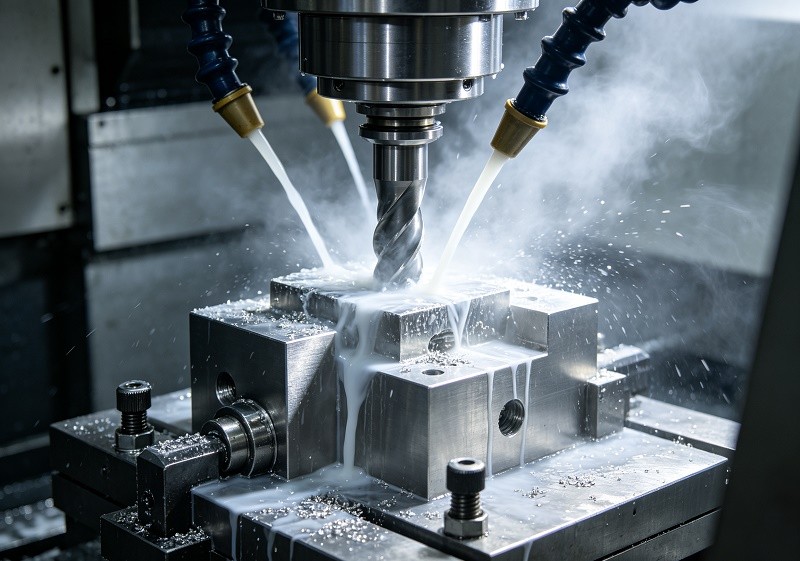
Top Challenges in Stainless Steel CNC Machining
1. Work Hardening — The #1 Challenge
2. Heat Concentration at the Cutting Edge
3. Built-Up Edge (BUE)
4. Chip Control Problems
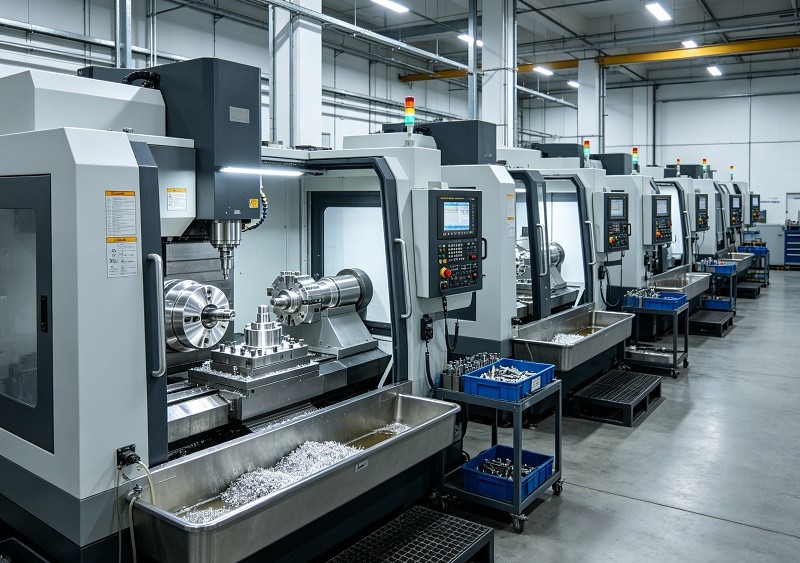
Best Practices for Machining Stainless Steel
Tool Selection
Cutting Parameters
Coolant Strategy
How SOMI Custom Parts Can Help
Frequently Asked Questions
Q: Which stainless steel grade is easiest to CNC machine?
Q: What is the best way to prevent work hardening in stainless steel?
Q: Can stainless steel be CNC machined to tight tolerances?
Q: How much does CNC machining of stainless steel cost compared to other materials?
Q: Is passivation necessary for CNC machined stainless steel parts?
Conclusion