CATV Hardline Connectors Explained: Everything a Supplier Needs for Reliable Coaxial Connections
- Share
- Issue Time
- Jul 7,2026
Summary
Ultimate guide for CATV hardline connectors suppliers. Master F-type, Pin & Splice connectors, DOCSIS 4.0 compatibility, and TCO analysis for reliable RF networks.
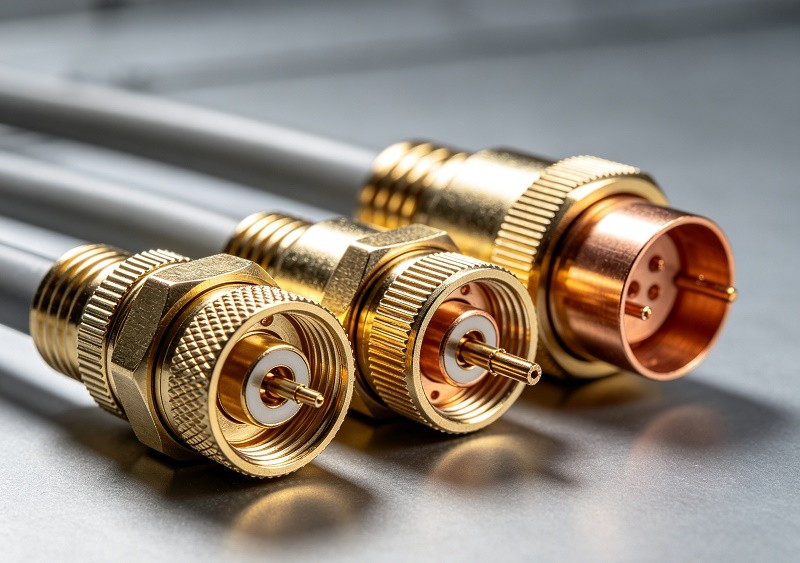
Welcome to our essential guide for every CATV hardline connectors supplier. In the fast-evolving world of broadband, ensuring reliable coaxial connections is crucial for network performance and customer satisfaction. Hardline coax connectors are among the most critical components for delivering service to subscribers, making proper installation and selection vital for overall network health.
Today, we're diving deep into the world of CATV hardline connectors, exploring everything you need to know to provide top-tier products and services to your clients. From basic types and performance criteria to future-proofing for 10G networks, this guide covers the essential knowledge for supplying connectors designed for today's demanding digital networks, capable of handling high-speed data, telephony, and performance beyond 1 GHz.
Understanding the Foundation: What Every CATV Hardline Connectors Supplier Must Master for Reliable Connections
The reliability of a CATV network is only as strong as its weakest link, and often, that weakness can be found in the connections. Hardline connectors are fundamental pieces in the journey of a signal from the headend through trunk and feeder lines to the subscriber. A single improperly installed or poorly chosen connector can introduce failures that degrade the performance of the entire network. Therefore, as a supplier, a foundational understanding of connector technology, performance metrics, and selection criteria is not just beneficial—it's essential for providing value and ensuring your clients' network integrity.
The ABCs of CATV Hardline Connectors: Types and Characteristics
Navigating the world of CATV hardline connectors begins with a solid understanding of the primary types available and their specific applications. Each design offers a unique set of advantages and is suited for different scenarios within the hybrid fiber-coax (HFC) network. For a supplier, being able to articulate these differences is key to guiding customers toward the right solution.
Exploring F-Type Connectors and Their Significance for CATV
Invented in the early 1950s for the burgeoning cable television market, the F-type connector is a coaxial RF connector that has become a staple for CATV, satellite television, and cable modem applications. Its primary function is to connect coaxial cables, such as RG-6 or RG-59, to devices like televisions, set-top boxes, and modems, ensuring a stable and reliable signal transmission.
The F-type connector's design is both simple and effective. It is a threaded, gendered connector that provides a secure mechanical connection, minimizing signal interference. A key design feature is its use of the cable's own solid inner conductor as the pin for the male connector, which helps reduce signal loss and maintain a strong transmission path. These connectors are designed to have a 75-ohm impedance match, which is crucial for handling frequencies well over 1 GHz with usable bandwidth extending into several GHz. This characteristic makes them ideal for carrying the high-frequency signals required for both standard and high-definition video.
For suppliers, it's important to highlight the different attachment methods:
- Twist-on: These are easy to install without special tools but may offer less reliable shielding.
- Crimp-on: This method requires a crimping tool and offers a more secure fit.
- Compression: Considered the superior method, compression F-type connectors require a special tool to create a strong, waterproof, and dustproof seal, ensuring the highest signal integrity.
The widespread adoption and low cost of F-type connectors make them a universal component in residential and commercial installations. Their reliability is fundamental to delivering high-quality television and broadband services to the end-user.
Pin vs. Splice Connectors: Pros and Cons for Your Supplier Inventory
When dealing with the trunk and feeder lines of a CATV network, which use larger, rigid hardline cables, two primary types of connectors come into play: Pin-type and Splice-type. Understanding their respective strengths and weaknesses is crucial for stocking a versatile and effective inventory.
Pin-Type Connectors: Pin connectors are used to terminate a hardline cable and connect it to an equipment port, such as on an amplifier or a tap. These connectors have an integrated or separate "pin" or "stinger" that is inserted into the equipment's seizure mechanism.
Pros:
- Direct Connection to Equipment: Designed specifically for connecting cable to active or passive devices in the network.
- Controlled Interface: The pin length can be precisely cut to match the equipment manufacturer's specifications, ensuring a proper and secure connection inside the device.
- Modularity: Allows for easy disconnection from equipment for maintenance or troubleshooting without disturbing the cable-to-connector interface.
Cons:
- Limited Application: Solely for equipment "entry," not for connecting two cables together.
- Potential for Mismatch: Incorrect pin length is a common installation error that can lead to poor signal transfer or damage to the equipment port.
Splice Connectors (or Feed-Through Connectors): Splice connectors, as the name suggests, are used to join two separate hardline cables together, creating a continuous line. This is common when repairing a damaged section of cable or extending a line.
Pros:
- Cable-to-Cable Connection: Their primary purpose is to create a seamless electrical and mechanical bridge between two cables.
- Repairs and Extensions: Essential for field repairs, allowing technicians to fix cable breaks without replacing the entire length.
- Signal Continuity: A high-quality splice connector maintains the impedance and shielding integrity of the cable, minimizing signal loss or reflection at the connection point.
Cons:
- Potential Point of Failure: Every splice introduces a potential point for signal degradation, moisture ingress, or failure if not installed perfectly.
- Signal Loss: While minimal in high-quality connectors, there is always some inherent signal loss (insertion loss) at a splice point.
Here is a summary table for quick reference:
| Feature | Pin-Type Connector | Splice-Type Connector |
|---|---|---|
| Primary Use | Connecting hardline cable to equipment (amplifiers, taps) | Joining two hardline cables together |
| Main Advantage | Provides a standardized, modular connection to devices | Enables in-field repairs and cable extensions |
| Key Consideration | Proper pin length must be ensured for optimal contact | Installation quality is critical to prevent signal loss and ingress |
| Inventory Logic | Essential for all installations involving active/passive devices | Critical for maintenance, and network build-out crews |
As a supplier, offering a robust selection of both high-quality pin and splice connectors ensures that your clients are equipped for both new installations and the inevitable maintenance required in the field.
Key Performance Metrics: How a Reliable CATV Hardline Connectors Supplier Ensures Quality
A connector is more than just a physical link; it's a critical component for safeguarding the quality of signals that traverse the network. Suppliers who can articulate and guarantee key performance metrics provide immense value to their clients. Ensuring quality is about minimizing signal degradation from the headend to the subscriber, and this hinges on several technical parameters that define a connector's performance.
Maintaining Signal Integrity and Minimizing Ingress Noise
Signal integrity is the measure of the quality of an electrical signal. In CATV networks, maintaining high signal integrity means ensuring that the signal that leaves the headend arrives at the subscriber's equipment with minimal distortion, loss, or interference. High-quality coaxial cables and connectors are essential for this purpose, providing shielding and low signal loss.
One of the greatest threats to signal integrity is ingress noise. This is unwanted RF energy that leaks into the cable plant from external sources, such as amateur radio, CB radios, and LTE mobile signals. This external noise combines with the desired CATV signals, lowering the overall signal-to-noise ratio (SNR). Low SNR can cause a variety of issues, from pixelation and freezing on video channels to slow speeds and connection drops for broadband services.
A high-quality hardline connector plays a critical defensive role against ingress. Here’s how:
- Robust Shielding: Premium connectors are designed to maintain the 360-degree shielding of the coaxial cable through the connection point, preventing RF leaks. This is often measured as shielding effectiveness, with higher dB values indicating better performance.
- Secure Mechanical Connection: A physically solid and properly torqued connection prevents micro-gaps from forming, which can act as entry points for ingress. Loose connectors are a very common source of ingress noise. Studies and field experience show that a significant percentage—often cited as 80% or more—of ingress issues originate at or near the subscriber's home due to loose fittings or damaged drop cables.
- Environmental Sealing: Moisture is a major adversary. Water that seeps into a connection can cause corrosion, which degrades the electrical contact and compromises shielding. A connector with effective O-rings and environmental seals is crucial, especially for outdoor components like taps and amplifiers.
As a supplier, you can demonstrate the value of your products by highlighting features designed to preserve signal integrity and block ingress, such as superior shielding materials, precision-machined threads, and durable, multi-seal weatherproofing.
Addressing Common Mode Current for Stable Coaxial Connections
Beyond ingress noise, another subtle but disruptive phenomenon is common mode current. In an ideal coaxial system, the signal travels down the center conductor, and an equal and opposite return current travels on the inside of the braided shield. This "differential mode" operation is what allows the cable to effectively contain the RF signal.
However, imbalances in the system can cause some of the return current to flow on the outside of the coax shield. This unwanted current is known as a common mode current. When this happens, the outside of the shield itself becomes part of the antenna system, causing it to radiate signals (egress) and also pick up external noise (ingress).
Common mode currents can be caused by several factors:
- Unbalanced Antennas or Connections: Connecting a balanced device (like a dipole antenna) to an unbalanced line (coax) without a proper balun (a balanced-to-unbalanced transformer) is a classic cause.
- Grounding Issues: Differences in ground potential between equipment can create paths for common mode currents.
- Asymmetrical Layouts: If one part of a system is closer to conductive objects than another, it can unbalance the system.
The effects of common mode current can be difficult to diagnose, often appearing as intermittent RFI (Radio Frequency Interference), inexplicable noise floors, or distorted signal patterns. A key symptom is when problems change or disappear when the coaxial cable is moved or touched.
While much of common mode current is managed through proper system design and grounding, connectors can play a role. A connector with excellent conductivity and a secure, continuous ground path helps ensure the shield performs as intended. Problems can be addressed by using common-mode chokes or baluns, which are devices that present a high impedance to common mode currents while allowing the desired differential signal to pass through.
For a supplier, understanding this concept is important for consulting with clients who face hard-to-trace noise issues. While your connectors may not be the primary cause, ensuring they provide a solid, low-impedance ground path is a critical piece of the solution.
Strategic Selection Criteria: Guiding Your Customers to the Best Fit for Optimal Network Infrastructure
As a supplier, your role extends beyond simply providing parts; you are a strategic partner in the development of robust and future-proof network infrastructures. Guiding your customers to select the right connectors is a critical service that impacts long-term network performance, reliability, and total cost of ownership. This requires a deep understanding of evolving standards and the specific needs of different network segments.
DOCSIS 4.0 Compatibility and Future-Proofing Networks with the Right Connectors
The roadmap for cable broadband is clear: higher speeds, lower latency, and greater capacity. The driving force behind this evolution is DOCSIS 4.0 (Data Over Cable Service Interface Specification). This new standard is a game-changer, promising symmetrical multi-gigabit speeds—up to 10 Gbps downstream and 6 Gbps upstream—over existing Hybrid Fiber-Coax (HFC) networks.
This leap in performance is achieved through two main strategies:
- Extended Spectrum DOCSIS (ESD): This involves expanding the usable frequency spectrum on the coaxial cable plant from the current 1.2 GHz up to 1.8 GHz, and eventually even higher.
- Full Duplex DOCSIS (FDX): This allows upstream and downstream traffic to use the same spectrum simultaneously, dramatically increasing upstream capacity.
For you, as a connector supplier, this has profound implications. The entire passive RF path, including your connectors, must be capable of performing flawlessly at these higher frequencies.
Key Connector Requirements for DOCSIS 4.0:
- High-Frequency Performance: Connectors must be specified to operate up to at least 1.8 GHz, and ideally up to 3 GHz, to be considered future-proof. Performance at these higher frequencies is critical, as issues like insertion loss and return loss become more pronounced. Even modern hardline coaxial cable experiences significantly higher signal loss at 1.8 GHz compared to 1.2 GHz.
- Exceptional Shielding and RFI Integrity: The higher the frequency, the more susceptible the signal is to leaking out (egress) and interference leaking in (ingress). Connectors for DOCSIS 4.0 must provide outstanding RFI shielding to protect signal integrity.
- Superb Electrical Performance: This includes low insertion loss to avoid weakening the already-attenuated high-frequency signals, and high return loss (low VSWR) to prevent signal reflections that cause distortion.
Guiding your clients towards connectors that are explicitly rated for 1.8 GHz or 3 GHz is essential for future-proofing their investment. While DOCSIS 3.1 networks may function adequately with 1.2 GHz components, upgrading to DOCSIS 4.0 will require a complete evaluation of the physical layer, and connectors are a foundational part of that upgrade. By stocking and promoting DOCSIS 4.0-ready connectors, you position your business as a forward-thinking leader in the industry.
Considerations for TV Antenna Cables and PAL Male to F-Type Connectors
While much of the focus is on hardline infrastructure, the final connection in the home or to an antenna system is just as important. In this area, suppliers often encounter a mix of connector standards, particularly the F-Type and the PAL connector.
- F-Type Connector: As discussed, this is the North American standard, known for its secure, threaded connection which provides excellent electrical and mechanical stability. It is the connector of choice for satellite TV, cable modems, and modern antenna installations.
- PAL Connector (Belling-Lee): This is the traditional standard in Europe, Australia, and parts of Asia. It uses a simple push-fit design, which is convenient but mechanically less secure than the F-type's screw-on mechanism.
The need for interoperability arises frequently. For instance, a customer might purchase a modern antenna that has an F-Type output but needs to connect it to an older television or a wall plate with a PAL input. This is where PAL Male to F-Type Female adapters or hybrid cables become indispensable problem-solvers.
What to advise your customers:
- When to Use Adapters: For connecting mismatched ports, a high-quality adapter can provide a simple and effective solution. Advise customers to choose adapters with solid brass construction and quality plating to ensure a good connection with minimal signal loss.
- The Advantage of a Hybrid Cable: A single cable with a PAL Male connector on one end and an F-Type connector on the other often provides a cleaner and more reliable signal path than using a separate cable and adapter. Fewer connection points mean fewer potential points of failure or signal degradation.
- Prioritizing F-Type for New Installations: When customers are performing new installations or significant upgrades, especially for digital or high-definition signals, recommending a switch to F-Type connectors and compatible RG6 cable can lead to improved signal stability and fewer dropouts due to their superior secure fit.
As a supplier, having a comprehensive inventory that includes PAL connectors, F-Type connectors, and the necessary adapters and hybrid cables allows you to serve a global market and provide practical solutions for common real-world installation challenges.
Innovating for Tomorrow: How a Proactive CATV Hardline Connectors Supplier Stays Ahead in a 10G World
The evolution of broadband is relentless. The transition toward a 10G-capable HFC network is not a distant future concept; it's the current trajectory of the industry, driven by DOCSIS 4.0 and the insatiable demand for faster, more reliable connectivity. For a CATV hardline connectors supplier, being proactive isn't just a strategy—it's a necessity for survival and growth. Staying ahead means more than just stocking the latest parts; it involves understanding technological shifts, rethinking value propositions, and empowering your clients to succeed in this new high-speed era. It's about leading the charge in innovation rather than just reacting to it.
Evolving for 10G and Beyond: The Future of Coaxial Connections and Your Role as a Supplier
The promise of 10G—delivering 10 Gbps speeds over HFC networks—relies heavily on the capabilities of the existing coaxial infrastructure. While fiber is expanding, the reality is that coax is already in the ground and reaches over 90% of US households. The cost and logistics of a full fiber-to-the-home (FTTH) replacement are immense, making the evolution of coax through DOCSIS 4.0 a highly attractive and practical path forward for operators. This places hardline connectors directly in the spotlight.
New Roles for CATV Hardline Connectors in High-Speed Networks
In a 10G world, the role of the hardline connector is amplified. It is no longer just a passive component for carrying television signals; it is a critical linchpin for a converged network that supports a vast ecosystem of digital services. Average data consumption per household is exploding, fueled by 4K/8K streaming, online gaming, remote work, and a growing number of connected devices.
Here are the new and expanded roles for hardline connectors:
- Enabling Symmetrical Speeds: DOCSIS 4.0's promise of symmetrical multi-gigabit speeds puts immense pressure on the entire signal path. Connectors must maintain near-perfect performance to support the robust upstream and downstream traffic.
- Backbone for Wireless Services: The HFC network is becoming a crucial backbone for expanding 5G wireless services. Small cell antennas can be connected to the existing coaxial network, using the fiber and coax plant to backhaul data. This requires connectors that are not only high-performing but also exceptionally reliable and environmentally sealed for outdoor pole-mounted deployments.
- Supporting Distributed Access Architecture (DAA): The industry is moving from a centralized architecture (with all the electronics in the headend) to DAA. In DAA, digital fiber runs deeper into the network, and key functions are moved to "nodes" closer to the subscribers. These nodes convert the digital signal to RF for the final coaxial run. This architecture requires more numerous and more sophisticated connection points, elevating the importance of every single hardline connector in the plant.
- Powering Smart Cities and IoT: The same reliable, high-bandwidth network powering homes and businesses can also support smart city applications like traffic management, public Wi-Fi, and IoT sensor networks. Hardline connectors become part of this critical public infrastructure.
As a supplier, your narrative should shift from selling a "CATV connector" to providing a "high-speed connectivity solution." You are supplying the components that make the 10G vision a cost-effective reality, enabling your clients to leverage their vast existing infrastructure to compete with full-fiber solutions.
Analyzing Total Cost of Ownership: A Smarter Approach for Your CATV Hardline Connectors Supplier Business
In a competitive market, it can be tempting to focus on the unit price of a connector. However, savvy operators and engineers understand that the true cost of a component extends far beyond its initial purchase price. As a supplier, shifting the conversation from "price" to "Total Cost of Ownership" (TCO) is a powerful way to demonstrate the superior value of high-quality connectors. TCO encompasses all direct and indirect costs associated with a product over its entire lifecycle.
Beyond Unit Price: Factors Affecting Long-Term Value and Network Reliability
Shifting the conversation from price to value requires educating your clients on the hidden costs associated with lower-quality components. While a cheaper connector might save a few dollars upfront, it can lead to significantly higher expenses down the line.
Here are the key factors that contribute to a connector's long-term value and should be part of your TCO analysis:
| TCO Factor | Impact of Low-Quality Connectors | Benefit of High-Quality Connectors |
|---|---|---|
| Installation Time & Labor | Poorly machined threads, inconsistent dimensions, and difficult assembly increase installation time. This drives up labor costs, a significant portion of any network build or repair. | Precision engineering, features like anti-rotation, and designs that don't require torque wrenches save valuable time in the field, reduce labor costs, and ensure consistent, repeatable installations. |
| Network Performance & Reliability | High insertion loss, poor return loss, and susceptibility to ingress noise lead to degraded signals. This results in poor customer experience, lower data speeds, and service complaints. | Superior electrical performance ensures maximum signal integrity, supporting higher speeds and a better quality of experience (QoE) for subscribers, which reduces churn. |
| Maintenance & "Truck Rolls" | Failures due to corrosion, moisture ingress, or mechanical stress necessitate expensive service calls ("truck rolls"). One truck roll to fix a cheap, failed connector can cost hundreds of dollars, negating any initial savings. | Exceptional durability, with features like robust weather sealing and use of corrosion-resistant materials like brass, dramatically reduces failure rates and maintenance requirements. Some premium connectors are even reusable, an added benefit for maintenance. |
| Downtime & SLA Penalties | For business clients, network downtime can mean thousands of dollars in lost revenue. Service Level Agreement (SLA) penalties for operators can be substantial. A failed connector is a single point of failure that can take down multiple customers. | High reliability minimizes the risk of outages, helping operators meet their SLA commitments and maintain a strong reputation for business services. |
| Future-Proofing & Upgrade Costs | Connectors not rated for 1.8 GHz+ will need to be replaced when the network is upgraded to DOCSIS 4.0, requiring a massive, network-wide re-investment. | Investing in 1.8 GHz or 3 GHz-rated connectors today ensures they will support future network evolutions without needing replacement, protecting the initial investment. |
By presenting this TCO framework, you can clearly demonstrate that investing in a premium hardline connector is not a cost, but a strategic investment in network reliability, performance, and future readiness. It's the difference between a short-term saving and long-term financial and operational success.
Supporting Field Excellence: Installation, Maintenance, and Troubleshooting Guides for Your Clients
A superior connector can still fail if it's installed incorrectly. As a supplier, your responsibility extends to ensuring your clients have the knowledge and tools to use your products effectively. Providing comprehensive support for installation, maintenance, and troubleshooting adds immense value and strengthens your position as a trusted partner. This commitment to "field excellence" directly contributes to the reliability of your clients' networks and reduces the likelihood of product-related service calls.
Best Practices for Network Backbone Installation and Certification
The network backbone is the central artery of the HFC plant, and its integrity is paramount. Your role as a supplier is to equip technicians with both the best products and the best knowledge.
Installation Best Practices to Share with Clients:
- Proper Tools and preparation: Emphasize that hardline connectors require specific cable preparation tools (coring tools, stripping tools, conductor cleaners). Using dull, damaged, or incorrect tools can score the conductor or sheath, leading to signal issues and future failures. The cable must be cut cleanly and squarely, and all flooding compound must be removed.
- Correct Connector Tightening: Hand-tightening hardline connectors is never sufficient. Connectors must be tightened to the manufacturer's specifications using appropriate wrenches. Many modern connectors feature a "positive stop" design, providing a clear physical and visual indicator when the connection is complete. This removes guesswork and ensures a reliable, weatherproof seal.
- Pin Length (for Pin-Type Connectors): The "stinger" or pin must be cut to the precise length specified by the equipment manufacturer (e.g., for the amplifier or tap port). An incorrect length can cause a poor connection or damage the equipment's seizure mechanism.
- Moisture Prevention: Moisture is the number one enemy of network reliability. Stress the importance of weatherproofing. This includes using connectors with high-quality, redundant O-rings and properly applying heat shrink where specified to protect the connection from the elements.
Network Certification: After installation, the network's performance must be verified. Certification is a rigorous process of testing the cabling against industry standards (like those from TIA and ISO/IEC).
- What it is: Unlike simple verification (checking for continuity), certification uses sophisticated field testers to measure key performance parameters like insertion loss, return loss, crosstalk, and resistance unbalance.
- Why it matters: Certification provides documented proof that an installation meets performance requirements, which is essential for manufacturer warranties and for ensuring the network can support high-speed applications like DOCSIS 4.0. It guarantees that workmanship and components are up to standard.
- Your Role: Guide clients to understand the importance of certification. While you don't perform the testing, supplying connectors that consistently pass certification reinforces their quality and reliability.
Understanding QR500 Coaxial Cable Performance with Your Wholesale Connectors
Different hardline cables have different characteristics. A common type used in CATV trunk lines is the QR series, such as QR500. This is a 0.500-inch diameter coaxial cable known for its welded aluminum shield, excellent mechanical strength, and stable attenuation performance.
Key Performance Characteristics of QR500:
- Impedance: 75 ohms, the standard for CATV applications.
- Attenuation: Like all cables, QR500 loses signal strength over distance and at higher frequencies. For example, its attenuation (loss per 100 feet) is higher at 1000 MHz than at 5 MHz. Network designers must account for this loss.
- Shielding: The solid aluminum tube shield provides excellent protection against RFI/EMI ingress and egress.
- Durability: It is designed for long-run aerial or underground installations and is mechanically robust.
Connector Compatibility and Performance: As a wholesale supplier, you must offer connectors that are specifically designed for QR-type cables. While different cable types (e.g., P3 vs. QR) may look similar, they can require slightly different preparation techniques and connectors for a perfect fit.
When discussing QR500 with clients, highlight that the performance of this high-quality cable can be completely undermined by a poor connector. A connector that doesn't properly seize the aluminum sheath or creates an impedance mismatch will negate the benefits of the cable's low loss and high shielding characteristics. Offering pin and splice connectors that are specified for QR500 and other common hardline types demonstrates your comprehensive understanding of the physical plant.
The Power of Customization: Offering OEM CATV Connector Solutions for Engineers
While the market is dominated by standard connector types, there are often unique challenges in network design, equipment manufacturing, and specialized installations that require non-standard solutions. This is where offering Original Equipment Manufacturer (OEM) and custom connector solutions can set you apart as an invaluable partner to engineers and product designers.
Why Offer Custom Solutions?
- Solve Unique Problems: Off-the-shelf connectors might not work for densely packed equipment, unique environmental conditions (e.g., extreme temperatures or vibration), or specific electrical requirements. A custom-designed connector can be the perfect solution.
- Space Savings: As electronic devices become smaller and more compact, a custom connector can be designed to fit a specific, tight form factor that a standard part cannot.
- Enhanced Performance: Engineers can specify exact requirements for materials, plating, and internal design to optimize electrical performance (like impedance matching and return loss) for a specific application.
- Establish a Deeper Partnership: By collaborating with an engineer's design team, you move from being a simple parts supplier to a critical design partner. This builds immense loyalty and positions you as an expert resource. Offering custom manufacturing services for unique projects can set your business apart.
- Competitive Advantage: Many suppliers focus only on high-volume, standard parts. The ability to produce or source custom connectors—even in lower volumes—is a significant differentiator.
Types of Customization to Offer: Even if you don't manufacture in-house, partnering with a manufacturer that offers customization is key. Common modifications include:
- Material and Plating Changes: Using specialized materials like stainless steel or specific platings for enhanced corrosion resistance or conductivity.
- Polarization and Keying: Creating unique keying to prevent incorrect mating in complex systems.
- Custom Cable Assemblies: Providing pre-terminated hardline jumpers or pigtails to specific lengths with the required connectors already installed, saving engineers time and ensuring quality connections.
- Unique Form Factors: Designing completely new connector housings to fit a specific enclosure or device chassis.
By opening the door to custom solutions, you demonstrate a flexible, problem-solving approach. You empower engineers to create optimal designs without being constrained by standard components, reinforcing your role as an indispensable expert in the field of coaxial connectivity.
As CATV hardline connectors suppliers, our commitment to quality, knowledge, and innovation directly impacts the reliability and performance of communication networks. The journey from simply providing parts to becoming a strategic partner involves a deep mastery of connector types, performance metrics, and evolving industry standards like DOCSIS 4.0. By mastering these key areas, from the foundational principles of signal integrity to the advanced concept of Total Cost of Ownership, we can confidently meet the escalating demands of the market and exceed our customers' expectations.
We encourage you to continually explore advancements in materials, design, and installation best practices to ensure you remain a leading CATV hardline connectors supplier in this dynamic market. The future is hybrid, fast, and connected, and your expertise and dedication are truly essential for building the robust and future-ready broadband infrastructures that will power it. Your role is not just to supply a component, but to ensure the vital connections that keep our digital world running seamlessly.