Beyond the Unit Price: A Deep Dive into the Total Cost of Ownership of CATV Hardline Connectors
- Share
- Issue Time
- Jun 7,2026
Summary
Look beyond the sticker price. This guide reveals the Total Cost of Ownership (TCO) of CATV Hardline Connectors, exposing hidden costs of cheap parts.
Unpacking the True Cost of Your CATV Network Hardware
In the competitive landscape of broadband and cable television, network operators are under constant pressure to optimize budgets and enhance performance. When scrutinizing expenses, the unit price of components like CATV hardline connectors often comes under the microscope. The temptation to opt for a lower-cost alternative is strong. However, a singular focus on initial purchase price is a critical mistake that can lead to spiraling operational costs, network failures, and dissatisfied customers. This is where understanding the Total Cost of Ownership (TCO) becomes essential. TCO provides a comprehensive framework that accounts for all expenses incurred throughout the lifecycle of a connector, from purchase and installation to maintenance and potential failure. It reveals that the "cheapest" option is rarely the most cost-effective in the long run.
The Fallacy of the Low Unit Price
The most visible metric is the line item on a purchase order. A connector costing a few cents less per unit can appear to generate significant savings, especially when ordered in bulk. However, this perspective ignores the multitude of hidden costs that accompany lower-quality components. These expenses don't appear on the initial invoice but manifest as rework labor, service calls, and lost revenue. A single, improperly installed or failed connector can create network-wide problems, turning initial savings into a substantial long-term liability.
Installation: The First Stumbling Block
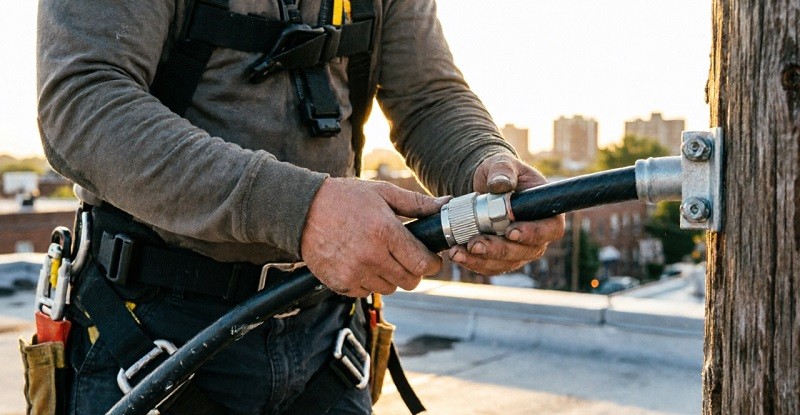
High-quality hardline connectors are designed for ease and reliability of installation. Features like consistent machining, smooth threads, and clear mechanical stops ensure that technicians can create secure, weatherproof connections every time. Conversely, cheaper connectors often suffer from poor manufacturing tolerances. This can lead to:
- Increased Installation Time: Technicians may struggle to properly seat the connector, leading to longer installation times per unit. This inflates labor costs, especially in large-scale deployments or upgrades.
- Tool and Equipment Damage: Inconsistent connector design can cause premature wear and tear on expensive coring and compression tools.
- Installation Errors: Ambiguous or difficult installation processes increase the likelihood of human error, resulting in connections that are destined to fail.
Signal Integrity and Performance Degradation
A CATV network is only as strong as its weakest link. Hardline connectors are critical points in the signal chain, and any compromise in their quality can have a significant impact on performance. Low-cost connectors can introduce a host of signal integrity issues:
- Signal Leakage (Ingress and Egress): Poorly shielded or improperly sealed connectors can allow outside signals to leak into the network (ingress), causing interference and degrading service. They can also allow signals to leak out (egress), which can violate regulatory standards and interfere with other wireless services.
- Return Loss: Every connection point introduces some level of return loss, where signals are reflected back toward the source. Poorly made connectors create significant return loss, which disrupts upstream and downstream data flow, leading to slow internet speeds and poor video quality.
- Intermodulation Distortion (IMD): When dissimilar metals are in contact or when a connection is not secure, it can create non-linear effects that generate unwanted distortion, impacting the clarity and quality of analog and digital signals.
The Cost of Downtime and Maintenance
The most significant hidden costs associated with cheap connectors stem from network downtime and subsequent maintenance. A failed connector can take an entire node or segment offline, impacting hundreds or even thousands of subscribers. The costs associated with this are multi-faceted:
- Emergency Truck Rolls: Dispatching technicians to diagnose and repair failures is expensive, factoring in fuel, vehicle maintenance, and technician salary.
- Reputation Damage: Service outages lead to customer frustration, negative reviews, and ultimately, subscriber churn. The cost of acquiring a new customer is far greater than retaining an existing one.
- Penalties and SLAs: For commercial clients, service level agreements (SLAs) often stipulate high penalties for downtime, turning a small component failure into a major financial event.
Material Science: Brass vs. Aluminum
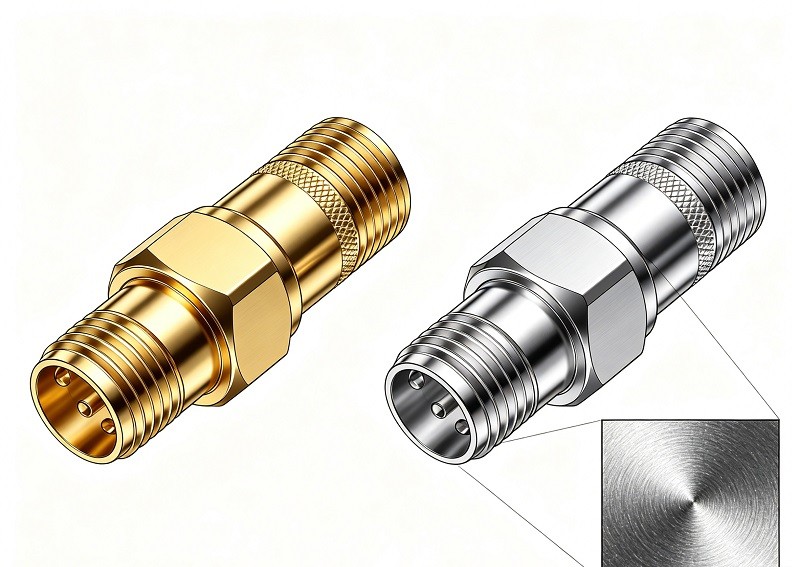
The material from which a connector is made plays a pivotal role in its long-term reliability and cost-effectiveness. While many standard connectors are made from lightweight aluminum, premium connectors often utilize brass. Brass offers superior tensile strength and hardness, making it more resistant to damage from over-torquing or side-loading during installation. Furthermore, brass does not experience galling (cold welding) like aluminum can, ensuring that connectors can be disassembled cleanly for maintenance without leaving metal shavings that could compromise the connection.
The Reusability Factor
Another aspect of TCO is the potential for reusability. High-quality connectors from manufacturers like PPC are often designed to be reused during routine maintenance or emergencies without damage. This feature can provide significant cost savings over time, as it reduces the need to purchase new connectors for every maintenance activity. Cheaper, single-use connectors add to material costs over the life of the network.
Calculating the Total Cost of Ownership: A Simple Framework
To truly evaluate the cost-effectiveness of a connector, operators must look beyond the purchase price. A basic TCO calculation would include:
| Cost Factor | High-Quality Connector | Low-Quality Connector |
|---|---|---|
| Initial Purchase Price | Higher | Lower |
| Installation Labor Cost | Lower | Higher |
| Failure Rate | Very Low | High |
| Cost of Rework/Repairs | Minimal | Significant |
| Network Downtime Costs | Negligible | High |
| Customer Churn Impact | Low | Potentially High |
| Total Cost of Ownership | Lower | Higher |
This table illustrates that while the initial outlay for quality connectors is higher, the savings in labor, reliability, and performance result in a lower TCO.
Partnering with the Right Supplier
Choosing a supplier is about more than just finding the best price. A true partner provides expertise, support, and products engineered for long-term value. Look for suppliers who can demonstrate the performance characteristics of their products through data on return loss, shielding effectiveness, and environmental durability. A supplier focused on TCO will emphasize reliability and performance, not just the unit cost.
Conclusion: An Investment in Reliability
The choice of a CATV hardline connector is not a minor decision; it is a long-term investment in the health and reliability of your network. By shifting the focus from the initial unit price to the Total Cost of Ownership, network operators can make smarter, more strategic purchasing decisions. Investing in high-performance, reliable connectors from reputable manufacturers is the most cost-effective strategy to minimize operational expenses, ensure regulatory compliance, reduce subscriber churn, and build a robust network capable of meeting the demands of today and tomorrow. The seemingly insignificant hardline connector holds the key to network integrity and, ultimately, business success.