Beyond Television: The Surprising New Roles for CATV Hardline Connectors in a 10G World
- Share
- Issue Time
- Jun 5,2026
Summary
CATV hardline connectors are evolving beyond traditional video delivery. Driven by DOCSIS 4.0, these critical components are enabling next-generation applications, including 5G backhaul, smart city infrastructure, and mission-critical business services.
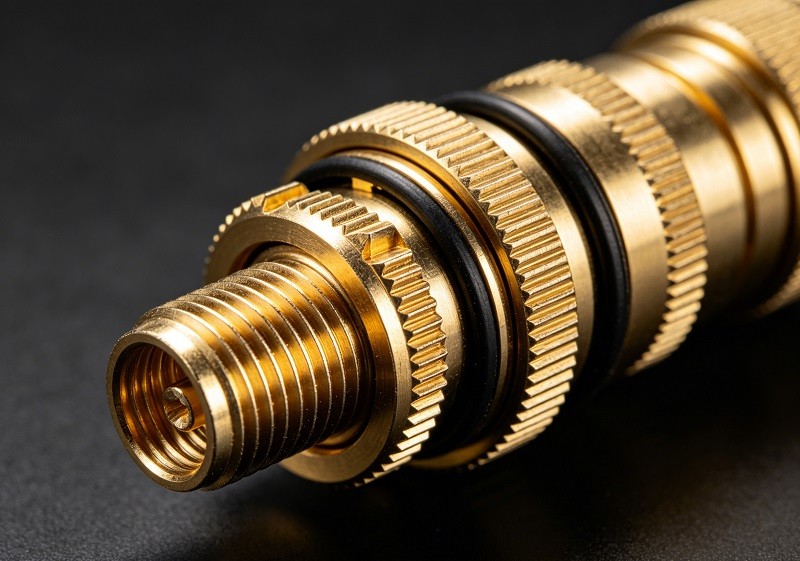
The humble CATV hardline connector, long a staple of residential television delivery, is undergoing a profound transformation. As Hybrid Fiber-Coaxial (HFC) networks evolve to meet insatiable demands for bandwidth, these connectors are moving beyond their traditional role. They are becoming the linchpins in an expanding ecosystem of next-generation services, from multi-gigabit internet to the foundational infrastructure of smart cities. This evolution is not just about speed; it's about reliability, capacity, and enabling a connected future that was once the stuff of science fiction. The HFC network, far from being obsolete, is proving to be a resilient and cost-effective backbone for this new era, with hardline connectors playing a more critical role than ever.
The Driving Force: DOCSIS 4.0 and Bandwidth Expansion
The primary catalyst for this change is the rollout of DOCSIS 4.0 (Data Over Cable Service Interface Specification). This new standard dramatically increases the potential of existing HFC networks, promising symmetrical multi-gigabit speeds that rival full-fiber networks. DOCSIS 4.0 achieves this through two key methods: Extended Spectrum DOCSIS (ESD), which expands the usable radio frequency (RF) spectrum up to 1.8 GHz and even 3.0 GHz in the future, and Full-Duplex DOCSIS (FDX). This expansion places immense pressure on every component in the signal path. Hardline connectors must now perform flawlessly at frequencies far beyond the old 1 GHz standard, handling significantly more data without signal degradation. The transition to DOCSIS 4.0 makes the selection of high-performance, future-proof connectors a critical strategic decision for network operators.
Powering the Next Wave: 5G Backhaul and Small Cells
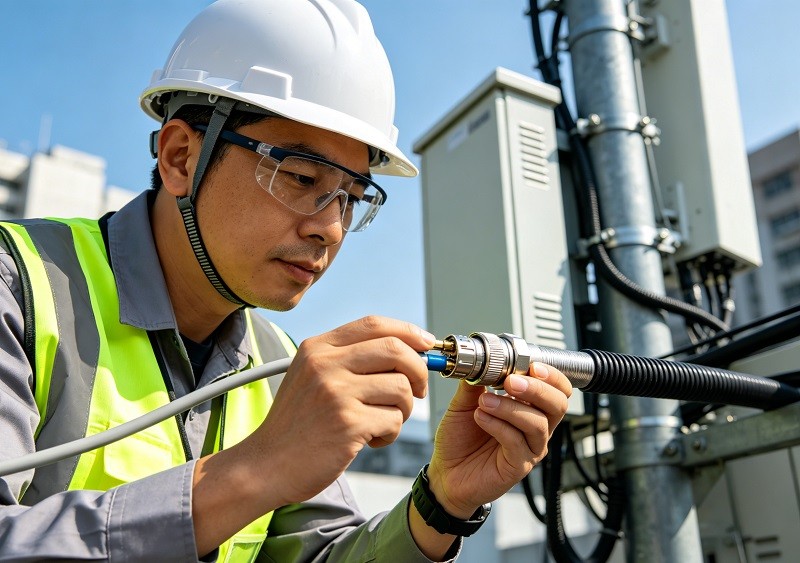
One of the most significant new applications for HFC infrastructure is supporting the rollout of 5G wireless networks. While 5G promises revolutionary wireless speeds, it requires a dense network of small cell antennas. These cells need to be connected to the core network, a process known as backhaul. HFC networks are perfectly positioned to provide this crucial link. Using the HFC network for backhaul is substantially cheaper and faster to market than building out new fiber for every cell. A key advantage is that HFC hardline cables already carry power, simplifying the process of powering small cell equipment without a separate electrical permit. Hardline connectors are essential in this architecture, providing the reliable, high-bandwidth RF interface needed at each small cell location.
Building Smarter Communities: Smart City Infrastructure
HFC networks are becoming the central nervous system for emerging smart cities. The same robust infrastructure that delivers high-speed internet can also connect a vast array of Internet of Things (IoT) devices. Imagine a network linking smart traffic lights, environmental sensors, public Wi-Fi hotspots, security cameras, and intelligent street lighting. These applications require a network that is both ubiquitous and reliable. Hardline coaxial cables, with their durable connectors, provide the perfect medium for transmitting data and power to thousands of nodes across a city, helping to create more efficient, safer, and more sustainable urban environments.
Mission-Critical Enterprise and Business Services
Beyond residential customers, businesses are demanding more robust and higher-capacity network services. The symmetrical speeds enabled by DOCSIS 4.0 make HFC networks a viable and highly competitive option for enterprise clients. These services support cloud applications, massive data transfers, high-definition video conferencing, and other mission-critical operations. The reliability of these business services hinges on the integrity of the physical network. Hardline connectors must ensure minimal downtime and consistent performance, as any interruption can have significant financial consequences for a business.
A New Network Blueprint: Distributed Access Architectures (DAA)
To manage the increasing complexity and bandwidth demands, operators are shifting to Distributed Access Architectures (DAA). In a DAA model, functions that were once centralized in a headend are moved closer to the network edge, into fiber nodes. This reduces noise and improves performance. However, it also changes the function of the coaxial portion of the network. The connection from the DAA node to the customer remains dependent on high-quality hardline coaxial cable and, critically, the connectors that join everything together. These connectors must maintain signal integrity in a more distributed and complex RF environment.
Technical Demands on Modern Hardline Connectors
The transition to multi-gigabit services places new and stringent demands on hardline connectors. As frequencies increase with DOCSIS 4.0, signal loss (attenuation) becomes a much bigger problem. Connectors must be engineered for superior performance up to 1.8 GHz and beyond to prevent signal degradation that can cripple network speed and reliability.
Key Performance Requirements:
- Low Insertion Loss: Minimizing the signal power lost at the connection point.
- High Return Loss: Ensuring that very little signal is reflected back from the connector, which would cause interference.
- Excellent Shielding Effectiveness: Preventing outside RF signals from leaking into the cable (ingress) and preventing signals from leaking out (egress).
Innovations in Connector Design: Meeting Higher Frequencies
To meet the challenges of DOCSIS 4.0, connector manufacturers are innovating with new materials and designs. While aluminum has been a common material, stronger alloys like brass are gaining favor due to their superior strength, durability, and resistance to issues like thread galling. Advanced designs now feature enhanced seizing mechanisms that provide a more secure and electrically stable grip on the cable’s center conductor. This prevents signal deterioration from micro-movements caused by temperature changes or vibration.
The Critical Role of PIM Performance
Passive Intermodulation (PIM) is a form of interference generated when two or more signals mix in a non-linear junction, such as a poorly made connector. As networks become more crowded with signals for data, voice, and video, PIM becomes a major source of noise that can limit network capacity. High-quality hardline connectors are designed and manufactured to minimize PIM, ensuring the RF spectrum remains clean and the network can operate at its maximum potential.
| Feature | Traditional Connector (Pre-DOCSIS 3.1) | Modern DOCSIS 4.0 Connector |
|---|---|---|
| Frequency Range | Up to 1 GHz | Up to 1.8 GHz or 3.0 GHz |
| PIM Performance | Standard | Low PIM Design is Critical |
| Material | Often Aluminum | High-strength Brass or advanced alloys |
| Seizing Mechanism | Basic Collet | Advanced multi-grip or helical design |
| Weather Sealing | Standard gaskets | Multiple O-rings, enhanced weatherproofing |
Ensuring Reliability: Advanced Weatherproofing and Durability
Hardline connectors are constantly exposed to the elements, from scorching heat and UV radiation to ice and corrosive salt spray. A failure in weather sealing can allow moisture to penetrate the connection, leading to corrosion and immediate signal failure. Modern connectors feature advanced weatherproofing with multiple O-rings and durable, corrosion-resistant platings (like Nitin-6™) to ensure a long service life and reliable performance in the harshest outdoor environments. Their robust construction makes them more resistant to damage during installation and maintenance, a factor known as install-ability.
Installation Efficiency: Speed and Repeatability Matter
As operators upgrade millions of connections to be DOCSIS 4.0 ready, installation efficiency is paramount. Connectors that are easy and fast to install, without requiring specialized tools like torque wrenches, save significant time and money. Features like a full mechanical stop that provides tactile feedback when the connection is properly tightened ensure a perfect, repeatable connection every time. Reusability is another key feature; connectors that can be removed and reinstalled without damage during maintenance reduce operating costs and waste.
Conclusion: The Unseen Heroes of Next-Generation Networks
While fiber optics often grabs the headlines, the existing HFC network, powered by advancements like DOCSIS 4.0, has a long and powerful future. At the heart of this evolution are the CATV hardline connectors. These seemingly simple components are the unsung heroes enabling the leap to 10G speeds, powering 5G expansion, and building the framework for our smart cities. As network demands continue to escalate, the performance, reliability, and innovation packed into these critical connectors will be more important than ever in shaping our digital future.