Anatomy of Precision: A Deep Dive Into Surgical Robotic Instrument Components
- Share
- Issue Time
- Dec 14,2025
Summary
Robotic surgical instruments feature core components like arms, end-effectors, vision systems, and precision materials, enabling minimally invasive surgery with advanced control and feedback.
Unveiling the Future of Surgery: An Introduction to Robotic Instruments
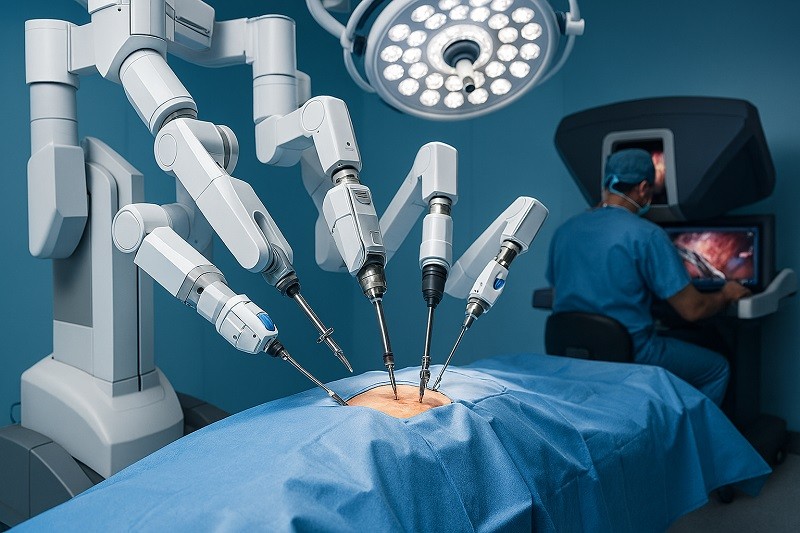
Robot-assisted surgery has rapidly transitioned from a futuristic concept to a cornerstone of modern medicine. These sophisticated systems empower surgeons to perform complex, minimally invasive procedures with unparalleled precision and control. While the complete system—comprising a surgeon's console, a patient-side cart, and a vision system—is a marvel of engineering, the true magic lies in the instruments themselves. The components of these robotic instruments are what translate a surgeon's intent into life-saving action. This article delves into the anatomy of these remarkable tools, exploring the individual parts that work in harmony to redefine the boundaries of the operating room.
The Three Pillars: Core System Components
A robotic surgical system is typically composed of three main parts that work together seamlessly. First, the Surgeon's Console is the command center where the surgeon sits, viewing a high-definition, 3D image of the surgical site and manipulating the controls. Next, the Patient-Side Cart stands near the patient and holds the robotic arms. Finally, the Vision System includes the high-definition 3D camera and imaging processing equipment that provides the surgeon's eyes inside the patient's body.
The Workhorses: Robotic Arms and Manipulators
The most visible components of the patient-side cart are the robotic arms. These are the limbs of the robot, responsible for holding and maneuvering the surgical instruments with a steadiness that surpasses the human hand. They are designed to provide a wide range of motion, allowing instruments to approach the surgical site from optimal angles. Advanced control algorithms filter out any potential hand tremors from the surgeon, ensuring movements are smooth and precise. Each arm is a complex assembly of joints, motors, and sensors, forming the robust backbone of the entire system.
The Surgeon's Eyes: Advanced 3D Vision Systems
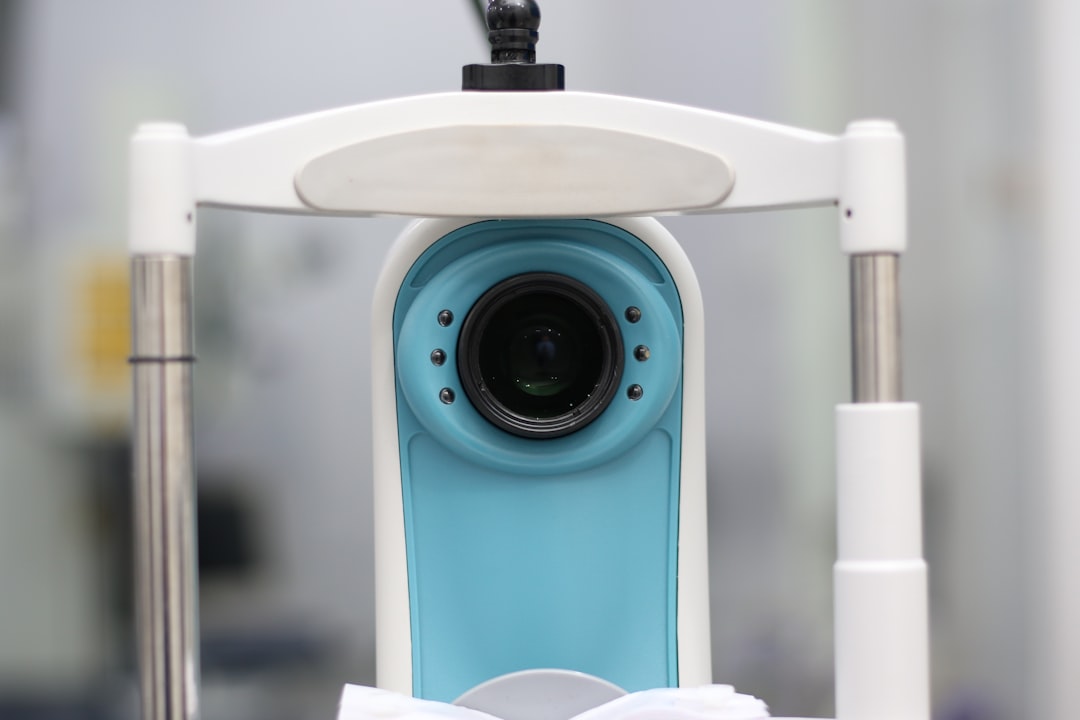
Clear and detailed visualization is critical in minimally invasive surgery. Robotic systems utilize advanced vision systems, typically featuring a high-definition 3D endoscope (camera) that is inserted into the patient through a small incision. This provides the surgeon at the console with a magnified, immersive view of the operative field, improving depth perception far beyond traditional 2D laparoscopy. Some systems even integrate fluorescence imaging, which can help surgeons identify critical anatomical structures or differentiate between healthy and diseased tissue.
The Surgeon's Hands: End-Effectors and Specialized Instruments
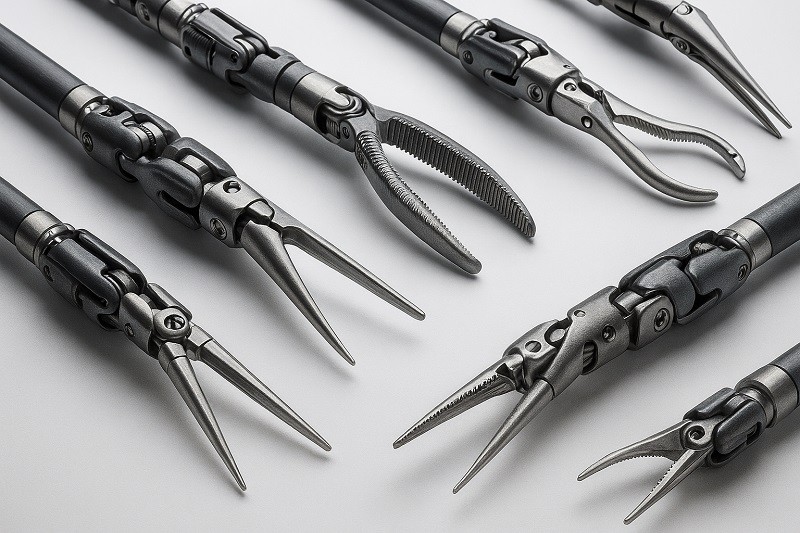
If the robotic arms are the limbs, the end-effectors are the hands and fingers. These are the actual surgical instruments that attach to the end of the arms and perform the work inside the patient's body. There is a vast array of specialized end-effectors, each designed for a specific task, including:
- Graspers and Forceps: Used to manipulate and hold tissue.
- Scissors: For precise cutting and dissection.
- Energy Instruments: Tools that use electrical or ultrasonic energy to cut tissue and coagulate blood vessels simultaneously.
- Needle Drivers: To hold needles for suturing with exceptional dexterity.
- Clip Appliers: For placing surgical clips to close vessels or ducts.
These instruments can be interchangeable, allowing the surgical team to switch tools as the procedure demands.
A Pivotal Innovation: The EndoWrist and Articulation
One of the most significant breakthroughs in robotic instrumentation is the development of wristed instruments, such as the EndoWrist® by Intuitive Surgical. These instruments are designed to mimic the dexterity of the human wrist, but with an even greater range of motion—often with seven degrees of freedom. This allows surgeons to rotate and articulate the tip of the instrument in tight spaces, enabling complex maneuvers like intricate suturing and dissection that would be difficult or impossible with traditional laparoscopic tools.
Power and Precision: Motors, Actuators, and Encoders
Behind every fluid movement of a robotic instrument is a network of miniature, high-performance components. Motors and actuators are the muscles of the robot, converting electrical signals from the control console into precise mechanical motion. They must be powerful enough to perform surgical tasks yet small and responsive enough for delicate work. Position encoders and sensors act as the robot's nervous system, constantly providing real-time feedback on the position and orientation of every joint and instrument. This closed-loop feedback is essential for the system's incredible accuracy and safety.
The (Missing) Sense of Touch: Haptic Feedback and Sensors
One historical limitation of robotic surgery has been the lack of direct tactile feedback. Surgeons cannot "feel" the tissue they are manipulating through the robot. To bridge this gap, engineers are integrating advanced force/torque sensors and haptic feedback systems. These sensors measure the forces exerted by the instruments on the tissue and can translate this data into a perceivable sensation for the surgeon, such as a vibration or resistance in the hand controls, restoring a sense of touch.
Materials Matter: The Foundation of Instrument Design
The materials used to construct robotic surgical instruments are chosen for a unique combination of properties. They must be strong, durable, and capable of holding a sharp edge, yet also biocompatible and able to withstand rigorous sterilization processes. Common materials include medical-grade stainless steel, titanium, and advanced polymers.
| Material | Key Properties | Common Applications |
|---|---|---|
| Stainless Steel | High strength, corrosion resistance, durability | Instrument shafts, gears, end-effectors |
| Titanium | Excellent strength-to-weight ratio, biocompatible | Microsurgical instruments, implants |
| PEEK & PEEK-CF | Lightweight, chemical resistant, radiolucent | Housings, certain instrument parts |
| Advanced Polymers (PPSU) | High toughness, withstands repeated sterilization | Handles, connectors, reusable parts |
These materials ensure that the instruments are not only effective but also safe for patient contact and durable enough for repeated use in a demanding environment.
Manufacturing the Micro-World: Precision Engineering
The components of robotic instruments are often microscopic and require incredibly high-precision manufacturing processes. Techniques such as CNC machining, laser cutting, and metal injection molding (MIM) are used to create the intricate gears, linkages, and jaws of the end-effectors to tolerances of just a few microns. This level of precision is absolutely critical to ensuring the reliability and flawless performance of the instrument during a delicate procedure.
The Brains of the Operation: Control Software
Underpinning the entire system is a sophisticated software platform. This is the brain that translates the surgeon's hand movements at the console into the scaled, tremor-free movements of the robotic instruments. The software also runs constant safety checks and manages the vision system and user interface. The evolution of this software, increasingly incorporating AI and machine learning, is key to developing future capabilities like real-time guidance and procedure automation.
The Future of Surgical Robotic Components
Innovation in surgical instrument components is relentless. Several key trends are shaping the next generation of robotic tools. Miniaturization is leading to even smaller, more specialized instruments for delicate procedures like neurosurgery or for use in single-port systems. The development of multifunctional instruments aims to reduce the need for tool exchanges, making surgery faster and more efficient. Furthermore, the integration of Artificial Intelligence (AI) and advanced data analytics promises to provide surgeons with real-time decision support, helping to identify risks and guide surgical steps for even safer and more effective outcomes.