Accelerating Production: How a 3D Printing MJF Parts Supplier Delivers Automotive Parts
- Share
- Issue Time
- Apr 11,2026
Summary
This article introduces how MJF 3D printing suppliers accelerate automotive parts production, highlighting rapid manufacturing, custom solutions, cost efficiency and real application cases for auto parts.
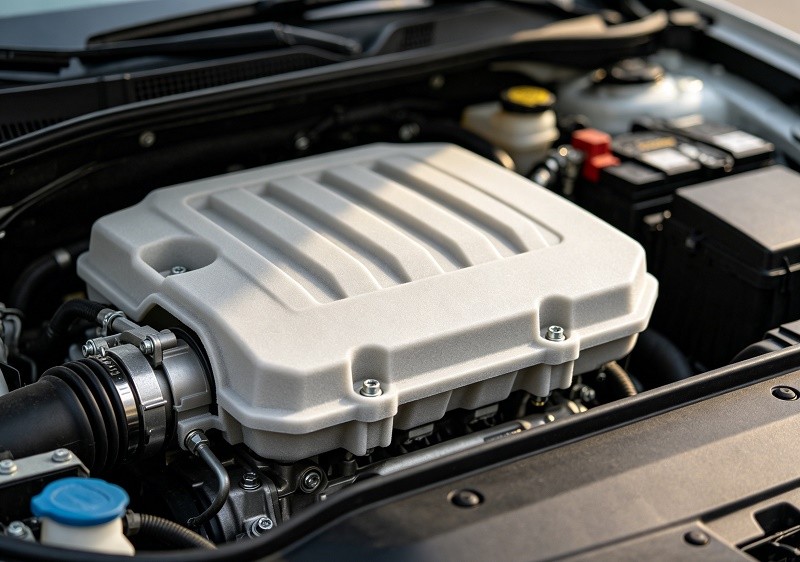
As automotive innovation accelerates, the demand for faster, more precise, and cost-effective manufacturing solutions has never been greater. We've seen firsthand how traditional methods often struggle to keep up with rapid design iterations and specialized part requirements. That's why we're excited to share how 3D printing, especially Multi Jet Fusion (MJF) technology, is revolutionizing the automotive industry. It's a game-changer for accelerating production.
Understanding the Technology: What Makes a 3D Printing MJF Parts Supplier So Effective?
To appreciate the revolutionary impact of Multi Jet Fusion on the automotive sector, it's essential to understand the core principles that set it apart. Unlike other additive manufacturing processes, MJF offers a unique combination of speed, precision, and material strength that makes it ideal for the demanding environment of car production. An expert supplier harnesses this technology to deliver parts that meet and often exceed the standards of traditional manufacturing, but in a fraction of the time.
The Magic of Multi Jet Fusion: Speed and Precision
The primary advantage of Multi Jet Fusion (MJF) technology lies in its incredible speed and fine-detail capabilities. Developed and introduced by HP, MJF is a powder bed fusion process that stands out from other 3D printing methods like Fused Deposition Modeling (FDM) or Stereolithography (SLA). The key to its efficiency is its "layer-at-a-time" approach rather than a point-by-point method. A wide print bar deposits chemical agents across the entire surface of the powder bed in a single pass, allowing it to fuse a complete layer simultaneously. This makes the printing process significantly faster, particularly when producing multiple parts at once, as the build time is determined by the height of the tallest part, not the total volume. In a commercial setting, this can result in production speeds up to 10 times faster than competing 3D printing systems.
Beyond speed, MJF delivers exceptional precision and dimensional accuracy. The technology can produce parts with a layer thickness of just 80 microns (0.003 inches), enabling intricate details, sharp edges, and complex geometries that are difficult to achieve with other methods. Furthermore, MJF parts exhibit isotropic mechanical properties, meaning they have nearly identical strength and durability in all three axes (X, Y, and Z). This uniformity is a significant advantage over methods like FDM, where parts are often weaker along the layer lines, and is crucial for functional automotive components that must withstand stress from multiple directions.
| Feature | Multi Jet Fusion (MJF) | Fused Deposition Modeling (FDM) | Stereolithography (SLA) |
|---|---|---|---|
| Method | Powder bed fusion with fusing/detailing agents | Material extrusion (thermoplastic filament) | Vat photopolymerization (resin cured by UV laser) |
| Speed | Very fast (prints entire layers at once) | Slow to moderate (point-by-point extrusion) | Moderate (point-by-point curing) |
| Precision | High (80-micron layers, fine details) | Low to moderate (dependent on nozzle size) | Very high (capable of extremely fine details) |
| Material Properties | Isotropic (uniform strength in all directions) | Anisotropic (weaker between layers) | Often brittle, anisotropic |
| Best For | Functional prototypes, end-use parts, complex geometries | Low-cost prototypes, simple parts | High-detail models, casting patterns |
From Powder to Performance: How MJF Works
The transformation from a fine powder into a high-performance automotive part is a sophisticated, multi-step process. Understanding this workflow reveals why MJF is so reliable for producing durable components. A specialized supplier of 3D Printing MJF Parts manages this process with meticulous care to ensure quality and consistency.
The MJF printing process unfolds as follows:
- Material Deposition: The process begins with a thin layer of a polymer powder (such as PA 11 or PA 12 nylon) being deposited across the build platform inside the printer.
- Agent Application: A printhead containing thousands of nozzles sweeps across the powder bed, precisely jetting two types of chemical agents:
- Fusing Agent: An ink-like agent that absorbs infrared light. It is deposited onto the areas of the powder that will become the part.
- Detailing Agent: This agent is printed around the contours of the part. It helps prevent thermal bleed and ensures sharp, well-defined edges.
- Energy Application & Fusing: High-power infrared lamps pass over the build area. The fusing agent absorbs this energy, heating up and melting the surrounding powder to fuse it into a solid layer. The rest of the powder remains untouched.
- Layer-by-Layer Completion: The process repeats layer by layer until the parts are fully formed, encased in a "cake" of unfused powder. This surrounding powder acts as a natural support structure, eliminating the need for dedicated support material that must be removed later.
- Cooling and Extraction: Once printing is complete, the entire build unit is moved to a separate processing station for controlled cooling. This slow cooling process is critical for ensuring part accuracy and mechanical integrity. The parts are then excavated from the loose powder.
- Post-Processing: The recovered powder is sieved and recycled for future builds, making MJF a highly sustainable process with minimal waste. The parts themselves are cleaned of any remaining powder via bead blasting and are then ready for use or for secondary post-processing steps like dyeing, vapor smoothing, or machining.
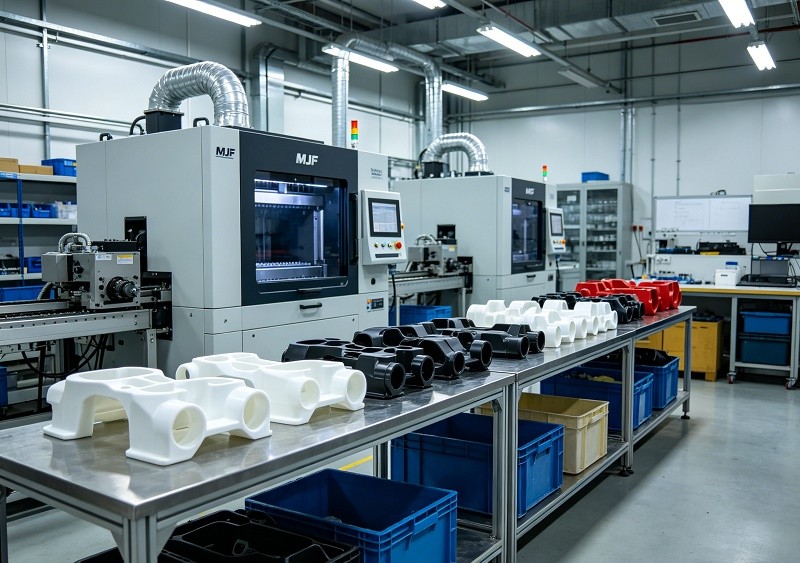
Driving Innovation: How a 3D Printing MJF Parts Supplier Accelerates Automotive Production
In the fast-paced automotive industry, the ability to innovate quickly is the ultimate competitive advantage. This is where a 3D printing MJF parts supplier becomes an indispensable partner. By leveraging the speed and material versatility of MJF, automotive engineers and designers can radically shorten development cycles, test functional components more effectively, and bring groundbreaking designs to life.
Rapid Prototyping and Iteration for Automotive Design
Traditionally, creating a prototype for an automotive part—like a dashboard console, an engine component, or an interior trim piece—involved expensive and time-consuming processes like CNC machining or injection mold tooling. Lead times could stretch from weeks to months, severely limiting the number of design iterations possible. MJF 3D printing completely upends this paradigm.
With MJF, automotive design teams can go from a CAD file to a physical, functional prototype in a matter of days, sometimes even overnight. This speed allows engineers to test and validate multiple design variations in the same amount of time it would have taken to produce a single traditional prototype. They can physically handle the part, test its fit and form within a larger assembly, and perform functional evaluations under real-world conditions. This rapid feedback loop enables a highly iterative design process, where improvements are made quickly and flaws are identified early. For example, a team can test three different vent designs or four variations of a bracket in a single week, leading to a more optimized and robust final product. This accelerated validation process significantly de-risks the transition to final production and shortens the overall time-to-market.
Manufacturing Functional Parts and Tooling with Advanced Materials
While MJF excels at prototyping, its true power in the automotive industry is realized in the production of functional, end-use parts and custom manufacturing tools. The materials used in MJF, such as Nylon PA 11, PA 12, and TPU, offer properties that are highly desirable for automotive applications.
- Nylon PA 12: This is the workhorse of MJF printing. It offers an excellent balance of strength, stiffness, and chemical resistance, making it suitable for a wide range of parts, including housings, brackets, fluid reservoirs, and complex ductwork. Its robustness ensures it can withstand the vibrations and temperature fluctuations common in vehicle operation.
- Nylon PA 11: Derived from renewable castor oil, PA 11 offers superior ductility and impact resistance compared to PA 12, making it ideal for parts that need to absorb energy, such as snap-fit components, living hinges, and bumpers.
- TPU (Thermoplastic Polyurethane): This elastomeric material provides rubber-like flexibility, tear resistance, and high rebound. It is perfect for creating seals, gaskets, bellows, and other soft-touch or vibration-dampening components.
Beyond end-use parts, MJF is invaluable for creating custom jigs, fixtures, and assembly aids for the factory floor. These tools, which hold parts in place during manufacturing or inspection, can be designed and printed on-demand to perfectly match the geometry of a specific component. This is far faster and cheaper than machining them from metal, allowing production lines to be set up or modified with greater agility and efficiency.
The Competitive Edge: Why Partner with an Expert 3D Printing MJF Parts Supplier?
While the technology itself is powerful, realizing its full potential requires expertise. Partnering with a specialized 3D printing MJF parts supplier provides more than just access to a machine; it unlocks a wealth of knowledge in design optimization, material science, and supply chain management. This partnership is what gives automotive companies a true competitive edge, enabling them to innovate faster, reduce costs, and deliver higher-quality products.
Unlocking Design Freedom and Material Versatility
One of the most profound benefits of MJF is the nearly limitless design freedom it offers. Traditional manufacturing methods are constrained by rules dictating what can be molded, milled, or cast. These constraints often force designers to compromise, resulting in heavier, multi-part assemblies. MJF, as an additive process, builds parts layer by layer, freeing engineers to create designs based on function rather than manufacturing limitations.
This freedom allows for:
- Part Consolidation: Multiple components that previously had to be manufactured separately and then assembled can be consolidated into a single, complex part. This reduces assembly time, eliminates potential points of failure, and often results in a lighter, stronger final product.
- Complex Geometries: Intricate features like internal channels for fluid flow, complex lattice structures for lightweighting, and organic shapes for ergonomic or aesthetic purposes can be produced with ease. This is impossible or prohibitively expensive with conventional methods.
- Mass Customization: Because no tooling is required, MJF makes it economically viable to produce customized or bespoke parts, even in small batches. This is ideal for luxury vehicles, special editions, or aftermarket components.
An expert supplier guides designers in leveraging these capabilities through a process known as Design for Additive Manufacturing (DfAM), ensuring that parts are optimized for performance, weight, and cost-effectiveness.
Streamlining Supply Chains and Reducing Waste
The traditional automotive supply chain is built on mass production, forecasting, and extensive warehousing, which leads to high inventory costs and potential obsolescence. MJF enables a paradigm shift towards a more agile, on-demand supply chain model.
With a digital inventory, part designs are stored as files and can be printed anywhere in the world, whenever they are needed. This "digital warehouse" model drastically reduces the need for physical stock and its associated costs. For spare parts, this is a game-changer. Instead of storing a vast inventory of components for older models, a manufacturer can simply print a replacement part on demand, ensuring availability without the overhead.
Furthermore, MJF is an inherently sustainable manufacturing process. In subtractive manufacturing like CNC machining, a significant portion of the raw material is cut away and becomes waste. In MJF, over 80% of the unfused powder can be recycled and reused in subsequent builds, dramatically reducing material waste. This not only lowers costs but also aligns with the growing industry focus on environmental responsibility.
Achieving Aerospace-Level Quality and Detail
The automotive industry's standards for quality, reliability, and precision are incredibly high. MJF technology, which is also heavily utilized in the demanding aerospace sector, is perfectly suited to meet these requirements. The process control and material science behind MJF result in parts with consistent, predictable mechanical properties.
The isotropic nature of MJF parts ensures they can handle stresses uniformly, a critical factor for safety-relevant components. A professional MJF supplier implements rigorous quality control throughout the entire workflow, from material handling and printer calibration to post-processing and final inspection. They use advanced metrology tools to verify dimensional accuracy and can provide detailed quality assurance documentation. This ensures that every part, whether it's a single prototype or part of a 1,000-unit production run, meets the exact specifications required for automotive applications. This commitment to quality and process control allows automotive manufacturers to adopt MJF with the same confidence they have in long-established production methods.
Your Partner in the Future: Choosing the Right 3D Printing MJF Parts Supplier
Selecting the right manufacturing partner is as critical as choosing the right technology. A competent 3D printing MJF parts supplier acts as an extension of your engineering team, providing the expertise and capacity needed to turn ambitious designs into reality. Their role is to ensure that the journey from concept to market is seamless, efficient, and scalable, allowing you to focus on innovation.
Ensuring Scalability and Production Efficiency
A common misconception about 3D printing is that it is only suitable for one-off prototypes or very small production volumes. However, MJF was designed for production scalability. The technology's speed and the ability to nest dozens or even hundreds of parts within the full volume of the build unit make it economically viable for production runs of up to several thousand units.
A top-tier supplier demonstrates scalability through:
- A Fleet of Machines: They operate multiple MJF printers to offer parallel production capacity, ensuring redundancy and the ability to handle large orders without creating bottlenecks.
- 24/7 Operation: Automated systems and dedicated staff allow for continuous operation, maximizing machine uptime and accelerating production timelines.
- Optimized Workflow: They have mastered the end-to-end process, from file preparation and build nesting to efficient post-processing and quality control, ensuring a smooth and predictable output.
This focus on production efficiency means a supplier can deliver consistent, high-quality parts on a reliable schedule, whether you need ten parts for a pilot run or thousands for a limited series production.
Navigating Complex Mechanical Requirements
The success of a 3D-printed automotive part depends on more than just accurate geometry; it must meet a host of complex mechanical and environmental requirements. This is where the deep expertise of a specialized supplier becomes invaluable. They provide critical guidance on:
- Design for Additive Manufacturing (DfAM): An expert partner will review your part design and suggest optimizations specifically for the MJF process. This could involve modifying wall thicknesses, adding strengthening ribs, or orienting the part in the build chamber to maximize its mechanical properties.
- Material Selection: Based on your application's needs—be it heat resistance under the hood, UV stability for exterior components, or flexibility for seals—the supplier will recommend the ideal material. Their knowledge of material datasheets and real-world performance is crucial for success.
- Post-Processing Solutions: The raw MJF part is only the beginning. A supplier offers a range of finishing options to meet specific functional or aesthetic needs. This includes:
- Dyeing: For aesthetic parts, components can be dyed black or other colors for a finished look.
- Vapor Smoothing: A chemical vapor process that smooths the surface of the part, sealing it and improving its surface finish and mechanical performance.
- Machining: For features that require extreme tolerances, secondary machining operations like drilling or tapping can be performed.
By navigating these complexities, the right supplier ensures that the final part not only fits perfectly but also performs reliably throughout its intended service life.
In conclusion, the impact of 3D printing, especially MJF technology, on automotive manufacturing is profound. From rapid prototyping to producing complex end-use parts, we are seeing a significant shift in how vehicles are designed and built.
Partnering with a specialized 3D Printing MJF Parts Supplier gives companies the agility and innovation needed to stay ahead in a fast-evolving market. We believe this technology is not just an alternative, but the future of industrial production, offering unparalleled benefits in speed, design flexibility, and mechanical performance.
At SOMI Custom Parts, we pride ourselves on being a leading 3D Printing MJF Parts supplier, based in China, offering comprehensive solutions and OEM services. Our expertise ensures that our clients receive high-quality, precise automotive components, accelerating their journey from concept to market.