A Simple Guide to Sourcing Quality Wholesale Stainless Steel Milling Parts
- Share
- Issue Time
- Mar 12,2026
Summary
Source quality wholesale stainless steel milling parts with confidence. Discover key strategies for material verification via PMI testing, ensuring CNC machining consistency, custom laser marking, and secure global packaging solutions.
For anyone looking to source quality wholesale stainless steel milling parts, the process can feel like a significant challenge. Identifying the right supplier is not just a procurement task; it's a critical decision that directly impacts your product's quality, the success of your project timelines, and ultimately, your company's reputation in the marketplace. A dependable wholesale partner for stainless steel milling parts provides more than just components; they offer competitive pricing, streamlined processes that save time and reduce frustration, and a lower risk of downstream liability. Partnering with a premier manufacturer means you can expect consistent product quality, clear accountability, and a shared commitment to your business's success.
This comprehensive guide will navigate you through the essential factors to consider when choosing a supplier for your wholesale stainless steel milling parts. We will cover everything from the crucial steps of material verification and assessing manufacturing consistency to the nuances of communication, logistics, and calculating the true total cost of your investment.
Ensuring Material Quality for Your Wholesale Stainless Steel Milling Parts
The foundation of any high-performance milled part is the raw material it's made from. In manufacturing, the quality of raw materials significantly influences the durability and performance of the final product. For industries where component integrity is paramount, accepting anything less than certified, prime-quality material is a risk that isn't worth taking. Using premium materials ensures that parts meet the highest standards for both performance and reliability. This is why a rigorous approach to verifying material quality is not just a recommendation but a necessity.
Verifying Material Composition and Transparency for Wholesale Stainless Steel Milling Parts
Trust, but verify. This age-old adage is profoundly relevant when sourcing critical components. A supplier's claims about material composition must be backed by verifiable proof. Transparency in sourcing and testing is a hallmark of a trustworthy manufacturer. This process involves looking beyond surface-level labels and demanding concrete data that confirms the material's integrity, ensuring it meets all required standards and specifications for your application.
Beyond the Label: Not All '316 Stainless Steel' is Created Equal
It's a common misconception that all stainless steel sold under the same grade designation is identical. The label "316 Stainless Steel," for instance, can encompass a range of alloys with subtle but critical differences in their chemical makeup. While standard Grade 316 is renowned for its excellent corrosion resistance, variants like 316L (low carbon) and 316H (high carbon) are designed for specific applications. Grade 316L, with its lower carbon content, is designed to improve weldability and reduce the risk of corrosion after welding. Conversely, 316H has a higher carbon content, which improves its strength and stability at elevated temperatures.
The most significant differentiator is the addition of molybdenum, which is present in 316 stainless steel but not in the more common 304 grade. This element is what gives Grade 316 its superior resistance to chlorides and other industrial chemicals, making it the preferred choice for marine, chemical processing, and medical applications. A reliable supplier will not only understand these distinctions but will be able to provide the exact variant your project requires, without trying to substitute a lower-cost or inappropriate alternative. The visual appearance can also offer clues; Grade 304 often has a brighter finish, while the molybdenum in Grade 316 can give it a slightly duller look.
Demanding Proof: Material Test Reports (MTRs) for Wholesale Stainless Steel Milling Parts
The single most important document for verifying material quality is the Material Test Report (MTR), also known as a Mill Test Report or Mill Certificate. This quality assurance document is issued by the material manufacturer and certifies the material's exact chemical and physical properties, confirming its compliance with specific international standards like ASTM, ASME, or EN. For any business sourcing critical metal parts, reviewing the MTR is an essential part of the quality control process.
An MTR provides a wealth of information, but its primary purpose is to offer complete traceability and accountability. Key elements to scrutinize on an MTR include:
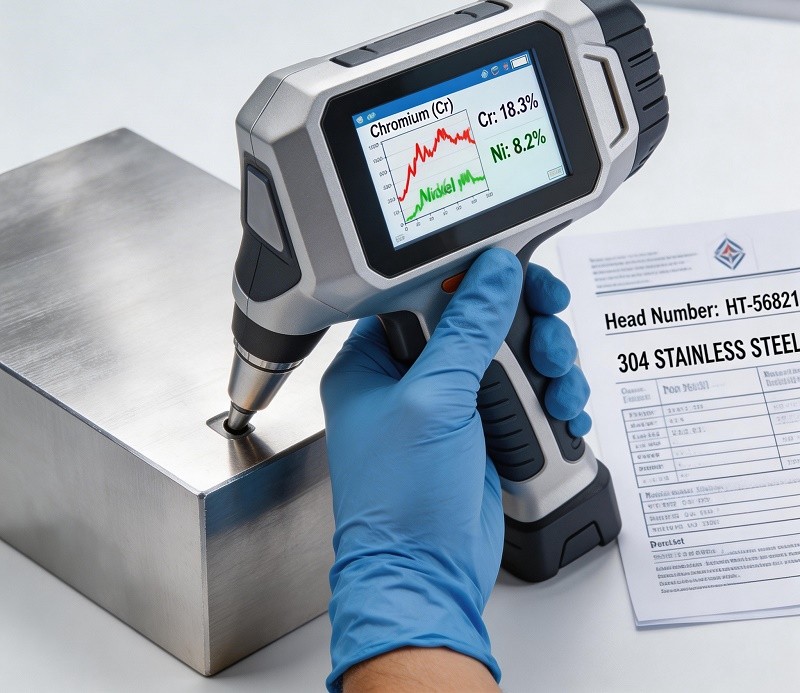
- Heat Number: This unique identifier is the "DNA" of the material, linking the finished part back to the specific batch or "melt" of steel it came from. You should always verify that the heat number on the MTR matches the number stenciled or engraved on the raw material or parts you receive.
- Chemical Composition: The report will detail the exact percentage of all constituent elements, such as chromium, nickel, molybdenum, carbon, sulfur, and phosphorus. This allows you to confirm that the material meets the precise chemical requirements for the specified grade (e.g., that 316 stainless steel contains 2-3% molybdenum).
- Mechanical Properties: This section validates the material's physical performance through destructive testing of a sample "coupon" from the same heat. It includes critical data on tensile strength, yield strength, elongation, and hardness, ensuring the material can withstand the stresses of its intended application.
A reputable supplier will always provide a complete and traceable MTR with every shipment without hesitation. This document is your ultimate proof that you are getting exactly what you paid for.
On-Site Verification: Spectrometer PMI Testing for Wholesale Stainless Steel Milling Parts
While MTRs are essential, how can you be certain that the report corresponds to the material you have in hand? The answer lies in Positive Material Identification (PMI). PMI is a non-destructive testing (NDT) method used to analyze and identify the alloy composition of materials. This process is vital for quality and safety control and can prevent the catastrophic consequences of material mix-ups, especially in critical applications like oil and gas, power generation, and aerospace.
The two most common technologies for on-site PMI testing are:
- X-Ray Fluorescence (XRF): Handheld XRF analyzers are a popular choice for PMI. The device bombards the material surface with X-rays, causing the atoms to emit secondary, fluorescent X-rays. Each element emits a unique energy signature, which the analyzer detects to determine the material's elemental composition with remarkable speed and accuracy. Modern XRF guns can identify most metal alloys in just a couple of seconds, making them ideal for inspecting large batches of parts.
- Optical Emission Spectroscopy (OES): OES is another powerful technique, particularly valued for its ability to detect light elements like carbon, phosphorus, and sulfur with high precision. A portable OES device uses an electrical discharge to "spark" the material's surface, exciting the atoms and causing them to emit light. This light is analyzed by a spectrometer to measure the wavelengths and intensities, which correspond to the specific elements and their concentrations in the alloy. This method is crucial when you need to differentiate between standard and low-carbon (L-grade) steels, a task that can be challenging for some XRF analyzers.
Insisting on a supplier that either has in-house PMI capabilities or is willing to accommodate third-party on-site testing provides an invaluable layer of security.
Understanding Supplier Testing Capabilities for Wholesale Stainless Steel Milling Parts
A supplier's commitment to quality is directly reflected in its testing capabilities. Leading manufacturers invest in both in-house and third-party testing to validate their products thoroughly. Understanding what a potential supplier can and cannot test is crucial for assessing their reliability.
A comprehensive testing program may include:
- Chemical Analysis: Verifying the elemental composition using XRF or OES.
- Mechanical Testing: Assessing properties like tensile strength, hardness, and impact resistance to ensure the material performs as expected under stress.
- Corrosion Resistance Testing: Methods like salt spray tests can simulate harsh environments and verify the material's ability to resist corrosion over time.
- Metallographic Examination: Micro-structure analysis can reveal important information about the material's heat treatment and grain structure, which impacts its overall performance.
Does the supplier have an ISO/IEC 17025 accredited laboratory? Do they have an expert team of metallurgists on staff? Do they maintain strict calibration intervals for their testing equipment? A supplier who can provide clear, comprehensive test reports and confidently discuss their quality assurance processes is a partner you can trust.
Achieving Production Consistency and Surface Finish for Wholesale Stainless Steel Milling Parts
Receiving a perfect first batch of stainless steel milled parts is one thing; receiving the tenth and hundredth batch with the exact same quality is another. Production consistency is the bedrock of reliable wholesale sourcing. It ensures that every part you receive, regardless of when it was produced, meets the same exacting standards. This uniformity is vital for industries where precision is non-negotiable, such as aerospace, medical, and automotive manufacturing. This section explores how to evaluate a supplier's ability to maintain consistency across production runs and deliver the high-quality surface finish your products demand.
Standardized Processes and Quality Control for Wholesale Stainless Steel Milling Parts
Consistency doesn't happen by accident; it's the result of rigorously standardized processes and a robust quality control (QC) system. When evaluating a potential supplier, you should inquire deeply into their QC methodologies. Look for evidence of a well-documented quality management system, such as an ISO 9001 certification. This international standard demonstrates a company's commitment to consistent processes, continuous improvement, and customer satisfaction.
A strong QC framework should encompass every stage of production, from the initial inspection of raw materials to in-process checks and final inspection of the finished parts. Ask potential suppliers about:
- First Article Inspection (FAI): Do they perform a comprehensive FAI to verify that the initial production run meets all specifications before proceeding with mass production?
- In-Process Monitoring: What tools and techniques do they use to monitor critical dimensions and features during the machining process? This could include statistical process control (SPC) to track and control variations.
- Final Inspection Protocols: How do they conduct the final inspection? Is it a 100% inspection, or do they use a sampling plan like AQL (Acceptable Quality Limit)? What equipment (CMMs, calipers, gauges) do they use?
A supplier who can clearly articulate and provide documentation for their standardized processes is more likely to deliver consistent results batch after batch.
Evaluating Surface Finishes: What to Look for in Wholesale Stainless Steel Milling Parts
The surface finish of a milled part is not just about aesthetics; it is a critical functional attribute that can affect performance, durability, and corrosion resistance. A smooth, uniform surface can reduce friction and wear, improve fatigue life, and ensure proper sealing for mating components. Conversely, a poor surface finish with visible tool marks, burrs, or inconsistencies can create stress concentration points and become sites for corrosion to begin.
When evaluating surface finishes, you need to understand the language of surface roughness, typically measured as Ra (Roughness average). Ra is expressed in micrometers (µm) or microinches (µin). A lower Ra value indicates a smoother finish. Your engineering drawings should specify the required Ra for critical surfaces.
When examining parts, look for:
- Uniformity: The finish should be consistent across the entire specified surface without blotches, discoloration, or variations in texture.
- Absence of Defects: Be vigilant for machining defects such as tool marks, chatter marks (vibrations during cutting), burrs (sharp edges left after machining), and scratches.
- Cleanliness: Parts should be clean and free of cutting fluids, metal shavings, and other contaminants from the manufacturing process.
A top-tier supplier will have the expertise and equipment—including advanced CNC machining centers and post-processing techniques like polishing, bead blasting, or electropolishing—to achieve consistently superior surface finishes that meet your specifications.
Requesting Samples Across Batches for Consistent Wholesale Stainless Steel Milling Parts
The ultimate test of a supplier's consistency is to evaluate samples from different production runs. While a single pre-production sample can validate a supplier's capability, it doesn't guarantee long-term consistency. A more effective strategy is to request samples taken from separate, distinct manufacturing batches.
This allows you to compare parts produced at different times and assess for any variations in:
- Dimensional Accuracy: Use precision measuring tools to check if critical dimensions remain within tolerance across all samples.
- Material Properties: If possible, conduct PMI tests on samples from different batches to ensure the material composition has not changed.
- Surface Finish: Visually and, if necessary, with a profilometer, compare the surface roughness and overall appearance.
A supplier who is confident in their process control will be willing to provide samples from multiple batches. Any hesitation to do so could be a red flag, indicating potential issues with their ability to maintain quality over time.
Traceability: Tracking Production and Inspection Records for Wholesale Stainless Steel Milling Parts
Full traceability is a cornerstone of modern quality management. It's the ability to track a finished part all the way back through its production journey to the original raw material. A robust traceability system, often managed through the heat number from the MTR, is crucial for accountability and root cause analysis.
Should a defect or failure occur, traceability allows you to:
- Pinpoint the exact production batch affected.
- Isolate potentially faulty products quickly, minimizing the impact.
- Review all associated production and inspection records for that batch to identify the root cause of the problem.
- Implement effective corrective actions to prevent a recurrence.
Ask potential suppliers how they manage traceability. Do they link every production order to a specific heat number? Are inspection records, operator logs, and machine settings all documented and tied to the batch? A supplier with a comprehensive traceability system demonstrates a mature and professional approach to quality assurance, providing you with confidence that in the event of an issue, it can be resolved efficiently and effectively.
Assessing Manufacturing Capabilities and Customization for Wholesale Stainless Steel Milling Parts
A supplier's true value often lies beyond their standard catalog. Their ability to customize parts to your exact specifications, coupled with their underlying technological and engineering prowess, separates a mere parts vendor from a genuine manufacturing partner. When you're sourcing wholesale stainless steel milled components, assessing these capabilities is crucial. It ensures the supplier can not only produce your parts but can also adapt to your unique needs, add value through branding, and deliver the precision your application demands.
The Mark of a True Manufacturer: Customization Options for Wholesale Stainless Steel Milling Parts
The willingness and ability to offer customization is a clear indicator that you are dealing with a direct manufacturer, not just a distributor or middleman. True manufacturers have control over the production process from start to finish, allowing them to integrate custom features seamlessly. This capability is essential for creating proprietary products, enhancing brand identity, and ensuring parts meet unique functional requirements.
Custom Logos and Laser Marking for Wholesale Stainless Steel Milling Parts
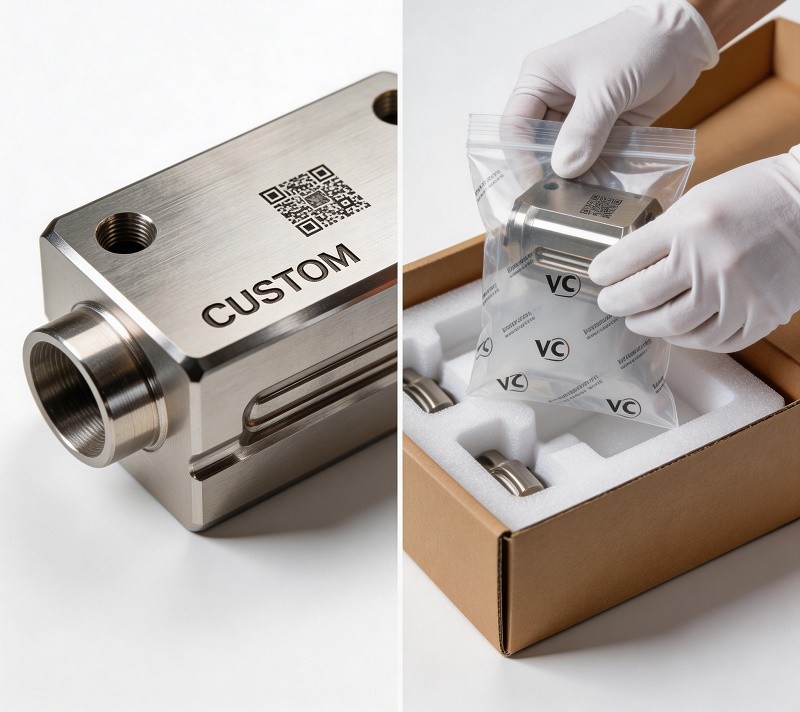
In a competitive market, branding is everything. Having your company logo, part number, batch code, or even a QR code permanently marked on your components offers significant advantages. It reinforces your brand, simplifies part identification for assembly and maintenance, and provides robust traceability. Laser marking has become the gold standard for this purpose.
Laser engraving is a non-contact process that uses a focused beam of light to permanently etch high-contrast, precise marks onto the surface of the stainless steel. This method offers several key benefits over traditional techniques like stamping or ink printing:
- Precision and Detail: Lasers can produce incredibly fine and intricate details, making them perfect for complex logos, small text, and machine-readable codes like Data Matrix or QR codes.
- Speed and Efficiency: For high-volume production, laser marking is significantly faster than mechanical engraving, helping to keep lead times short.
- Durability and Permanence: The mark is etched into the material itself, making it resistant to wear, chemicals, and harsh environmental conditions, ensuring it lasts the lifetime of the part.
- No Material Damage: Because it's a non-contact process, laser marking does not introduce mechanical stress or deform the part, which is critical for components with tight dimensional tolerances.
A supplier offering custom laser marking services demonstrates an investment in modern technology and an understanding of the importance of branding and traceability for their clients.
Tailoring Dimensions and Specifications for Wholesale Stainless Steel Milling Parts
Off-the-shelf parts rarely meet the needs of specialized or high-performance applications. The ability to tailor dimensions and specifications is the core of custom manufacturing. A capable supplier should be able to work directly from your CAD files or technical drawings to produce parts that match your exact requirements, particularly when it comes to holding tight tolerances.
A tolerance is the acceptable range of variation for a given dimension. While a standard tolerance might be around ±0.005 inches (±0.127 mm), high-precision applications in industries like aerospace, medical, and defense often require "tight tolerances," which can be ±0.001 inches or even finer. Achieving these tight tolerances requires a combination of:
- Advanced CNC Machines: State-of-the-art 3, 4, and 5-axis CNC machines with features like thermal compensation and high-resolution feedback systems are necessary to maintain accuracy.
- Expertise in Metrology: The ability to accurately measure and verify dimensions using equipment like Coordinate Measuring Machines (CMMs), optical comparators, and precision gauges.
- Skilled Machinists and Programmers: Experienced personnel who understand how to design manufacturing processes (e.g., minimizing setups, selecting the right tools) to control for sources of error.
When discussing a project with a potential supplier, be clear about the critical dimensions and their required tolerances. A competent partner will not only confirm they can meet them but may also offer Design for Manufacturability (DFM) feedback to optimize the part for cost-effectiveness without compromising function.
Equipment and Engineering Expertise for Wholesale Stainless Steel Milling Parts
Behind every high-quality milled part is a combination of advanced machinery and deep engineering knowledge. The equipment a manufacturer uses directly impacts the precision, consistency, and complexity of the parts they can produce. Equally important is the expertise of their engineering team, who select the right materials and processes to turn a design into a functional, reliable component.
The Role of CNC Machining in Producing Wholesale Stainless Steel Milling Parts
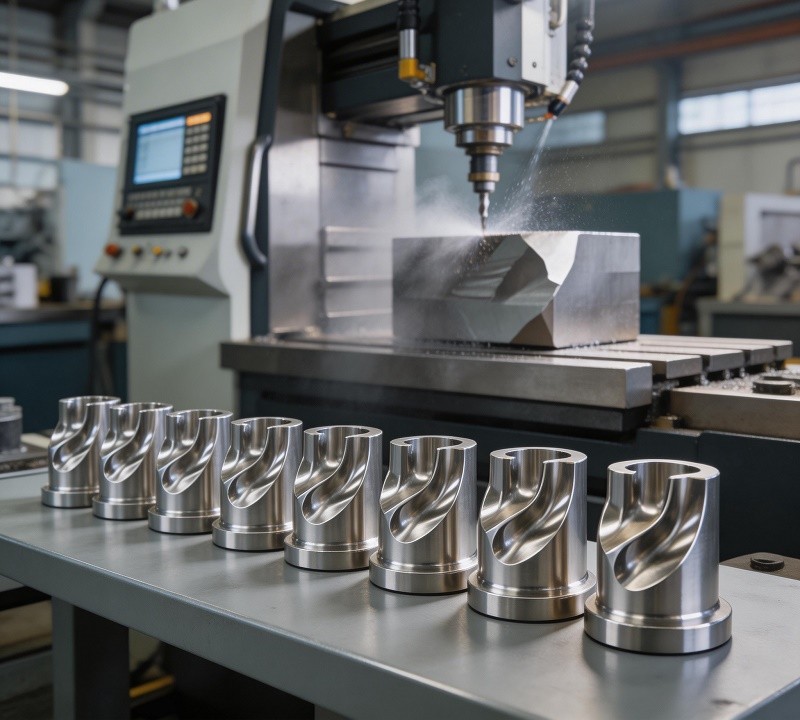
Computer Numerical Control (CNC) machining is the cornerstone of modern precision manufacturing. It is a subtractive process where computer-controlled cutting tools remove material from a solid block of stainless steel to create the final part. This technology offers unparalleled advantages for producing stainless steel components:
- Precision and Repeatability: CNC machines follow programmed instructions with extreme accuracy, ensuring that every part produced is virtually identical. This consistency is essential for wholesale production and allows for tolerances as tight as ±0.001 inches or better.
- Complexity: Advanced multi-axis CNC machines (like 5-axis mills) can create highly complex geometries, internal features, and smooth, contoured surfaces in a single setup, which would be difficult or impossible with manual methods.
- Efficiency: Once programmed, CNC machines can run with minimal operator intervention, allowing for high-volume production with fast cycle times and reduced labor costs.
Key CNC processes for stainless steel parts include CNC milling, where a rotating tool removes material from a stationary workpiece, and CNC turning, where the workpiece rotates against a stationary cutting tool, ideal for cylindrical parts like shafts and fittings. A supplier's investment in a diverse range of modern, well-maintained CNC equipment is a strong indicator of their commitment to quality and capability.
Different Grades of Stainless Steel for Wholesale Stainless Steel Milling Parts
The choice of stainless steel grade has a profound impact on a part's performance, cost, and manufacturability. A knowledgeable supplier will have experience machining a wide variety of grades and can help you select the optimal one for your application. The most common families are:
-
Austenitic Stainless Steels (300 Series): This is the most widely used family, known for excellent corrosion resistance and formability.
- Grade 304: The versatile workhorse of stainless steels, offering a great balance of corrosion resistance, weldability, and cost. It is widely used in everything from kitchen equipment to architectural trim. However, it can be challenging to machine due to its tendency to work-harden.
- Grade 316: The premier choice for harsh environments. The addition of molybdenum gives it superior resistance to chlorides (like salt water) and industrial chemicals. This makes it ideal for marine, medical, and chemical processing parts. However, it is generally harder to machine than 304.
- Grade 303: The "free-machining" version of 304. The addition of sulfur (around 0.15%) makes it much easier to cut, allowing for faster production speeds and lower costs for complex, high-volume parts like fasteners and shafts. The trade-off is slightly reduced corrosion resistance and poor weldability.
-
Ferritic and Martensitic Stainless Steels (400 Series):
- Grade 416: This is a magnetic, heat-treatable grade with added sulfur, making it one of the most easily machinable of all a stainless steels. It offers good strength but has lower corrosion resistance compared to the 300 series.
- Grade 420: A hardenable grade used when high strength and wear resistance are needed, such as in cutting tools and surgical instruments.
Consulting with your supplier's engineering team about the specific demands of your project—machining intensity, required corrosion resistance, and strength requirements—will ensure you select the grade that provides the best total value.
Logistics, Communication, and Support for Your Wholesale Stainless Steel Milling Parts
Even with the highest quality parts, a supplier relationship can fail due to poor logistics, communication breakdowns, or non-existent after-sales support. For wholesale sourcing, especially from overseas, these elements are just as critical as the manufacturing process itself. A reliable partner understands that their responsibility doesn't end when the parts come off the machine. They must ensure the products are protected during transit, provide clear and responsive communication, and stand behind their work with robust support systems.
Packaging and Shipping: Protecting Your Wholesale Stainless Steel Milling Parts
The journey from the factory to your facility is fraught with peril for precision-machined parts. Stainless steel components, despite their durability, are susceptible to damage from impact, abrasion, and corrosion if not packaged properly. Investing in quality parts only to have them arrive damaged is a costly and frustrating experience that leads to project delays and disputes.
The Impact of Poor Packaging on Wholesale Stainless Steel Milling Parts
Inadequate packaging can lead to several types of damage, compromising the integrity of your wholesale stainless steel milling parts. A supplier who cuts corners on packaging is creating significant risks for their customers, including:
- Mechanical Damage: Parts loosely packed in a box can collide, causing dents, dings, and scratches. For components with critical surface finishes or tight tolerances, this type of damage can render them unusable. Sharp edges and threads are particularly vulnerable to impact damage.
- Surface Abrasion: Vibration during transit can cause parts to rub against each other or abrasive packaging materials. This can mar polished surfaces, compromise surface finish specifications, and remove protective passivation layers.
- Corrosion: Although stainless steel is corrosion-resistant, it is not immune, especially in humid or marine environments. Trapped moisture from improper packaging, combined with contact with corrosive materials (like certain types of cardboard or wood), can lead to surface rust or "tea staining." This is particularly risky during long sea freight journeys.
- Contamination: Parts that are not properly cleaned and sealed can arrive covered in residual cutting oils, metal dust, or other debris. This requires you to invest extra time and labor in cleaning before the parts can be used or assembled, adding unexpected costs.
The consequences of poor packaging ripple outward, causing production slowdowns, increased inspection and rework costs, and potential disputes with your supplier.
Best Practices for Secure Packaging of Wholesale Stainless Steel Milling Parts
A professional supplier will implement a multi-layered packaging strategy designed to protect parts from all potential hazards during shipping. This demonstrates their attention to detail and commitment to delivering a quality product. Look for suppliers who follow these best practices:
- Individual Protection: Each part, especially those with fine details or polished surfaces, should be individually wrapped or protected. Common methods include using soft foam sleeves, VCI (Vapor Corrosion Inhibitor) plastic bags, or custom-molded trays that prevent part-to-part contact.
- Internal Cushioning and Dunnage: The primary shipping box should be filled with appropriate cushioning material, such as bubble wrap, foam inserts, or air pillows, to absorb shock and prevent contents from shifting. Heavy parts may require custom wooden crates with secure bracing to immobilize them.
- Corrosion Prevention: For long-distance shipping, especially by sea, using VCI-treated bags or paper is crucial. VCI materials release a harmless, invisible vapor that forms a protective layer on the metal surface, preventing moisture from initiating corrosion. Desiccant packets may also be included to absorb any ambient moisture within the sealed packaging.
- Robust Exterior Packaging: The outer container must be durable enough to withstand the rigors of handling and transit. This typically means using double-walled corrugated cardboard boxes, reinforced with strapping tape, or building sturdy wooden crates for heavier shipments. Clear labeling with handling instructions ("Fragile," "This Side Up") is also essential.
A supplier who can show you pictures or videos of their standard packaging process provides tangible proof of their commitment to protecting your investment.
Leveraging DDP Services for Wholesale Stainless Steel Milling Parts
For businesses importing parts from overseas, navigating the complexities of international shipping, customs clearance, duties, and taxes can be a significant administrative burden. This is where Delivered Duty Paid (DDP) shipping terms become incredibly valuable.
Under DDP Incoterms, the seller assumes all responsibilities, risks, and costs associated with transporting the goods until they are delivered to the buyer's named destination. This includes:
- Arranging and paying for all transportation (freight).
- Handling all export and import documentation.
- Clearing customs in the destination country.
- Paying all import duties and taxes (like VAT).
By choosing a supplier who offers DDP services, you effectively simplify your procurement process into a single, all-inclusive price. This eliminates surprise fees at the border, removes logistical headaches, and provides a clear, predictable landed cost for your parts. It transforms your international supplier into a partner who provides a true door-to-door service, allowing you to focus on your core business rather than the intricacies of global trade.
Effective Communication and After-Sales Support for Wholesale Stainless Steel Milling Parts
Clear, timely communication and reliable after-sales support are the cornerstones of a successful long-term supplier relationship. A supplier who is difficult to reach, slow to respond, or unwilling to address issues after a sale is a liability. True partners are accessible, transparent, and stand by their products, offering you peace of mind and a clear path to resolving any problems that may arise.
Responsive Communication During the Inquiry Phase for Wholesale Stainless Steel Milling Parts
The quality of a supplier's communication during your initial inquiry is often a strong predictor of how they will communicate throughout the entire business relationship. During this crucial phase, you should expect and look for:
- Prompt Responses: A professional supplier should acknowledge your inquiries promptly and provide detailed answers within a reasonable timeframe (typically 24-48 hours).
- Clarity and Professionalism: Responses should be clear, well-written, and directly address your questions. The ability to communicate fluently in your business language is essential to avoid misinterpretations.
- Technical Competence: The sales or engineering contact should be knowledgeable enough to discuss technical specifications, material properties, and manufacturing processes intelligently. If they don't know an answer, they should be proactive in consulting with their technical team and getting back to you.
- Proactive Questions: A great supplier will ask clarifying questions about your application, functional requirements, and expectations. This shows they are engaged and are working to ensure the final product will be a success.
Slow responses, vague answers, or an unwillingness to engage in technical details are major red flags that could signal future communication challenges and a lack of customer focus.
Understanding Warranty and Replacement Procedures for Wholesale Stainless Steel Milling Parts
Even with the best quality control, defects and non-conformances can occasionally occur. What truly defines a great supplier is how they handle these situations. Before placing a significant order, you must have a clear understanding of their warranty policy and replacement procedures.
Key questions to ask include:
- What is the warranty period for your parts?
- What is the process for reporting a non-conforming or defective part? (e.g., Who to contact? What documentation is needed?)
- How do you handle the replacement of defective parts? (e.g., Will they expedite a new production run? Will they cover the shipping costs for replacements?)
- What is your policy on returned goods? Do you issue credit or a refund for defective parts?
A reputable supplier will have a clear, documented policy and will be transparent about their procedures. They should view a defect not as a nuisance, but as an opportunity to demonstrate their commitment to customer satisfaction and to improve their own processes. A supplier who is vague or non-committal about their warranty should be approached with extreme caution, as it suggests you may be left on your own if problems arise.
Optimizing Your Investment: Total Landed Cost vs. Unit Price for Wholesale Stainless Steel Milling Parts
When sourcing wholesale parts, it's easy to get fixated on the unit price. However, the sticker price is only one piece of a much larger financial puzzle. A savvy buyer understands that the true measure of a sourcing decision is the Total Landed Cost. This figure represents the complete, all-in cost to get a product from the supplier's factory to your warehouse door. Focusing solely on the lowest unit price can be misleading, as hidden expenses in shipping, customs, and other fees can quickly erase any initial savings. Optimizing your investment means looking at the bigger picture to ensure you're achieving the best possible value, not just the lowest initial price.
Beyond the Sticker Price: Calculating Total Landed Cost for Wholesale Stainless Steel Milling Parts
The total landed cost is the sum of all expenses incurred to acquire and receive your international shipment. Miscalculating this figure is one of the most common ways businesses lose money on imported goods, as it can lead to inaccurate product pricing and eroded profit margins.
The formula for landed cost appears simple, but capturing each component accurately is the key challenge: Landed Cost = Product Cost + Shipping & Freight + Customs, Duties & Taxes + Risk & Insurance + Overhead
Let's break down the core components:
- Product Cost: This is the base price you pay the manufacturer for the parts.
- Shipping & Freight: This includes all transportation charges, from international air or ocean freight to the final domestic trucking that brings the goods to your facility. It also includes fuel surcharges and documentation fees.
- Customs, Duties & Taxes: This is a complex and often underestimated category. It includes tariffs calculated based on the product's Harmonized Tariff Schedule (HTS) code, Merchandise Processing Fees (MPF), Harbor Maintenance Fees (HMF) for sea freight, and any applicable import taxes like VAT or GST.
- Risk & Insurance: This covers the cost of cargo insurance to protect against loss or damage during transit. It can also include the cost of premium packaging or other risk-mitigation measures.
- Overhead: This category captures various transactional costs, such as customs brokerage fees, bank fees for international payments, currency conversion charges, and potentially even financing costs.
A cheap product from one supplier might incur high shipping and duty costs, making its landed cost higher than a pricier part from a supplier in a different location with better logistics. A strategic supplier will help you understand and forecast these costs, particularly if they offer DDP (Delivered Duty Paid) shipping, which rolls all these variables into a single, predictable price.
Minimum Order Quantities (MOQs) for Wholesale Stainless Steel Milling Parts
When dealing with manufacturers, you will inevitably encounter the Minimum Order Quantity (MOQ). The MOQ is the smallest number of units a supplier is willing to produce or sell in a single order. Suppliers set MOQs to ensure their production runs are profitable and efficient, as there are fixed costs associated with setting up machinery, procuring raw materials, and managing the logistics of an order. For a manufacturer, producing a very small batch can be more costly than the revenue it generates.
MOQs can present a challenge, especially for smaller businesses or those launching a new product, as they can tie up significant capital in inventory and increase storage costs. However, MOQs are not always set in stone. Here are a few strategies for navigating them:
- Direct Negotiation: The most straightforward approach is to have an open conversation with the supplier. Explain your situation and ask if they are willing to lower the MOQ. Sometimes, they may be flexible, especially if they are experiencing a slow period.
- Offer a Higher Per-Unit Price: Acknowledge that a smaller run is less efficient for the manufacturer and offer to pay a premium (e.g., 10-15% more per unit) in exchange for a lower MOQ. This directly compensates them for the inefficiency and can make the deal more attractive.
- Request a Trial Order: Position your first purchase as a smaller "trial order" to test the market, with the promise of larger, more consistent orders in the future if the product is successful. This reduces the initial risk for both parties.
- Bundle Your Order: If you need several different parts from the same supplier, ask if you can meet the MOQ by combining the quantities of multiple items into one larger order. This helps the supplier achieve an overall production volume that is efficient for them.
Understanding why a supplier has a certain MOQ is the first step. By approaching the conversation as a partner looking for a mutually beneficial solution rather than just a customer demanding a lower price, you increase your chances of finding a workable compromise.
White Labeling and Custom Packaging for Wholesale Stainless Steel Milling Parts
For businesses that want to build their own brand without investing in the complexities of manufacturing, white labeling is an excellent strategy. White labeling is a business practice where a company purchases a generic product from a manufacturer and rebrands it as its own. This allows you to leverage the expertise and infrastructure of an established manufacturer while focusing your own resources on what you do best: marketing, sales, and building your brand.
The benefits of white labeling wholesale parts include:
- Speed to Market: It eliminates the lengthy and expensive process of research, development, and setting up production, allowing you to launch a product line quickly.
- Reduced Costs & Risk: You avoid the significant capital investment in machinery, facilities, and R&D. The risk is lower because you are often branding a product that is already proven.
- Brand Focus: By outsourcing production, you can concentrate your efforts on creating a strong brand identity and fostering customer relationships.
An essential component of a successful white label strategy is custom packaging. Professional, branded packaging distinguishes your product from competitors and is often the first tangible interaction a customer has with your brand. A good manufacturing partner who offers white label services should also provide options for custom packaging, including:
- Custom-Printed Boxes: Mailer boxes or product boxes featuring your logo, brand colors, and marketing messages create a memorable unboxing experience.
- Branded Labels and Tape: Even simple branding on shipping labels or packaging tape can reinforce your brand identity.
- Packaging Inserts: Adding custom materials like thank-you cards, flyers, or instruction manuals to the package can further enhance the customer experience.
When a manufacturing supplier offers both the production of the parts and the custom branding and packaging, they become a true one-stop-shop, streamlining your supply chain and helping you build a professional brand from day one.
Conclusion
By carefully considering the critical factors outlined in this guide, you can confidently select a supplier who will provide high-quality wholesale stainless steel milling parts, ensuring the success of your projects and the satisfaction of your end customers. The journey from sourcing to final product is complex, but with the right knowledge, you can navigate it effectively.
Remember, the most effective suppliers act as strategic partners, not just transactional vendors. These are the partners who are transparent about material quality, who invest in the technology to achieve production consistency, and who stand behind their work with clear communication and robust support. Building a long-term relationship based on mutual respect, clear expectations, and transparent practices will ultimately lead to the best outcomes for your wholesale stainless steel milling parts needs.
Investing time in thorough due diligence now is not an expense; it's a strategic investment. This upfront effort will save you significant time, money, and frustration in the future. It guarantees that you receive not just a part, but the best possible value and quality, laying a solid foundation for your business's growth and reputation. We encourage you to share this guide with your colleagues and use it as a checklist in your next sourcing endeavor.