A Complete Guide to Liquid Silicone Injection Molding for High-Performance Parts
- Share
- Issue Time
- Mar 15,2026
Summary
Discover the complete guide to Liquid Silicone Injection Molding (LSR) for high-performance parts. Learn about LSR properties, the LIM process, design tips, and applications in medical, automotive, and electronics industries.
What is Liquid Silicone Rubber (LSR)?
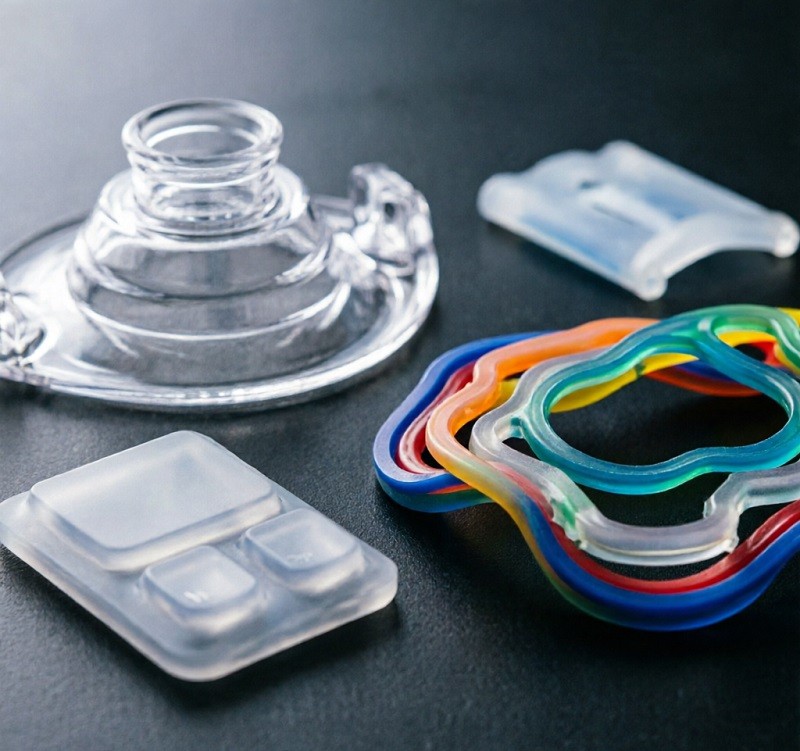
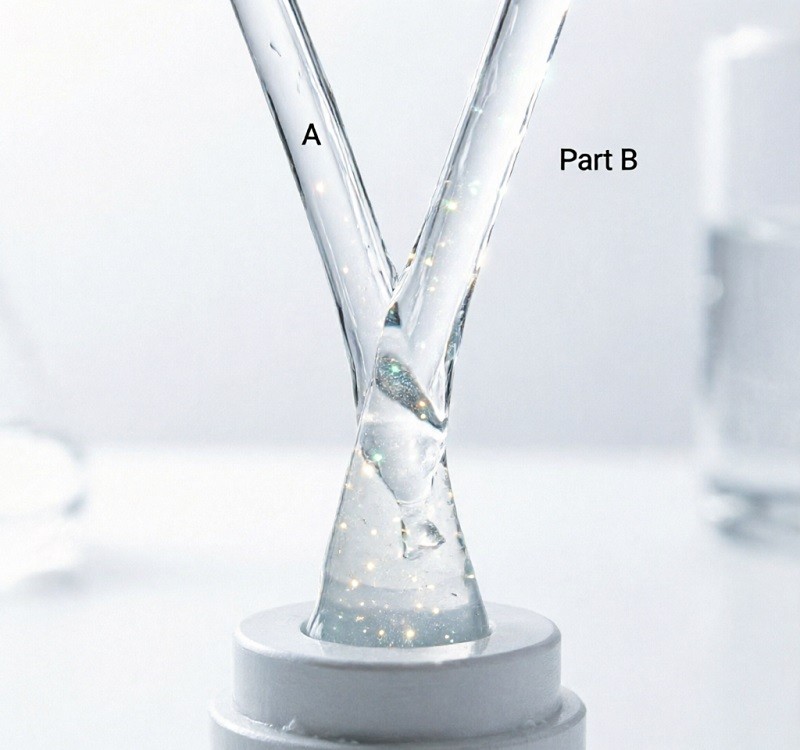
Liquid Silicone Rubber (LSR) is a high-purity, two-part platinum-cured elastomer renowned for its exceptional durability, flexibility, and performance under extreme conditions. Unlike high-consistency rubber (HCR) which resembles clay, LSR starts as two separate liquid components. When these components are mixed, typically in a 1:1 ratio, a chemical reaction is initiated. The process is then accelerated with heat inside an injection mold, causing the material to cross-link and solidify, or vulcanize, into a final, robust part. This thermosetting process is irreversible, meaning the part cannot be re-melted, which contributes to its superior stability at high temperatures.
The Key Properties That Make LSR a Superior Material Choice
LSR's popularity in demanding industries isn't accidental. It stems from a unique combination of chemical and mechanical properties that outperform many other elastomers, especially thermoplastic elastomers (TPEs).
- Extreme Temperature Resistance: LSR parts maintain their mechanical properties across a vast temperature range, typically from -60°C to over 200°C (-76°F to 392°F). This makes them ideal for automotive under-the-hood components and medical devices that require high-temperature sterilization.
- Biocompatibility and Purity: LSR is tasteless, odorless, and inherently inert. Many grades comply with strict FDA standards and USP Class VI requirements, making it the material of choice for medical devices, skin-contact products, baby care items, and food-grade applications.
- Chemical and Environmental Resistance: This material shows excellent resistance to water, oxidation, UV radiation, and a broad spectrum of chemicals. This resilience ensures longevity for outdoor applications, such as environmental seals for electronics.
- Excellent Mechanical Properties: LSR offers great elongation, high tear and tensile strength, and a very low compression set. This means it can be repeatedly stretched or compressed and will return to its original shape, a critical feature for seals, gaskets, and keypads.
- Electrical Insulation: LSR possesses outstanding dielectric properties, making it a trusted insulator for a wide array of electrical and electronics applications, from connectors to EV battery components.
An Overview of the Liquid Injection Molding (LIM) Process
Liquid Injection Molding (LIM) is a specialized manufacturing process designed to leverage the unique characteristics of LSR. It is a highly automated and efficient method for producing high volumes of intricate parts with exceptional precision and consistency. Unlike thermoplastic injection molding where solid pellets are melted, the LIM process keeps the material cool until it is injected into a heated mold. This fundamental difference is key to preventing premature curing and ensuring a flawless final product.
Step-by-Step: How Liquid Silicone Injection Molding Works
The LIM process is a symphony of precision machinery working in concert:
- Material Supply: Two primary LSR components (Part A and Part B) are housed in separate containers, often 20 or 200-liter drums. A third container may hold a color pigment.
- Metering and Mixing: A precision metering unit pumps the A and B components at a constant 1:1 ratio. The color pigment can also be introduced at this stage.
- Static Mixer: The materials are forced through a static mixer, which combines them into a homogeneous, uncured compound.
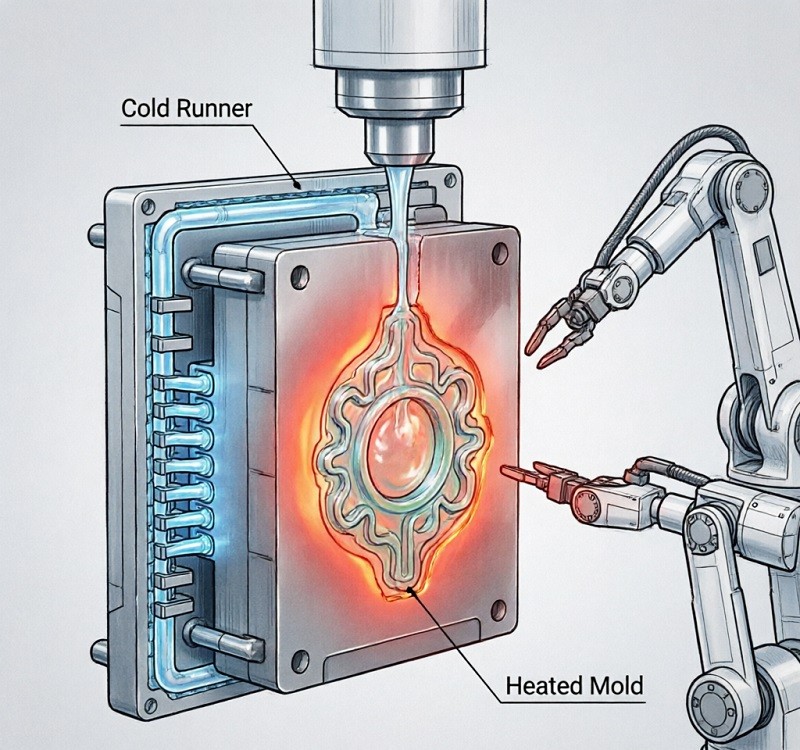
- Injection: The mixed LSR is injected from the machine's barrel through a cold runner system. This system keeps the material cool to prevent it from curing before it reaches the mold cavities.
- Curing: The material enters the pre-heated mold (typically 150°C to 200°C). The heat accelerates the vulcanization process, and the liquid silicone solidifies into its final shape in as little as 30 seconds, depending on the part's thickness.
- Ejection: Once cured, the mold opens, and the finished part is removed, often manually or with robotic automation, as the material's flexibility makes traditional ejector pins less common.
Critical Design Considerations for LSR Parts
Designing for LSR molding shares some principles with thermoplastic design but also has unique rules due to the material's liquid state and flexibility.
- Wall Thickness: Walls can be incredibly thin, sometimes down to 0.25mm, as LSR's low viscosity allows it to fill intricate details easily. Maintaining a uniform wall thickness is recommended to promote even curing.
- Draft Angles: While standard injection molding often requires significant draft (taper) for part release, LSR is more forgiving. A draft of 1 degree is common, but zero-draft may be possible for shallow parts due to the material's flexibility.
- Parting Lines: Because LSR flows so easily, it can create flash in gaps as small as 0.005mm. Therefore, parting lines must be meticulously designed and maintained to be as simple and minimal as possible.
- Undercuts: The natural elasticity of LSR allows for the molding of parts with simple undercuts, as they can often be manually de-molded without complex mold mechanisms.
Common Applications: Where is LSR Molding Used?
The versatility of LSR makes it a cornerstone material across numerous high-tech industries.
- Medical and Healthcare: Due to its biocompatibility and sterilizability, LSR is used for seals, O-rings, syringe stoppers, respiratory masks, and implantable devices.
- Automotive: Its resistance to extreme temperatures and fluids makes it perfect for gaskets, seals, wire harness connectors, and keypad buttons.
- Consumer Electronics: LSR is used to create protective covers, keypads, and waterproof seals for everything from smartphones to outdoor sensors.
- Food and Beverage: FDA-compliant grades are used for baking molds, utensils, bottle nipples, and dispensing valves.
LSR vs. Other Elastomers: A Material Comparison
When choosing a material, it's crucial to understand how LSR stacks up against alternatives like High-Consistency Rubber (HCR) and Thermoplastic Elastomers (TPEs).
| Feature | Liquid Silicone Rubber (LSR) | High-Consistency Rubber (HCR) | Thermoplastic Elastomer (TPE) |
|---|---|---|---|
| Processing | Automated Liquid Injection Molding | Manual Compression/Transfer Molding | Thermoplastic Injection Molding |
| Cycle Time | Very Fast (30-120 seconds) | Slow (5-15 minutes) | Fast |
| Complexity | Excellent for complex, detailed parts | Better for simpler geometries | Good for complex parts |
| Temp. Resistance | Excellent (-60°C to 250°C) | Good | Moderate |
| Biocompatibility | Excellent, medical grades common | Good, but can have byproducts | Varies, often not for implants |
| Waste | Minimal, especially with cold runners | Higher material waste | Recyclable scrap |
Tooling and Mold Design for Liquid Silicone Rubber
Designing molds for LSR requires a different approach than for thermoplastics. The mold is heated, not cooled, and the runners are often kept cold to prevent the material from setting before it fills the part cavity. Because LSR has a very low viscosity, mold tolerances must be extremely tight to prevent flash. Vents are also critical to allow air to escape the cavity as it fills with the liquid material. Precision CNC machining is essential to create the high-quality molds needed for consistent, flash-free parts.
Quality Control in the LSR Injection Molding Process
Achieving high quality in LSR molding depends on controlling several key variables. The molding process is highly automated, which improves consistency. Key quality checks include ensuring the precise 1:1 mix ratio of the two material components, maintaining consistent mold temperature and pressure, and performing visual inspections for flash or air traps. Since the raw material is sealed from the environment until it enters the mold, the process is inherently very clean, which is crucial for medical and electronic applications.
The Future of LSR and Advanced Molding Techniques
The field of liquid silicone molding is constantly evolving. Innovations include overmolding, where LSR is molded directly onto a metal or plastic substrate to create a single, integrated component. This is common for creating soft-touch grips on rigid handles or sealing gaskets directly onto electronic housings. Additionally, advancements in micro-molding are enabling the production of incredibly small and complex LSR parts for sophisticated medical and electronic devices. As industries push the boundaries of performance and miniaturization, the demand for advanced LSR solutions will only continue to grow.
Choosing the Right Partner for Your LSR Molding Project
Liquid silicone injection molding is a highly specialized field that requires deep expertise and advanced equipment. When selecting a manufacturing partner, it is vital to choose a company with a proven track record in LSR. Look for an expert who understands the nuances of material selection, part design, and mold engineering specific to liquid silicone rubber. A knowledgeable partner can provide invaluable design-for-manufacturability (DFM) feedback to optimize your part for quality, reduce cycle times, and lower overall project costs, ensuring your high-performance components meet the most stringent requirements.