A Buyer's Guide to Selecting the Right Surface Finishing Supplier
- Share
- Issue Time
- May 7,2026
Summary
This buyer's guide helps select the right surface finishing supplier, covering process types, quality control, certifications, customization, cost and partnership tips for metal parts.
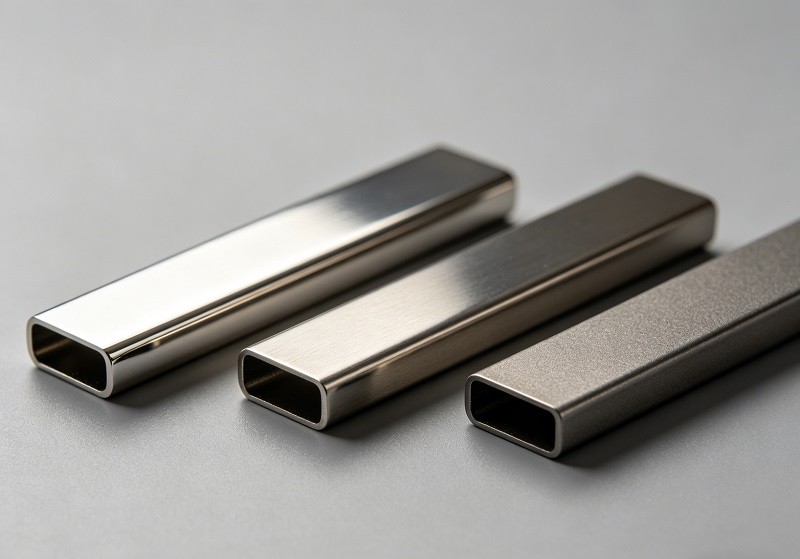
Welcome to this essential guide for selecting the ideal surface finishing supplier, a decision of paramount importance for demanding industries like aerospace. The right partner significantly impacts the performance, durability, and compliance of your critical components. Navigating the complex landscape of aerospace coating systems and application services requires a clear understanding of what to look for. This guide is crafted to help you make an informed choice and foster a successful partnership.
Understanding the Different Types of Aerospace Surface Finishing Suppliers
The term "surface finishing supplier" encompasses a diverse range of companies, each playing a distinct yet interconnected role in the aerospace value chain. Broadly, they can be categorized into two primary groups: the innovators who develop the coating chemistry and the experts who apply it. Understanding this distinction is the first step in identifying the right kind of partner for your specific needs, whether you require a novel coating formulation for a next-generation aircraft or a certified applicator for an existing specification. A successful project often relies on the seamless collaboration between these two types of suppliers, or in finding a single, vertically integrated partner who excels in both domains.
The Innovators: Coating Chemistry Developers and Material Suppliers
These companies are the architects of protection and performance, operating at the molecular level to design and manufacture the advanced coatings that shield aerospace components from the harshest environments. They are the chemical engineers, the materials scientists, and the research and development powerhouses pushing the boundaries of what is possible. Their core business is not applying coatings, but creating the liquid formulations, resins, and pigments that application service providers will later use. When evaluating these innovators, the focus shifts from application capability to the depth of their scientific knowledge, the breadth of their product portfolio, and the robustness of their technical support.
Focus on Advanced Formulations and Specialized Properties.
The primary role of coating developers is to engineer materials with highly specific and reliable properties. In aerospace, this goes far beyond simple aesthetics. We are talking about formulations designed to withstand extreme temperature fluctuations, from the cryogenic cold of high-altitude flight to the intense heat of engine components. These coatings provide critical protection against corrosion caused by moisture, salt spray, and aggressive aviation fluids. Other formulations are engineered for low-friction surfaces in moving parts, enhanced durability against abrasion and impact, or specialized electrical properties. The development of these advanced formulations is a complex process involving polymer chemistry, nanotechnology, and rigorous testing to ensure every batch meets exacting performance standards. True innovation in this space involves creating multi-functional coatings that can, for instance, provide corrosion resistance while also managing static dissipation or reducing the aircraft's radar signature.
Assessing Key Player Expertise and Specializations (e.g., advanced formulas, polyurethanes, protective coatings, functional and EMI shielding).
When sourcing a coating material supplier, it's crucial to look beyond a generic product catalog and assess their specific areas of expertise. Different suppliers specialize in distinct chemistries and applications. For example, some are renowned for their high-performance polyurethane topcoats, which are prized for their exceptional durability, chemical resistance, and ability to retain color and gloss under intense UV exposure. These are often the final, customer-facing layer on an aircraft's exterior.
Others may focus on foundational protective coatings, such as high-solids epoxy primers that form a robust barrier against corrosion and provide a tenacious bond for subsequent layers. A particularly critical specialization in modern avionics is the development of functional coatings, such as those providing electromagnetic interference (EMI) or radio frequency interference (RFI) shielding. These coatings contain conductive particles, like silver or nickel, that create a cage to protect sensitive electronic components from interference, ensuring their reliable operation. Assessing a supplier involves asking direct questions: What is your core chemistry expertise? Can you provide case studies for your EMI shielding coatings on projects with similar requirements to ours? Do you have a deep understanding of the interactions between different layers in a complete coating system? A supplier's specialization is a strong indicator of their ability to provide a solution that is not just adequate, but optimal.

Evaluating Technical Support, R&D Capabilities, and Compliance Know-How.
A superior formulation is only valuable if it can be applied successfully and meets all regulatory requirements. Therefore, evaluating a developer's ancillary services is just as important as evaluating their products. Excellent technical support is non-negotiable. Your chosen partner should have a team of field technical service representatives who can assist with troubleshooting application issues, optimizing parameters, and training your applicators. They should function as an extension of your own engineering team.
Furthermore, assess their Research & Development (R&D) horsepower. Does the supplier have a dedicated lab and a team of PhDs working on next-generation solutions? A strong R&D capability means they can not only provide off-the-shelf products but also partner with you to develop custom formulations tailored to unique performance challenges. This is particularly vital when dealing with new substrates or unprecedented operating environments.
Finally, their regulatory knowledge is paramount. The aerospace industry is governed by a complex and ever-changing web of chemical regulations, such as REACH (Registration, Evaluation, Authorisation and Restriction of Chemicals) in Europe and various EPA standards in the United States. A knowledgeable supplier will not only provide products that are compliant today but will also have a strategic roadmap for phasing out substances of concern (like hexavalent chromium) and introducing safer, high-performance alternatives. Their ability to navigate this compliance landscape protects you from costly future redesigns and supply chain disruptions.
The Experts: Coating Application Service Providers
While developers create the "what," these experts master the "how." Coating application service providers are the skilled technicians and process engineers who take the advanced chemical formulations and apply them to critical aerospace components with absolute precision. Their facilities are not chemical labs but highly controlled industrial environments, featuring specialized equipment, certified personnel, and rigorous quality control checkpoints at every stage. For these suppliers, the key differentiators are their process expertise, their certifications, and the breadth of services they can offer, from initial surface preparation to final inspection. They are the final guardians of quality before a part is installed on an aircraft.
Precision Application with Certified Processes.
In aerospace, the application of a coating is a science in itself. It is far from simply "painting" a part. Every step must be executed within tightly controlled parameters to achieve the desired performance. Professional applicators use a variety of sophisticated methods, including High Volume Low Pressure (HVLP) spray guns, electrostatic bells, and robotic application systems, each chosen to suit the specific coating chemistry and part geometry. The goal is to achieve a perfectly uniform film thickness, as variations can compromise performance—too thin, and the part lacks protection; too thick, and the coating can crack or add unnecessary weight. Certified processes are the backbone of this precision. Applicators must prove, through exhaustive testing and documentation, that their methods consistently meet the specifications laid out by the coating manufacturer and the aerospace prime contractor. This includes controlling environmental conditions like temperature and humidity, managing spray gun settings, and defining cure schedules with absolute accuracy.
Importance of NADCAP Certification and Stringent Aerospace Requirements.
For anyone sourcing coating services in the aerospace industry, one acronym stands above all others: NADCAP. The National Aerospace and Defense Contractors Accreditation Program is the industry-managed standard for ensuring quality and process excellence across a wide range of special processes, including chemical processing and coatings. Achieving NADCAP accreditation is an arduous and expensive undertaking for a supplier. It involves a deep-dive audit by industry experts that scrutinizes every aspect of their operation, from equipment calibration and technician training to process documentation and quality management systems.
For a buyer, choosing a NADCAP-accredited supplier is the single most important step in mitigating risk. It signifies that the supplier has demonstrated a commitment to the highest industry standards and is capable of consistently repeating their certified processes with a high degree of fidelity. Operating without NADCAP accreditation is, for most aerospace applications, a non-starter. It serves as the baseline level of trust and competence required to handle flight-critical hardware. When evaluating a supplier, you should not only ask if they are NADCAP certified for coatings, but also review the scope of their accreditation to ensure it covers the specific processes you require.
Assessing Capabilities: Surface Preparation, Priming, Topcoats, and Integrated Services.
A world-class coating application is built upon a foundation of meticulous surface preparation. Even the most advanced coating will fail if applied to a contaminated or improperly prepared substrate. Therefore, a key part of evaluating an applicator is assessing their full range of capabilities, starting with preparation. This includes processes like degreasing and cleaning to remove oils and contaminants, as well as mechanical or chemical preparation methods such as grit blasting, sanding, or chemical etching to create a surface profile that promotes adhesion.
Following preparation, the supplier's proficiency in applying a complete coating system is critical. This typically involves multiple layers:
- Pre-treatments: Chemical conversion coatings that enhance corrosion resistance and adhesion.
- Primers: The foundational layer that provides the primary corrosion protection and bonds tenaciously to both the substrate and the topcoat.
- Topcoats: The final layer that provides durability, UV resistance, chemical protection, and the desired aesthetic finish.
An expert applicator will have deep knowledge of the compatibility between these layers and will have certified processes for each step. Furthermore, leading suppliers offer integrated services, managing the entire finishing process under one roof. This single-source responsibility streamlines logistics, reduces lead times, and ensures quality control is maintained throughout the entire sequence, from raw part to fully coated and inspected component.
Key Criteria for Evaluating a Potential Surface Finishing Supplier
Once you have identified the type of supplier you need—be it a developer, an applicator, or an integrated partner—the next phase involves a rigorous evaluation against a set of key criteria. This process is about moving beyond sales pitches and marketing brochures to uncover tangible evidence of quality, expertise, and reliability. The goal is to build a partnership, and partnerships must be founded on a bedrock of trust and verified capability. The following criteria represent the core pillars you must investigate to ensure a potential supplier can meet the uncompromising demands of the aerospace industry. This involves a detailed look at their certifications, a deep dive into their technical prowess, and a thorough assessment of their quality assurance systems.
Non-Negotiable Certifications and Compliance Standards
In a safety-critical industry like aerospace, compliance is not optional. Certifications and adherence to standards are the objective language of quality and trust. They provide independent, third-party validation that a supplier's processes, materials, and quality systems have met a recognized benchmark. Before you even begin to discuss technical solutions or pricing, your first step should be to verify a potential supplier's credentials. A lack of proper certification is an immediate red flag and often a sufficient reason to disqualify a supplier from consideration for any flight-critical application.
The Critical Role of NADCAP Accreditation.
As previously mentioned, NADCAP accreditation is the gold standard for special processes in the aerospace and defense sectors. When evaluating an application service provider, the question is not simply "Are you NADCAP accredited?" but "What is the specific scope of your NADCAP accreditation?". The audit and accreditation are specific to certain processes (e.g., "Coatings," "Chemical Processing"). A supplier must demonstrate that they have an active accreditation for the exact services you require. The Performance Review Institute (PRI) maintains an online Qualified Manufacturers List (QML) where buyers can verify a supplier's accreditation status and scope in real-time. This program is managed by a board composed of prime contractors (like Boeing, Airbus, GE, and Rolls-Royce), demonstrating the industry's collective reliance on it. Utilizing a NADCAP-accredited supplier provides a high degree of confidence that processes are controlled, repeatable, and documented, which is fundamental to risk management in the aerospace supply chain.
Meeting Military Specifications and Commercial Aviation Requirements.
Beyond NADCAP, the aerospace world is governed by a vast library of specifications issued by government bodies and commercial entities. A competent supplier must demonstrate not only that they are aware of these specifications but that they have a proven history of producing parts that meet them.
Military Specifications (Mil-Spec): These are standards issued by the U.S. Department of Defense that define requirements for materials and processes. For coatings, these are often designated "MIL-PRF" for performance specifications or "MIL-DTL" for detailed specifications. For instance, MIL-PRF-23377 is a widely cited standard for high-solids epoxy primers, and MIL-PRF-85285 is a key specification for polyurethane topcoats. A supplier should be able to provide Certificates of Conformance (CoCs) with every shipment, attesting that the material or service meets the requirements of a specific Mil-Spec.
Commercial Aviation Requirements: Major aircraft manufacturers, or Original Equipment Manufacturers (OEMs), issue their own set of proprietary specifications. Boeing has its BAC (Boeing Aircraft Company) specifications, Airbus has its AIMS (Airbus Industrial Method Sheets), and engine manufacturers like GE and Rolls-Royce have their own unique standards. These specifications are often even more stringent than the general military ones. A potential supplier must be on the "Approved Supplier List" (ASL) for the specific OEM and specification relevant to your project. Gaining this approval is a rigorous process, and a supplier's presence on these lists is a powerful testament to their capability.
Technical Expertise, Customization, and Quality Assurance
While certifications confirm a baseline of process control, true partnership value is unlocked through a supplier's technical depth, collaborative spirit, and unwavering commitment to quality. The best suppliers don't just follow a recipe; they understand the science behind it. They can troubleshoot problems, optimize solutions, and ensure that every single part that leaves their facility is perfect. This section of your evaluation probes their ability to go beyond the specification and deliver genuine engineering value and flawless execution.
Utilizing Supplier R&D for Tailored Solutions (e.g., custom formulation, compatibility testing, application parameter optimization).
The most valuable suppliers act as collaborative partners rather than mere vendors. They can leverage their in-house technical expertise and R&D capabilities to help solve your unique challenges. This is particularly crucial when you are facing a novel engineering problem, such as needing a coating that adheres to a new composite material or a finish that must survive in an environment with a previously unencountered chemical.
A truly capable supplier can engage in:
- Custom Formulation: If you are working with a developer, they may be able to modify an existing formula or develop a new one to meet a specific set of performance targets.
- Compatibility Testing: An expert supplier can conduct tests to ensure that a proposed coating system is compatible with the substrate, as well as with other chemicals, fluids, or materials it may come into contact with during its service life.
- Application Parameter Optimization: An experienced applicator can work with you to fine-tune the application process for complex part geometries, ensuring complete and uniform coverage without defects like runs, sags, or "orange peel."
This collaborative approach transforms the supplier relationship from a transactional one to a strategic one, where their expertise directly contributes to the success and performance of your product.
Robust Quality Control, Performance Testing, and Inspection Processes.
A supplier's promise of quality is meaningless without a robust system to verify it. A thorough evaluation must include a deep dive into their Quality Management System (QMS), which should be certified to a standard like AS9100, the aerospace-specific version of ISO 9001. Beyond the QMS, you must assess their hands-on quality control and inspection capabilities.
At a minimum, a well-equipped supplier lab should be able to perform a range of standard performance tests to validate coating quality. The following table outlines some of the most common tests based on ASTM (American Society for Testing and Materials) standards:
| Test Name | ASTM Standard | Purpose |
|---|---|---|
| Film Thickness | ASTM D7091 | Measures the dry film thickness (DFT) of the coating. Crucial for ensuring proper protection and performance. |
| Adhesion | ASTM D3359 | Assesses how well the coating is bonded to the substrate using a tape test method. Failure here is critical. |
| Corrosion Resistance | ASTM B117 | Evaluates the coating's ability to protect the substrate from corrosion by exposing it to a salt spray environment. |
| Hardness | ASTM D3363 | Determines the coating's resistance to scratching and indentation using pencils of varying hardness. |
| Flexibility/Mandrel Bend | ASTM D522 | Measures the coating's ability to resist cracking when the substrate is bent over a conical mandrel. |
Beyond these standard tests, a supplier's inspection process is critical. This should include rigorous visual inspection under controlled lighting conditions by trained and certified inspectors. For complex requirements, they may also employ instrumental methods to measure color, gloss, and surface finish. You should always ask for a tour of their QC lab and review their inspection procedures and records. A supplier who is proud of their quality will be transparent and eager to demonstrate their capabilities.
Maximizing Value with an Integrated Surface Finishing Supplier Partnership
In today's competitive landscape, simply finding a competent supplier is no longer enough. The drive for greater efficiency, reduced risk, and accelerated timelines is pushing companies to seek more strategic partnerships. This has led to the rise of the integrated supplier—a single partner who can offer a broader range of capabilities beyond a single, siloed process. By consolidating services and embracing a more holistic approach to manufacturing, companies can unlock significant value. An integrated surface finishing partner can streamline your supply chain, enhance quality control, and ultimately deliver a better product faster. This final section explores the strategic advantages of this model and how to identify a supplier who offers a truly comprehensive solution.
The Strategic Advantages of Vertically Integrated Capabilities
Vertical integration refers to a strategy where a company owns and controls multiple stages of its supply or production chain. In the context of aerospace manufacturing, a vertically integrated surface finishing supplier is one who does more than just apply coatings. They have expanded their capabilities "upstream" into fabrication or "downstream" into assembly, offering a more complete solution to their customers. This model moves away from the traditional, fragmented supply chain where a part must be shipped between multiple specialized vendors—one for machining, another for surface prep, a third for coating, and perhaps a fourth for assembly.
Combining Coating Application with Other Manufacturing Services (e.g., CNC machining, final assembly).
The quintessential example of an integrated supplier is one that combines precision manufacturing with expert finishing. Imagine a partner who can take a block of raw aluminum or a forging, perform complex multi-axis CNC machining to create a final part, and then seamlessly move that part into their on-site NADCAP-accredited finishing line for pre-treatment, priming, and topcoating. This integration can extend even further. Some suppliers also offer sub-assembly services, where they will install bushings, bearings, or other hardware onto the freshly coated part before conducting a final functional test. This "one-stop-shop" approach consolidates a significant portion of the value stream under a single roof, with a single point of responsibility.
Benefits of Vertical Integration: Quality Control, Reduced Lead Times, Streamlined Supply Chains.
The strategic advantages of partnering with a vertically integrated supplier are tangible and significant:
Enhanced Quality Control: When one company controls the entire process from machining to final coating, accountability is absolute. There is no "finger-pointing" between a machinist who might blame surface imperfections on the coater, or a coater who might blame adhesion failure on residual oils from the machining process. The integrated supplier owns the quality of the part from start to finish, leading to a more holistic approach to process control and problem-solving.
Reduced Lead Times and Logistics: Every time a part is packaged, shipped, received, and inspected by a new vendor, it adds time, cost, and risk to the process. An integrated model eliminates many of these handoffs. The "lead time" to move a part from the CNC mill to the paint booth can be measured in minutes or hours, not days or weeks. This dramatically shortens the overall production cycle, allowing you to get your products to market faster.
Streamlined Supply Chain and Reduced Administrative Burden: Managing a single, highly capable supplier is far simpler than managing a complex web of smaller, specialized vendors. Your procurement team has one point of contact, one set of purchase orders to manage, and one company to audit. This reduces administrative overhead, simplifies communication, and fosters a deeper, more strategic partnership.
Seeking Comprehensive Solutions from Your Chosen Surface Finishing Supplier
The ultimate goal is to find a partner who thinks not just about a single process, but about your final product. A comprehensive supplier invests in the capabilities, technologies, and expertise needed to provide end-to-end solutions. They see themselves as a critical part of your success and work to align their offerings with your strategic goals. When you engage with a potential supplier, your evaluation should focus on this big-picture perspective.
From Raw Material Transformation to Finished Protective and Functional Surfaces.
The ideal integrated partner can articulate a clear value proposition that spans the entire production journey. They can speak with equal authority on the selection of raw materials, the nuances of advanced machining toolpaths, the critical chemistry of surface preparation, and the application science of a multi-layer protective coating system. They have engineered their facility and their workflows to create a seamless, efficient, and high-quality path from raw stock to finished, protected, and functional component. This holistic capability is a powerful strategic asset for any aerospace company looking to build a more resilient and efficient supply chain.
Evaluating a Supplier's Full Product Portfolio and Service Offerings.
To assess a supplier's level of integration and comprehensive capability, you must look at the full breadth and depth of their offerings. Go beyond the specific service you need today and consider what you might need tomorrow. A supplier with a diverse portfolio of services is more likely to be a long-term strategic partner who can grow with you.
Consider creating a supplier capability matrix to objectively compare potential partners. Evaluate them across dimensions such as:
- Manufacturing Capabilities: CNC milling, turning, sheet metal fabrication, etc.
- Coating and Finishing Processes: NADCAP-accredited paint, plating, anodizing, conversion coatings, etc.
- Assembly and Integration Services: Hardware installation, bonding, kitting, etc.
- Quality and Inspection Technology: CMMs, optical comparators, in-house testing labs.
- Engineering and Support Services: Design for manufacturability (DFM) support, process engineering, R&D collaboration.
A supplier who scores highly across multiple categories is demonstrating a commitment to providing comprehensive solutions. They are not just a vendor; they are a vertically integrated manufacturing partner dedicated to maximizing value and minimizing complexity for their customers.
My exploration of surface finishing suppliers highlights that a deep understanding of their offerings, coupled with a rigorous evaluation of their certifications and technical prowess, is key to success. The choice is a strategic decision that reverberates through your product's lifecycle, impacting everything from performance and durability to supply chain efficiency and regulatory compliance.
By prioritizing critical aspects such as NADCAP accreditation, proven technical expertise in both formulation and application, and the strategic advantages of vertical integration, you can forge powerful partnerships. The goal is to find suppliers that not only meet but exceed the demanding requirements of your aerospace projects, ensuring long-term success and unshakeable component integrity. We invite you to share this guide with your colleagues and start the conversation within your own organization about how you approach this critical sourcing decision.