A Beginner's Guide to Choosing a Quality CNC Turned Parts Manufacturer
- Share
- Issue Time
- Jun 18,2026
Summary
Learn how to choose a quality CNC turned parts manufacturer. Evaluate experience, certifications, tech, and online services for precision machining.
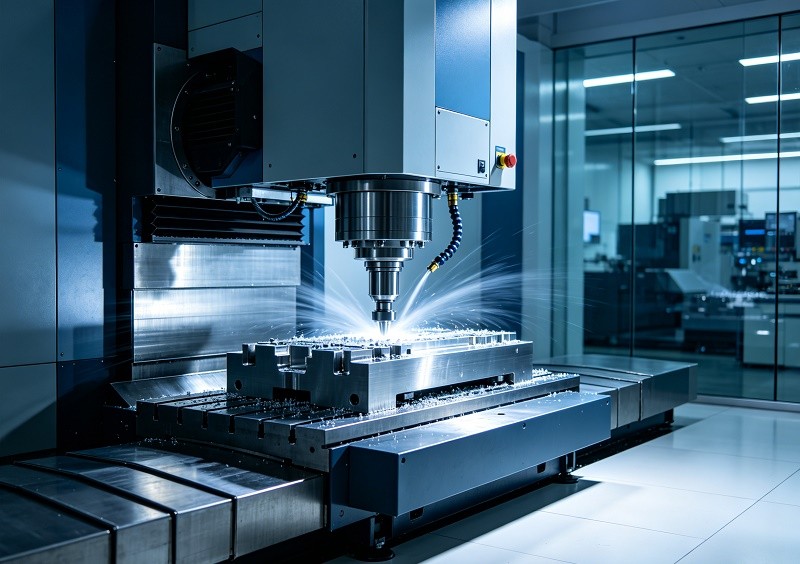
As we navigate the world of modern manufacturing, I've learned that precision engineering parts are more important than ever for industries like automotive, aerospace, and medical. These components directly impact the quality and performance of our final products.
I believe that selecting the right CNC turned parts manufacturer is one of the most important decisions you'll make, setting the foundation for long-term project success and reliable product outcomes.
Key Qualities to Seek in a Top CNC Turned Parts Manufacturer
Choosing the right partner for CNC turned parts is more than a simple procurement task; it's a strategic decision that impacts your product's quality, cost, and time-to-market. The ideal manufacturer acts as an extension of your team, providing not just parts, but also expertise and reliability. Let's explore the essential qualities that separate the best from the rest.
Valuing Experience and a Proven Track Record
In the world of precision manufacturing, there is no substitute for experience. A seasoned manufacturer brings a depth of knowledge that goes far beyond simply operating a machine. They have encountered and solved a vast array of challenges, from machining exotic materials to achieving near-impossible geometries. This battle-tested expertise translates into proactive problem-solving, optimized processes, and a lower risk of costly errors and delays.
When evaluating a potential partner, look for tangible evidence of their track record:
- Years in Business and Industry Specialization: How long have they been operating? Do they specialize in your industry, such as aerospace, medical devices, or automotive? Specialization often means they are already familiar with the specific standards, materials, and complexities of your sector.
- Case Studies and Portfolio: Ask to see examples of past projects similar to yours. A portfolio of complex, high-precision parts is a strong indicator of capability. Case studies can reveal how they tackled challenges and delivered value to other clients.
- Client Testimonials and References: What do their current and past clients say? Reputable manufacturers will be transparent and willing to provide references. Speaking to these references can offer unfiltered insight into their performance, communication, and reliability.
- Team Expertise: An experienced shop isn't just about the owner; it's about the collective knowledge of its engineers, programmers, and machinists. A stable, skilled workforce is often a sign of a well-managed and successful operation.
An experienced manufacturer understands that their role is not just to cut metal but to ensure the success of your project. They provide confidence that your parts will be made correctly the first time, every time.
Prioritizing Stringent Quality Control and Official Certifications
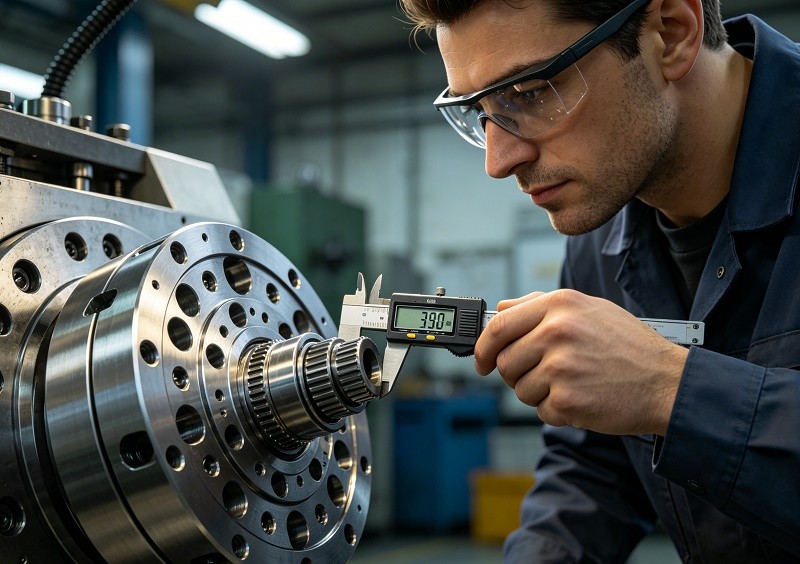
Quality in CNC turning is not an accident; it's the result of a deliberate, systematic approach. A top-tier manufacturer is defined by its unwavering commitment to quality, which should be embedded in every step of its process, from initial design review to final inspection. A robust Quality Management System (QMS) is the foundation of this commitment.
When assessing a manufacturer's quality credentials, focus on two key areas: their internal processes and their external validations.
1. Internal Quality Control Processes: A manufacturer's internal QMS should be comprehensive and rigorously enforced. Key elements include:
- First Article Inspection (FAI): Verifying that the first part produced in a run meets all specifications before mass production begins.
- In-Process Inspection: Regularly checking parts during the production run to catch any deviations early.
- Final Inspection: A thorough final check of all parts before shipment, often using advanced metrology equipment like Coordinate Measuring Machines (CMMs), optical comparators, and precision gauges.
- Material Traceability: Meticulous documentation that traces raw materials from their source to the final part, which is non-negotiable in sectors like aerospace and medical.
- Staff Training: A continuous training program that ensures all personnel, from machinists to inspectors, are proficient in the latest quality procedures and equipment use.
2. Official Certifications: Certifications are independent verifications that a manufacturer adheres to globally recognized standards. They are a powerful indicator of reliability and process maturity. While experience is valuable, certification proves that a company's processes are documented, repeatable, and held to a high standard.
Here are some of the most important certifications to look for:
| Certification | Industry Focus | What It Signifies |
|---|---|---|
| ISO 9001:2015 | General Manufacturing | The global standard for a Quality Management System (QMS). It demonstrates a commitment to customer satisfaction, continual improvement, and process-driven quality. |
| AS9100D | Aerospace & Defense | Builds upon ISO 9001 with additional, stricter requirements for risk management, traceability, and process control specific to the aerospace industry. It is often required by major aerospace clients. |
| ISO 13485 | Medical Devices | The definitive QMS standard for medical device manufacturing. It mandates rigorous controls for risk management, design, traceability, and regulatory compliance to ensure patient safety and product efficacy. |
| IATF 16949 | Automotive | The international standard for automotive quality management systems. It focuses on defect prevention, reduction of variation, and waste reduction in the automotive supply chain. |
| ITAR Registration | Defense | A requirement for any U.S. company that manufactures or exports defense-related articles. It ensures sensitive technical data is handled securely and in compliance with U.S. regulations. |
A manufacturer that invests in these certifications is investing in quality. It signals to you that they have the discipline, processes, and commitment to deliver parts that meet even the most stringent requirements.
Assessing Modern Machinery and Advanced Technical Skills
The "C" in CNC stands for "Computer," and just like computers, the technology in this field is constantly evolving. A manufacturer's investment in modern machinery and the technical skills of their team directly correlates with the quality, precision, and efficiency they can offer. Relying on outdated equipment and techniques can lead to longer cycle times, lower accuracy, and an inability to produce complex modern designs.
The Power of Advanced Machinery:
Modern CNC turning centers are marvels of engineering. The most significant advancements are found in multi-axis machines. While a traditional lathe operates on 2 or 3 axes (X, Z, and perhaps a live tool C-axis), modern multi-axis machines can operate on 5 or more axes simultaneously. This capability unlocks several key benefits:
- Single-Setup Machining: Multi-axis machines can machine complex geometries, such as off-center holes, angled features, and intricate contours, in a single clamping. This eliminates the need to move the part to different machines or perform multiple manual setups, drastically reducing the risk of alignment errors that accumulate with each new setup.
- Improved Accuracy and Precision: By minimizing setups, the geometrical accuracy of the final part is significantly enhanced. These machines can achieve incredibly tight tolerances, sometimes within ±0.005 mm, which is critical for high-performance applications in aerospace and medical fields.
- Superior Surface Finish: Multi-axis machines allow the cutting tool to maintain an optimal angle to the part's surface at all times. This, combined with shorter, more rigid cutting tools that reduce vibration, results in a smoother, higher-quality surface finish that may not require secondary polishing operations.
- Faster Production Times: Completing a complex part in one operation dramatically shortens the overall production cycle. This reduction in lead time can be as high as 70% compared to conventional methods, providing a significant competitive advantage.
The Indispensable Human Element: Technical Skills
Advanced machinery is only as good as the people who program and operate it. The best CNC machinists are not just machine operators; they are highly skilled technicians with a deep understanding of manufacturing processes. Key skills that separate a great machinist from a good one include:
- CAD/CAM Proficiency: Expertise in software like Autodesk Fusion 360 or Mastercam is essential for creating and simulating efficient toolpaths from 3D models.
- Knowledge of Cutting Parameters: A skilled machinist can optimize spindle speeds, feed rates, and depth of cut for different materials and tools to maximize efficiency and tool life while maintaining quality.
- Problem-Solving: The ability to diagnose and resolve issues on the fly, such as machine alarms, tool wear, or unexpected material behavior, is crucial for minimizing downtime and waste.
- Attention to Detail: Precision manufacturing demands meticulous attention to detail, from interpreting complex blueprints to verifying every measurement and tolerance.
When selecting a manufacturer, inquire about their equipment list and the skills of their team. A partner who invests in both state-of-the-art technology and continuous training is a partner who is prepared to meet the challenges of modern manufacturing.
The Importance of Comprehensive Engineering Assistance
The most valuable manufacturing partnerships transcend a simple transactional relationship. A top-tier CNC turning manufacturer acts as a collaborative partner, offering engineering support that helps optimize your parts long before the first chip is cut. This proactive involvement is often centered around the principle of Design for Manufacturability (DFM).
DFM is an engineering practice focused on designing products in a way that makes them easier and more cost-effective to manufacture, without sacrificing functionality or quality. A manufacturer with strong DFM expertise can analyze your part designs and provide critical feedback that leads to significant improvements. The choices made during the design phase can have an outsized impact on the final cost and lead time of a part.
Here are the key benefits of partnering with a manufacturer that offers comprehensive engineering assistance:
- Cost Reduction: DFM analysis can identify design features that are unnecessarily complex or difficult to machine. For example, a designer might specify sharp internal corners, which are impossible to create with a standard round cutting tool. A manufacturing partner can suggest adding a small, acceptable radius to that corner, allowing them to use standard tooling and avoiding a slow, expensive secondary operation like electrical discharge machining (EDM). Simplifying geometries and minimizing operations directly reduces machining time and cost.
- Shorter Lead Times: By optimizing a design for the available manufacturing processes, the entire production workflow becomes more efficient. A design that aligns with a manufacturer's standard tools and capabilities can be programmed and machined much faster, accelerating your time-to-market.
- Improved Quality and Consistency: DFM helps eliminate design elements that could lead to manufacturing defects. This collaborative review ensures that tolerances are appropriate and achievable, part features are accessible for machining and inspection, and the final design is inherently more robust for production.
- Material Selection Guidance: An experienced partner can offer valuable advice on material selection. They can suggest alternative materials that may be easier to machine, less expensive, or better suited for the part's application, all while meeting your mechanical and performance requirements.
Engaging with a manufacturer that provides this level of front-end support transforms them from a mere supplier into an integral part of your development process. This collaborative approach fosters innovation and ensures that your products are not only well-designed but also designed to be manufactured successfully.
Smart Strategies for Partnering with a CNC Turned Parts Manufacturer
Once you know what qualities to look for, the next step is to develop a smart sourcing strategy. This involves making key decisions about your production model, evaluating logistical factors, and leveraging modern procurement tools to find the perfect partner for your needs.
Deciding Between In-House Production and Outsourcing
One of the first strategic decisions a company faces is whether to produce parts in-house or to outsource them to a specialized CNC machining partner. Both approaches have distinct advantages and disadvantages, and the right choice depends heavily on your specific circumstances, including production volume, part complexity, and long-term business goals.
In-House CNC Production:
Bringing manufacturing in-house gives you maximum control over production schedules, quality, and intellectual property. It can be a viable option if you have consistent, high-volume production of relatively stable designs.
Pros:
- Greater Control: You have direct oversight of the entire production timeline and quality control process.
- IP Protection: Keeping sensitive designs within your own facility minimizes the risk of intellectual property theft.
- Potentially Lower Per-Part Cost (at high volume): Once the initial investment is paid off, the variable cost per part can be very low.
Cons:
- High Initial Investment: The capital expenditure for purchasing high-precision CNC machines, tooling, and inspection equipment is substantial.
- Skilled Labor Requirement: You must hire, train, and retain a team of skilled machinists, programmers, and quality technicians, which can be challenging and expensive.
- Operational Overhead: In-house production comes with ongoing costs for maintenance, facilities, utilities, and regulatory compliance.
- Limited Flexibility: You are committed to the capabilities of the machines you own. Adapting to new technologies or fluctuating demand can be difficult and costly.
Outsourcing to a CNC Machining Partner:
Outsourcing allows you to leverage the expertise, technology, and scale of a specialist without the massive upfront investment. This strategy converts a large capital expenditure (CapEx) into a predictable operational expenditure (OpEx).
Pros:
- Reduced Costs: You avoid the high cost of equipment, labor, and operational overhead. Outsourcing firms benefit from economies of scale, often resulting in a lower total cost for you.
- Access to Expertise and Technology: You immediately gain access to a partner's state-of-the-art equipment and a team of seasoned experts without having to invest in them yourself.
- Increased Scalability and Flexibility: You can easily scale production up or down to meet fluctuating market demand. You also have the flexibility to work with partners who have specialized capabilities for different projects.
- Focus on Core Business: Freeing yourself from the complexities of manufacturing allows your team to concentrate on core competencies like design, engineering, marketing, and sales.
Cons:
- Less Direct Control: You are entrusting a critical part of your process to an external partner, which requires clear communication and strong project management.
- Communication Challenges: Misunderstandings or delays can occur, especially if there are language or time zone differences with an overseas supplier.
- Potential Quality Risks: It is crucial to vet any outsourcing partner thoroughly to ensure their quality standards match your own.
The Verdict: For many small-to-medium-sized enterprises (SMEs), startups, and even large companies working on prototypes or low-to-mid volume production, outsourcing is the more strategic choice. It provides financial flexibility, reduces risk, and offers access to a level of manufacturing capability that would be prohibitive to build in-house.
Considering Delivery, Logistics, and Global Options
In today's interconnected world, your manufacturing partner could be across the street or across the ocean. The decision of where to source your CNC turned parts—domestically (onshoring) or internationally (offshoring)—has significant implications for cost, lead time, communication, and supply chain resilience. A robust supply chain is no longer optional; it is a necessity for modern manufacturing.
Onshoring (Domestic Manufacturing):
Partnering with a local or domestic manufacturer offers distinct advantages in speed, communication, and quality control.
Pros:
- Shorter Lead Times & Simpler Logistics: Proximity dramatically reduces shipping times and complexity. This simplifies your supply chain and allows for faster response to changes in demand.
- Improved Communication: Shared language, culture, and time zones facilitate clear and immediate communication, reducing the risk of misunderstandings. Face-to-face collaboration is also possible.
- Higher Quality and IP Protection: Domestic manufacturers often operate under stricter quality standards and regulations. Keeping production in the same country also provides stronger legal protection for your intellectual property.
- Supply Chain Resilience: A local supply chain is less vulnerable to global disruptions like international shipping delays, political tensions, or pandemics.
Cons:
- Higher Costs: Labor and operational costs are generally higher in North America and Europe, which can translate to a higher price per part.
Offshoring (International Manufacturing):
Offshoring, typically to lower-cost regions in Asia, has long been a popular strategy for cost reduction.
Pros:
- Lower Costs: The primary driver for offshoring is the significant reduction in labor and manufacturing costs, which can make a product more price-competitive.
- Large-Scale Capacity: Many overseas manufacturing hubs have vast industrial infrastructure and the ability to handle extremely high-volume production runs.
Cons:
- Longer Lead Times: International shipping can add weeks or even months to your lead time, making it difficult to respond quickly to market needs. recent data shows that production lead times from some regions have already lengthened by 30-50%.
- Logistical Complexity: Managing international freight, customs clearance, and tariffs adds significant complexity and potential for delays.
- Communication and Cultural Barriers: Differences in time zones, languages, and business practices can lead to communication breakdowns and costly errors.
- Quality and Compliance Risks: Verifying certifications and ensuring consistent adherence to quality standards can be more challenging from a distance.
A Hybrid Approach: Nearshoring
Nearshoring, or sourcing from a nearby country (e.g., a U.S. company sourcing from Mexico or Canada), offers a compromise. It often provides a balance of lower costs than onshoring with simpler logistics and better communication than offshoring.
Making the Right Choice: The "best" option is a strategic calculation. For prototypes, low-to-mid volume production, or parts where quality and speed are critical, onshoring is often the superior choice. The higher per-part price is frequently offset by a lower total cost of ownership when you factor in reduced risk, faster time-to-market, and improved quality. For high-volume, cost-sensitive consumer goods with a stable design, offshoring may remain a viable strategy. However, recent global supply chain disruptions have led many companies to re-evaluate this approach and bring production closer to home.
Embracing the Convenience of Online Purchasing
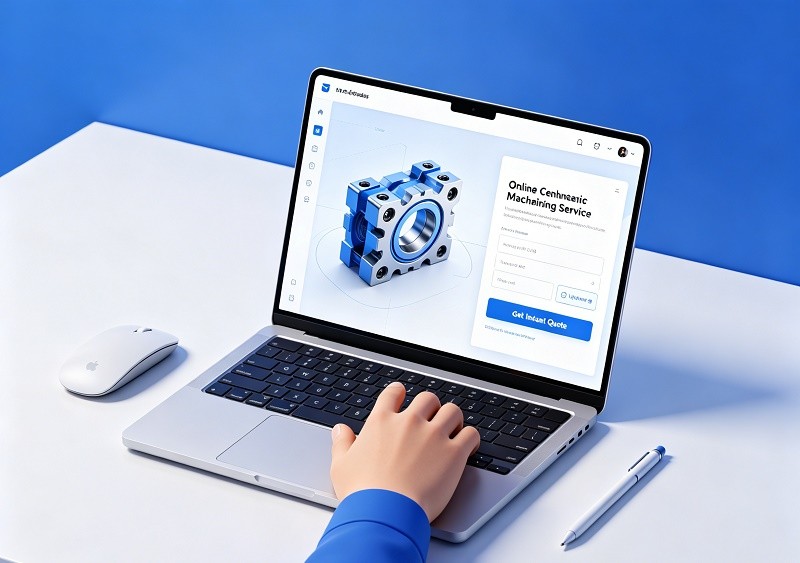
The digital transformation has revolutionized manufacturing procurement. Gone are the days of lengthy phone calls and faxed drawings. Today, online CNC machining platforms offer a streamlined, efficient, and transparent way to order custom parts. These digital services are particularly well-suited for engineers and product developers who need prototypes and small-batch production runs quickly.
An online CNC machining service acts as a digital manufacturing hub. The typical workflow is designed for speed and simplicity:
- Upload Your CAD File: You begin by uploading a 3D CAD model (in formats like STEP, IGES, or SLDPRT) directly to the platform's web interface.
- Configure Your Part: You then select your desired material from a wide range of options, specify the quantity, choose a surface finish, and define any critical tolerances.
- Receive an Instant Quote: Using sophisticated algorithms, the platform analyzes your part's geometry and specifications to generate an instant, automated quote. This eliminates the traditional back-and-forth negotiation and can reduce quoting time from days to mere seconds.
- Get DFM Feedback: Many advanced platforms also provide an automated Design for Manufacturability (DFM) analysis alongside the quote. a system can highlight features in your design that may be difficult or expensive to machine, allowing you to make cost-saving adjustments before committing to an order.
- Place Your Order: Once you are satisfied with the quote and design, you can place your order with a few clicks. The platform then manages the entire production process, from assigning the job to a vetted manufacturing partner to ensuring quality control and delivery.
Key Advantages of Online CNC Platforms:
- Speed and Efficiency: The primary benefit is the dramatic reduction in time. The ability to get instant quotes and DFM feedback allows for rapid design iteration and accelerates the entire product development cycle.
- Cost Transparency: Online platforms provide clear, upfront pricing, allowing you to easily compare costs for different materials, quantities, or designs.
- Accessibility: These services democratize access to high-quality manufacturing. Engineers, designers, and small businesses can access a global network of suppliers without needing established relationships or high-volume orders.
- Streamlined Communication: All project details, from file revisions to clarifying questions, are centralized on a single platform, creating a clear and traceable record of communication.
While sending a critical part design "into the internet" can feel daunting for those used to a traditional machine shop relationship, these platforms have matured significantly. They now offer robust quality management systems, ITAR and ISO certifications, and dedicated support teams to ensure your parts are made to spec and delivered on time. For anyone looking to procure CNC turned parts with speed, transparency, and convenience, online platforms are an indispensable tool.
Conclusion
In my experience, choosing the perfect CNC turned parts manufacturer requires looking closely at their expertise, technology, commitment to quality, and how well they communicate with us. The selection process is a critical investment in your product's success. It’s about building a strategic partnership, not just sourcing a component.
By carefully checking these important areas—from vetting their track record and certifications to assessing their technological capabilities and engineering support—we can build a strong and lasting relationship. This due diligence ensures our components are made with the precision and reliability we need, paving the way for successful project outcomes and a resilient supply chain. I encourage you to share your own experiences or questions in the comments below; your insights can help others in our community navigate this crucial decision.